These are the official pictures of the Fisherman’s Ring and Papal Pallium that will be given to Pope Leo XIV at the Papal Inauguration Mass on Sunday, 18 May 2025 at St. Peter’s Square, Vatican City.
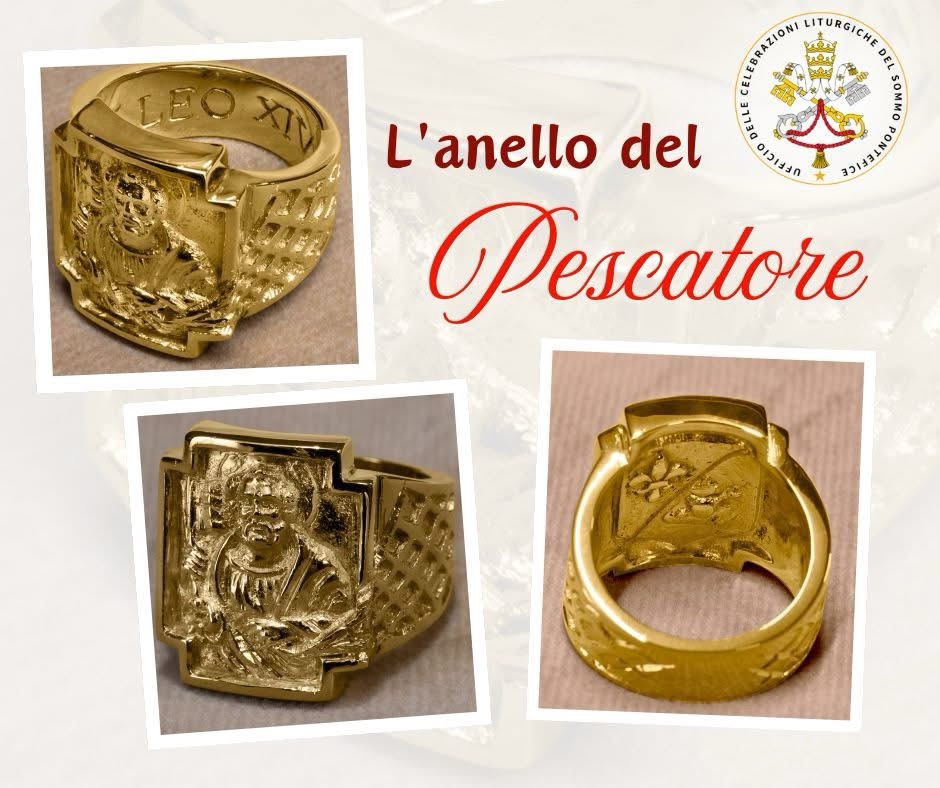
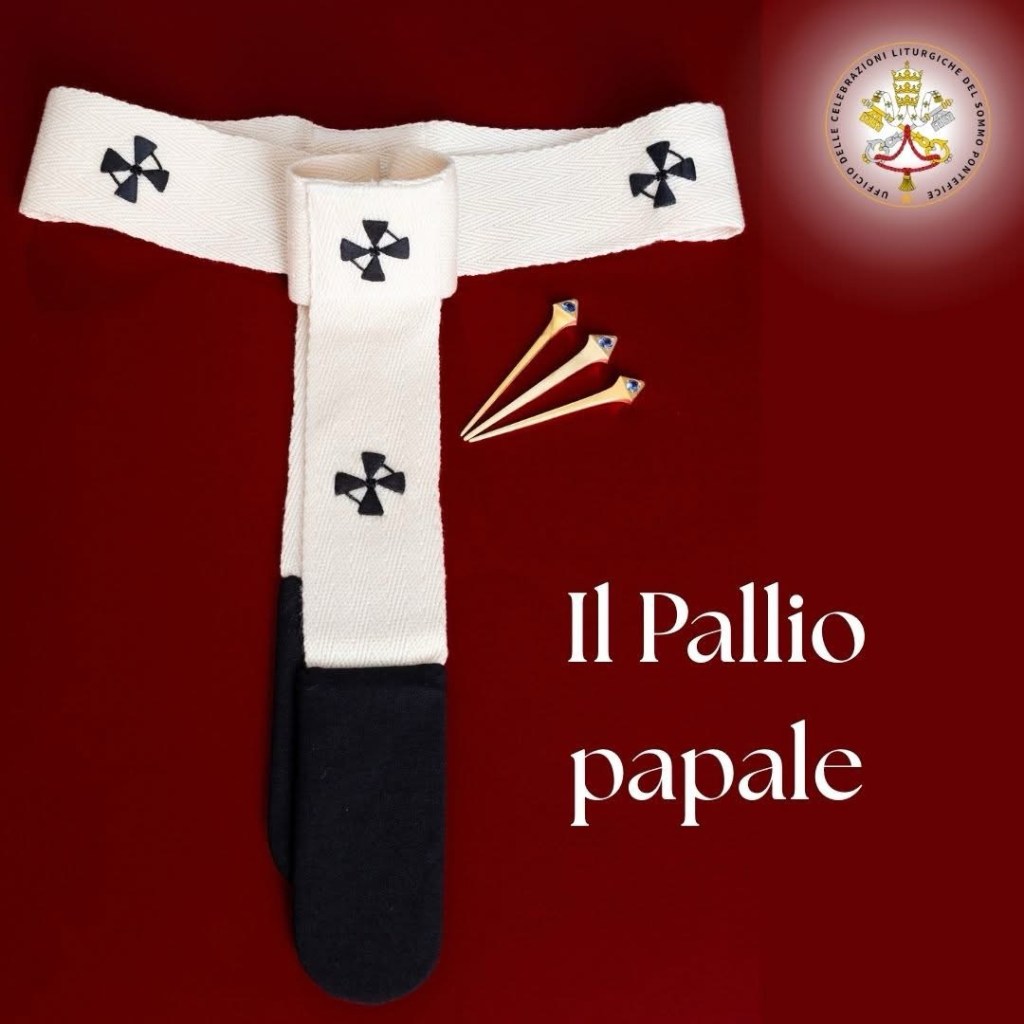

These are the official pictures of the Fisherman’s Ring and Papal Pallium that will be given to Pope Leo XIV at the Papal Inauguration Mass on Sunday, 18 May 2025 at St. Peter’s Square, Vatican City.
Liturgical Colour : Red
Dear brothers and sisters in Christ, the tone and the meaning of the readings of today are not that different from the readings of yesterday, as they all talked about the understanding of the Law, and what is the true meaning of the Law, that is truly about the love of God. For the Law was meant not to oppress us mankind or to purposely make our lives difficult, but it was meant to lead the people of God and to help them to find their ways to Him.
And in the first reading we read about the Man named Melchizedek, who was written in the Book of Genesis as the King of Salem, or also known as the King of Peace, as the King of justice, which are indeed curiously, the titles which our Lord Jesus also holds, namely the King of Peace, and the Lord God of all, the Great Judge of all creation, who would judge all of creation.
This is to show once again, as often reiterated throughout the entire Epistle to the Hebrews, of the nature of Jesus Christ our Lord as the High Priest of all creation, of us all mankind, just as Melchizedek was the High Priest of God of old, at the time of Abraham. We do not have much info on who exactly Melchizedek was, based on what we know from the Book of Genesis, but in the Epistle to the Hebrews, through the inspiration of the Holy Spirit, it was made clearer, that Melchizedek was probably another manifestation of God in the world, just like Jesus.
But Jesus was beyond even Melchizedek in deeds, for He did not just offer an offering of the tenth of the wealth of the world, as Abraham had given to Melchizedek, but He offered none other than Himself, the Body and Blood of the Lamb of God, the one and only perfect sacrifice who through that sacrifice justified the entire human race.
And indeed, as I have mentioned at the beginning of today’s discourse, that the Lord had done this out of a single and clear purpose, that is out of His great and everlasting love for us all, that He does not want even a single one of us to be lost to Him. The Lamb of God offered Himself as the perfect and sweet sacrifice for our liberation, the liberation from the clutches of sin. Because of what He has done, all of us have been offered the freedom from the hands of Satan.
He is the High Priest who gathers all of us to Himself, and by His offering cleanses all of us from all of our sins with the singular act of His death on the cross. And this is our faith, what we believe in fully in our hearts. He died for us so that we may have life in us, and this is what the entire revelations God had made through the prophets, and all His laws are truly about, that is about the love of God made real by His sacrifice on the cross for us.
Today, we celebrate the feast of St. Agnes, the holy martyr of the Faith and one of the holy virgins, who maintained the purity of their bodies in defense of their faith and courageously defending the Faith against the corruption of the world. St. Agnes, also known as St. Agnes of Rome, lived during the most difficult years for the Church and the faithful, that is during the reign of the Roman Emperor Diocleatian, infamous for his great persecution of the Church and the faithful, where St. Agnes also met her end in a holy martyrdom in the defense of her faith.
St. Agnes was a young Christian maiden born to a noble family, who died at a very young age in her early teenager years during the aforementioned persecution by Emperor Diocletian, as she openly declared that she was a Christian to the authorities. St. Agnes went through many sufferings and different forms of torture meant to force her and persuade her to abandon her faith, none of which succeeded to do so.
Miracles happened even while she was tortured, and her persecutors grew ever more desperate and grew even more vicious in their persecution of her as the miracles continued to happen. Eventually she was martyred for her faith as such a young age, a defiant symbol to the Emperor who had persecuted the faithful so much, that whatever he had done to harm their bodies, they did not fear at all, for they put their trust in the Lord in whom they received great rewards for their faith.
One of the symbol often used on St. Agnes is the lamb, for her name very closely resembled the word lamb in Latin, that is ‘Agnus’, and this should be a reminder to all of us, of the suffering that St. Agnes had undergone in defending her faith, and even more importantly, the sacrifice which our Lord Jesus Christ, the Lamb of God, had done to save us from the hands of death and bring us into life, as I have mentioned earlier in today’s discourse.
Let us all therefore renew our commitments to the Lord, so that all of us will grow ever closer to our Lord. Reject and resist all forms of temptations by Satan and let us strive to keep ourselves holy and pure, that when the Lord comes again, or when we see Him in heaven, He will praise us for our way of following Him, just as St. Agnes had done. God bless us all. Amen.
Liturgical Colour : Red
Mark 3 : 1-6
At that time, again Jesus entered the synagogue. A man, who had a paralysed hand, was there and some people watched Jesus : would He heal the man on the sabbath? If He did, they could accuse Him.
Jesus said to the man with the paralysed hand, “Stand here in the centre.” Then He asked them, “What does the Law allow us to do on the Sabbath? To do good or to do harm? To save life or to kill?” But they were silent.
Then Jesus looked around at them with anger and deep sadness, because they had closed their minds. And He said to the man, “Stretch out your hand.” He stretched it out, and his hand was healed. As soon as the Pharisees left, they met with Herod’s supporters, looking for a way to destroy Jesus.
Liturgical Colour : Red
Psalm 109 : 1, 2, 3, 4
The Lord said to my Lord, “Sit at My right hand till I make Your foes Your footstool.”
From Zion the Lord will extend Your mighty sceptre and You will rule in the midst of Your enemies.
Yours is royal dignity from the day You were born in holy majesty. Like dew from the womb of the dawn, I have begotten You.
The Lord has sworn, and He will not take back His word : “You are a Priest forever in the order of Melchizedek.”
Liturgical Colour : Red
Hebrews 7 : 1-3, 15-17
Scripture says that Melchizedek, king of Salem, priest of the Most High God, came out to meet Abraham who returned from defeating the kings. He blessed Abraham and Abraham gave him a tenth of everything.
Let us note that the name Melchizedek means King of Justice, and that king of Salem means king of Peace. There is no mention of father, mother or genealogy; nothing is said about the beginning or the end of his life. In this he is the figure of the Son of God, the Priest who remains forever.
All this, however, becomes clear if this Priest after the likeness of Melchizedek has in fact received His mission, not on the basis of any human law, but by the power of an immortal life. Because Scripture says : ‘You are a Priest forever in the priestly order of Melchizedek.’
Mass appeal: some details of tomorrow’s papal inauguration—UPDATED
Today, Tuesday, 19 March 2013, our new Pope will be solemnly inaugurated to begin his Pontificate. He is already our Pope, ever since he accepted the rightful election in the Conclave, but the Inauguration ceremony affirms and completes that process, with the imposition of the symbols of the authority of the Pope, as the leader of the entire Universal Church.
There will be some changes to the liturgy this year, as the imposition of the Pallium and the Ring of the Fisherman will take place just before the Mass starts, instead of being within the Mass itself, as the impositions are seen as more of an extra-liturgical event.
The Pope will pray with the leaders of the Eastern Catholic Churches, the Patriarchs and Major Archbishops at the Tomb of St. Peter underneath the main altar of St. Peter’s Basilica, where the pallium and the ring had been placed since the night before.
The Pope will then proceed with all the other concelebrating Cardinals and prelates outside to the Altar at St. Peter’s Square, which in the meanwhile the Laudes Regia hymn or ‘Laud to the King (Christ)’, that is a glorious rendition of the Litany of the Saints, with the new innovation of the inclusion of part asking the past Popes who had been canonised as saints for the new Pope, their successor, beginning from Pope St. Linus to Pope St. Pius X.
Following after this is the imposition of the papal pallium, which is different from the pallium worn by the Metropolitan Archbishops. Pope Francis’ pallium will be the same in appearance with that of Pope Benedict XVI’s pallium, with red crosses instead of black ones, representing the wounds of Christ, with three gold pins on three of the crosses, representing the nails that bound both hands and the legs of Christ onto the cross. The pallium symbolises the authority the Pope has over the entire Universal Church. The pallium will be imposed by the senior Cardinal of the order of Priest in the Cardinal-electorate, Cardinal Godfried Danneels.
The Ring of the Fisherman will be given after this, which signifies the bond between the Pope and God’s Church, and as the image on the ring depicts, that of St. Peter holding the keys on a boat, while fishing, as a fisher of man, it symbolises the Pope’s role as the successor of St. Peter the Apostle, and also as the current holders of the keys of the kingdom of Heaven, entrusted by Christ to Peter. The ring will be presented to the Pope by the senior Cardinal Deacon, Cardinal Jean-Louis Tauran.
Six Cardinals representing the rest of the Cardinals will pay homage to the Pope, and will give their obedience to him, following the imposition of the pallium and the Ring of the Fisherman.
The Mass follows as usual, and the readings will be done in different languages, English, Spanish, and most notably the Gospel in Greek, to highlight the universal nature of the Church, encasing both the Western and Eastern tradition of Christendom. The whole liturgy of the Mass itself will be conducted in solemn Latin and beautiful Gregorian chants.
The booklet for the Mass is available at the link below, in English, Italian, and Latin :
 petercanisiusmichaeldavidkang