Monday, 2 September 2013 : 22nd Week of Ordinary Time (Scripture Reflection)

Liturgical Colour : Green

Dear brothers and sisters in Christ, today we hear about how Christ was rejected and mocked by His own people, the people of Nazareth His hometown. They rejected Him when He came to proclaim the truth about Himself, as the perfect fulfillment of the prophecy of the prophets of God, including Isaiah, who made a lot of predictions about His coming, which was indeed fulfilled at that moment when Christ proclaimed the very completion of that prophecy to His own townspeople.

Why so? Why did they reject Christ? Why did they reject the very Messiah sent to save them? Precisely because of familiarity and their failure to look beyond what is apparent to them, and the failure to overcome their own prejudices and judgements, which they imposed on Christ without mercy. They knew Him to be the lowly son of a carpenter, though an upright job, but a job of the poor, and therefore, in their minds, prophets, even less so the Messiah could ever come from such backgrounds.

Yet, indeed, the Lord who is King of kings and the Messiah of all mankind, was born of a humble carpenter’s family, of Joseph His foster father, and of Mary, the humble and loving mother He had. Yet, He is truly the Messiah, the Anointed One of God, whom His own people had rejected. Yes, the people of Israel had often rejected their own prophets sent to them by God over the centuries before the coming of Christ, and they turned deaf ears to their warnings and reminders of the need to follow the Law of God and turn from their evil and wicked ways.

The same too therefore happened to Christ, that He was rejected in Nazareth, His own hometown, and even long before that, before His birth, He was rejected everywhere in Bethlehem, because all the inns were full, and He had to be born in a humble and dirty stable. He was rejected even by the people, by the Pharisees and the chief priests who saw Him as a threat to their authority and their power over the people, as a rival.

And just as the people had tortured and slaughtered the prophets of old without mercy, they too slaughtered the Lamb of God, the Messiah who was sent to ensure their own salvation and redemption from death. They had rejected Him for a lowly criminal, Barabbas. They preferred a criminal to a king, a criminal to the One who had to suffer for all of their sins, He who forgave them even fully knowing of their actions in bringing about His suffering.

Yes, brethren, our Lord Jesus bared His love and mercy to all of us, and as He lay hanging on that cross, looking with great love and mercy upon all of His people, even those who called for His death, thos who crucified and tortured Him. Why so? That is because He loves all of us so much, that He does not want us to be separated from Him by our sins, our wickedness, and our unworthiness. He died for us and shed His blood that through that sacrifice, our sins may be erased from us and that we have a new hope for a new life, a new life, eternal life of joy in Christ our Lord.

Just as St. Paul had elaborated in the First Reading that the faithful, both those who are still alive and those who have already passed away when the Lord comes again, will rise with Him into heavenly glory He had promised us who believes in Him and accepted Him as Lord and Saviour. However, the question here is, are we ready? Are we ready to welcome and greet our Saviour, when He comes again, or during our lives? Or are we going to be like the people of Nazareth, the Pharisees and the chief priests in rejecting Him?

It is clear, brethren, that we have need to open our doors for Christ, and to welcome Him into out hearts, that He may remain in us, just as we remain in His love and grace. Do not harden our hearts with prejudice, stubbornness, and fear, as the Lord comes and approaches us, and reveals to us the truth about His glorious and yet humble self. Do not be like the people of Nazareth who dismissed Him merely because he’s familiar to them as a carpenter’s son.

Dear brothers and sisters in Christ, today in our world, there are still many people who do not welcome Christ into their lives, and even many among those are they who call themselves as Christians, which I am sure including some of us here. Let us introspect ourselves and look into ourselves, whether we have kept the doors of our heart locked tight against the love of Jesus.

If the doors are closed, then let us have the courage to open it, let Christ in, bare everything to Him, just as He had bared all of His heart and love as He lay dying on the cross out of His great love for all of us. Let the Lord come into our hearts, healing it of our afflictions, of our wickedness, of our unworthiness, erasing from them the spirit of pride, of wrath, of gluttony, of lust, of greed, of hatred, of desire, and of all evils.

In their place may the Holy Spirit of love, peace, hope, and compassion come and reside within each one of us, that we may be truly and completely transformed into a people of love, a people of hope, and a people of faith, belonging to the Lord our God who will be pleased at our faith and who will raise us up on the last day. God bless us all. Amen.
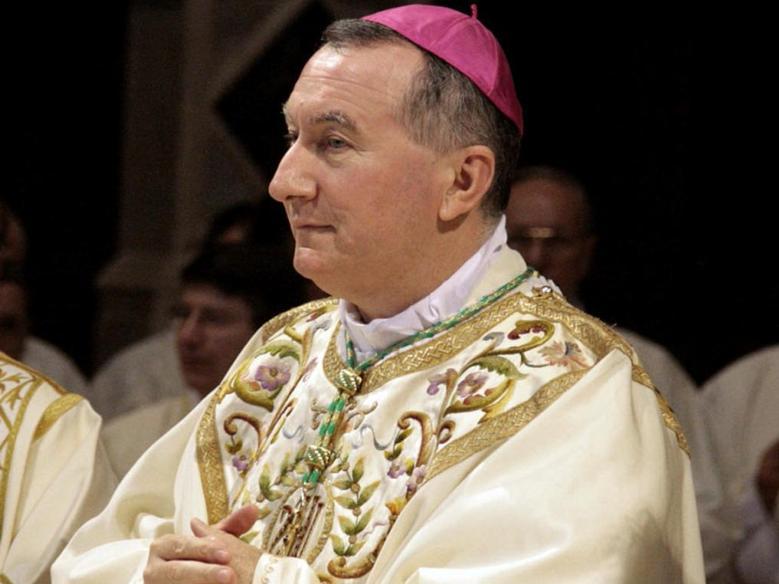
New Secretary of State of the Holy See, Archbishop Pietro Parolin

Image

Archbishop Pietro Parolin, the longtime veteran of the Secretariat of State of the Holy See, and a skilled and veteran diplomat in his current role as the Apostolic Nuncio to Venezuela, as the trusted aide to Pope Benedict XVI (now Pope Emeritus), had been appointed on Saturday, 31 August 2013 as the new Secretary of State, the top position of the Roman Curia, the governing body of the Church.

In addition, as positions tied to the post of Secretary of State, Archbishop Parolin also automatically become the new President of Interdicasterial Commission on Particular Churches (which task is managing the Eastern Catholic Churches), President of Interdicasterial Commission for the Church in Eastern Europe, and the Protector of Pontifical Ecclesiastical Academy.

Image

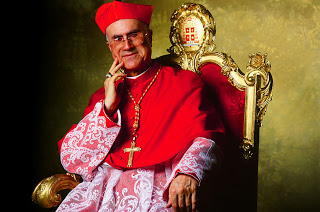
Archbishop Pietro Parolin will replace the outgoing Cardinal Secretary of State, Cardinal Tarcisio Bertone, S.D.B., who is also the Chamberlain (Camerlengo) of the Church, effective on 15 October 2013 as per the decree of Pope Francis released today.

Image

Cardinal Tarcisio Bertone is then the Secretary of State Emeritus effective on the state mentioned in the paragraph above (15 October), when Archbishop Pietro Parolin officially takes over as the new Secretary of State. The position of the Secretary of State is the top in the Roman Curia, below only the Pope in the hierarchy of the Church. Cardinal Bertone will however remain as the Camerlengo of the Church.

We thank Cardinal Bertone for all his hard work and contributions to the Church, many of which were unknown to many, and all the labours he had done in great humility and dedication in his position as the servant of the Holy Church.

As the Secretary of State position is the top official post of the entire Church and the Roman Curia save for the Pope himself, it is expected that the 58 years old Archbishop Pietro Parolin will be made a Cardinal in the next Consistory of Cardinals (possibly early 2014 or late 2014).

Sunday, 25 August 2013 : 21st Sunday of Ordinary Time, Lay Apostolate Sunday (First Reading)

Liturgical Colour : Green

Isaiah 66 : 18-21

Now I am going to gather the nations of every tongue, and they will witness My glory, for I will perform a wonderful thing among them. Then I will send some of their survivors to the nations – Tarshish, Put, Lud, Moscheck, Rosh, Tubal, and Javan – to the distant islands where no one has ever heard of Me or seen My glory. They will proclaim My glory among the nations.

They will bring your kindred from all the nations as an offering to YHVH on horses, in chariots, in litters, on mules, on camels to My holy mountain in Jerusalem, says YHVH, just as the Israelites bring oblations in clean vessels to the house of YHVH. Then I will choose priests and Levites even from them, says YHVH.

Thursday, 22 August 2013 : 20th Week of Ordinary Time, Memorial of the Queenship of the Blessed Virgin Mary (Gospel Reading)

Liturgical Colour : White

Luke 1 : 26-38

In the sixth month, the angel Gabriel was sent from God to a town of Galilee called Nazareth. He was sent to a young virgin, who was betrothed to a man named Joseph, of the family of David; and the virgin’s name was Mary.

The angel came to her and said, “Rejoice, full of grace, the Lord is with you.” Mary was troubled at these words, wondering what this greeting could mean. But the angel said, “Do not fear, Mary, for God has looked kindly on you. You shall conceive and bear a Son, and you shall call Him Jesus.”

“He will be great, and shall rightly be called Son of the Most High. The Lord God will give Him the kingdom of David, His ancestor; He will rule over the people of Jacob forever, and His reign shall have no end.”

Then Mary said to the angel, “How can this be, since I am a virgin?” And the angel said to her, “The Holy Spirit will come upon you and the power of the Most High will overshadow you; therefore, the Holy Child to be born of you shall be called Son of God. Even your relative Elizabeth is expecting a son in her old age, although she was unable to have a child; and she is now in her sixth month. With God nothing is impossible.”

Then Mary said, “I am the handmaid of the Lord, let it be done to me as you have said.” And the angel left her.

Tuesday, 20 August 2013 : 20th Week of Ordinary Time, Memorial of St. Bernard, Abbot and Doctor of the Church (Psalm)

Liturgical Colour : White

Psalm 84 : 9, 11-12, 13-14

Would that I hear God’s proclamation, that He promise peace to His people, His saints – lest they come back to their folly.

Love and faithfulness have met; righteousness and peace have embraced. Faithfulness will reach up from the earth while justice bends down from heaven.

The Lord will give what is good, and our land will yield its fruit. Justice will go before Him, and peace will follow along His path.

Wednesday, 14 August 2013 : 19th Week of Ordinary Time, Memorial of St. Maximilian Kolbe, Priest and Martyr (Psalm)

Liturgical Colour : Red

Psalm 65 : 1-3a, 5 and 16-17

Shout with joy to God, all you on earth; sing to the glory of His Name; proclaim His glorious praise. Say to God, “How great are Your deeds!”

Come and see God’s wonders, His deeds awesome for humans. All you who fear God, come and listen; let me tell you what He has done. I cried aloud to Him, extolling Him with my tongue.

Thursday, 8 August 2013 : 18th Week of Ordinary Time, Memorial of St. Dominic, Priest (Scripture Reflection)

Liturgical Colour : White

Dear brothers and sisters in Christ, we are reminded today, of our own weaknesses, of our own vulnerabilities, and the need for all of us to follow the will of our God, and follow the thinking of our God, trusting in Him fully with all our hearts, our minds, and all our beings, instead of trusting our own instincts and human emotions.

Today we celebrate the feast of St. Dominic, also known as St. Dominic de Guzman, a well known preacher who lived in the high Middle Ages Europe in the twelfth and thirteenth century Europe. He was the founder of the Dominican religious order, also known as the Order of Preacher. St. Dominic was well known for his strong devotion in the Lord, and his unshaken faith, in which he emphasized on the importance of having a strong and vibrant faith in God, as our armour, and put our trust in the Lord, instead of trusting in the power of men.

St. Dominic worked hard to spread the words of the Gospel, preaching to many people of God who had gone astray from the faith, and those in whom the flames of faith had died down. He had made much impact in strengthening the faith and zeal among the faithful at a time when heresies were commonplace in the Medieval Europe, particularly the Albigensian heresy or the Catharian heresy widespread in the Christendom at the time. Not only that, St. Dominic de Guzman was also well-known for being the one who propagated the devotion to the mother of our Lord, the Blessed Virgin Mary, through the Rosary.

St. Dominic and his successors in the Dominican religious order continued the spreading of the holy Rosary, as a potent tool and weapon which we can use, in our fight and constant struggle against the devil, as something that can help us anchor our faith firmly in the Lord, through the inspiration of the faith that His Blessed Mother has, that is the faith of Mary. The Dominican friars, monks, and priests continued until today the works and passions of St. Dominic, bringing more and more lost souls back to the embrace of the Lord who loves them.

Yes, brothers and sisters in Christ, it is important for all of us to continue to have faith in our Lord and in His saving power. Not just any faith, but a strong and immovable faith like that of a rock, faith that will never be shaken by any power of the devil or the temptations of this world. If our faith in the Lord is not strong, the devil can easily sow the seeds of rebellion and distrust in our hearts, and that will make our faith even weaker and less anchored.

That was what happened to the people of Israel during their journey in the desert, when the Lord led them through Moses to walk through the desert of Sinai from Egypt towards the Promised Land of Canaan. Even though the Lord had shown them His power and might through the miracles He had shown them via Moses and Aaron, by the Ten Plagues He had sent to punish their former Egyptian slavemasters, and despite His opening of the Red Sea for them to cross, and finally, even giving them manna, the bread of heaven to eat, and sweet water to drink from rocks, they still rebelled against Him and constantly complained against Him throughout the journey.

They abandoned the Lord immediately after He made them walk through the Red Sea, when Moses went up the Mountain of God and did not come down for forty days, when they decided to take the matter on their own hands, and made a new ‘god’ of gold shaped into a calf, abandoning the Lord their God who had shown them their might, for the pagan idol of gold and the world. They did not have true faith in their heart, nor true love for God, but they merely have amazement, wonder, and even fear for the Lord, for all the things He had done for them, but that is not love or faith.

We must be strong and have our faith firmly rooted in the Lord, that we will not be tempted nor give in to our human weaknesses and vulnerabilities. Ever since our ancestors ate from the tree of knowledge of good and evil, we have been exposed to such weaknesses, negative things such as lust, greed, wrath, anger, pride, and many others. These can derail us from the path towards salvation, that is the path for us to return to our Lord.

What happened to Moses and Peter in the first and the Gospel readings respectively are also examples of what can happen, even to those whose faith are firm and strong in the first place, if we do not keep our faith strong at all times and let it to waver or allow evil to dwell within us and plant his seeds of evil within us. Moses as the leader of the people of Israel and Peter as the leader of all the Apostles, the one to whom God entrusted all His people on earth to.

As the leader of the people, Moses certainly had a great responsibility, and his role as the one who speaks directly to the Lord God made his works even more demanding on him. When the people constantly complained and rebelled against his leadership and the Lord Himself, the strain went too much for him and indeed, at Massah and Meribah, as we heard from the reading today, Moses snapped. In his anger and wrath, he disobeyed the Lord in order to chastise the people. Yes, the Lord in His love still allowed the water to flow through the rocks for His people to drink, but Moses’ disobedience is something that he should not have done. As a result, he was not to enter the Promised Land together with the rebellious people, who had been punished for their lack of faith in the Lord.

Peter, the leader of the disciples of Jesus in his fear that the Lord would suffer and die under the Jewish authorities, rebuked Jesus in that he said that Jesus should not face His death and therefore complete what He was born into this world for. Peter gave in to his fear and uncertainty, and his faith was shaken. But the Lord rebuked Satan who was inside him, and rebuked the one who sowed the seeds of uncertainty in the heart of Peter, and reminded Peter as well, that one ought to put their full trust and attention to the Lord their God and not in the wisdom and power of men.

Yet, despite the apparent weakness of faith of Peter, and his later abandonment of the Lord in his three times denial that he knew Christ, Peter, who was Simon son of John has great faith in his heart, that the Lord who sees all knew about the true faith in Peter. That was why, He named Simon as Peter, which means ‘Rock’ or Cephas in the approximate Aramaic language used by the people of Jesus’ time.

That is because Peter truly is faithful to the Lord, and he truly loved Him, and he showed that in the end by giving up his own life for the sake of the Lord, as the martyr of the faith. He led the people of God in the Church faithfully and dutifully, ensuring that a stable foundation of God’s Church was built, and behold! The Church of God that He established on Peter as foundation remains today as our Church, with our current Pope Francis, as the successor of Peter as the head of the Universal Church.

We too, brothers and sisters in Christ, ought to strengthen our faith and our love for the Lord our God. There are many ways to do this, that our faith will blossom and grow together with our love, both for God and for our fellow men. Pray often, speak to the Lord our God through prayer, that we constantly remain in connection to His will and His words, that we do not easily fall astray of the true path to God.

And following the push by the Dominicans and their founder, St. Dominic, let us pray the rosary often with meaning and devotion, and not just merely chanting the prayers, but that we really mean the prayers in the rosary that we offer to the Blessed Virgin Mary, that she will then deliver our prayers to the throne of her Son, our Lord Jesus Christ, God and King of all the Universe, who will hear us, and succour us at all times.

May the Lord who is faithful and loving be with us always and give us His love and kindness, strengthening us whenever we are weak, and planting the seeds of faith in us, anchoring it on solid rock foundation, that we will withstand whatever assault Satan tries to make, and whatever temptations this world attempt on us, to lead us astray from salvation into damnation. Let us, inspired by the example of St. Dominic, reach out to one another and help one another in our devotion to the Lord, that all of us will be saved together. Amen.

Tuesday, 6 August 2013 : Feast of the Transfiguration of the Lord (Second Reading)

Liturgical Colour : White

2 Peter 1 : 16-19

Indeed, what we taught you about the power and the return of Christ Jesus our Lord was not drawn from myths or formulated theories. We ourselves were eyewitnesses of His majesty, when He received glory and honour from God the Father, when from the magnificent Glory this most extraordinary word came upon Him : “This is My beloved Son, this is My Chosen One.”

We ourselves heard this voice from heaven when we were with Him on the holy mountain. Therefore, we believe most firmly in the message of the prophets which you should consider rightly as a lamp shining in a dark place, until the break of day, when the Morning Star shines in your hearts.

Sunday, 28 July 2013 : 17th Sunday of Ordinary Time (Psalm)

Psalm 137 : 1-2a, 2bc-3, 6-7ab, 7c-8

I thank You, o Lord, with all my heart, for You have heard the word of my lips. I sing Your praise in the presence of the gods. I bow down towards Your Holy Temple and give thanks to Your Name.

For Your love and faithfulness, for Your word which exceeds everything. You answered me when I called; You restored my soul and made me strong.

From above, the Lord watches over the lowly; from afar, He marks down the haughty. If I walk in the midst of trouble, You give me life. With outstretched am, You save me from the wrath of my foes.

With Your right hand You deliver me. How the Lord cares for me! Your kindness, o Lord, endures forever. Forsake not the work of Your hands.

Saturday, 20 July 2013 : 15th Week of Ordinary Time, Memorial of St. Apollinaris, Bishop and Martyr (Gospel Reading)

Matthew 12 : 14-21

Then the Pharisees went out and made plans to get rid of Jesus. As Jesus was aware of their plans, He left that place. Many people followed Him, and He cured all who were sick. Then He gave them strict orders not to make Him known. In this way Isaiah’s prophecy was fulfilled : ‘Here is My servant whom I have chosen, the One I love, and with whom I am pleased. I will put My Spirit upon Him and He will announce My judgment to the nations.’

‘He will not argue or shout, nor will His voice be heard in the streets. The bruised reed He will not crush nor snuff out the smoldering wick. He will persist until justice is made victorious, and in Him all the nations will put their hope.’