Passing of Cardinal Domenico Bartolucci of Italy, at the age of 96

Bartolucci

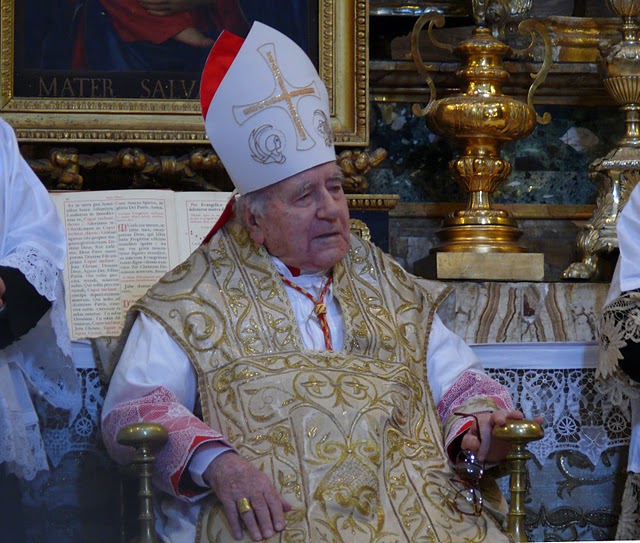
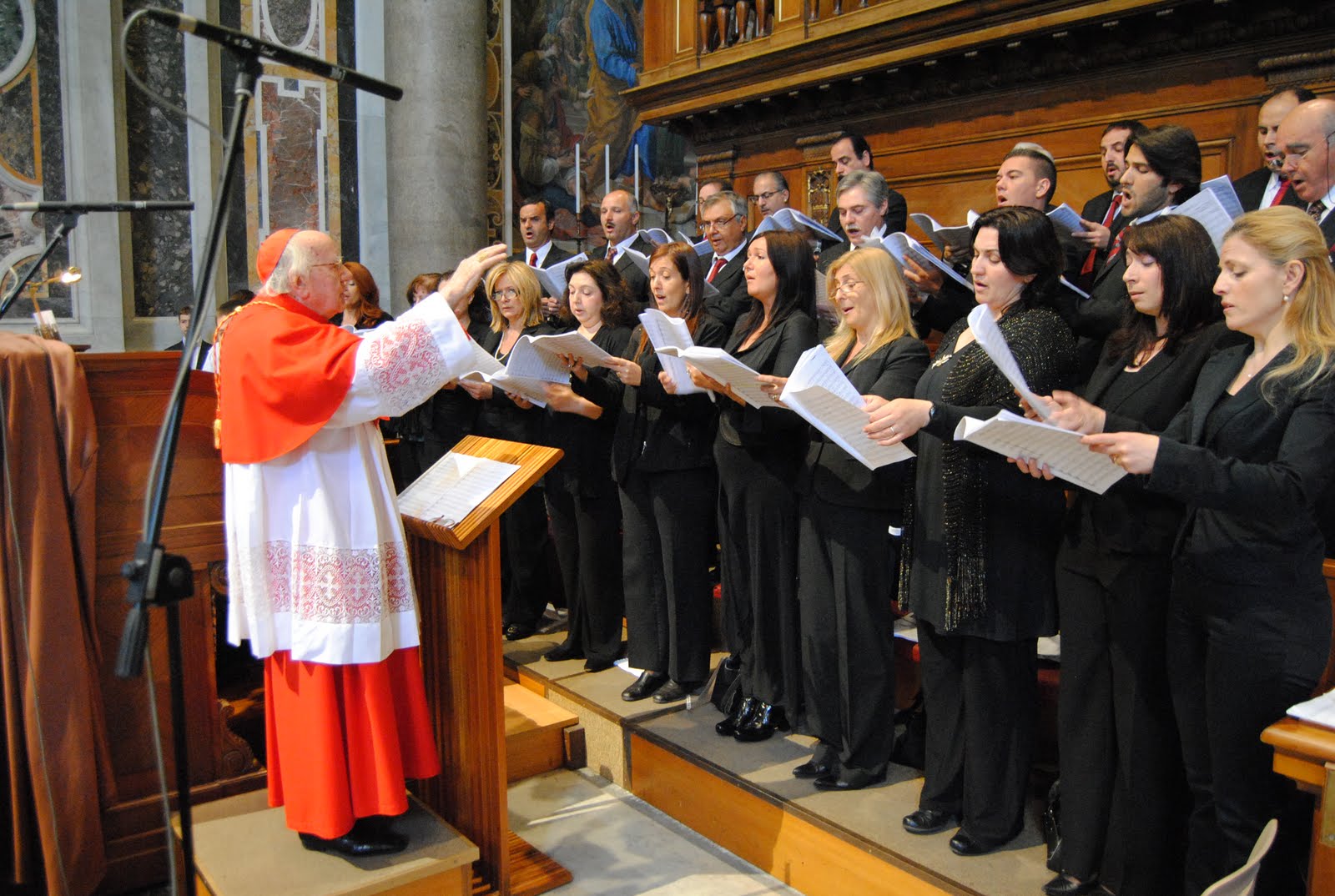
Cardinal Domenico Bartolucci, Cardinal Deacon of SS. Nomi di Gesu e Maria in Via Lata has passed away on Monday, 11 November 2013 at the age of 96. He was the Director of the Sistine Chapel Choir (1956-1997), better known as his title of the Director Master of the Pontifical Musical Chorus of the Sistine Chapel.

http://www.gcatholic.org/hierarchy/data/cardB16-3.htm#45954

Jan2011Nov2010BartolucciReuters

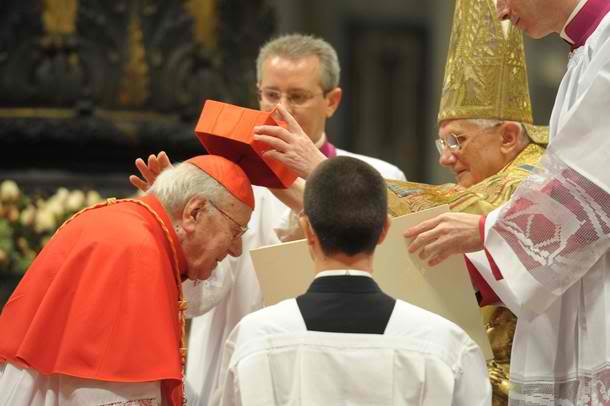
Cardinal Bartolucci was created Cardinal in 2010 by Pope Benedict XVI in his third Cardinal creation consistory and he was a longtime Director of the Sistine Chapel choir, a great conductor and composer of sacred and liturgical music, for over 41 years from 1956 to 1997. Cardinal Bartolucci retired in 1997, but even then, he still conducted his beloved choir and created more beautiful music for worship after he retired. He was honoured by Pope Benedict XVI for his longtime service to the Church by the bestowal of the red hat of a Cardinal in 2010, when he was 93.

brandmuller xvi

We pray for Cardinal Bartolucci, that he will rest in peace, and God will reward him for all his hard and great work as the long time servant of God through music as the conductor, director, and composer of the Papal liturgical music and sacred music through the Sistine Chapel choir  and his numerous other contributions to the Universal Church and for the Lord’s sake. May the Lord welcome him into His embrace in heaven and give him eternal rest and happiness that he deserved.

With the passing of Cardinal Bartolucci, the College of Cardinals now stands at 200 members, with 109 Cardinal-electors and 91 Cardinal non-electors.

There are now 11 Cardinal-elector vacancies in the College of Cardinals, 12 vacant Cardinal Titles (for Cardinal Priests) and 9 vacant Cardinal Deaconries (for Cardinal Deacons)

Tuesday, 3 September 2013 : 22nd Week of Ordinary Time, Memorial of St. Gregory the Great, Pope and Doctor of the Church (Scripture Reflection)

Liturgical Colour : Green or White

Dear brothers and sisters in Christ, we celebrate today the great feast of one principal saint of Christendom, none other than St. Gregory the Great, also known as Pope St. Gregory the Great who lived and reigned as Pope in the turn of the seventh century after the birth of Christ. He lived during the time of troubles, of the Dark Ages Europe, after the fall of the Roman Empire in Western Europe, with barbarians plundering the former lands of the Empire and settling in them as permanent settlers.

Even Rome and Italy at the time the birth of Pope St. Gregory the Great was under the authority and power of the Ostrogoths, one of the Gothic barbarian peoples who had settled in Italy after the fall of the Empire in the west. The Ostrogoths adopted the Arian heretic belief, and the predecessors of Pope St. Gregory the Great, as the Pope and the Bishop of Rome, worked hard to convert them to the true faith of the Apostles and reject their heretical beliefs.

Pope St. Gregory the Great lived through a time of great difficulties before he became Pope in 590 AD. The Ostrogothic kingdom went through a series of civil wars and internal conflicts, and together with the reconquest campaign by the Eastern Roman Empire, which saw Italy and Rome back at the hand of the Empire, had wrecked much of the local population, ravaged by warfare and deadly disease.

On the backdrop of these events, Pope St. Gregory the Great lived his early life and his adult years, and yet, he grew up to be a pious, zealous, and well educated man, who joined the religious life and became a monk. He was deeply devoted to Christ and immersed himself in his religious devotions as a monk, and prayed fervently and worked hard for the sake of God. Even after his election to the See of Peter, he remained the same, and continued his good works for the sake of God and God’s holy people.

Most importantly, Pope St. Gregory the Great reinvigorated the Church and its missionary efforts, in spreading the faith and the Holy Gospels to the pagan peoples and to the heretics who had walked away from the true path of God, the path of salvation. He sent many missionaries to the far ends of Christendom, to England through St. Augustine of Canterbury, and to other parts of Europe, converting many to the faith in God, and bringing many souls to salvation.

Not only that, Pope St. Gregory the Great was truly irreplaceable for his crucial role in the reform of the Church, particularly in its liturgy and rules of worship in the Mass. Both the Mass we have today, in all its forms, and the Divine Liturgy that our brethren of the Eastern Churches celebrate can trace their origins to the reforms and changes made by Pope St. Gregory the Great, the holy and great reformer Pope.

If you find the name Gregorian Chant familiar, yes, this wonderful music of worship is named after this great Pope, who reformed Church music in such a radical way, that it totally changed the landscape of divine song and songs of worship over the centuries even until today. To Pope St. Gregory the Great, the Lord our God in Jesus Christ is so great and glorious in heaven, and so profound is His might and power, that we ought to honour Him the best way we can with our abilities and senses, and hence, his reforms of the Mass and the Church music in the Gregorian chants.

Pope St. Gregory the Great gave much of his love and care for others, for the poor through charity, and for everyone through his dedicated and loving actions in Christ. He brought the Lord close to everyone through his own deeds and words, and indeed, through his copious writings. Many of Pope St. Gregory the Great’s writing remained and became source of inspiration for our faith, just as it had been during his time as Pope. He worked hard to defend the people against heresies and against the temptations of the devil, doing as much as he could to bring more and more souls towards salvation.

Yes, brethren, this great and saintly Pope truly is worthy of heaven, and he preached with the authority of Jesus Christ the Lord and Saviour of all, who is so mighty and all-powerful, that even the evil spirits obeyed Him, as we heard in the Gospel today. Even the devil would kneel before the Lord crucified, the Almighty Creator of all, for He is the light of the world, and no darkness would be able to stand before Him.

We are the children of light, brothers and sisters in Christ, and as long as we do the will of God, and follow His ways, we will always reflect His brilliant light, and the devil will have no power over us, for he is doomed to destruction and eternal torture, while we who are saved in Christ are fated to be in the eternal light of God and enjoy the fruits of our faith, the fruits of our salvation. Fear not, brethren, for our Lord and God who loves us, desires not our death and destruction, as what He truly wishes for us, is to live, and not just any life, but an eternal life filled with love and true joy in Him.

That was why He sent us many help along the way, all His saints, including Pope St. Gregory the Great, whom we talked about just before. Through their hard work, we have known the Lord our loving God, and through their labours, we have received the teachings of the Lord and grow to understand the extent of His great love and dedication to all of us. However, the work did not just stop there, brethren, as even today, much work awaits us, and we too are called to be the saints and the apostles of our own time.

Dear brothers and sisters in Christ, therefore, inspired by the examples of Pope St. Gregory the Great, and by the love and sacrifice of our Lord, through which He showed us His infinite love, let us also be proactive, in all our dealings, all of our words and all of our actions, that we will always reflect the love of God with zeal, and therefore obey His will, that is to love, to love Him with all our hearts and all our strength, and do the same to our fellow brothers and sisters.

May the Lord our God who showed us His mercy and love, and who rebuked evil spirits from the hearts of men that we may be clean and pure and worthy of Him, bless us, strengthen us, and empower us, that we will be reunited with Him when He comes again in glory and bring us to eternal life with Him, forever and ever. Amen.

Tuesday, 3 September 2013 : 22nd Week of Ordinary Time, Memorial of St. Gregory the Great, Pope and Doctor of the Church (Gospel Reading)

Liturgical Colour : Green or White

Luke 4 : 31-37

Jesus went down to Capernaum, a town of Galilee, and began teaching the people at the sabbath meetings. They were astonished at the way He taught them, for His word was spoken with authority.

In the synagogue there was a man possessed by an evil spirit, who shouted in a loud voice, “What do You want with us, Jesus of Nazareth? Have You come to destroy us? I recognise You : You are the Holy One of God.”

Then Jesus said to him sharply, “Be silent and leave this man!” The evil spirit then threw the man down in front of them, and came out of him without doing him harm.

Amazement seized all these people, and they said to one another, “What does this mean? He commands the evil spirits with authority and power. He orders, and you see how they come out!” And news about Jesus spread throughout the surrounding area.

Tuesday, 3 September 2013 : 22nd Week of Ordinary Time, Memorial of St. Gregory the Great, Pope and Doctor of the Church (Psalm)

Liturgical Colour : Green or White

Psalm 26 : 1, 4, 13-14

The Lord is my light and my salvation – whom shall I fear? The Lord is the rampart of my life; I will not be afraid.

One thing I ask of the Lord, one thing I seek – that I may dwell in His house all the days of my life, to gaze at His jewel and to visit His sanctuary.

I hope, I am sure, that I will see the goodness of the Lord in the land of the living. Trust in the Lord, be strong and courageous. Yes, put your hope in the Lord!

Tuesday, 3 September 2013 : 22nd Week of Ordinary Time, Memorial of St. Gregory the Great, Pope and Doctor of the Church (First Reading)

Liturgical Colour : Green or White

1 Thessalonians 5 : 1-6, 9-11

You do not need anyone to write to you about the delay and the appointed time for these events. You know that the Day of the Lord will come like a thief in the night. When people feel secure and at peace, the disaster will suddenly come upon them as the birth pangs of a woman in labour, and they will not escape.

But you, beloved, are not in darkness; so that day will not surprise you like a thief. All of you are citizens of the light and the day; we do not belong to night and darkness. Let us not, therefore, sleep as others do, but remain alert and sober.

For God has not willed us to be condemned but to win salvation through Christ Jesus our Lord. He died for us so that we might enter into life with Him, whether we are still awake or already asleep. Therefore encourage one another and build up one another, as you are doing now.

Wednesday, 21 August 2013 : 20th Week of Ordinary Time, Memorial of St. Pius X, Pope (Scripture Reflection)

Liturgical Colour : White

Dear brothers and sisters in Christ, today, we listen to the fairness of our God, the upright nature of His words, and the love He showed upon all of us through His constant help throughout time. He showed His love and mercy upon us, and He is just to all of His children. We who have been marred by sin and evil, and the ones who should have been cast with the devil into the eternal fire of hell, had been brought from the domain of death, back into the land of the living, just as the owner of the vineyard had brought those who are unemployed on the streets to work on his field.

Indeed, He has brought us from our oppressors, that is the devil and his angels, at a great price, a price that He paid with nothing other than His own Most Precious Blood, that redeemed all of us, from the price of sin that had been placed on us ever since we first sinned against God and disobeyed against His will and His commandments. He paid for all of us with that Most Precious Body and Blood of His, that we will not die, but live eternal with Him, He who loves us and He who wants to forgive us from our sins and impurities.

He had called us all from the darkness to come into the light, to come for the salvation that He had prepared for us. He made a promise, a covenant with all of us, that we will be rewarded with life eternal in Him, as we enter into our new life in Him, just as the labourers were taken out of their joblessness and life in the streets, into the new life in the service of the Lord in His field, His vineyard. Each of us, brothers and sisters, given a new chance of life, that we may truly receive a reward of eternity at the end of our labours and journey in this world.

Yes, and just like what we heard in the First Reading today, we are like the trees that goes around seeking a tree to be king over all of us, to be that source of leadership and guidance in our respective lives, to be the light guiding us through the darkness of this world. And indeed, while all the regal and great trees, well beloved and renowned, like the fig tree and the vine, did not want to abandon all that they have for the trees’ sake, Jesus is indeed like the bramble vine, who would want to lower Himself to be our king.

Why so? It is because becoming our king is not an easy thing for Jesus, as His ministry in this world would have shown. Many people opposed Him, and many paid a deaf ear to His messages and His teachings, and many openly defied Him and questioned Him, not least of all the leaders of the people, the chief priests and the Pharisees. He stripped everything off Himself to be our King, the king of slaves and the king of the oppressed and the abandoned ones.

That such that even He went through so much, as our leader and our King, and our Master, being crowned with the painful crown of thorns, to indeed signify that He is our king, and not just like any earthly kings, but a true king, one with His people always forefront in His heart and in all His concerns. He loves us, brothers and sisters, and His love for all of us, without exception, is so much that He was willing to endure all our sufferings and supposed punishments, and drink the cup of suffering that had been prepared for Him.

He did not shirk from the huge and burdensome task that awaited Him, and instead He went on, being led like a lamb brought to its slaughterhouse, and although He is innocent, He wanted to endure all those that were intended for all of us. For what, brothers and sisters in Christ? None other than the salvation and the rescue of our souls from the eternal damnation in hell! None other than the eternal separation that we would have to endure for all times, for all eternity, away from our Lord and God who loves us so much.

Yes, Jesus our Lord and God wants us to be with Him, instead of being in the fires and suffering of hell. He cares for us, He showered us with His love and mercy, especially through no other act greater than the surrendering of His own life, as the perfect and unblemished sacrifice for our sins, in His death on the cross. That was why He gave us the one and only means to salvation, that is none other than His own flesh and blood, which He gave to all of us and offered to all of us, at the Last Supper He had with His disciples.

That was exactly what Pope St. Pius X, the great early twentieth century Pope whose feast we are celebrating today, championed, on the emphasis on the Most Holy Body and Blood of Christ, the Most Holy Eucharist through which He had given us the means to salvation. Pope St. Pius X was born Giuseppe Melchiorre Sarto, and he became a priest in his home diocese of mantua, eventually rising up the ranks to be bishop, and then the Cardinal Patriarch of Venice. He was elected as Pope Pius X, the 257th Pope and the 256th successor of St. Peter in 1903.

Pope St. Pius X was truly a great and holy Pope determined to reform the Holy Church and all its practices to better reflect its task as the bearer and medium of God’s salvation to all of us, the member of that One Body of Christ in the Church. Most important of all, He reformed the rules of the Holy Communion, such that then even small children would be able to receive the Most Precious Body and Blood of Christ our Lord. Previously, only full fledged adults were able to receive Holy Communion, but with the reform spearheaded by Pope St. Pius X, those children were opened the way of salvation through the receiving of the Holy Eucharist.

To Pope St. Pius X, there is no better path and way to salvation, and there is no better gate to salvation than that of the Most Precious Body and Blood offered to us, from the Last Supper, down to us through the Holy Mass that we celebrate regularly. In them, we find the fullness and completeness of the Lord’s promise and dedication to us, in suffering the blows meant for us, that we will not die but live a life eternal in the bliss of heaven. For his hard work for the sake of the Lord, through the promotion of the early reception of the Eucharist, and also the regular reception of the Holy Eucharist, he was known as the Pope of the Eucharist.

Pope St. Pius X also reformed much aspect of the Church, ensuring that the Church can reflect better the ways through which it can persevere in the ever-changing and increasingly hostile world, to spread the words of the Lord’s Gospel to all mankind. He reformed the Church music by greatly promoting and reviving the usage of the Gregorian Chant, which beauty for the worship of the Lord, we can still enjoy today. He truly had dedicated his life and work for the sake of God, His Church, and His people, and he is indeed an example that all of us should try to emulate in our own lives.

Therefore, brothers and sisters in Christ, reminding ourselves most importantly of the love and attention God had for us, and the blessings He had given us, through His Son, Jesus, who had shed His own flesh and blood, and His life for us, let us resolve to love Him more and more, let us revere Him in the Most Holy Eucharist by attending the Mass regularly and reverently, and accepting Him into ourselves as we eat His Body and His Blood in the Holy Communion. Pray for us, Pope St. Pius X, that we will grow to love the Lord ever more in the Most Holy Eucharist. May the Lord in the Eucharist remain with us and bless us always. Amen.