Saturday, 20 September 2014 : 24th Week of Ordinary Time, Memorial of St. Laurent Imbert, Bishop and Martyr; St. Jacques Chastan, Priest and Martyr; St. Andrew Kim Taegon and Companions, Martyrs (Homily and Scripture Reflections)

Liturgical Colour : Red

Dear brothers and sisters in Christ, in today’s readings we heard two great exhortations, by St. Paul in his letter to the faithful and the Church in Corinth on the nature of the resurrection of the faithful and then the parable of the sower and the seeds by Jesus who told them what happened to the various seeds that ended up in different conditions.

In the two readings, we can see a great link and similarity, as both of them refer to the growth and the sowing of seeds, and what are these seeds? They are none other than the seeds of faith, hope and love, the three cardinal virtues of Christian life, as these have been planted in us, within our hearts and souls. And the purpose for these seeds are so that we may truly be transformed from our sinful, mortal and earthly bodies, to be truly worthy of our Lord and God, in a new spiritual body as mentioned by St. Paul, that is a body filled with the wonderful flowers and fruits of faith, of hope and of love.

But Jesus our Lord mentioned in His parable of the sower, that this would not be an instantaneous, automatic or easy process. He clearly highlighted the problems, dangers and great challenges that line up against us, to prevent us from achieving that state of spiritual maturity and worthiness, that we end up to continue living in sin and darkness rather than be accepted into the light.

Mankind had lived in this world and as such are bound to the ways of this world, that is the way of the flesh, and the ways of the world. That had been the way of mankind ever since the days of our first ancestors, after they had sinned and been cast away from the presence of God, and had to endure the sufferings of the earth. Ever since then, mankind had lived on earth and obeyed the ways of the world rather than the ways of the Lord.

What we need in order to escape this bonds and prison of the world is by cultivating and growing the seeds of faith, hope and love which God had planted in us, through His Spirit. It is however, as mentioned, not going to be an easy path. The parable of the sower in fact showed us that the devil is always at work in order to prevent us from ever achieving salvation in God, and instead perish with him together in hell.

Jesus mentioned that the seeds fell on first the roadside and got eaten by the birds. In this case, He also explained how Satan is always at work as he desired our total annihilation, as a form of his vengeance and continuous rebellion against God. As we mankind are God’s greatest and most beloved creation, there is indeed nothing more sinister and evil for Satan to commit his defiance against God other than by subverting mankind and bringing them into sin.

And Satan has much in his possession in order to execute this extremely well. This is because many of us are like the seeds that fall on the rocky ground. We listened to the word of God and we received the words of the Good News of Christ, but these did not take root in our hearts. It is like we heard these words from our ears, but it then remains just a superficial attachment in any, and indeed, in our actions, in our own words and deeds, they represent nothing that the Lord had taught us.

This is a fertile ground for Satan to make his attack upon us, and it is easy for him to sow the seeds of dissent and unfaithfulness in our hearts. And indeed, the same also applies to the kind of those who are like the seeds that grow on the soil with thistles. Thistles are plants that can spread and grow on the surfaces of other plants, taking precious nutrients as a parasite to the host plant, which then eventually is suffocated, impoverished and therefore die.

This is one main way through which Satan made his attacks, that is through the pleasures of the flesh, and the desires of men. He made his attack on us through these, so as to ensnare us on our way to reach the Lord, and therefore fail to reach salvation in God. The thistle represents the temptations and the corruptions which Satan is trying very hard to impose on us, so that we may obey him instead of God.

For us to truly be able to achieve salvation, we have to take heed of what Jesus and St. Paul had conveyed to us on this day. This is namely that we have to abandon our earthly ways, and all the things we used to do in this world, which are not in accordance with the will of God, which He had revealed through Jesus His Son. In this manner, then we can have that rich soil in us, upon which the Word of God and the seeds of faith, hope and love in us may form deep roots and grow strong.

And perhaps, by sharing the lives of the saints which feast we are celebrating today will inspire us even more to follow God with all of our hearts. Today, we celebrate the feast day of St. Laurent Imbert, Vicar Apostolic of Korea, one of the first shepherds of the Church and the faithful in Korea, and also St. Jacques Chastan, another missionary to Korea, with his many companions in martyrdom, both missionary, laity and priests alike, the Martyr Saints of Korea.

Korea at that time, as it had been for about two hundred years, ever since the Faith first came there, was truly a very hostile place for the Church and the faithful. There were open and state-led persecution of the Christian faithful, who were seen as disloyal, traitors and enemies of the state. Many were made to choose between keeping their faith and death. Many abandoned Christ, but there were also many of those who remained faithful to the Lord and suffered holy martyrdom.

St. Laurent Imbert was the Vicar Apostolic of Korea, a missionary part of the French mission to Korea. He faithfully worked in shepherding the people entrusted under his care, and more and more come to believe in Christ and achieved salvation through his dedication. St. Laurent Imbert however, heard that the persecution of the faithful might cease, if he and the other leaders of the faithful would surrender themselves to the authorities.

The suffering of the faithful at the time was really great, and many were brought to martyrdom every day. Thus, in the spirit of the words of Jesus, St. Laurent Imbert, who was in hiding at the time, told his people, that he would surrender himself to the authorities, in exchange for the safety and protection of his flock. He mentioned the good shepherd, where Jesus mentioned that the good shepherd lay down his life for his sheep.

St. Laurent Imbert followed the example of Jesus and in his love and faith for his flock, he thought only of the best for them. Thus, he even willingly surrendered himself, even while knowing that his fate most likely would be death. He thus gave a great example to the faithful, which we too should follow and emulate in our lives. Even though the martyrdom and persecution would continue even after the martyrdom of St. Laurent Imbert, as the authorities reneged on their promises, the blood and faith of these holy martyrs continued to cause more and more faith to blossom and prosper among the persecuted people of God.

Therefore, brothers and sisters in Christ, let us all come to a greater realisation of how great is the amount of effort and work that we should input into our lives, so that we may grow deeper and stronger in our faith, our hope and our love, that we may indeed bear fruit, that is the fruits of the Holy Spirit.

May all of us be ever more faithful and devoted to our Lord, so that our Lord may find us worthy of Himself and reunite us with Him together in the company of St. Laurent Imbert, St. Jacques Chastan, St. Andrew Kim Taegon and all the holy martyr saints of Korea, and together with the other holy men and women, as well as the angels. God bless us all. Amen.
New Cardinals and their assigned Churches in Rome, Consistory of 22 February 2014

On the Feast of the Chair of St. Peter, on Saturday, 22 February 2014, the Vicar of Christ and Bishop of Rome, Leader of the Universal Church, Pope Francis elevates 19 new Cardinals to the Cardinalate by the bestowal of the red biretta, 15 of which are of the order of priests (Cardinal Priests) and 4 of which are of the order of deacons (Cardinal Deacons).

3 of the new Cardinals are non-electors, being above the age of 80, appointed purely as honorary Cardinals for their service to the Church, and the other 16 Cardinals are voting-age Cardinals (below 80), and will be eligible to vote for the next Pope in the next Conclave until they reach the age of 80.

The College of Cardinals now stands at 218 members, with 122 Cardinal-electors and 96 Cardinal non-electors as of 22 February 2014.

In total, 2 new Cardinal churches in Rome are created, 1 for Cardinal Titular church and 1 for Cardinal deaconry.There are as of now, 0 vacant Cardinal Title, and 6 vacant Cardinal Deaconries.


Cardinal Deaconries :

1. Pietro Cardinal Parolin, Cardinal Secretary of State

Cardinal Deaconry of Ss. Simone e Giuda Taddeo e Torre Angela (New Deaconry)


2. Lorenzo Cardinal Baldisseri, Secretary of the Synod of Bishops and College of Cardinals

Cardinal Deaconry of S. Anselmo all’Aventino


3. Gerhard Ludwig Cardinal Muller, Prefect of the Congregation for the Doctrine of the Faith

Cardinal Deaconry of S. Agnese in Agone


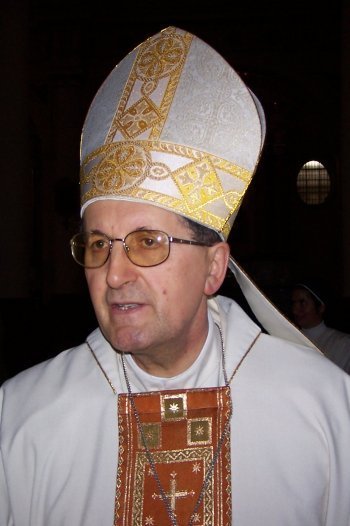
4. Beniamino Cardinal Stella, Prefect of the Congregation for Clergy

Cardinal Deaconry of Ss. Cosma e Damiano


Cardinal Titles :

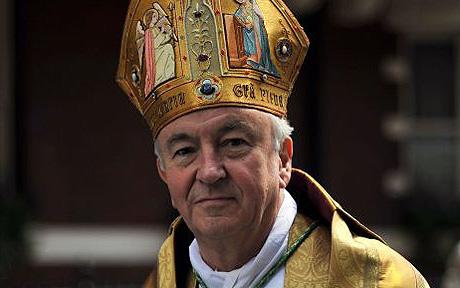
1. Vincent Gerard Cardinal Nichols, Metropolitan Archbishop of Westminster (UK)

Cardinal Title of Ss. Redentore e S. Alfonso in Via Merulana


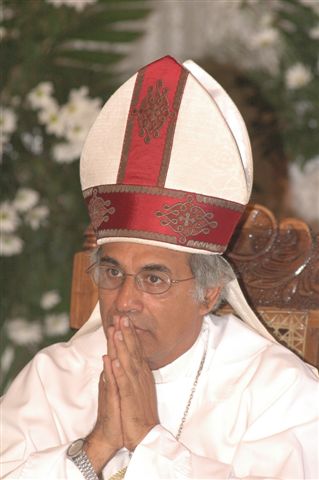
2. Leopoldo Jose Cardinal Brenes Solorzano, Metropolitan Archbishop of Managua (Nicaragua)

Cardinal Title of S. Gioacchino ai Prati di Castello


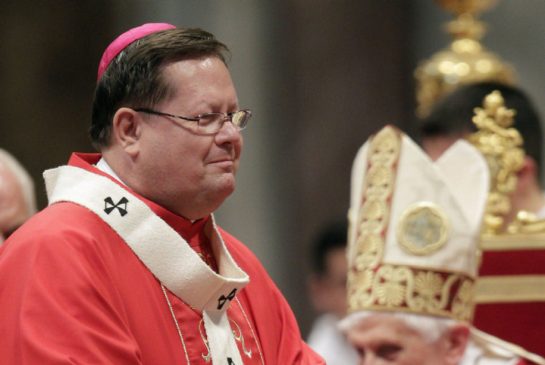
3. Gerald Cyprien Cardinal Lacroix, Metropolitan Archbishop of Quebec (Canada)

Cardinal Title of Giuseppe all’Aurelio


4. Jean-Pierre Cardinal Kutwa, Metropolitan Archbishop of Abidjan (Ivory Coast/Cote d’Ivoire)

Cardinal Title of S. Emerenziana a Tor Fiorenza


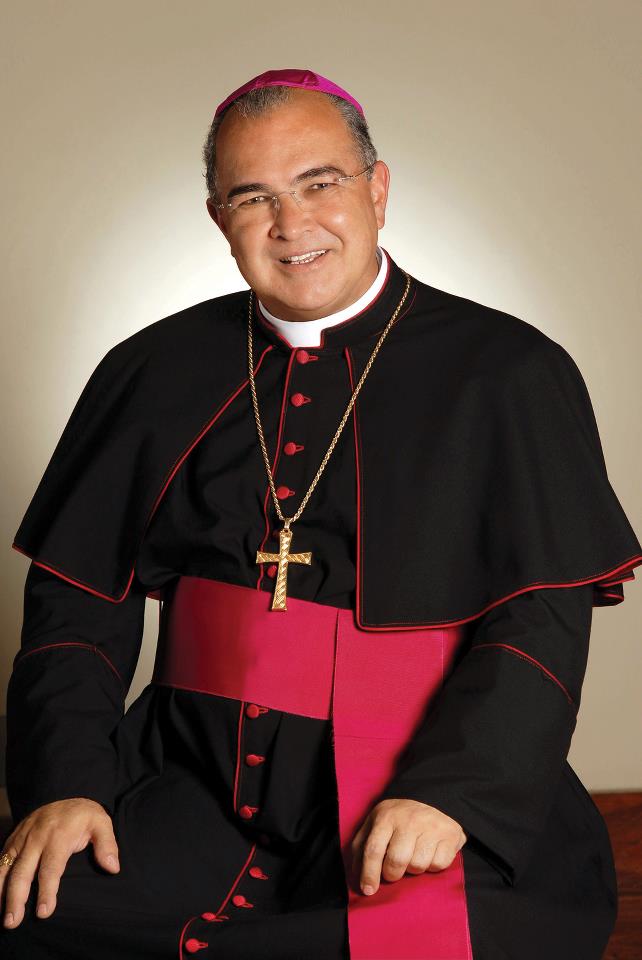
5. Orani Joao Cardinal Tempesta, Metropolitan Archbishop of Sao Sebastiao do Rio de Janeiro (Brazil)

Cardinal Title of S. Maria Madre della Provvidenza e Monte Verde


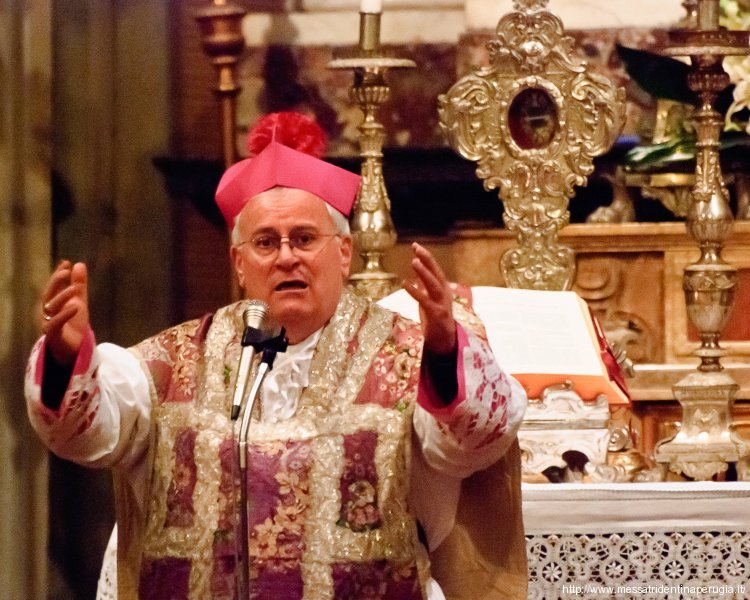
6. Gualtiero Cardinal Bassetti, Metropolitan Archbishop of Perugia-Citta della Pieve (Italy)

Cardinal Title of S. Cecilia


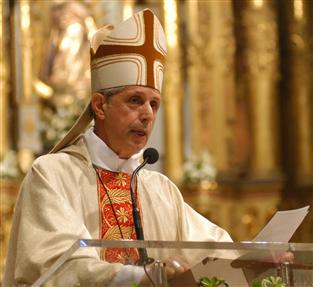
7. Mario Aurelio Cardinal Poli, Metropolitan Archbishop of Buenos Aires (Argentina)

Cardinal Title of S. Roberto Bellarmino


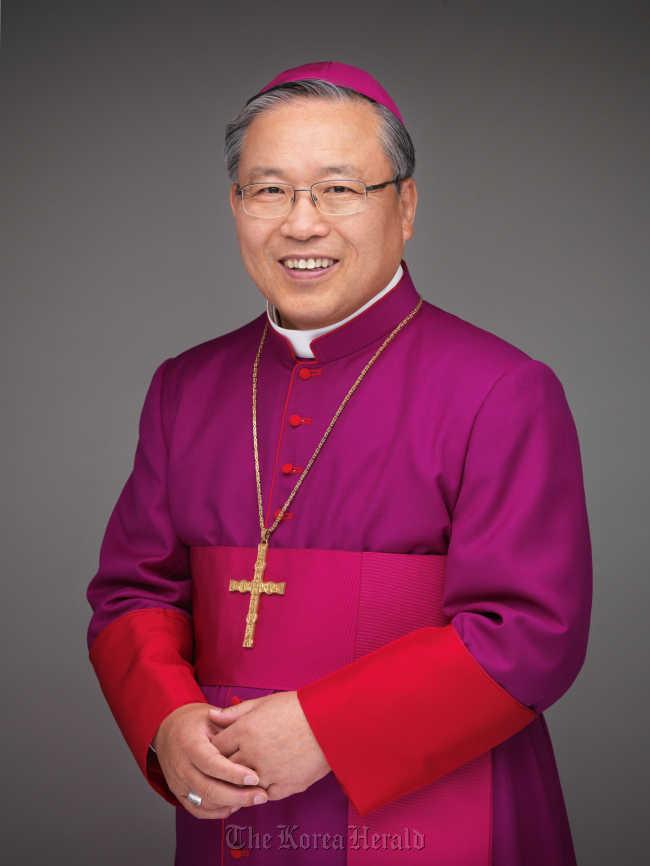
8. Andrew Cardinal Yeom Soo-jung, Metropolitan Archbishop of Seoul (South Korea)

Cardinal Title of S. Crisogono


9. Ricardo Cardinal Ezzati Andrello, Metropolitan Archbishop of Santiago (Chile)

Cardinal Title of Ss. Redentore a Valmelaina


10. Philippe Nakellentuba Cardinal Ouedraogo, Metropolitan Archbishop of Ouagadougou (Burkina Faso)

Cardinal Title of S. Marie Consolatrice al Tiburtino


11. Orlando Beltran Cardinal Quevedo, Metropolitan Archbishop of Cotabato (Philippines)

Cardinal Title of S. Maria ‘Regina Mundi’ a Torre Spaccata


12. Chibly Cardinal Langlois, Bishop of Les Cayes (Haiti)

Cardinal Title of S. Giacomo in Augusta (New Title)


13. Loris Francesco Cardinal Capovilla, Titular Archbishop of Mesembria, Personal Secretary to Blessed Pope John XXIII

Cardinal Title of S. Maria in Trastevere


14. Fernando Cardinal Sebastian Aguilar,  Metropolitan Archbishop Emeritus of Pamplona y Tudela (Spain)

Cardinal Title of S. Angela Merici


15. Kelvin Cardinal Edward Felix,  Metropolitan Archbishop Emeritus of Castries (Saint Lucia)

Cardinal Title of S. Maria della Salute a Primavalle

19 Cardinals to be created at the Consistory of 22 February 2014

On Sunday, 12 January 2014, at the Angelus of the Feast of the Baptism of the Lord, Pope Francis announced that 19 new Cardinals will be created at the consistory planned to be held on the Feast of the Chair of St. Peter, 22 February 2014.


Here are the names of the new Cardinals or Cardinal-elects, and some short explanation on them :

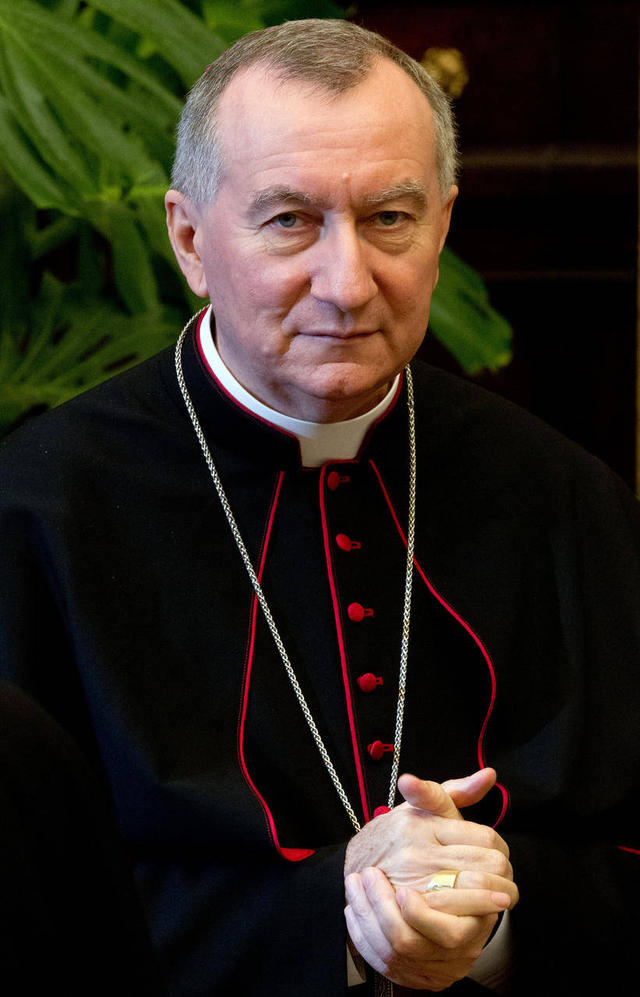
1. Archbishop Pietro Parolin, Secretary of the Secretariat of State – 58 (Age)

1272287

Being the highest position in the Church just below that of the Pope himself, Archbishop Parolin as the Secretariat of State is a certain candidate for the Cardinalate to be made at this consistory, and the position itself is explicitly stated to have to be held by a Cardinal (As Cardinal Secretary of State)


2. Archbishop Lorenzo Baldisseri, Secretary General of the Synod of Bishops – 73

images

Archbishop Lorenzo Baldisseri is also the Secretary of the College of Cardinals and therefore was the Secretary of the Conclave that elected Pope Francis on 13 March 2013.

It was reported and confirmed by sighting that the Pope had placed his own red zucchetto (skullcap) on the head of Archbishop Baldisseri, which by ancient custom (last used by Blessed Pope John XXIII on the Secretary of that time, Monsignor Alberto di Jorio in 1958) mark that the new Pope wants to bestow the red hat on the prelate. Hence, the elevation of Archbishop Baldisseri is pretty much certain.


3. Archbishop Gerhard Ludwig Muller, Prefect of the Congregation for the Doctrine of the Faith – 66

Muller

As the Prefect of a Congregation, and one as important as the Congregation for the Doctrine of the Faith once held by Cardinal Joseph Ratzinger before he was elected Pope Benedict XVI in 2005, Archbishop Gerhard Ludwig Muller is a certain candidate for the Cardinalate, and sure enough, he is one of the 19 appointed.


4. Archbishop Beniamino Stella, Prefect of the Congregation for Clergy – 72

Stella

Similar with Archbishop Muller, as the Prefect of an important Roman Curia Congregation, Archbishop Stella is a certain candidate for the Cardinalate, and as a recent appointee by Pope Francis, this made his elevation very certain indeed.


5. Archbishop Vincent Nichols, Metropolitan Archbishop of Westminster (United Kingdom) – 68

BRITAIN-RELIGION-ARCHISHOP-WESTMINSTER

With the problems that affected Cardinal Keith O’Brien early of last year and his retirement, the United Kingdom has no leading figure, which Archbishop Vincent Nichols, as the Archbishop of Westminster, the Primatial See of the United Kingdom as the obvious choice for the Cardinalate.


6. Archbishop Leopoldo Jose Brenes Solorzano, Metropolitan Archbishop of Managua (Nicaragua) – 64

Solorzano

As his predecessor was made Cardinal in 1985, and had been 7 years as a non-elector, it was natural that Archbishop Solorzano is made a Cardinal, representing the Central American region.


7. Archbishop Gerald Cyprien Lacroix, I.S.P.X., Metropolitan Archbishop of Quebec (Canada) – 56

gerald_cyprien_lacroix.jpg.size.xxlarge.promo

The second youngest of the newly appointed Cardinals, as the Primate of Canada by virtue of being the Prelate of Quebec, it is natural for Archbishop Lacroix to be appointed Cardinal. His predecessor, Cardinal Marc Ouellet, is the current Prefect of the Congregation for Bishops and was a leading papabili of the 2013 Papal Conclave.


8. Archbishop Jean-Pierre Kutwa, Metropolitan Archbishop of Abidjan (Cote d’Ivoire / Ivory Coast) – 68

Jean-Pierre Kutwa

With two of his immediate predecessors made Cardinals in 1983 and 2001 respectively, Archbishop Kutwa had a high chance of being appointed Cardinal. His appointment is a nod to the Church in Africa, a growing community of the faithful, one with the Universal Church.


9. Archbishop Orani Joao Tempesta, O. Cist., Metropolitan Archbishop of Sao Sebastiao do Rio de Janeiro (Brazil) – 63

Dom Orani João Tempesta

As the head of a Cardinalatial see, with all five of his immediate predecessors made Cardinals, and with the limelight gained from the 2013 World Youth Day in Rio de Janeiro, Archbishop Tempesta is a certain candidate for the Cardinalate.


10. Archbishop Gualtiero Bassetti, Metropolitan Archbishop of Perugia-Citta della Pieve (Italy) – 71

Bassetti

His long ago predecessor, Cardinal Vincenzo Gioacchino Pecci was elected Pope Leo XIII in 1878. Since then Perugia had had no Cardinal. This elevation of Archbishop Bassetti to the Cardinalate would honour the memory of Pope Leo XIII and give chance to other Italian Archdioceses to get the red hat besides the major, Cardinalate ones. Archbishop Bassetti is also known for his pastoral nature and hard work for his Archdiocese.


11. Archbishop Mario Aurelio Poli, Metropolitan Archbishop of Buenos Aires (Argentina) – 66

20130327134808

As the successor of Pope Francis as the Metropolitan Archbishop of Buenos Aires, Archbishop Poli is a natural and certain choice for the Cardinalate.


12. Archbishop Andrew Yeom Soo-jung, Metropolitan Archbishop of Seoul (South Korea) – 70

20120625000388_0

Among the three great Asian nations known for their Cardinals, namely Hong Kong (China), South Korea, and the Philippines, only South Korea at the moment has no Cardinal-elector. Hence, Archbishop Andrew Yeom is an almost confirmed choice for the Cardinalate, and indeed, he was chosen.


13. Archbishop Ricardo Ezzati Andrello, S.D.B., Metropolitan Archbishop of Santiago (Chile) – 72

02

Another Cardinalatial see in the Latin Americas, and therefore, Archbishop Ezzati Andrello is one of the few possible choices for the Cardinalate. Another Cardinal to increase the proportion of Latin America in the Sacred College of Cardinals.


14. Archbishop Philippe Nakellentuba Ouedraogo, Metropolitan Archbishop of Ouagadougou (Burkina Faso) – 68

Oua

One of his predecessor was made Cardinal by Pope Paul VI in 1965, and therefore Archbishop Ouedraogo was a potential candidate for the Cardinalate for Africa region.


15. Archbishop Orlando Beltran Quevedo, O.M.I., Metropolitan Archbishop of Cotabato (Philippines) – 74

Quevedo

A rather suprising choice because Archbishop Quevedo is already 74 and therefore is just one year from the mandatory retirement age, although this may be extended towards 80, as was quite common in recent years among Asian Cardinals.

Geographically the choice made sense because the Philippines does deserve more Cardinals, and so far the Cardinalatial sees only cover the north (Manila) and central (Cebu) portions of the country. A Cardinal from the southern island of Mindanao is a good sign indeed.


16. Bishop Chibly Langlois, Bishop of Les Cayes (Haiti) – 55

chibly_langlois

The youngest of the newly appointed Cardinals, from a relatively less important diocese in the Caribbean region. This choice is a nod both to the plight of the people of Haiti after the earthquake that happened a few years earlier, as well as the rising importance of the region to the Universal Church.


There are three Cardinal non-electors (over the age of 80) appointed in this Consistory, usually for their great and long contribution and dedication to the Church :


17. Archbishop Loris Francesco Capovilla, Archbishop-Prelate Emeritus of Loreto (Italy) – 98

Capovilla

The oldest of the newly appointed Cardinals at 98, likely the oldest person ever appointed a Cardinal. Archbishop Capovilla was renowned for being the long-time private secretary to Blessed Pope John XXIII.

As the aforementioned Pope will be canonised this coming April, it is an obvious nod to his memory that Archbishop Capovilla, coupled with his long and dedicated service, that he is made a Cardinal.


18. Archbishop Fernando Sebastian Aguilar, C.M.F., Metropolitan Archbishop Emeritus of Pamplona y Tudela (Spain) – 84

fernando-sebastian


19. Archbishop Kelvin Edward Felix, Metropolitan Archbishop Emeritus of Castries (Saint Lucia) – 80

rev_felix

Another appointee for the Caribbean region, even though being over 80, it was rather honorary in nature, but nevertheless it was to highlight the importance of the New World in the Universal Church.

Cardinabili List for the Cardinal Consistory of 22 February 2014

Here is my own list of the potential candidates for the Cardinalate, to receive the red biretta in the Consistory next month.

The final list is not yet known, and while some in this list may not be chosen, it is possible all of them are chosen, and there may be even names outside this list I have compiled too. Pray for them!


Cardinal Consistory of 22 February 2014 (Feast of the Chair of St. Peter)


Almost Certain


Curia

1. Archbishop Pietro Parolin, Secretary of the Secretariat of State

2. Archbishop Beniamino Stella, Prefect of the Congregation for Clergy

3. Archbishop Gerhard Ludwig Muller, Prefect of the Congregation for the Doctrine of the Faith

4. Archbishop Lorenzo Baldisseri, Secretary General of the Synod of Bishops


Residential

5. Patriarch Francesco Moraglia, Patriarch of Venice (Italy)

6. Archbishop Mario Aurelio Poli, Metropolitan Archbishop of Buenos Aires (Argentina)


Very likely


Residential

6. Patriarch Manuel Jose Macario do Nascimento Clemente, Patriarch of Lisbon (Portugal)

7. Archbishop Vincent Nichols, Metropolitan Archbishop of Westminster (United Kingdom)

8. Archbishop Andre-Joseph Leonard, Metropolitan Archbishop of Mechelen-Brussels (Belgium)

9. Major Archbishop Sviatoslav Shevchuk, Major Archbishop of Kyiv-Halyc (Head of the Ukrainian Greek Catholic Church)

10. Archbishop Jose Serafio Palma, Metropolitan Archbishop of Cebu (Philippines)

11. Archbishop Andrew Yeom Soo-jung, Metropolitan Archbishop of Seoul (South Korea)

12. Archbishop Cyprian Kizito Lwanga, Metropolitan Archbishop of Kampala (Uganda)

13. Archbishop Odon Razanakolona, Metropolitan Archbishop of Antananarivo (Madagascar)

14. Archbishop Orani Joao Tempesta, Metropolitan Archbishop of Rio de Janeiro (Brazil)

15. Archbishop Ricardo Ezzati Andrello, S.D.B., Metropolitan Archbishop of Santiago (Chile)


Possible


Curial

16. Archbishop Jean-Louis Brugues, O.P., Head of the Vatican Secret Archives and the Vatican Apostolic Library

17. Archbishop Salvatore Fisichella, President of the Pontifical Council for the Promotion of the New Evangelisation

18. Archbishop Vincenzo Paglia, President of the Pontifical Council for the Family


Residential

19. Archbishop Charles Joseph Chaput, O.F.M. Cap., Metropolitan Archbishop of Philadelphia (USA)

20. Archbishop Rogelio Cabrera Lopez, Metropolitan Archbishop of Monterrey (Mexico)

21. Archbishop Peter Takeo Okada, Metropolitan Archbishop of Tokyo (Japan)

22. Archbishop Ignatius Suharyo Hardjoatmodjo, Metropolitan Archbishop of Jakarta (Indonesia)

23. Patriarch Ibrahim Isaac Sidrak, Patriarch of Alexandria (Head of the Coptic Catholic Church)

24. Archbishop Francis Xavier Kriengsak Kovithavanij, Metropolitan Archbishop of Bangkok (Thailand)

25. Archbishop Eustaqio Pastor Cuquejo Verga, Metropolitan Archbishop of Asuncion (Paraguay)

26. Archbishop Cesare Nosiglia, Metropolitan Archbishop of Turin (Italy)