Tuesday, 29 April 2014 : 2nd Week of Easter, Memorial of St. Catherine of Siena, Virgin and Doctor of the Church (Scripture Reflections)

Liturgical Colour : White

Share your goods with one another, be with those among you who are lonely, sick, in trouble, or downtrodden, and comfort one another. Assure them that Christ is with them, through your actions. That is the essence of the lives of the early Christian communities, where the earliest converts to the cause of the Lord lived together in perfect harmony and in accordance to the will of God.

In doing what they had done, these predecessors of our faith has eliminated the temptations of this world, in the temptations of money, wealth and power, so that their lives might be completely dedicated to the cause of the Lord, as they had shown in how they lived and treated one another as brothers and sisters, children of the same God.

In essence, what these disciples of Christ had done is true communism and socialism, unlike what had been attempted by those we know as the communists and socialists of our days. They failed miserably, because they lacked God in their system, and they were unable to prevent human desire and intentions from interfering in their attempt to achieve true communism as the disciples of Christ had done.

This of course does not mean that what we have today is bad, or systems like capitalism is bad. It is unbridled capitalism, the desires and hunger for money and more money that is harmful, for it leads us to disregard for our fellow brethren especially those who are in need, and we are in the position where we are able to help them.

In reality of this world, what has been known as communism and socialism is nothing better than the tyranny of the minority and the powerful, that is in the name of championing equality and common good, certain people had taken advantage of the situation and ended up benefitting from what they had done. And these people are those in the positions of power, that is those who have the greatest access to many resources shared by the people, and ended up embezzling them for their own benefits and to the suffering of the people.

Greed, jealousy, fear, dishonesty, and many other vices we know well off are the many problems that mankind commonly face, and these are the main cause behind the problems that prevented the true implementation of common good for all mankind as the early Christian communities had done. That was why so many of the so-called communist and socialist states had failed miserably in achieving their aims, and instead became places where people suffer greatly.

On the other hand, however, we should also not take whatever is in the Scriptures literally. It does not mean that because the early Christian communities had lived as they did, sharing their goods with one another and selling their possessions to be shared, then we too must do the same. Indeed, in this era, in our world today, doing so would merely do more harm than good and it will also hinder us from having the opportunity to help those who are less fortunate.

Having possessions is in fact a great opportunity for us to give help to those who are in need. These possessions can be shared and yet we still have enough for ourselves. Remember that we should not impoverish ourselves to help others, as in fact this may hinder our ability to help them in the long run. What is the most important is that we have the heart for sharing, that is the heart to love another and the giving of ourselves to those who are in need.

It is the attitude that is important for us all, that we open our hearts to God and allow His love to fill us, and from us to the people around us, our brethren. We have to share this love and through the graces that God has given us, some of us have more and some have less, we should share it genuinely and sincerely, without coercion, unlike what those communist states had tried to do, and as what they are doing now in places like North Korea.

Today, we celebrate the feast of St. Catherine of Siena, a renowned saint, religious and mystic well-known for her deep faith in God, her holiness and her visions of the Lord. St. Catherine of Siena and her numerous works and writings are essential for the growth of faith in many of those who read them, and she also inspired countless others who followed in her footsteps, with some becoming saints eventually, like her.

St. Catherine of Siena desired that her life be one that is completely on tune with God in complete and total dedication, to the point of even declaring her perpetual dedication to Christ as His spouse. St. Catherine of Siena led a very holy and dedicated life, in deep prayers and fasting, which is often at odds with the society at the time, even clashing with her own family and their desires and plans for her.

St. Catherine of Siena threw far away her pride and human desires, seeking instead the solace and happiness that she could find in God alone, and she was among those called to be the instruments of God’s favour and love for mankind. Through her visions and works, she brought forth numerous writings that exemplified the excellence of her faith, that it shone out of her persona, and in her writings, God made His presence in this world known.

The holiness of St. Catherine of Siena and her dedication to the Lord, which at one point even brought her to be the one to convince the Pope to return to Rome to end the terrible and bitter schism which had divided the Church at that time, is our inspiration, and should indeed empower us to follow her footsteps and become more and more like her in our deeds and actions.

May the Lord continue to guide us in our lives, that we may dispel the superficial and the lies of Satan, and instead seek the truth in God as St. Catherine of Siena had once done. May God be with us, that we may be more and more like Him and when the time comes, may we all be found worthy of life everlasting. God bless us all. Amen.
Tuesday, 29 April 2014 : 2nd Week of Easter, Memorial of St. Catherine of Siena, Virgin and Doctor of the Church (Gospel Reading)

Liturgical Colour : White

John 3 : 7b-15

Jesus said, “You must be born again from above. The wind blows where it pleases and you hear its sound, but you do not know where it comes from or where it is going. It is like that with everyone who is born of the Spirit.”

Nicodemus asked again, “How can this be?” And Jesus answered, “You are a teacher in Israel, and you do not know these things! Truly, I say to you, We speak of what We know and what We witness to the things We have seen, but you do not accept Our testimony. If you do not believe when I speak of earthly things, what then, when I speak to you of heavenly things?”

“No one has ever gone up to heaven except the One who came from heaven, the Son of Man. As Moses lifted up the serpent in the desert, so must the Son of Man be lifted up, so that whoever believes in Him may have eternal life.”

Tuesday, 29 April 2014 : 2nd Week of Easter, Memorial of St. Catherine of Siena, Virgin and Doctor of the Church (Psalm)

Liturgical Colour : White

Psalm 91 : 1ab, 1c-2, 5

It is good to give thanks to the Lord, to sing praise to Your Name, o Most High.

For You make me glad with Your deeds, o Lord, and I sing for joy at the work of Your hands.

Tuesday, 29 April 2014 : 2nd Week of Easter, Memorial of St. Catherine of Siena, Virgin and Doctor of the Church (First Reading)

Liturgical Colour : White

Acts 4 : 32-37

The whole community of believers was one in heart and mind. No one claimed private ownership of any possessions, but rather they shared all things in common. With great power the Apostles bore witness to the resurrection of the Lord Jesus, for all of them were living in an exceptional time of grace.

There was no needy person among them, for those who owned land or houses, sold them and brought the proceeds of the sale. And they laid it at the feet of the Apostles who distributed it according to each one’s need. This is what a certain Joseph did. He was a Levite from Cyprus, whom the Apostles called Barnabas, meaning : “The encouraging one.”

He sold a field which he owned and handed the money to the Apostles.

Pope Francis to canonise 802 new saints on Sunday, 12 May 2013

http://www.romereports.com/palio/meet-the-soon-to-be-saints-of-the-catholic-church-english-9981.html#.UYurAcrTc78

Image

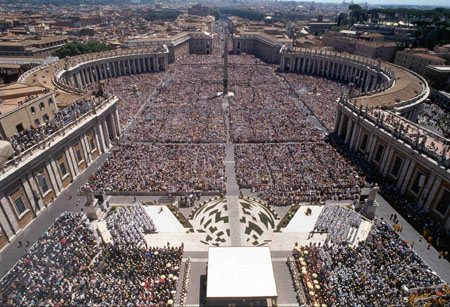
Pope Francis will canonise 802 new saints in a canonisation ceremony during the Mass on Sunday, 12 May 2013 at St. Peter’s Square.

Image

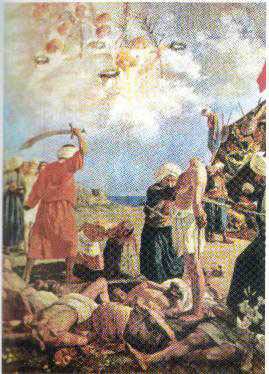
The most notable among the 802 new saints, are 800 among the saints themselves, who are the Martyrs of Otranto, who were martyred in 1480, when the rising Ottoman Empire raided Otranto, a city in Southern Italy, in one of their numerous raids against Christendom and the Lord’s faithful ones.

The 800 martyrs were the captured peoples of Otranto, who refused to abandon their faith and therefore live. They chose death and remain in the Lord instead. For this faith, they were declared martyrs and were beatified by Pope Clement XIV in 1771.

Image

Today, their relics and remains can be most obviously seen in the Chapel in Otranto are placed in glass display behind the Altar, as seen in the above picture. Led by Antonio Primaldo, the local tailor who led the townspeople in the invasion times, they were martyred by the Ottomans for defending their faith. They will henceforth be known as Saints Antonio Primaldo and Companions after their canonisation.

Image

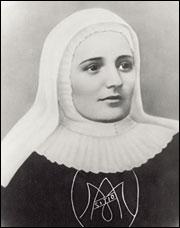
The other saint to be canonised with the Martyrs of Otranto is St. Laura Montoya, or also known as St. Laura of St. Catherine of Siena, who was a religious nun from Colombia, who worked hard to evangelise the local native populations, and tried her best to end prejudice and discrimination against the native Indian population. She will be Colombia’s first saint ever.

Image

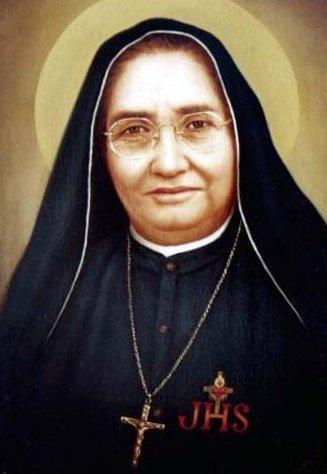
And the other saint to be also canonised with them is Mother Lupita, who was a Mexican nun that established a new religious organisation dedicated to the service of the poor and the less fortunate in Mexico, which had to often brave danger in their missions, because of the hostile situation at the time, with Mexico teeming with anti-Church sentiments. She will become the second female saint from Mexico.

The Martyr Saints of Otranto, Saint Laura, and Saint Lupita, pray for us.

Monday, 29 April 2013 : 5th Week of Easter, Memorial of St. Catherine of Siena, Virgin and Doctor (Scripture Reflection)

Dear brothers and sisters, let us not dwell in the false gods and idols, and remain true in our faith in God our Lord. Let us not be like the pagans at the time who failed to see the truth in God, and instead dwell in their imaginaries deities and gods, made out of earthly materials of stone, wood, silver, or gold. For these are merely empty vessels, vessels of deception by the devil to lure the faithful away from the true faith in God.

For today, dear brothers and sisters in Christ, even though we no longer see and worship idols made out of gold and silver, in the form of pagan and heathen false gods, the likes of Zeus, Hercules, and countless other gods, today in our world, a new kind of idols are rising, and not in the form of merely false gods in craven false imageries, but in the form of money and wealth itself.

For wealth and material possessions had been alluring to mankind for long ages past, and today, with God becoming ever more distant in the hearts of many, because of the rising secularisation and detachment of God from the world, due to the evil forces of relativism and scientific development, which marginalised God from the once central role He had in our daily lives, had become the new gods, which attempt to replace the One, True God in our hearts.

But they will not succeed, for God our Lord is mighty, and His love is everlasting, and despite all the attempts by the evil one to turn mankind away from God, God always stays ahead of Satan’s attempts, and send the helper and the advocate through the Holy Spirit, that inflames the hearts of many of the faithful to love God ever more, and strengthen our faith in Him.

Many of us had become myopic in our obsession with the material and the temporal possessions in this world, and so obsessed that we failed to look beyond our desires and obsession, in order to find the truth that is in the Lord and in His love, which He made manifest through Christ and His sacrifice on Calvary. Let us not limit ourselves to only viewing our desires and our needs, but let us always take a step back, and take some time to reflect, that our vision will not be then limited just to our desires, but our eyes will then be opened to see the plight of our fellow men, who are still suffering.

Today, we commemorate the feast day of a great saint and Doctor of the Church, that is St. Catherine of Siena. St. Catherine of Siena is a great saint and teacher of the faith through her numerous laters and literary works, which became inspiration for many Christians of her era and even today. She zealously defended the faith in God and zealously love Him in her actions and her life. She was also important in the bringing back of the Papacy from its self-imposed ‘exile’ from Avignon in France to return to Rome, where the centre of the Church is. Therefore, she played a great role in the reestablishment and rejuvenation of the Church as we know it today.

Therefore, dear brothers and sisters in Christ, let us today renew our commitment to serve and love our Lord, and to grow ever stronger in our faith in Him, that we will be transformed by His love, into beings of light and love, that in our every actions, words, and thoughts, we reflect the nature of God, and everyone can see that God is in us, and He is working through us. Let us pray for ourselves, for our brethren, and for our world, that it will be filled with God’s love and presence forever more. St. Catherine of Siena, pray for us. Amen.

Monday, 29 April 2013 : 5th Week of Easter, Memorial of St. Catherine of Siena, Virgin and Doctor (Gospel Reading)

John 14 : 21-26

“Whoever keeps My commandments is the one who loves Me. If he loves Me, He will also be loved by My Father; I too shall love Him and show Myself clearly to Him.”

Judas – not Judas Iscariot – asked Jesus, “Lord, how can it be that You will show Yourself clearly to us and not to the world?” Jesus answered him, “If anyone loves Me, he will keep My word and My Father will love him; and we will come to him and make a room in his home.”

“But if anyone does not love Me; he will not keep My words; and these words that you hear are not Mine, but the Father’s who sent Me. I told you all this while I was still with you. From now on the Helper, the Holy Spirit, whom the Father will send in My Name, will teach you all things, and remind you of all that I have told you.”

Monday, 29 April 2013 : 5th Week of Easter, Memorial of St. Catherine of Siena, Virgin and Doctor (Psalm)

Psalm 113B : 1-2, 3-4, 15-16

Not to us, o Lord, not to us, but to Your Name be the glory, for the sake of Your love and faithfulness. Why should the pagans say, “Where is their God?”

There in heaven is our God; whatever He wishes, He does. Not so the hand-made idols, crafted in silver and gold.

May you be blessed by the Lord, Maker of heaven and earth. Heaven belongs to the Lord, but the earth He has given to humans.

Monday, 29 April 2013 : 5th Week of Easter, Memorial of St. Catherine of Siena, Virgin and Doctor (First Reading)

Acts 14 : 5-18

A move was made by pagans and Jews, together with their leaders, to harm the apostles and to stone them. But Paul and Barnabas learnt of this and fled to the Lycaonian towns of Lystra and Derbe and to the surrounding countryside, where they continued preaching the Good News.

Paul and Barnabas spent a fairly long time at Lystra. There was a crippled man in Lystra who had never been able to stand or walk. One day, as he was listening to the preaching, Paul looked intently at him and saw that he had the faith to be saved.

So, he spoke to him in a loud voice, “In the Name of the Lord Jesus Christ, I command you to stand up on your feet!” And the man stood up and began to walk around.

When the people saw what Paul had done, they cried out in the language of Lycaonia, “The gods have come to us in human likeness!” They named Barnabas Zeus, and Paul they called Hermes, since he was the chief speaker.

Even the priest of the Temple of Zeus, which stood outside the town, brought oxen and garlands to the gate; together with the people, He wanted to offer sacrifice to them.

When Barnabas and Paul heard this, they tore their garments to show their indignation and rushed into the crowd, shouting, “Friends, why are you doing this? We are human beings with the same weaknesses you have and we are now telling you to turn away from these useless things to the living God who made the heavens, the earth, the sea and all that is in them.”

“In past generations He allowed each nation to go its own way, though He never stopped making Himself known; for He is continually doing good, giving your rain from heaven and fruitful seasons, providing you with food and filling your hearts with gladness.”

Even these words could hardly keep the crowd from offering sacrifice to them.