Sunday, 13 September 2015 : Twenty-Fourth Sunday of Ordinary Time, Memorial of St. John Chrysostom, Bishop and Doctor of the Church (First Reading)

Liturgical Colour : Green

Isaiah 50 : 5-9a

The Lord YHVH has opened My ear. I have not rebelled, nor have I withdrawn. I offered My back to those who strike Me, My cheeks to those who pulled My beard; neither did I shield My face from blows, spittle and disgrace.

I have not despaired, for the Lord YHVH comes to My help. So, like a flint I set My face, knowing that I will not be disgraced. He who avenges Me is near. Who then will accuse Me? Let us confront each other. Who is now My accuser? Let him approach. If the Lord YHVH is My help, who will condemn Me?

Saturday, 13 September 2014 : 23rd Week of Ordinary Time, Memorial of St. John Chrysostom, Bishop and Doctor of the Church (Homily and Scripture Reflections)

Liturgical Colour : White

Dear brothers and sisters in Christ, today we celebrate the feast of a great saint of the Church, one of the Four Great Doctors of the Church, and one of the most brilliant minds ever to come from the Church in the Eastern parts of the Roman Empire at the time. St. John Chrysostom is this saint, who was the Archbishop of the great See of Constantinople, capital of the Eastern Roman Empire during the early fifth century after the birth of Christ.

St. John Chrysostom was born from a relatively unknown parentage, and it was disputed whether his mother was a pagan or a Christian. In any case, St. John Chrysostom was baptised when he entered adulthood, and it was discovered that he had a great intellectual mind, and he easily went through his studies of literature and philosophy.

However, as time progressed, St. John Chrysostom turned more and more towards the Lord and dedicated his life to His service. His sermons and speeches were greatly influential and inspirational, based on the deep understanding and comprehension of the Gospels and the fundamentals of faith, through which he gained his title of Chrysostomus, which literally means ‘golden-mouthed’.

St. John Chrysostom preached in many parts of the Empire, and in one occasion his sincere and passionated plea to the pagans who were accused of the defilement of the statues of the Emperor in the city of Antioch brought thousands and more to see the error of their ways, and thus, they were received into the Church and was spared both the punishment and persecution by the Emperor, and even more importantly, they evaded the punishment and destruction of the soul by receiving the salvation in Jesus Christ our Lord.

Even after St. John Chrysostom had been appointed as the Archbishop of Constantinople, one of the most prominent position in the Church, in fact just second after the Pope in Rome himself, St. John Chrysostom remained humble and dedicated in his service to the people of God, the sheep entrusted to him. St. John Chrysostom rejected the extravagant and lavish ways of the society at the time and pushed for a true Christian community founded on love.

He did not fear even to oppose the mighty and the powerful. When the Empress Aelia Eudoxia lived extravagantly, he greatly criticised her for her way of life and actions. Together with his enemies, the Empress plotted together and managed to cast St. John Chrysostom into exile, which would indeed have ended his works for the Church, but the people of God were incensed, and divine wrath itself soon manifested in a great earthquake and fire that devastated many parts of the capital.

But even after St. John Chrysostom was recalled back to his mission in the Church, the Empress continued to defy the way of the Lord, as she continued to live extravagantly and even installed a silver statue of herself near the cathedral of St. John Chrysostom, purposely to provoke him into action. And indeed, St. John Chrysostom denounced the Empress again, and as her punishment, she died during childbirth.

But St. John Chrysostom continued to suffer as his enemies continued to plot against him and persecuted him. He was sent again into exile and died before he was able to return to shepherd his sheep again at Constantinople. Nevertheless, his legacies lasted long after him, even until today. He was credited for his many works and sermons that inspired many of the faithful and even many saints who came after him.

And his works also resulted in one of the rites used in the Eastern Church even until today, as the Divine Liturgy of St. John Chrysostom, one of the most solemn liturgical rites of the Church, designed solely for the glorification of the Lord. Thus, this holy man and servant of God is the one whose life and actions we celebrate on this day as we gather together.

How is this related to the readings of the day? Very much related indeed. This is because as Jesus said in the Gospel, that good fruits can only be produced by good and healthy trees, vice versa. Bad and rotten trees can only produce bad and rotten fruits. Thus, St. John Chrysostom, that good tree, produce only good fruits for the benefits of the faithful. Similarly this is also the case for the other saints, the holy servants of God.

And he listened to the word of God intently, placing them into the depths of his heart, and most importantly, he acted on them, and from there brought about much good for the Church and for the faithful ones in the Lord. Thus, his actions were the representation of the man who built his house on solid rock foundation, and therefore had no need to fear the storms or any forces arrayed against it.

On the other hand, those who refused to listen to the word of God were like those who built their houses on unstable ground, on weak foundations that are easily swept away by winds and waves, and therefore representing the actions of the wicked ones opposed to the works of St. John Chrysostom, namely the Empress and his rivals, who were engrossed so much in the ways of the Lord, that they failed to even see that what they were doing was their own undoing.

And St. Paul in his letter to the faithful in the city of Corinth clearly and zealously stated that we who are faithful ought not to have any share in the communion with demons, that is with Satan and his allies, the forces of darkness in the world. Instead, we who are the children of God should be like St. John Chrysostom, in how he worked hard with zeal to bring the word of God to many of God’s people so that they may achieve salvation.

How do we know if we have made a communion with the Lord or with the evil one? It is basic and simple indeed. We have to first be aware that all of us who are in the Church of God are part of one Body, that is the Body of Christ, which is the union of all who shared in the Body and Blood of Christ, who had worthily become part of the Body of Christ, Christ is in them and they are in the Lord. It is inconceivable that a part of the Body of Christ should be flawed with the darkness of evil.

Thus if we commit evil, just as what those people mentioned earlier had done, in preserving their own vanity, concerned only for their own prosperity and in slandering others, worse that is to even put an obstacle on the works of the servant of God. In doing these evils, they committed sin before the Lord, and therefore entered into communion with the devil. For the devil too, rebelled against the Lord because of his pride and vanity.

Therefore, as we are part of the Church of God, and we have become the children of God, let us all realise that all of us must act therefore as how a child of God should behave. Listen to the Lord, work on what we believe in and practice our faith in our lives. Love one another and love the Lord just as much as we love ourselves. If we do all these, we will be surely be granted favour by the Lord.

May Almighty God therefore grant us His grace, that He may empower us to live according to what St. John Chrysostom had once done. Let us all treasure this communion we share with one another, the communion and unity as the one Body of Christ, those who have received the Most Precious Body and Blood of our Lord Jesus Christ. Keep us, Lord, on the path towards salvation, and let us not to fall into evil. Amen.

Saturday, 13 September 2014 : 23rd Week of Ordinary Time, Memorial of St. John Chrysostom, Bishop and Doctor of the Church (Gospel Reading)

Liturgical Colour : White

Luke 6 : 43-49

Jesus said, “No healthy tree bears bad fruit, no poor tree bears good fruit. And each tree is known by the fruit it bears : you do not gather figs from thorns, or grapes from brambles.”

“Similarly the good person draws good things from the good stored in his heart, and an evil person draws evil things from the evil stored in his heart. For the mouth speaks from the fullness of the heart.”

“Why do you call Me, ‘Lord! Lord!’ and do not do what I say? I will show you what the one is like, who comes to Me, and listens to My words, and acts accordingly. That person is like the builder who dug deep, and laid the foundations of his house on rock. The river overflowed, and the stream dashed against the house, but could not carry it off because the house had been well built.”

“But the one who listens and does not act, is like a man who built his house on the ground without a foundation. The flood burst against it, and the house fell at once : and what a terrible disaster that was!”

Saturday, 13 September 2014 : 23rd Week of Ordinary Time, Memorial of St. John Chrysostom, Bishop and Doctor of the Church (Psalm)

Liturgical Colour : White

Psalm 115 : 12-13, 17-18

How can I repay the Lord for all His goodness to me? I will lift up the cup of salvation and call on the Name of the Lord.

I will offer you a thanksgiving sacrifice; I will call on the Name of the Lord. I will carry out my vows to the Lord in the presence of His people.

Saturday, 13 September 2014 : 23rd Week of Ordinary Time, Memorial of St. John Chrysostom, Bishop and Doctor of the Church (First Reading)

Liturgical Colour : White

1 Corinthians 10 : 14-22

Therefore, dear friends, shun the cult of idols. I address you as intelligent persons; judge what I say. The cup of blessing that we bless, is it not a communion with the Blood of Christ? And the bread that we break, is it not a communion with the Body of Christ?

The Bread is one, and so we, though many, form one Body, sharing the one Bread. Consider the Israelites. For them, to eat of the victim is to come into communion with its altar. What does all that mean? That the meat is really consecrated to the idol, or that the idol is a being.

However, when the pagans offer a sacrifice, the sacrifice goes to the demons, not to God. I do not want you to come into fellowship with demons. You cannot drink at the same time from the cup of the Lord and from the cup of demons. You cannot share in the table of the Lord and in the table of the demons.

Do we want, perhaps, to provoke the jealousy of the Lord? Could we be stronger than He?

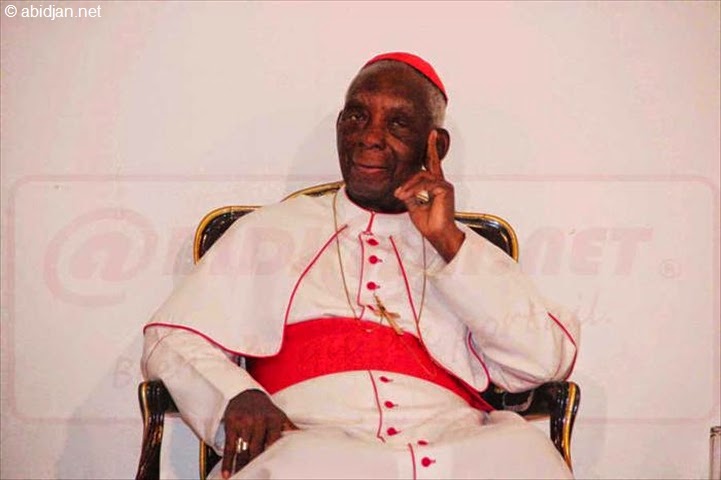
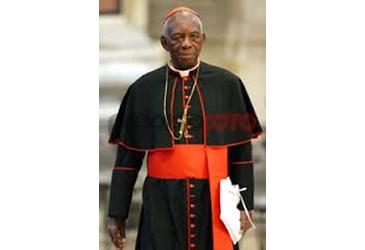
Passing of Cardinal Bernard Agre, Metropolitan Archbishop Emeritus of Abidjan (Cote d’Ivoire/Ivory Coast) at the age of 88

Cardinal Agre

Cardinal Bernard Agre, Cardinal-Priest of S. Giovanni Crisostomo a Monte Sacro Alto has passed away on Monday, 9 June 2014 at the age of 88. He was the Metropolitan Archbishop of Abidjan, the principal diocese of Ivory Coast or Cote d’Ivoire, from 1994 and 2006. Prior to this he was the long time Bishop of Man from 1968 to 1992 and as Bishop of Yamoussoukro from 1992 to 1994, in Cote d’Ivoire.

http://www.gcatholic.org/hierarchy/data/cardJP2-8.htm#2

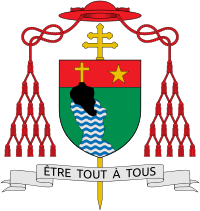
200px-Coat_of_arms_of_Bernard_Agré.svg

Cardinal Agre was created Cardinal in 2001 by Pope St. John Paul II in his eighth Cardinal creation consistory on 21 February 2001. His motto was Etre Tout a Tous, which means “Be all things to all”. This means an emphasis on service and Christian servant leadership, to give one’s best to all others who are in need.

1524462_LancioGrande

We pray for Cardinal Agre, that he will rest in peace, and God will reward him for all his hard and great work as the long time servant of God as the shepherd of the faithful in Abidjan and Cote d’Ivoire, as well as for all the ministries and good works he had done for the sake of God and His people in the entire Universal Church. May the Lord welcome him into His embrace in heaven and give him eternal rest and happiness that he deserved.

With the passing of Cardinal Agre, the College of Cardinals now stands at 213 members, with 118 Cardinal-electors and 95 Cardinal non-electors. The number of Cardinal-electors now is 2 below the specified maximum limit of 120.

There are now 2 Cardinal-elector vacancy in the College of Cardinals, 0 vacant Cardinal Suburbicarian Sees (for Cardinal Bishops), 3 vacant Cardinal Title (for Cardinal Priests) and 7 vacant Cardinal Deaconries (for Cardinal Deacons).

Friday, 13 September 2013 : 23rd Week of Ordinary Time, Memorial of St. John Chrysostom, Bishop and Doctor of the Church (Scripture Reflection)

Liturgical Colour : White

Brothers and sisters in Christ, today Christ continued to remind us of the great need to remain humble and loving in our lives, avoiding all sorts of vices, and do only what is in line with the will of God. He cares for us very much, and wants us to be righteous and worthy of Him. He protects and provides for all of us, in the same way that a father cares for his children, and way more than that.

He gave second chances to those who repent, to those who realised the depth of their sins and iniquities as He had done with St. Paul, once the great enemy of the faithful and the Church, and the great persecutor of saints and martyrs, turned into the great champion and defender of the faith, the great missionary of the Lord. Therefore, sinners are great in the eyes of the Lord, because the Lord loves them and cares for them, and wants them to return to Him.

Even saints and holy men and women of God now in heaven were once sinners, great or small. What matters is that they had learnt to manage their human weaknesses and tendency for sin, and overcome the sins they had done, with the help of God and one another, with the love they have in their hearts, and with the faith that they have.

We must therefore not be quick to condemn others or judge on others, especially on their faults or shortcomings, as we have to remember that none of us are perfect or completely filled with good things. All of us have weakness one way or another. We are imperfect, ever since sin has entered mankind’s heart. Yet, some of us would not realise of our own faults, thinking highly of ourselves and our own achievements, and look down on others whom we perceive to be inferior to us.

That was what the Pharisees did, as well as the chief priests and the teachers of the Law did, looking down on others because they thought highly of themselves. They prayed in loud voice and wonderful gestures, and followed the rules of the Law strictly, observing everything to the most minute details, and yet, behind all that, lay a huge problem, a huge fault with them. They have not the Lord in their heart, not even deep within their hearts.

They condemned others and sought faults in others, while they themselves were even more faulty in themselves. That was exactly what Christ condemned them for, their failure to do what the Lord truly asked of them, and even worse that as the leaders of the people, they misled the people and brought them to ruin instead of salvation.

Today, we celebrate the feast of St. John Chrysostom, one of the original four great Doctors of the Church, as one of the most brilliant minds of the Church, the leader of the faithful in Constantinople, St. John Chrysostom was truly an upright man, who lived piously and with deep faith in the Lord their God. He preached often of the need to live in charity and love, that is to show love to one another, especially the ones in need, and he truly practice what he preached.

St. John Chrysostom did not have it easy, as he did face many oppositions, especially from those who followed the heretical teachings, like Arianism, Monophysitism, Nestorianism, and many others. He faced them with firm faith and dedication to God. He was fully aware of his own sins and weaknesses, and therefore he wanted to bring souls to salvation in God, showing his care as a fellow sinner who had been called to guide his lost brethren to the Father in heaven.

St. John Chrysostom did not even shy away or fear of rebuking the Roman Emperor, Arcadius at the time, for the improper behaviour of his wife, the Empress Eudoxia, who resented St. John Chrysostom so much that he was banished from Constantinople and from his post. Immediately God set out to punish those who had conspired against the servant of God, and the Roman capital faced terrible catastrophe. Not even the imperial family was spared, with the Empress dying from childbirth and the Emperor himself a few years later.

Dear brothers and sisters in Christ, we should try to emulate St. John Chrysostom in his actions, in his life, and in his examples, that we should really look into ourselves first before we judge others, and reflect on our lives whether our words and actions had reflected God’s love in them. If we had not done so, then truly now is a good time to do so, while we still have the opportunity in this life. Let us have no fear and keep a steadfast faith like that of St. John Chrysostom, whom in his righteousness rebuked even an emperor and empress who went astray from the Lord.

Let us be always faithful to God, be loving both to Him and our brethren, and finally let us strive to give more of ourselves for the sake of others, the last, the lost, and the lonely, as St. John Chrysostom had done. Pray for us St. John Chrysostom! May God bless us always. Amen.

Friday, 13 September 2013 : 23rd Week of Ordinary Time, Memorial of St. John Chrysostom, Bishop and Doctor of the Church (Gospel Reading)

Liturgical Colour : White

Luke 6 : 39-42

And Jesus offered this example, “Can a blind person lead another blind person? Surely both will fall into a ditch. A disciple is not above the master; but when fully trained, he will be like the master.”

“So why do you pay attention to the speck in your brother’s eye, while you have a log in your eye, and are not conscious of it? How can you say to your neighbour, ‘Friend, let me take this speck out of your eye,’ when you cannot remove the log in your own? “

“You hypocrite! First remove the log from your own eye, and then you will see clearly enough to remove the speck from your neighbour’s eye.”

Friday, 13 September 2013 : 23rd Week of Ordinary Time, Memorial of St. John Chrysostom, Bishop and Doctor of the Church (Psalm)

Liturgical Colour : White

Psalm 15 : 1-2a and 5, 7-8, 11

Keep me safe, o God, for in You I take refuge. I say to the Lord, “You are my Lord.” O Lord, my inheritance and my cup, my chosen portion – hold secure my lot.

I bless the Lord who counsels me; even at night my inmost self instructs me. I keep the Lord always before me; for with Him at my right hand, I will never be shaken.

You will show me the path of life, in Your presence the fullness of joy, at Your right hand happiness forever.

Friday, 13 September 2013 : 23rd Week of Ordinary Time, Memorial of St. John Chrysostom, Bishop and Doctor of the Church (First Reading)

Liturgical Colour : White

1 Timothy 1 : 1-2, 12-14

From Paul, apostle of Christ Jesus by a command of God our Saviour and of Christ Jesus our hope, to Timothy, my true son in the faith. May God the Father and Christ Jesus our Lord give you grace, mercy, and peace.

I give thanks to Christ Jesus, our Lord, who is my strength, who has considered me trustworthy and appointed me to His service, although I had been a blasphemer, a persecutor and a rabid enemy.

However He took mercy on me because I did not know what I was doing when I opposed the faith; and the grace of our Lord was more than abundant, together with faith and love that are in Christ Jesus.