Sunday, 27 April 2014 : 2nd Sunday of Easter, Divine Mercy Sunday, Canonisation of Pope St. John XXIII and Pope St. John Paul II (First Reading)

Liturgical Colour : White

Acts 2 : 42-47

They were faithful to the teaching of the Apostles, the common life of sharing, the breaking of bread and the prayers. A holy fear came upon all the people, for many wonders and miraculous signs were done by the Apostles.

Now all the believers lived together and shared all their belongings. They would sell their property and all they had and distribute the proceeds to others according to their need. Each day they met together in the Temple area; they broke bread in their homes; they shared their food with great joy and simplicity of  heart; they praised God and won the people’s favour.

And every day the Lord added to their number those who were being saved.

Tuesday, 22 October 2013 : 29th Week of Ordinary Time, Memorial of Blessed Pope John Paul II, Pope (Scripture Reflection)

Liturgical Colour : Green

Dear brothers and sisters in Christ, be ready, be prepared, and be vigilant. Those are the key things that the Lord wants from us all to take heed of and to observe, as we live in this world, that we do not fall into the traps of the devil. That we also take heed of the loving works and sacrifice of Jesus Christ, our Lord, through whom we have been made worthy once again, of the Lord.

Having been taken from the dominion of the evil one, and no longer having to suffer eternal punishment with him is the reason, brethren, why the devil will constantly try to corrupt us back, so as to once again cast us away from the presence of God, as once happened to Adam and Eve, our ancestors, through their transgressions in disobedience.

We cannot be idle and let our guard be weakened, for the devil has his army of fallen angels, his subordinates, ready at all times to strike at us at our weakest points. That is why we must always be prepared for all circumstances. The Lord will come again as He had promised us through His disciples, and He will come again at a time we least expect of all.

Be prepared, brethren, for we have to always be awake at all times, that when the Lord comes again, at the time unexpected to all, we will be found ready and upright by He who comes, and therefore, be found worthy of His eternal kingdom, and worthy of the eternal glory and joy that He will bestow on all of us whom He will take as His own, and no one else will have any power over us.

And He who is to come has come down once as Jesus, the Son of Man, to be the new Adam. For just as once Adam the first man had sinned before the Lord and therefore, as the first reading today stated, that because of his single transgression, mankind had to suffer the consequences of Adam’s sin, by allowing evil and sin to enter into the hearts of men, therefore, by the singular act of Christ, the new Adam, the new Man, we are once again made whole and complete in salvation.

That singular act, is an act of perfect obedience to the will of God, and an act of perfect selflessness and love, just as the act of Adam, the first man, is an act of selfishness and disobedience. For Adam and Eve, tempted by Satan in the form of a snake, desired to have knowledge on things good and evil, and therefore to be like God, just as the snake had tempted them so. This brought mankind into sin and therefore bring them under the jurisdiction of death.

Yet, Christ’s act of selflessness, love, and perfect obedience, that is none other than His Passion and sacrifice on the hill of Calvary, when He laid down His life for our sake, for the love of us all, and in complete obedience to the will of God the Father. In this, He had become the new Man, the new Adam, through whom all mankind are once again made justified and worthy.

Today, we celebrate the feast of a great man, and yet a humble and loving servant of God. Yes, that is the feast of Blessed Pope John Paul II. This year will be the last time we celebrate his feast as a Blessed, as next year in April, Pope Francis, the current Pope will elevate this holy man into the glory of the sainthood. Blessed Pope John Paul II is well known for his love and devotion for the Lord, through His Blessed Mother Mary. This devotion extended not just to his devotions and prayers, but also to his life and actions.

Blessed Pope John Paul II showed the nature of Christ to the world, through his own life examples. He forgave the one who had tried to assassinate him, mirroring the example of Christ who forgave those who had pierced Him and condemned Him to die a humiliating death on the cross. Blessed Pope John Paul II also showed the nature of suffering and perseverance through his last years of life, lived in suffering from various debilitating conditions. He taught many of us the importance of faith and devotion to God, even amid suffering and times of difficulties.

And ultimately, Blessed Pope John Paul II was known for his approach to all mankind, especially those who had faltered in their way towards the Lord. He championed the call for everyone to reach out towards holiness, and a life filled with faith and love towards the Lord our God. He asked all to open wide the doors of their heart to the Lord. Yes, indeed, the doors of our heart must be opened to the light and love of God, that we do not reject His love and kindness, which He had offered freely for us, and too often that mankind decided to reject Him and turn Him away from our hearts.

May the Lord our God who laid down His life for us, continue to inspire in us, the love for Him and for our fellow men, that we can realise how much love that He has for us. And also, that we all can begin if we have not done so, to build up our heavenly ‘bank account’ through obeying the will of God, doing His commandments, that is again, to love one another and to love God. So that when the Lord comes again, at a time unknown to us, we will be found ready and worthy, that He will bless us and give us the place in the kingdom that He had prepared for us. May Blessed Pope John Paul II intercede for us in heaven, and may God bless us all. Amen.

Pope Francis to canonise 802 new saints on Sunday, 12 May 2013

http://www.romereports.com/palio/meet-the-soon-to-be-saints-of-the-catholic-church-english-9981.html#.UYurAcrTc78

Image

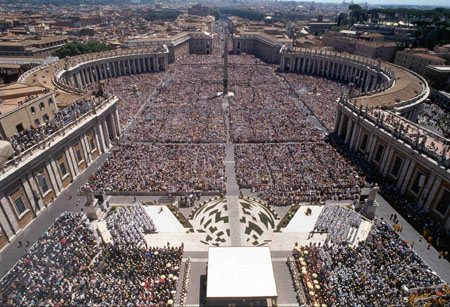
Pope Francis will canonise 802 new saints in a canonisation ceremony during the Mass on Sunday, 12 May 2013 at St. Peter’s Square.

Image

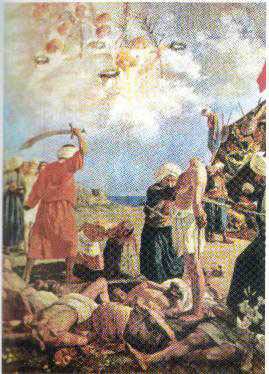
The most notable among the 802 new saints, are 800 among the saints themselves, who are the Martyrs of Otranto, who were martyred in 1480, when the rising Ottoman Empire raided Otranto, a city in Southern Italy, in one of their numerous raids against Christendom and the Lord’s faithful ones.

The 800 martyrs were the captured peoples of Otranto, who refused to abandon their faith and therefore live. They chose death and remain in the Lord instead. For this faith, they were declared martyrs and were beatified by Pope Clement XIV in 1771.

Image

Today, their relics and remains can be most obviously seen in the Chapel in Otranto are placed in glass display behind the Altar, as seen in the above picture. Led by Antonio Primaldo, the local tailor who led the townspeople in the invasion times, they were martyred by the Ottomans for defending their faith. They will henceforth be known as Saints Antonio Primaldo and Companions after their canonisation.

Image

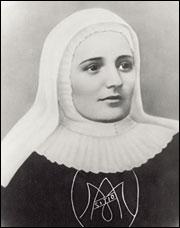
The other saint to be canonised with the Martyrs of Otranto is St. Laura Montoya, or also known as St. Laura of St. Catherine of Siena, who was a religious nun from Colombia, who worked hard to evangelise the local native populations, and tried her best to end prejudice and discrimination against the native Indian population. She will be Colombia’s first saint ever.

Image

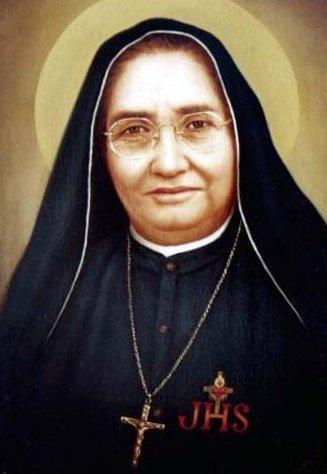
And the other saint to be also canonised with them is Mother Lupita, who was a Mexican nun that established a new religious organisation dedicated to the service of the poor and the less fortunate in Mexico, which had to often brave danger in their missions, because of the hostile situation at the time, with Mexico teeming with anti-Church sentiments. She will become the second female saint from Mexico.

The Martyr Saints of Otranto, Saint Laura, and Saint Lupita, pray for us.

Pope Francis’ Schedule for April and May 2013

http://www.news.va/en/news/liturgical-celebrations-to-be-presided-over-by-p-2


APRIL
7 April, Second Sunday of Easter, or Divine Mercy Sunday: 5:30pm, Mass in the Basilica of St. John Lateran for the Bishop of Rome to take possession of the Roman cathedra.
14 April, Sunday: 5:30pm, Mass in the Basilica of St. Paul Outside-the-Walls
21 April, Sunday: 9:30am, Mass and priestly ordinations in St. Peter’s Basilica.
28 April, Sunday: 10:00am, Mass and confirmations in St. Peter’s Square.
 
MAY
4 May, Saturday: 6:00pm, Recitation of the Rosary in the Basilica of St. Mary Major.
5 May, Sunday: 10:00am, Mass for Confraternities in St. Peter’s Square.
12 May, Sunday: 9:30am, Mass and canonizations of Blesseds Antonio Primaldo and Companions; Laura di Santa Caterina da Siena Montoya y Upegui; and Maria Guadalupe Garcia Zavala.
18 May, Saturday: 6:00pm, Pentecost Vigil in St. Peter’s Square with the participation of ecclesial movements.
19 May, Pentecost Sunday: 10:00am, Mass in St. Peter’s Square with the participation of ecclesial movements.

Homily of Pope Francis at the Mass of the Palm Sunday of the Passion of our Lord at St. Peter’s Square, Sunday, 24 March 2013

http://www.vatican.va/holy_father/francesco/homilies/2013/documents/papa-francesco_20130324_palme_en.html

Jesus enters Jerusalem. The crowd of disciples accompanies him in festive mood, their garments are stretched out before him, there is talk of the miracles he has accomplished, and loud praises are heard: “Blessed is the King who comes in the name of the Lord. Peace in heaven and glory in the highest!” (Lk 19:38).

Crowds, celebrating, praise, blessing, peace: joy fills the air. Jesus has awakened great hopes, especially in the hearts of the simple, the humble, the poor, the forgotten, those who do not matter in the eyes of the world. He understands human sufferings, he has shown the face of God’s mercy, and he has bent down to heal body and soul.

This is Jesus. This is his heart which looks to all of us, to our sicknesses, to our sins. The love of Jesus is great. And thus he enters Jerusalem, with this love, and looks at us. It is a beautiful scene, full of light – the light of the love of Jesus, the love of his heart – of joy, of celebration.

At the beginning of Mass, we too repeated it. We waved our palms, our olive branches. We too welcomed Jesus; we too expressed our joy at accompanying him, at knowing him to be close, present in us and among us as a friend, a brother, and also as a King: that is, a shining beacon for our lives. Jesus is God, but he lowered himself to walk with us. He is our friend, our brother. He illumines our path here. And in this way we have welcomed him today. And here the first word that I wish to say to you: joy! Do not be men and women of sadness: a Christian can never be sad! Never give way to discouragement! Ours is not a joy born of having many possessions, but from having encountered a Person: Jesus, in our midst; it is born from knowing that with him we are never alone, even at difficult moments, even when our life’s journey comes up against problems and obstacles that seem insurmountable, and there are so many of them! And in this moment the enemy, the devil, comes, often disguised as an angel, and slyly speaks his word to us. Do not listen to him! Let us follow Jesus! We accompany, we follow Jesus, but above all we know that he accompanies us and carries us on his shoulders. This is our joy, this is the hope that we must bring to this world. Please do not let yourselves be robbed of hope! Do not let hope be stolen! The hope that Jesus gives us.

The second word. Why does Jesus enter Jerusalem? Or better: how does Jesus enter Jerusalem? The crowds acclaim him as King. And he does not deny it, he does not tell them to be silent (cf. Lk 19:39-40). But what kind of a King is Jesus? Let us take a look at him: he is riding on a donkey, he is not accompanied by a court, he is not surrounded by an army as a symbol of power. He is received by humble people, simple folk who have the sense to see something more in Jesus; they have that sense of the faith which says: here is the Saviour. Jesus does not enter the Holy City to receive the honours reserved to earthly kings, to the powerful, to rulers; he enters to be scourged, insulted and abused, as Isaiah foretold in the First Reading (cf. Is 50:6). He enters to receive a crown of thorns, a staff, a purple robe: his kingship becomes an object of derision. He enters to climb Calvary, carrying his burden of wood. And this brings us to the second word: Cross. Jesus enters Jerusalem in order to die on the Cross. And it is precisely here that his kingship shines forth in godly fashion: his royal throne is the wood of the Cross! It reminds me of what Benedict XVI said to the Cardinals: you are princes, but of a king crucified. That is the throne of Jesus. Jesus takes it upon himself… Why the Cross? Because Jesus takes upon himself the evil, the filth, the sin of the world, including the sin of all of us, and he cleanses it, he cleanses it with his blood, with the mercy and the love of God. Let us look around: how many wounds are inflicted upon humanity by evil! Wars, violence, economic conflicts that hit the weakest, greed for money that you can’t take with you and have to leave. When we were small, our grandmother used to say: a shroud has no pocket. Love of power, corruption, divisions, crimes against human life and against creation! And – as each one of us knows and is aware – our personal sins: our failures in love and respect towards God, towards our neighbour and towards the whole of creation. Jesus on the Cross feels the whole weight of the evil, and with the force of God’s love he conquers it, he defeats it with his resurrection. This is the good that Jesus does for us on the throne of the Cross. Christ’s Cross embraced with love never leads to sadness, but to joy, to the joy of having been saved and of doing a little of what he did on the day of his death.

Today in this Square, there are many young people: for twenty-eight years Palm Sunday has been World Youth Day! This is our third word: youth! Dear young people, I saw you in the procession as you were coming in; I think of you celebrating around Jesus, waving your olive branches. I think of you crying out his name and expressing your joy at being with him! You have an important part in the celebration of faith! You bring us the joy of faith and you tell us that we must live the faith with a young heart, always: a young heart, even at the age of seventy or eighty. Dear young people! With Christ, the heart never grows old! Yet all of us, all of you know very well that the King whom we follow and who accompanies us is very special: he is a King who loves even to the Cross and who teaches us to serve and to love. And you are not ashamed of his Cross! On the contrary, you embrace it, because you have understood that it is in giving ourselves, in giving ourselves, in emerging from ourselves that we have true joy and that, with his love, God conquered evil. You carry the pilgrim Cross through all the Continents, along the highways of the world! You carry it in response to Jesus’ call: “Go, make disciples of all nations” (Mt 28:19), which is the theme of World Youth Day this year. You carry it so as to tell everyone that on the Cross Jesus knocked down the wall of enmity that divides people and nations, and he brought reconciliation and peace. Dear friends, I too am setting out on a journey with you, starting today, in the footsteps of Blessed John Paul II and Benedict XVI. We are already close to the next stage of this great pilgrimage of the Cross. I look forward joyfully to next July in Rio de Janeiro! I will see you in that great city in Brazil! Prepare well – prepare spiritually above all – in your communities, so that our gathering in Rio may be a sign of faith for the whole world. Young people must say to the world: to follow Christ is good; to go with Christ is good; the message of Christ is good; emerging from ourselves, to the ends of the earth and of existence, to take Jesus there, is good! Three points, then: joy, Cross, young people.

Let us ask the intercession of the Virgin Mary. She teaches us the joy of meeting Christ, the love with which we must look to the foot of the Cross, the enthusiasm of the young heart with which we must follow him during this Holy Week and throughout our lives. May it be so.

Holy Week Mass schedule (Live) with Pope Francis in Rome and the Vatican

Here is the schedule for Papal celebrations of Pope Francis for Holy Week in Rome :


(Live from Rome Reports : http://www.romereports.com/palio/modules.php?name=Content3&pa=showpage&newlang=english&pid=47#.UU4b91fTear)

(Live from Vatican Player : http://vatican.va/video/)

(Live from Vatican YouTube : http://youtube.com/vatican/)


1. Palm Sunday (Solemn Entry into Jerusalem) : Sunday, 24 March 2013 at 9.30 am Rome time / CET / UTC+1 (St. Peter’s Square)

2. Chrism Mass (Blessing of the Holy Oils) : Thursday, 28 March 2013 at 9.30 am Rome time / CET / UTC+1 (St. Peter’s Basilica)

3. Cena Domini (Mass of the Lord’s Supper) : Thursday, 28 March 2013 at 5.30 pm Rome time / CET / UTC+1 (Casa del Marmo prison)

4. Good Friday (Passion of our Lord Jesus Christ) : Friday, 29 March 2013 at 5 pm Rome time / CET / UTC+1 (St. Peter’s Basilica)

5. Way of the Cross at Colosseum : Friday, 29 March 2013 at 9 pm Rome time / CET / UTC+1 (Colosseum)

6. Easter Vigil (Resurrection of our Lord Jesus Christ) : Saturday, 30 March 2013 at 9 pm Rome time / CET / UTC+1 (St. Peter’s Basilica)

7. Easter Sunday (Resurrection of our Lord Jesus Christ) : Sunday, 31 March 2013 at 10 am Rome time / CET / UTC+1 (St. Peter’s Square)

8. Urbi et Orbi Blessing of Easter (Blessing to the city of Rome and the world) : Sunday, 31 March 2013 at 12 pm (noon) Rome time / CET / UTC+1 (St. Peter’s Square)

Pope Francis’ schedule between the Papal Inauguration to Palm Sunday

Here is a summary of Pope Francis’ schedule between his Papal Inauguration on Tuesday, 19 March 2013, to the beginning of the Holy Week on Palm Sunday, 24 March 2013 :

1. Tuesday, 19 March 2013 at 9.30 am Rome time : Papal Inauguration Mass at St. Peter’s Square, estimated to be attended by more than 1 million people from all over the world, and many foreign dignitaries, heads of states, and leaders. Mark the full beginning of Pope Francis’ Pontificate with a solemn inauguration with the imposition of both the pallium and the Ring of the Fisherman. First to be attended by the Ecumenical Patriarch of Constantinople, currently Bartholomew I, since the Great Schism in 1054.

2. Wednesday, 20 March 2013 : Reception of the delegations from different Christian churches and representatives at Clementine Hall (Sala Clementina). No General Audience will be held on this day.

3. Friday, 22 March 2013 : Reception of accredited diplomatic representatives to the Holy See in the Regia Hall (Sala Regia).

4. Saturday, 23 March 2013 : Meeting with his predecessor, Pope Emeritus Benedict XVI, at Castel Gandolfo, where the Pope Emeritus is residing.

5. Sunday, 24 March 2013 at 9.30 am Rome time : Palm Sunday Mass at St. Peter’s Square, beginning the Holy Week celebrations.

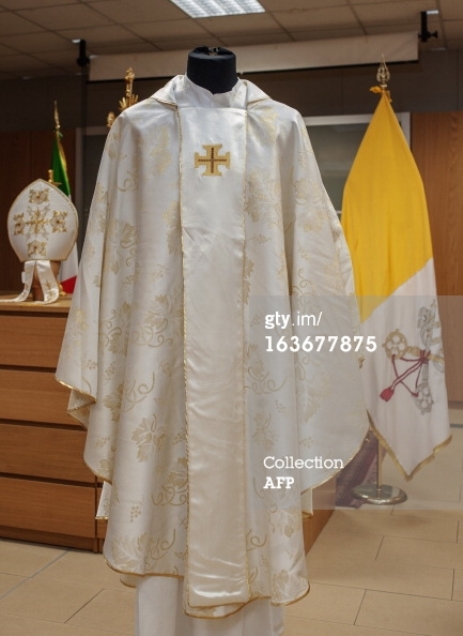
Papal vestment for the Papal Inauguration Mass of Pope Francis, Tuesday, 19 March 2013

Image

The vestments above is the vestment that Pope Francis will wear at the Papal Inauguration Mass in St. Peter’s Square, on the Feast of St. Joseph, Tuesday, 19 March 2013 at 9.30 am Rome time.

The vestments are decent and not over-simplistic, but neither overbearing, while maintaining the beauty of the vesture, which will make the liturgy of the Mass more beautiful and bring people closer to God.

(Update : It seems that Pope Francis chose to wear his personal mitre and the matching vestments that comes with his mitre (as bishop))

Papal Visit to Parish of St. Anne, Rome, and Pope Francis’ First Angelus

Image

Pope Francis visited his first parish in the Diocese of Rome today, Sunday morning, 17 March 2013 and celebrated Mass there (there are more than 300 parishes in the Diocese of Rome).

Image

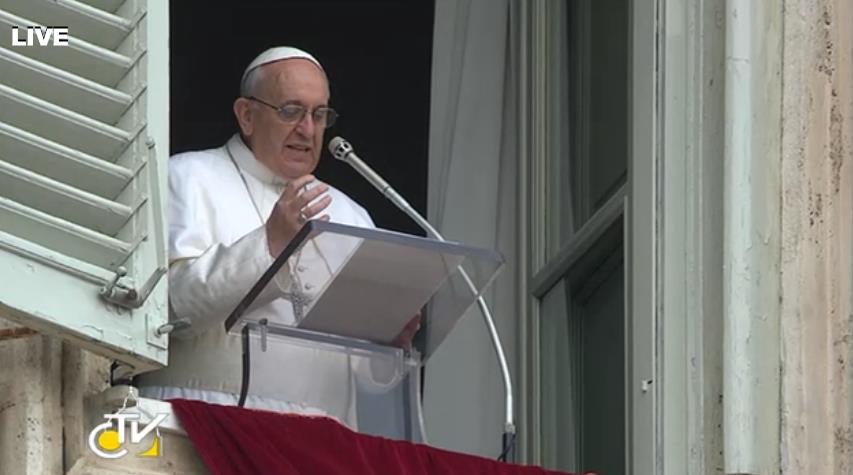
At noon, he returned to the Papal Apartments at the Vatican to deliver his very first Sunday Angelus to thousands gathered in St. Peter’s Square.

My Guide to the Papal Conclave : Part III (From the election of the new Pope to the Urbi et Orbi blessing by the new Pope)

Part II here : https://petercanisiusmichaeldavidkang.com/2013/03/09/my-guide-to-the-papal-conclave-part-ii-from-the-beginning-to-the-election-of-the-new-pope/


1. After the new Pope had accepted his election as Pope and leader of the Roman Catholic Church, there are several scenarios :


a. If he is already a bishop : The new Pope will immediately be the Bishop of Rome and leader of the Universal Church, the Successor of St. Peter the Apostle. Then he will immediately accept the homage of the Cardinal-electors gathered in the Conclave, after he changes his cardinal’s robes for the new, white papal robes in the Room of Tears.

b. If he is not yet a bishop : The new Pope will need to be immediately ordained a bishop following the proper order of the Ordination of bishops, and the senior Cardinal Bishop by seniority in the Conclave should be the principal consecrator. The new Pope can only receive homage of the Cardinals after his ordination to the episcopate (after he had been ordained a bishop).


2. The new Pope then leaves the Sistine Chapel main hall where the voting took place, into the special ‘Room of Tears’, where three sets of differently-sized white papal robes had been prepared for him to adjust to his size. The new Pope changes from his cardinal’s red robes into the white papal robes and then return to the main hall of the Sistine Chapel.


3. The new Pope, after dressed in the white papal robes (with the red mozzetta and the large state stole) will then receive the homage of all the Cardinals gathered in the Sistine Chapel.


4. New addition in 2013 Conclave : After the homage, the new Pope will proceed with all the Cardinal-electors from the Sistine Chapel to the Pauline Chapel. The new Pope will enter the Pauline Chapel alone, and pray before the Blessed Sacrament in the Chapel.


5. In the meanwhile, the most senior Cardinal in the order of deacons, that is the Cardinal Protodeacon (Cardinal Jean-Louis Tauran for the 2013 conclave) will then appear at the Loggia or the balcony of St. Peter’s Basilica to deliver the announcement of the election of a new Pope.


The formula :

The Cardinal Protodeacon will first greet the assembled people in St. Peter’s Square and throughout the world (done in 2005 conclave in different languages) :

1. Italian : Fratelli e sorelle carissimi

2. Spanish : Queridísimos hermanos y hermanas

3. French : Bien chers frères et sœurs

4. German : Liebe Brüder und Schwestern

5. English : Dear brothers and sisters


Then he continues :

Annuntio vobis gaudium magnum

I announce to you a great joy


Habemus Papam!

We have a Pope!


Eminentissimum ac Reverendissimum Dominum

The most eminent and reverend Lord


Dominum (New Pope’s first name/baptismal name) Sanctae Romanae Ecclesiae Cardinalem (New Pope’s surname)

Lord (New Pope’s first name/baptismal name) Cardinal (New Pope’s surname) of the Holy Roman Church


Qui sibi nomen imposuit (New Pope’s chosen regnal name and number)

Who takes for himself the name of (New Pope’s chosen regnal name and number)


5. After this, after a moment, the new Pope, led by a processional crucifix, made his appearance at the same balcony of St. Peter’s Basilica. He then may deliver his first address as Pope to the people gathered at the Square, and to the world.


6. After the address, then the new Pope will give his Urbi et Orbi special blessing (For the city of Rome (Urbi) and the world (Orbi)), with which is attached plenary indulgence, that is the forgiveness of all temporal sins, providing the people participates in full faith and repentance.


The text of the Urbi et Orbi blessing (Latin):

Sancti Apostoli Petrus et Paulus: de quorum potestate et auctoritate confidimus ipsi intercedant pro nobis ad Dominum.

(Amen)

Precibus et meritis beatæ Mariae semper Virginis, beati Michaelis Archangeli, beati Ioannis Baptistæ, et sanctorum Apostolorum Petri et Pauli et omnium Sanctorum misereatur vestri omnipotens Deus; et dimissis omnibus peccatis vestris, perducat vos Iesus Christus ad vitam æternam.

(Amen)

Indulgentiam, absolutionem et remissionem omnium peccatorum vestrorum, spatium verae et fructuosae poenitentiæ, cor semper penitens, et emendationem vitae, gratiam et consolationem Sancti Spiritus; et finalem perseverantiam in bonis operibus tribuat vobis omnipotens et misericors Dominus.

(Amen)

Et benedictio Dei omnipotentis, Patris et Filii et Spiritus Sancti descendat super vos et maneat semper.

(Amen)


Text of Urbi et Orbi blessing (English)

May the Holy Apostles Peter and Paul, in whose power and authority we have confidence, intercede on our behalf to the Lord.

(Amen)

Through the prayers and merits of the Blessed Mary ever Virgin, of Blessed Michael the Archangel, of Blessed John the Baptist, and of the Holy Apostles Peter and Paul, and of all the saints, may Almighty God have mercy on you, and with your sins forgiven, may Jesus Christ lead you into everlasting life.

(Amen)

May the Almighty and merciful Lord grant you indulgence, absolution, and remission of all your sins, time for a true and fruitful penance, an always repentant heart and amendment of life, the grace and consolation of the Holy Spirit, and final perseverance in good works.

(Amen)

And may the blessing of Almighty God, the Father, the Son, and the Holy Spirit, descend on you and remain with you always.

(Amen)


7. Then the new Pope takes his leave of the people, and return inside St. Peter’s Basilica. The long process of electing a new Pope is over, and the new Pope is now in charge in leading God’s Church in his given mission as the Successor of St. Peter the Apostle.


8. The Papal Inauguration Mass will take place several days after the election (does not have to be on a Sunday), to allow for the foreign dignitaries invited to the event to be able to arrive, to attend the Papal Inauguration Mass. The new Pope will receive his signs of office in this Inauguration, namely, the pallium and the Ring of the Fisherman. The Papal Inauguration most likely will take place at St. Peter’s Square.


9. The new Pope will take possession of his Cathedral, in an enthronement ceremony at the Cathedral of the Diocese of Rome (The Pope is the Bishop of Rome, and contrary to popular perceptions, St. Peter’s Basilica is not a Cathedral). The Cathedral of Rome is the Archbasilica of St. John Lateran

Complete name (Latin) : Archibasilica Sanctissimi Salvatoris et Sanctorum Ioannes Baptista et Evangelista in Laterano, Omnium urbis et orbis Ecclesiarum Mater et Caput

Complete name (English) : Archbasilica of the Most Holy Saviour, Saint John the Baptist, and Saint John the Evangelist in Lateran, Head and Mother Church of All the City and the Whole World