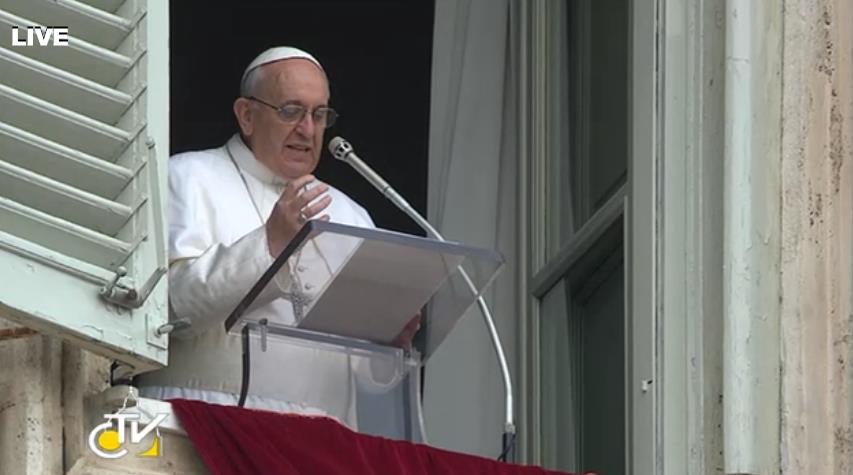
Appointment of Advisory Board for the Reform of the Roman Curia

Pope Francis had appointed an advisory board composed of eight Cardinals and some other prelates whose function is to help the Holy Father in his reform of the Roman Curia to increase its efficiency.

http://www.news.va/en/news/pope-appoints-council-of-eight-cardinals-to-advise


Here are the members of the Advisory Board, picked from members of the College of Cardinals across the globe (set to meet from 1-3 October 2013 for first discussion) :

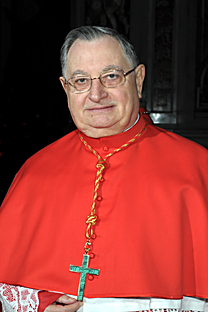
1. Cardinal Giuseppe Bertello, President of the Governatorate of Vatican City State

Image

2. Cardinal Francisco Javier Errazuriz Ossa, Metropolitan Archbishop Emeritus of Santiago del Cile (Chile)

Image

3. Cardinal Oswald Gracias, Metropolitan Archbishop of Bombay (India)

Image

4. Cardinal Reinhard Marx, Metropolitan Archbishop of München und Freising (Germany)

Image

5. Cardinal Laurent Monswengo Pasinya, Metropolitan Archbishop of Kinshasa (Democratic Republic of Congo)

Image

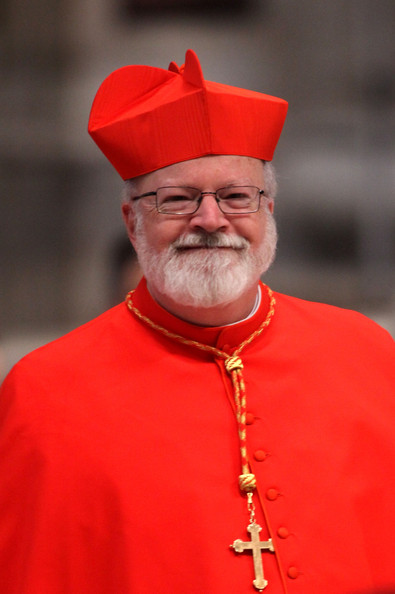
6. Cardinal Sean Patrick O’Malley. O.F.M. Cap., Metropolitan Archbishop of Boston (U.S.A.)

Image

7. Cardinal George Pell, Metropolitan Archbishop of Sydney (Australia)

Image

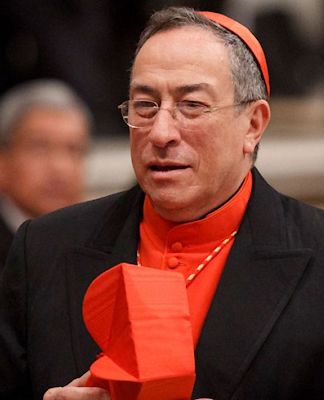
8. Cardinal Oscar Andrés Maradiaga Rodríguez S.D.B., Metropolitan Archbishop of Tegucigalpa (Honduras)

Image


As mentioned, the first meeting of the group would be from 1-3 October 2013, so I would not expect significant changes to the Roman Curia before the end of this year, or even early next year (2014).

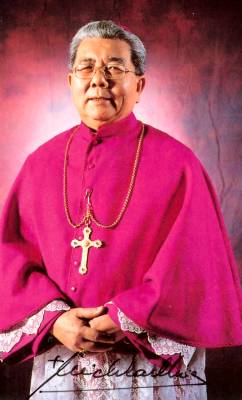
75th Birthday Anniversary of Archbishop Nicholas Chia Yeck Joo, Archbishop of Singapore (born 8 April 1938)

Image

Today marks the 75th birthday anniversary of the Archbishop of Singapore, Archbishop Nicholas Chia. Ad multos annos, Your Excellency!

According to Canon Law 401, §1, all bishops must submit their resignation upon reaching the age of 75. Whether they will resign shortly or a while after the reached that age, depending on the decision of the Pope and the Congregation for Bishops, and whether the suitable candidate has been found.

In this case, as we already have a Coadjutor Archbishop, the Coadjutor Archbishop (William Goh) will take over as the new Archbishop of Singapore the moment the announcement of retirement of the current Archbishop (Nicholas Chia) is made by the Holy See.

(Check at Holy See Press Office daily bulletin at : http://attualita.vatican.va/sala-stampa/bollettino/en/index.html)

Holy Week Mass schedule (Live) with Pope Francis in Rome and the Vatican

Here is the schedule for Papal celebrations of Pope Francis for Holy Week in Rome :


(Live from Rome Reports : http://www.romereports.com/palio/modules.php?name=Content3&pa=showpage&newlang=english&pid=47#.UU4b91fTear)

(Live from Vatican Player : http://vatican.va/video/)

(Live from Vatican YouTube : http://youtube.com/vatican/)


1. Palm Sunday (Solemn Entry into Jerusalem) : Sunday, 24 March 2013 at 9.30 am Rome time / CET / UTC+1 (St. Peter’s Square)

2. Chrism Mass (Blessing of the Holy Oils) : Thursday, 28 March 2013 at 9.30 am Rome time / CET / UTC+1 (St. Peter’s Basilica)

3. Cena Domini (Mass of the Lord’s Supper) : Thursday, 28 March 2013 at 5.30 pm Rome time / CET / UTC+1 (Casa del Marmo prison)

4. Good Friday (Passion of our Lord Jesus Christ) : Friday, 29 March 2013 at 5 pm Rome time / CET / UTC+1 (St. Peter’s Basilica)

5. Way of the Cross at Colosseum : Friday, 29 March 2013 at 9 pm Rome time / CET / UTC+1 (Colosseum)

6. Easter Vigil (Resurrection of our Lord Jesus Christ) : Saturday, 30 March 2013 at 9 pm Rome time / CET / UTC+1 (St. Peter’s Basilica)

7. Easter Sunday (Resurrection of our Lord Jesus Christ) : Sunday, 31 March 2013 at 10 am Rome time / CET / UTC+1 (St. Peter’s Square)

8. Urbi et Orbi Blessing of Easter (Blessing to the city of Rome and the world) : Sunday, 31 March 2013 at 12 pm (noon) Rome time / CET / UTC+1 (St. Peter’s Square)

Papal Visit to Parish of St. Anne, Rome, and Pope Francis’ First Angelus

Image

Pope Francis visited his first parish in the Diocese of Rome today, Sunday morning, 17 March 2013 and celebrated Mass there (there are more than 300 parishes in the Diocese of Rome).

Image

At noon, he returned to the Papal Apartments at the Vatican to deliver his very first Sunday Angelus to thousands gathered in St. Peter’s Square.

Official Video by the Vatican on the Election of Pope Francis, 266th Pope and Bishop of Rome

The official video released by the Vatican in YouTube, with full coverage of the election of the Metropolitan Archbishop of Buenos Aires, Argentina, Jorge Maria Cardinal Bergoglio as Pope Francis, 266th Pope and Bishop of Rome, and the 265th Successor of St. Peter the Apostle.

Summary of the Tenth and the Last General Congregation of the College of Cardinals, and details on the Conclave

New Cardinals have been elected to lead the Particular Congregations (elected every 3 days) in the Conclave. Cardinal Antonios Naguib for the Cardinal Bishops; Cardinal Marc Ouellet for the Cardinal Priests; Cardinal Francesco Monterisi for the Cardinal Deacons. New leaders will be elected if after three days in the Conclave, the Conclave has not yet ended with the election of a new Pope. Their task is to guide the Cardinal Camerlengo, who is Cardinal Tarcisio Bertone.

28 Cardinals had spoken in the Tenth General Congregation, and a total of 161 Cardinals had already spoken in all the past General Congregations. Not all Cardinals who wanted to speak has spoken, as the number of Cardinals that spoke had made the Cardinals to vote whether to continue or to stop the General Congregation at that point (likely because it has taken too much time).

In the meanwhile, during the Sede Vacante, certain offices that represent the Holy See, particularly diplomatic representation, Nuncios, Delegates, and many other offices of the Holy See continue to function as per normal, even when the Apostolic See is vacant, and the Cardinals waiting to elect a new Pope. The Cardinal Camerlengo, Cardinal Tarcisio Bertone is the leader during the period of the Sede Vacante, having limited powers, with the College of Cardinals, in order to settle all matters, and all things pertaining to election of the new Pope.

This Monday evening at 5.30 pm Rome time / CET / UTC+1, all the personnels, about 90 of them, who are also ‘locked’ together with the Cardinal-electors in the Conclave, including doctors, nurses, bus drivers, and other staffs involved in maintenance of the Cardinals’ residence at Domus Sancta Marthae, will take their solemn oath of secrecy, in the presence of the Camerlengo of the College of Cardinals, Cardinal Tarcisio Bertone, and also in the presence of the Secretary of the College of Cardinals, Archbishop Lorenzo Baldisseri, Master of Pontifical Liturgical Celebrations, Monsignor Guido Marini and other officials.

The swearing of the oath of secrecy by the auxiliary personnel will not be live on Vatican Television (Therefore, may not be viewable in Vatican Player).

The Mass for the Election of the Roman Pontiff or Missa pro Eligendo Pontifice, which will begin the Conclave process, will be celebrated in St. Peter’s Basilica on Tuesday morning at 10 am Rome time / CET / UTC+1, and will be in Latin, but also with translations in Italian and English available in the Vatican official website.

Cardinal Dean of the College of Cardinals, Cardinal Angelo Sodano will be the celebrant of the solemn Mass, the concelebrants will be all the Cardinal-electors and the Cardinal non-electors currently present in Rome. The homily will also be available a short period of time just before the Holy Mass on Tuesday morning (Rome time), likely from the Vatican website.

The Cardinals will enter into the Conclave in the Sistine Chapel from the Pauline Chapel, from Cardinal Prosper Grech, who will deliver the second meditation to the Cardinal-electors, followed by the Cardinals in reverse order of precedence (first by order : bishop, priest, and deacon – reverse this), and then within these order, the Cardinals in order of creation (earlier created then later created, and also within the same consistory, those whose names are earlier in the order of creation have higher precedence – also reverse all this).

The last will be the Master of Pontifical Liturgical Celebrations, Monsignor Guido Marini, and Cardinal Giovanni Batista Re, the senior Cardinal Bishop who is an elector, who will be the leader of the Conclave in absence of Cardinal Sodano, the Dean, who is a non-elector (above 80). The Cardinals will proceed into the Sistine Chapel singing the Litany of the Saints, and the hymn Veni Creator Spiritus. After the oath-taking by the Cardinal-electors, Monsignor Marini will order the traditional “extra omnes”, or “all out!” order to all except the Cardinal-electors.

The entry into the Sistine Chapel will begin on Tuesday afternoon, at 4.30 pm Rome time / CET / UTC+1, and will be broadcasted live.

The first smoke signal from the chimney of the Sistine Chapel will be at sometime around 8 pm Rome time, and will not likely be a white smoke (It is unlikely that the new Pope will be elected in the first ballot, as there will only be one ballot session on Tuesday).

The Vatican camera (available in Vatican Player at http://www.vatican.va/video/) will be fixed on the chimney through this period and available live.

The senior Cardinal Bishop-elector, Cardinal Re, will be the one in place of the Cardinal Dean, who is a non-elector, asking the newly elected Pope whether he accepts the election and also ask him the regnal name that he will assume as the Pope.

A new addition for the 2013 Conclave is that, after the Pope receives the homage from all the Cardinal-electors in the Sistine Chapel, he will proceed with all the Cardinal-electors, to the Pauline Chapel, and the new Pope alone will enter the Chapel to pray before the Blessed Sacrament in the Chapel. In the meanwhile, the Cardinal Protodeacon, Cardinal Jean-Louis Tauran, will announce the traditional Habemus Papam announcement.

It took about one hour in 2005 Conclave from the white smoke appearance until the new Pope made his appearance on the balcony of St. Peter’s Basilica (also known as the Loggia). As the new addition of prayer in the Pauline Chapel is made for the 2013 Conclave, we can expect a time frame of slightly longer than 1 hour between the white smoke, and the appearance of the new Pope on the balcony.

Sede Vacante : Which offices are suspended, which ones has important roles and which remains in place during the sede vacante

http://www.gcatholic.org/events/sede-vacante.htm

A superb collection and data collated by GCatholic site, on the list of all offices that are suspended during the Sede Vacante period (that is between the vacancy of the Apostolic See by the death or resignation of the previous Pope, and the election of a new Pope).

The suspended offices are mainly the prefects of the Congregations of the Roman Curia (example : Congregation for the Doctrine of the Faith), presidents of the Pontifical Councils (example : Pontifical Council for Justice and Peace), and many other members and offices of the Roman Curia. The new Pope will be able to either confirm them to continue in their respective offices, or choose to replace them with his own preferred candidates.

The offices that continue to be exercised during the Sede Vacante, include the offices that has important roles in the Sede Vacante period and the Conclave, such as the Camerlengo, the Vice-Camerlengo (who seals the papal apartments and destroy the Ring of the Fisherman), several other officers of the Roman Curia, head of the Papal Household (currently Archbishop Georg Ganswein), all the Apostolic Nuncios, Apostolic Delegates, and other diplomatic representatives of the Holy See, whose diplomatic authority remains even during the Sede Vacante.

Amongst the Cardinals themselves and some other officials, there are special duties that they are supposed to carry out during the Conclave, which includes the Cardinal-electors by their order (Bishop, priest, or deacon), in the running of the Conclave, the Papal Master of Ceremonies (currently Monsignor Guido Marini), who is the one stating the ‘extra omnes’ order officially beginning the lockdown of the Conclave, and other offices.

Future title of Pope Benedict XVI after his retirement : Bishop Emeritus of Rome

http://www.romereports.com/palio/top-ranking-cardinal-reveals-future-title-for-benedict-xvi-english-9121.html#.USeny6XLoj4

It has been determined indeed that Pope Benedict XVI upon his retirement from the Papacy effective 28 February 2013 at 8.00 pm Rome time, he will still be called “Your Holiness” as he is now, and he will retain the title “Benedict XVI”, which is his chosen regnal name, and hence, he will be called, “Your Holiness Benedict XVI”.

He will also, like all other diocesan bishops, who once retired, take up the name Bishop/Archbishop Emeritus of his diocesan see, thus, Pope Benedict XVI, as the Pope, the Bishop of Rome, will also be known simply as the Bishop Emeritus of Rome.

What do I think about this? Well, after 28 February 2013, Pope Benedict XVI indeed will be no longer our Pope, but in effect, he never actually completely relinquish the Papacy, just as all other retired bishops remain as bishops and can remain active if they choose to do so, therefore the Pope too, even though not officially our Pope anymore, but our respect to him will always remain the same, and we will always remember him as our beloved Pope, who had done so much for the good of the Church.

He has chosen a quiet life in retirement and prayer, and dedicated himself fully to God, which is truly a noble choice, setting himself aside that someone else with the potential and vigour to step in and make the Church, which he had made good, becomes even better in the future.

Pray for our Pope Benedict XVI and his successor.

Friday, 22 February 2013 : Feast of Chair of St. Peter the Apostle (Scripture Reflection)

Today, one might ask, why do we celebrate the feast of a chair? Why the chair of St. Peter? As we all should know, that all dioceses in the world has Cathedrals, one in each diocese, and in the Cathedral, there is a special ‘chair’ that only the ordinary or the bishop of the diocese can sit on. This is because that chair is the Cathedra, the bishop’s throne or seat, which represents his authority, which is given from the Lord Himself.

Where does this authority come from? Right, you all should know indeed, that it came eventually, down the centuries and millenia from the early leaders of the Church, who themselves receievd that power and authority from the Apostles, whose leader is Peter, who was then known as Simon, son of Jonah, or Simon Bar-Jona, the fisherman.

Simon answered out of great courage and speak out the truth sincerely about Christ, who is indeed the Messiah and the Son of the living God, who has come to save the world, although maybe none at that time has yet to understand that He has to do this through His suffering and ultimately death on the cross. But indeed, for the great act of faith that Simon showed, Christ entrusted him with His authority and power, as His vicar on earth, simply through the words that He mentioned, that He will give Simon the keys of the kingdom of heaven, and He will build His Church, that is all the faithful in Him, united as one Body, on him as the foundation.

Hence, that is why Christ renamed Simon as Peter, whose Aramaic (the language spoken at the time of Jesus) origin was Kephas/Kepha, which means rock, that was then translated to Greek as Petros, and then to Latin as Petrus, which all means rock. The Gospel indeed has some pun to the word as Christ did say, “You are Peter and on this Rock…”, which one may interpret as the play on the word Petros/Petrus/Kepha, and there are those, who said that the rock does not refer to Peter at all.

No, this cannot be, since that Rock does refer to Peter, and why? It is because of his great faith in Christ, that is like a great rock, will become the most suitable foundation of His Church on this world, for Peter himself later on, as the leader of the Church, rooted himself firmly in Christ, even to his death in Rome.

It does not mean that Peter did not falter in his faith and dedication to the Lord. As everyone should know, that Peter was well-known for his betrayal of the Lord, even after he said during the Last Supper that he would never leave or abandon the Lord, but when Jesus was tried and mocked, and someone suspected Peter of being Christ’s accomplice, he denied Christ three times, out of fear and uncertainty, seeing that the Lord he has always believed in, has now been judged and soon to be sentenced to death.

Nevertheless, it is not Peter’s failures that we should focus on, but rather, what happens after, as he should indeed be a role model to all of us, that after whenever we fall, we must rise up again and rise up ever stronger than before, even stronger than before we fall. It was Peter who led the Apostles in the days after the Crucifixion and the Resurrection of Christ, and it was to him that Christ asked, “Peter, do you love Me.”, also three times.

Just as we often heard indeed in the Bible that God is merciful and willing to forgive all who had erred but yet willing to fully turn themselves back towards Him again, the same thing was what Christ did to Peter. Peter knew that he had been forgiven, and he gave Christ the promise of undying and eternal love, and that he will never fail Him again as before. Christ then entrusted the care of all His sheep in this world, all those who believe in Him, in Peter, whom He then affirm as the leader of all the faithful, and His representative in this world.

It is at that point that Christ entrusted the keys of the kingdom of heaven, and built His Church, which began on Pentecost, with the coming of the Holy Spirit on the Apostles. It was Peter who defended Christ and gave a fiery speech, asking the people to believe in Christ, and caused many to convert to the cause of God, and therefore, marked the very beginning of the Church.

Through Peter, we have many of his successors, who are the Bishops of Rome. Why the Bishop of Rome? This is because, in the established tradition and the letters following the events of the New Testament, Peter would travel to Rome eventually and settled there, before being martyred by the Emperor Nero of the Roman Empire sometime in 67 AD, not long after the other great Apostle Paul, the Apostle of the Gentiles, who is also associated together with the Bishop of Rome.

St. Peter in his great humility, when he was about to be crucified, through which he will face his martyrdom, refused to be crucified in the same way as the Lord did, and thus chose to be crucified upside down. This is what we know now as the ‘upside-down’ cross, or the cross of St. Peter.

Many had misunderstood this ‘upside-down’ as the symbol of the Antichrist, when the Pope, for example Blessed Pope John Paul II utilised it on his chair during his visit to the Holy Land, which in fact is the symbol of his own authority as the successor of St. Peter, and the symbol of Peter’s humility in being crucified upside-down that he would not die the same way as Christ, as he felt unworthy to do so. Now that all of you know about this, tell those who has yet to know about this, that they too may know and not linger in falsehood, but remain in the truth.

The chair of St. Peter can be seen at the back of the High Altar below the famous Holy Spirit stained glass on the walls of St. Peter’s Basilica in the Vatican, which was built on the spot where St. Peter was buried after his martyrdom. This chair, which is armless, and made of wood and inlaid with precious metals, contains the materials from the original chair that was known to have been used by St. Peter himself when he was in Rome. In a sense, this was St. Peter’s cathedra, and thus, the very first seat of authority that was present in this world.

Many of the Bishops of Rome who succeeded Peter had been great Popes, and many too had been saints and great saints, contributing greatly to the growth of the Church of Christ to whom they are entrusted to, through Peter. Of course there are also some Popes who had been bad Popes, and were great sinners. We condemn what they did, which in one way or another have done bad to the Church of Christ and to the faithful, due to their failure to faithfully carry out the mission that has been entrusted by Christ to them through Peter.

The Popes, who are the Bishops of Rome, are human too, as St. Peter was, and therefore was also prone to sins and errors as other mankind are, but we had indeed gone a long way since St. Peter was entrusted with the keys of kingdom of heaven. After the Council of Trent, and the succeeding councils, the Church has rediscovered itself, and led by the Pope, who is the leader of all the faithful in Christ, we continue in our mission that Christ had given us, that is to spread the Gospel, the Good News to all, and to baptise everyone in the name of the Father, the Son, and the Holy Spirit.

Let us pray for our Pope, the successor of St. Peter the Apostle, that he will continue to carry out his mission entrusted to Him by Christ, and use the authority he was given to unite all the faithful in Christ. Now that our Pope, our beloved Pope Benedict XVI has decided to step down due to ill health, we pray for him that God will continue to watch over him in his retirement, and we pray for whoever his successor as the Bishop of Rome, St. Peter’s successor, will be. It is out  of the same humility that our Pope has decided to step aside, because he felt that someone else can better fulfill the roles and mission entrusted to the Popes since St. Peter, just like Peter himself humbly asked to be crucified upside-down to not die the way Christ died for the salvation of the world.

St. Peter the Apostle, you to whom Christ entrusted the keys of the kingdom of heaven, and upon whom He built His Church, pray for us, pray for our Pope Benedict XVI, your successor, and his successors, and pray for the new Coadjutor Archbishop of Singapore, Msgr. William Goh Seng Chye, who will be ordained today, and who will receive the authority given to him through the endless succession that came from you, and from Christ, who gave you the authority over the Church and the world. Pray for us, St. Peter. Amen.

How the Conclave proceeds : A very nice and concise animation!

http://vaticaninsider.lastampa.it/en/the-vatican/come-si-elegge-il-papa/

Go and visit this site, which offers a very good and detailed though simple explanations on the way a Conclave proceeds. Not only that it is easy to follow, step-by-step from the beginning of the Conclave to after a new Pope is elected, I believe it’s quite neat too, with all the animations they did for the occasion. Good job Vatican Insider!