Monday, 30 September 2013 : 26th Week of Ordinary Time, Memorial of St. Jerome, Priest and Doctor of the Church (Scripture Reflections)

Liturgical Colour : White

Dear brothers and sisters in Christ, today we listened to a lesson on humility, and its importance, when we become the disciples of Christ, not to boast of our own glory, but rather boast of the glory of God, made evident in Jesus the Christ. That is because it is indeed the Lord who is worthy of all praise and glory, for His might, and even more importantly for the extent of the love that He had shown us through Christ.

The Lord wanted to teach His disciples, and through them, all of us, on the value and importance on humility and being humble, as the way to be a good and upright person, a good child of God. And Christ did not just preach and do nothing about what He taught, because in fact He truly practiced what He had preached.

How so? Jesus is truly humble and unassuming, although He is truly great, as the King of all kings. He is divine and omnipotent, and all creation is under His power and authority, as the Lord of all the universe, and yet, for our sake and our salvation from death, He is willing to make Himself small and insignificant, as small and unworthy as we are, to be man like one of us, although without sin.

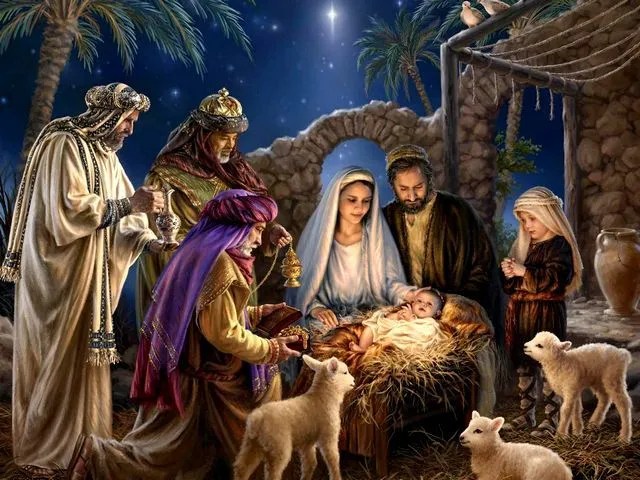
In His humility too, He was born in a small stable, rejected by others, from inns and houses, that He had to be born among the animals and shepherds. He lived as a carpenter’s son and was ridiculed by His own people, the people of Nazareth, when He revealed the truth about Himself to them. He was humble in all of His ways and loving in all of His actions.

There is nothing that exemplifies His humility better than that of His ultimate sacrifice on the cross. That He lowered Himself to die a death of a slave, the death on the cross, condemned to death despite His innocence, for the sake of all of us. But that is also where the Lord’s words came true even more. That is because the symbol of the cross was transformed forever, from the symbol of shame to be a symbol of hope and victory.

Christ rose up from the dead in glory on the third day after His death, and He took His rightful place as the Lord of all things, having saved mankind through His death, that they will not die but live. On the other hand, the prideful and arrogant Satan was cast down in great shame, and forever he is condemned to the punishment prepared for him, for his prideful rebellion against the Lord.

With humility, we will go a long way, because with humility in our heart, we will be more ready to open it to the love of God, to the wisdom of God, and to His saving power. We will be more ready to listen to Him and take in all the teachings that He had told us, the commandments that He had given us to follow, that we become truly faithful and obedient to He who created us.

Humility allows one to understand one’s faults and weaknesses more readily, and also the understanding, that one’s sins had prevented one from reaching the Lord and eternal joy in heaven. That this will likely make one to atone for one’s own sins and do things that help to overcome those sins as well as doing good for others. That is how important humility truly is.

Without humility, we tend to be prone to fall into our own pride, and end up shutting the Lord and even our other beloved ones from our heart. We will tend to build up our ego, to the point that we think only about ourselves, and not for others, at all. We tend to do things for our own glory, and praising ourselves for our own greatness, without realising that, without God we are really nothing.

Today, brethren, we celebrate the feast of St. Jerome, a great writer of the early Church, and one of the greatest Doctors of the Church, as one of the original Four, together with St. Augustine, St. Gregory Nazianzen and St. as strong pillars of the Church. St. Jerome lived at a time when the faith has begun to take hold over the entire Roman Empire after it was no longer persecuted.

St. Jerome’s contribution to the Church is truly great, especially to the Church in the western parts of the Empire. The Roman Empire was a vast Empire spanning from Britain and the Atlantic Ocean all the way to the Middle East and Egypt, encompassing the entire Mediterranean Sea basin. The western part of that Empire spoke primarily Latin and its dialectic derivatives, the official language of the Empire.

The eastern part however, spoke primarily Greek and a variety of other ancient languages, and because the faith came and arose from that region, much of the Scripture that we know today was written in Greek or in the other eastern languages. It is St. Jerome who opened the doorway to the Scripture in the west, and therefore to us, by being the first to translate the Septuagint, that is the Greek Scripture, into the Vulgate, the Latin Scripture, written by St. Jerome himself.

St. Jerome also courageously defended the true and orthodox faith, defending it against every kind of aberrations and heresies that threatened to split the Church apart at that time. Through his writings and other works, St. Jerome kept the Apostolic faith alive and strong even in difficult times.

Therefore, brothers and sisters in Christ, today, as we celebrate the feast of this great saint, St. Jerome, let us also strive to be more like him. St. Jerome is an ascetic, one who withdrew from the pleasures of the world and reject worldly glories, putting the Lord above everything else. He is also humble, and he did his work with great humility, and yet he bore much fruits.

That is why, brethren, we too should emulate him, in doing good works in our own ways, even in small little ways. Because even in little things, good can eventually come in abundance. In humility too, we can become great, not in the way that the world sees it, but instead in the eyes of the Lord. Humility bears love, and that love will bear much good. Even in his ‘humble’ work as a writer, St. Jerome’s good works still affect us even until this day. All the Bibles that we read today eventually had their roots from the works of St. Jerome.

May St. Jerome intercede for us and pray always for us sinners, that we can remain in the grace of God, and receive His heavenly blessings. May God be with us and remain with us always. Amen.

Monday, 30 September 2013 : 26th Week of Ordinary Time, Memorial of St. Jerome, Priest and Doctor of the Church (Gospel Reading)

Liturgical Colour : White

Luke 9 : 46-50

One day the disciples were arguing about which of them was the most important. But Jesus knew their thoughts, so He took a little child and stood him by His side.

Then He said to them, “Whoever welcomes this little child in My Name, welcomes Me; and whoever welcomes Me, welcomes the One who sent Me. And listen : the one who is found to be the least among you all, is the one who is the greatest.”

Then John spoke up, “Master, we saw someone who drives out demons by calling upon Your Name, and we tried to forbid him, because he does not follow You with us.” But Jesus said, “Do not forbid him. He who is not against you is for you.”

Monday, 30 September 2013 : 26th Week of Ordinary Time, Memorial of St. Jerome, Priest and Doctor of the Church (Psalm)

Liturgical Colour : White

Psalm 101 : 16-18, 19-21, 29 and 22-23

O Lord, the nations will revere Your Name, and the kings of the earth Your glory, when the Lord will rebuild Zion and appear in all His splendour. For He will answer the prayer of the needy and will not despise their plea.

Let this be written for future ages, “the Lord will be praised by a people He will form.” From His holy height in heaven, the Lord has looked on the earth to hear the groaning of the prisoners, and free those condemned to death.”

Your servants’ children will dwell secure; their posterity will endure without fail. Then the Name of the Lord will be declared in Zion, and His praise in Jerusalem, when the peoples and the kingdoms assemble to worship Him.

Monday, 30 September 2013 : 26th Week of Ordinary Time, Memorial of St. Jerome, Priest and Doctor of the Church (First Reading)

Liturgical Colour : White

Zechariah 8 : 1-8

The word of YHVH, the God of hosts was directed to me in this way, “I am intensely jealous for Zion, stirred by a burning anger for her sake. YHVH says : I will return to Zion and live in her midst. Jerusalem shall be called City of faithfulness and the Mountain of YHVH of hosts, the Mountain of holiness.”

YHVH, God of hosts speaks, “Old men and women will again sit in the squares, each with a stick in hand on account of their great age. The squares of the city will be filled with girls and boys playing.”

YHVH, God of hosts declares, “If that seems impossible in the eyes of those who have returned from exile, will it be impossible for Me as well?” – word of YHVH.

YHVH, God of hosts says, “See, I am going to save My people, bringing them from the east and from the west, and they will live in Jerusalem. They will be My people and I shall be their God in truth and in justice.”

Friday, 27 September 2013 : 25th Week of Ordinary Time, Memorial of St. Vincent de Paul, Priest (Scripture Reflections)

Liturgical Colour : White

Dear brothers and sisters in Christ, today Christ revealed His identity to His disciples, after asking them whether they know who He truly was. And the prophet Haggai in the first reading, comforted the people of God who laid in ruins after they returned to the land the Lord had given them after a long exile in Babylon.

In Christ, the Son of God, the world has been given the salvation that God had promised for them. In Christ, who is not mere man but a divine made man, the world achieve a fullness of glory in the Lord, the perfection that has been taken from us when we became lost after our rebellion at the beginning of Creation.

Christ is the fulfillment of God’s promise to mankind over time which He renewed through the prophets, and finally perfected in Jesus. God resolved to rebuild the destroyed mankind that they once again become His beloved ones, freed from sins and slavery to the worldly pleasures and sins.

Yet, although He is a conquering King who comes to destroy death and sin, and be triumphant over all evils, but He came as a humble King, One who is destined to suffer and die. Yes, death for our sake, that through the death, we may not die but live eternal with Him. He is the Lamb of God, the One to be slaughtered and whose Blood is to be shed, for the sake of all of us, for our salvation.

Although He is great and mighty, He faced suffering, persecution, and death, that He took in into Himself all the sins and sufferings of mankind, that we do not have to suffer them for eternity, and instead enjoy life everlasting in happiness with God. This is the renewal the Lord promised to the returned exiles of Israel through the prophet Haggai and the other leaders of the people. The renewal God had sent through His own Son, Jesus Christ.

The Lord loves us so much, that He was not willing to see us to suffer with the devil in eternal fire, to suffer for the consequences of our sins and faults. That was why He sent us Jesus, to be our Help, our Hope, and our Way, to return to Him, to reclaim the true joy, happiness, and the inheritance that we had forsaken when we disobeyed Him in the garden of Eden.

All that, and He was ready to endure lashes, torture, nails, and the cross itself.  The Lord Jesus walked that arduous path towards Calvary, enduring the weight of that cross, bleeding from His wounds, to die a criminal’s death on the cross, in Calvary, for our sake. Imagine the combined weight of the world’s sins, that is the sins of all mankind. That was the weight of the burden which caused Christ much pain and suffering, and He endured it.

At the same time, through that sacrifice of Himself, God had made His love for His people evident, by the giving of Himself for out sake. He gave us all new hope and light in life. Remember, before the glorious cross, the cross of Christ resurrected from the dead, there is always the cross of suffering, that is the cross taken up by the Christ suffering for our sins.

We cannot abandon the Christ, both in His glory and in His time of greatest humiliation on the cross, the humiliation that he turned into glory. That is why, brethren, we have a mission that has been given to all of us and that is to proclaim the crucified Christ to all people, to all the nations, especially to those who have yet to hear about the wondrous Christ and His works of salvation.

Today, we commemorate the feast of St. Vincent de Paul, one of the great saints in the Church, who was well known for his commitment to the Lord, especially to the weak, the poor, and the unloved. St. Vincent de Paul was born in France and was educated to be a faithful and good follower of Christ, when he was captured among many by the Algerian pirates running rampant in the region during his time, and was made into a slave.

St. Vincent de Paul was enslaved and sold to a renegade Catholic owner, until he managed to convince him to return to the faith, who then helped to get St. Vincent to be released from his slavery. He then committed the rest of his life as a worker of the Lord, caring for the last, the lost, and the least in the society, emphasizing on the need to give love to these people, and not abandon them to the darkness.

St. Vincent de Paul was particularly caring about those who were enslaved, being once a slave himself, and showed them the true nature of Christian love, that is dedication and the giving of oneself for the sake of others in need. He was truly the embodiment of who we all Christians ought to become, to be people for others, to be faithful disciples of the Lord who is Love.

Therefore, brothers and sisters in Christ, let us follow the examples of St. Vincent de Paul, making real our faith in this world, through our dedication and service to our brethren in need. We do not have to do big things, but what we can do is, to do even simple things to those around us, to those whom we meet along the way, giving them simple acts of love.

Even these small acts are significant, brethren, and we must not discount them for bigger and more ambitious acts of charity, as it is in these small acts that we can do daily that truly make the difference, and truly bring out the love that we have in us, and sharing it with one another. St. Vincent de Paul, pray for us always, that in all the things we do, we may be more inspired to be charitable and loving. God bless us all, always. Amen.

Friday, 27 September 2013 : 25th Week of Ordinary Time, Memorial of St. Vincent de Paul, Priest (Gospel Reading)

Liturgical Colour : White

Luke 9 : 18-22

One day, when Jesus was praying alone, not far from His disciples, He asked them, “What do people say about Me?” And they answered, “Some say that You are John the Baptist; others say that You are Elijah, and still others that You are one of the prophets of old, risen from the dead.”

Again Jesus asked them, “But who do you say that I am?” Peter answered, “The Messiah of God.” Then Jesus spoke to them, giving them strict orders not to tell this to anyone.

And He added, “The Son of Man must suffer many things. He will be rejected by the elders and chief priests and teachers of the Law, and be put to death. Then after three days, He will be raised to life.”

Friday, 27 September 2013 : 25th Week of Ordinary Time, Memorial of St. Vincent de Paul, Priest (Psalm)

Liturgical Colour : White

Psalm 42 : 1, 2, 3, 4

Make justice, o God, and defend my cause against an ungodly people; deliver me from the wicked and deceitful.

You are my God, my Stronghold, why have You cast me out? Why should I go about mourning, oppressed by the enemy?

Send forth Your light and Your truth; let them be my guide, let them take me to Your holy mountain, to the place where You reside.

Then will I go to the altar of God, to God, my gladness and delight. I will praise You with the lyre and harp, o God, my God.

Friday, 27 September 2013 : 25th Week of Ordinary Time, Memorial of St. Vincent de Paul, Priest (First Reading)

Liturgical Colour : White

Haggai 1 : 15b – Haggai 2 : 9

It was the twenty-fourth day of the sixth month. On the twenty-first day of the seventh month of the second year of the reign of Darius, this word of YHVH was sent through the prophet Haggai, “Give this message to Zerubbabel, the governor of Judah, and to Joshua, the high priest, and to all the people :

Is there left among you one of those who saw this House long ago in the time of its glory? What do they think of what they see now? Is it not a very little thing? But I say to you, Zerubbabel, Joshua, and My people : do not be discouraged. Begin to work, for I am with you, says YHVH. Do not be afraid, for My Spirit is in your midst.

Thus says YHVH of hosts, within a short while I will shake the heavens and the earth, the sea and the continents. Then I will shake all the nations and bring in the treasures of the whole world. I will fill this House with glory, says YHVH. I will have as much silver and gold as I wish. The renown of this Temple will be greater than before, and in this place I will give peace,” says YHVH of hosts.

Thursday, 26 September 2013 : 25th Week of Ordinary Time, Memorial of Saints Cosmas and Damian, Martyrs (Scripture Reflections)

Liturgical Colour : Green or Red

Dear brothers and sisters in Christ, today we heard the story on Jesus, and on who Jesus truly is. Yes, Christ is the Son of God, God incarnate into man, the Word of God made flesh, but what is the significance to us? What is the significance of the coming and the revelation of this Man, who made even Herod tremble, hearing about His Name and His deeds?

That is because, dear brethren, Christ is the bringer of new hope, the new hope in God, in the same way as how we heard in the first reading today, on the prophet Haggai admonishing the people of Israel for not taking their part in the rebuilding of the House of God in Jerusalem. Through Christ, the House of God long forgotten and which laid in ruins, was rebuilt, in all its new splendour and glory.

That new House of God is us, brothers and sisters in Christ, that is the Body of Christ, that is the One, Holy, Catholic, and Apostolic Church. Through Christ, we had been brought together into one, as one people, and towards God. The old, ruined house had been rebuilt, and a new hope arose for all mankind and for all creation marred by sin.

The first physical House of God, that is the First Temple of Jerusalem, the Temple King Solomon had built, was truly magnificent and mighty, and yet, it faltered and was destroyed, when Jerusalem and Israel were both given over to their enemies, to the Babylonians who enslaved them for years. The Temple, as the symbol of the unity of the people of God was destroyed and the people of God was scattered, because they themselves had rejected the Lord and His love.

The prophet Haggai criticised the people and rebuked them, because they seemed to become lax in their faith, in how they showed no concern and general ignorance on the need to rebuild the House of God in the midst of His people. All these while they themselves lived well and had had a good life. They lived according to the world and gave in to the temptations of the world. Sin still held mastery over them, and enslaved they were to it.

The Lord sent His own Son, Jesus the Christ as the One who would reestablish that Temple, and not just any Temple like that of Solomon, but an eternal Temple, the renewed House of God, of all the people of God, reunited once again as one people, united by Christ the Lord, through His sacrifice on Calvary. That Temple is the new Temple, also known as the Temple of the Holy Spirit, that are our physical bodies, all of us who had accepted Christ and He dwells in us.

Just as the Temple of Jerusalem housed the Lord residing among the people in the Holy of Holies, we too house the Lord within each one of us. That is why we have to keep ourselves pure and holy, and therefore worthy of His presence within us. Not only pure and clean in physical terms, but even more importantly, the purity of our soul, our spiritual being, from any kind of sins or fornication.

Today, we celebrate the feast of two saints, St. Cosmas and Damian, who are well-known martyrs of the Church, and they were martyred for their faith at the last great persecution against the faithful ones of God, during the late Roman Empire. St. Cosmas and Damian were twin brothers who were doctors and faithful servants of the Lord living in the late third century after the birth of Christ.

St. Cosmas and Damian worked hard for the good of the people of God and even performed miracles on the sick, bringing them back to good health, even in impossible cases. Yet, the Roman Emperor at the time, Diocletian, was staunchly against the faithful of the Lord, and ordered a vicious persecution on them, killing and capturing many, torturing them to abandon the faith in God.

St. Cosmas and Damian were also among those who were imprisoned for their faith, and despite attempts, persuasion, and even torture to make them recant their faith went nowhere, and they stayed ever faithful and did not budge even in the face of suffering and death. They were crucified, shot with arrows, and finally beheaded. They spilled their blood defending their faith, keeping their purity, the purity of their souls from the taints of sin.

Therefore, brothers and sisters, following the example of Saints Cosmas and Damian, let us also strive to strengthen ourselves, our faith in God, and our love, that we will be ever holy and worthy for our God, that we, as the Temples of the Lord, where He resides, will be found worthy and that God will reside in us, and we in Him, that we will be welcomed into His kingdom on the last day.

Pray for us, St. Cosmas and Damian, that we will be always inspired by your examples and strive to keep our faith strong and alive in Christ. May God bless us all. Amen.

Thursday, 26 September 2013 : 25th Week of Ordinary Time, Memorial of Saints Cosmas and Damian, Martyrs (Gospel Reading)

Liturgical Colour : Green or Red

Luke 9 : 7-9

King Herod heard of all this, and did not know what to think, for people said, “This is John, raised from the dead.” Others believed that Elijah, or one of the ancient prophets, had come back to life. As for Herod, he said, “I had John beheaded. Who is this Man, about whom I hear such wonders?” And he was anxious to see Him.