(Usus Antiquior) Assumption of the Blessed Virgin Mary (Double I Classis) – Friday, 15 August 2025 : Epistle

Liturgical Colour : White

Lectio libri Judith – Lesson from the Book of Judith

Judith 13 : 22-25 and Judith 15 : 10

Benedixit te Dominus in virtute Sua, quia per te ad nihilum redegit inimicos nostros. Benedicta es tu, filia, a Domino Deo excelso, prae omnibus mulieribus super terram. Benedictus Dominus, qui creavit caelum et terram, qui te direxit in vulnera capitis principis inimicorum nostrorum; quia hodie nomen tuum ita magnificavit, ut non recedat laus tua de ore hominum, qui memores fuerint virtutis Domini in aeternum, pro quibus non pepercisti animae tuae propter angustias et tribulationem generis tui, sed subvenisti ruinae ante conspectum Dei nostri.

Tu gloria Jerusalem, tu laetitia Israel, tu honorificentia populi nostri.

English translation

The Lord had blessed you with His power, because by you He had brought our enemies to nought. Blessed are you, o daughter, by the Lord the Most High God, above all women upon the earth. Blessed be the Lord, who made heaven and earth, who had directed you to the cutting off the head of the prince of our enemies, because He had so magnified your name this day, that your praise shall not depart out of the mouth of men who shall be mindful of the power of the Lord, forever. For that you have not spared your life, by reason of the distress and tribulation of your people, but have prevented our ruin in the presence of our God.

You are the glory of Jerusalem, you are the joy of Israel, you are the honour of our people.

(Usus Antiquior) Assumption of the Blessed Virgin Mary (Double I Classis) – Friday, 15 August 2025 : Introit and Collect

Liturgical Colour : White

Introit

Apocalypse 12 : 1 and Psalm 97 : 1

Signum magnum apparuit in caelo : mulier amicta sole, et luna sub pedibus ejus, et in capite ejus corona stellarum duodecim.

Cantate Domino canticum novum : quia mirabilia fecit.

Response : Gloria Patri et Filio et Spiritui Sancto, sicut erat in principio, et nunc, et semper : et in saecula saeculorum. Amen.

English translation

A great sign appeared in heaven : A woman clothed with the sun, and the moon under her feet, and on her head a crown of twelve stars.

Sing all of you to the Lord a new canticle, because He had done wonderful things.

Response : Glory be to the Father and to the Son and to the Holy Spirit, as it was in the beginning, is now, and ever shall be, world without end. Amen.

Collect

Omnipotens sempiterne Deus, qui Immaculatam Virginem Mariam, Filii Tui genetricem, corpore et anima ad caelestem gloriam assumpsisti : concede, quaesumus; ut, ad superna semper intenti, ipsius gloriae mereamur esse consortes. Per eumdem Dominum nostrum Jesum Christum Filium Tuum, qui Tecum vivit et regnat in unitate Spiritus Sancti Deus, per omnia saecula saeculorum. Amen.

English translation

Almighty, everlasting God, You Who have taken up the Immaculate Virgin Mary, the Mother of Your Son, with body and soul into heavenly glory, grant we beseech You, that we may always, intent on higher things, deserve to be partakers of her glory. Through the same Lord Jesus Christ, Your Son, who with You lives and reigns in the unity of the Holy Spirit, God, world without end. Amen.

Friday, 15 August 2025 : Vigil Mass of the Solemnity of the Assumption of the Blessed Virgin Mary (Homily and Scripture Reflections)

Liturgical Colour : White

Dear brothers and sisters in Christ, this evening before the fifteenth day of August, all of us as the Church of God gather together to celebrate the Vigil of the Solemnity of the Assumption of the Blessed Virgin Mary, commemorating the moment when Mary, the Mother of God, of Our Lord and Saviour Jesus Christ, was taken up body and soul into Heaven at the end of her earthly life at the time that God had appointed it. This celebration of the Assumption of the Blessed Virgin Mary is also celebrated similarly as the Dormition of the Virgin Mother of God in the Eastern churches and traditions, both of which highlighted not just the importance of Mary in our Christian faith but also the role that she has played in the history of our salvation.

In the Dogma of the Assumption of the Blessed Virgin Mary, one of the Four Marian Dogmas and the latest of the four to the officially declared as a Dogma, by the Venerable Pope Pius XII in the Year of Our Lord 1950, the Church teaches that Mary, the Mother of God as mentioned was taken up body and soul into Heaven, although the exact manner of which how this was done was left into interpretations, of which there are two major interpretations. And although it was recently declared as a Dogma, it did not mean that the Church and the faithful had not believed in the Assumption of Mary earlier on. Instead, since the earliest days of the Church, as attested by the Apostolic accounts and traditions themselves, and passed onto the faithful people of God, the early Christians, they have all upheld that Mary did not remain in this earthly realm in her body, and there was indeed no tomb of Mary that existed, just like that of her Son, Our Lord and Saviour Jesus Christ, Who had risen from the dead and ascended into Heaven.

Now, in order to understand better the Assumption of Mary, let us first delve into our Scripture readings today. In our first reading on this Vigil Mass, we heard from the Book of Chronicles of Israel and Judah in which the story of the moment when David, then King of Israel, was bringing the Ark of the Covenant of God into the city of Jerusalem. The Ark of the Covenant was usually housed in the Holy Tent of Meeting, within the Holy of Holies of that Tent ever since days of the Exodus of the Israelites from Egypt. But King David had wanted to build a permanent House and Temple over the Ark of God, and hence he consulted the prophet of God, which was then the prophet Nathan, on the proposition that he had in wanting to build a great and worthy Temple for God.

We may wonder on why we heard about the Ark of the Covenant on this occasion of the Assumption of the Blessed Virgin Mary, and that must be related to the purpose and intention of the Ark of the Covenant in the salvation of the people of God. The Ark of the Covenant contained the two stone tablets of the Law of God, containing the Ten Commandments that God Himself had written on those two tablets, and then in addition, there was also manna, the heavenly bread that God provided to the Israelites which was preserved in the Ark, together with the Staff of Aaron, the staff that Moses used in leading the Israelites through their journey in the desert, and the same staff by which Moses and Aaron had shown God’s power and might before the Egyptians and their Pharaoh, and all the other miracles and wonders before God’s people.

And this is related to Mary because there are many parallels between the original Ark of the Covenant and Mary being the one to bear within her the Saviour of the world, Jesus Christ our Lord, Who is the Mediator of the New Covenant between God and mankind. Just as the old and original Ark of the Covenant bears within it the evidence and aspects of the original Covenant between God and His people, the Israelites, therefore Mary is the New Ark, of the New Covenant, the New and Eternal Covenant which the Lord our God has lovingly established with each and every one of us, His beloved and chosen people. Why is that so, brothers and sisters in Christ? Because Christ Himself is the fulfilment and perfection of the Law of God, also the Bread of Life, the One Who has given Himself for us all to partake, and He is the One bearing the power and authority of God as the Good Shepherd of all the faithful, with parallel to each of the items stored in the original Ark of the Covenant.

Then, from the second reading today, taken from the Epistle of St. Paul the Apostle to the Church and the faithful in Corinth, we heard of the Apostle speaking about the matter of sin and death, and how the sting of sin is death. Indeed, this is because sin that we have committed against God out of disobedience against Him has led us to be separated from Him, the Master and Lord of life. But the Lord did not let us to perish alone and to be destroyed. He loves each and every one of us, and through His great love and kindness, He has given us all His Son to save us all from our certain damnation and destruction. By the perfect offering of love that He has given to us all, through His most selfless love on the Cross, Christ our Lord has opened for us the gate of Heaven, and becoming the bridge leading us all back to our Heavenly Father.

And He made for us the New and Eternal Covenant, one that is enduring and everlasting, and will not be overcome by any forms of challenges and trials, and not even sin and darkness around us can separate us from the eternal and ever-patient love of God, which He has always constantly poured out upon us. If we put our faith and trust in our Lord and Saviour, Jesus Christ, then surely we shall share in His victory and triumph, which He has won for all of us by His sacrifice on the Cross. By rising from the dead, Christ our Lord and Saviour has been victorious and triumphant against death itself, and hence against the power and dominion of sin, showing that sin and ultimately death do not have the final say over all of us. While we may have to endure the sufferings of death, but in the end, we will be freed from it, in a new and eternal life that we shall share with God.

Lastly, from our Gospel passage today, we heard of the short passage from the Gospel according to St. Luke the Evangelist where the people praised the Lord and the one who had given birth to Him because of everything which He had done in their midst, highlighting His own Blessed Mother Mary. But the Lord told the people that truly blessed are those indeed who listen to the words of the Lord and obeyed them faithfully. In doing so, it does not mean that the Lord was being rude to His own Mother as some of us might be thinking about. In fact, since His own Mother had been a truly great example in listening to the Lord and obeying His commandments, Jesus was using her as an example for everyone, for all of us to follow and to be inspired by, in imitating and following whatever she had done in her own life and actions.

Today’s celebration of the Assumption of Mary has great link to what we believe about her in the other Dogmas, such as the Immaculate Conception and her Perpetual Virginity. Mary had been prepared specially for this role to be the one to bear within her the Son of God Himself incarnate in the flesh. Therefore, even far greater than the original Ark of the Covenant, which had been made from the most noble and precious materials by the hands of men, but incomparable to the New Ark, Mary, that was made and crafted by God Himself, to bear something far greater than what was in the original Ark, the New Covenant that is far greater than the original Covenant, covering not just the people of Israel, but also all the sons and daughters of mankind, to all the whole world.

That was why Mary was kept from the taint of original sin, being conceived without it, in the Immaculate Conception so that no taint of sin would have made her unworthy of bearing the Lord and Saviour of all, God Himself in the flesh. And she remained full of grace throughout her whole life, and hence, to the very end of her earthly existence, Mary remained free from the taint and corruption of sin, and hence according to Apostolic tradition, teachings and beliefs, Mary did not have to suffer from the effects of sin unlike the rest of us mankind, who still have to endure death as the consequence of our sins. That, together with the historic evidence and the testimony of the experiences that the Apostles and the early Christians themselves experienced, Mary was indeed taken up to Heaven in body and soul.

Now, as mentioned, one of the schools of thought highlighted this lack of consequence for sin and death, and therefore Mary did not go through death at all, and was taken up directly into Heaven to the side of her Son. Another school of thought, which is also celebrated as mentioned in the Eastern churches and traditions as the Dormition of the Theotokos, is that Mary did still die, but not because she had to suffer the consequences of sin, which is death, and she did not die as a punishment for her own sins, because she was free from it. Rather, she died, and went through the process peacefully akin to falling asleep, and hence ‘Dormition’, and all these happened because she wanted to share in the same death that her own Son suffered on the Cross, out of love for Him, so that she would be like just her Son in all things.

Brothers and sisters in Christ, Mary showed us all the preview of what we ourselves will experience in the end of times, when we too shall share with her the fullness of the resurrection, as we are lifted up in body and soul, reunited fully with each other, truly living a new and eternal life with the Lord, to enjoy forever the inheritance that God has planned and meant for each and every one of us. That is why, we too should seek to follow the Lord wholeheartedly and worthily in the same way as our Blessed Mother herself had done, so that in all of our words, actions and deeds, in our every dealings and interactions with one another we will continue to be good examples and inspirations for one another as good disciples and followers of the Lord.

May God be with us always and may through the intercession of our loving Mother, Mary ever Virgin, assumed body and soul into Heaven, and now seated at the right hand of her Son’s Throne, we will continue to be guided and strengthened in our respective journeys in life. May God bless our every good works and endeavours, and may His blessed Mother continue to intercede and pray for us, now and always. Holy Mary, Mother of God, gloriously assumed into Heaven, pray for us sinners now and at the hour of our death. Amen.
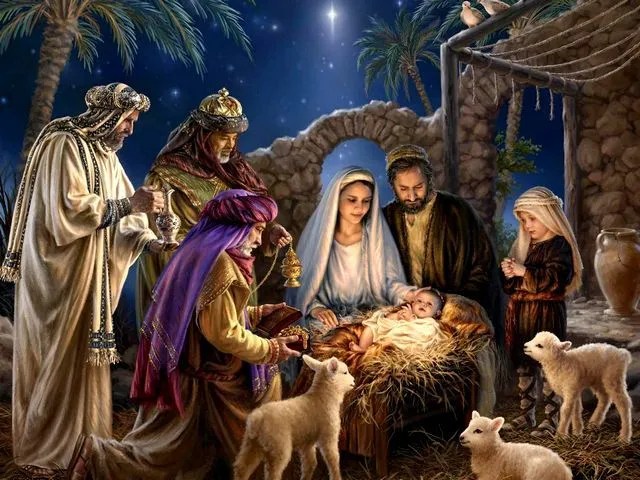
Friday, 15 August 2025 : Vigil Mass of the Solemnity of the Assumption of the Blessed Virgin Mary (Gospel Reading)

Liturgical Colour : White

Luke 11 : 27-28

At that time, as Jesus was speaking, a woman spoke from the crowd and said to Him, “Blessed is the one who gave You birth and nursed You!”

Jesus replied, “Truly blessed are those who hear the word of God, and keep it as well.”

Friday, 15 August 2025 : Vigil Mass of the Solemnity of the Assumption of the Blessed Virgin Mary (Second Reading)

Liturgical Colour : White

1 Corinthians 15 : 54b-57

When our mortal being puts on immortality, the word of Scripture will be fulfilled : Death has been swallowed up by victory. Death, where is your victory? Death, where is your sting?

Sin is the sting of death, to kill, and the Law is what gives force to sin. But give thanks to God, Who gives us the victory, through Christ Jesus, our Lord.

Friday, 15 August 2025 : Vigil Mass of the Solemnity of the Assumption of the Blessed Virgin Mary (Psalm)

Liturgical Colour : White

Psalm 131 : 6-7, 9-10, 13-14

Then came the news, “The Ark is in Ephrata, we found it in the fields of Jaar.” Let us go to where He dwells and worship at His footstool!

May Your priests be arrayed in glorious mantle; may Your faithful ones shout in gladness. For the sake of Your servant, David, do not turn away the face of Your Anointed.

For YHVH has chosen Zion; He has desired it for His dwelling : “This is My resting place forever; this I prefer; here, will I dwell.”

Friday, 15 August 2025 : Vigil Mass of the Solemnity of the Assumption of the Blessed Virgin Mary (First Reading)

Liturgical Colour : White

1 Chronicles 15 : 3-4, 15-16 and 1 Chronicles 16 : 1-2

Then David gathered all Israel together in Jerusalem to bring the Ark of God up to the place he had prepared for it. David called together the sons of Aaron and the sons of Levi. And the Levites carried the Ark of God with the poles on their shoulders, as Moses had ordered according to the command of YHVH.

David then told the leaders of the Levites to assign duties for some Levites to sing and play a joyful tune with their various musical instruments : harps and lyres and cymbals. They brought the Ark of God in and put it inside the tent that David had prepared for it; and they offered burnt offerings and peace offerings to God.

And when David had finished offering the sacrifices, he blessed the people in the Name of YHVH.

Thursday, 14 August 2025 : 19th Week of Ordinary Time, Memorial of St. Maximilian Kolbe, Priest and Martyr (Homily and Scripture Reflections)

Liturgical Colour : Red

Dear brothers and sisters in Christ, today as we all gather together and listen to the words of the Sacred Scriptures, we are all reminded to be compassionate and merciful, loving and kind in all of our dealings and actions. As Christians, that is as those whom God had called and chosen, we have to strive to follow the Lord’s own examples in love and compassion, in truly caring for those who are around us, especially to those who have not experienced love and care, those who have been abandoned, ostracised and treated badly by their society, all those who need our love, care and attention. And all those things are what we should be doing as Christians, as those who have been called to follow Christ in all things that we say and do.

In our first reading today, we heard from the Book of Joshua detailing for us the events that happened as the people of Israel were about to cross the River Jordan and enter the promised land of Canaan. We heard of God’s reassurance to Joshua, the successor of Moses as the leader of the Israelites, and the instructions on what they all had to do, bringing the Ark of the Covenant to the middle of the River itself so that the river can be passed through by the whole nation of the Israelites. God Himself is present through the Ark of the Covenant, leading His beloved and chosen people into the land that He has promised to them, and for which they had laboured and waited for a long time in the wilderness.

From what we heard in today’s reading of that account, we can clearly see the power of God in guiding His people, as He continued to bless them and help them throughout their journey, stopping the flow of the River Jordan itself to allow His people to safely cross through to their promised land, just as He had done earlier with the sea that He had split open to allow them to escape the Egyptians and their armies and chariots. God reminded His people that whatever He has revealed and promised to them, He would continue to honour and fulfil, and if they remain in faith in Him, then they shall truly be blessed and happy, in the land that He has promised to all of them. He will never abandon them even though they themselves had frequently abandoned Him for the pagan idols or all sorts of worldly pursuits and desires that they had.

Then, from our Gospel passage today, taken from the Gospel according to St. Matthew the Apostle and Evangelist, we heard of the parable of the ungrateful and unforgiving servant who had not treated his fellow servant in the manner of how he had been graciously treated by his master. In that parable, we heard of how the ungrateful servant had owed his master a large sum of money, and when he begged for mercy and patience from the master, his master showed that servant compassion and forgiveness, forgiving that servant everything that he had owed him, even though it was a rather large sum of money. And then, we heard of how this same servant then went to another fellow servant who owed him money and demanded that fellow servant to return him his money that the latter had borrowed, even though it was a far lesser sum than what he owed his master.

This parable is a reminder for all of us to show compassion and mercy to one another, to be kind and not to behave like that ungrateful servant. The servants themselves represent each and every one of us, while the master is a representation of the Lord, our God Himself. The debts which the servants owed to the master and to each other represent the sins which we have committed both against God and against one another. By looking at the master’s action in forgiving that ungrateful servant of the great amount of debt that he had owed him, and how the master expected his servants to do the same for one another, which the ungrateful servant obviously did not do, it is a reminder for all of us that God Who has forgiven us all our sins, despite how great they may be, also expect us all to forgive each other’s sins too, every faults and mistakes we did to one another, and to love one another as He has loved us.

Brothers and sisters in Christ, do we remember the line from the Lord’s Prayer, ‘Forgive us all our trespasses, just as we have forgiven those who trespassed against us?’ This is precisely what we are reminded to do as Christians, to be loving, compassionate and forgiving to each other in all of our actions and dealings, in our interactions and in every moments of our lives. And unless we do so, we cannot truly call ourselves as genuine and true Christians, as God’s holy and beloved people. We must be compassionate and merciful as God has been that way towards us, ever generous and compassionate with His love and mercy. This is how we should live our lives as Christians, as the ones who should embody our Christian faith not just merely in words, but also through real actions, in each and every moments of our lives.

Today, the Church celebrates the Feast of St. Maximilian Kolbe, a great and renowned saint, a faithful martyr and servant of God who had dedicated his whole life to the service of God, and whose love and compassion for others inspired many people who heard his stories and experiences. St. Maximilian Kolbe was born in Poland to a mixed German-Polish family towards the end of the nineteenth century, which at that time was part of the Russian Empire. He and his elder brother joined the Conventual Franciscans when they were teenagers and eventually going through the professions and was ordained as a priest after a tough experience in the First World War where his own father was caught and hanged as a traitor by the Russians during that war.

St. Maximilian Kolbe founded the popular Militia Immaculatae, a Catholic evangelisation movement that emphasised on evangelisation and conversion of sinners through the intercession of the Blessed Virgin Mary, in whom St. Maximilian Kolbe had a deep devotion for. That popular organisation and its popular publication continued to grow as St. Maximilian Kolbe continued to work hard for the Lord and His people, gathering more and more followers. Then, St. Maximilian Kolbe himself endeavoured to go on missionary works in distant lands, proclaiming the Good News of God to more and more people. This came true when he went to the Far East in the early 1930s, ministering to the faithful in Asia as far as Japan, where he spent several years in missionary works.

Eventually, St. Maximilian Kolbe returned to his native Poland just before the beginning of the Second World War, which began approximately two decades after the end of the previous World War. He ministered to the people of God faithfully even during the years of the German occupation, when the NAZI regime conquered his native Poland and caused a lot of atrocities in the region. He was eventually arrested when his monastery was forcefully closed under the NAZI regime, and was brought into prison before being transferred to the infamous Auschwitz concentration camp. At that concentration camp, St. Maximilian Kolbe continued to minister to the faithful inmates, strengthening and encouraging them all amidst the difficult and challenging times.

Then, in one occasion, the escape of several inmates from the concentration camp led to the camp commander ordering the deaths of several prisoners as a punishment for those that escaped. And when one of the Polish man to be condemned to death cried out for his family and children, St. Maximilian Kolbe volunteered to take his place among the condemned. That was how St. Maximilian Kolbe was then put into the cell meant for those condemned to death, deprived of food and water for two weeks, and eventually, when the guards found that St. Maximilian Kolbe and three others were still alive, they were killed by lethal injection of carbolic acid. That was how St. Maximilian Kolbe encountered martyrdom for his faith in God, his endless dedication to God and his love and compassion for his fellow brothers and sisters.

Brothers and sisters in Christ, let us all therefore be inspired by the good examples, faith and love shown by St. Maximilian Kolbe, and from what we have discussed earlier on through the Scripture readings, that we will always practice our faith in the manner that God Himself has shown, taught and reminded us, to be truly genuine in our love for God and for one another, reminding ourselves of God’s ever generous and patient love, and doing our best to show that love in each and every one of our actions as well. May God bless us all and strengthen us in our journey of faith in life, now and always. Amen.

Thursday, 14 August 2025 : 19th Week of Ordinary Time, Memorial of St. Maximilian Kolbe, Priest and Martyr (Gospel Reading)

Liturgical Colour : Red

Matthew 18 : 21 – Matthew 19 : 1

At that time, Peter asked Jesus, “Lord, how many times must I forgive the offences of my brother or sister? Seven times?” Jesus answered, “No, not seven times, but seventy-seven times.”

“This story throws light on the kingdom of Heaven : A king decided to settle accounts with his servants. Among the first of them was one who owed him ten thousand pieces of gold. As the man could not repay the debt, the king commanded that he be sold as a slave with his wife, his children and all his goods, as repayment.”

“The servant threw himself at the feet of the king and said, ‘Give me time, and I will pay you back everything.’ The king took pity on him, and not only set him free, but even cancelled his debt. When this servant left the king’s presence, he met one of his fellow servants, who owed him a hundred pieces of silver. He grabbed him by the throat and almost choked him, shouting, ‘Pay me what you owe!'”

“His fellow servant threw himself at his feet and begged him, ‘Give me time, and I will pay everything.’ But the other did not agree, and sent him to prison until he has paid all his debt. Now the servants of the king saw what had happened. They were extremely upset, and so they went and reported everything to their lord.”

“Then the lord summoned his servant and said, ‘Wicked servant, I forgave you all that you owed me when you begged me to do so. Were you not bound to have pity on your fellow servant, as I had pity on you?’ The lord was now angry. He handed the wicked servant over to be punished, until he had paid the whole debt.”

Jesus added, “So will My heavenly Father do with you, unless you sincerely forgive your brothers and sisters.” When Jesus had finished these sayings, He left Galilee and arrived at the border of Judea, on the other side of the Jordan River.

Thursday, 14 August 2025 : 19th Week of Ordinary Time, Memorial of St. Maximilian Kolbe, Priest and Martyr (Psalm)

Liturgical Colour : Red

Psalm 113A: 1-2, 3-4, 5-6

Alleluia! When Israel came out of Egypt, the family of Jacob, from a people of foreign language. Judah became His Sanctuary; Israel, His possession.

At His sight, the sea fled and the Jordan retreated; the mountains skipped like rams, the hills frolicked like lambs.

Why is it, sea, that you flee? Jordan, that you turn back? Mountains, that you skip like rams? Hills, that you frolic like lambs?