Friday, 18 October 2013 : 28th Week of Ordinary Time, Feast of St. Luke the Evangelist (Gospel Reading)

Liturgical Colour : Red

Luke 10 : 1-9

After this, the Lord appointed seventy-two other disciples, and sent them two by two ahead of Him to every town and place, where He Himself was to go. And He said to them, “The harvest is plentiful, but the workers are few. So you must ask the Lord of the harvest to send workers to His harvest.”

“Courage! I am sending you like lambs among wolves. Set off without purse or bag or sandals; and do not stop at the homes of those you know. Whatever house you enter, first bless them, saying, ‘Peace to this house!’ If a friend of peace lives there, the peace shall rest upon that person. But if not, the blessing will return to you.”

“Stay in that house, eating and drinking at their table, for the worker deserves to be paid. Do not move from house to house. When they welcome you to any town, eat what they offer you. Heal the sick, who are there, and say to them, ‘The Kingdom of God has drawn near to you.

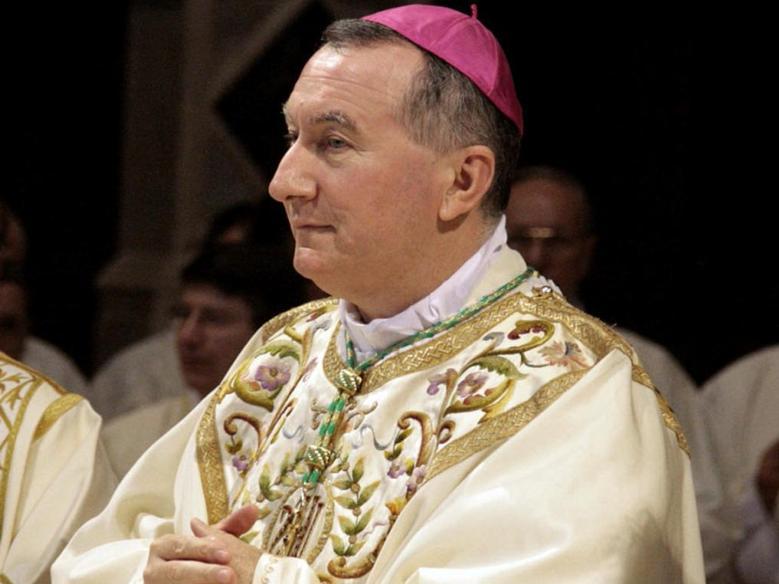
New Secretary of State of the Holy See, Archbishop Pietro Parolin

Image

Archbishop Pietro Parolin, the longtime veteran of the Secretariat of State of the Holy See, and a skilled and veteran diplomat in his current role as the Apostolic Nuncio to Venezuela, as the trusted aide to Pope Benedict XVI (now Pope Emeritus), had been appointed on Saturday, 31 August 2013 as the new Secretary of State, the top position of the Roman Curia, the governing body of the Church.

In addition, as positions tied to the post of Secretary of State, Archbishop Parolin also automatically become the new President of Interdicasterial Commission on Particular Churches (which task is managing the Eastern Catholic Churches), President of Interdicasterial Commission for the Church in Eastern Europe, and the Protector of Pontifical Ecclesiastical Academy.

Image

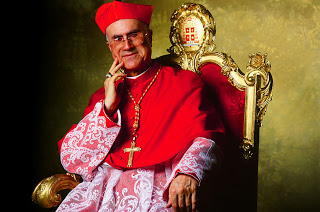
Archbishop Pietro Parolin will replace the outgoing Cardinal Secretary of State, Cardinal Tarcisio Bertone, S.D.B., who is also the Chamberlain (Camerlengo) of the Church, effective on 15 October 2013 as per the decree of Pope Francis released today.

Image

Cardinal Tarcisio Bertone is then the Secretary of State Emeritus effective on the state mentioned in the paragraph above (15 October), when Archbishop Pietro Parolin officially takes over as the new Secretary of State. The position of the Secretary of State is the top in the Roman Curia, below only the Pope in the hierarchy of the Church. Cardinal Bertone will however remain as the Camerlengo of the Church.

We thank Cardinal Bertone for all his hard work and contributions to the Church, many of which were unknown to many, and all the labours he had done in great humility and dedication in his position as the servant of the Holy Church.

As the Secretary of State position is the top official post of the entire Church and the Roman Curia save for the Pope himself, it is expected that the 58 years old Archbishop Pietro Parolin will be made a Cardinal in the next Consistory of Cardinals (possibly early 2014 or late 2014).

Sunday, 7 July 2013 : 14th Sunday of Ordinary Time (Gospel Reading)

Luke 10 : 1-12, 17-20

After this, the Lord appointed seventy-two other disciples, and sent them two by two ahead of Him to every town and place where He Himself was to go. And He said to them, “The harvest is plentiful, but the workers are few. So you must ask the Lord of the harvest to send workers to His harvest. Courage! I am sending you like lambs among wolves. Set off without purse or bag or sandals; and do not stop at the homes of those you know.”

“Whatever house you enter, first bless them, saying, ‘Peace to this house!’ If a friend of peace lives there, the peace shall rest upon that person. But if not, the blessing will return to you. Stay in that house, eating and drinking at their table, for the worker deserves to be paid. Do not move from house to house.”

“When they welcome you to any town, eat what they offer you. Heal the sick who are there, and say to them, ‘The kingdom of God has drawn near to you.'”

“But in any town where you are not welcome, go to the marketplace and proclaim : ‘Even the dust of your town that clings to our feet, we wipe off and leave with you. But know for a certainty that the kingdom of God has drawn near to you.’ I tell you, that on the Day of Judgment it will be better for Sodom that for this town.”

The seventy-two disciples returned full of joy. They said, “Lord, even the demons obeyed us when we called on Your Name.” Then Jesus replied, “I saw Satan fall like lightning from heaven. You see, I have given you authority to trample on snakes and scorpions and to overcome all the power of the Enemy, so that nothing will harm you. Nevertheless, do not rejoice because the evil spirits submit to you; rejoice rather that your names are written in heaven.”


Alternative Reading (shorter version)


Luke 10 : 1-9

After this, the Lord appointed seventy-two other disciples, and sent them two by two ahead of Him to every town and place where He Himself was to go. And He said to them, “The harvest is plentiful, but the workers are few. So you must ask the Lord of the harvest to send workers to His harvest. Courage! I am sending you like lambs among wolves. Set off without purse or bag or sandals; and do not stop at the homes of those you know.”

“Whatever house you enter, first bless them, saying, ‘Peace to this house!’ If a friend of peace lives there, the peace shall rest upon that person. But if not, the blessing will return to you. Stay in that house, eating and drinking at their table, for the worker deserves to be paid. Do not move from house to house.”

“When they welcome you to any town, eat what they offer you. Heal the sick who are there, and say to them, ‘The kingdom of God has drawn near to you.'”

Saturday, 25 May 2013 : 7th Week of Ordinary Time, Memorial of St. Bede the Venerable, Priest and Doctor; Pope St. Gregory VII, Pope; and St. Mary Magdalene de’ Pazzi, Virgin (Scripture Reflection)

Dear brothers and sisters in Christ, today, we learn about God, that God is our Father, our creator. God shaped us from dust, in His own image, that we look like Him, and receiving His Holy Spirit through His breath, we gain life that is anchored in the Spirit that is in all of us.

He is our Father, and like our earthly father, He loves us, protects us, and grant us His grace, through His guidance and numerous blessings to us. He taught us many things through subtle means, and He opened our eyes to the knowledge of the world. He brought us up since the day of our conception and cares for us till the day of our death.

God who is our Father loves us, brothers and sisters in Christ, that He even sent His only Son, one of the Holy Trinity, Jesus Christ, to be one of us, to be a lowly man like us, and in doing so, He brought us even closer to Himself, because we now, through Christ, truly become children of God, because Christ Himself, the Son of God, is our brother, just as He is our Lord and Saviour.

But we have rebelled against His love and His faithfulness to us, and we have rejected Him since the first days of creation, beginning with the disobedience of Adam and Eve in the Garden of Eden, when they ate the fruits of the tree of knowledge of good and evil, trusting Satan in the snake more than they trust the Lord their God and their creator.

Yes, one weakness that mankind particularly has today is greed, my brethren, especially greed for knowledge, curiosity, and an excess of it, which resulted exactly in the rebellion of the first mankind, because of their curiosity of the knowledge of good and evil as tempted by Satan. The Lord has given each one of us wisdom and intellect, but we have never felt enough, and are always curious and wanting to know more.

This is how our modern world rapidly becoming less and less faithful to God, and many turn their hearts away from total obedience and love for God. Many question their faith, because they are curious about the truth behind it, and they trust more alternatives to God such as scientific discoveries, because in those discoveries, they gain more and more knowledge, and this displaces God in their hearts, because to them, science seems to offer them something tangible, as science itself represents something that must be verifiable and visible.

Yes, our God and Lord may not be visible to us, and His presence may not be easily felt, if you apply the standards of science, and the standards of our human stature to it, but God does exist in our hearts, brothers and sisters in Christ, and He is present in all of us, through the Spirit of life that He has given us. What mankind is lacking truly is the ability to transcend that greed for more knowledge and more understanding, but in the process, those greed transform them into a corrupted being.

That is why Christ asks us to be like the children, to have faith like the children, because children are pure and innocent, and in the children lie the fullness of the love of God, and they are beings that can truly love God with all their heart, their mind, and their soul, without being disrupted and clouded by the evils of this world, simply because, in the innocence of their heart, they know only the love of God.

That is why, brothers and sisters in Christ, we too should follow the children’s example, in their pure and unadulterated love for God. If you see a child pray, you can see that their prayer is pure, and not like many of us who utter litany of wishes in our prayer, because we have been tainted by greed and desire, desiring that God grant us our wishes, although prayer is in fact the bridge of faith, our pure connection, a two-way connection between us and God, instead of being a help line or a wishing line.

That is why those of you who are parents with young children, it is important to educate your children well, and ensure that they are protected from the evil influences that are ever present in our world, and in our surroundings. In a world where knowledge had become much more readily accessible and in the reach of even children through the media and the internet, there is a need for greater vigilance, brethren, that we, and especially young children, do not fall prey to Satan’s advances. Knowledge is good, and knowing more is good, but are we able to truly distinguish between truth or lies? and are we able to distinguish between what is good and what is bad?

Today, we also celebrate feast of saints, my brothers and sisters in Christ. Saints because we do not just celebrate one saint, but three saints! They are St. Bede the Venerable, a holy monk living in the seventh and early eighth century England, who contributed greatly to the development of the Church in Britannia, and we also have Pope St. Gregory VII, a great Pope, and a great reformer Pope, who championed the freedom and the authority of the Papacy against secular powers that try to usurp the Church’s authority from it, and finally St. Mary Magdalene de’ Pazzi, a virtuous religious sister who often received visions from the Lord, and was known for her great piety and love for God.

St. Bede the Venerable was a great author who wrote extensively on the early histories of the British Isles, but also made important chronicles of the development of the Church in the West and in Britain, especially in the well known history of the Church and people of England, that is the Historia ecclesiastica gentis Anglorum. His works brought great advancement in the field of learning and knowledge. This shows the greatness of wisdom and intellect that God has given us, and if we utilise it right, we can bring about great good to mankind, just as St. Bede the Venerable had done.

Pope St. Gregory VII, is a great Pope of the medieval era, who championed Papal supremacy and authority over the rulers of Christendom. He persevered over the power of the secular ruler, in the person of the Holy Roman Emperor, the Christendom’s ruler at the time, over the appointment of bishops, which rightfully should belong to the successor of the apostles, the successor of Peter, that is the Pope, alone. He triumphed against those who in their pride think that they know it all and did not pay proper respect to the Lord out of their pride and arrogance.

St. Mary Magdalene de’ Pazzi gained many visions which she received regularly from the Lord, and through her writings on her visions and experiences, many believed in the Lord. This is the proof that knowledge and wisdom indeed comes from God, and from God alone. We humans receive our knowledge and wisdom from the Spirit that is also our life, but we are prone to think that this knowledge and wisdom is our own, and disregard the Lord’s role in it.

Therefore, dear brothers and sisters in Christ, let us from now on, follow in the footsteps of these great saints, and pursue the true knowledge, the truth that is in the Lord. Do not be tempted by the falsehood that this world offers, that is Satan’s temptation. God who loves us will grant us truth, wisdom, and knowledge that is anchored in Him, that we will not fall like Adam and Eve once did. May God be our light of guidance, and steer us on the path to return to Him one day. Amen.

New Curial Appointment for the Archdiocese of Singapore

Image

The new Archbishop of Singapore, Archbishop William Goh Seng Chye, has appointed new members of his Curia, that is the Curia of the Archdiocese of Singapore, which functions to help the Archbishop in his management of the day-to-day affairs in the Archdiocese.


The new appointments :

1. Vicar General (Pastoral) : Monsignor Ambrose Vaz

Ambrose Vaz

2. Vicar General (Administration and Religious) : Monsignor Philip Heng, S.J.

ph-church-01

Both of the Vicar Generals receive the honorary title Monsignor, more precisely titular Monsignor durante munere, that is they are only Monsignori during their term of office as Vicar Generals. The former Vicar General, Monsignor Eugene Vaz therefore is now known as Fr. Eugene Vaz.

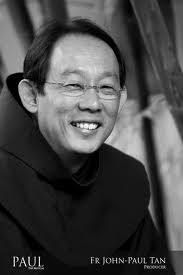
3. Chancellor : Fr. John Paul Tan, O.F.M.

JPTan

4. Episcopal Vicar for New Evangelisation : Fr. Erbin Fernandez

Rev.-Fr-Erbin-Fernandez

5. Executive Secretary (to Archbishop William Goh) : Fr. Ignatius Yeo

fr_Ignatius

6. Financial Administrator : (Permanent) Deacon Clement Chen

de_clement

We pray for all the new appointees of Archbishop William Goh, that both all of them and the new Archbishop will begin their new term of office with God’s every graces and blessings, for the Church in Singapore and in the wider world. God bless!

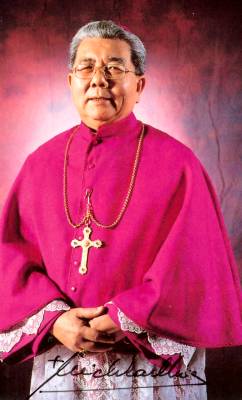
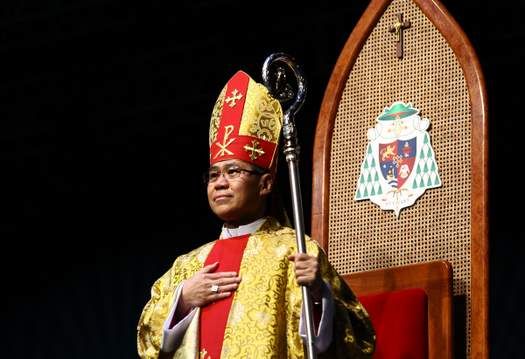
Archbishop William Goh, the new Archbishop of Singapore

http://www.catholicnews.sg/index.php?option=com_content&view=article&id=8794%3Aholy-see-announces-new-archbishop-of-singapore-accepts-retirement-of-his-grace-most-rev-msgr-nicholas-chia&catid=265%3Aannouncements

As of today, Saturday, 18 May 2013, on the eve of the Pentecost Sunday, the Holy See and the Pope Francis has accepted the retirement of Archbishop Nicholas Chia, who will immediately become the Archbishop Emeritus of Singapore. This is in fulfillment of the Code of the Canon Law Can. 401§1, that all bishops upon reaching the age of 75 must tender their resignation to the Holy See, and the See will be empty once the resignation is accepted.

Chia Photo0001

(Above : The now Archbishop Emeritus Nicholas Chia of Singapore)

Archbishop William Goh, the Coadjutor Archbishop of Singapore, therefore, being the coadjutor archbishop, has an immediate right of succession, and thus immediately become the new Archbishop of Singapore, and the proper Ordinary of the Archdiocese, according to the Code of the Canon Law, Can. 404§1, as of today, Saturday, 18 May 2013.

Although today’s (18 May 2013) Vatican bollettino has yet to include this announcement of appointment, but as this news comes from the Apostolic Nunciature to Singapore, it is expected that by Monday, the bollettino will reflect this new change in the Church.

elbishop

(Above : The new Archbishop of Singapore, Archbishop William Goh)

The installation Mass of the new Archbishop of Singapore is expected to be soon, to be held at the Cathedral of the Good Shepherd, which will also be soon closed for major renovation.

images

Pope Francis’ Schedule of Celebrations and Events from May to July 2013 (After Pentecost to World Youth Day)

http://attualita.vatican.va/sala-stampa/bollettino/2013/05/17/news/31002.html

Pope Francis’ schedule for the months of May to July 2013 (After Pentecost Sunday to World Youth Day 2013)


May 2013


Thursday, 23 May 2013 at 6 pm in the Basilica of St. Peter, Vatican

Profession of faith with the bishops of the Italian Episcopal Conference (CEI)


Sunday, 26 May 2013 at 9.30 am (Solemnity of the Most Holy Trinity)

Visit to the Parish of St. Elizabeth and Zachary in the Diocese of Rome, followed by Holy Mass


Thursday, 30 May 2013 at 7 pm in the Lateran Square (in front of the Lateran Basilica)

Holy Mass of the Solemnity of the Most Precious Body and Blood of our Lord (Corpus Christi), followed by Eucharistic Adoration and Procession to the Basilica of St. Mary Major.


June 2013


Sunday, 2 June 2013 (9th Ordinary Sunday) at 6 pm in the Basilica of St. Peter, Vatican

Eucharistic Adoration


Sunday, 16 June 2013 (11th Ordinary Sunday)at 10.30 am in the St. Peter’s Square, Vatican

Holy Mass to commemorate the Encyclical (by Blessed Pope John Paul II) Evangelium Vitae, on the Sanctity of Life (Literal : The Gospel of Life)


Saturday, 29 June 2013 at 9.30 am in the Basilica of St. Peter, Vatican

Holy Mass of the great Solemnity of Sts. Peter and Paul, with the imposition of the pallium on the newly appointed Metropolitan Archbishops by the Pope


July 2013


Sunday, 7 July 2013 (14th Ordinary Sunday) at 9.30 am in the Basilica of St. Peter, Vatican

Holy Mass with seminarians and religious novices


Monday, 22 July 2013 – Monday, 29 July 2013

World Youth Day 2013 celebrations in Rio de Janeiro, Brazil

Minister General of the Franciscan Order, Jose Rodriguez Carballo of Spain appointed as the new Secretary of the Congregation for Institutes of Consecrated Life and Societies of Apostolic Life

The Minister General of the Order of Friars Minor, or better known as the Franciscans, Fr. Jose Rodriguez Carballo, had been appointed as the new Secretary of the Congregation for Institutes of Consecrated Life and Societies of Apostolic Life, filling up the vacancy left by his predecessor, Archbishop Joseph William Tobin, who was appointed the Archbishop of Indianapolis, USA last October (2012).

OLYMPUS DIGITAL CAMERA

Archbishop Jose Rodriguez Carballo is appointed Titular Archbishop of Bellicastrum, as part of his office as the Secretary of the Congregation, together with his new appointment. He is expected to be ordained bishop soon, either by the Pope or by a Cardinal delegated for the Episcopal Ordination.

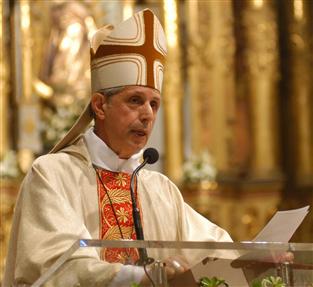
Bishop Mario Aurelio Poli, Bishop of Santa Rosa, appointed new Metropolitan Archbishop of Buenos Aires

Image

In his first appointment of bishop, Pope Francis appointed his successor as the Metropolitan Archbishop of Buenos Aires, which was Pope Francis’ former seat, as Cardinal Jorge Maria Bergoglio.

http://www.gcatholic.org/dioceses/diocese/buen0.htm#5560

Bishop of Santa Rosa and former Auxiliary Bishop of Buenos Aires, Mario Aurelio Poli, was appointed today as the new Metropolitan Archbishop of Buenos Aires, Argentina.

An excellent article on what a Coadjutor Archbishop/Bishop is (from the Church of Our Lady of Perpetual Succour, Archdiocese of Singapore)

http://www.olps.sg/understanding-term-coadjutor-bishop-449#.URNZ46WyCWV

The Article :

On December 29, 2012 the Vatican announced that Rev Msgr William Goh has been appointed as Coadjutor Archbishop of Singapore. What does this term “Coadjutor” mean? Read on to find out!

It’s been all over the catholic news in Singapore since our year of 2013 begun – the news of Rev Msgr William Goh being appointed Coadjutor Archbishop of Singapore. In order to understand what this all means, read this article which explains in depth what a “Coadjutor bishop” is, what he does, and why he is appointed.

What is Coadjutor?

In terms of Sacramental Character or Sacramental “powers”, a Coadjutor bishop is truly a bishop, for he receives Episcopal consecration just like the diocesan bishop. He therefore has the power validly to ordain priests, to confirm, and to consecrate other bishops.

In terms of ecclesial “title”, the Coadjutor has similar a title to the resident Bishop, or in the case of our Archdiocese, the Coadjutor is similar in ecclesial honour to our Archbishop.

However, the jurisdiction, or governing authority, of a Coadjutor bishop is another matter. Within a given diocese, the existing diocesan bishop alone has full responsibility for the entire diocese which the Pope has entrusted to his care (cf Paul VI, Muto proprio, Pastorale manus, on the powers and privileges granted to bishops, 30 November 1963. AAS 56 (1964) c. 381.1).

A Coadjutor bishop, therefore, is not to be construed as a co-leader of a diocese, as he does not have full authority over that diocese—only the existing diocesan bishop himself does.

A coadjutor bishop, as described in canon 403.3, also is given special faculties. In a sense a Coadjutor bishop can be given governing power, but it is generally limited to certain geographic sections of the diocese, or to certain aspects of it. Regardless of a Coadjutor bishop’s duties, however, the existing diocesan bishop retains ultimate authority

Why appoint a “Coadjutor Bishop”?

The exact time when a bishop will be replaced by a successor is not always predictable, of course. Obviously, a diocesan bishop can always die unexpectedly, or find himself obliged to resign (for medical or other reasons) with relatively short notice.

In these cases, there is normally a period of time—ranging from months to even years, depending on the circumstances—when the diocese is without any bishop at all. The code provides strict rules about who has authority, and in which situations, during this vacancy (cf. Muto proprio, Pastorale manus cc. 416-430).

But often it is easy for Rome to foresee that a diocesan bishop will need to step down. Usually this is due to the bishop’s age. Diocesan bishops are requested to submit their resignation to the Holy Father when they reach their 75th birthday (c. 401.1).

The Pope is not, however, required to accept it, and he may choose to extend the bishop’s tenure in his diocese for many more years if he sees fit (and, of course, if the health of that diocesan bishop permits). But the Pope can, and frequently does, accept bishops’ resignations as soon as they are submitted—and in these cases a successor naturally has to be chosen as soon as possible.

In some case, the Holy Father may decide to pre-empt the resignation of the existing bishop, and after the due process of selection of a new bishop, he may name a coadjutor bishop for Bishop X’s diocese right now.

What are the benefits?

For instance, the coadjutor bishop already knows that in June, Bishop X will resign and he himself will be the new diocesan bishop. Between then and now, this gives the coadjutor bishop a period of several months to become acquainted with the diocese, its people and its problems—and since the soon-to-be-retired diocesan bishop is still present, he can give his successor-to-be some pointers!

What are the formalities required of a “coadjutor bishop” (cf Paul VI, Muto proprio, Pastorale manus, on the powers and privileges granted to bishops, 30 November 1963. AAS 56 (1964) c. 381.1):

The Coadjutor needs to formally “take office”

Can. 404 §1 The coadjutor Bishop takes possession of his office when, either personally or by proxy, he shows the apostolic letters of appointment to the diocesan Bishop and the college of consultors, in the presence of the chancellor of the curia, who makes a record of the fact.

§3 If the diocesan Bishop is wholly impeded, it is sufficient that either the coadjutor Bishop or the auxiliary Bishop show their apostolic letters of appointment to the college of consultors, in the presence of the chancellor of the curia.

He undertakes responsibilities and appointments

Can. 405 §1 The coadjutor Bishop and the auxiliary Bishop have the obligations and the rights which are determined by the provisions of the following canons and defined in their letters of appointment.

§2 The coadjutor Bishop, or the auxiliary Bishop mentioned in can. 403 §2, assists the diocesan Bishop in the entire governance of the diocese, and takes his place when he is absent or impeded.

Can. 406 §1 The coadjutor Bishop in can. 403 §2, is to be appointed a Vicar general by the diocesan Bishop. The diocesan Bishop is to entrust to him, in preference to others, those things which by law require a special mandate.

When dealing in matters requiring decisions

Can. 407 §1 For the greatest present and future good of the diocese, the diocesan Bishop, the coadjutor can. 403 §2, are to consult with each other on matters of greater importance.

§2 In assessing matters of greater importance, particularly those of a pastoral nature, the diocesan Bishop is to consult the auxiliary Bishop before all others.

§3 The coadjutor Bishop since they are called to share in the cares of the diocesan Bishop, should so exercise their office that they act and think in accord with him.

The coadjutor’s liturgical and pastoral functions

Can. 408 §1 As often as they are requested to do so by the diocesan Bishop, a coadjutor Bishop are obliged to perform those pontifical and other functions to which the diocesan Bishop is bound.

§2 Those episcopal rights and functions which the coadjutor can exercise are not habitually to be entrusted to another by the diocesan Bishop.

He has right to succession

Can. 409 §1 When the episcopal see falls vacant, the coadjutor immediately becomes the Bishop of the diocese for which he was appointed, provided he has lawfully taken possession.

Where must he reside

Can. 410 The coadjutor Bishop and the auxiliary Bishop are bound, like the diocesan Bishop, to reside in the diocese. Other than for the fulfilment of some duty outside the diocese, or for holidays, which are not to be longer than one month, they may not be away from the diocese except for a brief period.

Episcopal Ordination Mass & Reception

The Episcopal Mass and Reception in conjunction with the upcoming Ordination of our Coadjutor Archbishop, Rev Msgr William Goh will be held as follows:

EPISCOPAL ORDINATION MASS
Date : Friday 22 Feb 2013
Time : 7.30 pm
Venue : Singapore Expo (The Max Pavilion and Exhibition Hall 9)
1 Expo Drive, Singapore 486150
Presider : The Apostolic Nuncio to Singapore, Archbishop Leopoldo Girelli & assisted by our Archbishop Nicholas Chia and Archbishop Murphy Pakiam from Kuala Lumpur
Admission : Tickets will be allocated to Parishes by mid-Feb 2013
Dress Code : Smart casual

GENERAL RECEPTION (HIGH TEA)
Date : Saturday 23 Feb 2013
Time : 2.00 pm to 5.00 pm
Venue : Catholic Spirituality Centre
1261 Upper Serangoon Road, Singapore 534796
Admission : No tickets required. Open to ALL parishioners to meet the new Coadjutor Archbishop
Dress Code : Smart casual

View article on Catholic News

OUR WISH FOR OUR COADJUTOR BISHOP

The Parishioners at Our Lady of Perpetual Succour Church sends their heartiest congratulations and good wishes to Coadjutor Archbishop, Rev Msgr William Goh on his Episcopal Ordination.

We pray that the wisdom and strength of the Holy Spirit will be with him as he takes on the role as Shepherd for the Church in the Archdiocese of Singapore. May the good Lord Bless, guide and protect him always!

My Personal Comments and Additions: 

Therefore, in simple summary, coadjutors are successors to the diocesan bishop, while auxiliaries are helpers to the diocesan bishop. This does not mean that auxiliary bishops cannot be selected as the successor by the Pope, but it means that this kind of succession is not automatic, whereas coadjutors are guaranteed the succession (automatic).

But coadjutors actually do not always succeed the diocesan bishop, as in some cases, some coadjutors actually died before the diocesan bishop resigned, and therefore never succeeded as the rightful diocesan bishop. In some other cases, coadjutor of certain diocese may be reassigned as a bishop/archbishop of another diocese/archdiocese before their succession).

Lastly, as there are still confusion on the nature of coadjutor archbishop’s office, they are no longer assigned any titular see, which is a formerly active diocese that had been suppressed due to lack of Christians or historical reasons (Muslim conquest, etc., which is why many titular sees are actually ancient dioceses in North Africa and Eastern Mediterranean region), and then restored as a titular diocese.

Auxiliary bishops are assigned a titular see upon their appointment as auxiliary, and coadjutor bishop/archbishop too were once (before around 1970) assigned a titular see upon their appointment. However, in present practice, coadjutors are named as Coadjutor Bishop/Archbishop of the diocese/archdiocese that they are going to succeed in (example : Coadjutor Archbishop of Singapore (Archdiocese), William Goh), and no titular see is assigned to the coadjutor.

I hope these simple explanations do help many who still have questions in understanding more on the office of the bishop and his helpers (and successor).

+Ut Omnes Unum Sint, ad Maiorem Dei Gloriam+

(That they all may be One, for the greater glory of God)