Monday, 20 January 2014 : 2nd Week of Ordinary Time, Week of Prayer for Christian Unity, Memorial of Pope St. Fabian, Pope and Martyr, and St. Sebastian, Martyr (Scripture Reflections)

Liturgical Colour : Green and Red (Martyrs)

Dear brothers and sisters in Christ, our Lord needs something from all of us, from each and every one of us. And what He needs is precisely our love, devotion, and wholehearted dedication, more than anything else. Yes, that is the offering of our hearts to Him, that we open our hearts to Him, our Lord, and show Him the sincere love we have for Him and for His precepts.

God gave His people Israel a long list of laws and regulations, as written in the Torah, in the Book of Leviticus, the Books of Exodus, Numbers, and Deuteronomy. These were not meant to put a heavy burden on the people, or to unnecessarily strangle them with the obligations to these laws. Instead, they were meant to provide a comprehensive guideline to them, that they can follow them and remain in God’s favour and love.

In these laws and regulations were written in detail, and the rituals and proceedings related to the offerings of burnt animals, their meat, fats, and blood were very elaborate indeed. There were details of each type of offerings, as well as details governing the daily life of the people of Israel, which were meticulously followed, and in the time of Jesus, was zealously followed by the Pharisees, who disdained anything other than perfect adherence to that extensive set of laws.

On top of the laws and rules stipulated and written in the Scriptures, over time, the religious authorities and leaders added more strict rules and regulations, adapting from the laws applicable to the society of the time. This covered everything from bathing, washing of hands before meals, the rituals related to what one should do in response to various things.

These laws, rules, and regulations were no different from the laws that exists in other various cultures and societies, particularly those of the eastern cultures, for example in China, Japan, and many others. They govern how the society should behave, and how people should do things in the correct and acceptable way. This was meant to prevent the people from doing things their own way, which may contradict the way things should be done in the society.

That is what the Lord meant for His people, when He presented them with these laws through Moses His servant. Even with these laws in place, the people of Israel, renowned for their constant whining, complaints and rebellions against the Lord during and after their journey to the Promised Land, continued to disobey the Lord and often refused to follow His laws. How would it have been therefore, had the Lord not given the laws to them to follow?

But there is one danger in strict adherence to the laws, such as those practiced and enforced by the Pharisees and the teachers of the law at the time of Jesus. That is because the way they practiced the law of Moses was that it became a kind of blind obedience to the law instead of practicing the law for its true purpose. That is why Jesus was often so much against the Pharisees and their way of observing the law.

What is therefore, the true purpose of the law of God? The law is truly about obeying the Lord and all that is about the Lord. And the Lord is actually quite simple in a way, because He is Love. Yes, love, and He is love personified, the perfect form of love. He loves us very, very much, and there can be no love greater than the love He has for all of us, for each one of us. So much so, that He was willing to come down unto this world and gave Himself for us so that we may live with Him once again.

The laws of the Lord was meant to bring His people to the greater understanding of God’s love for them, and then, bring them to love Him just as He has loved them. Yes! That is the purpose of God’s law! That is to make God’s people love Him, and that was why Jesus came to the world, to make clear that point to the people. And yet, many of the people refused to believe the truth.

God does not want to burden us unnecessarily, and neither does He want to punish us or make our lives difficult. What He wants from us is also not the sacrifices as written in the law of Moses, as what He truly asked is that the people offer Him their love, obedience, and devotion. In the quest to follow strictly the law, the Pharisees and the teachers of the law had missed entirely the meaning of the law. That was why Jesus rebuked them by saying that despite their pious external appearance, inside they were truly empty. Yes, there was no love of God in them, but only love for themselves.

Dear brothers and sisters in Christ, the same the Lord expects from each one of us His faithful ones. The Church of which we are part of had also a set of rules and regulations to how we should live our faith. However, these rules are not used in the same way as the Pharisees had used the laws of the Lord. They were genuinely meant for helping all of us to find our way towards the Lord.

The question that is asked of us now is that, have we truly loved God? Or do we just offer lip service and empty gestures of faith to God? A simple example will make this point clear. The point on the obligation for all the faithful to go to Mass on every Sunday had been either ignored or followed. However, among those who did attend weekly Mass on Sundays, can we truly say that they, and indeed all of us here, can we say that we have done this out of true faith and devotion, or whether we did it out of obligation and coercion?

Brothers and sisters in Christ, therefore use this opportunity to reaffirm the love and devotion that we have for our Lord. Do not be hesitant to offer the Lord our love, brethren! For indeed the Lord desires our love, and the genuine offering of our hearts! He wants us to be with Him and reunited with Him, and even though we have sinned and did things wicked in His eyes, what He wants is for us to come back to Him in total repentance.

Do not fear the Lord and open our hearts to Him. Yes, open wide the doors of our hearts to Him, that we may come to Him and He may also come to us. Offer the gifts of our hearts to Him, the ultimate gifts, and the gifts that the Lord really wants from us. And we can do this by following the teachings, the guidelines and the rules established by the Church, to be our guide on the way to God.

Yet, we have to do them with understanding. Blind or coerced obedience is not the way, brethren. In that way our faith will not be true. It will be artificial and dead. Let what had happened to the Pharisees and their way of interpreting the faith be kept to them only, and let us not follow in their footsteps. Love the Lord, and love Him genuinely, as well as our fellow men. That is the true desire of the Lord.

Today, brethren, we celebrate the feast of two great saints, the first of which is Pope St. Fabian, one of the early Bishops of Rome, and St. Sebastian, both of whom were martyrs of the faith, at the time of the Roman Empire. Pope St. Fabian was elected the leader of the Universal Church in a strange event, when a dove came down upon his head, and thus marking him as the chosen one of God, and he was then elected the Bishop of Rome.

Pope St. Fabian worked hard to strengthen the Church amidst various persecutions against the faithful by the pagan Roman Emperors, who were hostile against the Christians. Pope St. Fabian helped organise the Church and did many good and charitable works. And when a new Roman Emperor, who was particularly hostile against the faithful came to power, Pope St. Fabian adamantly refused to bow to the Imperial pressure to worship pagan gods and to give offering to the Emperor.

He was therefore one of the first martyrs of the faith under that Emperor, Decius, who was well known for his Decian persecutions of the Christians in the Empire. Despite that, all of the hard works of Pope St. Fabian in strengthening the Church at Rome and throughout the Empire helped it to persevere through the harsh persecutions and even thrived.

St. Sebastian, meanwhile, was a soldier of high rank, possibly a captain or centurion in the Roman Army, who lived just after the life of Pope St. Fabian. He lived through the period of the last and the greatest persecution against Christians by the Roman Emperor Diocletian. The Emperor asked the centurion St. Sebastian to force some Christians who refused to offer worship to the pagan idols to renounce their faith.

Instead, St. Sebastian, being a secret Christian at that time, managed to convert the parents of the Christians as well as many others, including the prison master who guarded the Christian prisoners at the time. For this act of defiance and disobedience against the Emperor and his authority, St. Sebastian was punished to death, and was shot with arrows just as he was tied to a tree, but miraculously he did not die.

Only after the Emperor himself acted to put him to death, did St. Sebastian die. Just like Pope St. Fabian before him, St. Sebastian did what is right to obey the Lord, even if it was to mean their death because they had disobeyed laws and authorities of the land. Although the context was different, but they did provide us with the example to follow, that is to follow the Lord and obey only His will, not by blind obedience, but through concrete action, based on faith and love.

May the Lord our God, who loves us very much, continue to grace us with His infinite love and blessing, that we may live in happiness with Him, and that our faith in Him will continue to grow ever stronger, and become ever more genuine, that it comes not just from our mouths, but also from our hearts! God bless us all. Amen.
Monday, 20 January 2014 : 2nd Week of Ordinary Time, Week of Prayer for Christian Unity, Memorial of Pope St. Fabian, Pope and Martyr, and St. Sebastian, Martyr (Gospel Reading)

Liturgical Colour : Green and Red (Martyrs)

Mark 2 : 18-22

One day, when the Pharisees and the disciples of John the Baptist were fasting, some people asked Jesus, “Why is it that both the Pharisees and the disciples of John fast, but Yours do not?”

Jesus answered, “How can the wedding guests fast while the bridegroom is with them? As long as they have the bridegroom with them, they cannot fast. But the day will come when the bridegroom will be taken from them, and on that day they will fast.”

“No one sews a piece of new cloth on an old coat, because the new patch will shrink and tear away from the old cloth, making a worse tear. And no one puts new wine into old wineskins, for the wine would burst the skins, and then both the wine and the skins would be lost. But new wine, new skins!”

Monday, 20 January 2014 : 2nd Week of Ordinary Time, Week of Prayer for Christian Unity, Memorial of Pope St. Fabian, Pope and Martyr, and St. Sebastian, Martyr (Psalm)

Liturgical Colour : Green and Red (Martyrs)

Psalm 49 : 8-9, 16bc-17, 21 and 23

Not for your sacrifices do I reprove you, for your burnt offerings are ever before Me. I need no bull from your stalls, nor he-goat from your pens.

What right have you to mouth My laws, or to talk about My covenant? You hate My commands and cast My words behind you.

Because I was silent while you did these things, you thought I was like you. But now I rebuke you and make this charge against you. Those who give with thanks offerings honour Me, but the one who walks blamelessly, I will show him the salvation of God.

Monday, 20 January 2014 : 2nd Week of Ordinary Time, Week of Prayer for Christian Unity, Memorial of Pope St. Fabian, Pope and Martyr, and St. Sebastian, Martyr (First Reading)

Liturgical Colour : Green and Red (Martyrs)

1 Samuel 15 : 16-23

Samuel then told Saul, “Enough! Let me tell you what YHVH said to me last night.” Saul replied, “Please tell me.” So Samuel went on and said, “Though you had no confidence in yourself, you became chief of the tribes of Israel, for YHVH wanted to anoint you king over Israel.”

“Then He sent you with this command, ‘Go. Completely crush the Amalekite offenders, engaging them in battle until they are destroyed.’ Why then did you not obey the voice of YHVH but instead swooped down on the spoil, doing what was evil in His sight?”

To this, Saul replied, “I have obeyed the voice of YHVH and have carried out the mission for which He sent me. I have captured Agag, king of Amalek and completely destroyed the Amalekites. If my men spared the best sheep and oxen from among those to be destroyed, it was in order to sacrifice them to YHVH, your God, in Gilgal.”

Samuel then said, “Does YHVH take as much delight in burnt offerings and sacrifices, as in obedience to His command? Obedience is better than sacrifice, and submission better than the fat of rams. Rebellion is like the sin of divination, and stubbornness like holding onto idols. Since you have rejected the word of YHVH, He too has rejected you as king.”

Saturday, 21 December 2013 : 3rd Week of Advent, Memorial of St. Peter Canisius, Priest and Doctor of the Church (Scripture Reflections)

Liturgical Colour : Purple/Violet or White (Priests)

Brothers and sisters in Christ, today we celebrate the feast day of one of the great saints of the past centuries, that is of St. Peter Canisius, also known as Peter Canis or Petrus Canisius. He was a German who joined the then growing and newly established Society of Jesus, founded by St. Ignatius of Loyola. St. Peter Canisius also happen to be the saint whose name, together with that of St. Peter the Apostle, I adopted as my own name at baptism, because both of them are truly inspiring role models to me.

St. Peter Canisius lived during a time of great difficulty for the Church, because at that time, numerous people were swayed under the heresy of Protestantism, which spread like wildfire, based on ignorant and fallacious teachings and ideas of men. These ideas were manipulated by some to gain followers and broke apart the unity of the Church. This was particularly bad in Germany, where numerous occurrences of the mentioned heresies happened.

Yet St. Peter Canisius was not to be daunted by challenges, and he put his full trust in the Lord and spearheaded the efforts countering the damaging effects of the Protestant heresy. He and several other leaders such as St. Ignatius of Loyola were crucial in the process of Counter-Reformation, where these courageous leaders fought to stem the tide of corruption on the faithful and return them to the one true faith in God.

The problem was that we have grown lax in our faith, and we no longer stay truly faithful to the Lord. And neither did we put our trust in the Lord, trusting rather more the forces of this world, and our own feeble abilities and desires. Faith is weakened when we no longer put ourselves completely in God’s hands, and evil may enter our hearts. The same, then, happened as it had, during the heresy, which sadly continues all the way until even today.

At that time, indeed, the Church had grown powerful, and it had gained many worldly properties and accumulated much influence and wealth. That was when human desires and the corrupting power of Satan entered into the Church. The Church became a nest of impurities, debauchery, and sinfulness, far from being the holy congregation of the Lord’s faithful ones. Popes, cardinals, bishops and priests were influenced by the forces of the world and quite a few of them were corrupted.

Indeed, many of those who had submitted themselves to Protestant heresies, would argue that the very reason why they broke away from the one and only Church of God was because of its impurities, such that as if the Church no longer had any legitimacy or spiritual authority over the faithful. They elected their own leaders and established their own so-called ‘churches’ in the delusion of righteousness that they experienced.

Yes, that delusion in fact served the purposes of the devil. Some of the proponents and leaders of the heresies had truly noble intents in their actions, but many if not all were eventually succumbed to the designs of the evil one. Instead of helping to reform the Church and purge the impurities out of the holy Church, they succumbed to their own human vanity, pride, and stubbornness, and broke apart the unity of the One Body of Christ, that is the Church.

Remember what the Lord had said, that He is the vine and we are the branches. In the unity of the One, Holy, Catholic, and Apostolic Church, the one and only Church, that is our Church, we live in grace and love because of the love and life-giving strength that God bestowed upon us through that unity. Broken and torn apart from that unity, those splinters withered and died, just as history itself had proven to us.

“There were as many churches as there were heads.” Such was the sayings that time, when numerous churches were founded and established, and each with their own ideas and own way of interpreting the messages of the Lord, and therefore, confirming further the devil’s hold on many souls and on the hearts of mankind. Many of these ‘heads’ could not agree upon each other on what they were to believe in God and about God.

They quarrelled, fought, debated, and wasted much energy doing nothing but attacking each other and badmouthing each other, blaspheming that in doing so, they obeyed and followed God’s will. The devil sowed the seeds of distrust, division, and strife among the people of God. Instead of the intended good, only evil and division came out of the events.

That was what St. Peter Canisius was so eager to combat, the divisions within the Church and among the faithful ones. He championed both the reform within the Church as well as the deliverance of those who had lapsed and went outside of the saving grace of Christ in the Church. He led the Jesuit order to restore the faith in his native Germany. And he made great successes there, converting many thousands upon thousands back to the true faith.

St. Peter Canisius stemmed the tide of heresy, from what is an unstoppable wave into a controllable tide. He championed reaching out to those who had fallen away from the faith and explaining to them in great clarity and truth, the truth about the One and True faith, our Catholic faith. That was why St. Peter Canisius was also well known for his contribution to Catholic education. He educated the faithful of the future, as well as future zealous and dedicated teachers of the faith who would bring back the faithful back into the Church.

The Catechisms written by St. Peter Canisius helped many to return to their true faith in God, explaining the faith in clear terms to the people. His Mariology and devotion to the Blessed Virgin Mary was also exemplary, and in fact laid the foundations of much of the devotion to the Blessed Mother of God as we know today. It was he who included the phrase, ‘Holy Mary, Mother of God, pray for us sinners” to the Hail Mary prayer.

Indeed, seeing the examples of the life of this saint, St. Peter Canisius, we see how much we need to come closer to God, and dedicate ourselves even more intimately to Him. We cannot separate ourselves from the Lord, or we risk the corruption of evil, through the ways of this world. To keep ourselves close to the Lord, with the help of His Blessed mother, is to keep our faith pure and acceptable to the Lord.

Therefore, brothers and sisters in Christ, as we come even closer to the celebration of Christmas, and as we rejoice in this feast day commemorating the great Doctor of the Church and the Defender of the Faith, St. Peter Canisius, let us heed the lesson on the importance of our faith, and how important it is to make sure that we adhere to the teachings and to the will of God, putting aside our human ego, our human weaknesses, and all the temptations of the world.

Instead, let us open ourselves fully and completely to the Lord, and the Lord who loves us completely and dedicatedly will grant us His endless blessings and graces. Let us also follow in the footsteps of St. Peter Canisius, preaching the truth about the Lord, especially to our separated brethren. Proclaim the truth to them and reveal to them the fullness of the Lord’s saving power, and what is true faith in the Lord, that is in the teachings of the One, Holy, Catholic, and Apostolic Church, the one and only Church of God.

St. Peter Canisius, pray for us, and help us that we may be strong in our faith and remain vigilant against the powers and temptations of the evil one. May the Lord too watch over us, and love us dearly and tenderly as He had always done. May the prayer of our Lord Jesus Christ, Ut Omnes Unum Sint, that they all may be one, come true, that all the faithful ones in God can be reunited once again, purging themselves of all the errors of human judgments, emotions, and thinkings. Amen.

Sunday, 12 May 2013 : 7th Sunday of Easter (Scripture Reflection)

Dear brothers and sisters in Christ, today we hear of the glory of God, who is to come, the glory of God who had been risen in glory from the dead and therefore triumphed over death and evil, and broke their hold over all of us for eternity. This God who had been taken up in glory to heaven, in the glorious Ascension, and seated at the right hand of God the Father. This was seen by the first martyr, Stephen the deacon, who saw and proclaim the glory of Christ, that despite knowing that such proclamation would certainly bring about his death at the hands of the chief priests.

God’s promise will become a reality, that He will soon once again come down onto this world, this time not as the humble king born in a manger, which we celebrate now as Christmas, but this time He will descend as a great and almighty king in glory, as the ruler of all creation and the Master of all the Universe. He will come as the great judge who will judge all for their own worth, whether they are worthy or unworthy of heaven that is the reward for those who are faithful, and for those who keep God in their hearts.

Those who knows Christ will know the Father, because Christ was sent by the Father into this world in His first coming to be our Messiah, our Saviour from death and the slavery of sin. If we hold fast onto this faith, Christ too will know us, and make all of us His own, and when the time comes for all of us to be judged, we will be welcomed into His Kingdom, and we will receive our rewards of eternal life.

Christ desires also, first and foremost, that all of those who believe in Him be one and united, as one Body, and therefore one Spirit, in the Church that He established through the Apostles. This is because Christ knows human weaknesses and the extent of human susceptibility to the devil’s influences. The evil one will stop at nothing to prevent his ultimate fate that is total defeat and damnation, but his fate has already been decided. Nevertheless, through his numerous agents and tools in this world, he can indeed make life difficult for those of us who believe and keep the faith.

Christ knows that the Church He had established will be fractured by the agents of Satan, through human pride and arrogance, and self-serving attitudes, that resulted in the breaking of the Body of the faithful. That is why He prayed, and prayed hard to His Father in heaven, that all the faithful ones in Him, His sheep, will remain as one, as indivisible from each other, just as He and the Father, and also the Holy Spirit are together and united in an immeasurably strong bond and unity.

His wish, that they all may be one, that all of us may be one, as one Church, one people, with one Creed, and one belief, had been dashed by the evils of human ambitions and weaknesses throughout the past centuries. Many had succumbed to the temptations of the world and false teachings, through numerous false prophets, aimed by Satan to confuse the Church and the faithful, and broke the unity within the Body of Christ, that is the Church.

False prophets like Arius, Jan Hus, Martin Luther, and many others who even claimed themselves Messiah or the second coming of Christ, had spread seeds of disunity among the faithful, and also spread false teachings that ended up confusing the faithful and snared many into damnation because of them believing in teachings in contrary to the teachings of Christ, as delivered to us through the Apostles and the early Church Fathers.

Many today in our world had claimed that faith must be a personal one, that is to be a personal ‘encounter’ with Christ. But they had forgotten that faith in Christ is impossible to be described in personal terms, or separated from the whole community of the faithful, that is the Church. Humans are inherently weak because of our imperfections, and because of our own sinful nature, since our first rebellion through our ancestors who disobeyed the Lord’s command not to eat the fruits of the tree of knowledge of good and evil.

Since then, many think too high of themselves, thinking that they are capable of great wisdom and possessing great knowledge, and therefore are capable of interpreting the Scripture on their own, and as they like it. This is why, although reading the Scripture is important for the development of the faith, we have to anchor ourselves in the authority and the teaching magisterium of the Church, as only in good guidance of the Church, that we can fully make use and understand the Scripture.

For the Scripture was written by the apostles and disciples of Christ, who were inspired by the Holy Spirit, and also the numerous prophets of the past times, who also received the message of the Lord, many of which are veiled messages that are part of the mystery of our faith. Even someone who is very knowledgeable and experienced in the Scripture, will certainly not be able to claim to fully understand the full and true meaning of God’s words contained in the Scripture.

Many today and in the past interpreted the words of God in the Scripture as they wished, and they ended up establishing new ‘faiths’ that they call churches, which in fact exist in thousands, millions, and maybe more today. There are as many ‘churches’ as there are heads, obviously because no one can agree perfectly with one another and mankind will certainly be influenced by pride and arrogance to shut out other’s own interpretations and keep one’s own interpretations to oneself. Such is the danger of self-faith and faith that does not conform to the will of God in the Church.

Indeed, many of them sinned grievously because they had caused division in the body of the faithful, the Church, the Body of Christ, and also spreading false teachings, and many of these, especially are intertwined with relativism, that is to include secular developments into the faith, which are in fact incompatible, and therefore, the faith, the true faith that we know of, no longer exists in those who had gone astray.

Brothers and sisters in Christ, strengthen your faith and resolve! Do not give up to the temptations of Satan and this world. Read the Scripture and learn the faith through the teachings of the Church, and deafen yourselves to the false allures of the false prophets and agents of the evil one. Be steadfast and be faithful, and the Lord will reward all of you.

Help one another in the faith, and pass the teachings of the Lord in the Church to those, especially those who had gone astray in their path, and those who has had wrong impression and ideas about the true faith in God. Who says that Christians can only evangelise to non-Christians and non-believers? Look into ourselves, and you can see so much division within the Body of Christ that is the Church, that we need to do some internal housecleaning first.

Just as Christ said, that if we are united then the world will believe in the Lord, if we are divided against ourselves, by attacking one another’s faith, how is the Church going to stand and bring then the fight to the devil? Let us strive to fulfill Christ’s wish and indeed, God’s will, that the entire community of the believers in Christ, would be reunited, into one body, one faith, and one belief in Christ our Lord, within His One, Holy, Catholic, and Apostolic Church, our Roman Catholic Church, the one and only true Church that Christ had established in this world, on Peter His Apostle, on whom He entrusted the keys of the Kingdom of heaven.

May God strengthen the unity between Christians and allow all those who believe in Him to be reunited once again within one Church, and one faith, under the authority and jurisdiction of the Pope, the Bishop of Rome, the successor of St. Peter the Apostle, keeper of the keys of the kingdom of heaven, and Vicar of Christ in this world. God bless all of us, Amen.

Sunday, 12 May 2013 : 7th Sunday of Easter (Gospel Reading)

John 17 : 20-26

I pray not only for these, but also for those who through their word will believe in Me. May they all be one, as You Father are in Me, and I am in You. May they be one in Us, so that the world may believe that You have sent Me.

I have given them the glory You have given Me, that they may be one as We are one; I in them and You in Me. Thus they shall reach perfection in unity; and the world shall know that You have sent Me, and that I have loved them, just as You loved Me.

Father, since You have given them to Me, I want them to be with Me where I am, and see the glory You gave Me, for You loved Me before the foundation of the world.

Righteous Father, the world has not known You, but I have known You, and these have known that You have sent Me. As I revealed Your Name to them, so will I continue to reveal it, so that the love with which You loved Me may be in them, and I also may be in them.

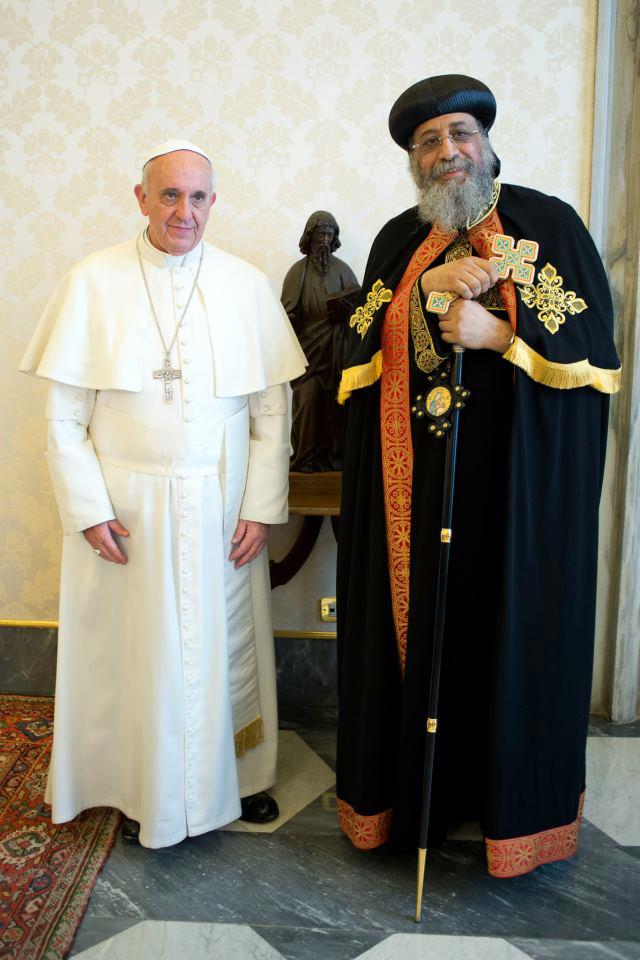
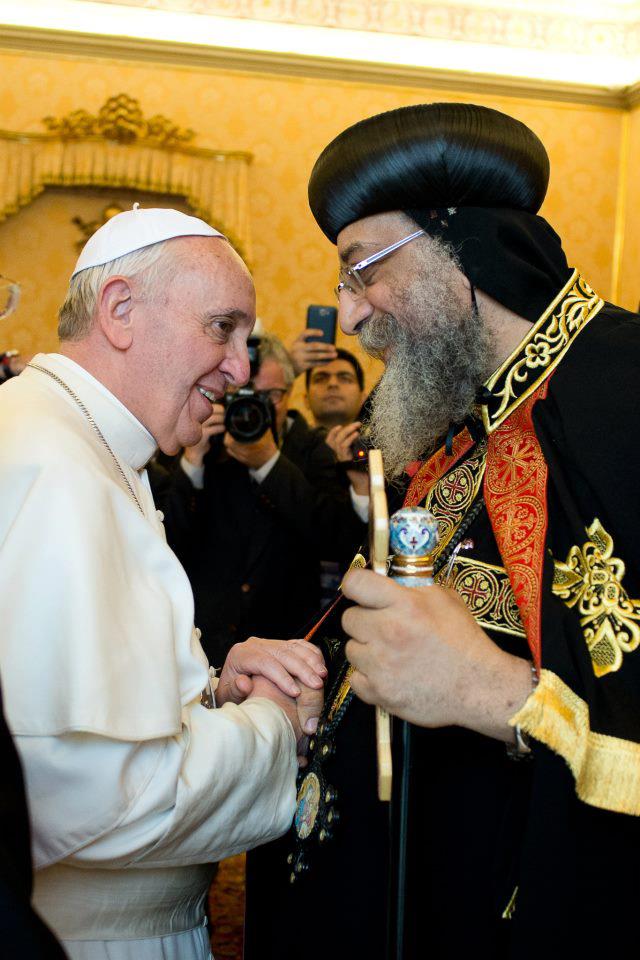
Historic visit by Pope and Patriarch of Alexandria, Pope Tawadros II to the Pope of the Church, Pope Francis

Image

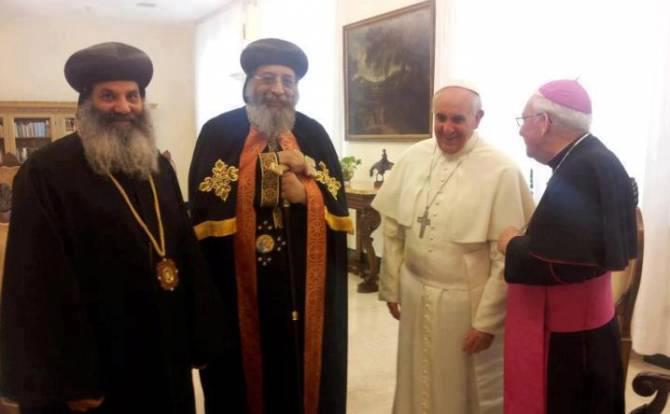
Pope Tawadros II (Theodore II) of Alexandria, the head of the Coptic Church, Successor of St. Mark the Evangelist, first Bishop of Alexandria, is visiting Rome to pay a visit to the Pope and Supreme leader of the Universal Church and Successor of St. Peter the Prince of the Apostles, Pope Francis.

Image

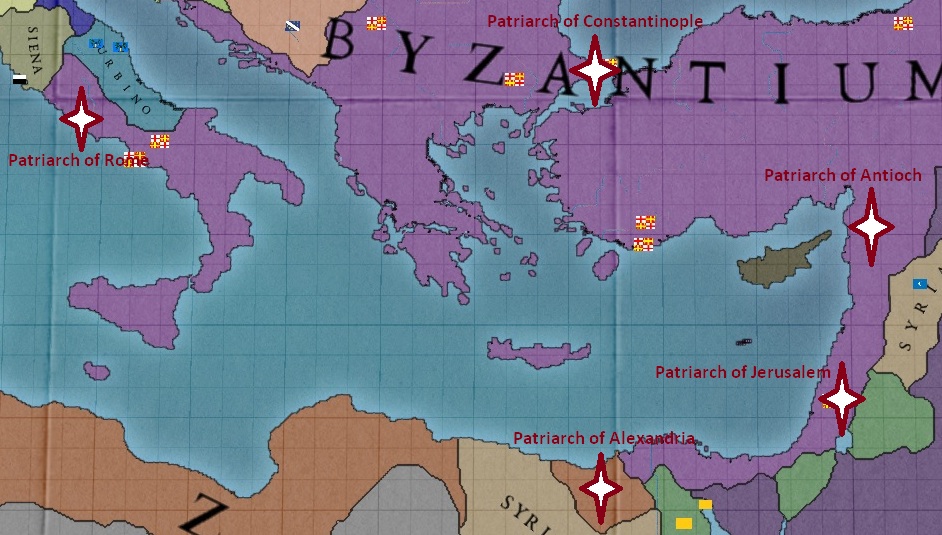
The Coptic Church is the direct descendant of the Patriarchate of Alexandria of the early Christian Pentarchy (Rome, Constantinople, Alexandria, Antioch, and Jerusalem), which broke apart from Rome and the Universal Church due to the disagreement in the Council of Chalcedon of 451, on the true nature of Christ.

Image

This disagreement is more due to misunderstanding in the nature of God, whether Christ’s human and divine persona is distinct or mixed. The initial term for non-Chalcedonians is monophysites, which is a heresy stating that both persona are mixed and indistinguishable. In fact, the Coptics and the other non-Chalcedonians in fact adopt miaphysitism, which while distinguishing the human and divine nature of Christ, but also acknowledge the mystery of the relationship between the two persona.

Image

Pope Tawadros II visits Rome in conjunction with the historic first meeting between the two Popes of Rome and Alexandria in 1973 by Pope Shenouda III, Pope Tawadros II’s predecessor, and Pope Paul VI. During that meeting a historic joint declaration of faith and friendship was announced and declared between the two Churches of God.

Image

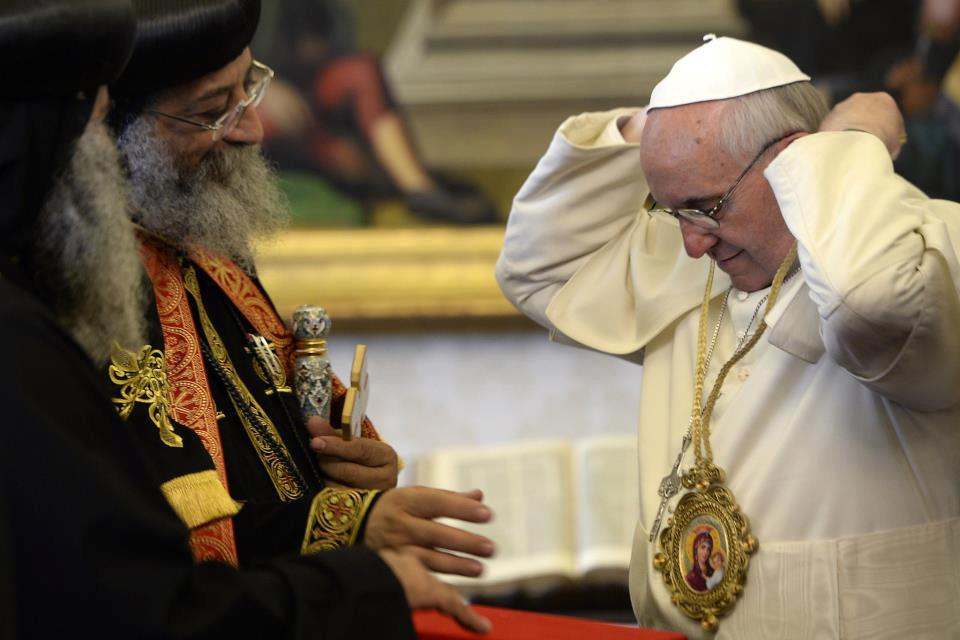
Pope Francis received a gift of an engolpion, which is a form of imagery in medallion, which is worn in the same way as pectoral cross, which are worn by the bishops of the Eastern Rite.

Image

We hope that all Christians, with the Copts and the Orthodox Churches can be reunited once again with the true and only Church, that is the Church of God, as one Body, indivisible by men and worldly ambitions, in the One, Holy, Roman, Catholic, and Apostolic Church.


Pray always for Christian Unity. That we are One, just as Christ our Lord and the Father in heaven are One.


Ut Omnes Unum Sint, ad Maiorem Dei Gloriam

(That they all may be One, for the greater glory of God)

The Church, the Year of Faith, and Christian Unity : Ut Omnes Unum Sint (That they all may be One)

The Lord never said : “You are Peter, and I will make you the leader amongst thousands of churches and other leaders, and they can have their own customs and choose what they believe in, and we can also do what we like, and what we want.”

He did not say : “Peter, you will be one of the many, in a board of management of My ‘churches’, and that these churches were born from Me.”

No, what He truly said was :

“You are Peter, and on this Rock, I will build My Church (singular), and never will the powers of death overcome it. I will give you the keys of the kingdom of heaven : whatever you bind on earth shall be bound in heaven, and whatever you unbind on earth shall be unbound in heaven.”

For our Church is One, and all are united with the successor of St. Peter the Apostle, to whom God has entrusted to feed all of His sheep, and to whom He has entrusted the authority over all of the earth and mankind, the beloved people of God (‘whatever you bind on earth shall be bound in heaven, and whatever you unbind on earth shall be unbound in heaven’), and that there is only One Body of Christ, all believing in Christ, and obeying the elders God has appointed over them, of which Peter and his successors are the chief shepherds, the chief elders, who then report to the very Chief Shepherd who will come again at the end of time.

For our faith in Christ is communal as it is personal. This is why we have our bishops, and our beloved Pope, Peter’s successor. For if not so, then all of us can just be our own priests, and just by thinking that we are saved by simply say, “Lord, Lord, I believe in you.”, and shutting ourselves from everyone else, caring only about our salvation.

No, not only will we not be saved by that way, we will be condemned by God, who will judge our ignorance and failure to live our faith by helping others around us, who are less fortunate, and need our help.

When a house is divided against itself, how can it stand and survive? When Satan is divided against himself, he will perish and not stand, just as what Christ said to the Pharisees when they accused Him of using the power of Beelzebub, Satan’s liutenant in casting out demons.

So, therefore, how can God’s Church stand if we are divided against ourselves? In order for us to stand the persecution of Satan in this world, we must first unite and gather our strength, that when Satan and his angels come to scourge God’s beloved people, we will be united as one against him, and as one Church, God will make us all righteous when He comes again in glory.

Let us pray therefore, that in this Year of Faith, our faith in God will ever be strengthened, and will never falter, and that most importantly we can live this faith and put in into action that will be pleasing to the Lord, by serving our fellow men, and thus spreading His Gospel, not just by our words, but by our own actions.

Let us also pray that Ut Omnes Unum Sint, God’s great wish, that all of His faithful may be One, will be accomplished, that every Christian, and everyone who believes in Christ, will all return to the One, Holy, Catholic, and Apostolic Church, that is built by God, Christ Himself, on the rock of faith that is Peter. Amen!


+Ut Omnes Unum Sint, ad Maiorem Dei Gloriam+
(That they all may be One, for the greater glory of God)

Friday, 8 February 2013 : 4th Week of Ordinary Time, Memorial of St. Jerome Emiliani, and St. Josephine Bakhita, Virgin (Scripture Reflection)

We heard today of the tale of how St. John the Baptist was killed by Herod, out of Herod’s adulterous behaviour with his brother’s wife, and that wife’s hatred on John. St. John the Baptist, who had come before Christ to make straight the way for the Lord, met his death at the hands of the corrupt and immoral person who called himself the king of Judea at that time.

Who is John the Baptist? He is the cousin of Jesus, son of Elizabeth, miraculously conceived when Elizabeth was already old and barren, because the Lord desires that through her, a great prophet preceding Christ be born. St. John the Baptist indeed become the last prophet just before the coming of the Messiah, declaring to the world to repent and to be baptised at the River Jordan, in order to prepare themselves for the Messiah, who in fact at that time, had already walked on this world, in the form of Jesus, son of Mary, and Son of the Most High God.

John the Baptist’s call was heeded by many, who came to be baptised by John, and to truly repent from their sins. Nevertheless, the Pharisees and the scribes, just as they will later reject Jesus, they were also skeptical of John’s prophetic mission, and did not repent as many others do. But John managed to lay out the foundation for the later works of Christ and His disciples, just like a farmer plowing the soil preparing for it for the sower, who is Christ, who spreads the seeds on the plowed soil, fertile and ready, and thus are able to produce fruits hundredfold and thousandfold.

After Jesus was baptised by John, He arises in importance, which John in great humility said to his own disciples that just as the Lord for whom he has come to prepare the path for, is rising, he himself has to become lesser. His task in preparing the path for the Lord is complete, and in the last part of his life, which was told in the Gospel today, he was imprisoned for chastising Herod the king and his adultery with Herodias, his brother’s wife.

In ancient Jewish custom, this is actually not unacceptable for a brother to take care of a deceased brother’s wife, and take her as his own wife. Remember another story from the Bible, where the Saducees, who did not believe in the resurrection, asked the Lord about whose wife is the woman who was married to seven brothers, who died one after the other. Clearly, this custom is identified as the norm at that time, as the widow is perceived to be financially incapable of supporting herself, and therefore, it is justified for the brother to come in and take care of his sister-in-law by marrying her himself.

However, in this case, this is different because, just as Jesus later will stress, that marriage is a sacrosanct act, in which a man and woman is joined by God, and through God, this union, when made is eternal and cannot be dissolved by either man or even angels. For what God has made one, no man shall divide. This is the new commandment of the new covenant that Christ brought with His coming, and John, as the messenger of the Lord, did his last service to God by putting forward this teaching, against none other than Herod himself.

It is sad that today, many disregard the sanctity of marriage, and think that marriage is a trivial matter, and that divorce can be so easily contemplated and done. Divorce is something which should be avoided at all costs, as it directly violates what God has told us, that what He had brought together in marriage, which is a Sacrament on its own, no one, not even the husband and the wife themselves should divide back into two. It is sad that in our modern world, many take divorces lightly, and even marry again after the divorce. Many who did this, did so because they claim that they no longer love the wife, or worse that they have been tempted with lust and desire for another woman or man.

In order to maintain the sanctity of marriage, it is paramount that in the family, the faith in the Lord be kept strong, and that all actions should be carried out in love, and in accordance with God’s will. This is why it is important for couples and families, to come together and have meals together as best as they can everyday, so that they will stay close, despite challenges and temptations, and pray together, that the Lord will continue to bless them and strengthen their union, so that the evil one cannot come in between them and made them to decide to split.

Many couples are able to last for decades and many last beyond 50 years, and indeed, until death brought them apart, but not forever, since we know that we eventually will be reunited with the loved ones when we ourselves ascend to heaven at the end of our own lives. Indeed, their secret is no other than ensuring that couples constantly speak to one another from heart to heart, and coming together at all times, with their children, to pray regularly, to share the meal at the table. Remember that when more than two and three gathered in God’s name, He will be there, and will remain there with them, always.

Another story which I will bring to your attention, besides the already told story of John the Baptist, Herod, and Herodias, is the story of the divorces of King Henry VIII, the founder of the Anglican ‘church’ in his vain search for a male heir. King Henry VIII divorced his first wife, Catherine of Aragon, because she was not able to produce a male heir for him, although she did produce a daughter. His appeal to divorce her to the Pope was rejected, and King Henry VIII, displeased at the Papal disapproval went his own way and rebel from the Church, creating his own Anglican ‘church’.

St. Thomas More, King Henry VIII’s chancellor, refused to follow his king into rebellion from Rome, and chastised the king for his immoral behaviour in seeking to marry Anne Boleyn, who was to become the king’s second wife. He was asked to choose between loyalty to his king, and be given great wealth and influence as he always had before that, and thus even greater afterwards, or death if he remains faithful to the true Church. St. Thomas More abandoned all of his worldly wealth and fame, and chose to remain faithful to the Lord, and was therefore martyred.

Ultimately, King Henry VIII would kill Anne Boleyn after she herself failed to produce a male heir, and eventually married no less than four more times, with a total of having six wives and at least two mistresses, and all ultimately in vain, since even when there was a male heir, he died young, and the dynasty died out.

All that futile attempts was most damaging especially if we see how today, 80 million Christians who are in the Anglican Communion, are the direct product of this adulterous behaviour of King Henry VIII. This is an example on how if marriage is not kept as sacrosanct and indivisible in nature, not only it can affect just the two, but especially in King Henry’s case, it caused the destruction of the unity in the Body of Christ, that is the Church. Until today, we still pray and hope that all of them will eventually return soon to the true Faith and Church.

Today we also celebrate the feast of St. Jerome Emiliani, an Italian charitable man who cared deeply for the poor and orphans in early 16th century northern Italy, and died after in his pious work of service to the sick and the poor, he contracted a disease that killed him, and St. Josephine Bakhita, a Canossian nun, who was once a slave from Sudan, who after being freed from slavery, converted to Christianity and committed herself to the Lord by joining the Canossians as a nun. She was noted for her great faith in the Lord, and her dedication to Mary, His mother. She was also very much noted for her great heart and forgiving nature, seeking not revenge against her enemies, and even her former slavemasters, but rather seeking to forgive them and bless them instead.

Therefore, in the footsteps of these great saints, let us all strive, especially for those amongst us who are married, to keep our lives holy and meaningful, by doing what is good for the sake of others, just like St. Jerome Emiliani in service of the poor and the sick, by giving and sharing what we have more to those who need them more, and by our gentle and forgiving nature, following the example of St. Josephine Bakhita, who strive to keep herself pure and holy in the presence of God.

Let us pray also for the unity of all Christians, that especially for the Anglicans today, that their detachment from the Body of Christ that is the Church can soon be reversed, through our constant prayers to God, and through God’s actions, may the unity of the Church be restored. What damages King Henry VIII had done in his adulterous ways parallel to what Herod had done, in direct opposition to the Lord’s will on the sanctity of marriage, may we begin to heal through concrete attempts to reunite back the branches of the Body of Christ back onto its trunk, the Church.

Pray for us, St. Thomas More. And St. Jerome Emiliani, and St. Josephine Bakhita, pray for us all too. Pray for God’s holy Church that it will be one again, and indivisible, just like marriage, as the Lord has made His Church one, just like He and the Father is one and indivisible in the Holy Trinity. Amen.

+Ut Omnes Unum Sint+

(That they all may be One)