Wednesday, 3 December 2014 : Feast of St. Francis Xavier, Priest and Patron of Missions (Homily and Scripture Reflections)

Liturgical Colour : White

Dear brothers and sisters in Christ, today we celebrate the feast of a truly great and renowned saint, of whom many of our brethren around the world, particularly in Asia and in the Pacific region owed their faith to in the beginning, when the Church and the Faith first reached those regions of the world and was able to anchor themselves until today as flourishing communities of the faithful as we witness today.

Today we celebrate the feast of St. Francis Xavier, or Franciscus Xaverius, a Spanish Jesuit priest and great missionary, whose missionary works caused a great flowering of the cause of the Faith in the East Indies, in countries now encompassing India, Malaysia, Singapore, Indonesia, Macau, Hong Kong, China, and also Japan. It is also likely that his works had also had even wider contributions to the whole Universal Church both in the mission areas and at home, in the heart of Christendom.

For St. Francis Xavier lived during a very difficult time for the Faith and the Church of God. This is because at that time, the very heart of Christendom were besieged both inside and outside by its enemies, both heretics, heathens, pagans and other enemies of God and His Church alike. The Islamic Ottoman Turks were on the rise and they had conquered many nations, and after vanquishing and subjugating Christian nations one after another, it seemed that they were poised to strike at the remaining nations faithful to the Lord.

Meanwhile, the so-called false Protestant ‘reformation’ was on the rage in most of Europe at the time, with many people, rulers and even clergy alike were swayed by the lies of the devil and by the greed of men, in following their own hearts’ desire and following false doctrines, forsaking the truth and the wholeness of the teachings of Christ as espoused and kept by the Church of God. Princes and peoples alike rebelled and broke free from the Church of God, destroying the unity of the Church.

Wars were fought in many places for the sake of the souls of the faithful. Many were lost to the Lord, but many also were called back to the Faith and repented their sins and rebellions. But at a time when external threats to the Faith were mounting as mentioned earlier, the Church and the faithful were not in good position to deal with all of them at once.

This is not to mention that within the Church itself there were many corruption and wickedness, with simony and even sexual impropriety all over the places. Buying of positions and honours were abound, nepotism and collusion were commonplace. And these further caused troubles to the already beleaguered Faith, Church and the faithful of God. This was why, there were a new movement then within the Church aiming for a great reform and purification of the Faith, which led to the great Council of Trent and Counter-Reformation, to reclaim the souls of many from heresy.

The Society of Jesus founded by St. Ignatius of Loyola, together with many others of his comrades, St. Peter Canisius and including St. Francis Xavier, the Patron Saint of Missions whose feast we are celebrating today, they were pivotal in the efforts of Counter-Reformation, to reclaim for the Lord His people who have been lost to the darkness of the world and all those who had been lost to heresy of men.

Many of these brave missionaries and servants of God preached throughout Christendom calling them to repent from their sins and return to the Faith in the Holy Mother Church. While many resisted and persecuted the missionaries, there were also many who were moved by the preachings and they returned to the one and true Faith. But at the same time, there were challenges and opportunities beyond what had been mentioned here.

For at that time, advances in technology allowed the people of God for the very first time, to explore the entirety of the world. New worlds and places were discovered and this represented a great opportunity for the evangelisation of the Faith as it could not have been done before. St. Francis Xavier was sent as part of the evangelisation effort, to spearhead the Faith’s effort to bring the Good News to many of those who have yet to hear it before, bringing the Light to a people still living in darkness.

All these are linked to the readings of this day we heard from the Holy Scriptures, all of which talked about one thing, that is evangelisation and the spreading of the Good News to all of the world. That was the last and ongoing mission given by the Lord Jesus to all of His Apostles and disciples after His resurrection and just before He ascended to heaven, as we heard in the Gospel today.

Jesus told His disciples to bring forth the Good News and preach it to the entire world, to the whole mankind, so that all peoples may hear and witness the truth of God’s love and salvation, and thus be stirred from their slumber, to be awakened to walk and seek the Lord’s saving grace. This is a mission which He charged the Church with, and thus the mission which the Lord entrusted to all of us His faithful ones.

And the actions of the Jesuits in the traditional home of Christendom in Europe, wrecked by the Protestant ‘reformation’ and heresy, represented also a kind of evangelisation and spreading the Good News. They worked hard to dispel the lies of the devil and the falsehoods spread by the wicked agents of the evil one, and instead preaching and teaching the truth of Christ which the Church had kept faithfully since the very beginning.

What St. Francis Xavier and his fellow missionaries had done, then also expand the works of evangelisation even further, carrying out the mission of our Lord Jesus as He had entrusted to His disciples. Yes, which is to spread the Good News to all the nations and to baptise many nations and peoples in the Name of the Father, Son and the Holy Spirit, which was exactly what St. Francis Xavier had laboured hard for.

St. Francis Xavier travelled from countries to countries and from places to places, spreading the Faith wherever he went. He baptised many of the local communities and populace whom he encountered along his missionary journeys, and gained for the Lord many more souls he had helped brought to salvation. He preached the Lord’s Good News wherever he went, and he also helped to build up the Church in various places in Asia, at Goa in India, Malacca in the Malay Archipelago, Macau in China, and Nagasaki in Japan.

He faced and encountered many difficulties and challenges along the way, and yet he persevered. He performed many miracles and wonders throughout his missionary journeys, and he also even calmed a terrible storm which threatened to sink his boat while he was sailing to a place he was to preach the Good News at. He healed many of the sick and cast out demons.

Yes, brethren, was this not what our Lord Jesus had told His disciples too in the Gospel today? Those whom He had sent to preach His Good News and those who had devoted themselves and their lives in the service of God and His Gospel, He will not leave alone, but He will grant them His blessings and power to carry out their mission successfully.

Therefore, brothers and sisters in Christ, on this holy occasion of the feast of St. Francis Xavier, the Patron Saint of Missions, let us all learn from what I have shared with you, of the courage of the missionaries and the servants of God in preaching the Good News of the Gospel to the nations, not only to those who had erred in their ways and walked away from the truth, but also to those who have not yet heard a single word of the Good News of Christ.

But it does not mean that their works ended just there, brothers and sisters in Christ. The mission which Jesus entrusted His disciples continues even today, and we are all, brothers and sisters in Christ, all the faithful ones of God are also tasked and entrusted with the same mission, to preach and spread the Good News of God’s salvation to all the nations and to all the peoples.

Therefore, let us all pray to the Lord, that in our hearts, the courage and desire we should have to preach His words and truth may be awakened and strengthened in us, so that we may also live faithfully and truly live out our faith with real action and real devotion, by loving one another as our Lord had loved us, and show love to all those around us who need them. Let us all follow and walk in the footsteps of St. Francis Xavier, the Patron Saint of missions! God bless us all. Amen.


First Reading :

https://petercanisiusmichaeldavidkang.com/2014/12/02/wednesday-3-december-2014-feast-of-st-francis-xavier-priest-and-patron-of-missions-first-reading/


Psalm :

https://petercanisiusmichaeldavidkang.com/2014/12/02/wednesday-3-december-2014-feast-of-st-francis-xavier-priest-and-patron-of-missions-psalm/


Gospel Reading :

https://petercanisiusmichaeldavidkang.com/2014/12/02/wednesday-3-december-2014-feast-of-st-francis-xavier-priest-and-patron-of-missions-gospel-reading/

Apostolic Letter of His Holiness Pope Francis on the Year of Consecrated Life (30 November 2014 – 2 February 2016)

http://w2.vatican.va/content/francesco/en/apost_letters/documents/papa-francesco_lettera-ap_20141121_lettera-consacrati.html

APOSTOLIC LETTER OF HIS HOLINESS
POPE FRANCIS

TO ALL CONSECRATED PEOPLE

ON THE OCCASION OF THE YEAR OF CONSECRATED LIFE

[Multimedia]


Dear Brothers and Sisters in Consecrated Life,

I am writing to you as the Successor of Peter, to whom the Lord entrusted the task of confirming his brothers and sisters in faith (cf. Lk 22:32). But I am also writing to you as a brother who, like yourselves, is consecrated to God.

Together let us thank the Father, who called us to follow Jesus by fully embracing the Gospel and serving the Church, and poured into our hearts the Holy Spirit, the source of our joy and our witness to God’s love and mercy before the world.

In response to requests from many of you and from the Congregation for Institutes of Consecrated Life and for Societies of Apostolic Life, I decided to proclaim a Year of Consecrated Life on the occasion of the fiftieth anniversary of the Dogmatic Constitution on the Church Lumen Gentium, which speaks of religious in its sixth chapter, and of the Decree Perfectae Caritatis on the renewal of religious life. The Year will begin on 30 November 2014, the First Sunday of Advent, and conclude with the Feast of the Presentation of Jesus in the Temple on 2 February 2016.

After consultation with the Congregation for Institutes of Consecrated Life and for Societies of Apostolic Life, I have chosen as the aims of this Year the same ones which Saint John Paul II proposed to the whole Church at the beginning of the third millennium, reiterating, in a certain sense, what he had earlier written in the Post-Synodal Apostolic Exhortation Vita Consecrata: “You have not only a glorious history to remember and to recount, but also a great history still to be accomplished! Look to the future, where the Spirit is sending you in order to do even greater things” (No. 110).

I. AIMS OF THE YEAR OF CONSECRATED LIFE

1. The first of these aims is to look to the past with gratitude. All our Institutes are heir to a history rich in charisms. At their origins we see the hand of God who, in his Spirit, calls certain individuals to follow Christ more closely, to translate the Gospel into a particular way of life, to read the signs of the times with the eyes of faith and to respond creatively to the needs of the Church. This initial experience then matured and developed, engaging new members in new geographic and cultural contexts, and giving rise to new ways of exercising the charism, new initiatives and expressions of apostolic charity. Like the seed which becomes a tree, each Institute grew and stretched out its branches.

During this Year, it would be appropriate for each charismatic family to reflect on its origins and history, in order to thank God who grants the Church a variety of gifts which embellish her and equip her for every good work (cf. Lumen Gentium, 12).

Recounting our history is essential for preserving our identity, for strengthening our unity as a family and our common sense of belonging. More than an exercise in archaeology or the cultivation of mere nostalgia, it calls for following in the footsteps of past generations in order to grasp the high ideals, and the vision and values which inspired them, beginning with the founders and foundresses and the first communities. In this way we come to see how the charism has been lived over the years, the creativity it has sparked, the difficulties it encountered and the concrete ways those difficulties were surmounted. We may also encounter cases of inconsistency, the result of human weakness and even at times a neglect of some essential aspects of the charism. Yet everything proves instructive and, taken as a whole, acts as a summons to conversion. To tell our story is to praise God and to thank him for all his gifts.

In a particular way we give thanks to God for these fifty years which followed the Second Vatican Council. The Council represented a “breath” of the Holy Spirit upon the whole Church. In consequence, consecrated life undertook a fruitful journey of renewal which, for all its lights and shadows, has been a time of grace, marked by the presence of the Spirit.

May this Year of Consecrated Life also be an occasion for confessing humbly, with immense confidence in the God who is Love (cf. 1 Jn 4:8), our own weakness and, in it, to experience the Lord’s merciful love. May this Year likewise be an occasion for bearing vigorous and joyful witness before the world to the holiness and vitality present in so many of those called to follow Jesus in the consecrated life.

2. This Year also calls us to live the present with passion. Grateful remembrance of the past leads us, as we listen attentively to what the Holy Spirit is saying to the Church today, to implement ever more fully the essential aspects of our consecrated life.

From the beginnings of monasticism to the “new communities” of our own time, every form of consecrated life has been born of the Spirit’s call to follow Jesus as the Gospel teaches (cf. Perfectae Caritatis, 2). For the various founders and foundresses, the Gospel was the absolute rule, whereas every other rule was meant merely to be an expression of the Gospel and a means of living the Gospel to the full. For them, the ideal was Christ; they sought to be interiorly united to him and thus to be able to say with Saint Paul: “For to me to live is Christ” (Phil 1:21). Their vows were intended as a concrete expression of this passionate love.

The question we have to ask ourselves during this Year is if and how we too are open to being challenged by the Gospel; whether the Gospel is truly the “manual” for our daily living and the decisions we are called to make. The Gospel is demanding: it demands to be lived radically and sincerely. It is not enough to read it (even though the reading and study of Scripture is essential), nor is it enough to meditate on it (which we do joyfully each day). Jesus asks us to practice it, to put his words into effect in our lives.

Once again, we have to ask ourselves: Is Jesus really our first and only love, as we promised he would be when we professed our vows? Only if he is, will we be empowered to love, in truth and mercy, every person who crosses our path. For we will have learned from Jesus the meaning and practice of love. We will be able to love because we have his own heart.

Our founders and foundresses shared in Jesus’ own compassion when he saw the crowds who were like sheep without a shepherd. Like Jesus, who compassionately spoke his gracious word, healed the sick, gave bread to the hungry and offered his own life in sacrifice, so our founders and foundresses sought in different ways to be the service of all those to whom the Spirit sent them. They did so by their prayers of intercession, their preaching of the Gospel, their works of catechesis, education, their service to the poor and the infirm… The creativity of charity is boundless; it is able to find countless new ways of bringing the newness of the Gospel to every culture and every corner of society.

The Year of Consecrated Life challenges us to examine our fidelity to the mission entrusted to us. Are our ministries, our works and our presence consonant with what the Spirit asked of our founders and foundresses? Are they suitable for carrying out today, in society and the Church, those same ministries and works? Do we have the same passion for our people, are we close to them to the point of sharing in their joys and sorrows, thus truly understanding their needs and helping to respond to them? “The same generosity and self-sacrifice which guided your founders – Saint John Paul II once said – must now inspire you, their spiritual children, to keep alive the charisms which, by the power of the same Spirit who awakened them, are constantly being enriched and adapted, while losing none of their unique character. It is up to you to place those charisms at the service of the Church and to work for the coming of Christ’s Kingdom in its fullness”.[1]

Recalling our origins sheds light on yet another aspect of consecrated life. Our founders and foundresses were attracted by the unity of the Apostles with Christ and by the fellowship which marked the first community in Jerusalem. In establishing their own communities, each of them sought to replicate those models of evangelical living, to be of one heart and one soul, and to rejoice in the Lord’s presence (cf. Perfectae Caritatis, 15).

Living the present with passion means becoming “experts in communion”, “witnesses and architects of the ‘plan for unity’ which is the crowning point of human history in God’s design”.[2] In a polarized society, where different cultures experience difficulty in living alongside one another, where the powerless encounter oppression, where inequality abounds, we are called to offer a concrete model of community which, by acknowledging the dignity of each person and sharing our respective gifts, makes it possible to live as brothers and sisters.

So, be men and women of communion! Have the courage to be present in the midst of conflict and tension, as a credible sign of the presence of the Spirit who inspires in human hearts a passion for all to be one (cf. Jn 17:21). Live the mysticism of encounter, which entails “the ability to hear, to listen to other people; the ability to seek together ways and means”.[3] Live in the light of the loving relationship of the three divine Persons (cf. 1 Jn 4:8), the model for all interpersonal relationships.

3. To embrace the future with hope should be the third aim of this Year. We all know the difficulties which the various forms of consecrated life are currently experiencing: decreasing vocations and aging members, particularly in the Western world; economic problems stemming from the global financial crisis; issues of internationalization and globalization; the threats posed by relativism and a sense of isolation and social irrelevance… But it is precisely amid these uncertainties, which we share with so many of our contemporaries, that we are called to practice the virtue of hope, the fruit of our faith in the Lord of history, who continues to tell us: “Be not afraid… for I am with you” (Jer 1:8).

This hope is not based on statistics or accomplishments, but on the One in whom we have put our trust (cf. 2 Tim 1:2), the One for whom “nothing is impossible” (Lk 1:37). This is the hope which does not disappoint; it is the hope which enables consecrated life to keep writing its great history well into the future. It is to that future that we must always look, conscious that the Holy Spirit spurs us on so that he can still do great things with us.

So do not yield to the temptation to see things in terms of numbers and efficiency, and even less to trust in your own strength. In scanning the horizons of your lives and the present moment, be watchful and alert. Together with Benedict XVI, I urge you not to “join the ranks of the prophets of doom who proclaim the end or meaninglessness of the consecrated life in the Church in our day; rather, clothe yourselves in Jesus Christ and put on the armour of light – as Saint Paul urged (cf. Rom 13:11-14) – keeping awake and watchful”.[4] Let us constantly set out anew, with trust in the Lord.

I would especially like to say a word to those of you who are young. You are the present, since you are already taking active part in the lives of your Institutes, offering all the freshness and generosity of your “yes”. At the same time you are the future, for soon you will be called to take on roles of leadership in the life, formation, service and mission of your communities. This Year should see you actively engaged in dialogue with the previous generation. In fraternal communion you will be enriched by their experiences and wisdom, while at the same time inspiring them, by your own energy and enthusiasm, to recapture their original idealism. In this way the entire community can join in finding new ways of living the Gospel and responding more effectively to the need for witness and proclamation.

I am also happy to know that you will have the opportunity during this Year to meet with other young religious from different Institutes. May such encounters become a regular means of fostering communion, mutual support, and unity.

II. EXPECTATIONS FOR THE YEAR OF CONSECRATED LIFE

What in particular do I expect from this Year of grace for consecrated life?

1. That the old saying will always be true: “Where there are religious, there is joy”. We are called to know and show that God is able to fill our hearts to the brim with happiness; that we need not seek our happiness elsewhere; that the authentic fraternity found in our communities increases our joy; and that our total self-giving in service to the Church, to families and young people, to the elderly and the poor, brings us life-long personal fulfilment.

None of us should be dour, discontented and dissatisfied, for “a gloomy disciple is a disciple of gloom”. Like everyone else, we have our troubles, our dark nights of the soul, our disappointments and infirmities, our experience of slowing down as we grow older. But in all these things we should be able to discover “perfect joy”. For it is here that we learn to recognize the face of Christ, who became like us in all things, and to rejoice in the knowledge that we are being conformed to him who, out of love of us, did not refuse the sufferings of the cross.

In a society which exalts the cult of efficiency, fitness and success, one which ignores the poor and dismisses “losers”, we can witness by our lives to the truth of the words of Scripture: “When I am weak, then I am strong” (2 Cor 12:10).

We can apply to the consecrated life the words of Benedict XVI which I cited in the Apostolic Exhortation Evangelii Gaudium: “It is not by proselytizing that the Church grows, but by attraction” (No. 14). The consecrated life will not flourish as a result of brilliant vocation programs, but because the young people we meet find us attractive, because they see us as men and women who are happy! Similarly, the apostolic effectiveness of consecrated life does not depend on the efficiency of its methods. It depends on the eloquence of your lives, lives which radiate the joy and beauty of living the Gospel and following Christ to the full.

As I said to the members of ecclesial movements on the Vigil of Pentecost last year: “Fundamentally, the strength of the Church is living by the Gospel and bearing witness to our faith. The Church is the salt of the earth; she is the light of the world. She is called to make present in society the leaven of the Kingdom of God and she does this primarily by her witness, her witness of brotherly love, of solidarity and of sharing with others” (18 May 2013).

2. I am counting on you “to wake up the world”, since the distinctive sign of consecrated life is prophecy. As I told the Superiors General: “Radical evangelical living is not only for religious: it is demanded of everyone. But religious follow the Lord in a special way, in a prophetic way.” This is the priority that is needed right now: “to be prophets who witness to how Jesus lived on this earth… a religious must never abandon prophecy” (29 November 2013).

Prophets receive from God the ability to scrutinize the times in which they live and to interpret events: they are like sentinels who keep watch in the night and sense the coming of the dawn (cf. Is 21:11-12). Prophets know God and they know the men and women who are their brothers and sisters. They are able to discern and denounce the evil of sin and injustice. Because they are free, they are beholden to no one but God, and they have no interest other than God. Prophets tend to be on the side of the poor and the powerless, for they know that God himself is on their side.

So I trust that, rather than living in some utopia, you will find ways to create “alternate spaces”, where the Gospel approach of self-giving, fraternity, embracing differences, and love of one another can thrive. Monasteries, communities, centres of spirituality, schools, hospitals, family shelters – all these are places which the charity and creativity born of your charisms have brought into being, and with constant creativity must continue to bring into being. They should increasingly be the leaven for a society inspired by the Gospel, a “city on a hill”, which testifies to the truth and the power of Jesus’ words.

At times, like Elijah and Jonah, you may feel the temptation to flee, to abandon the task of being a prophet because it is too demanding, wearisome or apparently fruitless. But prophets know that they are never alone. As he did with Jeremiah, so God encourages us: “Be not afraid of them, for I am with you to deliver you” (Jer 1:8).

3. Men and women religious, like all other consecrated persons, have been called, as I mentioned, “experts in communion”. So I am hoping that the “spirituality of communion”, so emphasized by Saint John Paul II, will become a reality and that you will be in the forefront of responding to “the great challenge facing us” in this new millennium: “to make the Church the home and the school of communion.”[5] I am sure that in this Year you will make every effort to make the ideal of fraternity pursued by your founders and foundresses expand everywhere, like concentric circles.

Communion is lived first and foremost within the respective communities of each Institute. To this end, I would ask you to think about my frequent comments about criticism, gossip, envy, jealousy, hostility as ways of acting which have no place in our houses. This being the case, the path of charity open before us is almost infinite, since it entails mutual acceptance and concern, practicing a communion of goods both material and spiritual, fraternal correction and respect for those who are weak … it is the “mystique of living together” which makes our life “a sacred pilgrimage”.[6] We need to ask ourselves about the way we relate to persons from different cultures, as our communities become increasingly international. How can we enable each member to say freely what he or she thinks, to be accepted with his or her particular gifts, and to become fully co-responsible?

I also hope for a growth in communion between the members of different Institutes. Might this Year be an occasion for us to step out more courageously from the confines of our respective Institutes and to work together, at the local and global levels, on projects involving formation, evangelization, and social action? This would make for a more effective prophetic witness. Communion and the encounter between different charisms and vocations can open up a path of hope. No one contributes to the future in isolation, by his or her efforts alone, but by seeing himself or herself as part of a true communion which is constantly open to encounter, dialogue, attentive listening and mutual assistance. Such a communion inoculates us from the disease of self-absorption.

Consecrated men and women are also called to true synergy with all other vocations in the Church, beginning with priests and the lay faithful, in order to “spread the spirituality of communion, first of all in their internal life and then in the ecclesial community, and even beyond its boundaries”.[7]

4. I also expect from you what I have asked all the members of the Church: to come out of yourselves and go forth to the existential peripheries. “Go into all the world”; these were the last words which Jesus spoke to his followers and which he continues to address to us (cf. Mk 16:15). A whole world awaits us: men and women who have lost all hope, families in difficulty, abandoned children, young people without a future, the elderly, sick and abandoned, those who are rich in the world’s goods but impoverished within, men and women looking for a purpose in life, thirsting for the divine…

Don’t be closed in on yourselves, don’t be stifled by petty squabbles, don’t remain a hostage to your own problems. These will be resolved if you go forth and help others to resolve their own problems, and proclaim the Good News. You will find life by giving life, hope by giving hope, love by giving love.

I ask you to work concretely in welcoming refugees, drawing near to the poor, and finding creative ways to catechize, to proclaim the Gospel and to teach others how to pray. Consequently, I would hope that structures can be streamlined, large religious houses repurposed for works which better respond to the present demands of evangelization and charity, and apostolates adjusted to new needs.

5. I expect that each form of consecrated life will question what it is that God and people today are asking of them.

Monasteries and groups which are primarily contemplative could meet or otherwise engage in an exchange of experiences on the life of prayer, on ways of deepening communion with the entire Church, on supporting persecuted Christians, and welcoming and assisting those seeking a deeper spiritual life or requiring moral or material support.

The same can be done by Institutes dedicated to works of charity, teaching and cultural advancement, to preaching the Gospel or to carrying out specific pastoral ministries. It could also be done by Secular Institutes, whose members are found at almost every level of society. The creativity of the Spirit has generated ways of life and activities so diverse that they cannot be easily categorized or fit into ready-made templates. So I cannot address each and every charismatic configuration. Yet during this Year no one can feel excused from seriously examining his or her presence in the Church’s life and from responding to the new demands constantly being made on us, to the cry of the poor.

Only by such concern for the needs of the world, and by docility to the promptings of the Spirit, will this Year of Consecrated Life become an authentic kairos, a time rich in God’s grace, a time of transformation.

III. THE HORIZONS OF THE YEAR OF CONSECRATED LIFE

1. In this letter, I wish to speak not only to consecrated persons, but also to the laity, who share with them the same ideals, spirit and mission. Some Religious Institutes have a long tradition in this regard, while the experience of others is more recent. Indeed, around each religious family, every Society of Apostolic Life and every Secular Institute, there is a larger family, a “charismatic family”, which includes a number of Institutes which identify with the same charism, and especially lay faithful who feel called, precisely as lay persons, to share in the same charismatic reality.

I urge you, as laity, to live this Year for Consecrated Life as a grace which can make you more aware of the gift you yourselves have received. Celebrate it with your entire “family”, so that you can grow and respond together to the promptings of the Spirit in society today. On some occasions when consecrated men and women from different Institutes come together, arrange to be present yourselves so as to give expression to the one gift of God. In this way you will come to know the experiences of other charismatic families and other lay groups, and thus have an opportunity for mutual enrichment and support.

2. The Year for Consecrated Life concerns not only consecrated persons, but the entire Church. Consequently, I ask the whole Christian people to be increasingly aware of the gift which is the presence of our many consecrated men and women, heirs of the great saints who have written the history of Christianity. What would the Church be without Saint Benedict and Saint Basil, without Saint Augustine and Saint Bernard, without Saint Francis and Saint Dominic, Saint Ignatius of Loyola and Saint Teresa of Avila, Saint Angelica Merici and Saint Vincent de Paul. The list could go on and on, up to Saint John Bosco and Blessed Teresa of Calcutta. As Blessed Paul VI pointed out: “Without this concrete sign there would be a danger that the charity which animates the entire Church would grow cold, that the salvific paradox of the Gospel would be blunted, and that the “salt” of faith would lose its savour in a world undergoing secularization” (Evangelica Testificatio, 3).

So I invite every Christian community to experience this Year above all as a moment of thanksgiving to the Lord and grateful remembrance for all the gifts we continue to receive, thanks to the sanctity of founders and foundresses, and from the fidelity to their charism shown by so many consecrated men and women. I ask all of you to draw close to these men and women, to rejoice with them, to share their difficulties and to assist them, to whatever degree possible, in their ministries and works, for the latter are, in the end, those of the entire Church. Let them know the affection and the warmth which the entire Christian people feels for them.

3. In this letter I do not hesitate to address a word to the consecrated men and women and to the members of fraternities and communities who belong to Churches of traditions other than the Catholic tradition. Monasticism is part of the heritage of the undivided Church, and is still very much alive in both the Orthodox Churches and the Catholic Church. The monastic tradition, and other later experiences from the time when the Church in the West was still united, have inspired analogous initiatives in the Ecclesial Communities of the reformed tradition. These have continued to give birth to further expressions of fraternal community and service.

The Congregation for Institutes of Consecrated Life and for Societies of Apostolic Life has planned a number of initiatives to facilitate encounters between members of different expressions of consecrated and fraternal life in the various Churches. I warmly encourage such meetings as a means of increasing mutual understanding, respect and reciprocal cooperation, so that the ecumenism of the consecrated life can prove helpful for the greater journey towards the unity of all the Churches.

4. Nor can we forget that the phenomenon of monasticism and of other expressions of religious fraternity is present in all the great religions. There are instances, some long-standing, of inter-monastic dialogue involving the Catholic Church and certain of the great religious traditions. I trust that the Year of Consecrated Life will be an opportunity to review the progress made, to make consecrated persons aware of this dialogue, and to consider what further steps can be taken towards greater mutual understanding and greater cooperation in the many common areas of service to human life.

Journeying together always brings enrichment, and can open new paths to relationships between peoples and cultures, which nowadays appear so difficult.

5. Finally, in a special way, I address my brother bishops. May this Year be an opportunity to accept institutes of consecrated life, readily and joyfully, as a spiritual capital which contributes to the good of the whole body of Christ (cf. Lumen Gentium, 43), and not simply that of the individual religious families. “Consecrated life is a gift to the Church, it is born of the Church, it grows in the Church, and it is entirely directed to the Church”.[8] For this reason, precisely as a gift to the Church, it is not an isolated or marginal reality, but deeply a part of her. It is at the heart of the Church, a decisive element of her mission, inasmuch as it expresses the deepest nature of the Christian vocation and the yearning of the Church as the Bride for union with her sole Spouse. Thus, “it belongs… absolutely to the life and holiness” of the Church (ibid., 44).

In the light of this, I ask you, the Pastors of the particular Churches, to show special concern for promoting within your communities the different charisms, whether long-standing or recent. I ask you to do this by your support and encouragement, your assistance in discernment, and your tender and loving closeness to those situations of suffering and weakness in which some consecrated men or women may find themselves. Above all, do this by instructing the People of God in the value of consecrated life, so that its beauty and holiness may shine forth in the Church.

I entrust this Year of Consecrated Life to Mary, the Virgin of listening and contemplation, the first disciple of her beloved Son. Let us look to her, the highly -beloved daughter of the Father, endowed with every gift of grace, as the unsurpassed model for all those who follow Christ in love of God and service to their neighbour.

Lastly, I join all of you in gratitude for the gifts of grace and light with which the Lord graciously wills to enrich us, and I accompany you with my Apostolic Blessing.

From the Vatican, 21 November 2014, Feast of the Presentation of the Blessed Virgin Mary

Francis


[1] Apostolic Letter to the Religious of Latin America on the occasion of the Fifth Centenary of the Evangelization of the New World Los caminos del Evangelio (29 June 1990), 26.[2]SACRED CONGREGATION FOR RELIGIOUS AND SECULAR INSTITUTES, Religious and Human Promotion (12 August 1980), 24: L’Osservatore Romano, Suppl., 12 November 1980, pp. I-VIII.

[3] Address to Rectors and Students of the Pontifical Colleges and Residences of Rome (2 May 2014).

[4] POPE BENEDICT XVI, Homily for the Feast of the Presentation of the Lord(2 February 2013).

[5] Apostolic Letter Novo Millennio Ineunte (6 January 2001), 43.

[6]Apostolic Exhortation Evangelii Gaudium (24 November 2013), 87

[7] JOHN PAUL II, Post-Synodal Apostolic Exhortation Vita Consecrata (25 March 1996), 51.

[8] BISHOP J.M. BERGOGLIO, Intervention at the Synod on the Consecrated Life and its Mission in the Church and in the World, XVI General Congregation, 13 October 1994.

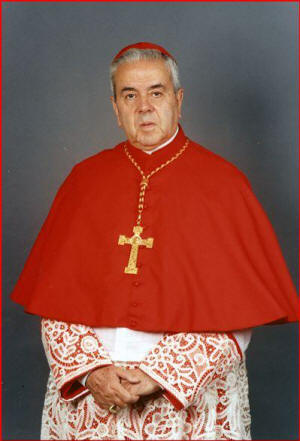
Cardinals Update: Passing of Cardinal Fiorenzo Angelini, President Emeritus of the Pontifical Council for Health Care Workers (Italy), at the age of 98

ANGELINI FIORENZO p

Cardinal Fiorenzo Angelini, Cardinal-Priest of S. Spirito in Sassia pro hac vice Title, has passed away on last Saturday, 22 November 2014 at the age of 98. He was the long time chief of the Pontifical Council for Health Care Workers, first as its Pro-President from 1985 to 1989 and then as President from 1989 to 1996. In that position, Cardinal Angelini has a very special role to help the health care workers that are part of the Church’s vast humanitarian and charity efforts around the world. In another unique note, he was also the last of the Cardinals present in the current College of Cardinals to be born in the city of Rome in the year 1916.

http://www.gcatholic.org/hierarchy/data/cardJP2-5.htm#7

fiorenzo-angelini

Cardinal Angelini was created Cardinal in 1991 by Pope St. John Paul II in his fifth Cardinal creation consistory on 28 June 1991. His motto was “Evangelizo Pacem Evangelizo Bonum” which means ‘I bring the Good News of peace’, a reminder that our Lord Jesus Christ brings peace into the world, and in His Good News we can find true peace. It is this peace which Cardinal Angelini had worked hard for many years, and to which peace he is now going to.

angelini

We pray for Cardinal Angelini, that he will rest in peace, and God will reward him for all his hard and great work as the long time servant of God for the ministries and good works he had done for the sake of God and His people in the entire Universal Church in his dedication and work in the Roman Curia, in helping those who are dealing with health care and care of the sick around the world. May the Lord welcome him into His embrace in heaven and give him eternal rest and happiness that he deserved.

With the passing of Cardinal Angelini, and the recent aging out of Cardinal Franc Rode, the College of Cardinals now stands at 209 members, with 113 Cardinal-electors and 96 Cardinal non-electors. The number of Cardinal-electors now is 7 below the specified maximum limit of 120.

There are now 7 Cardinal-elector vacancy in the College of Cardinals, 0 vacant Cardinal Suburbicarian Sees (for Cardinal Bishops), 5 vacant Cardinal Titles (for Cardinal Priests) and 10 vacant Cardinal Deaconries (for Cardinal Deacons).

Wednesday, 26 November 2014 : 34th Week of Ordinary Time (Homily and Scripture Reflections)

Liturgical Colour : Green

Dear brothers and sisters in Christ, today’s readings remind us of the truth of our Faith and how things will happen to us if we are to be the disciples of Christ, and if we remain faithful to Him. Suffering and difficulties will be our lot and part of our lives, but we do not need to worry, as our Lord is with us, and He will guide us to the final triumph and victory against evil, and into our eternal reward and glory.

In the Gospel reading, Jesus told His disciples and the people who heard His teachings, and from them to us. We clearly heard of what challenges the faithful will encounter for the sake of the Lord. The world, which is our world, with all of its forces and powers, with all of its influences and temptations, are against the Lord and all of His ways. The ways of this world are the opposite of the ways of the Lord.

And as such, the world will always stand against the Lord and His efforts to bring light into it. The darkness of this world, the powers of Satan and his angels want us to remain in darkness and lost to the Lord, that we may remain forever in sin and debauchery. But the Lord Jesus wants an end to all of these, as He loves us and He wants us to be rescued and brought into the light.

Thus He sent His messengers and servants into the world, and through His teachings, the Apostles and the saints went forth around to spread His Good News to all the nations and all the people. They persevered in their missions, accepted in some but rejected in many places. There were many persecutions against them, betrayal by those they have trusted, betrayal by those who professed the same faith to God but who failed to persevere and were tempted by the world, and many other sufferings.

Many including St. Paul were sent to prison and suffered grievously in incarceration, and they were betrayed by their own people, reported and punished by the Sanhedrin, the Jewish High Priesthood and council, which jealously watched after their actions and tried many times to bring them to court and kill them for what they stood up for. And what did these holy servants of God stand up for? None other than the truth, as the Lord Jesus had revealed to them, and now these truths have also been revealed to us.

But the works of the Apostles, the disciples and servants of the Lord are not yet done. This world is always covered in darkness and sin, just as it had been in the past. Many among the people of God are still longing for the light, and many had been misled by the lies of the devil, and to follow the ways of the world. And who will be there to give the light of our Lord to them? It is none other than all of us, brothers and sisters.

For through our baptism, when we were born anew in the Lord, we have been made one as the Church of God, and as its members, we too share the same mission which had been given to the Apostles, the disciples and the servants of our Lord, that is to evangelise and spread the Good News of the Gospel to the whole world, and thus to enlighten a people who still live in the darkness of this world, and bring them all into the light just as we are already in the light of Christ.

It is important for us to realise that each and every one of us have been entrusted with many gifts of the Lord, for the use in the benefit of those who are around us. All of us have the responsibility and obligation to help our brethren in need. For surely, if we have done nothing to help them, then they will be lost to the darkness forever in damnation, and our Lord will then judge us for our failure to help when we are able to do so.

Therefore, brothers and sisters in Christ, as we continue our day today, and from now on henceforth, let us all realise that we need to stay true to our faith in God, and in that therefore, we have to live our faith and commit ourselves completely to the Lord, and in order to do so, we have to be a witness of the Faith and our Lord through our actions, words and deeds that truly proclaim the Lord and that we are indeed His followers.

We do not have to worry or fear about what we will encounter. We will indeed encounter challenges and difficulties in this life, but we have to keep our spirit up, knowing that we will be triumphant in the end. There is nothing that Satan and his allies can do to harm us, as they have no power over us, as long as we stay true to the Faith and refrain from sinning.

At the end of days, when our Lord and Master comes again in His glory, we shall be united in His triumph and enjoy forever our rightful reward. His wrath, as born by the seven angels will not befall us. The seven plagues of the Book of revelations will only affect all those who have not walked in the way of the Lord but instead prefer to give in to the world’s desires and temptations.

May Almighty God help to keep us faithful to Him, and awaken in us the desire to help one another, to keep each other vigilant and devoted to the Lord, so that at the end of time, when our Lord comes again to make a reckoning with the world and all of His children, He may find us righteous and faithful to the end and thus worthy of His eternal promise of life everlasting. God bless us all. Amen.


First Reading :

https://petercanisiusmichaeldavidkang.com/2014/11/25/wednesday-26-november-2014-34th-week-of-ordinary-time-first-reading/


Psalm :

https://petercanisiusmichaeldavidkang.com/2014/11/25/wednesday-26-november-2014-34th-week-of-ordinary-time-psalm/


Gospel Reading :

https://petercanisiusmichaeldavidkang.com/2014/11/25/wednesday-26-november-2014-34th-week-of-ordinary-time-gospel-reading/

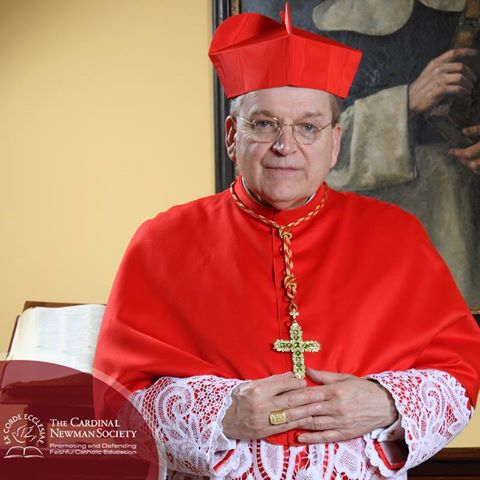
Pray for His Eminence, Raymond Leo Cardinal Burke and sign this petition!

10806429_10152779535488886_4828076339322054205_n

(Image above is courtesy of the Cardinal Newman Society)

All of you must have heard of the recent news that the faithful Cardinal Burke has been transferred from the position of the Prefect of the Supreme Tribunal of the Apostolic Signatura to the largely honorary position of the Cardinal Patron of the Sovereign Military Order of Malta.

First, while the position of Cardinal Patron is largely honorary, but the Sovereign Military Order of Malta is one of the largest charity arm of the Church, and a multinational organisation with tens of thousands of members vigorously and faithfully serving the people of God around the globe. And secondly, the position of Cardinal Patron will definitely free up more of Cardinal Burke’s time to continue defending the true Faith, just as he had done so at the Extraordinary Synod on the Family which recently ended.

Cardinal Burke is still young at 66, and many bishops and Cardinals all around the world, having known who are the ones that stood up for the Faith and for the Lord, will remember what he had done, and I am certain, that he will soon be elected the Successor of St. Peter the Apostle, and be the Defender of the Faith as the future Vicar of Christ. Pray for this, and pray for the Church of God!

https://www.lifesitenews.com/petitions/thank-you-cardinal-burke-for-your-vatican-service

Please sign the above petition as well, to show our gratitude to Cardinal Burke’s often thankless and yet courageous service to God, His Church and His beloved people.

Tuesday, 11 November 2014 : 32nd Week of Ordinary Time, Memorial of St. Martin of Tours, Bishop (Homily and Scripture Reflections)

Liturgical Colour : White

Dear brothers and sisters in Christ, today all of us through the readings of the Holy Scriptures we are all shown the virtues of obedience and proper behaviours according to the teachings and the ways of the Lord. In the first reading, in continuation of the letter which he sent to Titus while he was in captivity in Rome, St. Paul exhorted the faithful ones of God to follow the rules and expectations for each members of the Church, be it man or woman, old or young.

Meanwhile, in the Gospel reading, Jesus told a parable to His disciples, about a servant and his master, and the relationship between them, which ought to be proper, as how a master should be, and the servant should also act and do things as is expected of him. In this, we also see a clear link with the exhortations of St. Paul, on how the Church consists of many members, made up of many different kinds of peoples, all of whom should behave as they are expected to behave.

Mankind had the nature to rebel and disobeying others. It is often difficult for us to listen to others and follow what they want us to do. Ever since the beginning, we have rebelled against our Divine Master, the Lord God, who was so generous with His love and care for us, His servants, and yet we still chose to walk on our own path, disregarding the commandments of God, and rather, we listened to our own hearts’ desires.

Just look at the people of Israel, the chosen people of God, who for generations continued to rebel against the Lord’s will, and even after the Lord had given them His Law, from time to time, they continued to follow their own paths, worshipping pagan gods and idols, sacrificing to these idols, and also committing other forms of debauchery and wickedness in their lives.

And they wanted a king to rule over them, and God gave His permission for them to do that, and they had kings, some of whom were good, but many were wicked and disobedient to God, acting not as they should. The kings of Israel were the vicars and regents for the Lord’s true reign over His people, Israel, and yet they misappropriated and abused their powers and authority, serving their own purposes, leading the people even deeper into sin and rebellion against the Master of all.

And even in the world today, we still see such rebellious attitudes running rampant among us. It is difficult for many of us to know who we are and what we are expected to do, as a member of God’s Church. That is why, if we look at the various issues at hand, we can see that there are many dissenting voices trying to disturb and in fact destroy the order of things, as God had ordained.

Each of us has our role to play in the Church of God, as the presbyterate, the members of the ordained priesthood, or as the laity, the people of God who live on their daily lives as normal. And the men and women, each of whom had their own unique and complementary roles in the Church, as the members of God’s people. Yet, many people who did not understand how the order of things is like, are trying to disrupt the harmonious way of things is working.

Therefore, we ought to stand up against those who cry out for gender equality in the Church in any of its forms, and the subversion of the roles of the priest and the laity, by the blurring of the differences in their roles. Those who called for such horrendous changes are not educated and ignorant in the truths of our Faith, and as St. Paul had said in his letter, we should help them to learn the truth, find their roles in the Church and act accordingly according to those roles.

The truth is that, each members and parts of the Church have unique roles and expectations, and their roles are distinct and complementary to each other. One cannot usurp the function and role of another without disrupting the proper and good order in the Church.

The priests are the ones who celebrate the Sacrifice of the Holy Mass, and also are the ones authorised to give the Holy Sacraments to the people of God. Meanwhile, the laity are not allowed these roles, but instead, what are their roles? Their roles are to help the priests in their ministry and works, and in living their daily lives, they ought to be exemplary and faithful, and in building up their families, they should lead a true Christian way of life, creating good and faithful Christian families.

None of them can function without the other, as they support each other and becoming pillars, strong pillars of the Church and the Faith. And then, with regards to the roles of men and women in the Church, each of them have their own complementary roles, that support each other and perfect each other in the running of the Church.

Only men can become priests, as chosen by the Lord, and it is an unchangeable and unalterable Law of the Lord, given that the Apostles were men. But this does not mean that women are sidelined or discriminated against in the Church. Instead, women also occupy very special role in the Church, as the guardians of the Faith in the family, by her faith and dedication to God, she became role model for her family.

And we also know that there are many female religious, as nuns and others, who dedicated themselves fully to the Lord in prayer and loving service. These religious support the good works of the priests, by assisting in their missionary and loving works, and through dedicated service to mankind, showing a great example of faith to be followed by others. There had been many saints who were holy women, both religious and the laity who had dedicated themselves to the way of the Lord.

Today we celebrate the feast of St. Martin of Tours, a renowned saint and Bishop of Tours during the late Roman Empire. St. Martin of Tours was once a Roman soldier, who was pious and devoted to the Lord. He was born of a pagan family, but he attended Christian services since youth and became a believer against the wishes of his father.

The qualities of St. Martin of Tours had been evident even since his youth. When he was still a centurion in the Roman Army, he met a poor beggar in a town, who was freezing to death on the cold road. St. Martin of Tours was moved with love and pity, cutting his own centurion’s army cloak in half, and giving that half of a cloak to cover the body of the poor beggar.

At night, St. Martin of Tours had a vision of the poor beggar, who brought the half cloak to him, and revealing himself to be none other than the Lord Jesus Himself. He rewarded St. Martin for his actions, and this vision and event simply pushed St. Martin further in his zeal, and it also brought him into the faith completely, for he was still a catechumen at that time.

As a member of the Roman Army, he was often intrigued by the need for him to shed the blood of others, of his enemies, which he felt was against his conscience as a Christian and follower of the Lord. Therefore, eventually he renounced his part in the Army and became a full time follower and servant of the Lord, by becoming disciple of another famous saint, St. Hilary of Poitiers.

As the bishop of Tours, this holy man carried out numerous good works for his flock, building up churches and places of worship, setting numerous standards to be followed by the followers of Christ, and establishing strong foundations of the faith in his diocese. Through his various works as bishop and shepherd to the people of God in Tours, he brought many blessings and goodness to them.

Brothers and sisters in Christ, therefore, on this holy day of St. Martin of Tours, let us all take home two messages, and two important things which we need to heed in this life. First, is that all of us should play our roles actively in the Church, not by trying to be what we are not supposed to be, but to be faithful to the Lord and His will, just as He had said in the Gospel today, that we fulfill the will and wishes of our Lord and Master, without succumbing to our desires and pride.

And then second, we have to emulate the example of St. Martin of Tours in how he had lived his life. We have to show mercy and charity to others, helping those who are in need of help, so that our faith in the Lord will not be just merely empty faith, but will instead be alive and vibrant, filled with the love of God. And after we have done all these, remember that we have done it not for ourselves, but as the actions of the loving servants of our God.

Let us all say to the Lord, that we have all done our duties faithfully and as a servant of God should have done. Let us grow richer and stronger in our humility, so that we may learn how to live according to the role which God had given us, and not to seek to gain more for our own purposes. And we hope that He who sees all and knows all that we do, will reward us with His everlasting grace and love. God bless us all. Amen.


First Reading :

https://petercanisiusmichaeldavidkang.com/2014/11/10/tuesday-11-november-2014-32nd-week-of-ordinary-time-memorial-of-st-martin-of-tours-bishop-first-reading/

Psalm :

https://petercanisiusmichaeldavidkang.com/2014/11/10/tuesday-11-november-2014-32nd-week-of-ordinary-time-memorial-of-st-martin-of-tours-bishop-psalm/

Gospel Reading :

https://petercanisiusmichaeldavidkang.com/2014/11/10/tuesday-11-november-2014-32nd-week-of-ordinary-time-memorial-of-st-martin-of-tours-bishop-gospel-reading/

Sunday, 9 November 2014 : 32nd Sunday of Ordinary Time, Feast of the Dedication of the Lateran Basilica, Archbasilica of the Most Holy Saviour and Saints John the Baptist and the Evangelist at the Lateran (Gospel Reading)

Liturgical Colour : White

John 2 : 13-22

At that time, as the Passover of the Jews was at hand, Jesus went up to Jerusalem. In the Temple court He found merchants selling oxen, sheep and doves, and money-changers seated at their tables. Making a whip of cords, He drove them all out of the Temple court, together with the oxen and sheep.

He knocked over the tables and of the money-changers, scattering the coins, and ordered the people selling doves, “Take all this away, and stop turning My Father’s house into a marketplace!” His disciples recalled the words of Scripture : ‘Zeal for Your House devours Me like fire.’

The Jews then questioned Jesus, “Where are the miraculous signs which give You the right to do this?” And Jesus said, “Destroy this temple and in three days I will raise it up.” The Jews then replied, “The building of this temple has already taken forty-six years, and will You raise it up in three days?”

Actually, Jesus was referring to the Temple of His Body. Only when He had risen from the dead did His disciples remember these words; then they believed both the Scripture and the words Jesus had spoken.


Homily and Reflection :

https://petercanisiusmichaeldavidkang.com/2014/11/08/sunday-9-november-2014-32nd-sunday-of-ordinary-time-feast-of-the-dedication-of-the-lateran-basilica-archbasilica-of-the-most-holy-saviour-and-saints-john-the-baptist-and-the-evangelist-at-the-lat-5/

Thursday, 6 November 2014 : 31st Week of Ordinary Time (First Reading)

Liturgical Colour : Green

Philippians 3 : 3-8a

We are the true circumcised people since we serve according to the Spirit of God, and our confidence is in Christ Jesus rather than in our merits. I myself do not lack those human qualities in which people have confidence. If some of them seem to be accredited with such qualities, how much more am I!

I was circumcised when eight days old. I was born of the race of Israel, of the tribe of Benjamin; I am a Hebrew, born of Hebrews. With regard to the Law, I am a Pharisee, and such was my zeal for the Law that I persecuted the Church. As for being righteous according to the Law, I was blameless.

But once I found Christ, all those things that I might have considered as profit, I reckoned as loss. Still more, everything seems to me as nothing compared with the knowledge of Christ Jesus, my Lord.


Homily and Reflection : 
https://petercanisiusmichaeldavidkang.com/2014/11/05/thursday-6-november-2014-31st-week-of-ordinary-time-homily-and-scripture-reflections/

Tuesday, 4 November 2014 : 31st Week of Ordinary Time, Memorial of St. Charles Borromeo, Bishop (First Reading)

Liturgical Colour : White

Philippians 2 : 5-11

Your attitude should be the same as Jesus Christ had : Though He was in the form of God, He did not regard equality with God as something to be grasped, but emptied Himself, taking on the nature of a Servant, made in human likeness, and in His appearance found as a Man.

He humbled Himself by being obedient to death, death on the cross. That is why God exalted Him and gave Him the Name which outshines all names, so that at the Name of Jesus all knees should bend in heaven, on earth and among the dead, and all tongues proclaim that, Christ Jesus is the Lord to the glory of God the Father.


Homily and Reflection :

https://petercanisiusmichaeldavidkang.com/2014/11/03/tuesday-4-november-2014-31st-week-of-ordinary-time-memorial-of-st-charles-borromeo-bishop-homily-and-scripture-reflections/