Thursday, 19 June 2014 : 11th Week of Ordinary Time, Memorial of Sts. Philip Minh, Priest and Companions, Martyrs (Scripture Reflections)

Liturgical Colour : Red

Dear brothers and sisters in Christ, today we listen to how our Lord taught us Himself, how we should pray, and in the first Reading, we also learn how we should become, or what are the things expected from us as the children of God and as His disciples. The two prophets, Elijah and Elisha are the ones mentioned, and they and their actions ought to be our model of the faith.

And in relation to all of that, I would like to bring your attention to the saints whom we are celebrating today, the Saints of the Vietnamese persecution of the faithful, also known as the Vietnamese martyrs, led by the Vietnamese priest, St. Philip Minh. They consisted of the laity and the religious, all thoroughly dedicated to the cause of the faith.

They all faced persecution for their faith and for their work in testifying and proclaiming that faith to others around them. As we know, Elijah and Elisha the prophets faced many difficulties in their mission, as we can read from the two Book of Kings in the Bible, how they had to go from town to town, and even having to exile themselves in foreign lands at times, when their lives were in considerable danger through being opposed to the king and the people’s wickedness.

St. Philip Minh and his companions, the Vietnamese martyrs lived through different periods of time spanning several hundred years, but they all faced similar opposition and persecution against their faith, when many were asked to choose between recanting their faith in Christ and live or to abandon and forsake Christ in exchange for their lives.

The Vietnamese monarchy and the government, ran by strongly Confucian-influenced officials and nobles viewed the faith in Christ as an aberration in the society and as a great and terrible threat to the unity of the nation and to the authority of the Confucian-run government. Hence, the officials and the Vietnamese Emperor officially went on a great persecution and opposition against the faith and the faithful.

Yet, the faith made great progress in Vietnam, and even it still does until this very day. Persecution against the faith and the faithful still continues even to this day, under the atheist and anti-faith Communist government in power, and yet the faithful continued to go on in their daily struggle and remain true to their faith in the Lord.

The Vietnamese martyrs showed us a great example of how we should treasure and live our faith meaningfully, for they had been tortured and forced to recant their faith, and yet they persevered on, and they did not give in to the demands and the offers of their executors and torturers. They chose to remain faithful and continued with their evangelisation of the faith, be it through their work or through their death, that they bring more and more souls into salvation and into knowing God.

Brothers and sisters in Christ, it does not mean that we should seek martyrdom or be confrontational about the faith, but instead it means that we should not take our faith for granted, and we have to be active and genuine in living our faith. We have to realise that in having and in keeping this faith, we will find ourselves often standing in opposition to the values and ways of the world, because we belong to the Lord. Remember, as Jesus Himself said, that this world hated Him and therefore it would hate us too.

Our faith life will inevitably meet challenges and difficulties along the way, some of which had happened to the prophets Elijah and Elisha, as well as to St. Philip Minh and his companions, the Vietnamese martyrs. The question now is, are we able to follow in their footsteps and remain faithful to the Lord and walking in His ways at all times, despite the challenges and difficulties?

Let us from now on reflect on this, and on the lives and actions of the prophets and the martyrs, that we may reflect on our own lives and actions. Let us hope that we may change for the better, and grow stronger in our faith, that our faith may be genuine and filled with love, both for God and for our fellow men. God bless us all. Amen.

Friday, 13 June 2014 : 10th Week of Ordinary Time, Memorial of St. Anthony of Padua, Priest and Doctor of the Church (Scripture Reflections)

Liturgical Colour : White

Brothers and sisters in Christ, today is a direct continuation of the discourse and catechesis of yesterday’s Scripture readings, and we continue on the matter of understanding the Law and the true intention of the Lord as He revealed to mankind. We need to know that the Law of the Lord should not be taken at plain literal meaning, nor should we be proud of ourselves and assume that we know it all about God and His desire, and therefore be judgmental on others.

We need to understand the greater purpose of the Law and the rules of our faith. We cannot be blindly oblige to the rules without first understanding them, and yet we can neither fail to oblige with the excuse that we do not understand them or worse if we decide to ignore them. We must therefore make the conscious effort to understand the Lord and His Law. How do we do so, brothers and sisters?

By obeying the teachings and tenets of the Church, and the regulations established by the Church, and maintaining a good and healthy relationship with our shepherds, that is our priests and bishops. It is because these people are the ones who had been entrusted with our care by the Lord, and they have also been granted teaching authority by Christ Himself, empowered by the Holy Spirit, that they teach the faith and the Law of God in its purest form and in its true meaning.

Today we celebrate the feast day of one of the greatest teachers of the faith, that is St. Anthony of Padua, a very renowned Franciscan friar who was legendary and amazing in his homilies and discourses, so much so that even the Pope at that time employed him as the one to deliver the homilies at his court. St. Anthony of Padua also preached in many places across Europe, and from his teachings, he brought many people closer to God by awakening in them the proper understanding of His laws and purpose.

St. Anthony of Padua was well educated since his youth, and at the same time he was also very dedicated to the Lord, having been educated in the seminary since his youth, and eventually decided to join a sacred religious life. He learnt much about the faith and how to teach it well to the people of God, and through his vast experiences in many situations and stints in various religious orders, he gained great knowledge and ability to teach the faith to the faithful.

St. Anthony of Padua was a great orator and preacher of the faith, and yet he remained truly humble despite his renown and his abilities. In fact, the very first time when St. Anthony of Padua’s preaching abilities was identified, he was reluctant and afraid when he was pointed out to be the one to give a sermon to a group of gathered religious congregations. Yet, despite his reluctance and initial refusal, he made such an eloquent and impressive sermon, that the people who heard him were completely astonished.

St. Anthony of Padua continued to preach from then on, and demands for his sermons are always high, and the Pope even kept a record of his sermons, which was truly valuable for us, for there is truly much wisdom that we can learn from St. Anthony of Padua and his discourses. Through him the word of God and the intentions of the Lord were made clear to many people, who then grew on deeper in their faith because of that.

Therefore, brothers and sisters in Christ, we have to keep faithful and true to the deposit of faith that is in the Church. Yes, we have to keep the complete entirety of the deposit of faith, which is the accumulated wisdom, teachings, and revelations that we have received through the holy men and women, who dedicated themselves like St. Anthony of Padua had done. Through them, we gain this precious knowledge and understanding, and therefore, in our lives, we have to continue safeguarding this deposit of the faith and teach it to others.

It is not difficult to do so, and we do not have to be like St. Anthony of Padua, or be as wise and eloquent as him in order to do so. What we need to do is in fact, to practice what we believe in our own lives, that in all our words, deeds and actions we will always reflect who we are, the children and followers of our Lord and God. If we practice genuinely what we believe in, then those who see us and who are still unbelievers, will certainly be touched by the light of Christ and believe in God, and come to believe and be saved.

May the Lord bring about His good works and graces through us, that He may make manifest His truth and love to the world, just as He had once made Himself known through St. Anthony of Padua. God bless us always and strengthen us at all times. Amen.

Thursday, 12 June 2014 : 10th Week of Ordinary Time (Scripture Reflections)

Liturgical Colour : Green

Brothers and sisters in Christ, today it is revealed to us that in our obedience to God, we cannot be blindly obedient and obeying Him for the sake of obedience, or because we fear the wrath of God and His punishments. That is because any faith based on such reasons is likely to be weak and unstable, easily manipulated and shaken when we are in our most vulnerable moments.

Our faith must in fact be based on genuine love and devotion for God. And how do we devote ourselves to God, brothers and sisters in Christ? It is by finding out the true meaning of God’s love for us and His Laws, that we obey Him and follow Him not for the sake of obedience or merely for the fulfillment of our obligations to God, but because we truly understand that our obedience is because we realise our frailty and our need for the Lord to be our guide and help.

What the Lord told the disciples today is that, there is reason behind every single tenets and parts of the Law which God has given His people to follow, and that reason is all based on nothing else but love. Yes, the love of God for mankind, and the love which we ought to show and emulate among ourselves, to each other. And love is the heart of the Law, which we all need to remember always, and yet often forgets.

People like the Pharisees and the scribes like to dwell in very detailed scrutinies of the Law and certain rules, which inadvertantly diverted their attention from the true focus, that is love. Their preoccupation with otherwise minor details on the Law of God prevented them from showing acts of love and acts of mercy when they were expected to do so.

In fact, not only just that, but they even often misused their power and abused it for their own purposes, that is to secure their own positions, their own power and to preserve the dominion and authority which they felt was rightfully theirs as the leaders of the people. They would do things in direct contravention with the true meaning of the Law of God, if those things would help them to preserve themselves.

For example, the case of the woman caught in adulterous behaviour and brought to Jesus was a clear example of this abuse. The Pharisees and the elders of Israel brought her to Jesus not because they were concerned a single bit about her, whether for her redemption or condemnation, but they did so in order to discredit Jesus and trap Him in His own words, and thus constituted a vile attempt to mock the love of God and the Law itself.

Therefore, brothers and sisters in Christ, today we are urged to build our relationships with God anew, that is to reaffirm our complete and total devotion to His love, and vow to carry on that love with us as we live our lives and as we interact with one another in this world, so that God’s love may ever be more ubiquitous and evident in our world which is increasingly lacking in love.

We are called to reflect on our own actions, on whether we have truly been faithful disciples of the Lord, that is truly taking into account how each and every one of our actions stand with reference to the Lord and His love. Have we attain a high standard of love in our actions? And have we truly been obedient to the will of God? Or are we only concerned about our own fates and well-being, often to the disadvantage of others around us?

Let us use this opportunity to reflect, and from then on, to take concrete actions, which will benefit all of us, and further spread the love of God for His people throughout the world, and make it a much better place. Remember, obey the Lord and all His ways, with all of our hearts and minds. God preserve us. Amen.

Message to the Faithful and Reflection on the Occasion of the Solemnity of Pentecost Sunday

Liturgical Colour : Red

Brothers and sisters in Christ! Today I wish you all Happy Pentecost and indeed happy birthday to us all as the members of His One Church, the One Body of Christ. Today is indeed the birthday of the Church, as the Pentecost day when the Holy Spirit descended on the Apostles marked the very beginning of the Apostolic ministry of the Church as we know it.

The Pentecost day from its name signify a period of fifty days since the celebration of the Passover, that is the Jewish Passover. Why do we call this solemnity, the solemnity of the Pentecost? That is because the Jews also celebrate Pentecost, but for a different purpose. After the people of Israel had been brought out of Egypt, they travelled for days through the desert, from the Red Sea to the Mount Horeb, or the Mountain of God.

There the people encamped on the plain, while Moses ascended up the mountain to meet the Lord and receive something that was truly very important. The Pentecost celebration by the Jewish people celebrated that moment when the Lord gave His gift, the Law which He revealed to Moses, to the people of Israel, as a guide on how they should live their lives worthily of the Lord. The Pentecost for the Jewish people therefore originally meant the reception of the Law as the means of enlightenment, that the people who was once lawless and without guide, now has the Law to guide them.

As we witnessed in the Scripture reading, the reading on the Tower of Babel, which many of us are quite familiar with, shows how mankind after creation had grown proud on earth with their accomplishments, and tried to challenge God by building the tower that reaches to the heavens. As a result, God punished mankind who had grown proud by confusing their languages and customs, that they become separated into many peoples and many languages. Hence the people of God became leaderless and without guidance.

But God did not intend to let this go on forever. So first through Moses He gave the people the Law, as the first guide for them to seek Him. But it is not perfect, for although the Law itself in its entirety is perfect, but mankind whose wisdom has been brought to disarray by God has different mindsets and ways of thinking. That is why we often disagree on many matters big and small, and we often have different opinions on things and other occurrences. The same therefore happened to how the people of God interpret the Law.

Some took a laidback and leisurely attitude to the Law, while others took the Law very seriously and even to the point of being very detailed and thorough in their observation of the Law. There were widely differing views and interpretations, which ended up in the corruption of the true meaning of the Law. The observation of the Law over time became ritualistic and formal observations, and the elders of the people over time interpret the Law in ever more varying ways so as to create extensive new rules and regulations that the people have to obey, an astounding six hundred and thirteen rules in all for the people to observe.

Hence, that is why the people grew ever more distant from the Lord, and they grew ever more wayward, particularly that of the leaders and the priestly class. These people grew to enjoy the power that they possess as judges of the people, and abused their power in many occasions. Over time, this grew worse, and these leaders ended up leading the people of God further from salvation, as they committed wicked things and sins before the eyes of God.

The Lord promised the coming of the Messiah, who would liberate the people of God and brought them to a new light and understanding about God. And He had well-prepared the people long before the coming of this Messiah, who came in the person of Jesus Christ, the Son of Man, and also the Son of God. He is the Word of God made flesh, and by entering into the material body of mankind, He entered our world in order to redeem it.

The Son, Jesus Christ was with God, and is now with God, and He is equal with the Father, and together with the Holy Spirit, He is One. Yes, there is only One God, omnipotent and unsurpassed in all things, but at the same time, the Oneness of the Lord consists also of three distinct and equal Divine Persons, in the Father, Son and Holy Spirit. Each of them are equal to each other, but they are not the same to each other. Yet, they are perfectly bound in love, forming what we know as the Most Holy Trinity.

And this was the truth which the Messiah and Son brought into the world, together with the proclamation of God’s love and saving works, which He intended to fulfill through the works of Jesus Christ, the Messiah. He taught the people of God by the means of parables and stories, as well as explanations, which He made even clearer to His disciples, the Apostles. But they had not been able to understand it yet before the coming of the Holy Spirit, for the understanding is in them, but their confused mind still blocked them from truly understanding the completeness of truth in Christ.

This is where the Pentecost came in, the Christian Pentecost, that is the descent of the Holy Spirit on the disciples, the beginning of the Church of God on earth. Just as the first Pentecost involves the revelation of God through the Law, the second and greatest Pentecost involves the revelation of God in its completeness and fullness through the Holy Spirit Himself that descended directly to the people of God through the Apostles.

Jesus had promised the disciples often, that He would send them the Helper, or the Advocate, which in fact is the Holy Spirit. And He fulfilled that promise on the Pentecost. The Holy Spirit descended like a fire on each of the disciples, who went on to preach from then on, without fear and full of courage, the truth about Christ and the Good News of His salvation, passing down the Holy Spirit to all those who are faithful to God.

The Holy Spirit filled the hearts of the disciples and their minds, inflaming in themselves the fire of wisdom, understanding and love. The Holy Spirit is the great Teacher promised by Jesus, that He would teach mankind the complete truth about the Law and the Love which God has for mankind, and through Him would come the entirety of the revelation of His plans for us, that is for our salvation.

The Most Holy Trinity is working in tandem in order to make sure that everything goes on smoothly. God the Father is the source of all things, of all knowledge, wisdom and power, and the Son, Jesus, is the channel, through which the Father made manifest all of His love for mankind, which culminated in His death on the cross, the ultimate proof of love by God for men. And lastly, the Holy Spirit is the energy, the power that makes everything possible, through which the grace of God enters mankind, and that was exactly what happened at the Pentecost.

We can see clearly the difference between what happened before the Pentecost and after that. Before the Pentecost, the disciples were often doubtful and fearful. Even when Jesus was still with them, they often had doubts and fears while following Him. When Jesus was arrested by the chief priests, the disciples were scattered, like sheep whose shepherd had been struck down. Even Peter denied the Lord three times in order to preserve his own safety, because he was uncertain, afraid and doubtful.

But after the Holy Spirit had descended on the disciples on Pentecost, there was a drastic and total change in attitude and outlook in them, that the once fearful disciples became courageous and fearless in proclaiming their faith openly. From the meetings that were carried under locked doors into the public preaching on the streets and in the Temple, and persevering even against the harsh persecution by the chief priests and the Pharisees. That is the power of the Holy Spirit.

However, all of this would not have been possible if they had not opened themselves and commit themselves to do the will of the Holy Spirit. We too, brothers and sisters, have received the Holy Spirit through the Sacrament of Confirmation, when the Spirit granted to us in Baptism is strengthened with the outpouring of the Holy Spirit like that of the Pentecost day when the flames of the Holy Spirit descended unto the disciples of Christ.

But we cannot be idle, for if we remain idle, then we will never bear any fruits of the Holy Spirit. There are seven fruits of the Holy Spirit, all of which bear the testimony of God’s love and blessing on us, and they need to be cultivated in us, if we are to bear these fruits. The Apostles and the disciples of Christ opened themselves completely to the Spirit and were committed to do the works of the Holy Spirit, and therefore they bore many fruits in their lives and received rich rewards in the end.

In the parable of the fig tree, Jesus said that a tree that bears no fruit or bad fruit is useless, and ought to be thrown into the fire and perish. That will be the same for us, if we fail to make use of the Holy Spirit which had been passed down to us through the Sacrament of the Church from the Apostles. We have to bear fruits, the fruits of the Holy Spirit, if we are to receive rich rewards from the Lord, otherwise, we will be cast out from His presence and unworthy of Him.

Let us all therefore, in this Pentecost day celebration, renew our commitment to the Lord, and recall the day when we received the Holy Spirit unto ourselves. Let the Holy Spirit make great works within us, that we may bring the love of God to all the peoples of all nations, and bring many souls closer to God, that they too may receive the Holy Spirit and be saved. God be with us all, and may His Spirit be upon us always. Amen.

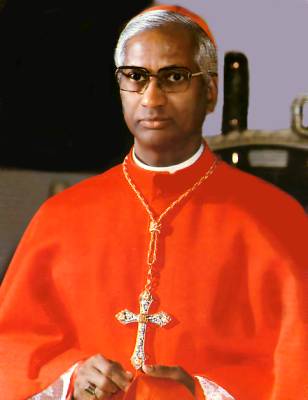
Passing of Cardinal Duraisamy Simon Lourdusamy, Metropolitan Archbishop Emeritus of Bangalore (India) and Protodeacon Emeritus of the College of Cardinals at the age of 90

Caridnal_Lourdusamy

Cardinal Duraisamy Simon Lourdusamy, Cardinal-Priest of S. Maria delle Grazie alle Fornaci fuori Porta Cavalleggeri has passed away on last Monday, 2 June 2014 at the age of 90. He was the Metropolitan Archbishop of Bangalore, one of the large Archdioceses in India, from 1968 to 1971, and then was for a very long time, the member of the Roman Curia, as the Secretary of the Congregation for the Propagation of the Faith from 1973 to 1985, and then as Prefect for the Congregation for Oriental Churches from 1985 to 1991, and eventually as the Protodeacon of the College of Cardinals from 1993 to 1996.

http://www.gcatholic.org/hierarchy/data/cardJP2-3.htm#88%5B/embed%5D

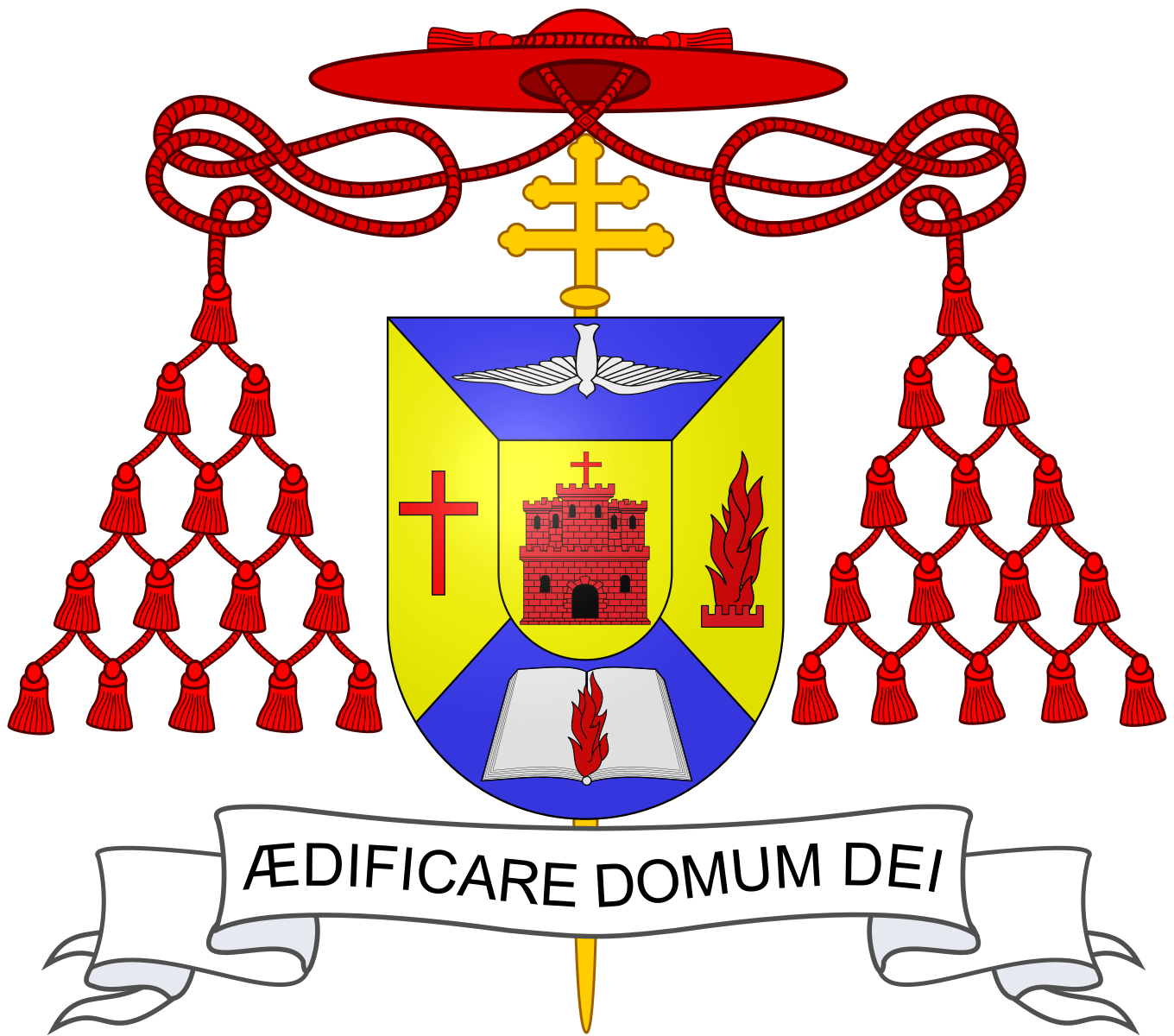
coa_duraisamy_simon_lourdusamy-svg

Cardinal Lourdusamy was created Cardinal in 1985 by Pope St. John Paul II in his third Cardinal creation consistory on 25 May 1985. His motto was Aedificare Domum Dei, which means “To build the house of God”. This means an emphasis on the evangelisation to the people of God, to establish His Church, which is growing rapidly in India, as millions grow to know about the Lord and wanting to join the faith in Jesus.

images

We pray for Cardinal Lourdusamy, that he will rest in peace, and God will reward him for all his hard and great work as the long time servant of God as the shepherd of the faithful in Bangalore, as well as for all the ministries and good works he had done in Rome for the sake of God and His people in the entire Universal Church. May the Lord welcome him into His embrace in heaven and give him eternal rest and happiness that he deserved.

With the passing of Cardinal Lourdusamy, the College of Cardinals now stands at 214 members, with 118 Cardinal-electors and 96 Cardinal non-electors. The number of Cardinal-electors now is two below the specified maximum limit.

There are now 2 Cardinal-elector vacancy in the College of Cardinals, 0 vacant Cardinal Suburbicarian Sees (for Cardinal Bishops), 2 vacant Cardinal Title (for Cardinal Priests) and 7 vacant Cardinal Deaconries (for Cardinal Deacons).

Saturday, 7 June 2014 : 7th Week of Easter (First Reading)

Liturgical Colour : White

Acts 28 : 16-20, 30-31

Upon our arrival in Rome, the captain turned the prisoners over to the military governor but permitted Paul to lodge in a private house with the soldier who guarded him.

After three days, Paul called together the leaders of the Jews. When they had gathered, He said to them : “Brothers, though I have not done anything against our people or against the tradition of our fathers, I was arrested in Jerusalem and handed over to the Romans.”

“They examined me and wanted to set me free, for they saw nothing in my case that deserved death. But the Jews objected, so I was forced to appeal to Caesar without the least intention of bringing any case against my own people. Therefore, I have asked to see you and speak with you, since it is because of the Hope of Israel that I bear these chains.”

Paul stayed for two whole years in a house he himself rented, where he received without any hindrance all those who came to see him. He proclaimed the kingdom of God and taught the truth about Jesus Christ, the Lord, quite openly and without any hindrance.

Friday, 6 June 2014 : 7th Week of Easter, Memorial of St. Norbert, Bishop (Scripture Reflections)

Liturgical Colour : White

Brothers and sisters in Christ, today we heard about the calling and the commissioning of St. Peter the Apostle, when the Lord Jesus talked to him, heart-to-heart on the shore of the Lake of Galilee after His resurrection. He asked Peter three times whether he loved Him more than anything or anyone else, and Peter affirmed his love and faith in Jesus. And Jesus gave him His sheep to care for, as His vicar on earth, which is the position inherited by our Pope today as the successor of St. Peter the Apostle.

For those of us who do not realise the significance of such an action by Jesus in today’s readings, Jesus asked Peter three times for his answer whether he loved Him is exactly because, for the same number of times, Peter had betrayed His Lord by denying Him on that night when Jesus was brought before the Sanhedrin, that is the Council of the elders and the chief priests to be condemned to death.

Peter surely knew that the Lord did such when He asked for his love three times, that the Lord knew of His denial, and how he had fallen as a disciple of His, but yet when Jesus asked him and affirmed his love for Himself, Peter had truly been forgiven by the most merciful Lord, and from then on, became the greatest servant of the Lord, leading the flock of Christ as His vicar on earth.

Today we focus on the Lord in His merciful and loving aspect, just as He is caring to all of us. But He also revealed today that to be His followers and servants is definitely not easy, and various challenges will await us if we decide to remain true to His path, as St. Peter himself had been told and what truly happened to him at the end of his life, as well as what had happened to St. Paul, who had to endure prison and incarcerations after incarcerations.

Jesus told Peter himself how he would die at the hands of the godless, and those who refused to listen to the truth of Christ. This was in fact the same fate that awaits all those who went on to preach the Good News, including the other Apostles and disciples of Christ, and St. Paul himself. They all met their deaths in various ways, but nevertheless, through their death, they brought glory to God, and through them more and more people came to know of the Lord and be saved.

All of these bring about the reality about our faith. For too long we have indeed been complacent in our faith, and we often take a laid-back attitude about it, pretending that we have easy and blissful life all the time in this world. On the other extreme is also that we are afraid to seek the Lord and ask for His forgiveness whenever we have committed sins in our respective lives. We therefore become isolated and do not receive the Lord’s forgiveness and instead we fall into even greater darkness, committing even greater evils.

We have to realise, brothers and sisters in Christ, as today’s Scripture readings had highlighted it to us, that we have to accept the realities it presented to us, that first, God is loving and merciful, for to those who have the will and desire to love God, He will grant them pardon and rich blessings. And secondly, that His way is different from the ways of the world, and this is why, suffering and persecution will be a part of the lives of those who keep their faith in God.

But God is always with us, and He will guide us, if we remain faithful, and that He assured the disciples and the Apostles, and rich indeed would be their reward for keeping the faith in heaven. And today, brethren, we also commemorate yet another faithful servant of God, that is St. Norbert, a bishop of Germany, who lived during the middle of the Medieval era Europe, and was also known as St. Norbert of Xanten, for he was born in that city.

St. Norbert led a very holy and religious life, and a life of simplicity and humility, especially after an incident which almost took his life, which he attributed to divine protection, and ever since, he deepened further his spirituality and dedication to the Lord. He established and strengthened religious orders and helped to spread the teachings of the faith to many people, and gained great following in the process.

He was a great reformer of the Church and the faith, adamant and strong in his principles in reforming the Church for the better, especially after he was appointed as the Archbishop of Magdeburg, an important position in the Church. And in conducting and pushing forward with his reforms, he made many enemies, many of whom sent assassins after him. Nevertheless those attempts failed, and St. Norbert continued to carry out his good deeds and works until his passing from this world.

We have to realise, brethren, that we have many graces awaiting us if we allow God to come to us, and do not close ourselves to the loving hands of the Lord, which He extends freely to us, offering us forgiveness and everlasting love. May St. Norbert intercede for us, that we may be brought ever closer to reconciliation with our God, and receive great blessings in our lives. Let us also face the challenges and opposition in life with joy and happiness, knowing that God is always with us, His beloved children. God bless us all. Amen.

Friday, 6 June 2014 : 7th Week of Easter, Memorial of St. Norbert, Bishop (Gospel Reading)

Liturgical Colour : White

John 21 : 15-19

After they had finished breakfast, Jesus said to Simon Peter, “Simon, son of John, do you love Me more than these?” He answered, “Yes, Lord, You know that I love You.” And Jesus said, “Feed My lambs.”

A second time Jesus said to him, “Simon, son of John, do you love Me?” And Peter answered, “Yes, Lord, You know that I love You.” Jesus said to him, “Look after My sheep.”

And a third time He said to him, “Simon, son of John, do you love Me?” Peter was saddened because Jesus asked him a third time, “Do you love Me?” and he said, “Lord, You know everything; You know that I love You.”

Jesus then said, “Feed My sheep! Truly, I say to you, when you were young, you put on your belt and walked where you liked. But when you grow old, you will stretch out your hands, and another will put a belt around you, and lead you where you do not wish to go.”

Jesus said this to make known the kind of death by which Peter was to glorify God. And He added, “Follow Me.”

Friday, 6 June 2014 : 7th Week of Easter, Memorial of St. Norbert, Bishop (Psalm)

Liturgical Colour : White

Psalm 102 : 1-2, 11-12, 19-20ab

Bless the Lord, my soul; all my being, bless His holy Name! Bless the Lord, my soul, and do not forget His kindness.

As the heavens are high above the earth, so great is His love for those fearing Him; as far as east is from the west, so far does He remove from us our sins.

The Lord has set His throne in heaven; He rules, He has power everywhere. Praise the Lord, all you His angels.

Friday, 6 June 2014 : 7th Week of Easter, Memorial of St. Norbert, Bishop (First Reading)

Liturgical Colour : White

Acts 25 : 13b-21

As King Agrippa and his sister Bernice were to stay in Caesarea for several days, Festus told the king about Paul’s case and said to him, “We have here a man whom Felix left as a prisoner. When I was in Jerusalem, the chief priests and the elders of the Jews accused him and asked me to sentence him. I told them that it is not the custom of the Romans to hand over a man without giving him an opportunity to defend himself in front of his accusers. So they came and I took my seat without delay on the tribunal and sent for the man.”

“When the accusers had the floor, they did not accuse him of any of the crimes that I was led to think he had committed; instead they quarrelled with him about religion and about a certain Jesus who has died but whom Paul asserted to be alive. I did not know what to do about this case, so I asked Paul if he wanted to go to Jerusalem to be tried there. But Paul appealed to be judged by the emperor. So I ordered that he be kept in custody until I send him to Caesar.”