Tuesday, 13 August 2013 : 19th Week of Ordinary Time, Memorial of Saints Pontian, Pope and Martyr, and Hippolytus, Priest and Martyr (Scripture Reflection)

Liturgical Colour : Green or Red (Martyrs)

Dear brothers and sisters in Christ, the Lord our God is a loving and merciful God, who is quick to forgive and slow to anger. He cares deeply for all of His children that is all of us. He gave His all to save His lost ones, likened by Christ Himself as the shepherd who went out to seek for the one lost sheep. Yes, brethren, so great is God’s love for all of us, that He was willing to come down to us, as a man, to be one of us, that He may save us all through His great sacrifice, a sacrifice for all our sins and our unworthiness.

The good shepherd gives his life for his sheep and is willing to die in exchange for the life of his sheep. That was exactly what Christ had done for the sake of us all, that is to die on the cross for us, to give up His life, that we may have life in us, through Him and through His action in His saving Passion. In order to look for us, the lost sheep, He was willing to go through painful suffering and rejection, so that He may find us, and not just find us, but also gather all of us, and return us into His most loving embrace.

We have been lost ever since our ancestors disobeyed the will of God and forsook His love, preferring the devil and the pleasures of this world instead of the love of our God. If our God does not love us or care for us, then He could have easily blasted us into oblivion, erasing us from existence. Remember, He is the Almighty God, who is all-powerful and almighty, and He is the God who created the universe. Just as easily as He created us, He can as easily erase us from creation, and therefore eliminate the evils present within us.

Yes, we have been dirtied by the evils within us, and the evils of this world, that we are unworthy for the Lord who is all good and perfect. Yet, He troubled Himself and went all the way, even to incarnate Himself as one of us, through the Blessed Virgin Mary, that He became one of us, sharing our sufferings, sharing our troubles and pains, even though He certainly was not obliged to do that. He was truly like a shepherd who shared the sufferings and experiences of his sheep, be it in the sun or in the rain, in safe times or in times of danger, when wolves are threatening to eat the sheep the shepherd is guarding.

Our loving God protects us from harm and shield us from pitfalls and from our enemies. That was evident in His great providence to His people, Israel. He blessed them, smote their enemies, and gave them food to eat and drinks to satiate their thirst. He brought them through the desert into the land He promised all of them. In His love and kindness, He had poured His love to His people, and protected them as He always had. Yet, the people lacked gratitude, and they made complaints after complaints against the Lord, chiding that He had not done enough good for them.

God kept His patience and continued without end to provide help to His people, by sending them His prophets and messengers. The people hardened their hearts and they rejected God’s messengers, casting them out of their cities and even killed them in cold blood. The Lord thundered His wrath on the rebellious ones and casted them out of His presence, but He kept on hoping in us mankind, that we will find our way back to Him our Father and our Good Shepherd.

To this end He sent us a great new hope, in Jesus Christ, part of the Most Holy Trinity, who became our connector to the Lord our Father, as the bridge that bridged the uncrossable and infinite chasm created as a result of our rebellion against God and His love. Christ is that shepherd who went out of his way to look for the lost sheep, and when the lost ones are found, great rejoicing happens, to the shepherd and the whole flock of the sheep, because the lost ones are no longer lost, but reunited as one once again, with the saved ones.

We have been saved, brothers and sisters in Christ, because we have believed in Jesus our Lord and Saviour, and accepting His offer to salvation, which He granted freely to all who trust in Him and all who put their faith in Him. We have been saved because we have been joined to that One Body of Christ that is the Church, the One and only Church that God had established, to be the united body of His faithful ones, that is the flock of the Lord’s sheep. We have been baptised in the Name of the Most Holy Trinity, and we have been taken away from this world and its evils, and brought together with other faithful ones, into the One, Holy, Catholic, and Apostolic Church, out of which there is no salvation.

Today, brethren, we commemorate the feast of two great saints and martyrs of the early Church, namely Pope St. Pontian or St. Ponziano, Bishop of Rome and successor of St. Peter the Apostle as the Vicar of Christ, and St. Hippolytus, a priest of the Church of God, also known as St. Hippolytus of Rome. Pope St. Pontian lived through the turbulent times of the third century Rome, when the Roman Empire went through a series of military and political upheavals. Pope St. Pontian initially led the Church in a relatively peaceful state, but soon faced a tough persecution of the faithful when a new Emperor came into power and began to persecute Christians once again.

St. Hippolytus lived in the same era, a contemporary of Pope St. Pontian, and in fact they clashed over certain issues during the time prior to their martyrdom. They were bitter rivals, and their rivalry even threatened to split the Church under factions led by each of them respectively. However, over time, they reconciled their differences, and worked together to bring back the lost sheep of the Lord caused by the divisions in the Church and among the faithful. Both St. Hippolytus and Pope St. Pontian were captured and exiled together by the Emperor who persecuted Christians harshly.

Eventually both of them met their end in death, in sacred martyrdom, in the defense of their faith, and in their courageous and vibrant love, which they showed to their fellow men, the flock of the Lord that they have been appointed as shepherds for. They did not fear death, because the Lord who had conquered death through His own death on the cross, has been triumphant, and death will not have the last word. Through their actions and deeds, many of the lost sheep of the Lord, and those who have yet to hear the Lord’s word were inspired to seek the Lord and find His truth, bringing to them the salvation of our Lord.

Brothers and sisters in Christ, even though both Pope St. Pontian and St. Hippolytus had died a long time ago, but the spirit of their hearts and their works are still evident even until today. They have inspired all of us to also be shepherds for one another, to take care for one another, dissolving the differences between us, and seeking for what unites rather than what divides.

Let us seek our God the Good Shepherd, and if we are lost, let us find He who looks for us day and night. Let us not to forget to ask the assistance and help from His faithful servants, the saints, Pope St. Pontian and St. Hippolytus, all the other saints and martyrs, and the holy angels of the Lord. Last but not least, let us also seek the help of the greatest saint of all, the mother of our Lord, the Blessed Virgin Mary. Let us continue to walk in the path of the Lord, and not to be led astray by the temptations of evil, that we will be reunited by the Lord our God in complete and eternal happiness. God bless us all. Amen.

Tuesday, 13 August 2013 : 19th Week of Ordinary Time, Memorial of Saints Pontian, Pope and Martyr, and Hippolytus, Priest and Martyr (Gospel Reading)

Liturgical Colour : Green or Red (Martyrs)

Matthew 18 : 1-5, 10, 12-14

At that time the disciples came to Jesus and asked Him, “Who is the greatest in the kingdom of heaven?”

Then Jesus called a little child, set the child in the midst of the disciples, and said, “I assure you that, unless you change and become like little children, you cannot enter the kingdom of heaven. Whoever becomes lowly like this child is the greatest in the kingdom of heaven, and whoever receives such a child in My Name receives Me.”

“See that you do not despise any of these little ones, for I tell you : their angels in heaven continually see the face of My heavenly Father.”

“What do you think of this? If someone has a hundred sheep and one of them strays, will he not leave the ninety-nine on the hillside, and go to look for the stray one? And I tell you : when he finally finds it, he is more pleased about it than about the ninety-nine, that did not get lost. It is the same with your Father in heaven : your Father in heaven does not want even one of these little ones to be lost.”

Thursday, 8 August 2013 : 18th Week of Ordinary Time, Memorial of St. Dominic, Priest (Psalm)

Liturgical Colour : White

Psalm 94 : 1-2, 6-7, 8-9

Come, let us sing to the Lord, let us make a joyful sound to the Rock of our salvation. Let us come before Him giving thanks, with music and songs of praise.

Come and worship; let us bow down, kneel before the Lord, our Maker. He is our God, and we His people; the flock He leads and pastures. Would that today you heard His voice!

Do not be stubborn, as at Meribah, in the desert, on that day at Massah, when your ancestors challenged Me, and they put Me to the test.

Monday, 29 July 2013 : 17th Week of Ordinary Time, Memorial of St. Martha (Scripture Reflection)

Brothers and sisters in Christ, today we celebrate the feast day of St. Martha, the sister of Lazarus, whom Christ had risen from the dead. St. Martha and her sister Mary were faithful followers of Christ, who cared for Him as we have read in the Gospel today. Both of them faithfully took care of the Lord and listened to Him as He went on through His ministry.

Jesus too cared for them, and blessed them with His love. He loved them so much that when Lazarus died, He wept. He was touched by the sisters’ dedication and love for one another, and He Himself is a loving God. In His mercy and love, He had sent His Son Jesus, to be our Saviour, to bring us from the grip of death into a new life in Him, just as He had done with Lazarus, His beloved. Yes, so that we may live, brethren, a new life in God, and a final escape from death and hell that was our fate.

For our sins and faults, and the rebellion of our fathers against the will of God had angered God and made us unworthy of His Holy presence. We had been made dirty by sin and the evils of the world, corrupted by the trickery and temptations of Satan and his agents. For such evils against the holiness of God, there is only one fate for all of us, that is death and eternal punishment in hell, in the fires and darkness prepared for Satan and his angels for eternity, for their own rebellion against God.

But the Lord does not want to leave us to our fate, nor does he want to abandon us in darkness and corruption. He loves all of us, the most beloved and perfect of all His creations, so much that He gave the way to salvation, the escape path from that certain destruction which awaits all of us. He provided the straight way for all of us, the straight highway to salvation, towards reunion with Him in eternal bliss of heaven.

That was why He sent us Jesus, His own Son, the Word of God made flesh, that in His coming to this world, He made it possible for us to be reunited with God, for the Son of God had become one like us, albeit without sin. He had become one of us, of man, the Son of Man, born in the humble stable, but destined for eternal kingship. Yes, brethren, He is to be the King of Israel, the King of all creation, the King of the Universe. In Him all of God’s promises to mankind is fulfilled and perfectly completed. In Him lies all our hope and our future.

Christ is willing to help all of us, because of His love for us. A love so great that with that love He endured the cup of suffering He drank, to suffer on the way to Calvary, throughout His Passion, and to die on the cross in a slow, painful death, rejected by His own people and condemned by the priests and the people themselves, though He is without sin, and have been condemned for a false reason. He offers us this love, to all without exception, that everyone may be saved and have life.

He is our Lord and our Shepherd, our guide through life, that we, who have been lost, the lost sheep, may return towards Him, the Good Shepherd, who had given His all in order to find us and save us. He sought us the lost ones, in the darkest corners of the world, in places of sin, where we dwell. He knocks at the doors of our heart and seek to come in to us, that He may speak in the silence of our hearts.

Yet, brothers and sisters in Christ, we are often occupied with things of the world, with things that distract us from the Lord. We often enclosed ourselves in our space of comfort, that we turned a deaf ear to the urging and the knocking of the Lord on the doors of our hearts. These distractions also include our daily works and businesses, and also our daily concern for things such as food, money, and other things that distract us from the Lord.

That was what happened to St. Martha in what we read from the Gospel of Luke. She loved the Lord indeed and she tried her best to show her love to God by giving the best service available to the Lord in His visit to her house. But she became too preoccupied and engulfed by her works, that she had forgotten what is the most important thing that the Lord wants from her and from all of us, that is love and undivided attention, and total devotion to Him.

It is not wrong to do what St. Martha had done, and indeed she was also sincere in her love for God in doing what she thought was the way for her to serve the Lord. However, what is important is that we must not let our work and busy schedule to subvert our true intention, and especially if we begin to attack others who chose to serve the Lord in another way, as Mary, Martha’s sister had done. Brothers and sisters, do not let our pride to get in our way to the Lord. Pride is our downfall just as it had once brought Lucifer, the fallen angel, down from his glory.

Let us humbly seek the Lord and ask for His mercy, as we approach Him, the merciful and most loving God. Let us listen to Him with all our attention, the way that Mary had done, and give our best to serve the Lord as Martha had done. May the Lord guide us through this life, that we will always walk in His ways and follow Him to the end of that path, that is salvation, when we are once again reunited with the Lord our God who loves us.

St. Martha, pray for us sinners who are still in this world. With all the saints, the holy men and women of God, be with us and protect us, as we walk our path of life, that we will always remain focused on the Lord and do not become distracted by the world and the temptations that Satan and his forces have arrayed against us that we fall. May the Lord bless us all with faith, with hope, and with love, to remain His always, and be victorious in our struggles against the evil one. God bless us all. Amen.

Sunday, 7 July 2013 : 14th Sunday of Ordinary Time (Gospel Reading)

Luke 10 : 1-12, 17-20

After this, the Lord appointed seventy-two other disciples, and sent them two by two ahead of Him to every town and place where He Himself was to go. And He said to them, “The harvest is plentiful, but the workers are few. So you must ask the Lord of the harvest to send workers to His harvest. Courage! I am sending you like lambs among wolves. Set off without purse or bag or sandals; and do not stop at the homes of those you know.”

“Whatever house you enter, first bless them, saying, ‘Peace to this house!’ If a friend of peace lives there, the peace shall rest upon that person. But if not, the blessing will return to you. Stay in that house, eating and drinking at their table, for the worker deserves to be paid. Do not move from house to house.”

“When they welcome you to any town, eat what they offer you. Heal the sick who are there, and say to them, ‘The kingdom of God has drawn near to you.'”

“But in any town where you are not welcome, go to the marketplace and proclaim : ‘Even the dust of your town that clings to our feet, we wipe off and leave with you. But know for a certainty that the kingdom of God has drawn near to you.’ I tell you, that on the Day of Judgment it will be better for Sodom that for this town.”

The seventy-two disciples returned full of joy. They said, “Lord, even the demons obeyed us when we called on Your Name.” Then Jesus replied, “I saw Satan fall like lightning from heaven. You see, I have given you authority to trample on snakes and scorpions and to overcome all the power of the Enemy, so that nothing will harm you. Nevertheless, do not rejoice because the evil spirits submit to you; rejoice rather that your names are written in heaven.”


Alternative Reading (shorter version)


Luke 10 : 1-9

After this, the Lord appointed seventy-two other disciples, and sent them two by two ahead of Him to every town and place where He Himself was to go. And He said to them, “The harvest is plentiful, but the workers are few. So you must ask the Lord of the harvest to send workers to His harvest. Courage! I am sending you like lambs among wolves. Set off without purse or bag or sandals; and do not stop at the homes of those you know.”

“Whatever house you enter, first bless them, saying, ‘Peace to this house!’ If a friend of peace lives there, the peace shall rest upon that person. But if not, the blessing will return to you. Stay in that house, eating and drinking at their table, for the worker deserves to be paid. Do not move from house to house.”

“When they welcome you to any town, eat what they offer you. Heal the sick who are there, and say to them, ‘The kingdom of God has drawn near to you.'”

Friday, 28 June 2013 : 12th Week of Ordinary Time, Memorial of St. Irenaeus, Bishop and Martyr (Scripture Reflection)

Dear brothers and sisters in Christ, today we celebrate the feast day of St. Irenaeus, who was a bishop and martyr hailing from the early Church. St. Irenaeus emphasized the teachings of the Apostles and the tradition of the faith in opposition to the numerous heresies of man born in the turbulent times of the second century Church. He especially defended the episcopacy and Church hierarchy, particularly the primacy of the successors of St. Peter, the Bishops of Rome.

He defended the teachings of the Church and the people of God from influences such as Gnosticism, which syncretic practices threatened to destroy the young Church from within. His role is therefore crucial in ensuring that the true, orthodox faith in the Lord can remain undisturbed and flourished in the next centuries after his death, while that of the heresies dwindling into oblivion.

He gave his full trust to the Lord, and steadfastly defended the faith. He believed in God who is loving and merciful, the Lord who healed the leper in the Gospel reading today, the Lord who gave Abraham the words of His promise, and kept fully to the promise, by granting Abraham his promised son, Isaac, through Sarah, even when she had been very old.

Yes, brothers and sisters in Christ, our Lord and God wants to heal us, and grant us His blessings and grace, that is if we remain faithful to Him and show our love and dedication to our God and creator. Our Lord and God is kind, and He wants to bring all of us scattered throughout the world back to Him, like a shepherd tending to his sheep, and searching for the lost ones, to make sure that no sheep may fall to be prey of wolves.

That He had done through His teachings that He had passed down through the Apostles. The Apostles themselves and their successors are shepherds in God’s image of the Good Shepherd, ever ready to defend the faith, both from the pagans and the heresies that came from within the Church itself. They worked hard, like the way St. Irenaeus had done, to defend the sheep of the Lord from the wolves of heresy, and the wolves of this world.

We should indeed rejoice, because despite our sinfulness and our rebellious nature, God wants to save us through the covenants He had made, first that He made with Abraham, and one that was renewed into a new covenant by Christ, the Son of God, by His death on the cross in Calvary. That He gave Himself, His own life, His Body and His Blood for us, so that we can be saved, is testimony enough of His love for us, and proof enough why He is the only One worthy of praise and worship.

Therefore, brothers and sisters in Christ, emulating the example of St. Irenaeus, the valiant defender of the faith of the early Church, his contemporaries, the Apostles and the early Church Fathers, let ourselves be resolved to defend our faith in the Lord against all kinds of aberrant teachings that seek to diminish the divinity and the love of our God, teachings that are like wolves preying on weak and unsuspecting sheep, our very own brothers and sisters.

That is why there is an ever greater need to strengthen the faith within all of us, empowering ourselves so that all of us may remain steadfast in our faith, the true faith as beheld by St. Irenaeus and the Apostles, amidst the numerous currents in this world, the currents of heresy, the currents of worldliness, and the currents of evil. These currents corrupt mankind and will bring us away from God and salvation in Him.

Remain strong, brothers and sisters in Christ!  and pray for one another at all times, that God will defend us against the evils of this world. May God always be with all of us. Amen.

Imposition of the pallium on the new Metropolitan Archbishops by Pope Francis

On the great Feast day and Solemnity of Saints Peter and Paul, Apostles, the feast day of the Church of Rome, on Saturday, 29 June 2013, 34 new Metropolitan Archbishops will receive the pallium, the symbol of their metropolitan office from Pope Francis, in a Mass at St. Peter’s Basilica.
Pallium (Pallium)
1_0_674753 (Papal Pallium)
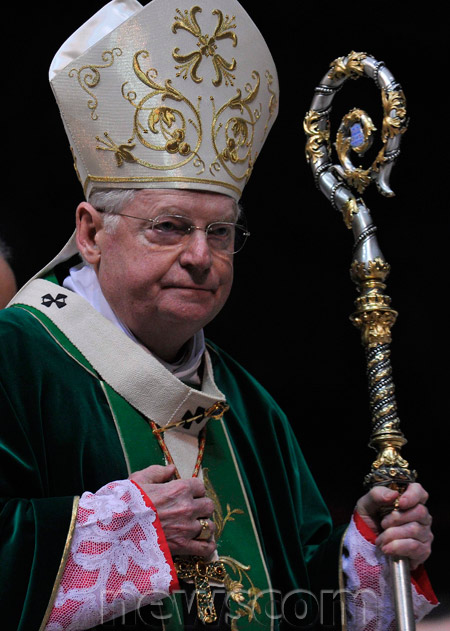
Pallium is a woolen band, worn around the shoulders, as a symbol of office, representation of the Good Shepherd, with Jesus carrying the lamb on His shoulder, which is reminiscent of the authority entrusted upon the Metropolitan Archbishops over their flocks. Pallium therefore is a symbol of authority. It is about three fingers wide, and has six black crosses, out of which three are pierced with a golden pin, representing the wounds of Christ pierced by the holy nails on the cross.
angelo-scola
(Above : image of Cardinal Angelo Scola, wearing the pallium, as the Metropolitan Archbishop of Milan, who received the pallium personally from Pope Benedict XVI in 2011)
Papal pallium from 2005 is different, in order to distinguish the nature of the Papal office, as the Pope is not just any bishop or Metropolitan Archbishop, but is Metropolitan over the entire world, the entire Church, as the Vicar of Christ.
Pope-Benedict-XVI
(Above : Pope Benedict XVI with the Papal pallium in 2012)

The list of the new Metropolitan Archbishops who will receive the pallium below.

1. Patriarch Manuel Jose Macario do Nascimento Clemente, Patriarch of Lisbon (Portugal)
2. Archbishop Dieudonne Nzapalainga, C.S.Sp., Metropolitan Archbishop of Bangui (Central African Republic)
3. Archbishop Carlo Roberto Maria Redaelli, Metropolitan Archbishop of Gorizia (Italy)
4. Archbishop Claudio Dalla Zuanna, S.C.I., Metropolitan Archbishop of Beira (Mozambique)
5. Archbishop Prakash Mallavarapu, Metropolitan Archbishop of Visakhapatnam (India)
6. Archbishop Antonio Carlos Altieri, S.D.B., Metropolitan Archbishop of Passo Fundo (Brazil)
7. Archbishop Marek Jedraszewski, Metropolitan Archbishop of Lodz (Poland)
8. Archbishop Philip Tartaglia, Metropolitan Archbishop of Glasgow (Great Britain)
9. Archbishop Salvatore Joseph Cordileone, Metropolitan Archbishop of San Francisco (USA)
10. Archbishop Rolando Joven Tria Tirona, O.C.D., Metropolitan Archbishop of Caceres (Philippines)
11. Archbishop Rogelio Cabrera Lopez, Metropolitan Archbishop of Monterrey (Mexico)
12. Archbishop Joseph William Tobin, C.Ss.R., Metropolitan Archbishop of Indianapolis (USA)
13. Archbishop Carlos Maria Franzini, Metropolitan Archbishop of Mendoza (Argentina)
14. Archbishop Lorenzo Ghizzoni, Metropolitan Archbishop of Ravenna-Cervia (Italy)
15. Archbishop George Antonysamy, Metropolitan Archbishop of Madras and Mylapore (India)
16. Archbishop Anil Joseph Thomas Couto, Metropolitan Archbishop of Delhi (India)
17. Archbishop John Wong Soo Kau, Metropolitan Archbishop of Kota Kinabalu (Malaysia)
18. Archbishop Murray Chatlain, Metropolitan Archbishop of Keewatin-Le Pas (Canada)
19. Archbishop Sérgio Eduardo Castriani, C.S.Sp., Metropolitan Archbishop of Manaus (Brazil)
20. Archbishop Peter Loy Chong, Metropolitan Archbishop of Suva, (Fiji)
21. Archbishop Alfonso Cortes Contreras, Metropolitan Archbishop of Leon (Mexico)
22. Archbishop Alexander King Sample, Metropolitan Archbishop of Portland in Oregon (USA)
23. Archbishop Joseph Effiong Ekuwem, Metropolitan Archbishop of Calabar (Nigeria)
24. Archbishop Jesus Juarez Parraga, S.D.B., Metropolitan Archbishop of Sucre (Bolivia)
25. Archbishop Fabio Martinez Castilla, Metropolitan Archbishop of Tuxtla Gutierrez (Mexico)
26. Archbishop Ramon Alfredo Dus, Metropolitan Archbishop of Resistencia (Argentina)
27. Archbishop Mario Aurelio Poli, Metropolitan Archbishop of Buenos Aires (Argentina)
28. Archbishop Gintaras Linas Grusas, Metropolitan Archbishop of Vilnius (Lithuania)
29. Archbishop Michael Owen Jackels, Metropolitan Archbishop of Dubuque (USA)
30. Archbishop Duro Hranic, Metropolitan Archbishop of Dakovo-Osijek (Croatia)
31. Archbishop Moacir Silva, Metropolitan Archbishop of Ribeirao Preto (Brazil)
32. Archbishop Jozef Piotr Kupny, Metropolitan Archbishop of Wroclaw (Poland)
33. Archbishop Sergio Alfredo Gualberti Calandrina, Metropolitan Archbishop of Santa Cruz de la Sierra (Bolivia)
34. Archbishop Giuseppe Petrocchi, Metropolitan Archbishop of L’Aquila (Italy)
In addition, the Metropolitan Archbishop of Hue, Archbishop Francois Xavier Le Van Hong, will not receive the pallium directly from the Pope in Rome, but in his home diocese of Hue, through the papal representative. Therefore, in addition to the 34 Metropolitan Archbishops mentioned above, 35 Metropolitan Archbishops will receive the pallium in this year.
35. Archbishop Francois Xavier Le Van Hong, Metropolitan Archbishop of Hue (Vietnam)

Metropolitan Archbishop differs from normal Archbishops in that, they have jurisdiction over other dioceses that are placed under their supervision, in a group called Ecclesiastical Province of the Church. Archbishops of Archdioceses without Metropolitan character has no jurisdiction over any dioceses under them, and they are usually directly subject to the Holy See.

Friday, 7 June 2013 : Solemnity of the Most Sacred Heart of Jesus (Scripture Reflection)

Brothers and sisters in Christ, today we celebrate a great feast in the Church, that is the Most Sacred Heart of our Lord Jesus Christ. Today we commemorate the very presence of the noble and loving Heart of our Lord Jesus, out of whom projecting light and love to all creation, to all mankind. This love He offered freely through His Most Precious Body and Blood which He offered through His ultimate sacrifice on Calvary.

Today, in the readings, we heard the readings on shepherds and the nature of shepherds’ works, and how it is compared with that of the Lord, who is often called the Good Shepherd. A good shepherd, according to Christ, gave up his life for his sheep, and protect and love his sheep with all of his being, unlike hired and rogue shepherds who do not love the sheep and the minute danger appears, they will run away and leave the sheep behind.

No, Christ did not do that, because He is indeed the Good Shepherd, the true chief shepherd of all, because He cares for all His sheep, to the point of giving Himself up on the cross, that through His surrender, crucifixion, and death, He made mankind whole again, and by the shedding of His Blood, He purified mankind and made them worthy, and redeemed them from the damnation due to the sins of our forefathers who rebelled against the love of God.

As the shepherd, He gave Himself so that His sheep may have life. He really loves us very much. He rejoices whenever there is even one amongst us who repented and return into His way. That is because, just as Christ Himself had mentioned in His parable on the shepherd and the lost sheep, even ninety-nine good and decent sheep cannot replace the joy of repentance of a single wayward sheep.

Even if just one wayward sheep is to return into the path of the Lord, that would bring great joy in heaven and on earth. Because all those who are already saved are indeed already secured in their heavenly inheritance. As long as they remain faithful to the Lord, they will eventually receive their heavenly reward and eternal life that Christ had promised to all who believes in Him.

But for the wayward one, no such guarantee exists, because as long as someone is cut away from the Lord, he will not have the promised salvation. Especially if this wayward sheep is basking in sin and darkness, in the depth of human weaknesses and the influence of evil which would then prevent salvation from reaching this one. But if this one is to repent and return to the faith in God, he will be saved, and will have equal inheritance with those who had already been saved.

Then some may ask, why then the hassle over just one sinful and wayward sheep. Why the trouble to spend so much just to convert one unworthy one that this one may be saved too? Can we not just be satisfied with the many people whom we have already saved? Yes, we may think that it makes perfect sense for us, especially if we consider the amount of energy and dedication needed in order to bring one in darkness back into light.

But not so with the Lord. He does not care, because Christ had died on the cross, not just for a select few, not just for His Apostles and disciples, not just for those who believe and follow Him, but also for all the people, for all mankind, without exception. He died for all, so that all may be redeemed. Through the outpouring of His Blood from the cross, He cleanses all mankind, just as the blood of the lamb of sacrifice purifies the people of Israel of old from their sins.

Yet, redemption does not yet equal salvation, because redemption just means that all of us had been redeemed and cleansed from the taints of sin from our ancestors, from the rebellion of Adam and Eve, whom first rebelled against the will of God, and instead followed Satan. Therefore, all mankind had been freed from the tyranny of Satan who enslaved us through sin. We have been released from the chains that held us and enslaved us, but it does not mean that we are guaranteed salvation.

Because at the same time, God also granted all of us free will, to choose freely the path that we want to take in our own lives, and many times we chose the path that steer away from God and became lost, just like a sheep lost from the flock, without a shepherd to guide him back into the flock. Such sheep can be in deep danger from wolves which will devour it without hesitation.

Therefore that is what can also happen to all those who became lost to the Lord in their lives in this world. This world has many evils, dear brethren, because it has many temptations, especially in our modern world today, that can deviate one’s heart away from the Lord, and instead inducing that someone to indulge in worldly pleasures and pleasures of the flesh, ignoring God’s love for him or her.

God wants everyone to be saved, because He loves us so much. Yes, our God, in His Most Sacred Heart is a very loving and kind God, who is slow to anger and merciful to sinners who repented their sins and profess their faith in Him, but at the same time, He is also perfect and good, and nothing evil can ever stand in His presence and survives.

That is why, even though it may seem to us why God did not just make everyone saved, that is simply not possible, because although we had been freed from the slavery of sin, but we still have sin dwelling within us, that still keeps us away from being truly close to God.

That is why, brothers and sisters in Christ, Jesus, before He was lifted up to heaven, gave His disciples a great mission, that is to baptise and make disciples of all nations and seal them in baptism in the Name of the Holy Trinity, essentially, bringing all the scattered sheep of the Lord together, to become one people once again, one people who worship one and only God, our God.

Brothers and sisters in Christ, since our own baptism we have also inherited this charge that has been entrusted to the apostles. We too are apostles of our own time, and our actions, while they may seem to be insignificant are always of use in glorifying God by bringing back God’s scattered flock so that they may be one again. Do not ever underestimate what a person can do, as a person can do much good and much harm even if he or she is only one person.

Therefore, through our own actions, in our daily lives, we can make a great difference in the lives of our brothers and sisters, especially those who have yet to believe in the Lord and have yet to hear and accept His redeeming Good News. It’s our charge now, brethren! With the Most Sacred Heart of Jesus within our hearts, let us bring God’s salvation to everyone so that God’s lost sheep can be found again, and there will then be great rejoicing across creation, for the sheep that were lost, had been found again, and will not be condemned to eternal damnation with Satan and his angels.

God, our Good Shepherd, bless us through Your Most Sacred Heart, and inflame in us the fire of love and zeal of faith in You, that we will never waver. Amen.

Friday, 7 June 2013 : Solemnity of the Most Sacred Heart of Jesus (Gospel Reading)

Luke 15 : 3-7

Jesus told the Pharisees and the scribes this parable : “Who among you, having a hundred sheep and losing one of them, will not leave the ninety-nine in the wilderness, and seek the lost one till he finds it? And finding it, will he not joyfully carry it home on his shoulders?”

“Then he will call his friends and neighbours together, and say, ‘Celebrate with me, for I have found my lost sheep!'”

I tell you, in the same way, there will be more rejoicing in heaven over one repentant sinner, than over ninety-nine decent people, who do not need to repent.

Friday, 7 June 2013 : Solemnity of the Most Sacred Heart of Jesus (Psalm)

Psalm 22 : 1-3a, 3b-4, 5, 6

The Lord is my shepherd, I shall not want. He makes me lie down in green pastures. He leads me beside the still waters, He restores my soul.

He guides me through the right paths for His Name’s sake. Although I walk through the valley of the shadow of death, I fear no evil, for You are beside me : Your rod and Your staff comfort me.

You spread a table before me in the presence of my foes. You anoint my head with oil; my cup is overflowing.

Goodness and kindness will follow me all the days of my life. I shall dwell in the house of the Lord as long as I live.