Monday, 16 June 2014 : 11th Week of Ordinary Time (Psalm)

Liturgical Colour : Green

Psalm 5 : 2-3, 5-6, 7

O Lord, listen to my words and hear my complaint, give heed to my sighs, my King and my God.

You are not a God who delights in wickedness; evil has no place in You. The arrogant cannot stand before You. You hate all who do evil.

You destroy all who speak falsehood, who thirst for blood and live on lies; all of them the Lord detests.

Monday, 16 June 2014 : 11th Week of Ordinary Time (First Reading)

Liturgical Colour : Green

1 Kings 21 : 1-16

Now Naboth, a man from Jezreel, owned a vineyard just beside the palace of Ahab, king of Samaria. Ahab asked Naboth, “Give me your vineyard which is near my house that I may use it for a vegetable garden. I will give you a better vineyard in exchange. Or, if you prefer, I will pay you its price.”

But Naboth said to Ahab, “YHVH forbid that I should give you the inheritance of my fathers.”

So Ahab went home angry and sad because of what Naboth had told him, that he  would not give him the inheritance of his fathers. So he lay down on his bed with his face turned toward the wall and refused to eat.

His wife Jezebel came to him and said, “Why are you so angry that you refuse to eat?” He answered, “I spoke to Naboth the Jezreelite and asked him to sell me his vineyard or to exchange it for another better one but he answered : I will not give you my vineyard.”

His wife Jezebel said to him, “Are you not king of Israel? Get up and eat and be joyful, for I will give you the vineyard of Naboth of Jezreel.” So Jezebel wrote letters using Ahab’s name and sealed them with his seal, and sent the letters to the elders and important persons living near Naboth.

This is what she wrote in the letters, “Declare a fast and put Naboth on trial. Get two worthless fellows to accuse him in this way : ‘You have cursed God and the king.’ Then take him out and stone him to death.”

The people, the elders and the important persons who lived in his city did as Jezebel had instructed them in the letters she sent to them. They declared a fast and put Naboth on trial. The two worthless fellows came in and sat facing him, accusing Naboth before the people, “Naboth cursed God and the king!”

So the people took him outside the city and stoned him to death. They then sent word to Jezebel that Naboth had been stoned and was dead. As soon as Jezebel heard that Naboth had been stoned and was dead, she told Ahab, “Now take possession of the vineyard of Naboth, the man of Jezreel who refused to sell it to you, for Naboth is now dead.”

As soon as Ahab heard that Naboth was dead, he went down to the vineyard of Naboth and took possession of it.

Monday, 9 June 2014 : 10th Week of Ordinary Time, Memorial of St. Ephrem, Deacon and Doctor of the Church (Scripture Reflections)

Liturgical Colour : Green

Brothers and sisters in Christ, today in the readings, we heard the famous Beatitudes or meaning, Blesseds, which is also known as the Sermon on the Mount by Jesus to the people. In that discourse and teaching, Jesus showed the people how people who do the will of God are blessed by Him for obeying His will. Through the Beatitudes, Jesus encouraged us all to carry out what we should be doing, to be truly blessed in the presence of God.

The Beatitudes showed us the criteria and the expectations that God kind of requires from His children, as they all embody the nature of God, that is love and mercy. However, in this world today we have often forgotten these things and be preoccupied by much concerns for the world and many other factors, that we fail to carry out what the Lord wants from us, as He laid them out in the Beatitudes.

For example, the Beatitudes blesses those who seeks peace and are peacemakers, and yet our world today is filled with hatred and violence, where brothers can fight against brothers, sisters fight against sisters, and quarrels are frequent among ourselves, which truly does not represent the peacemakers that we are supposed to be.

We too often find it difficult to show mercy to others and to forgive others for the mistakes, the wrongs, injustices and any other negative actions that they had done unto us. Indeed the Beatitudes blesses those who are merciful, but how many of us give mercy voluntarily to those who have hurt us? How many of us can genuinely forgive those who had wronged us? It is not easy, and it is in our human nature to seek vengeance and retribution rather than being merciful.

We often become judgmental of others, and we thought of ourselves as being the best, often in the disadvantage of others, that we get further and further from fulfilling the words of Christ in the Beatitudes. All these are because of our bad habits, tendencies and vulnerabilities in dealing with others and in our natural vulnerability to sin and evil.

Today we celebrate the feast of a saint, whose life has been dedicated to do the will of God, and in committing all that God has mentioned through the Beatitudes in his life. Today we commemorate St. Ephrem, also known as Ephrem the Syrian, who was a great inspiration source of many faithful during his lifetime, and a very faithful and hardworking servant of the Church and the people of God through his various ministries and roles in the Church.

St. Ephrem served the people of God dutifully and faithfully, and most importantly, he was very dedicated to the Lord, like the ones poor in spirit, as he sought the Lord for guidance. He received great graces and blessings, just as the Lord had pointed out in the Beatitudes. He also acted as mediator and communicator between many peoples, and between different ideas, providing important mediation between them and therefore promote unity and peace among the faithful.

As such, he was truly blessed by God, and he was made worthy of heaven, and recognised as such by the Church, in addition to the recognition of the vast amounts of work that he has done. He is our inspiration, and he should be our role model, someone who we aim to become, and perhaps even more, practising what the Lord Himself had recommended, as He stated in the Beatitudes.

Let us all ask for the intercession of St. Ephrem, that in our lives, we will always strive to become a good and responsible person, one who fear God, and yet love Him and who carry out His works dutifully. Let us all be like the persons whom the Lord described in the Beatitudes, beginning with small things, and gradually do all that the Lord asks of us.

May God remain with us, and through the intercession of His saints, let us all continue to profess and renew our faith, that we may truly be blessed by God, and be worthy of Him at the end of all times. God bless us all. Amen.

Monday, 9 June 2014 : 10th Week of Ordinary Time, Memorial of St. Ephrem, Deacon and Doctor of the Church (Gospel Reading)

Liturgical Colour : Green

Matthew 5 : 1-12

When Jesus saw the crowds, He went up the mountain. He sat down and His disciples gathered around Him. Then He spoke and began to teach them :

Fortunate are those who are poor in Spirit, for theirs is the kingdom of heaven.

Fortunate are those who mourn, they shall be comforted.

Fortunate are the gentle, they shall possess the land.

Fortunate are those who hunger and thirst for justice, for they shall be satisfied.

Fortunate are the merciful, for they shall find mercy.

Fortunate are those with a pure heart, for they shall see God.

Fortunate are those who work for peace, they shall be called children of God.

Fortunate are those who are persecuted for the cause of justice, for theirs is the kingdom of heaven.

Fortunate are you, when people insult you and persecute you and speak all kinds of evil against you because you are My followers.

Be glad and joyful, for a great reward is kept for you in God. This is how this people persecuted the prophets who lived before you.

Monday, 9 June 2014 : 10th Week of Ordinary Time, Memorial of St. Ephrem, Deacon and Doctor of the Church (Psalm)

Liturgical Colour : Green

Psalm 120 : 1-2, 3-4, 5-6, 7-8

I lift up my eyes to the mountains – from where shall come my help? My help comes from the Lord, Maker of heaven and earth.

Will He let your foot slip, the One watching over you? Will He slumber? No, the guardian of Israel neither slumbers nor sleeps.

The Lord is your Guardian, the Lord is at your side and you in His shade; Sunstroke will not be for you by day, nor the spell of the moon by night.

The Lord guards you from every evil; He will protect your life. The Lord watches over your coming and going both now and forever.

Monday, 9 June 2014 : 10th Week of Ordinary Time, Memorial of St. Ephrem, Deacon and Doctor of the Church (First Reading)

Liturgical Colour : Green

1 Kings 17 : 1-6

Now Elijah, the prophet from Tishbe in Gilead, said to Ahab, “As YHVH, the God of Israel whom I serve lives, neither dew shall drop nor rain fall except at my command.”

Then the word of YHVH came to Elijah, “Leave this place and go eastward. Hide yourself by the brook Cherith, east of the Jordan. You shall drink from the brook and, for your food, I have commanded the ravens to feed you there.”

So Elijah obeyed the word of YHVH and went to live by the brook Cherith, east of the Jordan. There the ravens brought him bread in the morning and meat in the evening; and he drank from the brook.

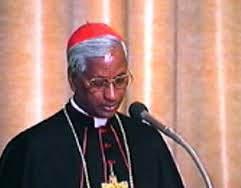
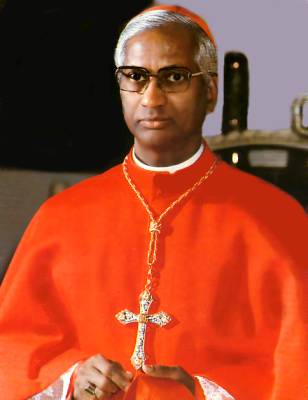
Passing of Cardinal Duraisamy Simon Lourdusamy, Metropolitan Archbishop Emeritus of Bangalore (India) and Protodeacon Emeritus of the College of Cardinals at the age of 90

Caridnal_Lourdusamy

Cardinal Duraisamy Simon Lourdusamy, Cardinal-Priest of S. Maria delle Grazie alle Fornaci fuori Porta Cavalleggeri has passed away on last Monday, 2 June 2014 at the age of 90. He was the Metropolitan Archbishop of Bangalore, one of the large Archdioceses in India, from 1968 to 1971, and then was for a very long time, the member of the Roman Curia, as the Secretary of the Congregation for the Propagation of the Faith from 1973 to 1985, and then as Prefect for the Congregation for Oriental Churches from 1985 to 1991, and eventually as the Protodeacon of the College of Cardinals from 1993 to 1996.

http://www.gcatholic.org/hierarchy/data/cardJP2-3.htm#88%5B/embed%5D

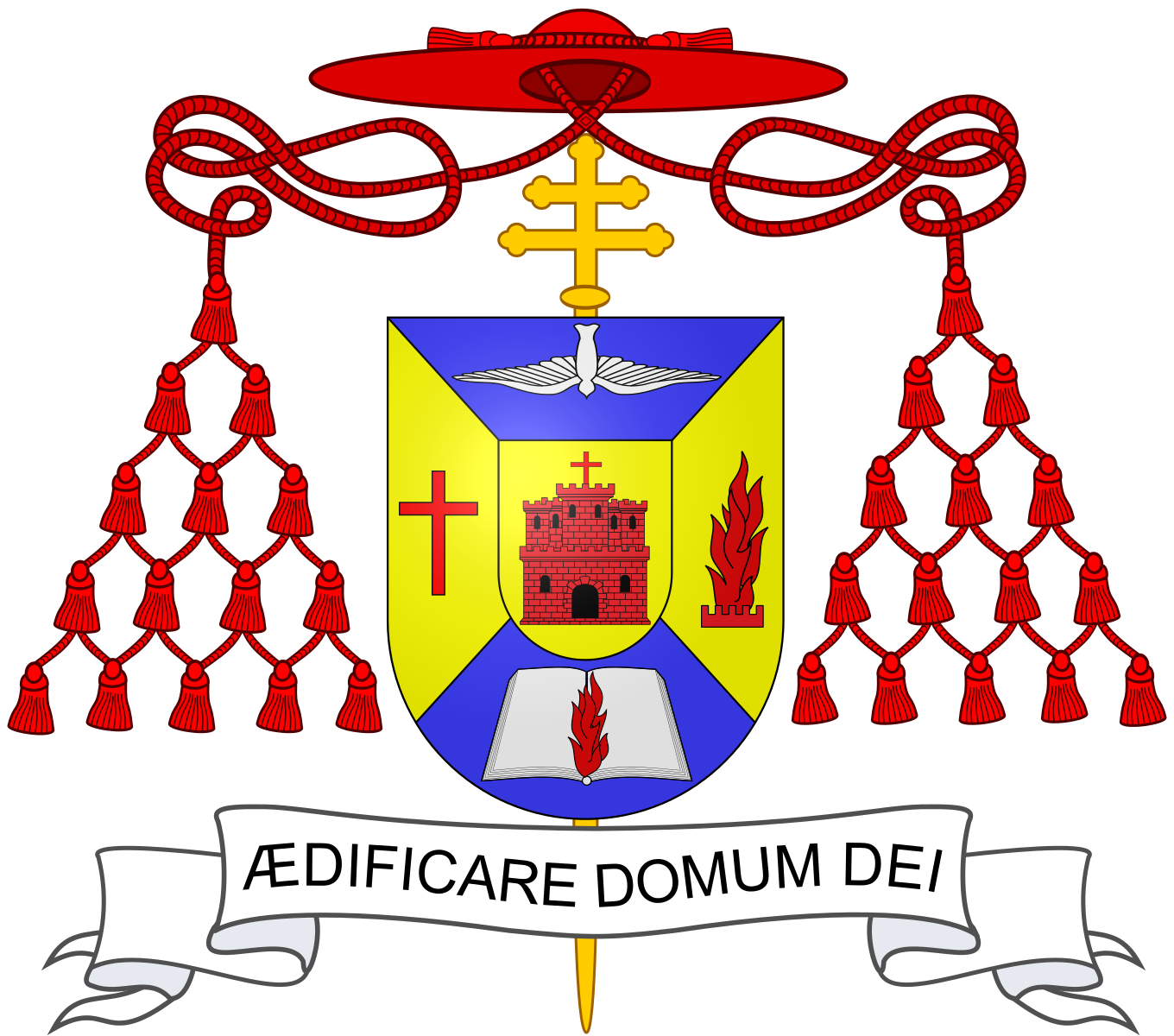
coa_duraisamy_simon_lourdusamy-svg

Cardinal Lourdusamy was created Cardinal in 1985 by Pope St. John Paul II in his third Cardinal creation consistory on 25 May 1985. His motto was Aedificare Domum Dei, which means “To build the house of God”. This means an emphasis on the evangelisation to the people of God, to establish His Church, which is growing rapidly in India, as millions grow to know about the Lord and wanting to join the faith in Jesus.

images

We pray for Cardinal Lourdusamy, that he will rest in peace, and God will reward him for all his hard and great work as the long time servant of God as the shepherd of the faithful in Bangalore, as well as for all the ministries and good works he had done in Rome for the sake of God and His people in the entire Universal Church. May the Lord welcome him into His embrace in heaven and give him eternal rest and happiness that he deserved.

With the passing of Cardinal Lourdusamy, the College of Cardinals now stands at 214 members, with 118 Cardinal-electors and 96 Cardinal non-electors. The number of Cardinal-electors now is two below the specified maximum limit.

There are now 2 Cardinal-elector vacancy in the College of Cardinals, 0 vacant Cardinal Suburbicarian Sees (for Cardinal Bishops), 2 vacant Cardinal Title (for Cardinal Priests) and 7 vacant Cardinal Deaconries (for Cardinal Deacons).

Monday, 2 June 2014 : 7th Week of Easter, Memorial of St. Marcellinus and St. Peter, Martyrs (Scripture Reflections)

Liturgical Colour : White or Red (Martyrs)

Brothers and sisters in Christ, we indeed believe in God and we put our trust in Him. However, as we all witnessed in our own lives, and in today’s Scripture readings, we know that things are not always good and nice to us all the time. There will be moments of difficulties and challenges that we will need to overcome, and opposition and resistance will always be a part and parcel of our lives.

Today we celebrate the feasts of two saints and martyrs of the faith, who are truly renowned in the Church, that of St. Marcellinus and St. Peter, both of whom received their martyrdom in the early fourth century, three hundred years after the birth of Christ. They went through one of the most intense period of persecution of the faithful, done by the Roman Emperor Diocletian, the last of the systematic and thorough persecution of the faithful people of God.

Although not much informations from their era remained to tell us greater and more about their tales and life stories, but through the Church, which preserved the knowledge about them, the two saints and martyrs were faithful servants of God, as both a preacher and for the case of St. Peter, an exorcist who cast out demons and evil spirits. They went around proclaiming the Good News through words, deeds and actions.

However, at that time, the Roman Empire had not yet accepted Christianity, and to live as a Christian at that time, and in many of the preceding years, decades and centuries, it was best to keep it secret and well-hidden the fact that someone was a Christian, or else from various quarters, persecutions and oppositions against them, often ending in violent deaths, would happen.

These martyrs lived at a time when the most infamous and destructive of the persecutions happened, the Diocletian persecution, when Christians were literally hunted throughout the Empire for maintaining their faith. These persecutions occurred in waves of intensive and efficient hunt for the faithful, destroying their Scriptures wherever they can be found.

That was indeed a tough and trying time to be faithful and to be identified as such, but St. Marcellinus and St. Peter remained true to their calling, and continued to serve the people of God despite the obvious threats to their lives. They did not fear death or persecution, because they know that God is with them and ultimately that their lives belong to God.

They did not fear death or evil, also because the Lord through His Holy Spirit is in them. They received the Holy Spirit through baptism and the laying of the hands on their heads by the successors of the Apostles of Christ, and this empowered them to go on with their arduous and challenging ministry. Yet they did not give up because the Spirit gave them strength.

We too, brothers and sisters in Christ, have received the Holy Spirit and the grace of God through our baptism and our confirmation in the faith, and we therefore have been similarly empowered to be ministers of the Gospel and His servants in this world much like St. Marcellinus and St. Peter, who had ministered without fear and doubt, even when faced with persecution and certain death.

Brethren, the devil hates us all, and he will certainly do everything within his power to strike at us, just as he had once done to the holy martyrs both in Rome and in other places where the faithful faced grievous persecutions. Let us all be strong and be inspired by the examples of St. Marcellinus and St. Peter, who had courageously defended their faith before God and before His people.

May God strengthen us, guide us, and be with us always, that we may bring glory to Him and save many souls from the darkness of the evil one in this world and together reach out to salvation in the Lord. God bless us all. Amen.

Monday, 2 June 2014 : 7th Week of Easter, Memorial of St. Marcellinus and St. Peter, Martyrs (Gospel Reading)

Liturgical Colour : White or Red (Martyrs)

John 16 : 29-33

The disciples said to Him, “Now You are speaking plainly and not in veiled language! Now we see that You know all things, even before we question You. Because of this we believe that You came from God.”

Jesus answered them, “You say that you believe? The hour is coming, indeed it has come, when you will be scattered, each one to his home, and you will leave Me alone. Yet I am not alone, for the Father is with Me.”

“I have told you all this, so that in Me you may have peace. You will have trouble in the world; but, courage! I have overcome the world.”

Monday, 2 June 2014 : 7th Week of Easter, Memorial of St. Marcellinus and St. Peter, Martyrs (Psalm)

Liturgical Colour : White or Red (Martyrs)

Psalm 67 : 2-3, 4-5ac, 6-7ab

Arise, o God, scatter Your enemies; let Your foes flee before You. As smoke is blown by the wind, so blow them away; as wax melts before the fire, so let the wicked perish before You.

But let the righteous be glad and exult before God; let them sing to God and shout for joy. Sing to God, sing praises to His Name. Rejoice in His presence.

Father of orphans and Protector of widows – such is our God in His holy dwelling. He gives shelter to the homeless, sets the prisoners free.