
Text of the Joint Declaration of the Vicar of Christ and Supreme Pontiff, Pope Francis and Ecumenical Patriarch Bartholomew I of Constantinople

http://www.zenit.org/en/articles/text-of-joint-declaration-signed-by-pope-and-ecumenical-patriarch
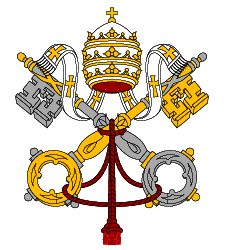
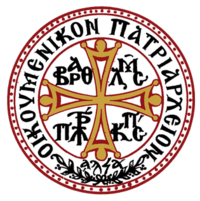
Vatican-coa200px-Constantinople_coat_of_arms

We, Pope Francis and Ecumenical Patriarch Bartholomew I, express our profound gratitude to God for the gift of this new encounter enabling us, in the presence of the members of the Holy Synod, the clergy and the faithful of the Ecumenical Patriarchate, to celebrate together the feast of Saint Andrew, the first–called and brother of the Apostle Peter. Our remembrance of the Apostles, who proclaimed the good news of the Gospel to the world through their preaching and their witness of martyrdom, strengthens in us the aspiration to continue to walk together in order to overcome, in love and in truth, the obstacles that divide us.

On the occasion of our meeting in Jerusalem last May, in which we remembered the historical embrace of our venerable predecessors Pope Paul VI and the Ecumenical Patriarch Athenagoras, we signed a joint declaration. Today on the happy occasion of this further fraternal encounter, we wish to re–affirm together our shared intentions and concerns.

We express our sincere and firm resolution, in obedience to the will of our Lord Jesus Christ, to intensify our efforts to promote the full unity of all Christians, and above all between Catholics and Orthodox. As well, we intend to support the theological dialogue promoted by the Joint International Commission, instituted exactly thirty–five years ago by the Ecumenical Patriarch Dimitrios and Pope John Paul II here at the Phanar, and which is currently dealing with the most difficult questions that have marked the history of our division and that require careful and detailed study. To this end, we offer the assurance of our fervent prayer as Pastors of the Church, asking our faithful to join us in praying “that all may be one, that the world may believe” (Jn17:21).

We express our common concern for the current situation in Iraq, Syria and the whole Middle East. We are united in the desire for peace and stability and in the will to promote the resolution of conflicts through dialogue and reconciliation. While recognizing the efforts already being made to offer assistance to the region, at the same time, we call on all those who bear responsibility for the destiny of peoples to deepen their commitment to suffering communities, and to enable them, including the Christian ones, to remain in their native land. We cannot resign ourselves to a Middle East without Christians, who have professed the name of Jesus there for two thousand years. Many of our brothers and sisters are being persecuted and have been forced violently from their homes.It even seems that the value of human life has been lost, that the human person no longer matters and may be sacrificed to other interests. And, tragically, all this is met by the indifference of many. As Saint Paul reminds us, “If one member suffers, all suffer together; if one member is honoured, all rejoice together” (1 Cor 12:26). This is the law of the Christian life, and in this sense we can say that there is also an ecumenism of suffering. Just as the blood of the martyrs was a seed of strength and fertility for the Church, so too the sharing of daily sufferings can become an effective instrument of unity. The terrible situation of Christians and all those who are suffering in the Middle East calls not only for our constant prayer, but also for an appropriate response on the part of the international community.

The grave challenges facing the world in the present situation require the solidarity of all people of good will, and so we also recognize the importance of promoting a constructive dialogue with Islam based on mutual respect and friendship. Inspired by common values and strengthened by genuine fraternal sentiments, Muslims and Christians are called to work together for the sake of justice, peace and respect for the dignity and rights of every person, especially in those regions where they once lived for centuries in peaceful coexistence and now tragically suffer together the horrors of war. Moreover, as Christian leaders, we call on all religious leaders to pursue and to strengthen interreligious dialogue and to make every effort to build a culture of peace and solidarity between persons and between peoples. We also remember all the people who experience the sufferings of war. In particular, we pray for peace in Ukraine, a country of ancient Christian tradition, while we call upon all parties involved to pursue the path of dialogue and of respect for international law in order to bring an end to the conflict and allow all Ukrainians to live in harmony.

Our thoughts turn to all the faithful of our Churches throughout the world, whom we greet, entrusting them to Christ our Saviour, that they may be untiring witnesses to the love of God. We raise our fervent prayer that the Lord may grant the gift of peace in love and unity to the entire human family.

“May the Lord of peace himself give you peace at all times and in every way. The Lord be with all of you” (2 Thess 3:16).

From the Phanar, 30 November 2014

Official Schedule of Pope Francis’ Apostolic Journey to the Holy Land (24-26 May 2014)

http://www.news.va/en/news/pope-francis-holy-land-pilgrimage-schedule-release

Here is the official schedule of Pope Francis’ planned visit to the Holy Land, which will take place from Saturday, 24 May 2014 to Monday, 26 May 2014.


Saturday, 24 May 2014
08:15 Departure from Rome Fiumicino Airport for Amman
13:00 Arrival at the Queen Alia International Airport in Amman
13:45 Arrival ceremony and welcome for Pope Francis in the al-Husseini Royal Palace in Amman. Pope Francis will also pay a courtesy visit to the King and Queen of Jordan in the Royal Palace.
14:20 Pope Francis is scheduled to meet the officials and authorities of the Kingdom of Jordan.
16:00 Pope Francis will celebrate the Holy Mass at the International Stadium in Amman.
19:00 Pope Francis will pay a visit to the Baptismal Site at Bethany beyond the Jordan
19:15 Pope Francis will meet with refugees and disabled youths in the Latin church at Bethany beyond the Jordan.

Sunday, 25 May 2014
8:15 Pope Francis departs from Jordan at the Queen Alia International Airport in Amman, heading towards Bethlehem
8:30 Departure by helicopter from the Queen Alia International Airport in Amman for Bethlehem
9:20 Pope Francis is scheduled to arrive at the helicopter port of Bethlehem
9:30 Arrival ceremony and welcome for Pope Francis at the Presidential Palace in Bethlehem. Pope Francis will pay a courtesy visit to the President of the State of Palestine.
10:00 Pope Francis is scheduled to meet with the officials and authorities of the State of Palestine.
11:00 Pope Francis will celebrate the Holy Mass in Manger Square in Bethlehem. This will be followed by Regina Caeli/Coeli.
13:30 Pope Francis will host a lunch with Palestinian families in the Franciscan convent of Casa Nova in Bethlehem
15:00 Pope Francis will pay a private visit to the Grotto of the Nativity in Bethlehem.
15:20 Pope Francis will greet children from the Deheisheh, Aida and Beit Jibrin refugee camps at the Phoenix Center of the Deheisheh Refugee Camp
15:45 Pope Francis will depart from the State of Palestine at the helicopter port of Bethlehem
16:00 Departure by helicopter from the helicopter port of Bethlehem for Ben Gurion International Airport in Tel Aviv
16:30 Arrival ceremony and welcome for Pope Francis at Ben Gurion International Airport in Tel Aviv.
17:15 Transfer by helicopter to Jerusalem
17:45 Arrival at the helicopter port of Jerusalem on Mount Scopus
18:15 Pope Francis will have a private meeting with the Ecumenical Patriarch of Constantinople, Patriarch Bartholomew I at the Apostolic Delegation in Jerusalem. They will sign of a joint declaration together.
19.00 Ecumenical Meeting between Pope Francis and Patriarch Bartholomew I on the occasion of the 50th anniversary of the meeting in Jerusalem between Pope Paul VI and Patriarch Athenagoras in the Basilica of the Holy Sepulchre in Jerusalem.
20:15 Dinner with the Patriarchs and Bishops and the Papal suite at the Latin Patriarchate in Jerusalem

Monday, 26 May 2014
8:15 Pope Francis will visit the Grand Mufti of Jerusalem in the building of the Great Council on the Esplanade of the Mosques.
9:10 Pope Francis is scheduled to pay a visit t0 the Western Wall in Jerusalem
9:45 Pope Francis will lay a wreath at Mount Herzl in Jerusalem
10.00 Pope Francis will visit Yad Vashem in Jerusalem.
10:45 Pope Francis will pay a courtesy visit to two chief rabbi at Heichal Shlomo Center in Jerusalem, next to the Jerusalem Great Synagogue.
11:45 Pope Francis will pay a courtesy visit to the President of Israel at the Presidential Residence in Jerusalem.
13:00 Pope Francis will have a private audience with the Prime Minister of Israel at Notre Dame Center in Jerusalem.
13:30 Lunch with the Papal suite at Notre Dame Center in Jerusalem
15:30 Pope Francis will have a private visit to the Ecumenical Patriarch of Constantinople at the building next to the Orthodox church of Viri Galileai on the Mount of Olives
16:00 Pope Francis will meet with priests, religious brothers and sisters and also seminarians in the church of Gethsemane at the foot of the Mount of Olives.
17:20 Pope Francis will celebrate the Holy Mass with the ordinaries (Patriarchs and bishops) of the Holy Land and the Papal Suite (Papal entourage) in the room of the Cenacle in Jerusalem.
19:30 Transfer by helicopter from the helicopter port on Mount Scopus in Jerusalem to Ben Gurion International Airport in Tel Aviv
20:00 Farewell and departure from Israel at Ben Gurion International Airport in Tel Aviv.
20:15 Departure from Ben Gurion International Airport in Tel Aviv for Ciampino Airport in Rome.
23:00 Pope Francis is scheduled to arrive back at Ciampino Airport in Rome.

Saturday, 30 November 2013 : Feast of St. Andrew, Apostle (Scripture Reflections)

Liturgical Colour : Red

Brothers and sisters in Christ! Today we celebrate the great feast of one of the Apostles, that is St. Andrew, the brother of St. Peter, the leader of the Apostles and Vicar of Christ. St. Andrew is also known as St. Andrew the first-called, because he was known to be the first Apostle to be called out of the Twelve Jesus had chosen. It was St. Andrew who brought his brother Simon, who is St. Peter, to the Lord and introduced the Lord to him.

St. Andrew is the patron saint of the city and Archdiocese of Constantinople, or New Rome. It is known as such because the Emperor Constantine, who ended the persecution of Christians in the Roman Empire, established a new capital in the eastern part of the Empire, in the city he built and named after his own name, which is today known as Istanbul, after its fall to the evil and pagan forces of the Muslim Ottoman Empire.

Not much is known of the actions of St. Andrew in the New Testament, but the Church tradition showed that he established many Christian communities in today’s Greece, particularly in the area now known as Thrace, especially the Christian community of Byzantium, later known as Constantinople when the Emperor established his new city and capital there.

St. Andrew laboured hard for the sake of the Gospel and preached to the unbelievers in the area, earning many converts for the sake of the Lord. Despite difficulties and oppositions and rejections, he continued his ministry with faith, and the faithful communities under his care flourished. And as many of the other Apostles and disciples of the Lord, he followed the Lord into death.

St. Andrew was crucified on an X-shaped cross, which from then on became known as the St. Andrew’s cross. His dedication and faith to the Lord did not make him hesitate to sacrifice even his own life for the sake of the Lord, shedding his blood and giving up his own life for the growth and spread of the Gospel, and for the salvation of more souls to God.

Today we rejoice with our brethren of the Eastern Orthodox Church, headed by the venerable Ecumenical Patriarch of Constantinople, the successor of St. Andrew the Apostle, who had first founded the see of that city. That is why today, we celebrate this great feast of St. Andrew, the patron of the see of our brethren in Constantinople, our brethren in faith, and One as the One, Holy, Catholic, and Apostolic Church.

It is lamentable and sad indeed, that due to petty political and personal ambitions of the corrupt Patriarch of Constantinople at that time, Michael Cerularius, that this very sad and preventable tragic division of the faithful had to occur, in what is known as the Great Schism of 1054, almost a thousand years ago. It is in the best interest of all the faithful that we all put aside our differences and throw far away the lies, rumours, prejudices, and misconceptions which keeps up the enmity and divisions in our One, Holy, Catholic, and Apostolic Church.

We are called today, as St. Paul has shown in the first reading, that we ought to preach the Good News to many people of many nations, and we have to reach out to them, and show them the love of God so that they will be converted to the cause of the Lord, just as St. Andrew himself had done. But we certainly cannot do this, if we ourselves are divided against ourselves.

Yes, first we must show our unity, the unity of the Church as one, the One and only Church of God, which Christ had established Himself on Peter, His Apostle, whom the Lord Jesus had appointed as the first Vicar of His will on this world. Sadly, many people, driven by ambition and human greed would like to see and keep the Church divided as it is, not for the glory of God, but for their own glory, for their own ego.

Following the footsteps of St. Andrew and the other Apostles, that of St. Peter, his brother, let us today, as we celebrate the feast of this great saint, as one Church, remember the mission that the Lord has given to us through His disciples, that we have to go out, and proclaim the words of the Lord, the Good News of Salvation, the salvation in Jesus Christ. And that before all these can be completely done, we must resolve to seek unity among ourselves, to avoid divisions and infighting among ourselves.

We are called to become the fishers of men, as we will catch mankind by thousands, tens of thousands, millions and more, bringing them closer to the Lord. That is why the Lord said to His disciples that they will become fishers of men. We too therefore have been called to be the same as they were, to be the witnesses of the Lord in this world. But fishermen cannot catch the fish if they first fight among themselves, instead of catching the fish and waste much energy, effort, and time in the process, and many fish will be lost.

Therefore, brothers and sisters in Christ, today on the feast of St. Andrew, we rejoice and celebrate together with our brethren in the Church of Constantinople, that is the Eastern Orthodox Christians. We resolve that we will aim and seek for unity between us, that we will be able to soon once again be perfectly reunited in One, Holy, Catholic, and Apostolic Church, the one and only Church that our Lord had built in this world, which He entrusted to Peter and his successors to lead and to be His Vicar in this world.

May the Lord continue to bless us and our loving Church, and bring it closer ever to unity, and with the help of the intercession of St. Andrew, may we be one again, as our Lord is One. Amen.

Saturday, 30 November 2013 : Feast of St. Andrew, Apostle (Gospel Reading)

Liturgical Colour : Red

Matthew 4 : 18-22

As Jesus walked by the lake of Galilee, He saw two brothers, Simon called Peter, and Andrew his brother, casting a net into the lake, for they were fishermen. He said to them, “Come, follow Me, and I will make you fish for people.”

At once they left their nets and followed Him. He went on from there and saw two other brothers, James, the son of Zebedee, and his brother John in a boat with their father Zebedee, mending their nets. Jesus called them.

At once they left the boat and their father and followed Him.

Saturday, 30 November 2013 : Feast of St. Andrew, Apostle (Psalm)

Liturgical Colour : Red

Psalm 18 : 2-3, 4-5

The heavens declare the glory of God; the firmament proclaims the work of His hands. Day talks it over with day; night hands on the knowledge to night.

No speech, no words, no voice is heard – but the call goes on throughout the universe, the message is felt to the ends of the earth.

Saturday, 30 November 2013 : Feast of St. Andrew, Apostle (First Reading)

Liturgical Colour : Red

Romans 10 : 9-18

You are saved if you confess with your lips that Jesus is Lord and in your heart you believe that God raised Him from the dead. By believing from the heart, you obtain true righteousness; by confessing the faith with your lips you are saved.

For Scripture says : ‘No one who believes in Him will be ashamed.’ Here there is no distinction between Jew and Greek; all have the same Lord, who is very generous with whoever calls on Him. Truly, all who call upon the Name of the Lord will be saved.

But how can they call upon the Name of the Lord without having believed in Him?  And how can they believe in Him without having first heard about Him? And how will they hear about Him if no one preaches about Him? And how will they preach about Him if no one sends them?

As Scripture says : ‘How beautiful are the feet of the messengers of Good News.’ Although not everyone obeyed the Good News, as Isaiah said : ‘Lord, who has believed in our preaching?’

So, faith comes from preaching, and preaching is rooted in the word of Christ. I ask : Have the Jews not heard? But of course they have. Because the voice of those preaching resounded all over the earth and their voice was heard to the ends of the world.

Friday, 13 September 2013 : 23rd Week of Ordinary Time, Memorial of St. John Chrysostom, Bishop and Doctor of the Church (Scripture Reflection)

Liturgical Colour : White

Brothers and sisters in Christ, today Christ continued to remind us of the great need to remain humble and loving in our lives, avoiding all sorts of vices, and do only what is in line with the will of God. He cares for us very much, and wants us to be righteous and worthy of Him. He protects and provides for all of us, in the same way that a father cares for his children, and way more than that.

He gave second chances to those who repent, to those who realised the depth of their sins and iniquities as He had done with St. Paul, once the great enemy of the faithful and the Church, and the great persecutor of saints and martyrs, turned into the great champion and defender of the faith, the great missionary of the Lord. Therefore, sinners are great in the eyes of the Lord, because the Lord loves them and cares for them, and wants them to return to Him.

Even saints and holy men and women of God now in heaven were once sinners, great or small. What matters is that they had learnt to manage their human weaknesses and tendency for sin, and overcome the sins they had done, with the help of God and one another, with the love they have in their hearts, and with the faith that they have.

We must therefore not be quick to condemn others or judge on others, especially on their faults or shortcomings, as we have to remember that none of us are perfect or completely filled with good things. All of us have weakness one way or another. We are imperfect, ever since sin has entered mankind’s heart. Yet, some of us would not realise of our own faults, thinking highly of ourselves and our own achievements, and look down on others whom we perceive to be inferior to us.

That was what the Pharisees did, as well as the chief priests and the teachers of the Law did, looking down on others because they thought highly of themselves. They prayed in loud voice and wonderful gestures, and followed the rules of the Law strictly, observing everything to the most minute details, and yet, behind all that, lay a huge problem, a huge fault with them. They have not the Lord in their heart, not even deep within their hearts.

They condemned others and sought faults in others, while they themselves were even more faulty in themselves. That was exactly what Christ condemned them for, their failure to do what the Lord truly asked of them, and even worse that as the leaders of the people, they misled the people and brought them to ruin instead of salvation.

Today, we celebrate the feast of St. John Chrysostom, one of the original four great Doctors of the Church, as one of the most brilliant minds of the Church, the leader of the faithful in Constantinople, St. John Chrysostom was truly an upright man, who lived piously and with deep faith in the Lord their God. He preached often of the need to live in charity and love, that is to show love to one another, especially the ones in need, and he truly practice what he preached.

St. John Chrysostom did not have it easy, as he did face many oppositions, especially from those who followed the heretical teachings, like Arianism, Monophysitism, Nestorianism, and many others. He faced them with firm faith and dedication to God. He was fully aware of his own sins and weaknesses, and therefore he wanted to bring souls to salvation in God, showing his care as a fellow sinner who had been called to guide his lost brethren to the Father in heaven.

St. John Chrysostom did not even shy away or fear of rebuking the Roman Emperor, Arcadius at the time, for the improper behaviour of his wife, the Empress Eudoxia, who resented St. John Chrysostom so much that he was banished from Constantinople and from his post. Immediately God set out to punish those who had conspired against the servant of God, and the Roman capital faced terrible catastrophe. Not even the imperial family was spared, with the Empress dying from childbirth and the Emperor himself a few years later.

Dear brothers and sisters in Christ, we should try to emulate St. John Chrysostom in his actions, in his life, and in his examples, that we should really look into ourselves first before we judge others, and reflect on our lives whether our words and actions had reflected God’s love in them. If we had not done so, then truly now is a good time to do so, while we still have the opportunity in this life. Let us have no fear and keep a steadfast faith like that of St. John Chrysostom, whom in his righteousness rebuked even an emperor and empress who went astray from the Lord.

Let us be always faithful to God, be loving both to Him and our brethren, and finally let us strive to give more of ourselves for the sake of others, the last, the lost, and the lonely, as St. John Chrysostom had done. Pray for us St. John Chrysostom! May God bless us always. Amen.

Friday, 13 September 2013 : 23rd Week of Ordinary Time, Memorial of St. John Chrysostom, Bishop and Doctor of the Church (Gospel Reading)

Liturgical Colour : White

Luke 6 : 39-42

And Jesus offered this example, “Can a blind person lead another blind person? Surely both will fall into a ditch. A disciple is not above the master; but when fully trained, he will be like the master.”

“So why do you pay attention to the speck in your brother’s eye, while you have a log in your eye, and are not conscious of it? How can you say to your neighbour, ‘Friend, let me take this speck out of your eye,’ when you cannot remove the log in your own? “

“You hypocrite! First remove the log from your own eye, and then you will see clearly enough to remove the speck from your neighbour’s eye.”

Friday, 13 September 2013 : 23rd Week of Ordinary Time, Memorial of St. John Chrysostom, Bishop and Doctor of the Church (Psalm)

Liturgical Colour : White

Psalm 15 : 1-2a and 5, 7-8, 11

Keep me safe, o God, for in You I take refuge. I say to the Lord, “You are my Lord.” O Lord, my inheritance and my cup, my chosen portion – hold secure my lot.

I bless the Lord who counsels me; even at night my inmost self instructs me. I keep the Lord always before me; for with Him at my right hand, I will never be shaken.

You will show me the path of life, in Your presence the fullness of joy, at Your right hand happiness forever.

Friday, 13 September 2013 : 23rd Week of Ordinary Time, Memorial of St. John Chrysostom, Bishop and Doctor of the Church (First Reading)

Liturgical Colour : White

1 Timothy 1 : 1-2, 12-14

From Paul, apostle of Christ Jesus by a command of God our Saviour and of Christ Jesus our hope, to Timothy, my true son in the faith. May God the Father and Christ Jesus our Lord give you grace, mercy, and peace.

I give thanks to Christ Jesus, our Lord, who is my strength, who has considered me trustworthy and appointed me to His service, although I had been a blasphemer, a persecutor and a rabid enemy.

However He took mercy on me because I did not know what I was doing when I opposed the faith; and the grace of our Lord was more than abundant, together with faith and love that are in Christ Jesus.