Monday, 17 March 2014 : 2nd Week of Lent, Memorial of St. Patrick, Bishop (First Reading)

Liturgical Colour : Purple/Violet

Daniel 9 : 4b-10

Lord God, great and to be feared, You keep Your Covenant and love for those who love You and observe Your commandments. We have sinned, we have not been just, we have been rebels, and have turned away from Your commandments and laws.

We have not listened to Your servants, the prophets, who spoke in Your Name to our kings, leaders, fathers and to all the people of the land. Lord, justice is Yours, but ours is a face full of shame, as it is to this day – we; the people of Judah, the inhabitants of Jerusalem, the whole of Israel, near and far away, in all the lands where you have dispersed us because of the infidelity we have committed against You.

Ours is the shame, o Lord for we, our kings, princes, fathers, have sinned against You. We hope for pardon and mercy from the Lord, because we have rebelled against Him. We have not listened to the voice of YHVH, our God, or followed the laws which He has given us through His servants, the prophets.

Friday, 22 November 2013 : 33rd Week of Ordinary Time, Memorial of St. Cecilia, Virgin and Martyr (Scripture Reflections)

Liturgical Colour : Red

Cast out evil! Purify ourselves! Throw out the devil that is in us! Draw closer to the Lord and make ourselves worthy of Him!

Brethren in Christ, that is the essence of what we had heard in the readings of the Holy Scripture today. At the centre of it all, drawing parallels between the purification of the Temple of Jerusalem by the Maccabeans, after it had been defiled by the pagan idols of the Greek king Antiochus Epiphanes, and the purification of the Temple, by Jesus our Lord, from the crooked merchants and cheaters of the people, is the importance for us to keep the purity of our souls and our bodies, which are the Temples of the Divine Presence, from all sorts of corruptions and evils.

The Lord showed His righteous anger, which He poured without mercy against those who had defiled the holiness of God’s Temple on earth, the Temple of Jerusalem. He whipped them and refused them from His presence, shunning them to the place prepared to them, outside of His salvation. That was what He had shown in the Gospel today, and what the disciples rightly pointed out, that the love Jesus has for His Father, has brought Him into a great wrath against those who defiled the House of the Lord.

The profanation was removed, and holiness returned to the House of God, in the same way that the Temple was purified by the Maccabees. The merchants profaned the House of God by the vile practices and other vices, by their dishonest practices and blatant cheating against the genuinely faithful worshippers of the Lord.

The Greeks under the Seleucid King Antiochus Epiphanes profaned the temple with idols and pagan practices. These were cast out of the House of God and the House was in both instances, made worthy again to be the dwelling of the Lord Most High. Then, one may ask, how does this relate to all of us? Is not the Temple as a building cleansed of vices and made worthy once again for the Lord?

That is because, brothers and sisters in Christ, all of us have often not realised that in each one of us, who believes in Christ our Lord as our Saviour, we all are the House of God, the divine Temple where He resides and dwells. How so? Remember that we are all receiving the Lord regularly whenever we attend and participate in the Holy Sacrifice of the Mass. We receive Him in the Most Holy Eucharist, the bread and the wine turned into our Lord’s own Precious Body and Blood.

The Lord who comes to us in His Most Holy and Real Presence in the Eucharist dwells within us, just as He takes us to dwell unto Him. And since the Lord has come upon us and dwell within each one of us who had received His Body and His Blood, we have been made to be just like the Temple of Jerusalem, because God dwells within us! Remember that Jesus is also known as Emmanuel, which means God is with us!

That is why, brothers and sisters, as we lived this life given to us by the Lord, we have to be always aware, that our actions have great implications. Remember always that the Lord dwells in us, and His Spirit is living inside of us. We are the Temples of the Holy Spirit, the Temples of the Holy Presence of God. Therefore, we cannot be complacent, and allow the influences of evil to corrupt our bodies, our minds, and our souls, since we are the places where the Lord Himself had dwelled in.

If we corrupt our bodies, our minds, and our souls with evil, that is by keeping our sinfulness without check, be assured that the Lord will cast us all out of His sight, just as what He had done with the corrupt merchants who had set their stalls on the holy grounds of the Temple of Jerusalem. He will not welcome us if we do not keep our body, mind, and soul to be always worthy of Him. He will cast us out in the same way He had cast out the merchants from the Temple of God.

Today we celebrate the feast day of St. Cecilia, one of the greatest saints of the Church. And we all know her well, as the patron saint of music, of our choir and of all who dedicate themselves to the commitment of beautiful hymns aimed at praising the Lord our God. Yet, St. Cecilia is also a pious and a holy martyr, one who did not allow the corruption of this world to touch her, resolving to keep herself pure and immaculate, despite the temptations and good offers from the lord of this world, that is evil.

Instead, St. Cecilia, defending her true faith unto death, received in the Lord, the assurance of eternal life and eternal glory. This is our faith, brothers and sisters, and do not let it to be corrupted by the lies of the devil. St. Cecilia lived an upright and just life, dedicated to her faith in God. She staunchly resolved to maintain the purity of her soul in an era filled with wickedness, by holding up her chastity.

St. Cecilia devoted herself and her entire life to God and therefore maintained the purity of her Temple, and she did not give up her purity for the comfortable life, and instead give it up for the sake of the Lord. Her purity is truly exemplary to all of us. And this is the kind of attitude that we need to have towards our faith in the Lord. Maintain always the purity of our hearts, our minds, our souls, and our bodies, just as St. Cecilia had done.

St. Cecilia is a role model for all of us, and I hope that today, we all will be more empowered and strengthened, to follow the Lord our God without moving away to the left or right. Let us now then resolve, and say to the Lord, that we all will honour Him and keep holy our selves, our bodies and souls, that we will ever be worthy to be His dwelling, and that on the last day, through the intercession of St. Cecilia, we will join her in singing the hymn of praise to the Lord, for eternity.

May the Lord our God give us strength, perseverance, and willpower, in order to keep the Temple of the Lord, the House and residence of our Lord in us, pure and worthy, as the beloved children of God, to whom He has sent Jesus His Son. God bless us all. Amen.

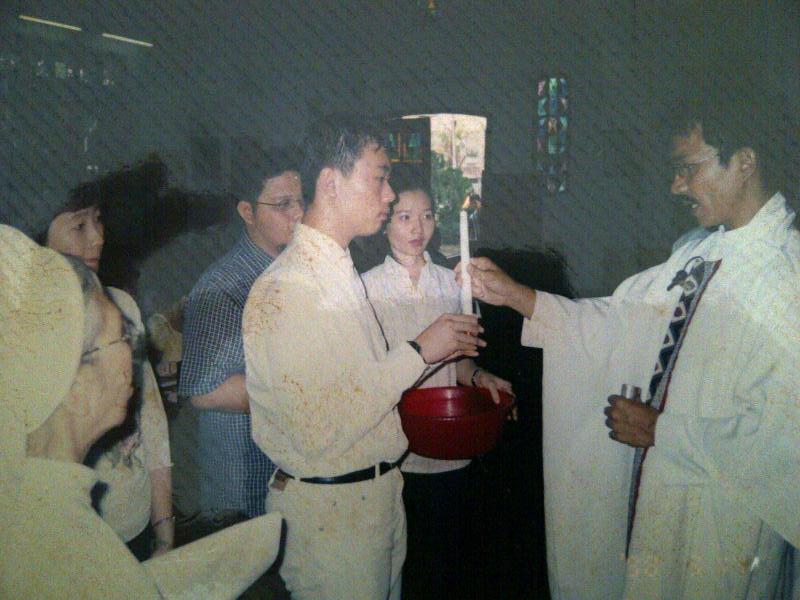
9th Anniversary of my baptism and entry into the Church of God (19 September 2004 – present)

9 years ago, on the Feast of St. Januarius, 19 September 2004, I was received into the Church through the Sacrament of Baptism.

As St. Paul before me, I have been called from the darkness into the light. Once a sinner, God had called me to be one of His children, unworthy as I am.

May my patron saints, St. Peter Canisius and St. Peter my namesake, and St. Michael the Archangel who strengthens me, continue to pray for me, and pray for all the other children of God in this world! That they will especially pray for those who are still on the journey to seek the Lord and in the process to enter the Church of God!

Image

(I baptise you in the Name of the Father, and the Son, and the Holy Spirit)

Image

(As Christ was anointed Priest, Prophet, and King, so may you live always as a member of His Body, sharing everlasting life)

Image

(Receive the light of Christ!)


Pray for me always, brethren! And pray for our brethren in need of our love too!

Thursday, 11 July 2013 : 14th Week of Ordinary Time, Memorial of St. Benedict, Abbot (Scripture Reflection)

Dear brothers and sisters in Christ, today we heard from the readings about the mission that Christ had entrusted all of us with. The mission that He had given to the apostles before He left this world, that is to spread the Good News of salvation to all mankind, and to all the world. Each and every Christians baptised in the Name of the Most Holy Trinity of Father, Son, and the Holy Spirit must uphold this mission and pledge ourselves to its cause, that is the cause of the Lord.

Christ had called all of us to be His disciples, to bring all the people of God back to His loving embrace, to open their eyes and their hearts to God’s divine and everlasting love. The Lord offers His love and His peace freely to all, without exception, even sinners, and especially sinners, because the Lord did come especially for the sake of sinners, those lost sheep lost in the darkness of evil and sin.

Christ gave up His life in sacrifice, as a worthy offering in atonement for all our sins, all of us, without any exceptions. He died for all mankind, past, present, and future so that all may live, and in this new life, be granted eternal life in glory with Him for eternity, as long as we keep to the covenant that He had made with us, a new covenant sealed by His Blood pouring down from the cross.

Our Lord Jesus loves us, brethren, so much that He is willing to suffer all the blows, lashes, and curses, the pain of the nails that pierced his hands and feet, so that all of us do not have to suffer death eternal in hell. For our sins and iniquities the Lamb of God had been slaughtered and sacrificed, innocent and pure as He is, He was made to bear all the sins of the world.

Sadly, as many as those who would accept His call and His words, and followed Him into a new life of purity and holiness, there are even many more who would prefer to remain in their state of sin and darkened life, and preferred the pleasures of the world and Satan to the Lord who loves them. Many would reject Him and reject His messengers and disciples, including all of us who had been called by the Lord to be His apostles in this modern era.

So if Christ is rejected by many, then we will be rejected too, but this does not mean that we should slacken or abandon the mission that has been given to us. Indeed, there are still those who would accept Christ and His Good News, and even among those who have rejected Him and rejected us, there is always still hope, that they will change and receive the Lord. We must remain strong and courageous, and embrace our mission with zeal, devotion, and most importantly, love.

Today, we celebrate the memorial of St. Benedict the abbot, also known widely as St. Benedict of Nursia, the founder of the religious order of St. Benedict, or the Benedictines. He was also an inspiration for our great Pope Emeritus, the beloved Pope Emeritus Benedict XVI, in choosing his regnal name as Pope, together with Pope Benedict XV, his predecessor and the Pope of peace.

St. Benedict of Nursia lived in the first millenium in the late Roman Empire, and he was the founder of a great religious order, the Benedictines, who imposed on them what is well-known as the Rule of St. Benedict. The rule placed a great emphasis on the balance between piety and religiosity and the need for service and good works, which the Benedictines practiced through their charitable acts and service, and a pious and holy lifestyle, dedicated to the Lord in humility and obedience. And important to the Benedictines are also the concept of peace, the need to seek peace in this world, and to be peaceful in one’s own acts.

St. Benedict strengthened the Christian monasticism that was growing up at his era, and he laid much foundations for the future missionary works of the Church and religious orders that helped to preserve the Traditions of the Faith through the tumultous era of the ending of the Roman Empire and the advent of the Dark Ages. Through St. Benedict, the monastic communities had been strengthened, and therefore, the Church itself had been strengthened.

Inspired by the example of St. Benedict of Nursia and other great missionary saints of the monastic orders, we embark on this new journey of the faith in this modern era of secularism and consumerism, where God increasingly take a lesser importance in people’s minds and lives. It is our duty then, to continue the work of faith, to bring the Lord closer to many people around the world who have yet to receive the Good News of the Lord, or even those who had rejected the message of salvation outright.

There will be rejection for sure, for the world will reject us just as it had once rejected Christ Himself. But we must never give up and we must be courageous, to defend our faith, to defend the Lord, and to bring salvation to many who still live in the darkness of evil and sin. May St. Benedict of Nursia intercede for us, and pray for our sake, that God will send His helpers to aid us in our mission in this world. May St. Benedict also intercede for the sake of our beloved Pope Emeritus Benedict XVI, who is fighting for the Church in prayer and solitude. God bless us all, and God bless His Holy Church! Amen.

Monday, 4 March 2013 : 3rd Week of Lent, Memorial of St. Casimir, Prince of Poland and Lithuania (Scripture Reflection)

God shows us today that His love and His care is universal and extends not to just a single person or a single people. He healed Naaman from his leprosy through Elisha the prophet, and He also succour the widow of Zarephath in Sidon through the prophet Elijah, who helped her after her miserable life due to her husband’s passing. It is through their faith in God’s deliverance and power that, even though with some reservations and doubts they had, but ultimately their obedience to God’s will through the prophets that caused the outpouring of divine love to them, who were not of Israel, God’s chosen people.

Many of us today think that we are special, and that we have special talents that others do not, and many of us with these advantages think that we should be honoured and praised because of such abilities that we have. Many of us also look down on those who apparently have no such abilities and talents like what we have, and shun them, and even sometimes bully and persecute them to an extent. But today, God teaches you that even the great are not perfect, and more often than not, it is the meek and humble that will receive God’s love and blessing, and will be found righteous than the powerful.

It is not that God despises those who have power, those who have talents, abilities, and fortunes. It is rather that He despises those who misuse those power, and those who thought highly of themselves and oppress the less fortunate because they have these. Like the people of Israel, the chosen people of God, who often thought highly of themselves because they were chosen by God, but they were then at the time of the prophets drunk with power, possession, and worldly temptations, leaving God behind, and worshiped the false gods of their Canaanite neighbours.

A humble offer from Naaman to seek the prophet of Israel, the King of Israel had spurned. He even tore his robes and accused the Syrians of attempting to spy in the disguise of search for the prophet. Such is the haughtiness and pride of the king of Israel and Israel at that time, that even those who came in humility and gifts they had rejected, although they came truly to glorify the God of Israel, our God.

In their humility and obedience, Naaman and the widow obeyed the will of God through the prophets. Despite some grumbling in the beginning, Naaman washed himself seven times in the Jordan and was healed; then the widow fed Elijah the prophet with the bread made from the flour she was to use to prepare the last meal for herself and her son. Through these acts of faith they are blessed and experienced the love of God.

Naaman who was the commander of the Aramean King’s armies, lowered himself before God and his prophet and his obedience, while the king of Israel haughtily and proudly think of himself and his power, and in the time of King Ahab of Israel, during which period Elijah lived, not only the king was proud, but he even brought the people of the northern kingdom to sin against God ever more by sacrificing to foreign gods and killing God’s prophets.

Today, we commemorate the feast of St. Casimir, who was the crown prince of the united Kingdoms of Poland and Lithuania in the late 15th century. He never succeeded the throne to which he was the crown prince of, because he died early in life, but in his relatively short life, he had achieved much, and was noted for his great piety and love for God, and was committed to chastity in life and always was humble, especially noted was his great humility before God, and also before those who are his subjects.

He was like the modern day Naaman, but even more so because the piousness he had in his life, that made him today a patron saint of the youth. He is not of the first chosen people of God, but yet God had made him righteous, and now a saint, he intercedes for us in heaven, all because of his love, his faith, and his obedience to God.

Let us pray therefore brothers and sisters, that in our lives, and indeed in our daily lives, we can always dull the edge of our pride and our vanity, and sharpen the edge of our humility, and increase our dedication and love for God and our fellow men, our neighbours, and even those who did bad things to us, and those who hates us. Humble ourselves before God, asking for His mercy, and allowing Him to work His wonders through us, that all those whom we meet in our lives, will be able to experience God, His love, His kindness, and His grace, through us and our actions.

St. Casimir, pray for us all, pray for our youth that they will grow ever stronger in faith and love to God just as you once did. All the Holy Saints and prophets of God, Elijah and Elisha, pray for us. Amen.