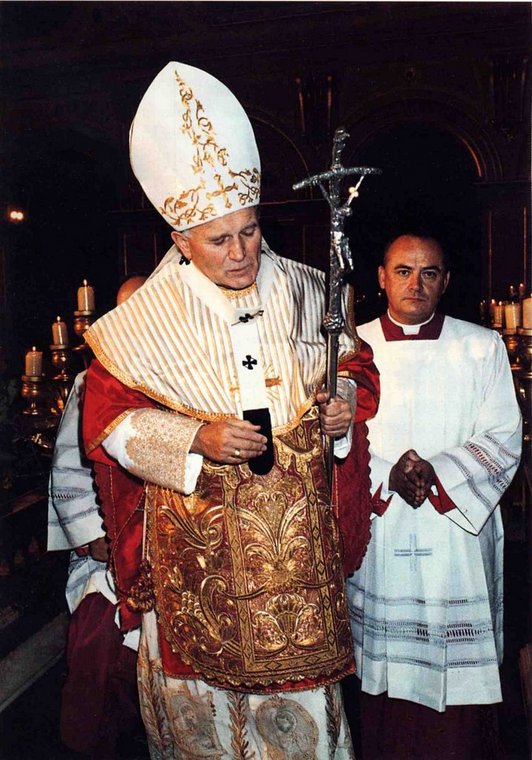
Thursday, 22 October 2015 : 29th Week of Ordinary Time, Memorial of Pope St. John Paul II, Pope (Gospel Reading)

Liturgical Colour : Green or White (Popes)

Luke 12 : 49-53

At that time, Jesus said to His disciples and to the people, “I have come to bring fire upon the earth, and how I wish it were already kindled! But I have a baptism to undergo, and what anguish I feel until it is over!”

“Do you think that I have come to bring peace on earth? No, I tell you, but rather division. From now on, in one house five will be divided : three against two, and two against three. They will be divided, father against son and son against father; mother against daughter and daughter against mother; mother-in-law against her daughter-in-law, and daughter-in-law against her mother-in-law.”

Thursday, 23 October 2014 : 29th Week of Ordinary Time, Memorial of St. John of Capestrano, Priest (Gospel Reading)

Liturgical Colour : Green or White (Priests)

Luke 12 : 49-53

At that time, Jesus said, “I have come to bring fire upon the earth, and how I wish it were already kindled! But I have a baptism to undergo, and what anguish I feel until it is over!”

“Do you think that I have come to bring peace on earth? No, I tell you, but rather division. From now on, in one house five will be divided : three against two, and two against three. They will be divided, father against son and son against father; mother against daughter and daughter against mother; mother-in-law against her daughter-in-law, and daughter-in-law against her mother-in-law.”

Saturday, 11 October 2014 : 27th Week of Ordinary Time, Memorial of Pope St. John XXIII, Pope (Homily and Scripture Reflections)

Liturgical Colour : Green or White (Saturday Mass of our Lady and Popes)

Brothers and sisters in Christ, today we are presented with the message of the Lord, through the Holy Scriptures and the Gospels, on the nature of our faith and salvation, and how we can attain that salvation through what we are doing in this life, not just based on any race or other passive benefits or factors, but through the commitment of actions that make our faith truly alive in God.

In the first reading today, St. Paul in his letter to the faithful and the Church in Galatia showed how while in the past, God revealed His Law to His people to guide them and prevent them from going astray from the path towards salvation, but the coming of Christ, the Messiah and Saviour of all, gave mankind a new focus of their faith and devotion. For God Himself had come down upon us, in our humble form, to save us from our fate that was death and oblivion.

There was also to be no more division and prejudice, or any difference in treatment between those in the society, based on either race or birth, based no longer on either status or wealth or possessions. What matters is truly whether one believes in the Lord Jesus Christ, and if one believes, and lives according to that faith which they have, then they are guaranteed salvation in Jesus Christ our Lord.

That was because, the Jews, who were descendants of Abraham, the faithful servant of God, with whom He had made His covenant with, were proud and prejudiced against their neighbours, thinking that as the heirs and sons of Abraham, they alone deserved salvation, and the others, the Gentiles, namely the Greeks, the Samaritans, Romans, Arabs, Canaanites, and others whom they considered as pagans and barbarians deserved eternal damnation.

Yet, Jesus made it clear in the Gospel, that blessing is upon those who follow the will of God, who walk in His ways, and who practice their faith in the real life, showing that their faith is truly real, concrete and dynamic. Yes, not the dead and stagnant faith shown by lack of action, by mere lip service of faith, and not by prejudicing against others or condemning others or glorifying oneself thinking that one is worthy of salvation, while others do not.

Therefore, today we are all called to reflect on our own lives, whether in all things we do, we have been truly faithful to the Lord, not just by mere faith or words, but also through actions founded in faith, filled with hope, and blessed and graced by love. This is what is necessary for us to attain our salvation, and blessed we are indeed if we listen to Jesus and what He had said, instead of following our own desires and wants.

Today, we celebrate together with the whole Universal Church, the feast of Pope St. John XXIII, the successor of St. Peter the Apostle, and one of the great and holy Popes of the twentieth century after the birth of Christ. Pope St. John XXIII, who was also called the ‘Good Pope’, was chiefly remembered for his role in convoking and gathering the latest Ecumenical Council of the Holy Roman Church, that is the Second Vatican Council, which lasted from 1962 to 1965, but in fact, his holiness stemmed not just from that act, but also from the actions which he had taken for the entire course of his life.

The life and examples of Pope St. John XXIII, the Good Pope, il Papa Buono, can be an inspiration for us all, as ever since he was born of a poor peasant family in the village and commune of Sotto il Monte, in the province of Bergamo in northern Italy as Angelo Giuseppe Roncalli, he had led a very faithful and devoted life to God. He was poor, just as his family was poor, but together they as a family lovingly devoted themselves to God.

At a certain moment in his youth, the young Angelo encountered experience in faith, by those whom he met, including his uncle, which encouraged him to consider giving himself to the service of God. As his family was poor, and peasant youths were considered important assets to help out in work, his parents were reluctant to let him to go and join the seminary.

Nevertheless, in the end, God had His way, and Angelo managed to join the seminary, studying intently and eventually was ordained a priest of the Diocese of Bergamo. He eventually became the secretary of the local ordinary, Bishop Radini-Tedeschi, who was a relatively obscure individual compared to his later famous protege, but the one who had great influence on Angelo and his later great works.

Bishop Radini-Tedeschi encountered a great workers and union strike in accordance to the poor living conditions and treatment of workers by the government of that era, in the early twentieth century, and Bishop Radini-Tedeschi faithfully and tenderly exercised his works as the shepherd of his flock, calling for restraint and restoration of order while calling for reforms and great improvement in the treatment of workers. He even donated his own personal wealth to help the poor workers made their ends meet.

All these inspired the young Angelo Roncalli, the later Pope St. John XXIII, as he later was made Archbishop and appointed as the Apostolic Delegate to Bulgaria, and later to Greece and Turkey. During his diplomatic missions in the service of the Church, Archbishop Roncalli did many great works, establishing links and friendship with the separated brethren of faith in the Eastern Orthodox Church, and during his mission in Greece and Turkey, even saved many Jews from the actions of the German NAZI who was bent on annihilating them as a race in the holocaust.

In his later mission as the Apostolic Nuncio to France, Archbishop Roncalli continued to do many good works, establishing links and relationship with the French government, including dealing with the difficult leader of France, Charles de Gaulle, who wanted to reduce the influence of the Church of Rome in the affairs of the Church in France.

And eventually, as the Patriarch of Venice and a Cardinal of the Holy Roman Church, Cardinal Angelo Roncalli continued to exercise the good works which he had done earlier in his earlier posts and ministries, and which eventually he continued when he was elected Pope in 1958 to succeed the great Pope Pius XII, the Pastor Angelicus, or the Angelic Pope.

Pope St. John XXIII continued to lead the Church faithfully, and he was particularly concerned with the restoration of relations with the Eastern Church, as he had experienced earlier during his time in Bulgaria, Greece and Turkey, in the relationships he had made with the prelates and faithful of the Eastern Church at the time. And then he was also concerned about the state of the Church, and the need for a continuation of the unfinished works of the First Vatican Council, which was prematurely ended due to the events at that time.

Thus, Pope St. John XXIII convoked the gathering of the Second Vatican Council, which commenced in 1962, and which sessions was started and opened by the Pope himself, which meeting was to continue until 1965, and concluded by Pope Paul VI, his successor as Pope St. John XXIII passed away in 1963, before the conclusion of the Ecumenical Council which he had initiated.

Pope St. John XXIII also was renowned for his role in helping to reduce tension between the superpowers, namely the United States of America and the Soviet Union, which almost ended up in a major war, during the Cuban Missile Crisis in 1962. One of the last major acts of Pope St. John XXIII was the peace which he helped broker between the two sides, and which was the major reason behind the Papal encyclical he released in 1963, the famous Pacem in Terris, or ‘Peace on earth’.

Brothers and sisters in Christ, as I have mentioned, that the actions of Pope St. John XXIII are examples to all of us, and through them, we should also be inspired to follow in his footsteps, that our faith may grow stronger and that in our devotion, we may be found justified in our faith by the Lord our God. Remember, brethren, that we have to have a living faith in us, so that our faith will not be just empty, but be real and concrete.

May Almighty God, who sees the faith and commitment which Pope St. John XXIII, also see the faith that is in us, and therefore may grant us the inheritance and reward which He promised us through Jesus Christ His Son. May we all come ever closer to His loving embrace, seeking His mercy and be made righteous once again. God bless us all. Amen.

Saturday, 11 October 2014 : 27th Week of Ordinary Time, Memorial of Pope St. John XXIII, Pope (Gospel Reading)

Liturgical Colour : Green or White (Saturday Mass of our Lady and Popes)

Luke 11 : 27-28

At that time, as Jesus was speaking, a woman spoke from the crowd and said to Him, “Blessed is the one who gave You birth and nursed You!”

Jesus replied, “Truly blessed are those who hear the word of God, and keep it as well.”

Saturday, 11 October 2014 : 27th Week of Ordinary Time, Memorial of Pope St. John XXIII, Pope (Psalm)

Liturgical Colour : Green or White (Saturday Mass of our Lady and Popes)

Psalm 104 : 2-3, 4-5, 6-7

Sing to the Lord, sing His praise, proclaim all His wondrous deeds. Glory in His Holy Name; let those who seek the Lord rejoice.

Look to the Lord and be strong; seek His face always. Remember His wonderful works, His miracles and His judgments.

You descendants of His servant Abraham, you sons of Jacob, His chosen ones! He is the Lord our God; His judgments reach the whole world.

Saturday, 11 October 2014 : 27th Week of Ordinary Time, Memorial of Pope St. John XXIII, Pope (First Reading)

Liturgical Colour : Green or White (Saturday Mass of our Lady and Popes)

Galatians 3 : 22-29

But the Scriptures have declared that we are all prisoners of sin, so the only way to receive God’s promise is to believe in Jesus Christ.

Before the time of faith had come, the Law confined us and kept us in custody until the time in which faith would show up. The Law then was serving as a slave to look after us until Christ came, so that we might be justified by faith. With the coming of faith, we are no longer submitted to this guidance.

Now, in Christ Jesus, all of you are sons and daughters of God through faith. All of you who were given to Christ through baptism, have put on Christ. Here there is no longer any difference between Jew or Greek, or between slave or freed, or between man and woman : but all of you are one in Christ Jesus.

And because you belong to Christ, you are of Abraham’s race and you are to inherit God’s promise.

Monday, 14 July 2014 : 15th Week of Ordinary Time, Memorial of St. Camillus de Lellis, Priest (Gospel Reading)

Liturgical Colour : Green

Matthew 10 : 34 – Matthew 11 : 1

Do not think that I have come to establish peace on earth. I have not come to bring peace, but a sword. For I have come to set a man against his father, and a daughter against her mother, a daughter-in-law against her mother-in-law. Each one will have as enemies those of one’s own family.

Whoever loves father or mother more than Me is not worthy of Me. And whoever loves son or daughter more than Me is not worthy of Me. And whoever does not take up his cross and come after Me is not worthy of Me. Whoever finds his life will lose it; but whoever loses his life for My sake will find it.

Whoever welcomes you welcomes Me, and whoever welcomes Me welcomes Him who sent Me. The one who welcomes a prophet as a prophet will receive the reward of a prophet; the one who welcomes a just man, because he is a just man, will receive the reward of a just man. And if anyone gives even a cup of cold water to one of these little ones, because he is My disciple, I assure you, he will not go unrewarded.

When Jesus had finished giving His twelve disciples these instructions, He went on from there to teach and to proclaim His message in their towns.

Wednesday, 1 January 2014 : Solemnity of the Blessed Virgin Mary, Mother of God – Theotokos, World Day of Prayer for Peace (Scripture Reflections)

Liturgical Colour : White

Dear brothers and sisters in Christ, today is a day of many blessings, a holy day, when we celebrate once again the important role that the Blessed Virgin Mary had on the plan of salvation of the world.today we celebrate the World Day of Prayer for Peace, but even more importantly for our faith, we celebrate today the Feast of the Theotokos, that is Mary as the Mother of our Lord and God, Jesus Christ.

Theotokos is the term in the Greek language, given since the earliest times of the Church to honour Mary, meaning the ‘Mother of God’. The Church and the faithful had, since the very beginning recognise the special role that Mary played in our salvation. Mary is a lowly and humble woman, but one who was destined to bear the Saviour of the world, Jesus Christ, who is none other than God Himself incarnate into man, to be one of us.

Therefore, to believe in the mother of the Divine, Mary, as the mother of God in Jesus, is to believe in the divinity of Christ Himself. Both of these beliefs are completely inseparable in nature. Christ is God just as He is man, He is the Son of God just as He is the Son of Man. We cannot believe in that Jesus is God if we do not believe that Mary is the mother of God.

Of course, in her motherhood of Jesus, this does not make her divine in herself, nor does this make her a goddess, as some enemies of the faithful and the false prophets have proclaimed. As the mother of God, Mary was made preeminent before all the other creations, over all mankind, save her own Son, Jesus, who is God and who existed before all ages, while Mary was created just as any other men and women.

Yet without Mary and her acceptance of the role which she had been given, we would not have Christ in our midst. Even though Jesus is Lord our God and was conceived wholly by the power of the Holy Spirit without human intervention, it was in the womb of Mary that the Saviour gestated for nine months before His entry into the world. It is through womb of Mary that the Saviour was born into the world.

That is the truth about our faith, that Jesus was born into this world as one of us, through Mary His mother, because through her womb, He was born. Many people over time would try to attack this fundamental part of our faith but they did not succeed. They would either attack the divinity of her Son, denying it and claiming that He was merely human and not divine, or by separating the humanity of Jesus from His divinity, and thus claiming that Mary was merely the mother of Jesus the Man and not the Mother of God.

No, brothers and sisters in Christ, we cannot fall into the same erroneous thinking as what was espoused by these people. We cannot deny the motherhood of Mary, who birthed the Lord and Saviour as the Mother of God, not that she is a goddess, just as we cannot separate the humanity of Jesus from His divinity. Jesus our Lord is fully and perfectly human just as at the same time He is also perfectly divine.

Many seemed to think in the erroneous ways because they were misinformed about the faith or misunderstood its true meaning. They failed to understand that in honouring Mary as the mother of God, we do not idolise or make a goddess out of her. We do not idolise or worship Mary, but instead honour her greatly as the blessed one among us, for having been the one chosen to bear the Saviour as He entered this world as a baby.

Mary is our role model, because she is truly obedient to God and she walked righteously in God’s way, without succumbing to the wickedness of the world. She is a person of love, peace, and faith. And that is why we glorify and honour her, as the greatest one among all those that God had created. God made her the first among all of us, so that we too may follow her example and be ever closer to her Son, Jesus.

Today we also celebrate the World Day of Prayer for Peace, which fits perfectly with today’s celebration on Mary as the Mother of God. Our world has forgotten peace and the values of peace, because mankind has given themselves up to the corrupting nature of the world. The world is filled with good things, but unbridled, they also feed our human weaknesses of greed and jealousy. Many of the wars in the past and even present, as well as the conflicts of the future will be fought because of mankind’s greed.

People fought over resources and material goods, and even siblings fought one another for their parents’ properties, often before even the latter’s departure from this world. Mankind always have their wants, and frequently they alwaiys desire more and more, and this is fueled by the world and the evil inside it. Mankind find it hard to satisfy their needs and therefore disregard the love they should show one another, and instead fight for their own benefits.

Wars, conflicts, and fightings are abhorrence of nature, because the devil has planted in us the seeds of division, pitting one man against another. We kill each other because hatred and greed has taken over our heart. We often allow the ways of this world to take us over, rather than to listen to the will of God, which exhorts us to seek peace and to love one another.

Therefore, brothers and sisters, even as we celebrate the coming of this new year of our Lord 2014, we should not forget that in the midst of all the celebrations and rejoicing, we should also seek for the peace and love in this world, that as we all pray for peace, we too lead the way for peace through our own actions, that we truly represent peace, love and harmony in all of our actions, our deeds, and our words.

May this day, the World Day of Prayer for Peace, then be a day where we all as one humanity, may reach out ever closer towards peace, following the examples of our role model in faith, Mary, the Mother of our Lord and God, Jesus Christ, in her obedience to God, and her faithfulness in Him, showing it through her loving actions, that we too ought to follow. Holy Mary, mother of God, pray for us sinners. Now and at the hour of our death. Amen.

Sunday, 24 November 2013 : Solemnity of our Lord Jesus Christ, King of the Universe, Christ the King (Second Reading)

Liturgical Colour : White

Colossians 1 : 12-20

Constantly give thanks to the Father who has empowered us to receive our share in the inheritance of the saints in His kingdom of light. He rescued us from the power of darkness and transferred us to the kingdom of His beloved Son. In Him we are redeemed and forgiven.

He is the image of the unseen God, and for all creation He is first born, for in Him all things were created, in heaven and on earth, visible and invisible : thrones, rulers, authorities, powers… All was made through Him and for Him. He is before all and all things hold together in Him.

And He is the head of the body, that is the Church, for He is the first, the first raised from the dead that He may be the first in everything, for God was pleased to let fullness dwell in Him.

Through Him God willed to reconcile all things to Himself, and through Him, through His blood shed on the cross, God establishes peace, on earth as in heaven.

On the Future Canonisation of Blessed Pope John XXIII and Blessed Pope John Paul II

Image

The two great Popes of the last century, both of whom had been recognised as Blessed, through the virtues of their life and miracles attributed to them, will be declared Saints, in a ceremony likely to be scheduled at the end of this year (2013).

Both Blessed Pope John XXIII and Blessed Pope John Paul II, who was made a Blessed just two years ago on 1 May 2011, had each left their incredible and remarkable footprint in the path of history, both in the history of the Church, and in the history of the world and mankind.

Image

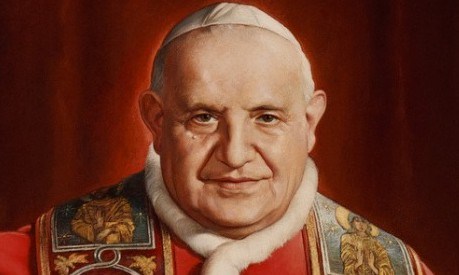
Blessed Pope John XXIII was known to be a great man of peace, and above all things seek to embrace peace and cooperation, between mankind, and also begun the process of Ecumenism in order to reunite the divided fragments of God’s Church back into the One, Holy, Catholic, and Apostolic Church that is our Church.

He was also known for his Encyclical Pacem in Terris (Peace on earth), which was released just months after the world was almost engulfed in an all-out nuclear war between the two superpowers, the United States of America (USA) and the Soviet Union (USSR) during the height of the Cold War in the Cuban Missile Crisis. Blessed Pope John XXIII worked hard ceaselessly to promote peace between the parties in conflict, for the good of all mankind, all of whom are the children of the same one God.

Blessed Pope John XXIII also convoked the Second Vatican Council, which brought the Church in line with the developments in the world, and also to make the Church more relevant in the increasingly rapid new developments in our world, and the rise of apathy towards religion in general. He would pass away before the Council was completed, but his legacy continued on until today.

Image

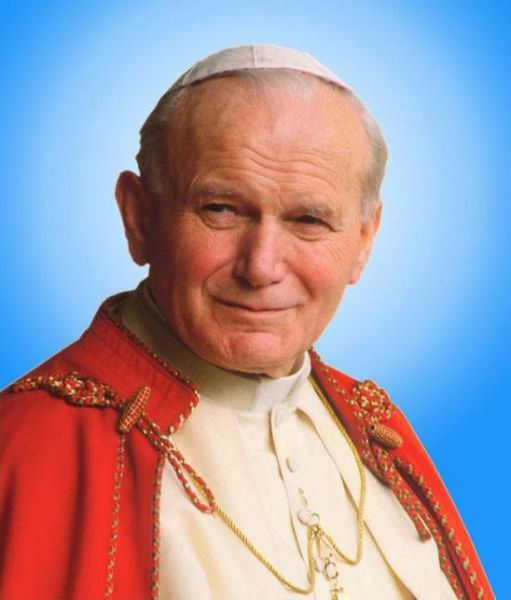
Blessed Pope John Paul II ‘the Great’ was a well-known Pope, a Pope of youths, and a hardworking Pope, who travelled around the world to visit all the flocks of the Lord that had been entrusted to him as the Successor of St. Peter the Apostle, as the Vicar of Christ. He was instrumental in the end of Communism in Eastern Europe, ending persecutions against the people of the faith, and also open boundaries and barriers that had been long in place since the beginning of the Cold War.

Blessed Pope John Paul II has also renewed the zeal for the faith amongst many around the world, and especially in youths, to whom he dedicated a special event, the World Youth Day, in order to commemorate the faith, particularly amongst the youths of the faith, around the globe. He inspired many through his works, his Encyclicals, and especially his perseverance despite being troubled with a worsening Parkinson’s disease condition, that made him to labour until his passing on 2 April 2005.

Both Popes had been very influential, hardworking, and very holy leaders of the One Church of the Lord Jesus Christ, and they had done much to strengthen the faith and the Church, and bring God closer to many, bringing them closer to salvation.

I hope to soon be able to ask for the intercessions of Pope St. John XXIII and Pope St. John Paul II the Great, and I pray that they will intercede for us sinners around the world, and pray for us, till we are greeted by them at the doors of heaven when it is time for us to be with the Lord again. Now we wait for the official announcement on the date of the Canonisation.

Image

Blessed Pope John XXIII, pray for us!

Image

Blessed Pope John Paul II, pray for us!