Thursday, 21 August 2014 : 20th Week of Ordinary Time, Memorial of Pope St. Pius X, Pope (Gospel Reading)

Liturgical Colour : White

Matthew 22 : 1-14

Jesus went on speaking to them in parables : “This story throws light on the kingdom of heaven : A king celebrated the wedding of his son. He sent his servants to call the invited guests to the wedding feast, but the guests refused to come.”

“Again he sent other servants, ordering them to say to the invited guests, ‘I have prepared a banquet, slaughtered my fattened calves and other animals, and now everything is ready. Come to the wedding!’ But they paid no attention and went away, some to their fields, and some to their work. Others seized the servants of the king, insulted them and killed them.”

“The king became angry. He sent his troops to destroy those murderers and burn their city. Then he said to his servants, ‘The wedding banquet is prepared, but the invited guests were not worthy. Go instead to the crossroads, and invite everyone you find to the wedding feast.'”

“The servants went out at once into the streets and gathered everyone they found, good and bad alike, so that the hall was filled with guests. The king came in to see those who were at table, and he noticed a man not wearing the festal garment.”

“So he said to him, ‘Friend, how did you get in without the wedding garment?’ But the man remained silent. So the king said to his servants, ‘Bind his hands and feet and throw him into the dark, where there is weeping and gnashing of teeth.'”

“Know that many are called, but few are chosen.”

Thursday, 21 August 2014 : 20th Week of Ordinary Time, Memorial of Pope St. Pius X, Pope (Psalm)

Liturgical Colour : White

Psalm 50 : 12-13, 14-15, 18-19

Create in me, o God, a pure heart, give me a new and steadfast spirit. Do not cast me out of Your presence nor take Your Holy Spirit from me.

Give me again the joy of Your salvation and sustain me with a willing spirit. Then I will show wrongdoers Your ways and sinners will return to You.

You take no pleasure in sacrifice; were I to give a burnt offering, You would not delight in it. O God, my sacrifice is a broken spirit; a contrite heart You will not despise.

Thursday, 21 August 2014 : 20th Week of Ordinary Time, Memorial of Pope St. Pius X, Pope (First Reading)

Liturgical Colour : White

Ezekiel 36 : 23-28

I will make known the holiness of My great Name, profaned among the nations because of you, and they will know that I am YHVH when I show them My holiness among you.

For I will gather you from all the nations and bring you back to your own land. Then I shall pour pure water over you and you shall be made clean – cleansed from the defilement of all your idols. I shall give you a new heart and put a new spirit within you.

I shall remove your heart of stone and give you a heart of flesh. I shall put My Spirit within you and move you to follow My decrees and keep My laws. You will live in the land I gave your ancestors; you shall be My people and I will be your God.

Wednesday, 21 August 2013 : 20th Week of Ordinary Time, Memorial of St. Pius X, Pope (Scripture Reflection)

Liturgical Colour : White

Dear brothers and sisters in Christ, today, we listen to the fairness of our God, the upright nature of His words, and the love He showed upon all of us through His constant help throughout time. He showed His love and mercy upon us, and He is just to all of His children. We who have been marred by sin and evil, and the ones who should have been cast with the devil into the eternal fire of hell, had been brought from the domain of death, back into the land of the living, just as the owner of the vineyard had brought those who are unemployed on the streets to work on his field.

Indeed, He has brought us from our oppressors, that is the devil and his angels, at a great price, a price that He paid with nothing other than His own Most Precious Blood, that redeemed all of us, from the price of sin that had been placed on us ever since we first sinned against God and disobeyed against His will and His commandments. He paid for all of us with that Most Precious Body and Blood of His, that we will not die, but live eternal with Him, He who loves us and He who wants to forgive us from our sins and impurities.

He had called us all from the darkness to come into the light, to come for the salvation that He had prepared for us. He made a promise, a covenant with all of us, that we will be rewarded with life eternal in Him, as we enter into our new life in Him, just as the labourers were taken out of their joblessness and life in the streets, into the new life in the service of the Lord in His field, His vineyard. Each of us, brothers and sisters, given a new chance of life, that we may truly receive a reward of eternity at the end of our labours and journey in this world.

Yes, and just like what we heard in the First Reading today, we are like the trees that goes around seeking a tree to be king over all of us, to be that source of leadership and guidance in our respective lives, to be the light guiding us through the darkness of this world. And indeed, while all the regal and great trees, well beloved and renowned, like the fig tree and the vine, did not want to abandon all that they have for the trees’ sake, Jesus is indeed like the bramble vine, who would want to lower Himself to be our king.

Why so? It is because becoming our king is not an easy thing for Jesus, as His ministry in this world would have shown. Many people opposed Him, and many paid a deaf ear to His messages and His teachings, and many openly defied Him and questioned Him, not least of all the leaders of the people, the chief priests and the Pharisees. He stripped everything off Himself to be our King, the king of slaves and the king of the oppressed and the abandoned ones.

That such that even He went through so much, as our leader and our King, and our Master, being crowned with the painful crown of thorns, to indeed signify that He is our king, and not just like any earthly kings, but a true king, one with His people always forefront in His heart and in all His concerns. He loves us, brothers and sisters, and His love for all of us, without exception, is so much that He was willing to endure all our sufferings and supposed punishments, and drink the cup of suffering that had been prepared for Him.

He did not shirk from the huge and burdensome task that awaited Him, and instead He went on, being led like a lamb brought to its slaughterhouse, and although He is innocent, He wanted to endure all those that were intended for all of us. For what, brothers and sisters in Christ? None other than the salvation and the rescue of our souls from the eternal damnation in hell! None other than the eternal separation that we would have to endure for all times, for all eternity, away from our Lord and God who loves us so much.

Yes, Jesus our Lord and God wants us to be with Him, instead of being in the fires and suffering of hell. He cares for us, He showered us with His love and mercy, especially through no other act greater than the surrendering of His own life, as the perfect and unblemished sacrifice for our sins, in His death on the cross. That was why He gave us the one and only means to salvation, that is none other than His own flesh and blood, which He gave to all of us and offered to all of us, at the Last Supper He had with His disciples.

That was exactly what Pope St. Pius X, the great early twentieth century Pope whose feast we are celebrating today, championed, on the emphasis on the Most Holy Body and Blood of Christ, the Most Holy Eucharist through which He had given us the means to salvation. Pope St. Pius X was born Giuseppe Melchiorre Sarto, and he became a priest in his home diocese of mantua, eventually rising up the ranks to be bishop, and then the Cardinal Patriarch of Venice. He was elected as Pope Pius X, the 257th Pope and the 256th successor of St. Peter in 1903.

Pope St. Pius X was truly a great and holy Pope determined to reform the Holy Church and all its practices to better reflect its task as the bearer and medium of God’s salvation to all of us, the member of that One Body of Christ in the Church. Most important of all, He reformed the rules of the Holy Communion, such that then even small children would be able to receive the Most Precious Body and Blood of Christ our Lord. Previously, only full fledged adults were able to receive Holy Communion, but with the reform spearheaded by Pope St. Pius X, those children were opened the way of salvation through the receiving of the Holy Eucharist.

To Pope St. Pius X, there is no better path and way to salvation, and there is no better gate to salvation than that of the Most Precious Body and Blood offered to us, from the Last Supper, down to us through the Holy Mass that we celebrate regularly. In them, we find the fullness and completeness of the Lord’s promise and dedication to us, in suffering the blows meant for us, that we will not die but live a life eternal in the bliss of heaven. For his hard work for the sake of the Lord, through the promotion of the early reception of the Eucharist, and also the regular reception of the Holy Eucharist, he was known as the Pope of the Eucharist.

Pope St. Pius X also reformed much aspect of the Church, ensuring that the Church can reflect better the ways through which it can persevere in the ever-changing and increasingly hostile world, to spread the words of the Lord’s Gospel to all mankind. He reformed the Church music by greatly promoting and reviving the usage of the Gregorian Chant, which beauty for the worship of the Lord, we can still enjoy today. He truly had dedicated his life and work for the sake of God, His Church, and His people, and he is indeed an example that all of us should try to emulate in our own lives.

Therefore, brothers and sisters in Christ, reminding ourselves most importantly of the love and attention God had for us, and the blessings He had given us, through His Son, Jesus, who had shed His own flesh and blood, and His life for us, let us resolve to love Him more and more, let us revere Him in the Most Holy Eucharist by attending the Mass regularly and reverently, and accepting Him into ourselves as we eat His Body and His Blood in the Holy Communion. Pray for us, Pope St. Pius X, that we will grow to love the Lord ever more in the Most Holy Eucharist. May the Lord in the Eucharist remain with us and bless us always. Amen.

Wednesday, 21 August 2013 : 20th Week of Ordinary Time, Memorial of St. Pius X, Pope (Gospel Reading)

Liturgical Colour : White

Matthew 20 : 1-16a

The story throws light on the kingdom of Heaven : A landowner went out early in the morning to hire workers for his vineyard. He agreed to pay each worker the usual daily wage, and sent them to his vineyard.

He went out again at about nine in the morning, and seeing others idle in the town square, he said to them, ‘You also, go to my vineyard, and I will pay you what is just.’ So they went.

The owner went out at midday, and again at three in the afternoon, and he did the same. Finally he went out at the last working hour – the eleventh hour – and he saw others standing there. So he said to them, ‘Why do you stay idle the whole day?’ They answered, ‘Because no one has hired us.’ The master said, ‘Go and work in my vineyard.’

When evening came, the owner of the vineyard said to his manager, ‘Call the workers and pay them their wage, beginning with the last and ending with the first.’ Those who had come to work at the eleventh hour turned up, and were each given a silver coin. When it was the turn of the first, they thought they would receive more. But they, too, each received a silver coin. So, on receiving it, they began to grumble against the landowner.

They said, ‘These last hardly worked an hour, yet you have treated them the same as us, who have endured the heavy work of the day and the heat.’ The owner said to one of them, ‘Friend, I have not been unjust to you. Did we not agree on one silver coin per day? So take what is yours and go. I want to give to the last the same as I give to you. Do I not have the right to do as I please with what is mine? Why are you envious when I am kind?’

So will it be : the last will be first, the first will be last.

Wednesday, 21 August 2013 : 20th Week of Ordinary Time, Memorial of St. Pius X, Pope (Psalm)

Liturgical Colour : White

Psalm 20 : 2-3, 4-5, 6-7

The king rejoices in Your strength, o Lord, and exults in Your saving help. You have granted him his desire; You have not rejected his request.

You have come to him with rich blessings; You have placed a golden crown upon his head. When he asked, You gave him life – length of days forever and ever.

He glories in the victory You gave him; You shall bestow on him splendour and majesty. You have given him eternal blessings, and gladdened him with the joy of Your presence.

Wednesday, 21 August 2013 : 20th Week of Ordinary Time, Memorial of St. Pius X, Pope (First Reading)

Liturgical Colour : White

Judges 9 : 6-15

Then all the lords of Shechem and the whole council assembled together by the oak at the pillar in Shechem, and proclaimed Abimelech king.

When Jotham was told about this, he went to the top of Mount Gerizim. There he cried out to them, “Listen to me, lords of Shechem, that God may listen to you!”

“The trees once set out to find and anoint a king. They said to the olive tree, ‘Be our king.’ The olive tree answered, ‘Am I going to renounce the oil by which – thanks to me – gods and people are honoured, to hold sway over the trees?’”

“The trees said to the fig tree : ‘Come and reign over us.’ The fig tree answered them, ‘Am I going to renounce my sweetness and my delicious fruit, to hold sway over the trees?’”

“The trees said to the vine : ‘Come and reign over us.’ The vine answered, ‘Am I going to renounce my juice which cheers gods and people to hold sway over the trees?”

“Then the trees said to the bramble bush : ‘Come, reign over us.’ The bramble bush answered the trees, ‘If you come in sincerity to anoint me as your king, then come near and take shelter in my shade; but if not, let fire break out of the bramble bush to devour even the cedars of Lebanon.’”

Friday, 2 August 2013 : 17th Week of Ordinary Time, Memorial of St. Eusebius of Vercelli, Bishop; and St. Peter Julian Eymard, Priest (Scripture Reflection)

Dear brothers and sisters in Christ, the Lord our God is great, and He is mighty. He is the ruler over all creation and has authority and power over all. From generations to generations He had shown His greatness to the people of Israel and all the other children of God. He had saved Noah from the flood by His enduring love, and brought Abraham, our father in faith into the Promised Land that He promised to his descendants.

He made his descendants into great nations, and to Jacob and his sons, he made them into His chosen people of Israel. He blessed them and protected them, and He made Joseph prosperous in Egypt when his brothers thought evil things for him. He blessed His people, made them prosper and multiply in foreign lands. When they were enslaved and persecuted, He rescued them and punished their enemies, bringing them out of the land of Egypt to the Promised Land.

It is His wonders, His infinite love, and His faithfulness that the people of Israel celebrate in the feast days appointed by the Lord and told to them through Moses, in the first reading today. The people celebrated His blessing in the Promised Land and all its wealth, by thanking Him and offering the first fruits of their labour in that blessed land, as a sign of their love and dedication to Him, their Lord and God. They also commemorate the Passover, their greatest feast, because on that day in Egypt long ago, the Lord had shown His might and saved for eternity, the people of Israel from the slavery under the Egyptians and the Pharaohs.

The Day of Atonement is also a special occasion for the Jewish people, because indeed, as much as the blessings that the Lord had given to the people, their ancestors had also rebelled and sinned against the Lord, by their disbelief and lack of faith, and by their doubt in the power and authority of the Lord, much like the people of Nazareth, the hometown of Jesus, which we heard today in our Gospel Reading. The Day of Atonement reminds them that they are sinful and they are nothing in the eyes of God because of their sins, and yet, in His infinite mercy and love, He embraced them and made them whole again, forgiving them from their sins.

It is not only the people of Israel who has feast days and days of celebrations in their annual calendar, my brothers and sisters, because we, the people of God, the chosen people of God, who believe in Christ, also have our feast days, not unlike that of the people of Israel of old. We commemorate Jesus Christ, the Son of God and Messiah, who had come into the world, the Word of God made flesh, for the salvation of all mankind.

We celebrate His birth on Christmas, the day when the Lord stooped down from His divine throne in heaven, and came down to be one of us, one like us, save for sin, so that we may have a new hope for salvation and deliverance from evil and death. We celebrate His ministries in this world in our daily and weekly Sunday Masses, when we listened to the readings of the Gospels, highlighting His good works and mission in this world, the teachings He had given to His apostles and from them, to us.

We celebrate daily and weekly, His most Glorious death on the cross, the ultimate sacrifice of the divine, the death of our own Lord and God, on the cross, for our sake, that we who believe in Him will not taste death but life. We celebrate this every time we have the Mass, when the ultimate sacrifice of Christ is brought closer to us, through the Eucharist, the Most Holy and Precious Body and Blood of Christ, that Jesus Himself had given us and His disciples, that He will live in us, and we in Him.

During the time of the Holy Week and Easter, we celebrate the greatest works He had done in His mission, that is the Passover of the Lord, the Great Passover, not unlike the Jewish Passover of old. This time, however, the Lord did not just pass over the people of Israel and brought death to their Egyptian oppressors, but this time, the Lord passed over the judgment of death from those who have their faith in Him, and brought them, not just into any Promised Land, but into the eternal happiness and blessing of the Promised heaven, which Christ promised to all those who put their complete trust in Him.

That is why, brothers and sisters, we ought to take greater attention and commit ourselves more strongly and more vigorously to our Lord, by putting greater effort on our own part, to fully participate in the celebrations and feast days of our Lord, celebrating the memory of His wondrous work for our sake, celebrating the mysteries of His birth, His ministry, His suffering, death, and resurrection from the dead, for in Him lies our only hope and our salvation.

Today, we celebrate the feast of both St. Eusebius of Vercelli and St. Peter Julian Eymard. St. Eusebius of Vercelli was the bishop of Vercelli who lived in Italy in the late Roman Empire at the fourth century after the birth of Christ. St. Eusebius faced much difficulties during his ministry as the servant of God’s Gospel, facing many divisions in the early Church, between the various heretical factions trying to subvert the truth of the Lord’s Good News.

St. Eusebius persevered and despite the difficulties, he professed his faith and adherence to the true teachings of Christ reflected in the orthodoxy of the Church magisterium. He defended the faith against heresies and promoted reconciliation between the different factions of the faithful, and also urged people who had veered away from the true faith to return once again to their Lord and their God.

St. Peter Julian Eymard also did not have an easy time in his ministry, as he faced challenges in the increasingly secular France, at the start of the nineteenth century, just decades after the horrors of the French Revolution. Yet, he persevered and continued to do great works for the sake of the people of God, ministering to them with love. He championed the cause of the children receiving the Holy Communion at a young age, which would be approved by the Church through Pope St. Pius X in the early decade of the twentieth century.

St. Peter Julian Eymard established the order of the Servants of the Blessed Sacrament, members of whom are devoted to the Blessed Sacrament, the Lord Himself, and in the service of His people, leading a prayerful and contemplative life filled with joy of the Lord. St. Peter Julian Eymard continued to serve the Lord in the best way he could, and he gave glory to God, the Lord who had come down from heaven to save us from death, and give us a new hope of eternal life.

Therefore, brothers and sisters in Christ, inspired by the examples of St. Eusebius of Vercelli and St. Peter Julian Eymard, we should also glorify the Lord our God and give Him our thanks, by devoutly following His teachings and proclaiming His life, death, and resurrection, particularly to those who had yet to hear the Word of God and thus the words of salvation.

May the Lord guide us in this journey through life, that we will always persevere regardless of the difficulties, and let us always remember of the love our God has for all of us, that He even was willing to suffer and die for us all, that we may live, and not just any life, but an eternal life of bliss and happiness with Him in heavenly glory. God bless us all. Amen.

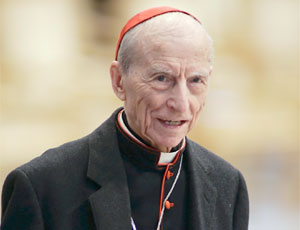
Passing of Cardinal Ersilio Tonini of Italy, at the age of 99

Image

Cardinal Ersilio Tonini, Cardinal Priest of SS. Redentore a Valmelaina has passed away on Sunday, 28 July 2013 at the age of 99, just a few days after his birthday on 20 July. At 99, he was the oldest living Cardinal in the College of Cardinals.

http://www.gcatholic.org/hierarchy/data/cardJP2-6.htm#175

Cardinal Tonini was created Cardinal in 1994 by the late Blessed Pope John Paul II and he was the Metropolitan Archbishop of Ravenna-Cervia, Italy from 1975 to 1990. He was the last Cardinal to have been born in the Pontificate of Pope St. Pius X, the last Pope to be made a saint. Pope St. Pius X passed away exactly one month after Cardinal Tonini was born (20 August 1914). He was also the last Cardinal to have been born prior to World War I, which began just a week after his birth.

We pray for Cardinal Tonini, that he will rest in peace, and God will reward him for all his hard work as the shepherd of the people of God in Ravenna-Cervia and his numerous other contributions to the Church and for the Lord’s sake. May the Lord welcome him into His embrace in heaven and give him eternal rest and happiness that he deserved.

With the passing of Cardinal Tonini, the College of Cardinals now stands at 202 members, with 112 Cardinal-electors and 90 Cardinal non-electors.

There are now 8 Cardinal-elector vacancies in the College of Cardinals, 11 vacant Cardinal Titles (for Cardinal Priests) and 8 vacant Cardinal Deaconries (for Cardinal Deacons)