(Usus Antiquior) Eighteenth Sunday after Pentecost (II Classis) – Sunday, 12 October 2014 : Homily and Scripture Reflections

Dear brothers and sisters in Christ, today we come together to celebrate the love of God and to listen to His words as written and recorded in the Holy Scriptures. And St. Paul in his letter to the Church and the faithful in Corinth praised the people of God for their faith in God, and how the Lord Jesus affirmed the faith of all those who believed in Him, so that all of them will be justified at the end of time and not perish.

And in the Gospel, we heard about the healing of the paralytic man, that is a man who cannot move or walk due to the paralysis of the body, and Jesus healed him to show His power and authority over all things, all sins and diseases, both those of the body and those of the soul. Yes, that is why Jesus came into the world, to show the power of God by the healing of the sick, but more than just the body, as more important is the healing of the soul.

Jesus is the Lord, the God of all creations. One and only God, not created but existing and with the Father before all ages and before the beginning of the reckoning of time, and before creation. He was with the Father and the Holy Spirit, as a trinity of Godhead, Three separate and equal brings, but one in nature. This is our faith and this is what we believe in, in the Most Holy Trinity, Three Godhead but One in perfect unity of love, the One True God, whom the people of Israel also believed in.

And thus, He who is the Word of God, who created heaven and earth and all the creatures and creations in them, was willing to come down upon us, to be with us and to walk among us, taking in humility our humble human form, not that of a king but the lowly Son of a carpenter of Nazareth, that through Him, what God had planned for the salvation of mankind might proceed and be fulfilled completely.

Brothers and sisters in Christ, we know that men often fall sick, suffering from the disease of the body. We know now of many diseases, both those that are contagious and non-contagious. We know of the recent outbreak of Ebola virus in Africa, of which many thousands have died, and many thousands more suffered from the disease. And we know how many millions are affected by dengue fever, malaria, polio, smallpox and many other diseases, which many of these cause not just suffering and pain, but eventually even death.

And death comes especially when the disease is left untreated, either because the sufferers are unable to afford the fees needed to cure their respective illnesses, or that the disease itself has yet to be curable, namely no cure has yet to be found. Some disease like HIV, diabetes, cancer and others have not yet been curable, and hence what doctors can do, is mostly to reduce the suffering, or in the case of cancer, that is to excise and cut out the cancerous cells to remove them from the body, or to use chemicals to kill and destroy them.

But all these bodily diseases, illnesses and afflictions pale in comparison to the disease of our heart and soul, namely sin. Sin is indeed a disease, since it attacks us in the depth of our own beings, and not just our soul and heart can be affected, but even our body, for the body obeys the will of our heart and soul. And if sin corrupts our heart and soul, our body will likely also be corrupted by the same sin.

And sin is more dangerous and harmful than the effects of the bodily diseases that I mentioned earlier on. It does not mean that those bodily diseases are trivial, but considering their seriousness and the sufferings they can inflict on us, then we should be even more aware of the kind of harm which sin can cause to us. Remember that Jesus said, that we do not need to fear those that can bring about the destruction of the body, but we ought to worry indeed, those that can bring about the destruction of the soul.

One of the intentions of Jesus is indeed that, we should not fear the devil and his agents. We have seen how scary and destructive they may seem to look, but they have no power over us. They may strike at our body, but they cannot harm our soul. The One who can bring about the destruction of our soul is indeed God Himself, the Lord and Master of all, who has the authority over all things. We know of the Last Judgment, and how the righteous will be separated from the wicked, and while the righteous will enjoy the fruits of God’s promise and love, the wicked will suffer for eternity. What will they suffer for? For their sins indeed!

Yes, so we need to indeed be wary of sin, and how it can bring about our destruction, and how it can harm us both in this life, and the life that is to come. That is why our Lord Jesus is the One with the power and authority to forgive sins. He is the One with the power to heal us from all of our afflictions, body and soul. That is why He rebuked the Pharisees when they doubted His ability to forgive sins, and even accused Him of blasphemy.

Why so? This is because they failed to recognise Christ, when it was so clear that the prophets from all ages had spoken about the Messiah who was to come. And in Jesus all of their prophecies, and all the promises of God were fulfilled. He is the Lamb of God, who takes away the sins of the world, and all who believe in Him will gain life eternal, and total liberation from the sins that have chained us mankind to death.

That marked the difference between the paralytic man and the Pharisees. Both of them were afflicted, with sin and darkness in their hearts. But the paralytic man listened to the Lord and allowed Him to work His wonders in him, healing him from all of His afflictions. Thus, if we follow the Lord and remain completely faithful to Him, we will gain healing through Him and be made justified through our faith, and thus eligible of eternal life.

On the other hand, if we act like the Pharisees, thinking that we are perfectly alright and have no need for healing, then the pride, greed, arrogance and wickedness in our hearts, just as they were in the hearts of the Pharisees and the scribes will be our undoing. Is this what we want for ourselves? Certainly not. Therefore, it is imperative that we take heed of what our Lord Jesus had done and what He had taught and shown us through our Faith and through the Scriptures.

May Almighty God therefore guide us, heal us from our afflictions, empower us, and grant us strength, as well as humility, so that we may have the courage and will to ask Him humbly to heal us and to make us whole again, that we sinners, filled with the sins of our ancestors and the sins of our own daily lives, may be made pure like snow, white and pure as a diamond, and be cleansed from all the diseases of our body and soul. That in the end, after excising all that is evil from our beings, and after decisively rebuking Satan, we are precious and worthy, and are welcome into the eternal life God had prepared for us all. Amen.
(Usus Antiquior) Eighteenth Sunday after Pentecost (II Classis) – Sunday, 12 October 2014 : Offertory, Secret Prayer of the Priest, Communion and Post-Communion Prayer

Offertory

Exodus 24 : 4, 5

Sanctificavit Moyses altare Domino, offerens super illud holocausta et immolans victimas : fecit sacrificium vespertinum in odorem suavitatis Domino Deo, in conspectu filiorum Israel.

English translation

Moses consecrated an altar to the Lord, offering upon it holocausts, and sacrificing victims. He made an evening sacrifice to the Lord God for an odour of sweetness, in the sight of the children of Israel.

Secret Prayer of the Priest

Deus, qui nos, per hujus sacrificii veneranda commercia, unius summae divinitatis participes efficis : praesta, quaesumus; ut sicut Tuam cognoscimus veritatem, sic eam dignis moribus assequamur. Per Dominum…

English translation

O God, who through the august communication of this sacrifice, do make us the partakers of the One Supreme Divinity, grant we beseech You, that, as we know Your truth, so we may ever follow it with worthy actions. Through our Lord…

Communion

Psalm 95 : 8-9

Tollite hostias, et introite in atria ejus : adorate Dominum in aula sancta ejus.

English translation

Bring up sacrifices, and come into His courts. All of you, adore the Lord in His holy court.

Post-Communion Prayer

Gratias tibi referimus, Domine, sacro munere vegetati : Tuam misericordiam deprecantes; ut dignos nos ejus participatione perficias. Per Dominum…

English translation

Strengthened by the sacred gift, we render thanks to You, o Lord, beseeching Your mercy that You make us entirely worthy to partake thereof. Through our Lord…

(Usus Antiquior) Eighteenth Sunday after Pentecost (II Classis) – Sunday, 12 October 2014 : Holy Gospel

Sequentia Sancti Evangelii secundum Matthaeum – Continuation of the Holy Gospel according to St. Matthew

Matthew 9 : 1-8

In illo tempore : Ascendens Jesus in naviculum, transfretavit et venit in civitatem suam. Et ecce, offerebant et paralyticum jacentem in lecto. Et videns Jesus fidem illorum, dixit paralytico : Confide, fili, remittuntur tibi peccata tua.

Et ecce, quidam de scribis dixerunt intra se : Hic blasphemat. Et cum vidisset Jesus cogitationes eorum, dixit : Ut quid cogitatis mala in cordibus vestris? Quid est facilius dicere : Dimittuntur tibi peccata tua; an dicere : Surge et ambula?

Ut autem sciatis, quia Filius Hominis habet potestatem in terra dimittendi peccata, tunc ait paralytico : Surge, tolle lectum tuum, et vade in domum tuam. Et surrexit et abiit in domum suam. Videntes autem turbae timuerunt, et glorificaverunt Deum, qui dedit potestatem talem hominibus.

English translation

At that time, Jesus entering into a ship, passed over the water and came into His own city. And behold they brought to Him one paralytic man lying in a bed, and Jesus seeing their faith, said to the paralytic man, “Be of good heart, son, your sins have been forgiven.”

And behold, some of the scribes said within themselves, “He has blasphemed.” And Jesus seeing their thoughts said, “Why do you think evil in your hearts? Whether is it easier to say, ‘Your sins are forgiven’ or to say, ‘Arise and walk’?”

“But that you may know that the Son of Man has the power on earth to forgive sins,” He then said to the paralytic man, “Arise, take up your bed and go into your house.” And the paralytic man arose, and went into his house. And the multitude seeing it, feared and glorified God who had given such power to men.

(Usus Antiquior) Eighteenth Sunday after Pentecost (II Classis) – Sunday, 12 October 2014 : Gradual and Alleluia

Psalm 121 : 1, 7 and Psalm 101 : 16

Laetatus sum in his, quae dicta sunt mihi : in domum Domini ibimus.

Response : Fiat pax in virtute Tua : et abundantia in turribus Tuis.

Alleluja, alleluja.

Response : Timebunt gentes Nomen Tuum, Domine, et omnes reges terrae gloriam Tuam. Alleluja.

English translation

I rejoiced at the things that were said to me : We shall go into the house of our Lord.

Response : Let peace be in Your strength, and abundance in Your towers.

Alleluia, alleluia.

Response : The Gentiles shall fear Your Name, o Lord, and all the kings of the earth shall fear Your glory. Alleluia.

(Usus Antiquior) Eighteenth Sunday after Pentecost (II Classis) – Sunday, 12 October 2014 : Epistle

Lectio Epistolae Beati Pauli Apostoli ad Corinthios – Lesson from the Epistle of Blessed Paul the Apostle to the Corinthians

1 Corinthians 1 : 4-8

Fratres : Gratias ago Deo meo semper pro vobis in gratia Dei, quae data est vobis in Christo Jesu : quod in omnibus divites facti estis in illo, in omni verbo et in omni scientia : sicut testimonium Christi confirmatum est in vobis : ita ut nihil vobis desit in ulla gratia, exspectantibus revelationem Domini nostri Jesu Christi.

Qui et confirmabit vos usque in finem sine crimine, in die adventus Domini nostri Jesu Christi.

English translation

Brethren, I give thanks to my God always for you, for the grace of God that is given to you in Jesus Christ, that in all things you are made rich in Him, in all utterance and in all knowledge, as the testimony of Christ was confirmed in you, so that nothing is wanting to you in any grace, waiting for the manifestation of our Lord Jesus Christ.

He who will also confirm you unto the end without crime, in the day of the coming of our Lord Jesus Christ.

(Usus Antiquior) Eighteenth Sunday after Pentecost (II Classis) – Sunday, 12 October 2014 : Introit and Collect

Introit

Ecclesiastes 36 : 18 and Psalm 121 : 1

Da pacem, Domine, sustinentibus Te, ut prophetae Tui fideles inveniantur : exaudi preces servi Tui et plebis Tuae Israel.

Laetatus sum in his, quae dicta sunt mihi : in domum Domini ibimus.

Response : Gloria Patri et Filio et Spiritui Sancto, sicut erat in principio, et nunc, et semper : et in saecula saeculorum. Amen.

English translation

Give peace, o Lord, to those who patiently wait for You, that Your prophets may be found faithful. Hear the prayers of Your servant, and of Your people Israel.

I rejoiced at the things that were said to me. We shall go into the house of the Lord.

Response : Glory be to the Father and to the Son and to the Holy Spirit, as it was in the beginning, is now, and ever shall be, world without end. Amen.

Collect

Dirigat corda nostra, quaesumus, Domine, Tuae miserationis operatio : quia tibi sine Te placere non possumus. Per Dominum…

English translation

Let the operation of Your mercy, we beseech You, o Lord, direct our hearts. For without You we cannot please You. Through our Lord…

Full Video of the Episcopal Ordination of Archbishop Julian Leow Beng Kim, Metropolitan Archbishop of Kuala Lumpur (Malaysia)

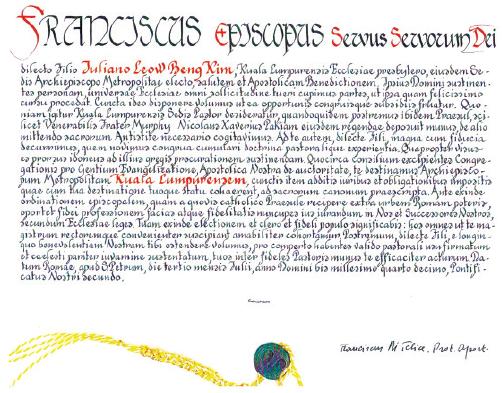
On Monday, 6 October 2014, on the feast of St. Bruno, by the grace and authority of the Apostolic See and the Successor of St. Peter, through Archbishop Joseph Salvador Marino, the Apostolic Nuncio to Malaysia,  Fr. Julian Leow Beng Kim was ordained to the episcopal order by Metropolitan Archbishop John Ha Tiong Hock of Kuching, after he was appointed as the new Metropolitan Archbishop of Kuala Lumpur on 3 July 2014.

The episcopal ordination took place at the Church of the Holy Family at Kajang, Metropolitan Archdiocese of Kuala Lumpur.

http://www.gcatholic.org/dioceses/diocese/kual0.htm#56850

Metropolitan Archbishop Julian Leow Beng Kim is the fourth Metropolitan Archbishop of Kuala Lumpur, and as the shepherd of the largest diocese in Malaysia and the diocese of the capital city, he is also unofficially the Primate of Malaysia. He has as his suffragan bishops, the Bishops of Penang and Melaka-Johor.

11792273901412591832

We wish Archbishop Julian Leow Beng Kim all the best in his new calling as the shepherd of souls in Kuala Lumpur. May he remain faithful and devoted to the orthodox and pure teachings of the Faith and the Church, making no compromises against the forces of darkness arrayed against the Church even as we speak today. May he also be devoted to the sheep he had been entrusted to, and lead them to the true, unblemished and orthodox faith. Amen.

Cardinals Update : Cardinal Franc Rode, C.M., Prefect Emeritus of the Congregation for Institutes of Consecrated Life and for Societies of Apostolic Life (Slovenia), turned 80, ceases to be a Cardinal-elector

640px-Cardeal_franc_rodé

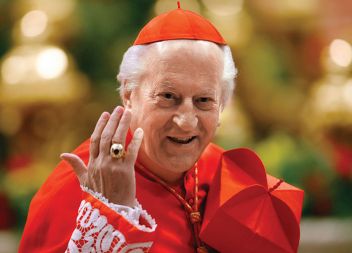
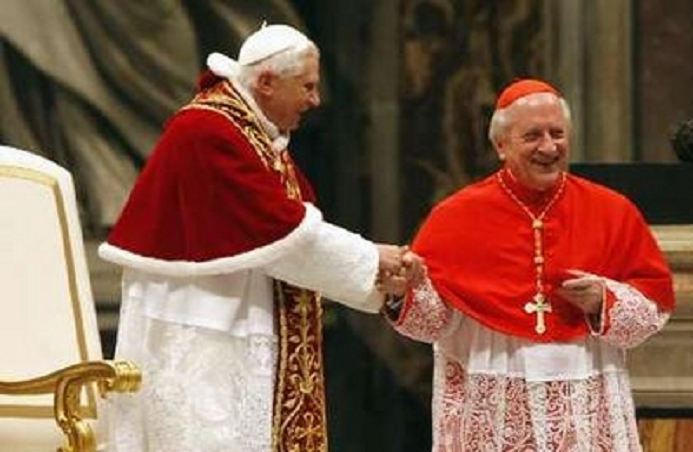
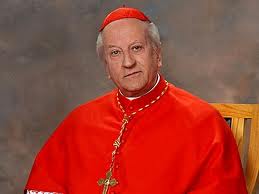
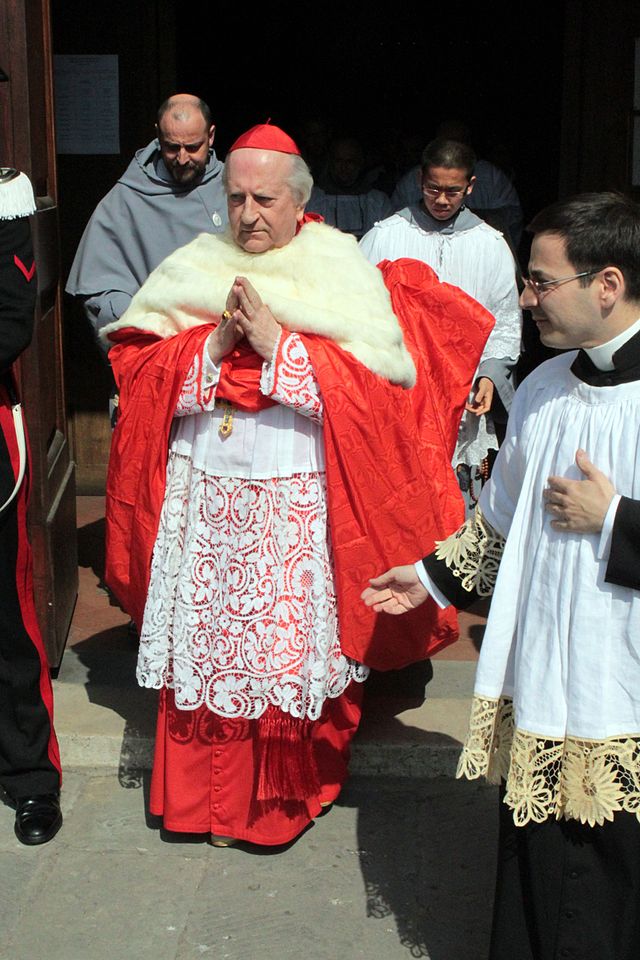
On Tuesday, 23 September 2014, Cardinal Franc Rode, C.M., Cardinal-Deacon of S. Francesco Saverio alla Garbatella, Prefect Emeritus of the Congregation for Institutes of Consecrated Life and for Societies of Apostolic Life (Slovenia), turned 80, and therefore, according to the rules written in the Apostolic Constitution Universi Dominici Gregis, he lost his right to vote in any future conclave. Cardinal Franc Rode was born in Ljubljana, Slovenia on 5 September 1934.

rode_franc_ap

Cardinal Rode was made Cardinal-Deacon of S. Francesco Saverio alla Garbatella by Pope Benedict XVI in the 2006 Consistory of Cardinals on 24 March 2006, the first Consistory of his pontificate. Cardinal Rode was made a Cardinal in honour of his position as the Prefect Emeritus of the Congregation for Institutes of Consecrated Life and for Societies of Apostolic Life, the branch of the Roman Curia in charge of all religious orders and all matters pertaining to religious life and profession, a position he held from 2004 to 2011. Before that, Cardinal Rode was the Metropolitan Archbishop of Ljubljana (Slovenia), the greatest and largest see in the country of Slovenia, from 1997 to 2004.

0202relig1pi7

http://www.gcatholic.org/hierarchy/data/cardB16-1.htm#695

May God bless His Eminence Cardinal Rode with a blessed old age and health. May he remain strong in the faith and hopefully can perhaps still continue to work great graces and good works of love and peace just as he had once done in his long service to the Church, particularly his contributions as a member of the Roman Curia in helping the actions of the Holy See and the Pope.

images

The College of Cardinals now stands at 210 members in total, with 113 Cardinal-electors and 97 Cardinal non-electors. There are now a vacancy of 7 Cardinal-elector as compared to the maximum number of electors allowed in the Conclave of 120.

Next Cardinal-elector to age out (80) will be Cardinal Tarcisio Bertone, S.D.B. (Italy), the Cardinal Secretary of State Emeritus of the Secretariat of State and the current Chamberlain of the Holy Roman Church of the Apostolic Camera on 2 December 2014.

Tenth Anniversary of Holy Sacrament of Baptism : My Profession of Faith

Friday, 19 September 2014 marked the exact ten years since I received the Holy Sacrament of Baptism on Sunday, 19 September 2004.

With this, I renewed my profession of faith before the Holy Gospels, and I ask that all of you will pray for me, that I will continue to grow stronger and deeper in faith, in hope and in love.

IMG-20140919-WA004

‘I baptise you in the Name of the Father, the Son and the Holy Spirit’


IMG-20140919-WA000

‘The almighty God, Father of our Lord Jesus Christ, has caused you to be born over again of water and the Holy Spirit and pardoned you all your sins. May He now anoint you with the chrism that sanctifies in Christ Jesus our Lord, and bring you to everlasting life.’


IMG-20140919-WA001

‘Take this burning candle as a reminder to keep your baptismal innocence. Obey God’s commandments, so that when our Lord comes for the joyous wedding feast you may go forth to meet Him with all the saints in the halls of heaven, and be happy with Him forevermore.’

Thursday, 21 August 2014 : 20th Week of Ordinary Time, Memorial of Pope St. Pius X, Pope (Scripture Reflections)

Liturgical Colour : White

Dear brothers and sisters in Christ, today we celebrate the feast of a great saint, the Pope of the Holy Eucharist as he is famously known, namely Pope St. Pius X, the first Pope to be elected in the twentieth century, and a great reformer of the faith who brought great rejuvenation both to the Church and to God’s people. Pope St. Pius X had done a great deal of goodness for the Lord and His people, and the effects of what He had done can still be clearly felt today.

Pope St. Pius X was the one who reformed much of the liturgy and the celebration of worship in the Church, and he made the Gregorian chant once again the predominant hymn and song used in the Holy Sacrifice of the Mass. Through his contributions, he made the liturgy of worship to God much richer and more beneficial for the growth of the faith and devotion among the faithful. Numerous other contributions he had made to the benefit of God’s people.

And his greatest contribution was the great improvement in the accessibility and focus on the Most Holy Eucharist, the very Precious Body and Blood of our Lord, Jesus Christ, who had given us these freely as He offered Himself humbly to the Lord as the sacrifice for the sake of our salvation, which we celebrate regularly in the Holy Mass. This is the centre of our faith, and the very foundation of what we believe in God.

In addition, if we today know the Holy Communion as something we always do every time we attend the Holy Mass, and if we can remember the time when we first received the Holy Communion in our early youth, then all of these could be attributed to the works of this holy Pope, Pope St. Pius X, and this is why he is also known famously as the Pope of the Eucharist. Why is this so? Let me elaborate further.

Pope St. Pius X encouraged frequent reception of the Holy Eucharist by the faithful, and he also lowered the minimum age required for the reception of the first Holy Communion, bringing the Lord closer to even young children. This reminds us clearly of what the Lord Jesus had said to His disciples and followers, that all of us ought to imitate the faith of children, and we should not prevent children from coming to the Lord.

With that consideration, what Pope St. Pius X had done was truly exemplary, allowing children, provided that they are at an age when they are already able to discern about the Lord, to receive the Lord in the Most Holy Eucharist, certainly at an age significantly younger than what was previously stipulated and practiced in the Church. This helps many of the youths and children to be close to the Lord for the important years when their faiths in God are developing and taking roots.

And ultimately, today we will focus on the role of this holy man and shepherd of the Church, in how he transformed and brought the Lord and His fullness of truth into the centre of the faithful’s attention, by emphasizing strongly on the importance of worship and the properness in worship of the Lord, in the Most Holy Sacrifice of the Mass, which we also celebrate today, but which in many places had notably dropped in terms of our ability to appreciate how important it is to properly worship the Lord.

This relates precisely to the reading of today, in which Jesus told His disciples a parable, which described the wedding feast organised by a king for his son, and how the guests whom the king had invited to the feast refused to come to the feast prepared for them. Those guests were given what they had deserved, and they were cast down.

And when the king invited new groups of people who were then invited to the wedding banquet, he found someone who was not wearing the garments appropriate for the wedding feast, and consequently he was thrown out of the banquet and cast into the darkness to suffer the penalty of his actions and his ignorance.

How is this relevant to us and our faith? Precisely because the Holy Mass is the wedding banquet of the Lord, when the Lord comes to be one with us and to dwell among us, none other than through His Most Holy Presence in the Eucharist, bread and wine transformed completely into the Most Precious Body and Blood of our Lord Jesus Christ.

And our focus should indeed be on the action of the guest who had come into the banquet not wearing the appropriate wedding garment. This in fact reflects on those among us, and many of us indeed, who did not take the celebration of the sacrifice of our Lord seriously. It reflects clearly on our part when we are not serious about our part in the celebration of the Holy Mass. And in particular, in the recent years, more and more abuses of worship and of the celebration has occurred.

How many of us would come to the Church properly dressed and with a proper heart and mind? That means, how many of us actually prepare ourselves thoroughly to attend the Holy Mass and participate with the fullness of our hearts? Many of us often did not do so, and conveniently ignored these, and ended up physically and spiritually unprepared to be with the Lord in the Mass. In this, we are no different from the person who attended the king’s banquet without a proper clothing.

The Mass is truly great and holy, because in it we celebrate the very sacrifice that our Lord had made that day on the hill of Calvary, when He was hung on the cross between the heavens and earth, and for what? For our sake, brethren, that is for our salvation. He died so that He may break us free from the bonds of death and destruction that await us and bring us into life. And in that, He offered Himself through the Body and Blood He gave us, which through His priests, who transformed the bread and wine into that of our Lord’s Body and Blood for us to receive and eat, and drink.

If it is the Lord Himself who is present in the Holy Mass, then why did we not worship Him? Why did we not respect Him? Why did we blaspheme against Him by our words and actions? And why did we ignore Him and attend to our own needs and to our own human arrogance? I am talking about how many people increasingly lost their focus, and especially in the Mass, and they end up not worshipping God and His love, but instead praising themselves.

This is evident from the rise of unorthodox and heretical practices in the Holy Mass, which in many places, particularly in the West, but also widespread in other places, of inappropriate actions by both the laity and the priests, who did not give glory to God through their actions, but instead glorify and praise themselves. The practices of ‘liturgical dance’, speaking in tongues, use of inappropriate music in the celebration of the Mass and many other liturgical abuses of the Mass, unlike the attitude of the man without a proper garment in the banquet.

Brothers and sisters in Christ, on this great occasion of the feast of Pope St. Pius X, let us ask for his kind intercession and help, so that the Lord may strengthen the faith in us, and hopefully we may learn to know how to properly prepare and place ourselves in the worship of our great Lord and God. Let us all redirect our attention away from ourselves back towards the Lord. Let us all restore the solemnity and holiness in the celebration of the Holy Mass. Let us all work together to make our celebration of the Mass be truly heaven on earth, and get rid of any forms of abuses that still mar our spirit of celebration of this great banquet of the Lord.

May Almighty God guide us on our efforts, strengthen our faith and renew in us the love that we have for Him. Let us strive to make our worship a true worship once again, gaining inspiration from what Pope St. Pius X had once done for the good of the souls of the faithful. God be with us all. Amen.