Monday, 14 October 2013 : 28th Week of Ordinary Time, Memorial of Pope St. Callistus I, Pope and Martyr (First Reading)

Liturgical Colour : Green or Red (Martyr)

Romans 1 : 1-7

From Paul, a servant of Jesus Christ, an apostle called and set apart for God’s Good News, the very promises He foretold through His prophets in the Sacred Scriptures, regarding His Son, who was born in the flesh a descendant of David, and has been recognised as the Son of God endowed with Power, upon rising from the dead through the Holy Spirit.

Through Him, Jesus Christ, our Lord, and for the sake of His Name, we received grace and mission in all the nations, for them to accept the faith. All of you, the elected of Christ, are part of them, you, the beloved of God in Rome, called to be holy : May God our Father,  and the Lord Jesus Christ, give you grace and peace.

Monday, 16 September 2013 : 24th Week of Ordinary Time, Memorial of St. Cornelius, Pope and Martyr, and St. Cyprian, Bishop and Martyr (Scripture Reflection)

Liturgical Colour : Red

Dear brothers and sisters in Christ, today we listen to the revelation of the great faith in the captain, who was likely a Roman soldier, and therefore not of the people of Israel. And we tie this revelation to the saying of St. Paul in his letter in our first reading today, that there exists only one way to salvation, that is through the great Mediator, Jesus Christ, Messiah of the world.

True faith in God lies not in the prayers after prayers that one utters. Yes, prayer is indeed important, brethren, but what is even more important is one’s own humility and awareness of themselves, and the complete surrender of oneself to the love of God, and in all these, the individual will then have a true, unshakeable faith in God.

It is that many people in Israel put themselves before God, and put their worldly desires before the Lord. That was also why the faith of the people in God, as was evident in how they looked at Jesus and His ministry, was truly shallow and weak faith, unlike that faith the captain of the army possessed for Christ and therefore for the Lord. That was also why, even though the people first proclaimed Jesus as a great Saviour, they were equally quick in condemning Him to death when He was convicted by false testimonies.

They loved not God and have faith not in Him, but on the wondrous things that He had done, and once those things were gone, or when challenges rose up to meet them, they quickly forgot about Him and rose up in rebellion. This was truly evident, when Israel walked through the desert into the Promised Land, that they rebelled and made complaints after complaints to the Lord for not caring for them enough in their journey, and even regretted having been brought out of Egypt.

The same also happened to Jesus, that people applauded Him for the miracles and powers He had shown, in healing the sick, opening the eyes of the blind, and loosening the tongues of the mute, and in raising the dead back into life. They followed Him and listened to His teachings, and yet, these did not take good roots in them, that they were easily shaken by fear and doubt.

On the other hand, the captain of the guards showed great faith in God, that He sent for Jesus to heal his sick servant and save him from death. Then, despite his relatively lofty and high position in the armed forces, and therefore in the society, he did not boast at all. He instead lowered himself before the Lord, as a sinner, who would not be worthy at all to receive the Lord who is good and perfect in his own residence.

One may interpret the way he said things to Jesus through his servant as being rude. After all, how can he say such things to Jesus who had spent so much of His time to come down to his place and heal his servant? Is he not being condescending and demanding of Christ the Lord?

No, brethren, in fact, in that sentence, and which was completely revealed in his last sentence, which we also utter during every Mass before the Lord’s Presence in the Holy Eucharist, showed perfectly the depth of his faith in the Lord and his humility, realising that he was truly nothing, despite his position of power, before the Lord Jesus our Saviour and God.

“Lord, I am not worthy that You should enter under my roof, but only say the word, and my soul shall be healed.” That is the precise words that we utter after the Agnus Dei, when the celebrant of the Mass show to us the Body of Christ crucified, through which He is willing to come upon us, in order to heal us from all our sins, iniquities, and unworthiness. We are unworthy of Him because of our sins, and yet He is willing to come to us, into us, so that He will be with us and stay with us, and we will also remain in Him, in His love.

It is precisely his understanding of his unworthiness before the Saviour of the world, before the Almighty God Himself, that he, the captain, though mighty in the eyes of men, but he is nothing compared to God and he is unworthy to stand before His presence, much less to invite Him to his humble and sinful abode. That is why, using his own experience as the captain of an army unit, he asked in his humility, for the Lord to give the orders, and he has complete faith that whatever the Lord commands, it will be fulfilled.

We too, brothers and sisters, should follow his example, and in saying the words that he had once uttered, every time in the Mass, let us say it with complete understanding and dedication to God, not because we are trained to say it without feelings, and not just because we memorised the phrase, and then utter them out of nothingness. Let us put ourselves into the shoes of the captain, understanding the love that God has for us, when He approaches us and offers Himself to us in His Body and Blood.

Today, brethren, we also celebrate the feast of two great saints of the early Church, namely that of Pope St. Cornelius and St. Cyprian, the great leaders of the Church and the staunch defenders of the faith. They lived at a difficult time for the Church, at the time when the pagan Roman Emperors, particularly Decius and Valerian persecuted Christians and slaughtered them mercilessly.

Pope St. Cornelius and St. Cyprian, his greatest supporter, as the Bishop of Carthage in Africa, also faced a great tribulation of the faith, with a heretical teaching by the priest Novatian, who also contested the Papacy as antipope to Pope St. Cornelius, causing a severe division of the faithful at the time when the enemies of the Church were persecuting strongly against her.

Pope St. Cornelius protected the important tenet of the faith, that is the Lord who is merciful, readily forgives those who had lapsed from the faith, as was often during his time as Pope. St. Cyprian was his strong supporter, against the heretic Novatian, who staunchly opposed to the forgiveness and redemption of those who had lapsed from the faith.

There were many Christians who lapsed from the faith due to various reasons, but many of which were linked with the temptations of the world and sin, especially because of the severe persecutions against the faithful at the time. According to Novatian heresy, these people were doomed, but Pope St. Cornelius and St. Cyprian begged to differ. As Christ had taught His disciples, that even the greatest of sinners can repent and many saints were also once great sinners.

They defended the true faith and maintained the integrity of the Church and the faithful. Through their hard work, many were prevented from falling into the heretical teachings. They died as defenders of the faith under persecution by the Roman authorities, and in their martyrdom, they provided the rich soil upon which the Church could grow further and carry out their work of salvation.

May the Lord opens our eyes and the doors of our hearts, and inspired by the examples and works of Pope St. Cornelius and St. Cyprian that we will be able to learn the unworthy state that we are in, because of our sins, that we, in deepest humility, following the footsteps of the captain, will humble ourselves before Christ, who is the great Mediator, the bridge between us and the Father, through whom, the only path to salvation and eternal life in glory is possible. Let us praise God and thank Him for having mercy and pity on us, coming to us to heal us, despite of our faults and unworthy behaviours. God be with us always and may He show His mercy and love upon us. Amen.

Monday, 16 September 2013 : 24th Week of Ordinary Time, Memorial of St. Cornelius, Pope and Martyr, and St. Cyprian, Bishop and Martyr (Gospel Reading)

Liturgical Colour : Red

Luke 7 : 1-10

When Jesus had finished teaching the people, He went to Capernaum. There was a captain whose servant was very sick and near to death, a man very dear to Him. So when He heard about Jesus, He sent some elders of the Jews to persuade Him to come and save his servant’s life.

The elders came to Jesus and begged Him earnestly, saying, “He deserves this of You, for he loves our people and even built a synagogue for us.” Jesus went with them. He was not far from the house, when the captain sent friends to give this message, “Sir, do not trouble Yourself, for I am not worthy to welcome You under my roof. You see, I did not approach You myself. Just give the order, and my servant will be healed. For I myself, a junior officer, give orders to my soldiers, and I say to this one, ‘Go!’ and he goes; and to the other, ‘Come!’ and he comes, and to my servant, ‘Do this!’ and he does it.”

On hearing these words, Jesus was filled with admiration. He turned and said to the people with Him, “I say to you, not even in Israel have I found such great faith.” The people, sent by the captain, went back to his house; there they found that the servant was well.

Monday, 16 September 2013 : 24th Week of Ordinary Time, Memorial of St. Cornelius, Pope and Martyr, and St. Cyprian, Bishop and Martyr (Psalm)

Liturgical Colour : Red

Psalm 27 : 2, 7, 8-9

Hear my cry for mercy as I call to You for help, as I lift up my hands toward Your innermost sanctuary.

The Lord is my strength, my shield, my heart was sure of Him, I have been helped and my heart exults, with my song I give Him thanks.

The Lord is the strength of His people, the saving refuge of His anointed. Save Your people, and bless Your inheritance, be their shepherd and carry them forever.

Monday, 16 September 2013 : 24th Week of Ordinary Time, Memorial of St. Cornelius, Pope and Martyr, and St. Cyprian, Bishop and Martyr (First Reading)

Liturgical Colour : Red

1 Timothy 2 : 1-8

First of all I urge that petitions, prayers, intercessions, and thanksgiving be made for everyone, for rulers of states and all in authority, that we may enjoy a quiet and peaceful life in godliness and respect. This is good and pleases God. For He wants all to be saved and come to the knowledge of truth.

As there is one God, there is one mediator between God and humankind, Christ Jesus, Himself human, who gave His life for the redemption of all. This is the testimony, given in its proper time, and of this, God has made me apostle and herald. I am not lying. I am telling the truth : He made me teacher of the nations regarding faith and truth.

I want the men in every place to lift pure hands in prayer to heaven without anger and dissension.

Tuesday, 3 September 2013 : 22nd Week of Ordinary Time, Memorial of St. Gregory the Great, Pope and Doctor of the Church (Scripture Reflection)

Liturgical Colour : Green or White

Dear brothers and sisters in Christ, we celebrate today the great feast of one principal saint of Christendom, none other than St. Gregory the Great, also known as Pope St. Gregory the Great who lived and reigned as Pope in the turn of the seventh century after the birth of Christ. He lived during the time of troubles, of the Dark Ages Europe, after the fall of the Roman Empire in Western Europe, with barbarians plundering the former lands of the Empire and settling in them as permanent settlers.

Even Rome and Italy at the time the birth of Pope St. Gregory the Great was under the authority and power of the Ostrogoths, one of the Gothic barbarian peoples who had settled in Italy after the fall of the Empire in the west. The Ostrogoths adopted the Arian heretic belief, and the predecessors of Pope St. Gregory the Great, as the Pope and the Bishop of Rome, worked hard to convert them to the true faith of the Apostles and reject their heretical beliefs.

Pope St. Gregory the Great lived through a time of great difficulties before he became Pope in 590 AD. The Ostrogothic kingdom went through a series of civil wars and internal conflicts, and together with the reconquest campaign by the Eastern Roman Empire, which saw Italy and Rome back at the hand of the Empire, had wrecked much of the local population, ravaged by warfare and deadly disease.

On the backdrop of these events, Pope St. Gregory the Great lived his early life and his adult years, and yet, he grew up to be a pious, zealous, and well educated man, who joined the religious life and became a monk. He was deeply devoted to Christ and immersed himself in his religious devotions as a monk, and prayed fervently and worked hard for the sake of God. Even after his election to the See of Peter, he remained the same, and continued his good works for the sake of God and God’s holy people.

Most importantly, Pope St. Gregory the Great reinvigorated the Church and its missionary efforts, in spreading the faith and the Holy Gospels to the pagan peoples and to the heretics who had walked away from the true path of God, the path of salvation. He sent many missionaries to the far ends of Christendom, to England through St. Augustine of Canterbury, and to other parts of Europe, converting many to the faith in God, and bringing many souls to salvation.

Not only that, Pope St. Gregory the Great was truly irreplaceable for his crucial role in the reform of the Church, particularly in its liturgy and rules of worship in the Mass. Both the Mass we have today, in all its forms, and the Divine Liturgy that our brethren of the Eastern Churches celebrate can trace their origins to the reforms and changes made by Pope St. Gregory the Great, the holy and great reformer Pope.

If you find the name Gregorian Chant familiar, yes, this wonderful music of worship is named after this great Pope, who reformed Church music in such a radical way, that it totally changed the landscape of divine song and songs of worship over the centuries even until today. To Pope St. Gregory the Great, the Lord our God in Jesus Christ is so great and glorious in heaven, and so profound is His might and power, that we ought to honour Him the best way we can with our abilities and senses, and hence, his reforms of the Mass and the Church music in the Gregorian chants.

Pope St. Gregory the Great gave much of his love and care for others, for the poor through charity, and for everyone through his dedicated and loving actions in Christ. He brought the Lord close to everyone through his own deeds and words, and indeed, through his copious writings. Many of Pope St. Gregory the Great’s writing remained and became source of inspiration for our faith, just as it had been during his time as Pope. He worked hard to defend the people against heresies and against the temptations of the devil, doing as much as he could to bring more and more souls towards salvation.

Yes, brethren, this great and saintly Pope truly is worthy of heaven, and he preached with the authority of Jesus Christ the Lord and Saviour of all, who is so mighty and all-powerful, that even the evil spirits obeyed Him, as we heard in the Gospel today. Even the devil would kneel before the Lord crucified, the Almighty Creator of all, for He is the light of the world, and no darkness would be able to stand before Him.

We are the children of light, brothers and sisters in Christ, and as long as we do the will of God, and follow His ways, we will always reflect His brilliant light, and the devil will have no power over us, for he is doomed to destruction and eternal torture, while we who are saved in Christ are fated to be in the eternal light of God and enjoy the fruits of our faith, the fruits of our salvation. Fear not, brethren, for our Lord and God who loves us, desires not our death and destruction, as what He truly wishes for us, is to live, and not just any life, but an eternal life filled with love and true joy in Him.

That was why He sent us many help along the way, all His saints, including Pope St. Gregory the Great, whom we talked about just before. Through their hard work, we have known the Lord our loving God, and through their labours, we have received the teachings of the Lord and grow to understand the extent of His great love and dedication to all of us. However, the work did not just stop there, brethren, as even today, much work awaits us, and we too are called to be the saints and the apostles of our own time.

Dear brothers and sisters in Christ, therefore, inspired by the examples of Pope St. Gregory the Great, and by the love and sacrifice of our Lord, through which He showed us His infinite love, let us also be proactive, in all our dealings, all of our words and all of our actions, that we will always reflect the love of God with zeal, and therefore obey His will, that is to love, to love Him with all our hearts and all our strength, and do the same to our fellow brothers and sisters.

May the Lord our God who showed us His mercy and love, and who rebuked evil spirits from the hearts of men that we may be clean and pure and worthy of Him, bless us, strengthen us, and empower us, that we will be reunited with Him when He comes again in glory and bring us to eternal life with Him, forever and ever. Amen.

Tuesday, 3 September 2013 : 22nd Week of Ordinary Time, Memorial of St. Gregory the Great, Pope and Doctor of the Church (Gospel Reading)

Liturgical Colour : Green or White

Luke 4 : 31-37

Jesus went down to Capernaum, a town of Galilee, and began teaching the people at the sabbath meetings. They were astonished at the way He taught them, for His word was spoken with authority.

In the synagogue there was a man possessed by an evil spirit, who shouted in a loud voice, “What do You want with us, Jesus of Nazareth? Have You come to destroy us? I recognise You : You are the Holy One of God.”

Then Jesus said to him sharply, “Be silent and leave this man!” The evil spirit then threw the man down in front of them, and came out of him without doing him harm.

Amazement seized all these people, and they said to one another, “What does this mean? He commands the evil spirits with authority and power. He orders, and you see how they come out!” And news about Jesus spread throughout the surrounding area.

Tuesday, 3 September 2013 : 22nd Week of Ordinary Time, Memorial of St. Gregory the Great, Pope and Doctor of the Church (Psalm)

Liturgical Colour : Green or White

Psalm 26 : 1, 4, 13-14

The Lord is my light and my salvation – whom shall I fear? The Lord is the rampart of my life; I will not be afraid.

One thing I ask of the Lord, one thing I seek – that I may dwell in His house all the days of my life, to gaze at His jewel and to visit His sanctuary.

I hope, I am sure, that I will see the goodness of the Lord in the land of the living. Trust in the Lord, be strong and courageous. Yes, put your hope in the Lord!

Tuesday, 3 September 2013 : 22nd Week of Ordinary Time, Memorial of St. Gregory the Great, Pope and Doctor of the Church (First Reading)

Liturgical Colour : Green or White

1 Thessalonians 5 : 1-6, 9-11

You do not need anyone to write to you about the delay and the appointed time for these events. You know that the Day of the Lord will come like a thief in the night. When people feel secure and at peace, the disaster will suddenly come upon them as the birth pangs of a woman in labour, and they will not escape.

But you, beloved, are not in darkness; so that day will not surprise you like a thief. All of you are citizens of the light and the day; we do not belong to night and darkness. Let us not, therefore, sleep as others do, but remain alert and sober.

For God has not willed us to be condemned but to win salvation through Christ Jesus our Lord. He died for us so that we might enter into life with Him, whether we are still awake or already asleep. Therefore encourage one another and build up one another, as you are doing now.

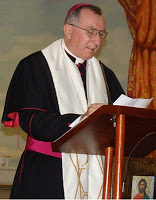
New Secretary of State of the Holy See, Archbishop Pietro Parolin

Image

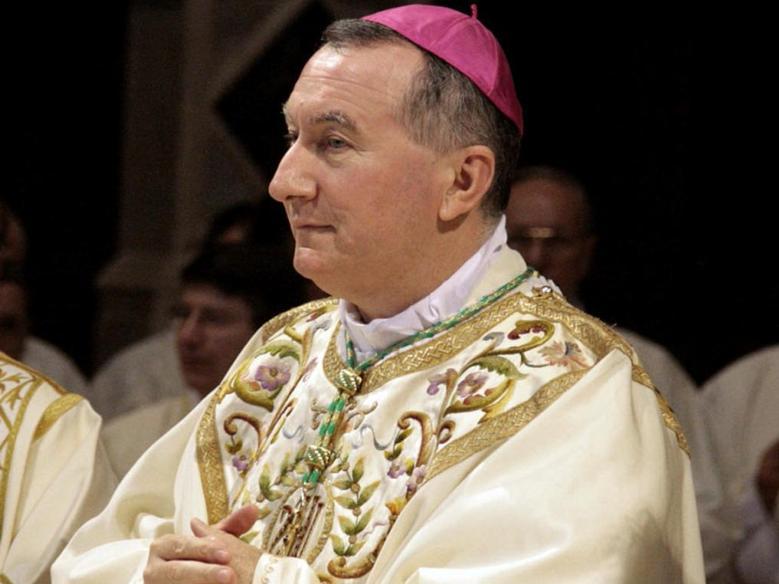
Archbishop Pietro Parolin, the longtime veteran of the Secretariat of State of the Holy See, and a skilled and veteran diplomat in his current role as the Apostolic Nuncio to Venezuela, as the trusted aide to Pope Benedict XVI (now Pope Emeritus), had been appointed on Saturday, 31 August 2013 as the new Secretary of State, the top position of the Roman Curia, the governing body of the Church.

In addition, as positions tied to the post of Secretary of State, Archbishop Parolin also automatically become the new President of Interdicasterial Commission on Particular Churches (which task is managing the Eastern Catholic Churches), President of Interdicasterial Commission for the Church in Eastern Europe, and the Protector of Pontifical Ecclesiastical Academy.

Image

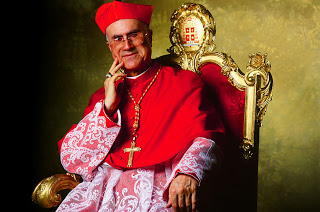
Archbishop Pietro Parolin will replace the outgoing Cardinal Secretary of State, Cardinal Tarcisio Bertone, S.D.B., who is also the Chamberlain (Camerlengo) of the Church, effective on 15 October 2013 as per the decree of Pope Francis released today.

Image

Cardinal Tarcisio Bertone is then the Secretary of State Emeritus effective on the state mentioned in the paragraph above (15 October), when Archbishop Pietro Parolin officially takes over as the new Secretary of State. The position of the Secretary of State is the top in the Roman Curia, below only the Pope in the hierarchy of the Church. Cardinal Bertone will however remain as the Camerlengo of the Church.

We thank Cardinal Bertone for all his hard work and contributions to the Church, many of which were unknown to many, and all the labours he had done in great humility and dedication in his position as the servant of the Holy Church.

As the Secretary of State position is the top official post of the entire Church and the Roman Curia save for the Pope himself, it is expected that the 58 years old Archbishop Pietro Parolin will be made a Cardinal in the next Consistory of Cardinals (possibly early 2014 or late 2014).