Friday, 12 July 2013 : 14th Week of Ordinary Time (Psalm)

Psalm 36 : 3-4, 18-19, 27-28, 39-40

Trust in the Lord and do good, dwell in the land and live on it. Make the Lord your delight, and He will grant your heart’s desire.

The Lord watches over the lives of the upright; forever will their inheritance abide. They are not crushed in times of calamity; when famine strikes, they still are satisfied.

Do good and shun evil, so that you will live secure forever. For the Lord loves justice and right, and never forsakes His faithful ones. The wicked instead will perish and their breed will be cut off.

The Lord is the salvation of the righteous; in time of distress, He is their refuge. The Lord helps them, and rescues them from the oppressor; He saves them for they sought shelter in Him.

Thursday, 11 July 2013 : 14th Week of Ordinary Time, Memorial of St. Benedict, Abbot (Scripture Reflection)

Dear brothers and sisters in Christ, today we heard from the readings about the mission that Christ had entrusted all of us with. The mission that He had given to the apostles before He left this world, that is to spread the Good News of salvation to all mankind, and to all the world. Each and every Christians baptised in the Name of the Most Holy Trinity of Father, Son, and the Holy Spirit must uphold this mission and pledge ourselves to its cause, that is the cause of the Lord.

Christ had called all of us to be His disciples, to bring all the people of God back to His loving embrace, to open their eyes and their hearts to God’s divine and everlasting love. The Lord offers His love and His peace freely to all, without exception, even sinners, and especially sinners, because the Lord did come especially for the sake of sinners, those lost sheep lost in the darkness of evil and sin.

Christ gave up His life in sacrifice, as a worthy offering in atonement for all our sins, all of us, without any exceptions. He died for all mankind, past, present, and future so that all may live, and in this new life, be granted eternal life in glory with Him for eternity, as long as we keep to the covenant that He had made with us, a new covenant sealed by His Blood pouring down from the cross.

Our Lord Jesus loves us, brethren, so much that He is willing to suffer all the blows, lashes, and curses, the pain of the nails that pierced his hands and feet, so that all of us do not have to suffer death eternal in hell. For our sins and iniquities the Lamb of God had been slaughtered and sacrificed, innocent and pure as He is, He was made to bear all the sins of the world.

Sadly, as many as those who would accept His call and His words, and followed Him into a new life of purity and holiness, there are even many more who would prefer to remain in their state of sin and darkened life, and preferred the pleasures of the world and Satan to the Lord who loves them. Many would reject Him and reject His messengers and disciples, including all of us who had been called by the Lord to be His apostles in this modern era.

So if Christ is rejected by many, then we will be rejected too, but this does not mean that we should slacken or abandon the mission that has been given to us. Indeed, there are still those who would accept Christ and His Good News, and even among those who have rejected Him and rejected us, there is always still hope, that they will change and receive the Lord. We must remain strong and courageous, and embrace our mission with zeal, devotion, and most importantly, love.

Today, we celebrate the memorial of St. Benedict the abbot, also known widely as St. Benedict of Nursia, the founder of the religious order of St. Benedict, or the Benedictines. He was also an inspiration for our great Pope Emeritus, the beloved Pope Emeritus Benedict XVI, in choosing his regnal name as Pope, together with Pope Benedict XV, his predecessor and the Pope of peace.

St. Benedict of Nursia lived in the first millenium in the late Roman Empire, and he was the founder of a great religious order, the Benedictines, who imposed on them what is well-known as the Rule of St. Benedict. The rule placed a great emphasis on the balance between piety and religiosity and the need for service and good works, which the Benedictines practiced through their charitable acts and service, and a pious and holy lifestyle, dedicated to the Lord in humility and obedience. And important to the Benedictines are also the concept of peace, the need to seek peace in this world, and to be peaceful in one’s own acts.

St. Benedict strengthened the Christian monasticism that was growing up at his era, and he laid much foundations for the future missionary works of the Church and religious orders that helped to preserve the Traditions of the Faith through the tumultous era of the ending of the Roman Empire and the advent of the Dark Ages. Through St. Benedict, the monastic communities had been strengthened, and therefore, the Church itself had been strengthened.

Inspired by the example of St. Benedict of Nursia and other great missionary saints of the monastic orders, we embark on this new journey of the faith in this modern era of secularism and consumerism, where God increasingly take a lesser importance in people’s minds and lives. It is our duty then, to continue the work of faith, to bring the Lord closer to many people around the world who have yet to receive the Good News of the Lord, or even those who had rejected the message of salvation outright.

There will be rejection for sure, for the world will reject us just as it had once rejected Christ Himself. But we must never give up and we must be courageous, to defend our faith, to defend the Lord, and to bring salvation to many who still live in the darkness of evil and sin. May St. Benedict of Nursia intercede for us, and pray for our sake, that God will send His helpers to aid us in our mission in this world. May St. Benedict also intercede for the sake of our beloved Pope Emeritus Benedict XVI, who is fighting for the Church in prayer and solitude. God bless us all, and God bless His Holy Church! Amen.

On the Future Canonisation of Blessed Pope John XXIII and Blessed Pope John Paul II

Image

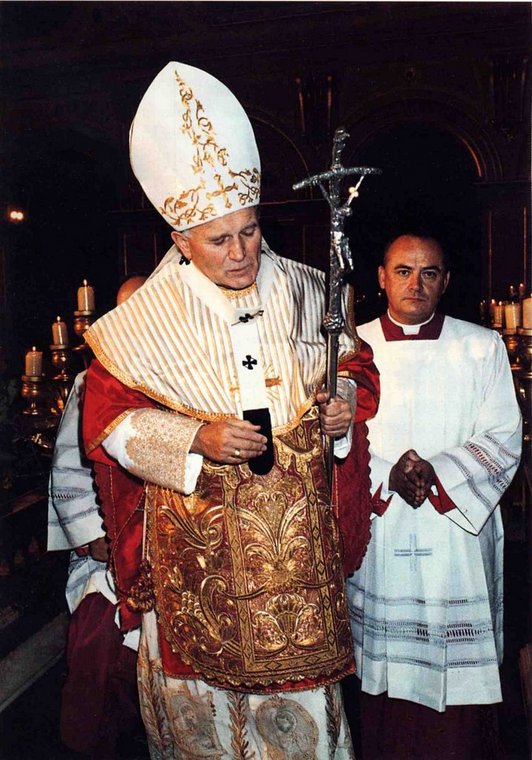
The two great Popes of the last century, both of whom had been recognised as Blessed, through the virtues of their life and miracles attributed to them, will be declared Saints, in a ceremony likely to be scheduled at the end of this year (2013).

Both Blessed Pope John XXIII and Blessed Pope John Paul II, who was made a Blessed just two years ago on 1 May 2011, had each left their incredible and remarkable footprint in the path of history, both in the history of the Church, and in the history of the world and mankind.

Image

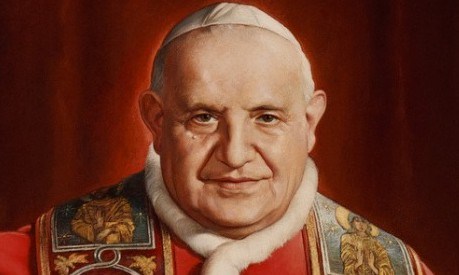
Blessed Pope John XXIII was known to be a great man of peace, and above all things seek to embrace peace and cooperation, between mankind, and also begun the process of Ecumenism in order to reunite the divided fragments of God’s Church back into the One, Holy, Catholic, and Apostolic Church that is our Church.

He was also known for his Encyclical Pacem in Terris (Peace on earth), which was released just months after the world was almost engulfed in an all-out nuclear war between the two superpowers, the United States of America (USA) and the Soviet Union (USSR) during the height of the Cold War in the Cuban Missile Crisis. Blessed Pope John XXIII worked hard ceaselessly to promote peace between the parties in conflict, for the good of all mankind, all of whom are the children of the same one God.

Blessed Pope John XXIII also convoked the Second Vatican Council, which brought the Church in line with the developments in the world, and also to make the Church more relevant in the increasingly rapid new developments in our world, and the rise of apathy towards religion in general. He would pass away before the Council was completed, but his legacy continued on until today.

Image

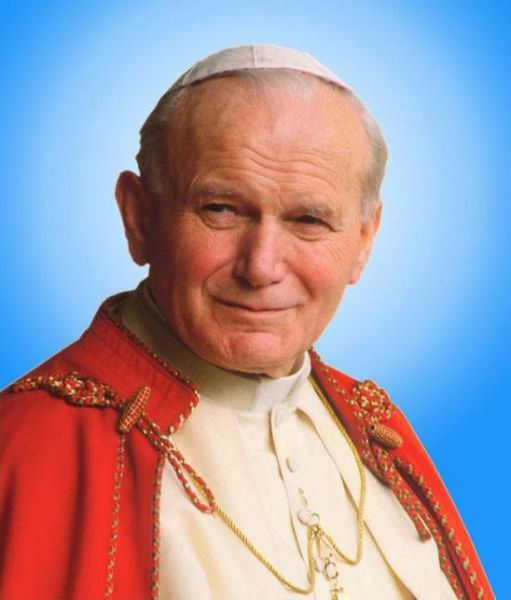
Blessed Pope John Paul II ‘the Great’ was a well-known Pope, a Pope of youths, and a hardworking Pope, who travelled around the world to visit all the flocks of the Lord that had been entrusted to him as the Successor of St. Peter the Apostle, as the Vicar of Christ. He was instrumental in the end of Communism in Eastern Europe, ending persecutions against the people of the faith, and also open boundaries and barriers that had been long in place since the beginning of the Cold War.

Blessed Pope John Paul II has also renewed the zeal for the faith amongst many around the world, and especially in youths, to whom he dedicated a special event, the World Youth Day, in order to commemorate the faith, particularly amongst the youths of the faith, around the globe. He inspired many through his works, his Encyclicals, and especially his perseverance despite being troubled with a worsening Parkinson’s disease condition, that made him to labour until his passing on 2 April 2005.

Both Popes had been very influential, hardworking, and very holy leaders of the One Church of the Lord Jesus Christ, and they had done much to strengthen the faith and the Church, and bring God closer to many, bringing them closer to salvation.

I hope to soon be able to ask for the intercessions of Pope St. John XXIII and Pope St. John Paul II the Great, and I pray that they will intercede for us sinners around the world, and pray for us, till we are greeted by them at the doors of heaven when it is time for us to be with the Lord again. Now we wait for the official announcement on the date of the Canonisation.

Image

Blessed Pope John XXIII, pray for us!

Image

Blessed Pope John Paul II, pray for us!

Tuesday, 9 July 2013 : 14th Week of Ordinary Time, Memorial of Saints Augustine Zhao Rong, Priest and Companions, Martyrs (Scripture Reflection)

Brothers and sisters in Christ, the Lord is driven to compassion for the sake of all of us, because of our poverty, the poverty of our souls, of our sinfulness, and our lack of leadership. That is because we are all like sheep without a shepherd, going in all directions and getting lost. Christ came into this world, and painstakingly taking all of us into His fold, as the Good Shepherd, seeking the lost ones one by one, until all of us are found once again and reunited.

The Lord our God does not wish us to be lost or forever separated from Him. He came down Himself and suffered for our sake, that eventually we can be reunited with Him for eternity. For there is no other option besides salvation, other than eternal damnation. That is why Christ came to us to offer us the other option that is salvation and eternal life. He became our shepherd, the Good Shepherd, so that we will no longer be lost. He became our guide, our leader, the light of our path, and our God.

Today we celebrate the memorial and feast of St. Augustine Zhao Rong and his companions, who are the Catholic martyrs from China, and many of them were martyred during the Boxer Rebellion at the turn of the twentieth century, when a severe persecution against Christians in China occurred. Many Christians, including St. Augustine Zhao Rong and his companions were murdered brutally for their faith, because they refused to renounce their faith and kept holding steadfastly to their faith.

St. Augustine Zhao Rong himself was a Chinese diocesan priest who served in several areas in China before he was arrested, tortured until his death in the defense of his Christian faith. He did not give up on the Lord and remained faithful. The same case had happened for many other martyrs of China, many of whom were repeatedly asked and offered to reject the Lord and reembrace pagan practices, but they refused and were received into heaven with a martyr’s glory.

These martyrs, the local Chinese and the Western missionaries, were joined in death for the sake of their faith in Christ, and they embody to us, the virtues of a faithful life dedicated to the Lord. A life lived with zeal and love for the Lord and His people, and with purpose. Opposition and persecution will naturally come, but they will be able to subvert the faith of the just ones.

Indeed, brothers and sisters in Christ, even today, the Church throughout the world, particularly in China, where St. Augustine Zhao Rong and companions met their martyrdom, where religious freedom, superficial as it is, is very limited and bordering on being non-existent. The Church was forced to serve the atheistic government, who views the Church as a hostile entity, and therefore they tried to destroy it. When the attempts to destroy the Church had not been successful, they resolve to weaken the Church by seizing it out of the Universal Church.

Many people there still suffer today, and Christians in the Church suffer an even greater suffering, being seen as ‘hostile’ by the government, and as a ‘threat’ that needs to be eliminated. Yet, as the saying goes, that the blood of martyrs is the seed of Christians, persecution and opposition brings fervour and zeal to the people of God, that they may not just persevere through the tough times, but indeed prosper and grow.

But seeds cannot grow without proper care and provision, as we need labourers to constantly care and give all their time into the effort. That is why the Lord said that though the harvest is plentiful, but the labourers are few. We need more labourers to harvest the field of the Lord, and these harvests are simply the people who come to know the Lord, and to be saved. The labourers are none other than our priests, supported by all of us, the laity.

All around the world, including in China, there are increasing shortage of priests to serve the people of God. The number of the people in the Church has grown significantly while the number of priests had been stagnating for quite a long time. This makes it increasingly difficult, especially in the areas where the Church is growing, to project itself through love and service, and also to conduct worship in the Mass, in which priests are badly needed.

It is more and more difficult to gain new priests nowadays, brethren, because the world increasingly shut the Lord out of the minds of the young people, many of whom are called by the Lord. Yes, many are called, but few responded, and among those who responded, even fewer followed his calling through to the end in service of the people of the Lord. It is important that we bring the zeal and devotion, and the love for God back to all of us, especially those whom the Lord had called and entrusted with His flock.

Even priests and religious brothers and sisters must also be growing in faith and love. All of us cannot be complacent otherwise we would be caught unprepared by the devil, whose works are many, and whose deceit and trickery threatened to corrupt many people and turn them away from the Lord their God.

Therefore, brothers and sisters, inspired by the devotion and zeal of St. Augustine Zhao Rong, his companions, the martyrs of China, let us persevere against the opposition and the persecution of the faith in any form that is there in this world, in our society, and even in our families. Let us foster a prayerful and loving atmosphere in our homes, in our communities, in our parishes, that we can allow the faith to grow strong in all of us, especially our youths, some of whom may be future priests and servants of God and His people.

Pray, brethren, and pray hard, for the sake of our Church, for God’s people, and especially a special intention for the Church in China, for our brethren in faith unjustly treated and persecuted for their faith and obedience to the Lord rather than to the secular and Godless authority. May the Lord strengthen them in faith, give them courage, and remain with them through their ordeal, and may He also be with us, at all times. Amen.

Tuesday, 9 July 2013 : 14th Week of Ordinary Time, Memorial of Saints Augustine Zhao Rong, Priest and Companions, Martyrs (Psalm)

Psalm 16 : 1, 2-3, 6-7, 8b and 15

Hear a just cause, o Lord, listen to my complaint. Give heed to my prayer for there is no deceit on my lips.

Let my defense come forth from You; Your eyes see what is right. You have probed my heart, searched me at night, tested me by fire, and You have seen no wickedness in me.

Under the shadow of Your wings hide me. As for me, righteous in Your sight, I shall see Your face and, awakening, gaze my fill on Your likeness.

Monday, 8 July 2013 : 14th Week of Ordinary Time (Scripture Reflection)

Brothers and sisters in Christ, today we heard how Jesus healed the woman suffering from a bleeding problem and also resurrected the daughter of the official, all because of their faith in Him and in what He can do. Faith can indeed go a long way, brethren. Our Lord rewards those who are faithful to Him. He wants only our love and our obedience to His will.

Faith is essential for salvation, as without faith, there is no hope at all for us to be saved. For we have been tainted by sin and darkness, of evil and this world, that we were unworthy of the Lord and His perfection. But yet, Jesus Christ came, the very Son of God, who opened the path to salvation by His death and resurrection. Through Him hope came into the world and dwell in us, in the Holy Spirit, that He sent to the Apostles on Pentecost.

We need faith to be the anchor of our lives, and as the centre of our very being, as with faith, we will have a strong anchor in God, and we will not be easily swayed by the temptations of Satan and the evils that are in the world. Without faith, we cannot love God, and consequently we would not be able to embrace Him and the salvation He offered to all of us freely.

To Christ had been granted all the authority on the heaven and the earth, over the living and the dead. That was why, He healed the suffering of the bleeding woman, and resurrected the dead daughter of the official. The readings today showed that Jesus did not just heal anybody and everyone. In fact, He sought those who truly were repentant, and sought God’s mercy, and showed their sincere love, devotion, and most importantly faith in Him, faith in His divinity, that He healed them from their afflictions and sickness.

Yet, faith alone is not sufficient, brothers and sisters in Christ, as the Lord taught us and His disciples, that faith must be in tandem with love and hope, as the three most important values of being a Christian, that is faith, hope, and love. These three virtues embody all that a Christian must be, must become, and must aspire to.

For faith without love is akin to a faith that is dead, and a faith that is empty, because this faith does not generate love and life. Love can simply be expressed as our service and care for our brothers and sisters, that is part of doing good works. This is why we do not believe in salvation through faith alone, but salvation through faith and good works, that is faith made alive through good works and actions that reflect love, and generate hope in others.

For faith lacking in love and hope is also a selfish faith, where we are concerned only in our own salvation and not others. A true Christian desires the salvation of all mankind, himself or herself and all those around him or her. Most especially, a true Christian desires the salvation of those who had caused suffering and pain to the Christian, and those who had wronged the Christian, or in short, the ‘enemy’. That is also in tandem with Christ’s teaching that we should love our enemies and those who persecute us.

Then going back to what we talked about earlier, love can neither exist without faith and hope, for love is intricately linked to faith and hope. It is not possible to truly love someone without first having faith in that person. We certainly will not truly love someone if we cannot even trust the person completely without fear or concern, or otherwise that love will by an empty love, or infatuation in some situations, where relationships are not born out of love but sexual desires and lust.

Then love also must bring hope, because in love, there is hope, hope for a new beginning, and indeed, hope for a new life. If you allow me to digress a little bit, yes, love does bring life and hope, that is children. For marriage as we know it, must be based on love, and as far as possible, should be fruitful and bear children, the gifts of God to man. Children represent this new hope, in a new life, a promising life, that should be nurtured with love and faith. That is also why it is important for us, to always link love with faith and hope, even in our own families, in the development of the spiritual faith of our children.

Then finally, hope itself cannot exist without faith and love, for to have hope in something means that we must at least have faith in that something. Hope itself cannot exist as long as we do not have faith in Christ, because Christ is the source of all hope, because only in Christ exist salvation, and out of Christ, we can have no hope. And hope itself begets love, because when we hope, we also express love, and because we love that someone, we have hope in that one. No better example than our Lord Himself, who loves us so much, that in His hope that we will be reunited with Him, that He sent His only Son, Jesus Christ to be our Redeemer and our Saviour.

Therefore, brothers and sisters in Christ, in this excellence experience of the Year of the Faith, let us renew and rejuvenate our faith in God, and dedicate ourselves fully and completely in Him, together with our hope in Him and our offering of the love for Him that is within our hearts. This Year of the Faith is the excellent opportunity for all of us to renew our commitment to our God and commit ourselves to Him and His cause.

Do not be afraid my brothers and sisters, for our Lord will always stand by our side, and supporting us, comforting us, as He had done to Israel of old. He is true to His covenant and promises, as He had once promised Abraham, Isaac, and Jacob. What we need to do, is to keep our part of the covenant, and remain faithful, loving, and hopeful, to God and our fellow men. God bless us all. Amen.

Saturday, 6 July 2013 : 13th Week of Ordinary Time, Memorial of St. Maria Goretti, Virgin and Martyr (Scripture Reflection)

Brothers and sisters in Christ, the Lord is with us, He is around us, and He is within us. He is the bride of the Church, and therefore, He is also our bridegroom, and we are united intimately with Him. That was why Jesus told the disciples of John the Baptist, that His disciples did not fast the way that they and the Pharisees had done, because the Lord Himself walked among them, the disciples, that they should indeed rejoice for being given such a privilege. And indeed, why lament, or be sorrowful, or fast when the Lord Himself is with us? We should indeed be happy and joyful.

And even the more reason we have today to rejoice in the presence of our Lord, because our Lord Jesus Christ had died for us, and is risen, triumphant over evil, sin, and death. He redeemed all of us, without exception, from our fate that is death, because of our sinful rebellion. That is the even greater reason why we should be joyful and rejoice over such a great victory, the victory over sin. If we accept the salvation offered freely by our Lord Jesus Christ, death will no longer have any power and hold over us, and we will enjoy life eternal with our Lord in heaven.

The Lord Jesus today talked about the wineskins and the clothes in today’s Gospel reading, and these parables are a very strong indication and teaching to us, that when we accept Christ, as our Lord and Saviour, we must be renewed, rejuvenated, into a new life in Christ, and abandon our old life, the old life of evil and sin. That old life, that sinful existence before we accepted Christ is the old wineskin, old wine, and the old cloths, while the new life in Christ is akin to the new wineskins, new wine, and the new cloths.

So incompatible evil is with our Lord, who is Love, perfection, and the ultimate good, that indeed, just as Christ had said to His disciples, that we cannot patch old cloths with new cloths, neither can we put old wine into new wineskins, or new wine into old wineskins. We have to transform ourselves so that we can truly belong to Christ. For Christ will descend upon us and dwell within us through the Holy Spirit, that our bodies should be transformed into the Temple of the Holy Spirit.

Upon our baptism, our old sins and the sins of our forefathers, of the rebellion of man against the love of God, are erased. This is the purification of our body and our soul from evil, from the slavery of Satan, into the holiness of Christ. That is why, we must ever be vigilant, and ever remember that our bodies, our hearts, our minds, and our souls must always remain as clean as possible from the taints of Satan and his darkness.

For Satan certainly does not sit idly by while we are saved by the Lord. He will use all of his power and all the tools in his possession in order to corrupt us back and allow us to fall back into his fold, thus preventing our salvation and instead bringing about our eternal damnation with him in hell. Dear brothers and sisters, we must always be vigilant, because Satan is a trickster, and his ideas are many. While what Jacob did in order to gain inheritance from his brother Esau in the first reading should not be a condoned act, although it was indeed in God’s plan, it can give us a good insight on the kind of trick that Satan can play on us, with Satan being Jacob, and us being Isaac, who could no longer see, and thus was tricked by Jacob’s trickery and gave him the blessing intended for Esau.

Today, yet another reminder of the need to keep ourselves pure and worthy of our Lord, so that we will not fall into damnation but eternal life, exists in the person of St. Maria Goretti, whose feast day we are celebrating today. Many of us know the story of the short life of St. Maria Goretti and her tragic death in defense of her faith and obedience to the laws and to the will of God.

St. Maria Goretti was still only 11 when she died, in a horrific attack in a rape attempt by Alessandro, a boy whose family lived together with St. Maria Goretti’s family. St. Maria Goretti rejected Alessandro’s advances and attempts, and constantly reminded him that what he was trying to do is a sin, and doing so would cause him to be condemned into hell. St. Maria Goretti also said that it is better for her to die rather than to betray her faith and dedication to the Lord, and rather than to sully her purity.

Despite being attacked and ravaged by Alessandro’s wrath, which eventually caused her death, St. Maria Goretti forgave her assailant, and prayed for his salvation, and for him to eventually join her in heaven. She died soon from her wounds, but her good works did not end there. Alessandro, her murderer, eventually regretted his deeds and renounced his past sinful ways and reformed himself in the Church, eventually dying in peace and love as one of God’s servants. He is now certainly with St. Maria Goretti in the glory of heaven and eternal life.

The example of St. Maria Goretti should inspire us and invigorate us, to keep ourselves pure and clean from all traces of evil. Turn away from our sinful past, and all the things detestable to the Lord, that we had done all these while. Let us abandon the old wineskin, and embrace the new wine with the new wineskin. Our Lord is merciful and loving, and if we repent our sinful ways, we will surely be welcomed in His loving embrace.

Therefore, following the example of St. Maria Goretti, and in obedience to God’s will and commandments, let us fill ourselves with Christ, and reflect Christ in our daily actions, in all the things that we say and do, that we truly belong to Christ, and Satan no longer has any power or hold over us. May the Lord who loves us strengthen the faith and love that is inside all of us, that we will be saved, and will be with Him for eternity in the bliss of eternal life in love, joy, and hope.

St. Maria Goretti, pray for us, and ask the Lord for His mercy for all of us sinners, still walking in this world, that we will not go astray from the path that the Lord had pointed out to us. Amen.

Friday, 5 July 2013 : 13th Week of Ordinary Time, Memorial of St. Anthony Zaccaria, Priest (Scripture Reflection)

Brothers and sisters in Christ, today we reflect on the calling of Matthew, who was a tax collector, and according to the Pharisees, a sinner. He was called from his custom-house and followed Christ, eventually to become one of the Twelve Apostles and one of the Four Evangelists, who wrote the Gospel of Matthew, which passage we are reading today.

Why did the Pharisees consider the tax collectors as sinners? We should understand the history and condition of the region at the time, of the region called Palestine today, and Judea at that time. At the time of Jesus, Judea was still a semi-independent kingdom, led by a king, Herod Antipas at that time, the son of Herod the Great, who tried to kill Jesus as a baby. But despite the semblance of independence generated by the presence of a ‘king of the Jews’ in Herod, the Romans, which had become an Empire by that time, had the overall command and control as the master of the people of Judea.

The Romans established an efficient taxation system throughout their Empire, and that made up the main source of their annual income, and Judea is no exception to the rule. The people of Judea, including the Jews, had to pay their taxes to the Roman authorities, and this was greatly despised by the Jews, particularly the Pharisees and the teachers of the Law. Not just because it showed a subordination to the greater Roman authority, but it seemed that it also contradicted the fact that one should obey and give honour to the Lord alone.

The Roman coins used in the tax payment itself could be considered blasphemous by the Jews at the time, because every single coins were engraved with the facial image of the Emperor, and therefore could be considered as tantamount to idolatry, worship of the Emperor, as what was indeed happening in Rome at that time, as Emperors increasingly became more autocratic, they also attributed more divinity towards themselves, and would in time be established as the cult of the Emperors, where the Roman Emperors were worshipped as divine, living in the flesh.

All these sparked the notion that paying taxes to the Romans was a detestable idea at best, and the people did not like it for certain, for other than the religious reasons, taxes also burdened them financially, and that was why, out of all people, the tax collectors were always considered to be at the bottom of the society and were considered, particularly by the ‘pious’ Pharisees, to be morally corrupt and unworthy as well as incapable of redemption.

The tax collectors were treated and condemned as sinners, even though they might actually be good people. Remember that tax collectors often had no choice to be one, because they themselves had to earn a living, and it was indeed not an easy job to be done, as I had mentioned, being tax collectors meant that one had to endure the hatred and displeasure of the general population, the priesthood, and many other people, and endure the label of evil placed unfairly onto them.

The Jewish people themselves were very nationalistic in nature, and were very proud of their descent from Abraham, their forefather both in blood and faith. They kept mostly to themselves and married one another, in order to prevent themselves from being tainted by the pagans around them. This had happened since the time of Abraham himself, as you would have noted in our first reading today, who asked Eliezer his servant to find a wife for his son, Isaac, from among his own people, his own family, and not among the women of Canaan.

This had further made the contempt given to the tax collectors and other Roman collaborators even greater. They were barely tolerated in the society, cursed and rejected by many. They may be able to survive financially, but in terms of their lives, it was truly miserable. This was the condition that formed the backdrop of the situation as it was when Jesus called Matthew to be His disciple, and when He ate with him and his fellow tax-collectors in his house with the Pharisees.

Jesus then highlighted His mission in this world to His disciples, the Pharisees, and the tax collectors, that is to heal the world and those afflicted in this world, those who are condemned to damnation in hell, those who are suffering, those who are immersed deeply in the darkness of sin. That is because these are the ones who really need help and assistance in order to ensure that they will not fall into hell. God loves all, everyone, especially the greatest of sinners, who are in greatest need for God’s mercy and love.

That is because those of us who had been saved, and had been following the commandments of the Lord will remain safe, as long as we keep the Lord’s commandments and stay in His grace. As long as we remain faithful to the Lord, no harm can come our way. That is why it is those who are ‘sick’ from sin and evil would need much more assistance and help than we do. But we should not let Christ do that alone, but we ourselves, as the children of God, can also play our part in ensuring the salvation of all, especially those whose sins are the greatest.

The Pharisees themselves, who considered themselves most pious and blessed of all the children of God because of their strict adherence to the Law of Moses, were in fact in great need of salvation themselves. They had indeed observed ‘sacrifices’ so much that they had forgotten ‘mercy’, and forgotten love. God desires not sacrifices from man, but their love, both towards Him and towards His other children, our brothers and sisters.

The Pharisees did not love and do the true will of God, and instead became too focused on their own strict laws made by men, and even condemned those so-called sinners such as prostitutes and tax collectors as morally bankrupt and evil, while in fact, it is they themselves who were deep in the darkness, and worse still, blind to their own inadequacies and iniquities.

Today, brothers and sisters, we also commemorate the feast day of St. Anthony Zaccaria, a priest who lived in the late Renaissance era Italy. He was a priest who placed a great emphasis on the love of God and the teachings of the Church as espoused by St. Paul and the Apostles. He put the emphasis on acts of love and mercy, in addition to devotions and prayers, that made the faithful become even more devout and strong in their faith.

St. Anthony Zaccaria showed to the people of his time that to love God, is to both worship Him in prayer and supplication, in the offering of the ‘sacrifice’ of our hearts, the true sacrifice that our Lord wants from us, and also to make our love evident through our own deeds and actions, so that the love that is in us will not be an empty love, but a vibrant love in both word and action.

Therefore, following the zeal and example of St. Anthony Zaccaria, let us be loving person, loving children of God our Father, who is Love. May all of us truly show our love for Him through our complete dedication to Him, and also our loving service to our neighbours, particularly those in greatest need of help.

May the Lord be with us and remain with us, blessing us with His love and mercy at all times. St. Anthony Zaccaria, pray for us. Amen.

Saturday, 29 June 2013 : Solemnity of Saints Peter and Paul, Apostles, Great Feast Day of the Church of Rome (Scripture Reflection)

Dear brothers and sisters in Christ, today we celebrate the Solemnity of Saints Peter and Paul, the great pillars of the Church, particularly the Church of Rome, the heart of Christendom and the Universal Church. Saints Peter and Paul were martyred for their faith in Rome, and that is why they formed the pillars of the Church there, just as a saying correctly said that, “The blood of martyrs is the seed of Christians”.

Persecution, suffering, and martyrdom did not prevent the people from searching for salvation in the Church, and in the faith in Christ, but instead these actually propelled more and more people towards the Lord, and therefore, through the sufferings and deaths of martyrs, the Church grew and grew ever more, made fertile by the blood of martyrs, many of whom became incredible sources of inspiration for all of the Christians.

But do not think that these saints and martyrs are superhuman in nature. They are the same human just like all of us here, but they have been made great by the Lord, who saw the good that is in them, and their love and dedication for Him. They were normal, humble people made great by the power of the Holy Spirit.

St. Peter and St. Paul both had had their weaknesses and vulnerabilities, and they had succumbed to human temptations and evil once. St. Peter denied the Lord three times out of fear of his life, and St. Paul was a great persecutor of the faithful in God in the early part of his life, as Saul. But the Lord deemed them worthy, and therefore, they were chosen from among so many other people, and they were made great by the Lord our God.

St. Peter was chosen from among the Apostles to be the one to uphold the entire Church of the Lord, that is all the people of God, united as one Body, with Christ at its head, and Peter as His Vicar in this world, as His representatives, carrying out His will. Thus St. Peter became the first Pope, the first Vicar of Christ, the head of the Universal Church. St. Peter did much work to advance the cause of the Lord, establishing many Christian communities, such as in Antioch, of which Peter was also its first bishop.

Then St. Peter went on to Rome, to preach there and lead the growing Christian community in that capital of the Roman Empire. The Emperor of Rome at that time, Emperor Nero treated Christians harshly and persecuted them in false accusations on that they were the ones who caused the Great Fire of Rome, which was actually caused by Nero himself in order to clear land to build a new Palace to feed his own grandiose and megalomaniac ideas.

St. Peter fled from that great persecution with the other Christians, but along the way out of Rome, on the road, he met Christ, who appeared to him while carrying a cross on His back. St. Peter, recognising Christ, asked the Lord, “Quo vadis, Domine?” which means “Where to, Lord?” or “Where are you going, Lord?” Jesus was carrying the cross in the direction of Rome, and He said to Peter, “Ad Romam iterum crucifigi” which roughly means, “To Rome, to be crucified again.”

Hearing this, St. Peter realised that suffering is truly part of being the Lord’s disciples, and persecution that awaits them should not be looked upon with fear, but instead with joy and courage, knowing that one had done the right thing in defending his or her faith in God. He gained strength, courage, and resolve, and he turned back and returned to Rome.

Eventually, St. Peter was martyred, by crucified on a cross. Yet again, St. Peter showed his great qualities, in that, in full knowledge of his unworthiness, he rejected that he should die in the same way as His Lord had died, that is to be crucified on the cross, and instead asked to be crucified upside-down, that in his unworthiness, he did not die the same way that Christ had died for all of us for the sake of our salvation.

There went the first Bishop of Rome, in his life and journey towards the Lord, the first Pope, whose successors went down the generations, keeping the faith faithfully, and remain as the keepers of the kingdoms of heaven as granted by Christ, and as the Vicar of Christ on earth. Indeed, no power on earth or hell may be able to stand against the Church of God, built on the solid rock foundation that is the faith of the apostle St. Peter.

St. Paul also went to Rome, and was beheaded during the height of the persecutions of Christians. He faced death willingly and openly, and his death, together with that of Peter, continued to seed the growing Christian populations in Rome and beyond. Today we are commemorating those two great saints, and we hope to be able to emulate their examples in our own daily lives.

Therefore, brothers and sisters in Christ, let us from today onwards learn of the examples following the footsteps of the Apostles, especially that of Saints Peter and Pail the pillars of our faith. Do not be afraid, and do not need to be disheartened when we face trouble and persecution, for the Lord will be with us, and He will provide for those who love Him.

Do not be afraid and keep faith. The Lord provides for us and He guides all of us, just as He provided for Saints Peter and Paul during their times of tribulation, during their long years of ministry to the Lord’s people and Church. We too can follow their examples and follow in their footsteps, even in these modern day. We must be strong and faithful as Peter was, and be vocal and courageous as Paul was.

May the Lord be with us, and with the prayers of the Apostles Saints Peter and Paul, may all of us become better Christians, inspired by the Holy Spirit, and strive to do more good for the sake of our brethren. God bless us all. Amen.

Saturday, 29 June 2013 : Solemnity of Saints Peter and Paul, Apostles, Great Feast Day of the Church of Rome (First Reading)

Acts 12 : 1-11

About that time King Herod decided to persecute some members of the Church. He had James, the brother of John, killed with the sword, and when he saw how it pleased the Jews, he proceeded to arrest Peter also.

This happened during the festival of the Unleavened Bread. Herod had him seized and thrown into prison with four squads, each of four soldiers, to guard him. He wanted to bring him to trial before the people after the Passover feast, but while Peter was kept in prison, the whole Church prayed earnestly for him.

On the very night before Herod was to bring him to trial, Peter was sleeping between two soldiers, bound by a double chain, while guards kept watch at the gate of the prison. Suddenly an angel of the Lord stood there and a light shone in the prison cell. The angel tapped Peter on the side and woke him saying, “Get up quickly!” At once the chains fell from Peter’s wrists.

The angel said, “Put on your belt and your sandals.” Peter did so, and the angel added, “Now, put on your cloak and follow me.” Peter followed him out; yet he did not realise that what was happening with the angel was real; he thought he was seeing a vision. They passed the first guard and then the second and they came to the iron door leading out to the city, which opened of itself for them. They went out and made their way down a narrow alley, when suddenly the angel left him.

Then Peter recovered his senses and said, “Now I know that the Lord has sent His angel and has rescued me from Herod’s clutches and from all that the Jews had in store for me.”