Sunday, 3 August 2025 : Eighteenth Sunday of Ordinary Time (Second Reading)

Liturgical Colour : Green

Colossians 3 : 1-5, 9-11

So then, if you are risen with Christ, seek the things that are above, where Christ is seated at the right hand of God. Set your mind on the things that are above, not on earthly things. For you have died and your life is now hidden with Christ in God. When Christ, Who is your life, reveals Himself, you also will be revealed with Him in glory.

Therefore, put to death what is earthly in your life, that is immorality, impurity, inordinate passions, wicked desires and greed, which is a way of worshipping idols. Do not lie to one another. You have been stripped of the old self and its way of thinking; to put on the new, which is being renewed, and is to reach perfect knowledge, and the likeness of its Creator. There is no room for distinction between Greek or Jew, circumcised or uncircumcised, barbarian, foreigner, slave or free, but Christ is all, and in all.

Sunday, 3 August 2025 : Eighteenth Sunday of Ordinary Time (Psalm)

Liturgical Colour : Green

Psalm 89 : 3-4, 5-6, 12-13, 14 and 17

You turn humans back to dust, saying, “Return, o mortals!” A thousand years in Your sight are like a day that has passed, or like a watch in the night.

You sow them in their time, a dawn they peep out. In the morning they blossom, but the flower fades and withers in the evening.

So make us know the shortness of our life, that we may gain wisdom of heart. How long will You be angry, o YHVH? Have mercy on Your servant.

Fill us at daybreak with Your goodness, that we may be glad all our days. May the sweetness of YHVH be upon us; may He prosper the work of our hands.

Alternative Psalm

Psalm 94 : 1-2, 6-9

Come, let us sing to the Lord, let us make a joyful sound to the Rock of our salvation. Let us come before Him giving thanks, with music and songs of praise.

Come and worship; let us bow down, kneel before the Lord, our Maker. He is our God, and we His people; the flock He leads and pastures. Would that today you heard His voice!

Do not be stubborn, as at Meribah, in the desert, on that day at Massah, when your ancestors challenged Me, and they put Me to the test.

Sunday, 3 August 2025 : Eighteenth Sunday of Ordinary Time (First Reading)

Liturgical Colour : Green

Ecclesiastes (Qoheleth) 1 : 2 and Ecclesiastes (Qoheleth) 2 : 21-23 

All is meaningless – says the Teacher – meaningless, meaningless! For here was a man who toiled in all wisdom, knowledge and skill; and he must leave all to someone who has not worked for it. This is meaningless and a great misfortune.

For what profit is there for a man in all his work and heart-searching under the sun? All his days bring sorrow; his work, grief; he has not, moreover, peaceful rest at night : that, too, is meaningless.

Saturday, 2 August 2025 : 17th Week of Ordinary Time, Memorial of St. Eusebius of Vercelli, Bishop, and St. Peter Julian Eymard, Priest (Homily and Scripture Reflections)

Liturgical Colour : Green or White (Bishops or Priests or Saturday Mass of Our Lady)

Dear brothers and sisters in Christ, today all of us heard from the readings of the Sacred Scriptures the reminders of God’s great love and mercy for all of us, His beloved people, that He has extended for all of us, the generous love and mercy, compassion and kindness that He has always provided to us all, His children, whenever we disobeyed and sinned against Him. God has also always been patient in loving us, and in providing for us at all times, as our most loving and patient Father, Who has never forgotten and abandoned us especially in our time of greatest need. And that is why we should always strive to live our lives righteously and worthily in accordance to God’s ways, and resist the temptations which may lead us astray in our paths in life, and cause us to commit great sins like what King Herod did in the Gospel today.

In our first reading today, we heard of the instructions of the Lord to His people through Moses regarding the matter of the forgiveness of debts and sins, which occurred every fifty years in what is known as the Jubilee, coming from the term Yobel, referring to the trumpet mentioned in that instruction today, made from a ram’s horn, which was sounded at every celebration of the Jubilee year. This Jubilee year took place every fifty years as it happens on the year after seven times seven Sabbath years, seven being a number considered as a holy number by the people of God, and the year after seven times seven Sabbath years being the fiftieth year. And that year marked the moment when one’s debts are forgiven and when the land was allowed to rest from any kind of planting and cultivation.

This tradition of the Jubilee year also continues today in the Church, which happens every twenty-five years, the Ordinary Jubilee Year which also happens to occur this year, the Ordinary Jubilee Holy Year of 2025, the Jubilee Year of Hope. During this year, plenary indulgences are extended to all those who carry out faithful pilgrimages to the four Papal Basilicas in Rome, and also to other local diocesan shrines and pilgrimage sites around the whole world. This Jubilee Year is a reminder for all of us of God’s love and grace, His generous mercy and compassion which He has extended to us through His Church. And it is indeed timely that we heard about this reading during this most blessed Holy Year of the Jubilee, that does not occur every year, so that we may be more encouraged to seek God’s mercy, love and forgiveness.

Then, from our Gospel passage today, taken from the Gospel according to St. Matthew the Apostle and Evangelist, we heard of the moment when St. John the Baptist, the faithful servant of God and the one to Herald the coming of the Messiah, to prepare the way for the Lord, was martyred when he was imprisoned in the court of King Herod Antipas. King Herod Antipas at that time had committed a grievous sin by taking his own brother’s wife, Herodias to be his own wife. Historical evidence showed that Philip, Herod’s brother was still alive at that time, and hence, Herod’s actions in marrying Herodias constituted an adulterous relationship, and was morally wrong and a sinful action, which St. John the Baptist courageously spoke up against, rebuking both Herod and Herodias for their sins.

This led to St. John the Baptist being arrested and incarcerated by Herod, and Herodias had a deep resentment and grudge against him. She tried to find a good opportunity to eliminate him and as we heard from our Gospel passage today, she had an excellent opportunity when Herod was intoxicated in a party and made a solemn oath before his guests to her daughter, likely the daughter she had with her previous husband, Philip, that he would give everything to her even half of his kingdom. And that was how St. John the Baptist ended up being martyred through the actions of King Herod Antipas, beheaded in prison because this king failed to control his temptations and desires, and ended up committing great sin after sin against the Lord. It is a reminder for all of us as well that we should not fall into the same temptations as well in our own lives.

Today, in tandem with what we have heard in our Scripture readings, especially the reading on the Jubilee Year, the year of forgiveness from the Book of Leviticus, it is indeed Divine plan and timing that it coincides with this day, the second day of August, which is also a day of celebration for the Feast of Our Lady of the Angels, and the celebration of the Portiuncula Indulgence, a practice that began from St. Francis of Assisi, and was known as such because of the place of Portiuncula being the very place where the Franciscan order originated from, as it was where St. Francis of Assisi began his journey upon listening to God’s call to restore His Church. St. Francis of Assisi, then still young misunderstood this as God asking him to literally restore the dilapidated church that happened to be there at Portiuncula.

What God actually wanted was to call on him to help restore the Church to its holy purpose and intentions, and that was what St. Francis of Assisi eventually did. He left his wealth and possessions, his family inheritance and status, becoming fully dedicated to the Lord and living a life with others who followed his examples and inspiration, becoming the first of the Franciscans. For many years, they all served the Lord faithfully, living in their community and serving the needs of the people around them. And through their loving service and commitment to God, they helped to renew the zeal of Christian living and faith, reforming the Church which at that time had been corrupted by worldly influences and corruptions, all of which had led many, both clergy and laity alike, away from the Lord and caused scandals for the Church.

It was at Portiuncula that the Franciscan community began and then spread, and continued to maintain their presence, and St. Francis of Assisi himself resided at that place, and where that original church or chapel that he was being called by the Lord being restored and made to be the shrine to which many people flocked to every year, the Shrine of Our Lady of the Angels at Portiuncula. And the Church extended a special indulgence known as the Portiuncula Indulgence for all those who visited this shrine on the second day of August on the Feast of Our Lady of the Angels, and extended even to all those who visited related churches and prayed for the intention of the Holy Father, along with the other usual indulgence conditions.

Today, the Church also celebrates the Feast of St. Eusebius of Vercelli and St. Peter Julian Eymard, holy servants of God who had dedicated themselves to the good works of the Lord and the missions entrusted to them. St. Eusebius of Vercelli was born in Sardinia and his father was martyred for his faith when he was still young. He eventually went to Rome and become a lector, before rising up through the Church hierarchy and becoming the first Bishop of Vercelli, a region in Piedmont in northern Italy today. He dedicated himself to his ministry with great zeal and was known for founding a priestly community that dedicated themselves in a monastic way of living, and also at the same time living together with his fellow clergy, inspiring many with his great piety and zeal. He was persecuted in many occasions, and faced difficulties, but this did not stop him from continuing to be faithful to his mission, working hard to oppose the heresies that were rampant at that time, and dedicating himself in these to the end of his life.

Meanwhile, St. Peter Julian Eymard was a French priest who was especially renowned for his great devotion to the Lord in the Holy Eucharist, the Blessed Sacrament, that as a priest, he inspired many and founded the religious order known as the Congregation of the Blessed Sacrament and also the Servants of the Blessed Sacrament for the women. He dedicated himself in ministry to the poor, the marginalised and all those who have lapsed from the Church and was lukewarm in their faith. He inspired many of them through his great dedication and love, his piety and devotion to the Blessed Sacrament and his tireless efforts to reach out to those who have been marginalised and broken by the troubles of this life. St. Peter Julian Eymard truly showed us what true Christian faith is all about by his examples and works.

Brothers and sisters in Christ, as we have heard from the lives of St. Eusebius of Vercelli, St. Peter Julian Eymard and St. Francis of Assisi, and being reminded at their commitment to God, their faithful actions and devotions, all the efforts that they had done to glorify God, as well as what we have heard from the Scripture readings today regarding the Year of the Jubilee, which we are very fortunate to experience in this very year, and also the sins committed by Herod Antipas and Herodias, let us all therefore reflect upon our own lives and see how we ourselves may have sinned against the Lord in the actions that we carry out each day. Let us all remind ourselves that as Christians, we are all called to be truly committed to God’s path, to truly love Him and to show that same love in our actions and interactions towards one another, caring for all those whom we love and even also for others whom we encounter in each and every days of our lives.

May the Lord continue to help and strengthen us in our journey, and may He empower us all to live our lives in the best way we can so that our lives may inspire many others to walk in the path of the Lord and that we may be good inspiration to more and more people, being the worthy and shining beacons of God’s light and hope to everyone. May God bless us all in our every good efforts and endeavours, our every good works, now and always. Amen.
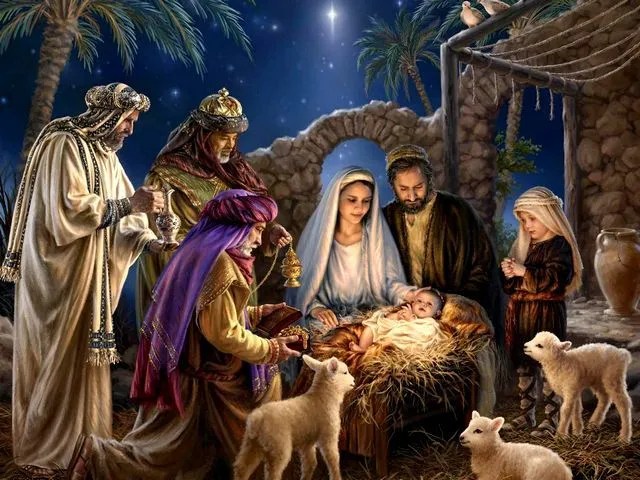
Saturday, 2 August 2025 : 17th Week of Ordinary Time, Memorial of St. Eusebius of Vercelli, Bishop, and St. Peter Julian Eymard, Priest (Gospel Reading)

Liturgical Colour : Green or White (Bishops or Priests or Saturday Mass of Our Lady)

Matthew 14 : 1-12

At that time, the reports about Jesus reached king Herod. And he said to his servants, “This Man is John the Baptist. John has risen from the dead, and that is why miraculous powers are at work in John.”

Herod had, in fact, ordered that John be arrested, bound in chains and put in prison, because of Herodias, the wife of his brother Philip. For John had said to Herod, “It is not right for you to have her as your wife.” Herod wanted to kill him but he did not dare, because he feared the people, who regarded John as a prophet.

On Herod’s birthday the daughter of Herodias danced among the guests; she so delighted Herod that he promised under oath to give her anything she asked for. The girl, following the advice of her mother, said, “Give me the head of John the Baptist, here, on a dish.”

The king was very displeased, but because he had made his promise under oath, in the presence of his guests, he ordered it to be given to her. So he had John beheaded in prison, and his head brought on a dish and given to the girl. The girl then took it to her mother.

Then John’s disciple came, took his body and buried it. Then they went and told Jesus.

Saturday, 2 August 2025 : 17th Week of Ordinary Time, Memorial of St. Eusebius of Vercelli, Bishop, and St. Peter Julian Eymard, Priest (Psalm)

Liturgical Colour : Green or White (Bishops or Priests or Saturday Mass of Our Lady)

Psalm 66 : 2-3, 5, 7-8

May God be gracious and bless us; may He let His face shine upon us; that Your way be known on earth and Your salvation, among the nations.

May the countries be glad and sing for joy, for You rule the peoples with justice; and guide the nations of the world.

The land has given its harvest; God, our God, has blessed us. May God bless us and be revered, to the very ends of the earth.

Saturday, 2 August 2025 : 17th Week of Ordinary Time, Memorial of St. Eusebius of Vercelli, Bishop, and St. Peter Julian Eymard, Priest (First Reading)

Liturgical Colour : Green or White (Bishops or Priests or Saturday Mass of Our Lady)

Leviticus 25 : 1, 8-17

YHVH spoke to Moses on Mount Sinai : “When seven Sabbaths of years have passed, that is, seven times seven years, there shall be the time of the seven weeks of years, that is forty-nine years. Then on the tenth day of the seventh month sound the trumpet loudly. On this Day of Atonement sound the trumpet all through the land.”

“Keep holy the fiftieth year and proclaim freedom for all the inhabitants of the land. It shall be a jubilation year for you when each one shall recover his property and go back to his family. In this fiftieth year, your year of Jubilee, you shall neither sow nor reap the aftergrowth, nor gather the grapes from the uncultivated vines. This Jubilee year shall be holy for you, and you shall eat what the field yields of itself without cultivation.”

“In this year of Jubilee each of you shall recover his own property. When you sell something to your neighbour or buy something from him, do not wrong one another. According to the number of years after the Jubilee, you shall buy it from your neighbour and according to the number of years left for harvesting crops he shall sell to you.”

“When the years are many the price shall be greater and when the years are few the price shall be less, for it is the number of crops that he is selling to you. So you shall not wrong one another but you shall fear your God, for I am YHVH, your God.”

Friday, 1 August 2025 : 17th Week of Ordinary Time, Memorial of St. Alphonsus Liguori, Bishop and Doctor of the Church (Homily and Scripture Reflections)

Liturgical Colour : White

Dear brothers and sisters in Christ, today all of us listened from the readings of the Sacred Scriptures in which we are reminded of the need for all of us to centre our lives on the Lord, to put our whole activities and everything that we do in Him, so that we will always continue to journey together with Him, doing everything that we can to glorify Him through each and every moments of our lives. We should allow the Lord to lead us in our paths in life and not to be distracted by all sorts of worldly ambitions and desires that may lead us astray through selfishness and sin. Each and every one of us as Christians should always be good role models and examples for one another, to be faithful and worthy bearers of our Christian faith at all times.

In our first reading today, taken from the Book of Leviticus, we heard of the instructions from the Lord to His people through Moses in which He detailed the various Festivals and celebrations that the people should partake in throughout the whole year. There were the Festival of the Unleavened Bread, marking the time of the original Passover in Egypt and its aftermath, when the people of Israel brought unleavened bread with them as they hurried on their way out of Egypt, with no time to wait for the bread to set and to rise with the addition of yeast or leaven. There were also the Festival of the Tents, also known as the Sukkot, which in tradition marked the memorial of the time when the Israelites were travelling in the desert, under the open skies and staying in tents, and how these celebrations ought to be celebrated each year according to the tradition and Law of the Lord.

We heard how the Lord detailed the various rules and expectations on how each of the Festivals were to be celebrated. In general each festivals required the people to put their focus and attention on celebrating the events covered in the Festival and taking a break from their usual daily routines and works, much like the Sabbath that is observed on each week. This observation of those Festivals serve as a reminder for all the people of God that their lives and activities should always be done in God’s Presence and that God should always be at the very heart of all things, being reminded to everyone in each and every one of those celebrations, done periodically so that all may know that God is truly present in their midst, and it is also therefore a reminder for all of us to keep God in our lives and our communities as well.

In our own way of life as Christians, we should also remind ourselves of the important Feasts and celebrations of our faith, which are also partly modelled and inspired from the Jewish feasts and festivals. We should keep in mind that as we continue to progress through the liturgical year, marking important events and celebrations that the Church had placed throughout the year, all of us should continue to focus our attention on the Lord as we live our lives and do our actions and activities. We should not allow ourselves to be so preoccupied by our many busy details, pursuits and ambitions in life so that our daily activities and business ended up distancing us and keeping us away from God. And this is why it is important that we should regularly participate in the daily Mass and taking part in the Sacraments.

Then from our Gospel passage today, taken from the Gospel according to St. Matthew the Apostle and Evangelist we heard of the moment when the Lord Jesus was in Nazareth in Galilee, in His hometown. At that time, the Lord was teaching in the synagogue and spoke with great wisdom and eloquence. But the people of Nazareth, many of whom had known the Lord since He was very young, doubted Him and refused to believe in Him simply because they took offense at the fact that He was merely the Son of the town or village carpenter, a profession that was indeed noble but was very lowly considered at that time, and they thought that a mere carpenter’s Son could not have gained such Wisdom and performed such miraculous wonders and works just as they must have heard from their surrounding regions where the Lord performed His works.

This is where we are reminded that our own human prejudices and arrogance can often come in between us and our faith in the Lord. The people of Nazareth thought that they knew it better because they used their own human judgments and ideas instead of trusting and believing in God. And that was why they failed to believe in Him, just as how many others across Galilee and Judea also refused to believe in the Lord Jesus, like those Pharisees and teachers of the Law, as they allowed themselves to be tempted and swayed by their own ego, pride and ambition, refusing to believe that the Lord could have manifested Himself in a mere carpenter’s Son, the Saviour of the whole world, the prophesied King of Kings and Son of David. And yet, the Lord showed them all that this was indeed the truth, and not their prejudices and false ideas.

Today, the Church also celebrates the Feast of St. Alphonsus Liguori, the famous founder of the Order of the Most Holy Redeemer, also known as the Redemptorists. St. Alphonsus Liguori was born in the southern region of Italy, near the city of Naples as the eldest of the seven children of a naval officer. As his health condition prevented him from joining the military like his father, he was prepared for a career as a lawyer, and then he excelled in his education, gaining doctorates in civil and canon law at the mere age of sixteen. He carried out his legal profession for more than a decade but after having experienced a moment of distress when he lost an important case, he felt the calling to leave behind the law profession and then serving the Lord.

That was how he then joined the Oratory of St. Philip Neri and desiring to become a priest. He managed to gain his father’s permission despite the latter’s initial opposition, but he did not join the congregation of the Oratory as a compromise, and instead, spent time to serve the poor and the marginalised in his home area of Naples. He became a very popular priest due to his simple and yet touching sermons, which were frequented by many people. He was credited with the foundation of the ‘Evening Chapels’, places like chapels where the faithful gathered for prayers and activities, and also other social and communal activities related to the faith, and where more and more people flocked towards as St. Alphonsus continued to do more wonderful works, and many were turned towards God through his homilies and preaching.

Eventually, as he would later be famous for, he founded the Congregation of the Most Holy Redeemer, a religious congregation that was dedicated to the service of the poor and the marginalised, focusing on the work of preaching and teaching in the slums, countryside and in other places where the last, the lost and the least were gathered in. His foundation of this Order of the Redemptorists were also rooted in the then rampant heresy of Jansenism which focused on excessive moral rigorism and blame on the human nature as sinners. Through his efforts and the Redemptorist missionaries, the faithful were reminded of the great love and mercy of God, the Redeemer of all, Who had indeed died for all of our sins, and calling on all those who had been separated and away from the Church to return to the Lord, their Redeemer.

St. Alphonsus Liguori continued to serve the Lord faithfully in various capacities, as the founder and the leader of the Redemptorists first and foremost, and then later on in his ministry as a bishop when he was appointed by the Pope as the Bishop of Sant’ Agata de Goti in the southern part of Italy. He was a humble man, who tried to refuse the appointment by citing his age and health problems, but eventually obeyed and faithfully dedicated himself to the missions which had been entrusted to him. He reformed the local church, its seminary and formation of the faithful, addressing various abuses of the clergy and the lack of discipline among those priests, while devoting himself to the care of the poor and the needy in his diocese. He also faced hardships and persecution even from his fellow priests, being dismissed from the very Redemptorist congregation he had founded, but he remained firmly faithful to the very end.

Brothers and sisters in Christ, let us all therefore be inspired by the good life and examples which St. Alphonsus Liguori had shown us all, and as we have been reminded by the readings of the Sacred Scriptures earlier on, let us all strive to put the Lord our God at the very centre of our lives and existence. Let us all be the faithful and worthy bearers of God’s truth and Good News to everyone, and the best way that we can do this is indeed by living our lives most worthily as Christians, in doing everything in accordance to what the Lord Himself had taught and shown us. Let our whole lives bear witness of our great and courageous faith in the Lord, and may God continue to bless us always in everything we do, now and forevermore. Amen.

Friday, 1 August 2025 : 17th Week of Ordinary Time, Memorial of St. Alphonsus Liguori, Bishop and Doctor of the Church (Gospel Reading)

Liturgical Colour : White

Matthew 13 : 54-58

At that time, Jesus went to His hometown and taught the people in their synagogue. They were amazed and said, “Where did He get this wisdom and these special powers? Is He not the carpenter’s Son? Is Mary not His mother and are James, Joseph, Simon and Judas not His brothers? Are not all His sisters living here? Where did He get all these things?” And so they took offence at Him.

Jesus said to them, “The only place where prophets are not welcome is his hometown and in his own family.” And He did not perform many miracles there because of their lack of faith.

Friday, 1 August 2025 : 17th Week of Ordinary Time, Memorial of St. Alphonsus Liguori, Bishop and Doctor of the Church (Psalm)

Liturgical Colour : White

Psalm 80 : 3, 4, 5-6ab, 10-11ab

Start the music, strike the timbrel, play melodies on the harp and lyre. Sound the trumpet at the new moon, on our feast day, when the new moon is full.

This is a decree for Israel, an ordinance of the God of Jacob, a statute He wrote for Joseph when he went out of Egypt.

There shall be no strange god among you, you shall not worship any alien god, for I, YHVH, am your God.