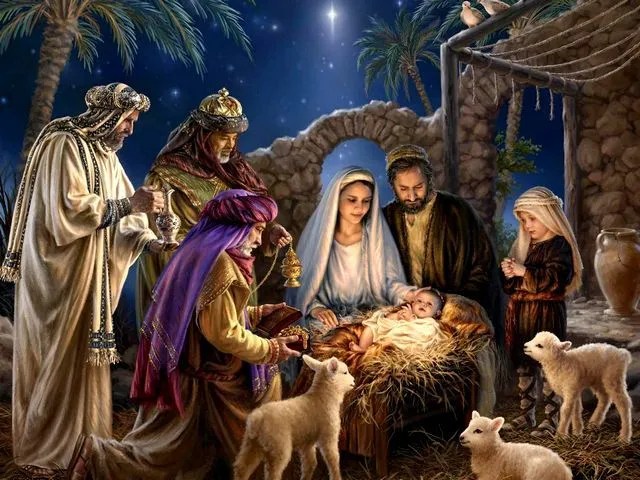
Tuesday, 31 December 2024 : Seventh Day within Octave of Christmas, Memorial of Pope St. Silvester I, Pope (Homily and Scripture Reflections)

Liturgical Colour : White

Dear brothers and sisters in Christ, today as we listened to the words of the Sacred Scriptures and as we continue to progress through this time and season of Christmas, the time of great rejoicing in celebrating the birth and arrival of the Saviour of the whole world, Jesus Christ, the Son of God, the true reason of our Christmas joy and celebrations, we should always hold onto the fullness of truth, hope and reassurances that we have received from God Himself. All of us as Christians must be the bearers of the Good News of God’s salvation in how we live our lives each day and in how we celebrate Christmas, so that everyone may come to know more about the Lord through them. This Christmas is truly a great opportunity for us to tell everyone about the Lord and His salvation.

Unfortunately, the reality is such that many people around the world do not celebrate Christmas in this manner. Many people focused on all the excesses of worldly pleasures and desires, all the temptations of glamour, glory and merrymaking that cause us to indulge in those pleasures instead of rejoicing in the manner that we should have done. Christmas has often become so secularised and commercialised in many parts of the world that even Christians themselves had forgotten and overlooked the very reason why we all gather together and rejoice during this time and season of Christmas, that is to be joyful at the coming of the Lord’s Salvation into our midst and to thank Him for all the love that He has shown us.

Many celebrations of Christmas focused instead on the details about the festivities, all the food, drinks and gifts that we partake and share in. Those things became the focus and emphasis in many of our Christmas observances and celebrations, while the One Whom we all ought to be celebrating about was overlooked and forgotten. We can see clearly all around us during this time of Christmas festivities, how many of those celebrations and decorations actually include and depict the Lord and His Nativity, as compared to the focus on the gifts and grandeur of our celebrations, and all other things which may easily distract us away from the Lord and His righteous path. And unless we are vigilant, we may also fall into this same path, sometimes without us even realising it.

That is exactly what our first reading today from the Epistle of John the Apostle spoke strongly about the antichrists and the false prophets, all of whom proclaimed words and gospels that were different from what the Lord had revealed and spoken to His people. Even at that time during the early days of the Church, there were already those who tried to subvert the truth and the Good News of God to suit their own selfish purposes and desires, or trying to gain more popularity and power for themselves. St. John spoke of the need for all the faithful to reject the temptations of Satan, and to continue to uphold the righteous path which has been shown and taught to them by God through His Church.

Then, from our Gospel passage today taken from the Gospel according to St. John the Apostle and Evangelist, we heard of the well-known and powerful revelation, testimony and declaration on Who the true identity of the Lord Jesus is, He Who is not just merely a Man and Son of Man, but Who is also the Divine Son of God, the Word of God incarnate in the flesh, appearing before all of us and dwelling in our midst just as He has promised to us, and which He has revealed through His prophets and messengers. Through this first chapter of the Gospel of St. John that revealed the nature of the Incarnation of the Word and the Divine Son of God, we are all reminded very clearly of what it is that we truly celebrate this Christmas, this time of glorious rejoicing and festivities, all made possible because God has come into our midst.

The Incarnation of the Word of God, and Him being conceived in the womb of Mary His mother, all of these came to fruition with the birth of this same Saviour, the Lord Jesus Christ, which happened in Bethlehem over two millennia ago. Christmas celebrates this very important moment of the Nativity of the Lord, the moment when the Lord was born into this world, which became the tangible, approachable and visible sign of God’s saving works, as He Himself has come into our midst to dwell among us, to be God Who is with us, Emmanuel, just as it has been prophesied by the prophets like Isaiah in the past. Through the historical coming of the Lord, and eventually His return in the future, all of us have received the renewal of hope and strength, courage and power through the love that the Lord has always had for each one of us.

Today, on this last day of the whole entire year, we are reminded of a great saint and man of God, this day being the Feast of Pope St. Silvester I, one of the Popes of the early Church. Pope St. Silvester I ruled as the Supreme Pontiff and Vicar of Christ for a long period of about twenty-one years, during the time of great changes and renewal for the Church. He became Pope succeeding his predecessor, Pope St. Miltiades shortly after the groundbreaking Edict of Milan, decreed and promulgated by the Roman Emperors Constantine the Great and Licinius, who then triumphed over their enemies and became the rulers of the Roman Empire. Both of them issues this Edict proclaiming toleration of the Christian faith and the ending of the official persecutions of Christianity that had taken place for centuries.

Pope St. Silvester I led the Church during this time of great change, overseeing the great liberation of the Christian worship in Rome and other parts of the Roman Empire, the establishment of many churches and basilicas from the strong support by the increasingly pro-Christian Emperor Constantine the Great. Halfway through his pontificate, another great event in the Church history also took place, namely the First Ecumenical Council, the Ecumenical Council of Nicaea. While Pope St. Silvester I himself did not attend the Council personally, he sent his representatives and legates to take part in the proceedings, and helped the Church to formulate the official codification and standardisation of the faith and teachings, rooting out false teachings and heresies. He performed many other great contributions and works to the end of his life.

Brothers and sisters in Christ, let us all therefore reflect upon what we have just discussed earlier on and from the life and ministry of Pope St. Silvester I. As we continue to progress through the celebration and festivities of this current Christmas season, let us all continue to stay focused on the Lord and put Him at the centre of all things and of all our celebrations and festivities. And as we are about to end this current year and begin a new year tomorrow, let us all strive to live a new life truly attuned to the Lord and be firmly faithful in all of our ways, so that by our every words, actions and deeds, we may reveal the Lord, His truth, His Good News and love to many more people around us, and inspire them all to come towards the Lord. May God be with us all, and may He continue to bless our every good efforts and endeavours. Amen.

Monday, 30 December 2024 : Sixth Day within Octave of Christmas (Homily and Scripture Reflections)

Liturgical Colour : White

Dear brothers and sisters in Christ, today as we all listened to the words of the Scriptures, we are all reminded to continue to keep our hope in the Lord and to resist all sorts of temptations and pressures so that we may continue to be righteous, just and worthy of God in all circumstances. We must not be ignorant of the dangers of the world and all the sins around us. If we do not take this seriously and do all the necessary preparations, it may be easy for us to be drawn into the path towards damnation and downfall, by losing sight in the true happiness and treasure that we will find in God alone. This is because the world and its many allures and alternative paths can indeed be very enticing and tempting, persuading us to take that path instead of God’s path.

In our first reading today, we heard from the Epistle of St. John the Apostle the exhortation that the Apostle made to the members of the faithful, addressed particularly to more senior members of the faithful, the fathers and parents who were supposed to bring up their children in the Christian faith, as well as the young men, those from the younger generation who have received the faith and its teachings from the Apostles and also from the guidance of their elders and seniors in their community. St. John exhorted all of them to put their faith in the Lord and in His salvation, in everything that He has done for our sake and overcoming all of the bondage for our sins and evils, all the things which had kept us tied and prevented from seeking God and His love and grace.

St. John also warned the faithful to be vigilant and to be wary of sin and all of its tempting allures, all the things that can lead us into downfall and destruction. He mentioned that if one loves the world and all the things that are in the world, then they will not have the love of God the Father in them. Essentially, it is not possible for one to be able to truly love the Lord and to love the world and all of its riches and temptations all at once. That is why St. John exhorted all the faithful so that they would not fall into this temptation and ended up on the wrong path in life, as if they are not careful, it is easy for them to end up falling ever deeper into the slippery slope of sin. This same reminder also applies to us all as well, and we should truly heed these reminders for our own good.

The Apostle also spoke of the fleeting and impermanent nature of the world against the permanence of God’s love and grace. This is a reality check for all of us especially if we reflect on all the things we often desire and want to pursue in our daily lives in this world. We must be aware that none of those things of the world that we seek, be it glory, fame, riches and wealth, material possessions, popularity and other forms of worldly parameters and things can truly satisfy us and none of them will also last and endure forever. All of them can be gone and disappear in mere moments, and none of us can bring them with us beyond this mortal life and existence we have on earth. The only thing that is truly everlasting is God’s Love and grace, His providence and salvation.

Then, in our Gospel passage today, we heard from the Gospel according to St. Luke the Evangelist in which the account of the time and moment when the Child Jesus was presented and offered at the Temple and House of God in Jerusalem, according to the Jewish laws and customs. At that time, the eldest child of the household and family of the Israelites ought to be dedicated and offered to God, about eight days after they were born. This was a sign of the renewal of God’s great Covenant, His love and enduring providence for all of His beloved people. Then, at that time, just as Mary and St. Joseph was at the Temple of God, two people came up to them and began to prophesy from God, giving thanks that they had managed to see the Saviour Himself appearing before them in the flesh. They were the old man Simeon and the prophetess Anna.

Both of them spoke of the many good things that the Lord God would do for His people through the Holy Child, and they also showed the first premonition of the kind of suffering and hardships which the Lord would eventually have to endure, and how that event would bring great sorrow and pain for Mary, His Mother. Yet, that was what the Lord had to go through in carrying out and completing His mission in this world, that is to bear the punishment and consequences for our many sins and wickedness, to bring forth into our midst the assurance of God’s salvation and grace, His forgiveness and ever enduring patience and love. And we are reminded of all these today in particular during this glorious and joyful season of Christmas so that we can continue to remember the true reason for our Christmas rejoicing and festivities.

The Lord and His love for us is and has always and will be so great that He has done everything for our sake, to help and rescue us from the depths of our predicament, from the darkness of our sins and troubles, from the snares of the devil and the threats of all those seeking our ruin and destruction. And because of this love all of us can now truly rejoice and be filled with hope, the hope for God’s salvation and the promise of eternal life and true happiness with Him. We should continue to put our faith in God and not easily allow ourselves to be distracted by the many temptations present all around us, all of which can lead us astray into the path towards our downfall. We should always trust in the Lord and distance ourselves from the excesses of worldly desires and pleasures, especially during this time of Christmas.

Let us all celebrate Christmas with proper understanding of its importance and significance to all of us, becoming the good role models for one another in how we put Christ at the heart and centre of all our festivities and rejoicing in this time and season. And at the same time, let us not be ignorant of and forget about the sufferings and trials that those who are around us may be facing in their lives. Some of us may also not be able to celebrate Christmas due to various difficulties and reasons, and all of us are therefore called and reminded to share our joy with one another. Let us all be the faithful and worthy bearers of the Light of Christ and His salvation to everyone, and may our Christmas joy be truly rooted and centred in Christ, as always. Amen.

Sunday, 29 December 2024 : Feast of the Holy Family of Jesus, Mary and Joseph (Homily and Scripture Reflections)

Liturgical Colour : White

Dear brothers and sisters in Christ, this Sunday, the first Sunday after the Nativity of the Lord we all celebrate the occasion of the Feast of the Holy Family of Jesus, Mary and Joseph which is indeed appropriate as after all that is what Christmas is all about, the Holy Family and everything that happened with them, especially in Christ Jesus, the Son of God Who is the centre figure of Christmas, the Holy Child born in Bethlehem in Judea over two millennia ago as the fulfilment of everything which God has promised to all of us, His beloved people throughout all of history and time. This Feast of the Holy Family is a reminder for all of us of the great love of God which He has shown us all, as our loving Father and Creator, and we are all part of God’s beloved Family.

On this day we recall that perfect and model family, the Family that is the inspiration for all of our Christian families, just as we heard from the evidence and the passages from the Sacred Scriptures on how this Family of the Lord is a real, loving and genuine family where each of the members of this Family performed their respective roles dutifully and faithfully, as an example for all of us to follow. This is also an inspiration and reminder for all of us as Christians, how we are to live our lives within our wider and greater Christian family in this world, the Church of God and the various communities that we have in the Church, in our own families and relatives. All of us should be inspired by this example so that our own families may be truly faithful and worthy bearers of God’s truth and love in our world today.

Now, let us first look through our Scripture passages, beginning from the first reading which was taken from the Book of the prophet Samuel about the story of the birth and early life of the prophet Samuel, the firstborn son of Hannah his mother with Elkanah, his father. For the context, Elkanah, Samuel’s father had two wives, named Penninah and Hannah. The other wife, Penninah, had borne Elkanah many children while Hannah, Samuel’s mother, was barren and unable to conceive a child. Not only that but since Elkanah loved Hannah more, Penninah often bullied Hannah and mocked her for her lack of a child and barrenness, which was a sign negatively viewed at the time. Hannah sought the Lord and prayed for a son, and God heard her.

Hannah also promised to dedicate her son to the Lord if He granted her wish, and that was what we heard in today’s first reading passage, which detailed how Samuel was born, and then at the appointed time after he has been weaned from his mother, Hannah and Elkanah brought him to Eli, the then High Priest and Judge of Israel, to consecrate and commit Samuel to the service of God. And that was how the story of Samuel began and how He eventually became God’s Prophet and the Judge over all of Israel, the last of the Judges before the days and time of the Kings. And we can see clearly in Samuel’s family how they all put God at the centre of all things, being faithful and committed to God, centred on prayer and devotion to Him.

We also can see how love is truly evident in Samuel’s family, as Elkanah mentioned earlier loved Hannah very much, and vice versa, and Hannah took good care of Samuel before he was dedicated to the Lord’s service. No doubt even after that, although it was unrecorded in the Scriptures, that Samuel’s family would continue to visit him from time to time as he grew up ever stronger in wisdom and in the ways of the world. Their exemplary faith and love, and how they kept putting God at the centre of their family and existence is something that we should also be doing in our own families. This is similar to what we then heard from our Gospel passage today regarding the Holy Family, about the time when the Lord Jesus stayed behind at the Temple of Jerusalem while He was just twelve years old.

As we heard and should well know, the Lord Jesus quietly stayed back at the Temple of Jerusalem, being drawn to the House of His Heavenly Father and as a revelation of His true identity as the Incarnate Son of God. But this made His Mother Mary and St. Joseph to be worried, and they spent time trying to find where He was, tracing their path back to Jerusalem and the Temple of God where they finally found Him. We heard how the Lord Jesus obeyed them and followed them back to Nazareth even though He desired to stay at His Father’s House. From the Lord Jesus we saw the example of obedience, which He later on would show again at the moment of His Passion, bearing up willingly the weight of the Cross for our salvation, obeying perfectly His Father’s will for our salvation.

And hence from Mary and St. Joseph we saw the great love that they had for their Son. Mary as the Mother of the Lord naturally loved Him and she devoted herself completely to Him, and later on, she would follow her Son throughout various parts of His ministry, and she followed Him all the way even to the Cross, as she faithfully stayed by His side to the very end. She nurtured the Lord Jesus and cared for Him throughout His whole life, and hence, she is truly deserving of the great honour that we have given to her as the Mother of God. At the same time, St. Joseph, despite not being the biological father of the Lord and was just His foster-father, he continued to devote himself, his time and effort to provide for and to protect Mary and her Holy Child, just as he had been entrusted to do.

Through the examples that we have been provided with today, we are all reminded that our families are truly important parts of our lives and they also serve as the foundations and integral parts of the whole Church of God. If our families are not rooted in the Lord and if we do not spend good and quality time together with our fellow family members, then it will be easier for the evil one to strike at us and break through us, dividing us among ourselves and weakening our connection both towards God and to our fellow brothers and sisters, especially to our fellow family members. This is why we need to strengthen our commitment to our families and take heed from the inspirations and examples shown and discussed this Sunday so that our families may grow ever stronger and more resilient against the many challenges and pressures from the world.

What all of us should do is, whichever members of our family we are, be it as a parent, grandparent, child, grandchild, sibling or others, all of us should strive and commit to spend good quality time with our fellow family members around us. If the family does not even spend good and quality time together at all, and instead being preoccupied by many distractions of worldly pursuits and ambitions, then how can the family stay together? Many families and marriages had faltered before and collapsed precisely because of this lack of good quality time that we should have spent with each other. And of course, another important part of our families must be God, and God should always be at the heart and centre of our every families.

Let us ask ourselves, when was the last time we spend good, quality and precious time with our family members, and as one family, praying together and doing activities together? If we have not done these recently, then it is imperative that we try our best to do them as soon as possible, and try to make the time for each other, even amidst our busy schedules and activities in life. Let us all realise the importance of good Christian families, all of which should be safe space and firm anchor for each one of us, as the strong pillars of our Church and faith, a safe place and space where each one of us can grow ever stronger in faith and grace of God. May the Lord be with us always, and may He continue to bless our families and their members. Amen.

Saturday, 28 December 2024 : Feast of the Holy Innocents, Martyrs (Homily and Scripture Reflections)

Liturgical Colour : Red

Dear brothers and sisters in Christ, today the Church celebrates the Feast of the Holy Innocents, those young children and infants, mostly below the age of two years old, who in the Scriptures were mentioned as the victims of the greed and ego of mankind, being slaughtered mercilessly by the forces of King Herod the Great, the King of Judea at that time. This was done because King Herod was afraid of the threat that the newborn ‘King of the Jews’ prophesied by the prophets and messengers of God presented against him and his rule, and this made him to try to find ways to prevent this King from overcoming his and his family’s rule, and when things did not work out, he desperately launched that massacre against his own people.

For the context, we must first understand that historically, the rule of King Herod was far from secure in the beginning of his reign, and while after decades of rule he had managed to secure the kingdom that he had established and been patronised for by the Romans, who was the overlord of the region, King Herod would always be seen as a usurper to the rightful rulers of the land, firstly as he rose to power on the coattails of the Romans who came and conquered the region, and through manipulations and trickery, and political plays, he managed to gain the throne and kingship over the land. He was also not a member of the House of David, which historically had held the Kingship over Israel, and lastly, he was an Idumaean, hailing from a people neighbouring the Israelites, and hence, was not considered by some as true legitimate King.

That was part of the reason why King Herod the Great was often seen as insecure in his reign and way of ruling, and in his megalomania and often overly ambitious projects, which he made in order to secure that legitimacy over the ruling of the land of Israel and the people of God. He built the great Temple in Jerusalem, greatly expanding the previous Second Temple there likely to win over the support from the Jewish community and from their chief priests and elders. He built the great city of Caesarea, a great port city and trading centre, and naming it after Caesar, the Emperor Augustus in Rome, as an obvious effort to try to win and maintain the support of the Romans, without which he could not have secured his rule and the rule for his family and dynasty. He had many other projects and works designed to show his greatness to the people.

And all of these likely led to King Herod the Great being increasingly insecure, paranoid and ambitious, as the more we depend on worldly means, powers and all those means in order to achieve our objectives and goals, the more it is that we may become dependent on them. And that was what happened to King Herod the Great, as well as many other worldly rulers and all those who have allowed their desires, ambitions, pride and ego to mislead them down the path of ruin. To King Herod, he was certainly unwilling to let go everything that he had spent his whole life building up, all the great things that he had supposedly achieved, and hence, this led him to the desperate actions and wicked things such as the slaughter of the Holy Innocents of Bethlehem just as we all heard in our Gospel passage today.

In our first reading today, taken from the Epistle of St. John the Apostle, we heard of the Apostle writing to the people of God regarding the matter of sin, and how the faithful ought to respond and act with regards to the sins which they had all committed. And we heard of the power of God in healing us all from our many sins and wickedness, and how He has sent us all His Son to be the One to intercede for us and deliver us the salvation of God. St. John also spoke about the need for the people of God not to be deluded to think that they had no sin or shortcomings, or have no need for God’s help and forgiveness. For this is the problem which many of the people of the time of St. John in the early Church had faced, as we still face the same issue even to our present day.

There are people who claim to be righteous, just and worthy of God, and took great pride in that status, like for examples the chief priests and the Pharisees among the Jewish people, and also others in the Christian community who considered themselves to be righteous and better spiritually and in the path towards God’s salvation than others. They underestimated the dangers of sin and even became desensitised to it. This is what we cannot let to happen to us as well, and we must first of all realise that we are sinners, in need of God’s help, and as we have seen from the examples of the past life and actions of King Herod and many other historical figures, we can easily be distracted and tempted by the many desires and pressures, expectations and ambitions that we have in our hearts.

Brothers and sisters in Christ, some of us may be wondering why is it that God permitted such atrocities to happen such as what happened in the massacre of the Holy Innocents of Bethlehem, as well as in many other dark moments in our human history. Some of us certainly would have criticised the Lord, thinking that God could have intervened and stopped all those atrocities and evils from happening. But this is where we have to understand and realise that God has given us the free will and the freedom to choose our course of action in life. The many sufferings that we often suffer from and encounter in this world, they all came from our abuse of our privileges, freedom and choices, as instead of choosing the better and righteous path, we often chose the path of pleasure and corruption, allowing sin and the temptations for it to mislead us down this path of destruction and ruin.

That is why, while all of us commemorate this Feast of the Holy Innocents of Bethlehem, we are reminded that we must continue to be vigilant so that we do not easily end up falling into the temptations to sin and to give in to our fears, our desires and ambitions, our pursuits for worldly glory and renown, just as King Herod had experienced. For all the efforts that he had done, ultimately Herod’s legacy was a failure, with the grand Temple he built being destroyed merely decades later, and other great monuments abandoned and destroyed, while his family’s rule over the lands of his kingdom did not last very long, and what remained for him is the everlasting reminder of this great atrocity that he ordered at Bethlehem. This is a reminder for us not to allow ourselves to walk in the same path he traversed.

Let us all as Christians instead be the courageous bearers of our faith before all, standing up firmly for the sake of the poor, the less privileged and the weak, striving not for our own selfish desires and ambitions, but rather for the common good of all. We must be good role models and inspirations for one another in upholding the truth and justice of God. May the Lord continue to help us to remain firmly focused on Him, and to be truly committed to a life of virtue and compassionate care for others as we continue to progress through this joyful season of Christmas, and share our Christmas joy to everyone around us, resisting the temptations of pleasure and hedonism, and striving instead to seek the true heavenly treasure that can be found in God alone. Amen.

Friday, 27 December 2024 : Feast of St. John, Apostle and Evangelist (Homily and Scripture Reflections)

Liturgical Colour : White

Dear brothers and sisters in Christ, today as we continue to progress through the Christmas season, two days after Christmas Day, we celebrate the occasion of the Feast of St. John the Apostle and Evangelist. St. John the Apostle was the beloved disciple of the Lord and was one of the Twelve Apostles, being one of the earliest ones to enter into the service of the Lord. He was once a fisherman at the Lake of Galilee together with his brother, St. James the Apostle or St. James the Greater. And what is unique about St. John among all the other Apostles is that he was likely the only one among the Apostles who have not suffered through martyrdom of the blood or the red martyrdom which all the other Apostles had suffered, but died at a very old age after many decades toiling and labouring for the Lord’s sake.

St. John was also one of the four writers of the Holy Gospels, and hence was also known as the Evangelist. He was also credited with the Epistles of St. John, addressed to the faithful people of God and as was in the Gospel that he wrote, he placed a lot of emphasis on the love of God which He has generously shown to all of us. St. John himself had witnessed many of the events that the Lord Jesus carried out and went through as he was among the few select ones to have attended to the Lord and went with Him, such as during the resurrection of the dead daughter of Jairus, the synagogue official, the moment of Transfiguration at Mount Tabor, the moment of the Lord’s Agony at the Garden of Gethsemane after the Last Supper, among others.

Then, after the death and Resurrection of the Lord, and after His Ascension and the coming of the Holy Spirit, St. John for a while took care of the Lord’s Mother, Mary, who had been entrusted to him by the Lord Himself, and at the same time, like the other Apostles, he was also involved in works of evangelisation and in the governance of the early Church. He went to the region of Judea and Samaria with the other Apostles to proclaim the Lord’s Good News and to establish Christian communities in all those places. He would go on to minister to the people of God and establish more Christian presence and communities in other places, and eventually, as the Lord Himself had predicted, St. John would outlive all the other Apostles, and according to Apostolic tradition, he lived to around the end of the first century, close to or around seven decades after the death of the Lord.

The Lord Jesus did mention in the Gospel that one of His disciples would not perish until the coming or the revelation of the kingdom of God, which later on would indeed come true, with St. John being the one whom the Lord entrusted with the eschatological vision or a vision about the end of times, revealing to him the events that would happen at those times before His Second Coming into this world and the Last Judgment. That happened when St. John was exiled to the island of Patmos in Greece when he was already very old in age, during the reign of the Emperor Domitian of Rome. According to some Church and Apostolic tradition, the Emperor Domitian carried out intense persecution against Christians, and many including St. John himself suffered, with the Apostle being exiled to that aforementioned island.

But it was exactly at those difficult moments, and also considering all the other persecutions and difficulties that the faithful people of God had encountered in the previous decades and which they would still endure for centuries and more afterwards, even including up to our very own present day world, that the Lord reassured us all of His love and providence, and a reassurance that if we all remain true and faithful to Him, then we shall be triumphant with God and that we shall be blessed forever, sharing in the eternal glory and the rich inheritance that He has promised and reassured to us, all these while. St. John saw all those things and recorded them in his Book of Revelations or the Apocalypse of St. John, for the knowledge of all the people of God.

St. John had witnessed many things from the time of the Lord’s ministry, and he witnessed all the moments surrounding the Lord’s Passion and death, and His glorious Resurrection from the dead just as we had heard it from today’s Gospel passage. And although he did not suffer from the same kind of martyrdom as the other Apostles of the Lord, he did indeed suffer a kind of martyrdom also known and recognised by the Church as the ‘white martyrdom’ which refers to the kind of martyrdom suffered by the people of God, who although did not face painful or bloody death, but they did face persecution and sufferings in all of its various forms. From all of these, all of us are reminded that as God’s people, as His followers and disciples, all of us must always remind ourselves to be faithful to the Lord.

We should always strive to put the Lord at the centre and as the focus of our whole lives, our whole existence and in all of the things that we do in life. In our Christmas celebration, festivities and all that we do in this joyful Christmas season, all of us are reminded to be ever always faithful to God and to show our true faith in Him in how we celebrate this Christmas occasion so that in all that we say and do, we will always glorify God by our every words, actions, and deeds, and indeed by our whole lives and examples. We must follow in the footsteps of St. John, Holy Apostle and Evangelist, whose whole life had been thoroughly dedicated to the service of God and His people. We must realise that the works that the Lord had entrusted to His Church and Apostles are far from being done, and it is now up to all of us to continue them.

Let us all therefore renew our commitment and desire to serve the Lord ever more faithfully in each and every moments of our lives, so that by our every moments in life, in everything that we carry out, we will continue to be good examples and the faithful, worthy and shining beacons of God’s Light and Hope in our darkened world today, and the bearers of His Love and compassion to all the people around us. May all of those who encounter us and witness our lives and examples be touched by God and His love, and be called to be His good and worthy followers as well, together with each one of us, now and always. Amen.

Thursday, 26 December 2024 : Feast of St. Stephen, Protomartyr (Homily and Scripture Reflections)

Liturgical Colour : Red

Dear brothers and sisters in Christ, today is the day after the Solemnity of the Nativity of the Lord, the actual day of Christmas, and it is celebrated in the Church as the Feast of St. Stephen, the Protomartyr of the Church. On this day we may wonder why is it that after the festive celebration of Christmas and the fact that this is still during the joyful Christmas season that we commemorate this feast of the very first martyr or protomartyr of the Church. Indeed, this is in fact a reminder for all of us that our celebration and festivities cannot be separated from the focus we ought to have in Christ, and as Christians, each and every one of us amidst our living as faithful and devoted Christians, we may encounter difficulties, challenges, obstacles, rejection, disapproval, and even persecutions for our faith, for what we believe in, and for our works and efforts.

In our first reading today, we heard of the story of the last ministry of St. Stephen, who would become the first martyr of the Church. Now, St. Stephen was one of the disciples of the Lord, likely to be among those disciples who have followed the Lord during His ministry and when He was still in this world. He was one of the seven original Deacons selected and tasked by the Apostles to be the ones to carry out the ministry of the diaconate and service to the people of God, as at that time, with the rapidly growing number of converts and Christian believers, the expansion of the Church in terms of size, numbers and geographical extent made it increasingly difficult for the Apostles to do everything by themselves in ministering to the Church as well as in governing and leading the faithful.

Not only that, but they also still have their primary mission which has been entrusted to them by the Lord Himself, and that is the ministry of evangelisation. Therefore, the Apostles prayed over the matter and inspired by the Holy Spirit, they resolved to choose seven holy and worthy men to be the first deacons with the primary mission to distribute the goods of the Church and the property needed to support the members of the faithful. There was in fact a strife and division among the members of the community who were divided between the Jewish converts and the Greek converts, and there was unhappiness because apparently those Greek converts had been neglected in the distribution of goods and property, as the earliest Christian communities lived in a communal manner, sharing their goods and property with one another.

Thus, the seven holy men and deacons were selected to be the impartial distributors of those resources and as ministers to the needs of the people of God. St. Stephen was one of those seven men, and was also the most prominent one among them, not less due to his early martyrdom, the tale of which was partly highlighted to us in our first reading passage today. Earlier before this part of the passage, St. Stephen was confronted by his enemies, who made false accusations against him as he was doing his works, and they even employed false witnesses against him, accusing him of having uttered and committed blasphemy against God. And that was how St. Stephen was set up for a confrontation against the whole entire Sanhedrin or the Jewish High Council and their supporters.

Yet, St. Stephen, encouraged and full of the Holy Spirit, courageously stood up before the whole assembly and spoke up about the salvation which God has shown to His people through Jesus Christ, telling them about the story of the people of God and the history of salvation, and how everything which God had promised His people and which He has spoken through His prophets and messengers, all the prophecies and predictions came true in Christ, the same One Whom those chief priests and elders, the members of the Sanhedrin had rejected and persecuted, and given to the Romans to be crucified at Calvary. It must have taken great courage for St. Stephen to speak of those words of great truth and wisdom, and yet, he did so, to the bewilderment and total surprise of everyone who listened to him.

St. Stephen gladly accepted suffering and death when all those who listened to him refused to accept the truth that he has presented to them, and stoned him accusing him of blaspheming against God. He was stoned to death by all the assembled people who were overcome with rage and anger against the words that St. Stephen had spoken to them, refusing to believe him even though he has spoken with such wisdom and convincing truth, as they had hardened their hearts and closed off their minds, allowing their pride, ego and ambitions to mislead them to the wrong path. But St. Stephen did not become angry at them or blamed them for all of that, and in fact, just as the Lord Himself had done at the time of His crucifixion, St. Stephen forgave those who persecuted and killed him, and prayed to God on their behalf.

Then, in our Gospel passage today, we heard from the Gospel according to St. Matthew the Apostle and Evangelist the account of the words which the Lord Jesus spoke to His disciples exactly about all these things that would come to pass and which would happen to many of them, how they would all face persecutions, struggles and challenges in the midst of their lives as Christians and disciples of the Lord. And yet, they must not be afraid, fearful or doubtful, as the Lord Himself would be with them, encouraging and strengthening them all in their path and in whatever that they would have to endure and go through. That was what St. Stephen himself has experienced, and his examples should serve as a good example and inspiration for all of us as well.

Brothers and sisters in Christ, let us all therefore strive to do our best to follow the faith and the inspiration of St. Stephen, the first or protomartyr of the Church. Let us all remember that as we rejoice in this Christmas season we must always keep in mind that Christ is truly at the centre of all of our festivities, rejoicing and celebration, and we must also put Him as the focus and the centre of our whole lives, in each and every moments. We must be strong and prepared for whatever trials, challenges, difficulties and obstacles that we may have to encounter in our journey, as we continue to go forth and live our lives worthily as Christians, and as we continue to proclaim the Lord and His Good News to more and more people. May the Lord continue to strengthen us all in our faith, and may His holy servant, St. Stephen, Holy Protomartyr, continue to intercede for us all as well. Amen.

Wednesday, 25 December 2024 : Solemnity of the Nativity of the Lord (Homily and Scripture Reflections)

Liturgical Colour : White

Dear brothers and sisters in Christ, today is the day that many of us had been long waiting for after almost a whole month of Advent commemorations and preparations, as we celebrate this day the great Solemnity of the Nativity of the Lord, the great celebration of Christmas, celebrating the birth of Our Lord Jesus Christ, Our Lord and Saviour, and the beginning of the great and joyful Christmas season. On this day we remember the great occasion when the Lord came into our midst and entered into the world, the Saviour of all mankind, born from the womb of His mother Mary. This is the day which we rejoice greatly because in Christ, the long awaited promise and assurances of God’s salvation has truly come into fruition and completion, and by His entry into this world, Christ has manifested to all of us the perfect manifestation of the love of God.

On this most joyful day therefore all of us gather together as one united people, as God’s one and holy Church to rejoice in glorious thanksgiving for all that He has done, what He has sent us to be the Redeemer. This is the day when the light of Christ’s salvation has shown us the power of God in dispelling the darkness of sin and evil, and brought us all a renewed existence and hope in Him, the Prince of Peace, the Divine Word Incarnate, the Love of God made manifest, being Emmanuel, God Who is with us and dwells within our midst. This Christmas is a commemoration of God’s Love made Man, made to be approachable and tangible to us, reminding us of everything that He had done for our sake. It is a clear proof and sure evidence that God’s love for us is not merely a fairytale or myth, but has been shown to us beyond doubt, through the coming of His Son, Our Lord and Saviour.

In our first reading today, we heard of the passage of great hope from the prophet Isaiah, the fulfilment of God’s many promises and reassurances to His people with the Good News and the arrival of His salvation into this world, the One Who would bring all of the people of God back to Himself, showing us the path to His eternal happiness and true joy with Him, being freed from all the bondage of sin and evil, from all the forces of darkness and destruction. God remembered His people and He would never abandon them in their time of great distress and difficulties. And even when they had brought their own misfortunes upon themselves, thanks to their own lack of faith and inability to resist the temptations of sin and worldly desires, but God still loved them nonetheless.

Through the prophet Isaiah and the other prophets, God made it clear that they are indeed His beloved people, and as their loving Father and Master, He desires to see that all of them ought to be restored in grace and reconciled to Him. And all has been fulfilled through His Son, the One He had sent into our midst to call us all back to Him, and to gather all the scattered children of God back to their most loving, patient and compassionate Father. God has never forgotten us and He has always had us all in His mind, ever concerned about us in each and every moments, and desiring that we should reject the evils and wickedness of this world, and instead embracing His righteousness and truth, His grace and love, as we should have done.

Then, as we have heard from the second readings of this Christmas celebrations, from the Epistle to the Hebrews, as well as from the Epistle of St. Paul to his protege, St. Titus, we heard the affirmation of the revelation of God’s love, kindness and grace which He has revealed through His Son, the Light of salvation and the ultimate proof of Love which God has given us, as the most perfect gift of all, the assurance of His patient persistence in guiding and leading us from the darkness into His light and loving embrace. All of us mankind have long been enslaved and put under the chains and dominions of evil and darkness, by our disobedience against God and His ways. And God alone is capable of leading us all out of this darkness and evil into the light, by His mercy and most generous forgiveness of our many sins.

In our Gospel passage this Christmas, we heard the account of the birth of the Lord from the Gospel of St. Luke in which it was told to us how His mother Mary and His foster father St. Joseph had to struggle to find a proper place for Him to be born, as they were on their way to Bethlehem, the city and ancestral house of David, the city where the Saviour was to be born as prophesied and foretold by the prophets. The Lord and Saviour of all has come into this world not in a palace fits for kings and rulers of this world, but in a stable not even fit for the living and dwelling place of men. But that reveals to us what He truly wants to do by coming into this world. He came into our midst not to overpower, conquer or dominate over us, but to show us His love and care, His compassion and kindness, everything that He has willingly done for us, to rescue and to help us all.

From the Gospel of St. John the Apostle that we heard this Christmas, from its very first chapter we heard about the well-known account of the incarnation of the Divine Word of God, the Son of God made flesh, incarnate through the will of the Father and through the power of the Holy Spirit, that God’s Son truly descended down to us in the flesh, adopting our very own existence and appearance, our nature and humanity, that He may embrace us all with love and touch us all, to be with us in our lowest and loneliest. Throughout all of history, there has never been any divinity that willingly embraced to be human, to abandon the glory and wonders of the Divine for human existence and nature, and yet, that was exactly what the Lord had done, in embracing us all and coming into our midst, as a Child, to be loved and care for, because He wants to teach us all how to love as well.

Brothers and sisters in Christ, in this celebration of Christmas, let us all keep in mind the true purpose and reason why we celebrate it. While the world all around us are full of excesses of worldly joy and merrymaking, festivities and jubilations, parties and all sorts of exultation which are not centred and focused on Christ, the true Reason for all of our Christmas joy and celebrations, all of us as Christians can lead and show the way in how we ourselves celebrate Christmas. Yes, we all can celebrate and rejoice this Christmas, having all the merrymaking and festivities, but we must always make sure that Christ is at the heart of all of our rejoicing and happiness. We cannot give in to the temptations and pressures all around us for us to follow the whim of our desires and the false comforts of the world.

Instead, each and every one of us as Christians are challenged to live up to the true essence and meaning of Christmas. And since Christmas is truly a celebration of God’s Hope, His Peace and Joy, and the manifestation of His Love in our midst, that is why we all should also show this same attitude in our lives, and especially in how we celebrate this Christmas. Christmas should not be just another celebration and festivities, revelries and merrymaking just for ourselves. We should be generous in loving and giving to one another, and be ready and willing to share our joy and merriness with each other, with our brothers and sisters all around us. And there are so many people out there who may not be able to rejoice and celebrate Christmas the way we do, because they are suffering from hardships and challenges in life, and from persecution for their faith in God.

Are we willing to share and be generous with our love, hope and comfort for all those around us, brothers and sisters? Are we capable of spending the time and effort to show the true hope of Christmas, the true reason for our joy and celebration, to all those whom we encounter daily in life? Let us all therefore be true and genuine Christians in each and every moments of our lives, and be the beacons of Christ’s Light and Hope in our world today. Let the joy and the true spirit of Christmas be in all and every parts of our lives from now on, and let us all be the good examples, role models and inspiration for all whom we encounter in life. May God be with us always, and may His love, which He has manifested to us in His Son, Our Lord and Saviour, continue to be generously poured upon all of us, now and forevermore. Amen.

Tuesday, 24 December 2024 : 4th Week of Advent (Homily and Scripture Reflections)

Liturgical Colour : Purple/Violet

Dear brothers and sisters in Christ, today is the day before the joyful Christmas Day and the beginning of the Christmas season and time which we have been preparing for these past few weeks during this time of Advent. On this day we remember again all that God has promised us and which He has Himself fulfilled by sending unto us His Son, Who is the Saviour of the whole world, the One to bring all of us mankind back to our loving God and Father. His coming into this world has restored the hope to all of us and brought to us the assurance that we are never alone in our journey of life and that we will always have the Lord and His love by our side, providing for us and guiding us in this path, because He is with us, Emmanuel, God Who is present in our midst.

In this day’s first reading, we heard from the Book of the prophet Samuel in which the interactions between the prophet Nathan and King David of Israel was recounted to us, when David had been secure in his kingdom and rule, and wanted to build a House and Temple for the Lord in Jerusalem, as he thought that he has been dwelling in an elegant and lavish house befitting a King, the palace that he had built for himself, and yet, the Lord and the Ark of the Covenant which is the symbol of His dwelling among His people was still in the Holy Tent ever since the time the Lord and His people travelled from the land of Egypt to the Promised Land of Canaan. David thought that it was inappropriate that he and his descendants, the Kings of Israel would live in a house of stone and gold, while the Lord still dwelled in the Tent, and that was why he came up with the plan to build a House for God.

But the Lord spoke to David through the prophet Nathan and told him everything that would come to happen, and also about his plan on building the House and Temple for the dwelling place of God among His people. God told David that it would not be him to build a House and Temple for His sake, but that it would be a son of his that would do so instead. This son was to be Solomon, the one who would succeed David as King of Israel, and the one who would be known as the one who established the great and marvellous House of God, named after him as Solomon’s Temple or the Temple of Solomon. But the one who initially planned for it, and who also eventually set aside the large quantity of resources for the building of this Temple was truly King David, Solomon’s father.

More importantly, as we heard the words of the Lord to King David, we heard the word of prophecy from the Lord spoken to His people and to His servant David, reassuring that the House of David would be forever secure in their rule over the Kingdom of Israel, the kingdom of God’s people. This was alluded not only in the rule of the heir of David, King Solomon, whom the Lord would assure and strengthen in time to come, but was also an allusion and prophecy of the Eternal and True King, the Heir and Son of David in the distant future, that is none other than Jesus Christ Himself, Who would come to dwell among us, the Son of God incarnate, Who would therefore come to walk among us, manifesting God’s love for all, and at the same time, sitting on the Throne of David, His forefather, fulfilling everything that had been promised by God to His people.

Then, from our Gospel passage this day, we heard of the Gospel according to St. Luke the Evangelist in which he wrote of the song which Zechariah, the father of St. John the Baptist sang in thanksgiving to God, when he was inspired by the Holy Spirit, giving thanks to God for all the great and wonderful things that He has done for all of His people, especially all those who have suffered and were downtrodden, without hope and were facing challenges and difficulties in their lives. At that time, his son, St. John the Baptist had just been born after a truly miraculous conception and pregnancy that by all reasonable possibilities and human wisdom is something that was truly impossible and yet, it happened because God made it happen.

Despite Elizabeth, Zechariah’s wife being already very old and way beyond childbearing age, but Elizabeth managed to conceived a child by the will and grace of God. And this son who was born to Elizabeth became a sign for all of the people of God, the revelation of the hope, light, truth and Good News which God has presented to us. St. John the Baptist is the Herald of the Messiah, the one whom had been sent to prepare the path for the coming of the Lord, and his coming into our midst is the revelation of the salvation that has come from God. Zechariah gave thanks to God for all that He has done for His people, for all the love which He has generously provided to us despite our many transgressions, sins and rebellions against Him.

Brothers and sisters in Christ, as we are all about to celebrate the great joy and happiness in Christmas, let us all therefore make good use of whatever time left to us before this celebration to remind ourselves that our Christmas joy and festivities, everything that we have been preparing for this Advent are all ultimately about the Lord and His salvation, all the love which He has presented and shown to us most generously, the mercy and forgiveness that He has given us so that we may have the sure path to eternal life and Heaven, bringing us down this path of mercy and compassion, leading us all to the light of God’s salvation. This Christmas is truly a celebration of God’s love for us and hence, He should always be at the centre and be the focus of all that we celebrate for. We should not be easily distracted by all the glamour, pleasures, excesses of the things that the secular celebrations of Christmas present to us.

Let us therefore enter into the Christmas season being reminded of God’s assurance and love, His constant faithfulness and commitment to the Covenant which He has made with each and every one of us. Let us all continue to grow in our faith and love towards Him, and in all of our Christmas joy and festivities, let us also remember our brothers and sisters around us, especially all those who are not able to rejoice in the manner that we do, and share with them the comforts of God’s love and joy, and bless them with our presence, care and love, to the best of our abilities. May our Christmas season and time, our celebrations and rejoicing be truly fruitful and beneficial in our ever closer and growing relationship with God, the One Whose coming into our midst is the true reason for our rejoicing. Amen.

Monday, 23 December 2024 : 4th Week of Ordinary Time, Memorial of St. John of Kanty, Priest (Homily and Scripture Reflections)

Liturgical Colour : Purple/Violet

Dear brothers and sisters in Christ, today as we all listened to the words of the Scriptures and as we are about to come to the end of this Advent season, the time of preparation for Christmas, we heard of the prophecy and the fulfilment of the coming of God’s salvation which He has repeatedly promised and renewed to us through His prophets and messengers, everything came true beginning with the coming of the one to prepare the way for the Saviour, the one whom the prophet Malachi had spoken about in our first reading passage today, and which was fulfilled with the arrival of St. John the Baptist, the Herald of the Messiah into this world.

As mentioned, in that first reading passage from the Old Testament, the prophet Malachi spoke about the moment when the Lord was sending His salvation, heralded by the coming of the Envoy who would prepare the way, straightening His path, the one who would call on all the people of God and their leaders to turn away from their many sins and wickedness, from all the things that prevented them from returning towards the Lord their God. The prophet Malachi was sent to the people at the time after the return of the Israelites from their exile in the distant lands of Mesopotamia, Assyria and Babylon during the reign and dominion of the Persians, who allowed the Israelites to return to their homeland and rebuild their cities and the Temple in Jerusalem.

At that time, the people of God had regained their lands and their cities had been reestablished, and God sent the prophet Malachi to reaffirm what He has always told them in the previous centuries, of everything that He would do for their sake, the prophecies of the coming of the Messiah or Saviour, the One Who would restore the greatness of the people of God, reconcile them all to Him, and reestablish the Kingdom of Israel, the Kingdom of God and His people. And as the prophet Malachi mentioned, the Envoy of the Messiah would be sent to precede His coming, and this Envoy would either be the prophet Elijah or the one like Elijah, who was taken from the world by the Lord in a flaming chariot.

Therefore, Elijah did not suffer from physical death, and was one of the few who was taken up to Heaven in this manner. The people believed that the prophet Elijah would come again to bring God’s salvation and promises to His people, and all of these would come true with the coming of St. John the Baptist, the Herald of the Messiah that was long awaited. A few centuries after the prophet Malachi, who was one of the last or the last among the long line of God’s prophets, the Hope and Light that God has promised to His people has finally arrived and dawned with the arrival of this servant of God into the world, and we are reminded of this today so that we may also realise that this same Hope has been given to us all as well.

From the Gospel passage taken from the Gospel according to St. Luke the Evangelist, we heard the account of the time when St. John the Baptist was born into this world. After a miraculous pregnancy that happened when Elizabeth, the mother of St. John the Baptist was already old and way beyond childbearing age, the servant of God was born and all his relatives and other people, neighbours and all came to celebrate his birth. At the moment of his circumcision, we heard how they all wanted to name him after his father, but Elizabeth intervened and said that he ought to be named as John or Yohanna as per what the Angel of God, likely the Archangel Gabriel had told Zechariah, his father. And the moment that Zechariah confirmed this fact, he was miraculously able to speak again.

The great events surrounding the birth of this Herald of the Messiah preceded all the great things that he would do for the people of God, in how he devoted himself thoroughly to God’s cause, living in the wilderness as one consecrated to God and then calling upon everyone to return to God with repentance and the genuine desire to be forgiven from their sins and wickedness. He baptised many people at the River Jordan, with that water baptism as the sign of commitment by those who went through it to do the necessary penance and to follow through the path of God’s forgiveness and mercy. He would also call on more and more to come back towards God, while also courageously rebuking the chief priests and the Pharisees for their wicked attitudes.

Today, the Church also celebrates the Feast of St. John of Kanty, also known as St. John Cantius, who hailed from the region of Kanty near the city of Krakow in what is today part of Poland. He eventually became a priest and academic, teaching in the local university. He was well known for his generosity and love for the poor people throughout the city especially towards the poor students who were studying at the university. He lived humbly and without much glamour, while being generous and loving, caring and compassionate towards all of those who were in need. He also spent long hours doing many good works for the sake of the Lord and His Church, showing great charity and generosity in His interactions towards everyone around him.

Brothers and sisters in Christ, let us all therefore be inspired by great courage and faith showed by the holy servants of God, our predecessors, namely St. John of Kanty in his virtues and great faith, as well as by St. John the Baptist, the Herald of the Messiah in obeying the commandments of God and in committing himself to the mission which God has entrusted to him. Let us all as Christians strive to be the bearers of God’s hope, light, truth and love in our daily lives, and also in how we celebrate our upcoming Christian celebrations and festivities so that hopefully we may showcase the love and generosity of our ever loving God and Father in everything that we do, and share the generous love of God, our joy and blessings to everyone around us, now and always. Amen.

Sunday, 22 December 2024 : Fourth Sunday of Advent (Homily and Scripture Reflections)

Liturgical Colour : Purple/Violet

Dear brothers and sisters in Christ, this Sunday is the fourth and last of the Sundays of Advent, on which occasion we focus ourselves on the aspect and theme of Love, the last one among the themes of Hope, Peace, Joy and Love that we reflect upon each Sundays in this time and season of Advent. On this Sunday we focus on the Love of God which has been manifested to us in His Son, incarnate in the flesh, to become the perfect manifestation of His love in our midst. Yes, Our Lord and Saviour, Jesus Christ, Whose coming into this world we celebrate this Christmas, is the One Who showed us all what God’s love is all about, love that is always ever enduring, love that never ceases, ever generous and which He has always lavished on each and every one of us, His precious and beloved ones.

And this emphasis on the theme of Love at the very last Sunday of Advent also has its significance as Love is also the most important one amongst the all the Christian virtues and values, the most important of all the fruits of the Holy Spirit and the manifestation of all that is good from God. Without Love then there can be neither Hope, nor Peace, nor Joy. True Hope, Peace and Joy have been shown and given to us most generously by the Lord Himself through His Beloved Son, Whom He sent into our midst, because God so loved the world that He gave us His only Begotten Son, so that all those who believe in Him may not perish but has eternal life, and that was what St. John wrote in his Gospel in the famous quote from the third chapter of the Gospel of St. John, verse sixteen. It is thanks to God’s Love, that all of us have Hope, the Hope for eternal Peace and true Joy.

In our first reading this Sunday, we heard from the Book of the prophet Micah in which God spoke to His people, the Israelites of the coming of His salvation from the land of Judah, at Bethlehem Ephrata, a small town where David once hailed from before he became the King of all Israel. It was from that city that the Saviour would also be born at, and everything indeed came true several centuries after the Lord had promised it to the people through the prophet Micah. The Lord would send His Son to this world to manifest His love, not through great and loud rejoicing, acclamation or proclamations, but rather through a small, little and vulnerable Child, born in a stable at Bethlehem over two millennia ago, the Holy Child that would be the Saviour of all mankind.

By making Himself small and vulnerable, He has shown us just how much He desire to love all of us. He wants to embrace us so much that He willingly took up our human nature and existence, being incarnate in the flesh, Love Himself manifested in the Christ-Child, being shown to all of us, that God truly cared for all of us, and He has never abandoned us to the darkness and sin. And we heard of His purpose of coming into this world through the second reading passage from the Epistle to the Hebrews in which the author of this Epistle spoke of the sacrifice and offering which Christ Our Lord and Saviour has offered on our behalf, as the one perfect sacrificial offering that is the only one worthy enough for the atonement of all of our many sins, faults and wickedness, to redeem us from all of those.

And even more importantly, Christ obeyed His Father’s will perfectly, that He as the new Man, the new Adam, as contrasted to the old and first Adam, rejected the temptations of disobedience and sin, of any worldly comforts and pleasures which we have often fallen to and embraced, instead of God’s love, truth and mercy. The author also spoke of the obedience of Christ and His sacrifice which has overridden the original interpretation of the commandments and Law of God as practiced by the Jewish people and their ancestors, which required them to offer sin offerings and sacrifices regularly at the Temple, for the one ultimate Sacrifice of Our Lord on His Cross is all that is sufficient to redeem all of us, all mankind past, present and future from our innumerable sins, something that no animal offerings or blood can offer us.

That is because Christ, out of His Love for His heavenly Father and for each and every one of us, being the manifestation of God’s Love in our midst have offered His own Most Precious Blood, the Blood of the Lamb of God, and at the same time acting as our One and Eternal High Priest, offering all these, His broken Precious Body and outpoured Precious Blood for the salvation of all. Through this perfect act of selfless and ultimate love, obedience and faith, Jesus Christ our Lord and Saviour, the incarnate Son of God has opened for us the path to eternal life and to full reconciliation with God, our loving Father and Creator. None of this would have been possible without the Love of God, the love that He has always had for us, ever enduring even despite our frequent disobedience and rebellions against Him.

In our Gospel passage this Sunday, we then heard of the moment when Mary visited Elizabeth when both of them were pregnant, Mary with the Holy Child and Saviour in her womb, while Elizabeth was bearing St. John the Baptist, the Herald of the Saviour in her. Through their interaction and exchanges, we can see the great joy and happiness that they had shown, representing all the joy and happiness that all of us should have in God as well because of everything that He had done for us, His beloved ones. God has never stopped loving us, and He has always fulfilled His promises, and He watched over every one of us and listened to the plight of the needy. The miraculous occasions of the pregnancy of both Mary and Elizabeth were the confirmation of this great love that God has for all of us.

Brothers and sisters in Christ, as we have heard and discussed from our Scripture passages this Sunday, therefore we are all reminded that Christmas is truly all about Love, the Love that God has never ceased to show us all, and which He has manifested to us through His Son, and reaffirmed fully at the moment of the Passion of the Lord, the time when He offered His life in exchange for ours, laying down His life for us all sinners, showing the greatest and most generous love. That is why as we all prepare ourselves for the celebrations and joyful occasion of Christmas season and time, let us all remind ourselves constantly that everything that we are rejoicing for, all of these are only possible thanks to the most generous and selfless love from God.

It means that we should also show this love in our Christmas celebrations and festivities, remembering to share the joy we have to one another, to everyone around us especially to those who are suffering and enduring challenges and difficulties, and also all those who may not be so fortunate and blessed, and may not be able to rejoice much this coming Christmas season. We must remember everyone around us, all those who are in need of our love and attention, our help and care so that we may indeed be able to share the joy and blessings that God has given us most generously. May all of us grow ever stronger in our love for both God and for one another just as God Himself has loved us all and shown us how we can love everyone around us, now and always. Amen.