Tuesday, 13 May 2025 : 4th Week of Easter, Memorial of Our Lady of Fatima (Gospel Reading)

Liturgical Colour : White

John 10 : 22-30

At that time, the time came for the Feast of the Dedication. It was winter, and Jesus walked back and forth in the portico of Solomon. The Jews then gathered around Him and said to Him, “How long will You keep us in doubt? If You are the Messiah, tell us plainly.”

Jesus answered, “I have already told you, but you do not believe. The works I do in My Father’s Name proclaim Who I am, but you do not believe because, as I said, you are not My sheep. My sheep hear My voice and I know them; they follow Me and I give them eternal life.”

“They shall never perish, and no one will ever steal them from Me. What the Father has given Me is above everything else, and no one can snatch it from out of the Father’s hand. I and the Father are One.”

Alternative reading (Mass of Our Lady of Fatima)

Luke 11 : 27-28

At that time, as Jesus was speaking, a woman spoke from the crowd and said to Him, “Blessed is the one who gave You birth and nursed You!”

Jesus replied, “Truly blessed are those who hear the word of God, and keep it as well.”

Tuesday, 13 May 2025 : 4th Week of Easter, Memorial of Our Lady of Fatima (Psalm)

Liturgical Colour : White

Psalm 86 : 1-3, 4-5, 6-7

He Himself has built it in His holy mountain; the Lord prefers the gates of Zion to all of Jacob’s towns. Great things have been foretold of you, o city of God.

Between friends we speak of Egypt and Babylon; and also Philistia, Tyre, Ethiopia : “Here so-and-so was born.” But of Zion it shall be said, “More and more are being born in her.” For the Most High Himself has founded her.

And the Lord notes in the people’s register : “All these were also born in Zion.” And all will dance and sing joyfully for You.

Alternative Psalm (Mass of Our Lady of Fatima)

Psalm 44 : 11-12, 14-15, 16-17

Listen, o daughter, pay attention; forget your father’s house and your nation, and your beauty will charm the King, for He is your Lord.

All glorious as she enters is the princess in her gold-woven robes. She is led in royal attire to the King, following behind is her train of virgins.

Amid cheers and general rejoicing, they enter the palace of the King. Forget your fathers and think of your sons, you will make them princes throughout the land.

Tuesday, 13 May 2025 : 4th Week of Easter, Memorial of Our Lady of Fatima (First Reading)

Liturgical Colour : White

Acts 11 : 19-26

Those who had been scattered because of the persecution over Stephen travelled as far as Phoenicia, Cyprus and Antioch, telling the message, but only to the Jews. But there were some natives of Cyprus and Cyrene among them who, on coming into Antioch, spoke also to the Greeks, giving them the Good News of the Lord Jesus. The hand of the Lord was with them so that a great number believed and turned to the Lord.

News of this reached the ears of the Church in Jerusalem, so they sent Barnabas to Antioch. When he arrived and saw the manifest signs of God’s favour, he rejoiced and urged them all to remain firmly faithful to the Lord; for he himself was a good man filled with Holy Spirit and faith. Thus large crowds came to know the Lord.

Then Barnabas went off to Tarsus to look for Saul and when he found him, he brought him to Antioch. For a whole year they had meetings with the Church and instructed many people. It was in Antioch that the disciples were first called Christians.

Alternative reading (Mass of Our Lady of Fatima)

Isaiah 61 : 9-11

Their descendants shall be known among the nations and their offspring among the peoples. All who see them will acknowledge that they are a race YHVH has blessed.

I rejoice greatly in YHVH, my soul exults for joy in my God, for He has clothed me in the garments of His salvation, He has covered me with the robe of His righteousness, like a bridegroom wearing a garland, like a bride adorned with jewels.

For as the earth brings forth its growth, and as a garden makes seeds spring up, so will the Lord YHVH make justice and praise spring up in the sight of all nations.

Monday, 12 May 2025 : 4th Week of Easter, Memorial of St. Nereus and St. Achilleus, Martyrs, and St. Pancras, Martyr (Homily and Scripture Reflections)

Liturgical Colour : White or Red (Martyrs)

Dear brothers and sisters in Christ, on this day as we continue to progress through this joyful time and season of Easter, listening to the words of the Sacred Scriptures, we are constantly being reminded of God’s wonderful love and kindness to all of us His beloved people. We are reminded that all of us, regardless of our background and origin, all of us are equally beloved and precious to God, Who has willingly loved us all, given us His attention and time, His ever present concern and care for all of us, His beloved children and people. Therefore, that is why He has always shown us His patient guidance and leading us all tirelessly towards Him, as our most loving and patient Shepherd, the Good Shepherd Who knows all of His sheep and flock by name, Who truly cares and loves for all of us without any exception.

In our first reading today, taken from the Acts of the Apostles, we heard of the story of how there were some disagreements between the early Christians in the community in Jerusalem and Judea, as some of them belonged to the group of the Pharisees, the ones who were particularly rigid and strict in how they observed the Law of God, and who were also often prejudiced and judgmental against the non-Jewish people or the Gentiles, seeing themselves being the direct descendants of Abraham and the Israelites to be superior to that of the other people. As such, because of the disagreements and divisions, which saw the Pharisees accusing those who mingled and interacted with the Gentiles as being mistaken and sinful, thus St. Peter told them all about the moment when he received a vision from God while he was at Joppa, in the land of the Gentiles.

In that vision which St. Peter received, shortly before he met and encountered a family of believers from among the Gentiles, likely influential Romans named Cornelius, St. Peter saw all sorts of animals which the Jewish laws and customs considered as unclean and impure, and which therefore should be avoided. However, he heard the Lord asking him to eat from those unclean animals, which St. Peter hesitated, and the same thing happened three times, as the Lord told him that what He deemed as clean, he should not deem as unclean. This, together with the encounter with Cornelius and his family which happened immediately afterwards served as an example which St. Peter presented to the assembly of the faithful that everyone are truly equal before God, without the need for distinction and prejudice between the Jews and the Gentiles.

This is why as Christians, it is important that we must not be prejudiced or judgmental against anyone, or adopt an attitude that is elitist and exclusivist in nature, thinking that we are somehow superior and better than others around us simply because we are the chosen people of God or because we have known the faith ahead of others. We must not be proud or arrogant because of this, but rather, we have to be like the Lord Himself, Who has loved each and every one of us equally, even the greatest sinners in our midst. God has always loved us and He does not want any one of us to be lost to Him, and that was why He has always kept the doors of His mercy and compassionate love open for us, reaching out to us through various means in calling us to return to Him, and we ourselves therefore should follow in His examples in how we help our fellow brethren around us.

Then, from our Gospel passage today, we heard of the account of the Gospel of St. John the Apostle and Evangelist about the Lord referring to Himself as the Good Shepherd, the One Whom God had sent into this world to gather all of His scattered children and people, who have been lost to Him due to the sins we have committed, the darkness of evil and all the distractions and temptations of the world which had kept us away from the Lord and His love. The Lord referred to Himself as the Good Shepherd because He truly knows us all as His sheep, many of whom have been lost to Him, and which He patiently guided towards Him. The Lord also referred to Himself as the Gate of the sheep, and His sheep recognised Him, and would not respond to those false shepherds and all those who did not truly care for the well-being of the sheep and the flock.

This reminds us again of the great love of God that He has shown to all of us, in His patient and ever enduring love that He has generously poured out on us, His disciples and followers. He has reached out to us and tried to find us in places where we have been lost at, all those places where darkness had misled us to, the forces of evil and sin misleading and coercing us into, that we become lost from our Lord’s loving and tender care. But God did not give up on us and He still constantly sought us out, reaching out to us and tirelessly trying to be reconciled and reunited with us, giving us so many opportunities for us to return to Him by various means. And we should not take this great and most generous love and compassion from the Lord for granted.

Today, the Church also celebrates the Feast of several saints, holy men and servants of God, whose lives and dedication to God can serve as good inspiration and role models for us all as Christians in our own lives in this world. They are St. Nereus and St. Achilleus, who were martyred during the early decades of Christianity, being the eunuchs and chamberlains of a niece of the Roman Emperor Domitian, who was well-known for his intense persecution of Christians. According to the Church tradition, they accompanied this niece of the Emperor, named Flavia Domitilla, who became a Christian, and altogether they were martyred for their faith after they were sent into exile. Meanwhile, St. Pancras, also known as St. Pancratius, was a young Christian man who was beheaded for his persistent faith in God during the terrible years of the intense Diocletianic Persecution.

We can see how from the examples of these great martyrs of the faith, that they had dedicated themselves to God and loved Him to the point of suffering even martyrdom for their faith in Him. They should inspire us all to be good and worthy role models for our fellow brethren, imitating the examples of Our Lord and Good Shepherd, Jesus Christ Himself. Let us all hence strive to do our best in each and every moments of our lives so that our lives, our every actions and words, our deeds and interactions may truly bear witness to the Lord, showcasing His love, truth, hope and Good News to everyone whom we encounter daily in life. May our lives be truly full of the love of our loving Good Shepherd, so that by our generous love, everyone may know God through us, and share in the same love that He has given us. Amen.

Monday, 12 May 2025 : 4th Week of Easter, Memorial of St. Nereus and St. Achilleus, Martyrs, and St. Pancras, Martyr (Gospel Reading)

Liturgical Colour : White or Red (Martyrs)

John 10 : 1-10

At that time, Jesus said to His disciples, “Truly, I say to you, anyone who does not enter the sheepfold by the gate, but climbs in some other way, is a thief and a robber. But the shepherd of the sheep enters by the gate. The keeper opens the gate to him and the sheep hear his voice; he calls each of his sheep by name and leads them out.”

“When he has brought out all his own, he goes before them, and the sheep follow him for they know his voice. A stranger they will not follow, but rather they will run away from him, because they do not recognise a stranger’s voice.” Jesus used this comparison, but they did not understand what He was saying to them.

So Jesus said, “Truly, I say to you, I am the Gate of the sheep. All who came were thieves and robbers, and the sheep did not hear them. I am the Gate. Whoever enters through Me will be saved; he will go in and out freely and find food. The thief comes to steal and kill and destroy, but I have come that they may have life, life in all its fullness.”

Monday, 12 May 2025 : 4th Week of Easter, Memorial of St. Nereus and St. Achilleus, Martyrs, and St. Pancras, Martyr (Psalm)

Liturgical Colour : White or Red (Martyrs)

Psalm 41 : 2-3 and Psalm 42 : 3, 4

As a deer longs for flowing streams, so my soul longs for You, o God.

My soul thirsts for God, for the living God. When shall I go and see the face of God?

Send forth Your light and Your truth; let them be my guide, let them take me to Your holy mountain, to the place where You reside.

Then will I go to the Altar of God, to God, my gladness and delight. I will praise You with the lyre an harp, o God, my God.

Monday, 12 May 2025 : 4th Week of Easter, Memorial of St. Nereus and St. Achilleus, Martyrs, and St. Pancras, Martyr (First Reading)

Liturgical Colour : White or Red (Martyrs)

Acts 11 : 1-18

News came to the Apostles and the brothers and sisters in Judea that even foreigners had received the Word of God. So, when Peter went up to Jerusalem, these Jewish believers began to argue with him, “You went to the home of uncircumcised people and ate with them!”

So Peter began to give them the facts as they had happened, “I was at prayer in the city of Joppa when, in a trance, I saw a vision. Something like a large sheet came down from the sky and drew near to me, landing on the ground by its four corners. As I stared at it, I saw four-legged creatures of the earth, wild beasts and reptiles, and birds of the sky.”

“Then I heard a voice saying to me : ‘Get up, Peter, kill and eat!’ I replied, ‘Certainly not, Lord! No common or unclean creature has ever entered my mouth.’ A second time the voice from the heavens spoke, ‘What God has made clean, you must not call unclean.’ This happened three times, and then it was all drawn up into the sky. At that moment three men, who had been sent to me from Caesarea, arrived at the house where we were staying.”

“The Spirit instructed me to go with them without hesitation; so these six brothers came along with me and we entered into the man’s house. He told us how he had seen an Angel standing in his house and telling him : ‘Send someone to Joppa and fetch Simon, also known as Peter. He will bring you a message by which you and all your household will be saved.”

“I had begun to address them when suddenly the Holy Spirit came upon them, just as it had come upon us at the beginning. Then I remembered what the Lord had said : ‘John baptised with water, but you shall be baptised with the Holy Spirit.’ If, then, God had given them the same gift that He had given us when we believed in the Lord Jesus Christ, who was I to resist God?”

When they heard this they set their minds at rest and praised God saying, “Then God has granted life-giving repentance to the pagan nations as well.”

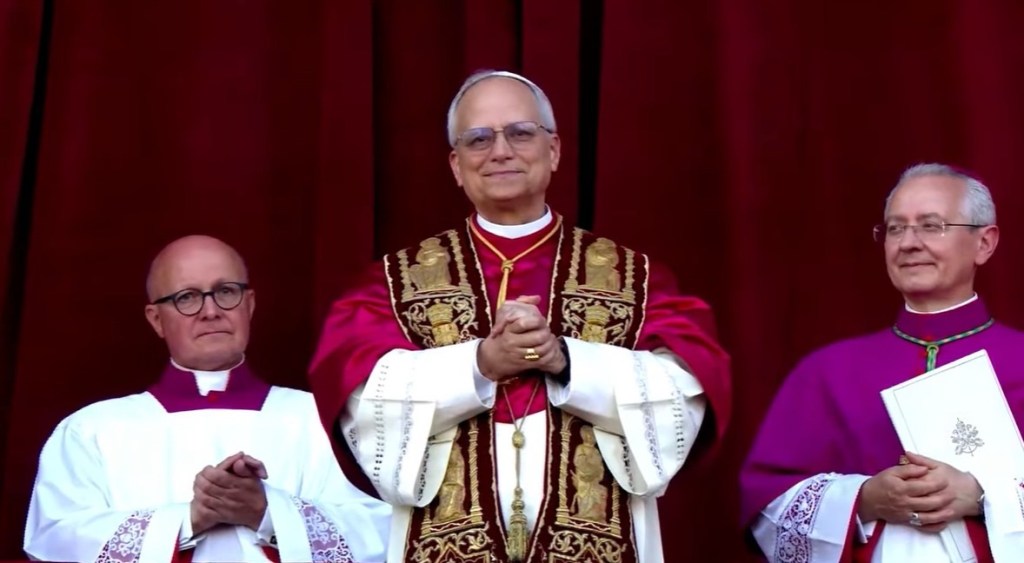
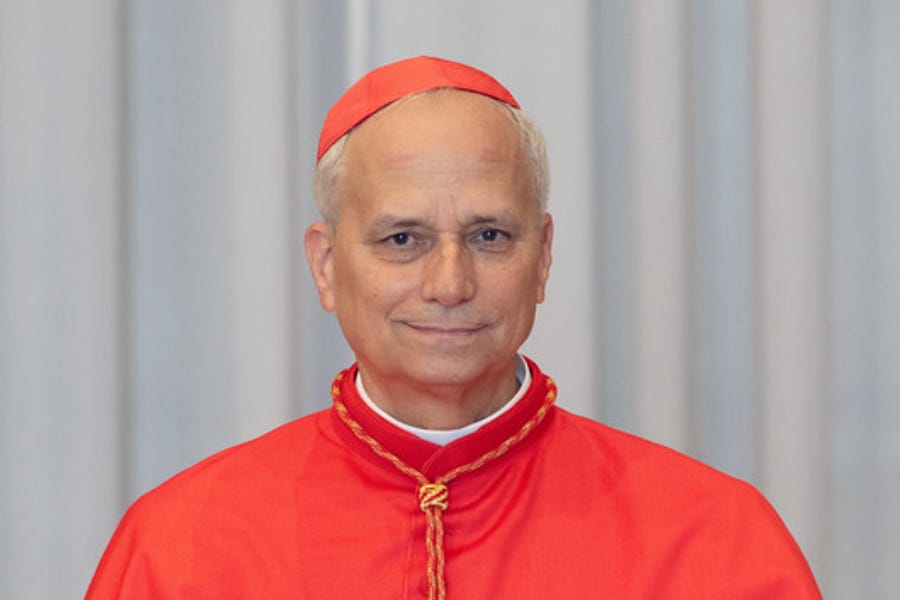
Cardinal Robert Francis Prevost elected as the 267th Pope, taking the name of Pope Leo XIV

Cardinal Robert Francis Prevost has been elected as the 267th Pope, Vicar of Christ and Supreme Pontiff, as the Successor of St. Peter the Apostle and the Leader of the One, Holy, Catholic and Apostolic Church.

He has chosen the name of Pope Leo XIV.

Livestreaming of the Sistine Chapel Chimney for Papal Conclave 2025

Sunday, 11 May 2025 : Fourth Sunday of Easter, Good Shepherd Sunday and Vocation Sunday (Homily and Scripture Reflections)

Liturgical Colour : White

Dear brothers and sisters in Christ, this Sunday is the Fourth Sunday of Easter and it is also commonly known as the Good Shepherd Sunday or Vocation Sunday. On this Sunday we remember the Lord as the Good Shepherd, the One Who guides all of the faithful people of God, the sheep of the Lord’s flock to return to God our loving Father and Creator, gathering us all from being scattered all throughout the whole world, so that we are no longer lost to Him. On this Sunday we also keep in mind all those who are discerning their vocation in life, and while we often put a lot of focus and emphasis on those who are being called to the priesthood, this day is in fact also a reminder of our various vocations in life, be it as those called to priesthood or consecrated life, as well as those who are part of the laity, in our diverse callings in life.

In our first reading this Sunday, we heard from the Acts of the Apostles of the actions and works of St. Paul the Apostle and his companion in ministry, St. Barnabas, who was also an Apostle. Both of them went through the regions of Perga and Pisidia which were in Asia Minor, what is now part of modern day Turkey, where they ministered to the people of God, both amongst the Jews in the diaspora communities there, as well as among the Gentiles or the non-Jewish people. St. Paul in particular was well-known for his outreach and efforts to proclaim the Good News of God among the Gentiles, and was very adamant in the equality between the Jews and the Gentiles, and how there should be no distinction between the two groups of people as God loves everyone of His followers equally and and wonderfully.

But many among the Jewish community, even in the diaspora, particularly thosewho who belonged to the school of the Pharisees and their supporters, namely those who upheld a very strict and rigid observance of the Law of God, and who were often very elitist and exclusivist in their faith, considering that God’s salvation and grace were meant only for the people of Israel and their descendants, and all the other people were doomed to condemnation and destruction unless they would adopt completely and entirely the whole Jewish customs and practices, that essentially therefore turned them into a Jew. This is something that is very difficult for the Gentiles, consisting of the Romans, the Greeks, Egyptians and many other local people, whose own customs and practices were very different from the Jews, and many of the Jewish customs and practices such as circumcision were abhorrent and disgusting to the Gentiles.

That was why St. Paul and St. Barnabas reached out to the Gentiles, since some if not quite a few among the Jewish populations in those cities they visited were not very keen or welcoming on the words and teachings that they had been bringing with them. But as we heard, this incited jealousy among the Jewish people in the region because St. Paul and St. Barnabas proclaimed salvation for all the people, both Jews and Gentiles alike, which were not agreeable to those among the Jewish people who upheld the ideas I mentioned earlier. They stirred up trouble and unrest and led to St. Paul and St. Barnabas to be expelled from the region. Nonetheless, both Apostles had already succeeded in planting the seeds of faith among the people, and they continued on their works despite all those challenges and trials that they had to face in their journey.

Then, from our second reading this Sunday, we heard from the Book of Revelations of St. John the Apostle in which the heavenly vision of St. John was highlighted to us. In that vision, St. John saw the multitudes of people, millions upon millions of people who had been found worthy by the Lord because they had been persecuted, facing difficulties and hardships, trials and challenges, and yet remained faithful to the Lord regardless to the very end. All of those people had washed themselves in the Blood of the Lamb, either in sharing His death through their martyrdom or by patiently enduring those sufferings in all of their various forms. Through this vision, God wanted us all to know through St. John the Apostle that there is hope for all of us and regardless of the sufferings and challenges that we may encounter in our paths in life, we will eventually be triumphant with God and freed from all those troubles.

There had been many challenges and trials facing the Church from the very beginning of its existence. Persecutions and trials, betrayals and many other hardships had been facing the faithful people of God from the very beginning of the Church, and there were many episodes and moments throughout the history of the Church, in all of its two thousand years, that numerous people who have committed themselves to the Lord faced a lot of troubles and hardships because of their faith. Some of them faltered and gave up their faith, and yet there were others who remained firm in their faith. And even among those who have given up their faith, some of them eventually repented and returned to the faith, and were willing to be persecuted again for their faith and trust in God.

This passage is a reminder to all of us that as Christians we must always have faith in the Lord, and we should not be afraid of the trials and persecutions that we may encounter in our path and journey as Christians, in being faithful to the Lord. We must trust in the Lord and in His Providence, in all that He has assured and repeatedly reassured us again and again, in everything that we shall receive and enjoy in the end after our earthly struggles and hardships have come to an end. Whatever sufferings and trials that we may be facing now in this world are not permanent, and the Lord Himself is always faithful to His Covenant and to the great and ever generous love that He has for each and every one of us. We should put our trust fully in His love and do our very best to commit ourselves to Him wholeheartedly at all times.

Lastly, from our Gospel passage taken from the Gospel according to St. John the Apostle and Evangelist, we heard the short account of the Lord’s words to His disciples telling them that He is as the Good Shepherd of the Lord’s flock, He knows His sheep well and conversely, His sheep also knows Him. This is a reminder for all of us again of God’s great love and commitment to us, in His ever enduring and present love for us, in His patient guidance and companionship with us as our loving and most dedicated Shepherd. He has come into our midst to find us all, to gather us all from being scattered all throughout this darkened world so that we may once again be reunited with God, and become members of this same flock, this same Church of God, the one united Body of Christ, which He has established in this world.

And He has shown His great love for us through His actions and most selfless love, by accepting on our behalf the punishments due for our sins and wickedness. He took upon Himself the blame and the punishment due for our sins, which He bore upon the Cross that He took on His shoulders. That is what the Good Shepherd has willingly done for His sheep, as He Himself said, that ‘The Good Shepherd lays down His life for His sheep.’ Essentially this means that a true and good shepherd will always care for his sheep no matter what, and will even put his life on the line for the ones who are truly precious to him. That is indeed the essence of true and genuine Christian love, love that is truly selfless and beautiful, and which all of us are called to follow in our own lives and examples. As Christians we should embody the selfless love of Christ, our Good Shepherd.

It means that we should help one another in  journeying towards the Lord and His salvation, and we share the responsibility of the Good Shepherd in being good role models and inspirations for each other in our respective lives. We should remind one another that every actions and words, deeds and interactions which we make in our lives are all very important, in ensuring that our every efforts, good works and endeavours are always focused on the Lord, and that we will continue to do our best to proclaim Him to everyone we encounter in life, in whatever circumstances and opportunities. And as today we also pray for our priests and all those who are discerning their vocations in life, may all of us be truly discerning in what we are planning to do in our lives, and pray that the Lord will guide us in making careful and well-discerned choice in our lives. May God bless us always. Amen.