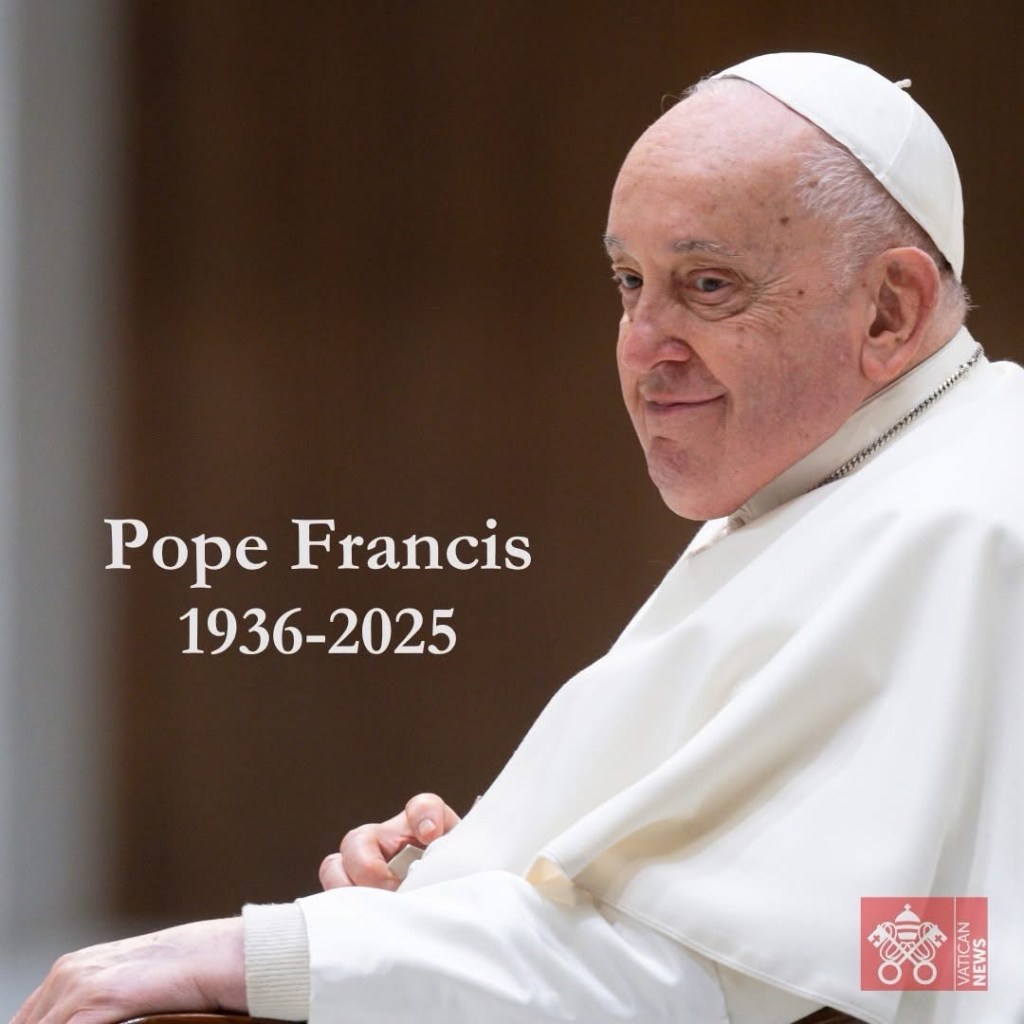
Pope Francis, the 266th Pope and Vicar of Christ passed away on Monday, 21 April 2025.
The Papal Funeral Mass will be on Saturday, 26 April 2025, 10 am Rome Time (CET) – St. Peter’s Square.
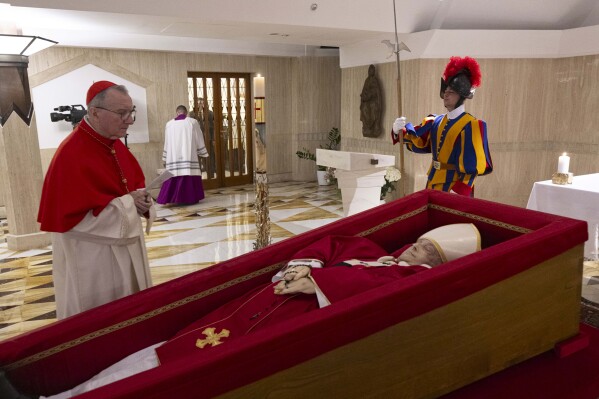

Pope Francis, the 266th Pope and Vicar of Christ passed away on Monday, 21 April 2025.
The Papal Funeral Mass will be on Saturday, 26 April 2025, 10 am Rome Time (CET) – St. Peter’s Square.
The private residence of the Pope in the Vatican City, that is his apartment in the Apostolic Palace beside the Basilica of St. Peter is left vacant upon the death of the Pope as Pope Francis, the 266th Pope has just passed away on Monday, 21 April 2025.
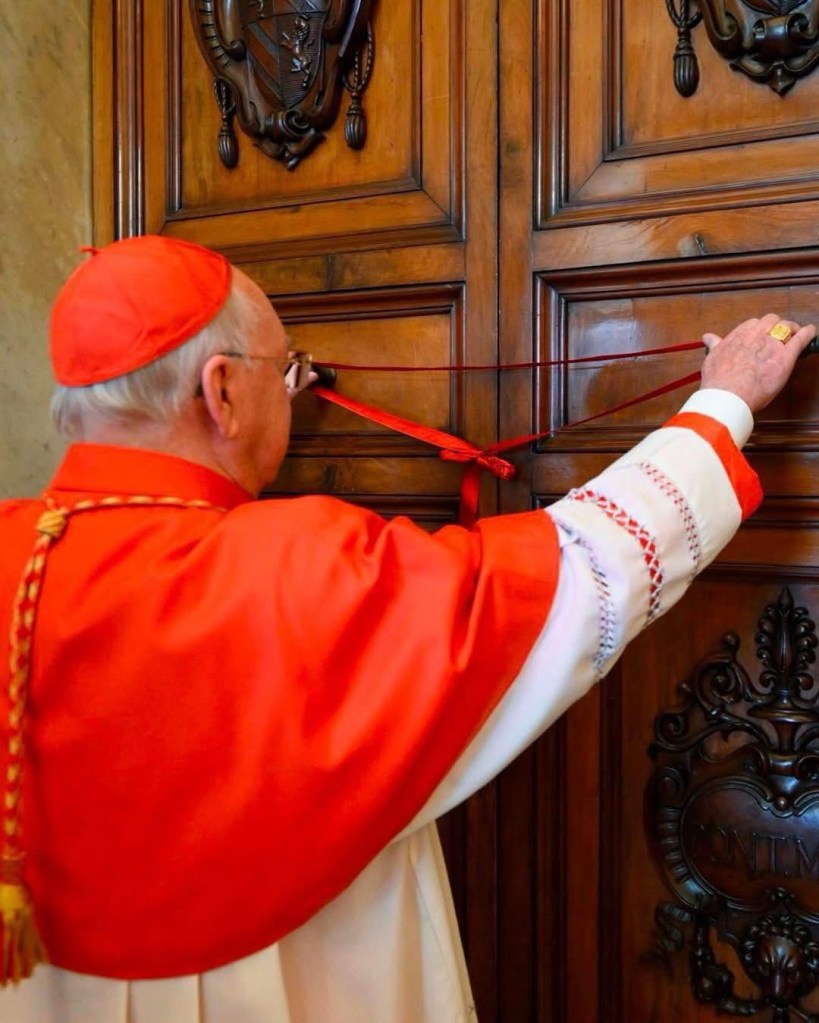
Therefore, in order to avoid fraud and manipulation of papal documents of the previous Pope, and to prevent release of items that can only be done by the new Pope, the Pope’s Apartment is sealed, by a special officer of the Roman Curia, that is the Camerlengo (Chamberlain) of the Holy Roman Church, who is now Cardinal Kevin Farrell, who is also the Prefect of the Dicastery for the Laity, Family and Life.
The Camerlengo is the leader of the sede vacante transition period, and working in conjunction with the Dean of the College of Cardinals. His duties include sealing the Pope’s apartment and the destruction of the Pope’s Ring of the Fisherman, both of which meant to ensure no fraud documents can be released in absence of the Pope.
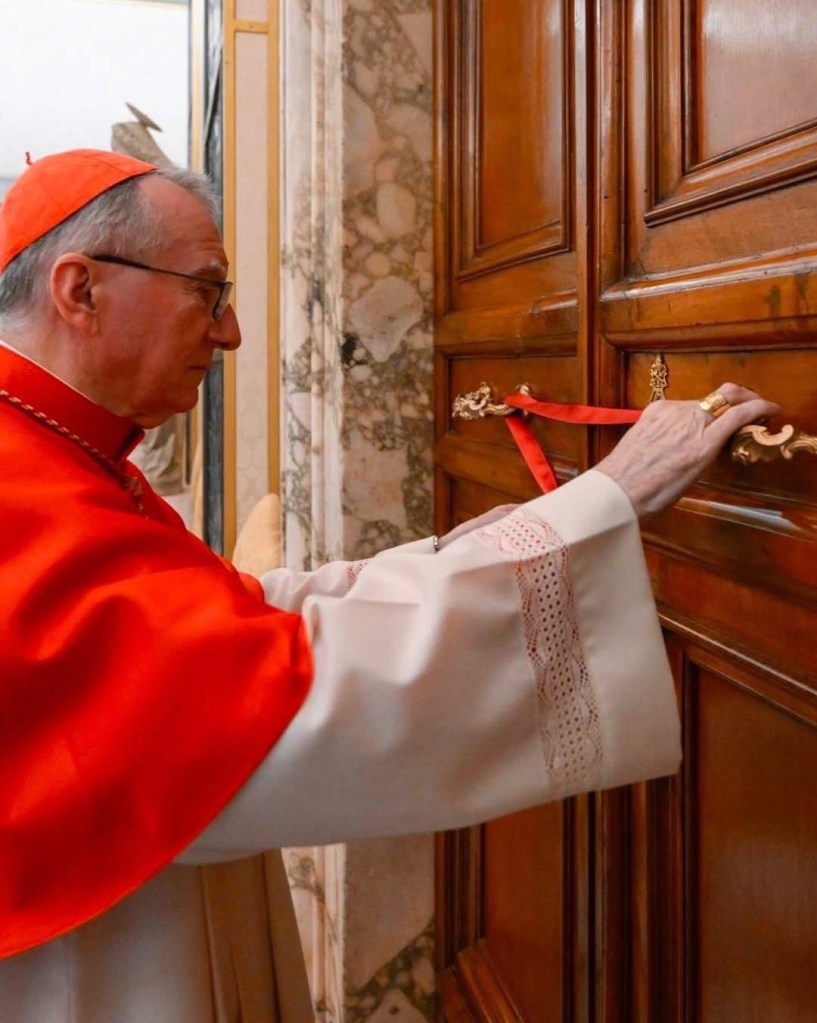
The sealing is done as soon as the Pope passed away or stepped down, and done in the presence of the Vice-Camerlengo, who is now Archbishop Ilson de Jesus Montanari, and sealed with a silk string tied and sealed with a wax seal to ensure no one can enter the room, with the unbroken wax seal as evidence.
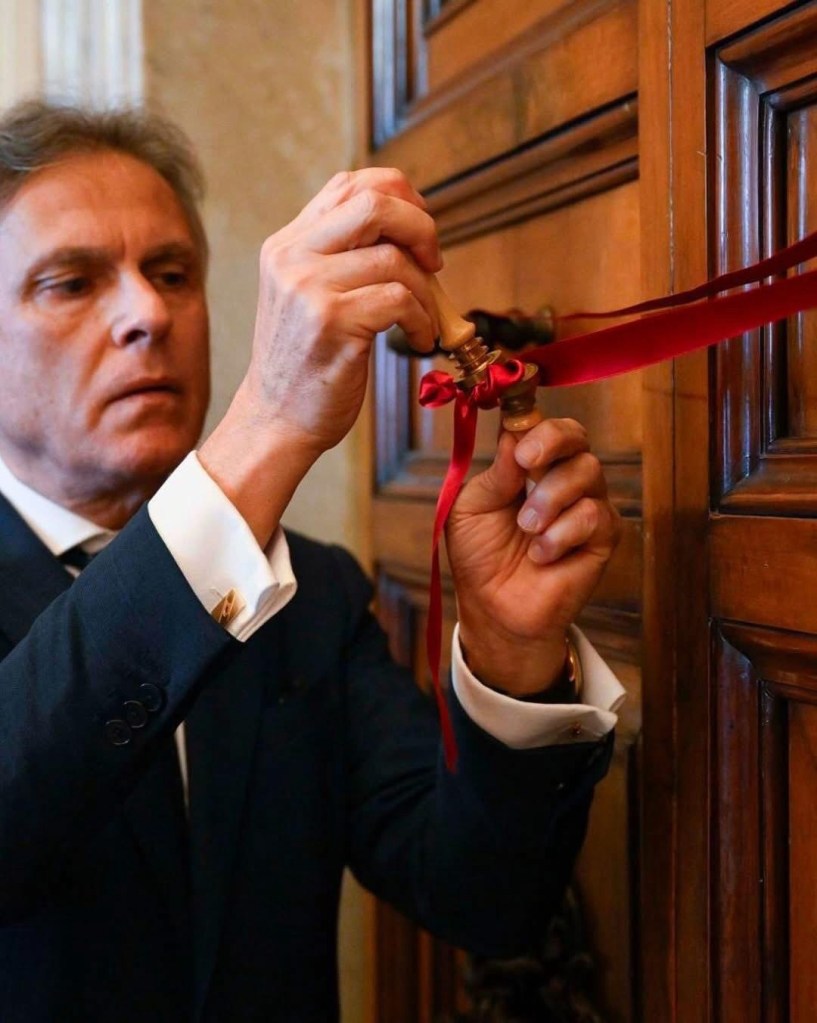
The room will only be opened again and the seal broken after the conclave is completed and a new Pope is elected.
Pope Francis has passed away in the Vatican at the age of 88, today on Monday, 21 April 2025.
Requiescat in Pace, Holy Father 🙏
Liturgical Colour : Green or Red (Martyrs)
Dear brothers and sisters in Christ, today as we all listened to the words of the Scriptures, we are reminded that each and every one of us as Christians, as God’s holy and beloved people, each and every one of us are called to commit ourselves wholeheartedly to the path that God has called us to walk through, following the examples of the Lord Himself, Our Saviour and High Priest Who has obeyed so perfectly the will of His Heavenly Father so that by His perfect obedience, He may show all of us mankind the path towards eternal life and salvation. He has become the perfect Man, the New Adam and the New Man that all of us as Christians are called to follow and embody in our own lives, embracing wholeheartedly our Christian faith in everything that we say and do at all times.
In our first reading today, the continuation from the discourse by the author of the Epistle to the Hebrews on the nature and the works of the Messiah, in which the author continued to elaborate on the role which Christ as the Messiah had played in the story of our salvation. As the author was writing to the audience composed of the Jewish people, likely both those who have believed in the Lord and also those who have not yet believed, he explained in detail throughout this Epistle Who the true and real identity of Jesus Christ was, the One Whom the Jewish leaders and authorities had rejected, oppressed and then handed over to the Romans to be crucified. This Epistle to the Hebrews instead presented this crucifixion as part of the plan of the Lord in saving all of His people just as He has promised and prophesied through His prophets like the prophet Isaiah.
The account from this Epistle further highlighted the actions that Christ has done at the pinnacle of His salvific mission, in offering on our behalf the perfect offering for all of our multitudes of sins, in the manner how the priests of the Israelites offered sacrificial offerings for the people of God. Those priests had to first offer sacrifices for themselves first because they themselves were sinners and had to atone for their own sins first, before offering the sacrifices on behalf of the people who came to them seeking their help. But it is different for the case of the Lord Jesus, the One and only True High Priest of all because He is perfect and without any taint of sin, and hence had no need to offer sin offering for Himself.
And most amazingly, while He Himself is blameless and without any fault, He chose willingly to bear the blame and the punishment assigned to Him, imposed on Him by the Jewish leaders and authorities, who blamed on Him the fault of rebellion and blasphemy against God, that He was handed over to the Romans to be crucified. Yet, as those who were familiar with the Scriptures would realise, this persecution and suffering of the Messiah that God had sent to be with His people has been foretold by the prophets, and it was by this willing sacrifice that the Lord Jesus Christ, the Saviour of all, offered His own Most Precious Body and Blood on the Altar of His Cross, by which He has purchased all of us, once and for all, the redemption for all of our innumerable sins.
Then from our Gospel passage today, taken from the Gospel according to St. Mark the Evangelist, we heard of the words of the Lord Jesus against those people who questioned Him on why those Pharisees and the disciples of St. John the Baptist carried out fasting and other pious practices but His disciples did not do the same. This was because at that time the Pharisees and the teachers of the Law were particularly strict in how they interpreted the Law of God, requiring all the people to follow the Law strictly, and one of them was the requirement for fasting, and how they ought to fast in the right manner. However, they placed so much emphasis and time focusing on how they observed and practiced the Law, that they ended up neglecting to follow the Lord faithfully and with God at the centre of all things.
The Lord also presented to them all the parable of the new wine and wineskin, old wine and wineskin, as well as new cloth and old cloth. This parable is meant to highlight first of all the fact that the Lord’s coming revealed truths about the Lord and His Law, His intentions and desire for His people, all of us, to fulfil them all perfectly and to correct the erroneous ways that His will, His Law and commandments have been received by the people, particularly by those who interpreted the Law and practiced them. Secondly, it is also a reminder for us that if we truly want to follow the Lord wholeheartedly and completely, then there is a need for us all to follow His path and reject the old path of worldliness that we may be familiar with. Otherwise, if we do not do so, we are no better than hypocrites.
Today, the Church also celebrates the feast of not just one but two amazing men of God whose faith and dedication to Him should be reminders for all of us to be truly faithful and committed as well in our own lives, in our obedience to God and His cause, and in doing whatever we can so that we may imitate their good and faithful lives, and realise how being good Christians may often require us to make sacrifices and to be ready and prepared to face challenges, trials and even oppressions for our faith in God. Pope St. Fabian and St. Sebastian both have suffered for their faith in God, being persecuted for their belief in Jesus Christ, the Saviour of all. However, they remained firmly faithful even despite all those sufferings and becoming for us great inspirations and role models to follow.
Pope St. Fabian was born into a noble Roman family during the third century after the birth of Christ, at a time of great challenges and turmoil for the Church and the faithful as they often encountered harsh persecutions and oppressions from the Romans who treated Christians and their faith as those who deserved to be punished and killed, unless they abandoned their faith. His election as Pope was truly remarkable in the sense that when the previous Pope, his predecessor passed away and the election for the successor took place, the future Pope St. Fabian was actually just visiting, and amidst all the competition between all the influential candidates at that time, no one minded Pope St. Fabian at all until a dove miraculously descended upon him, and the whole assembly acclaimed him as the new Pope. He would go on to carry out many great deeds and works as Pope.
Meanwhile, not much was known about the early life of St. Sebastian, but according to Church tradition and his hagiography, he was a young man who joined the Roman military during the time of the reign of the then Emperor Carinus, and then under his successors, Emperors Diocletian and Maximian. Those two Emperors were notorious for their very harsh and terrible persecution against Christians, but St. Sebastian managed to become one of the captains of the Praetorian Guards, the guards of the Emperor himself. In that capacity, he managed to help several of the captive and persecuted Christians, and even managed to convert some of those involved in the arrest and persecution of Christians.
Eventually, after the relatively long reign of about fourteen years for Pope St. Fabian and after the clandestine efforts in helping Christians and converting others for St. Sebastian, both of them were found out in their efforts and faith as Christians, with Pope St. Fabian being persecuted by the new Roman Emperor Decius, who unlike the previous Emperors that had been more tolerant of Christianity, he was a hardliner, arrested Pope St. Fabian and executed him for his faith as an example to all the other Christians. St. Sebastian meanwhile was persecuted by another harsh persecutor, the Emperor Diocletian, who was particularly displeased that one of his own Praetorian captains was a Christian. He was shot with many arrows, but miraculously survived and cared for by a Christian widow, before being martyred after he rebuked the Emperor publicly for his actions against Christians.
Brothers and sisters in Christ, the essence of what we have heard in our Scripture passages today and the lives of those saints whose memory we commemorate is that we must appreciate the great love, compassion and kindness which God has given to us so generously through His Son, and therefore, just as He has suffered in doing so, being rejected by the world and all those who dwelled and remained in sin, and how Pope St. Fabian, St. Sebastian and many other saints and holy men and women of God had done, let us all realise the challenges, difficulties and sufferings that we may face amidst our lives as Christians in this world today. Let us also be ready to live lives that are truly worthy of God at all times so that we may be good role models and inspirations ourselves to one another. Amen.
Liturgical Colour : Green or Red (Martyrs)
Mark 2 : 18-22
At that time, one day, when the Pharisees and the disciples of John the Baptist were fasting, some people asked Jesus, “Why is it that both the Pharisees and the disciples of John fast, but Yours do not?”
Jesus answered, “How can the wedding guests fast while the Bridegroom is with them? As long as they have the Bridegroom with them, they cannot fast. But the day will come when the Bridegroom will be taken from them, and on that day they will fast.”
“No one sews a piece of new cloth on an old coat, because the new patch will shrink and tear away from the old cloth, making a worse tear. And no one puts new wine into old wineskins, for the wine would burst the skins, and then both the wine and the skins would be lost. But new wine, new skins!”
Liturgical Colour : Green or Red (Martyrs)
Psalm 109 : 1, 2, 3, 4
The Lord said to my Lord, “Sit at My right hand till I make Your foes Your footstool.”
From Zion the Lord will extend Your mighty sceptre and You will rule in the midst of Your enemies.
Yours is royal dignity from the day You were born in holy majesty. Like dew from the womb of the dawn, I have begotten You.
The Lord has sworn, and He will not take back His word : “You are a Priest forever in the order of Melchizedek.”
Liturgical Colour : Green or Red (Martyrs)
Hebrews 5 : 1-10
Every High Priest is taken from among mortals and appointed to be their representative before God to offer gifts and sacrifices for sin. He is able to understand the ignorant and erring for he himself is subject to weakness. This is why he is bound to offer sacrifices for his sins as well as for the sins of the people.
Besides, one does not presume to take this dignity, but takes it only when called by God, as Aaron was. Nor did Christ become High Priest in taking upon Himself this dignity, but it was given to Him by the One Who says : You are My Son, I have begotten You today. And in another place : You are a Priest forever in the priestly order of Melchizedek.
Christ, in the days of His mortal life, offered His sacrifice with tears and cries. He prayed to Him Who could save Him from death, and He was heard because of His humble submission. Although He was Son, He learnt through suffering what obedience was, and once made perfect, He became the source of eternal salvation for those who obey Him. This is how God proclaimed Him Priest in the order of Melchizedek.
Liturgical Colour : White
Dear brothers and sisters in Christ, today as we listened to the words of the Sacred Scriptures and as we continue to progress through this time and season of Christmas, the time of great rejoicing in celebrating the birth and arrival of the Saviour of the whole world, Jesus Christ, the Son of God, the true reason of our Christmas joy and celebrations, we should always hold onto the fullness of truth, hope and reassurances that we have received from God Himself. All of us as Christians must be the bearers of the Good News of God’s salvation in how we live our lives each day and in how we celebrate Christmas, so that everyone may come to know more about the Lord through them. This Christmas is truly a great opportunity for us to tell everyone about the Lord and His salvation.
Unfortunately, the reality is such that many people around the world do not celebrate Christmas in this manner. Many people focused on all the excesses of worldly pleasures and desires, all the temptations of glamour, glory and merrymaking that cause us to indulge in those pleasures instead of rejoicing in the manner that we should have done. Christmas has often become so secularised and commercialised in many parts of the world that even Christians themselves had forgotten and overlooked the very reason why we all gather together and rejoice during this time and season of Christmas, that is to be joyful at the coming of the Lord’s Salvation into our midst and to thank Him for all the love that He has shown us.
Many celebrations of Christmas focused instead on the details about the festivities, all the food, drinks and gifts that we partake and share in. Those things became the focus and emphasis in many of our Christmas observances and celebrations, while the One Whom we all ought to be celebrating about was overlooked and forgotten. We can see clearly all around us during this time of Christmas festivities, how many of those celebrations and decorations actually include and depict the Lord and His Nativity, as compared to the focus on the gifts and grandeur of our celebrations, and all other things which may easily distract us away from the Lord and His righteous path. And unless we are vigilant, we may also fall into this same path, sometimes without us even realising it.
That is exactly what our first reading today from the Epistle of John the Apostle spoke strongly about the antichrists and the false prophets, all of whom proclaimed words and gospels that were different from what the Lord had revealed and spoken to His people. Even at that time during the early days of the Church, there were already those who tried to subvert the truth and the Good News of God to suit their own selfish purposes and desires, or trying to gain more popularity and power for themselves. St. John spoke of the need for all the faithful to reject the temptations of Satan, and to continue to uphold the righteous path which has been shown and taught to them by God through His Church.
Then, from our Gospel passage today taken from the Gospel according to St. John the Apostle and Evangelist, we heard of the well-known and powerful revelation, testimony and declaration on Who the true identity of the Lord Jesus is, He Who is not just merely a Man and Son of Man, but Who is also the Divine Son of God, the Word of God incarnate in the flesh, appearing before all of us and dwelling in our midst just as He has promised to us, and which He has revealed through His prophets and messengers. Through this first chapter of the Gospel of St. John that revealed the nature of the Incarnation of the Word and the Divine Son of God, we are all reminded very clearly of what it is that we truly celebrate this Christmas, this time of glorious rejoicing and festivities, all made possible because God has come into our midst.
The Incarnation of the Word of God, and Him being conceived in the womb of Mary His mother, all of these came to fruition with the birth of this same Saviour, the Lord Jesus Christ, which happened in Bethlehem over two millennia ago. Christmas celebrates this very important moment of the Nativity of the Lord, the moment when the Lord was born into this world, which became the tangible, approachable and visible sign of God’s saving works, as He Himself has come into our midst to dwell among us, to be God Who is with us, Emmanuel, just as it has been prophesied by the prophets like Isaiah in the past. Through the historical coming of the Lord, and eventually His return in the future, all of us have received the renewal of hope and strength, courage and power through the love that the Lord has always had for each one of us.
Today, on this last day of the whole entire year, we are reminded of a great saint and man of God, this day being the Feast of Pope St. Silvester I, one of the Popes of the early Church. Pope St. Silvester I ruled as the Supreme Pontiff and Vicar of Christ for a long period of about twenty-one years, during the time of great changes and renewal for the Church. He became Pope succeeding his predecessor, Pope St. Miltiades shortly after the groundbreaking Edict of Milan, decreed and promulgated by the Roman Emperors Constantine the Great and Licinius, who then triumphed over their enemies and became the rulers of the Roman Empire. Both of them issues this Edict proclaiming toleration of the Christian faith and the ending of the official persecutions of Christianity that had taken place for centuries.
Pope St. Silvester I led the Church during this time of great change, overseeing the great liberation of the Christian worship in Rome and other parts of the Roman Empire, the establishment of many churches and basilicas from the strong support by the increasingly pro-Christian Emperor Constantine the Great. Halfway through his pontificate, another great event in the Church history also took place, namely the First Ecumenical Council, the Ecumenical Council of Nicaea. While Pope St. Silvester I himself did not attend the Council personally, he sent his representatives and legates to take part in the proceedings, and helped the Church to formulate the official codification and standardisation of the faith and teachings, rooting out false teachings and heresies. He performed many other great contributions and works to the end of his life.
Brothers and sisters in Christ, let us all therefore reflect upon what we have just discussed earlier on and from the life and ministry of Pope St. Silvester I. As we continue to progress through the celebration and festivities of this current Christmas season, let us all continue to stay focused on the Lord and put Him at the centre of all things and of all our celebrations and festivities. And as we are about to end this current year and begin a new year tomorrow, let us all strive to live a new life truly attuned to the Lord and be firmly faithful in all of our ways, so that by our every words, actions and deeds, we may reveal the Lord, His truth, His Good News and love to many more people around us, and inspire them all to come towards the Lord. May God be with us all, and may He continue to bless our every good efforts and endeavours. Amen.
Liturgical Colour : White
John 1 : 1-18
In the beginning was the Word. And the Word was with God and the Word was God; He was in the beginning with God. All things were made through Him, and without Him nothing came to be. Whatever has come to be, found life in Him; life, which for human beings, was also light, light that shines in darkness, light that darkness could not overcome.
A man came, sent by God; his name was John. He came to bear witness, as a witness to introduce the Light, so that all might believe through him. He was not the Light, but a witness to introduce the Light; for the Light was coming into the world, the true Light that enlightens everyone. He was in the world, and through Him the world was made, the very world that did not know Him.
He came to His own, yet His own people did not receive Him; but to all who received Him, He empowers to become children of God, for they believe in His Name. These are born, but not by seed, or carnal desire, nor by the will of man : they are born of God.
And the Word was made flesh and dwelt among us; and we have seen His glory, the glory of the only Son of the Father : fullness of truth and loving-kindness. John bore witness to Him openly, saying, “This is the One Who comes after me, but He is already ahead of me, for He was before me.”
From His fullness we have all received, favour upon favour. For God had given us the Law through Moses, but Truth and Loving-kindness came through Jesus Christ. No one has ever seen God, but God-the-only-Son made Him known : the One, Who is in and with the Father.
Liturgical Colour : White
Psalm 95 : 1-2, 11-12a, 12b-13
Sing to the Lord a new song, sing to the Lord, all the earth! Sing to the Lord, bless His Name. Proclaim His salvation day after day.
Let the heavens be glad, the earth rejoice; let the sea and all that fills it resound; let the fields exult and everything in them; let the forest, all the trees, sing for joy. Let them sing before the Lord.
He Who comes to judge the earth. He will rule the world with justice and the peoples with fairness.
 petercanisiusmichaeldavidkang