Wednesday, 18 January 2023 : 2nd Week of Ordinary Time, Week of Prayer for Christian Unity (Gospel Reading)

Liturgical Colour : Green

Mark 3 : 1-6

At that time, again Jesus entered the synagogue. A man, who had a paralysed hand, was there and some people watched Jesus : would He heal the man on the sabbath? If He did, they could accuse Him.

Jesus said to the man with the paralysed hand, “Stand here in the centre.” Then He asked them, “What does the Law allow us to do on the Sabbath? To do good or to do harm? To save life or to kill?” But they were silent.

Then Jesus looked around at them with anger and deep sadness, because they had closed their minds. And He said to the man, “Stretch out your hand.” He stretched it out, and his hand was healed. As soon as the Pharisees left, they met with Herod’s supporters, looking for a way to destroy Jesus.

Wednesday, 18 January 2023 : 2nd Week of Ordinary Time, Week of Prayer for Christian Unity (Psalm)

Liturgical Colour : Green

Psalm 109 : 1, 2, 3, 4

The Lord said to my Lord, “Sit at My right hand till I make Your foes Your footstool.”

From Zion the Lord will extend Your mighty sceptre and You will rule in the midst of Your enemies.

Yours is royal dignity from the day You were born in holy majesty. Like dew from the womb of the dawn, I have begotten You.

The Lord has sworn, and He will not take back His word : “You are a Priest forever in the order of Melchizedek.”

Wednesday, 18 January 2023 : 2nd Week of Ordinary Time, Week of Prayer for Christian Unity (First Reading)

Liturgical Colour : Green

Hebrews 7 : 1-3, 15-17

Scripture says that Melchizedek, king of Salem, priest of the Most High God, came out to meet Abraham who returned from defeating the kings. He blessed Abraham and Abraham gave him a tenth of everything.

Let us note that the name Melchizedek means King of Justice, and that king of Salem means king of Peace. There is no mention of father, mother or genealogy; nothing is said about the beginning or the end of his life. In this he is the figure of the Son of God, the Priest Who remains forever.

All this, however, becomes clear if this Priest after the likeness of Melchizedek has in fact received His mission, not on the basis of any human law, but by the power of an immortal life. Because Scripture says : You are a Priest forever in the priestly order of Melchizedek.

Sunday, 10 July 2022 : Fifteenth Sunday of Ordinary Time (Second Reading)

Liturgical Colour : Green

Colossians 1 : 15-20

He is the image of the unseen God, and for all creation, He is the Firstborn, for, in Him, all things were created, in heaven and on earth, visible and invisible : thrones, rulers, authorities, powers… All was made through Him and for Him. He is before all and all things hold together, in Him.

And He is the Head of the Body, that is the Church, for He is the first, the first raised from the dead, that He may be the first in everything, for God was pleased to let fullness dwell in Him. Through Him, God willed to reconcile all things to Himself, and through Him, through His Blood shed on the cross, God established peace, on earth as in heaven.

Sunday, 23 January 2022 : Third Sunday of Ordinary Time, Sunday of the Word of God, Week of Prayer for Christian Unity (Second Reading)

Liturgical Colour : Green

1 Corinthians 12 : 12-30

As the body is one, having many members, and all the members, while being many, form one body, so it is with Christ. All of us, whether Jews or Greeks, slaves or free, have been baptised in one Spirit, to form one Body, and all of us have been given, to drink from the one Spirit. The Body has not just one member, but many.

If the foot should say, “I do not belong to the body for I am not a hand,” it would be wrong : it is part of the body! Even though the ear says, “I do not belong to the body for I am not an eye,” it is part of the body. If all the body were eye, how would we hear? And if all the body were ear, how would we smell?

God has arranged all the members, placing each part of the body as He pleased. If all were the same part where would the body be? But there are many members and one body. The eye cannot tell the hand, “I do not need you,” nor the head tell the feet, “I do not need you.”

Still more, the parts of our body that we most need are those that seem to be the weakest; the parts that we consider lower are treated with much care, and we cover them with more modesty because they are less presentable, whereas the others do not need such attention. God, Himself, arranged the body in this way, giving more honour to those parts that need it, so that the body may not be divided, but, rather, each member may care for the others. When one suffers, all of them suffer, and when one receives honour, all rejoice together.

Now, you are the Body of Christ, and each of you, individually, is a member of it. So God has appointed us in the Church. First Apostles, second prophets, third teachers. Then come miracles, then the gift of healing, material help, administration in the Church and the gift of tongues.

Are all Apostles? Are all prophets? Are all teachers? Can all perform miracles, or cure the sick, or speak in tongues, or explain what was said in tongues?

Alternative reading (shorter version)

1 Corinthians 12 : 12-14, 27

As the body is one, having many members, and all the members, while being many, form one body, so it is with Christ. All of us, whether Jews or Greeks, slaves or free, have been baptised in one Spirit, to form one Body, and all of us have been given, to drink from the one Spirit. The Body has not just one member, but many.

Now, you are the Body of Christ, and each of you, individually, is a member of it.

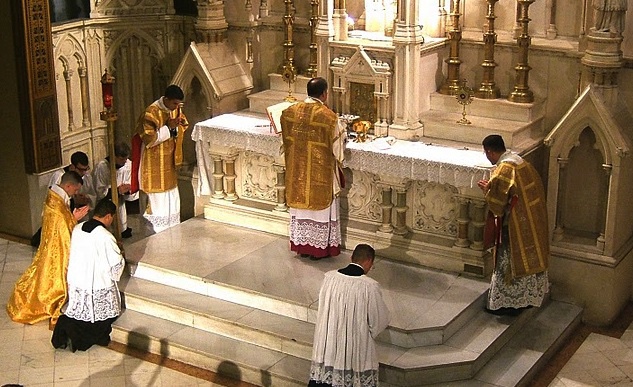
Reflections on the Motu Proprio Traditionis Custodes, for the good of the Universal Church

Brothers and sisters in Christ, I am sure that many of you are left with questions and even disappointments after listening to the publication of the new Motu Proprio ‘Traditionis Custodes’ (Custodians of Tradition) by His Holiness Pope Francis on 16 July 2021 regarding the rules and regulations on the celebration of the Holy Mass in the Roman Rite using the 1962 Missal, also known as the Extraordinary Form of the Roman Rite or Usus Antiquior.

There are undoubtedly many different responses from all segments of the Church, from utter dismay and anger by those who felt betrayed and oppressed by the new stricter regulations, to those who are rejoicing and exuberant because they had long opposed and were vocal critics of the ancient Mass and tradition. Unfortunately, the nature of these responses is exactly why the release of this Motu Proprio is an opportunity for the entire Church to reflect carefully on what our faith and our authentic liturgical expression is all about.

First of all, Traditionis Custodes does not equate the banning or attempt to make the Extraordinary Form of the Roman Rite illegal, unlike what quite a few individuals and groups had been saying. Unsurprisingly, these are the same groups and individuals that had been the very reason why Traditionis Custodes had been promulgated and published in the first place. These are the clear minority among those who treasure faith and tradition, and yet, are the most vocal and radical in their viewpoints, which unfortunately led to the broad characterisation and prejudice against the entire communities of the faithful favourable to the Extraordinary Form and tradition as a whole.

On the other extreme, we also have those who will not stop at anything to ‘change’ the Church and its teachings, a relativistic attitude to conform to worldly preferences and desires, to change the Church teachings and ways to suit the comforts and conveniences of men. These are also usually the same ones who are most jubilant and happy at the imposition of strict regulations as stipulated in the Motu Proprio Traditionis Custodes. In any case, these people who represent extreme attitudes are incompatible with the Universal Church, and were the ones that caused divisions within our Church and the communities of the faithful.

As such, we have to first of all appreciate that the ultimate goal of Popes since the efforts of Pope St. John Paul II in liberalising the use of the Extraordinary Form through the Motu Proprio Ecclesia Dei in 1988 and Pope Benedict XVI with Summorum Pontificum in 2007, is to bring together all the faithful in one expression of faith through the liturgy, encompassing both the liturgical reforms of the Second Vatican Council while appreciating the riches of the tradition of the ancient liturgy, from which the Ordinary Form ultimately also stemmed from.

What the Popes intended is for all the faithful communities to benefit mutually from the best of each liturgies, the theology and the rich symbolism of the ancient Extraordinary Form, its adherence to the rubrics and emphasis on the Sacrificial nature of the Holy Mass, while also appreciating the beauty and outreach of the vernacular and the more widespread use of the Scriptures and its contents in the Ordinary Form, which remained faithful in all to the true essence of the Mass, that is the celebration of the Lord’s one and only Sacrifice at Calvary.

Unfortunately, there were those who continued to be stubborn and refused to acknowledge, respect or accept the reforms of the Second Vatican Council. Although indeed there were abuses and grave errors in how some interpreted the Council and how they took the liturgy to the extent of liturgical abuse, but it can’t be denied that the actions of those who refused to accept the decisions, documents and developments of the Second Vatican Council have led to division within the united Church, the Body of Christ, with some even insisting on more extreme ideologies, rejecting even the Pope and other teachings of the Church.

That is why as we continue moving on forward as one united Body of Christ, the Church, we must make sure that the provisions of the Motu Proprio Traditionis Custodes are adhered to and followed. We have to trust in the Lord and the Holy Spirit, that the bishops to whom the authority had been entrusted in the management of the celebration of the Holy Mass in the Extraordinary Form, will exercise prudence and sound judgment, charity and generosity in extending the permission to celebrate to all those who have been deemed suitable to celebrate with reverence, the Extraordinary Form of the Roman Rite, for the benefit of all the faithful.

We also pray that the Lord will continue to bring us to true unity, that we will no longer be divided by our ideologies, and especially not by our liturgical preferences. The Holy Mass is after all, the same, valid and worthy, regardless whether it is done in the Ordinary Form or in the Extraordinary Form. What is important is the need for us to be reverent in our celebration of the Holy Mass, to be inclusive in our worship and to put God first and foremost in all things, especially in our worship above all else. That is why we should neither discriminate or be prejudiced against either the Ordinary or Extraordinary Form, or to be lacking in proper reverence and respect of the Lord, as some of the worst liturgical abuses had done in the past decades.

Let us all look deep into our faith and the traditions that our forefathers had upheld, and together with the Pope, our bishops and priests, and as one Universal Church, be more united to the Lord through prayer, and resolve to commit ourselves to better and ever more perfect unity through Him, that we may benefit from the riches of both Forms of our most noble Roman Rite, and grow ever stronger in our faith, with each and every passing moment. Let us all grow ever stronger in charity and compassion towards others, and develop a most loving and inclusive community of the faithful, united in the Lord, in purpose and mission, in our love and reverence to the Lord.

Peter C.M. David Kang

康銘琮

Singapore

18 July 2021

Thursday, 25 January 2018 : Feast of the Conversion of St. Paul, Apostle, Week of Prayer for Christian Unity (Homily and Scripture Reflections)

Liturgical Colour : White

Dear brothers and sisters in Christ, on this day we celebrate a great occasion in the history of our faith. In the history of the Church, as recording in the Scripture passages, we heard of the moment when a great enemy of God and His faithful ones, Saul, was converted to the faith, renouncing his former life and sinful past, and embracing the Lord as his Master, he eventually became a great defender and champion of the faith, St. Paul the Apostle.

Today we remember the moment of the conversion of St. Paul, when he was called by God from the depth of the darkness and into the new path in the light as the Lord had shown him. This is the pivotal moment in the history of the Church and our faith, as St. Paul would go on to perform many good works for the sake of the Church, ministering to many of the faithful in many cities throughout his journeys and travels across the Mediterranean, and in his many letters and writings to the faithful.

Brothers and sisters in Christ, the calling and conversion of St. Paul is a reminder for each and every one of us as Christians, that all of us at one point in our own lives have also been called by the Lord in the same manner. We might not have experienced such a miraculous occasion as what St. Paul experienced, but surely God has also called all of us to follow Him, and by being Christians, it means that we have responded to His call.

Yet, many of us do not know what being a Christian truly mean. Some of us even went to the point of ridiculing and looking down on others just because they have not become Christians like ourselves. However, we did nothing in order to bring the Lord closer to the people mentioned. In fact, by our actions, our haughtiness and our indifference, we ended up distancing more and more people from God by our own actions.

First of all, we have to realise that God is calling everyone to Himself, to reconcile all those who have been sundered and separated from His love. We are all sinners and unworthy, and we are just like St. Paul who was once a great persecutor of the faithful, and sinned greatly against the Lord. Many other saints were also once great sinners, like St. Augustine, who once fell into a life of debauchery and sin during his youth days, even to the point of fathering a child out of wedlock.

But God called all of them, and they responded to God’s call in various ways. But what distinguished persistent sinners from saints, is the very fact that they allowed God to work His wonders in them, and they turned away from their sinful way of life, embracing a new way as shown to them by the Lord. They were deemed worthy because of their newfound commitment to God and to His people, and that was how they were made saints of the Church.

St. Paul was just one amongst the many other people who have experienced similar experience of conversion, but his is often highlighted simply because of his impact to the Church in its early years, and therefore, his critical importance and significance to the Church and the faithful as a whole. Certainly, no one who have lived during those years and times when St. Paul was still known as Saul, could have imagined that the fanatical and overzealous Pharisee could have become a great champion of God’s people.

Yet, that was what actually happened. And this is therefore an appropriate time for us to reflect on our own respective lives, based on what we know and from what we have heard with regards to the conversion of the great Apostle, St. Paul. It is a reminder that each one of us have also been called to a renewed life, turning away from our waywardness and from our sins.

What does this mean, brothers and sisters in Christ? It means that all of us, while sinners, can become saints as well, if we are to follow the Lord and put our trust completely in His guidance. It is through our actions and deeds, by which we show our genuine faith in God, that we can draw ever closer to Him, and that we can follow in the footsteps of our forefathers in faith, all those deemed worthy by the Church to be saints and blesseds.

All of us are called to continue the mission entrusted by the Lord to His Apostles and disciples, which is the propagation of the Good News of His salvation, and by calling all to the same repentance and forgiveness, through baptism in the Holy Name of the Most Holy Trinity, Father, Son and the Holy Spirit. This mission is still ongoing, and there are still many people out there, who have yet to receive the Good News, and worse still, many more who have fallen away from the faith.

Let us all therefore do what we can, to follow in the footsteps of St. Paul the Apostle, in his courage and determination to live faithfully, by preaching the Good News of salvation, not only through words alone, but also through deeds, filled with love and genuine care for all of our fellow men. Let us all show love in our actions, by showing our care and concern for all those who are in need, especially those who are in most need of God’s love and mercy.

May the Lord continue to guide us and protect us on our way, that we will always walk faithfully in His path, and that day after day, we will draw ever closer to Him, so that by the end of it all, we may be worthy of sharing the glory of His saints, all those who were once sinners like us, and yet, by their determination and commitment, having received the crown of glory from the Lord, Who blessed them for their wonderful dedication and life consecrated to Him. St. Paul the Apostle, pray for us all sinners, that we may be strengthened by God to be ever faithful to Him. Amen.

Thursday, 25 January 2018 : Feast of the Conversion of St. Paul, Apostle, Week of Prayer for Christian Unity (Gospel Reading)

Liturgical Colour : White

Mark 16 : 15-18

At that time, Jesus told His disciples, “Go out to the whole world and proclaim the Good News to all creation. The one who believes and is baptised will be saved; the one who refuses to believe will be condemned.”

“Signs like these will accompany those who have believed : in My Name they will cast out demons and speak new languages; they will pick up snakes, and if they drink anything poisonous, they will be unharmed; they will lay their hands on the sick, and they will be healed.”

Thursday, 25 January 2018 : Feast of the Conversion of St. Paul, Apostle, Week of Prayer for Christian Unity (Psalm)

Liturgical Colour : White

Psalm 116 : 1, 2

Alleluia! Praise YHVH, all you nations; all you peoples, praise Him.

How great is His love for us! His faithfulness lasts forever.

Thursday, 25 January 2018 : Feast of the Conversion of St. Paul, Apostle, Week of Prayer for Christian Unity (First Reading)

Liturgical Colour : White

Acts 22 : 3-16

Paul spoke to the Jews in Jerusalem, “I am a Jew, born in Tarsus in Cilicia, but brought up here, in this city, where I was educated in the school of Gamaliel, according to the strict observance of our law. And I was dedicated to God’s service, as are all of you today. As for this Way, I persecuted it to the point of death and arrested its followers, both men and women, throwing them into prison.”

“The High Priest and the whole Council of elders can bear witness to this. From them, I received letters for the Jewish brothers in Damascus; and I set out to arrest those who were there, and bring them back to Jerusalem for punishment. But, as I was travelling along, nearing Damascus, at about noon, a great light from the sky suddenly flashed about me.”

“I fell to the ground and heard a voice saying to me : ‘Saul, Saul, why do you persecute Me?’ I answered, ‘Who are You, Lord?’ And He said to me : ‘I am Jesus, the Nazorean, Whom you persecute.’ The men who were with me saw the light, but they did not understand the voice of the One Who was speaking to me. I asked : ‘What shall I do, Lord?’”

“And the Lord replied : ‘Get up and go to Damascus; there, you will be told all that you are destined to do.’ Yet, the brightness of that light had blinded me; and so, I was led by the hand into Damascus by my companions. There, a certain Ananias came to me. He was a devout observer of the law, and well spoken of by all the Jews who were living there.”

“As he stood by me, he said : ‘Brother Saul, recover your sight.’ At that moment, I could see; and I looked at him. He, then, said, ‘The God of our ancestors has chosen you to know His will, to see the Just One, and to hear the words from His mouth. From now on, you shall be His witness before all the pagan people, and tell them all that you have seen and heard.’”

“‘And now, why delay? Get up and be baptised, and have your sins washed away, by calling upon His Name.’”

Alternative reading

Acts 9 : 1-22

Meanwhile, Saul considered nothing but violence and death for the disciples of the Lord. He went to the High Priest and asked him for letters to the synagogues of Damascus that would authorise him to arrest and bring to Jerusalem, anyone he might find, man or woman, belonging to the Way.

As he travelled along and was approaching Damascus, a light from the sky suddenly flashed around him. He fell to the ground and heard a voice saying to him, “Saul, Saul! Why do you persecute Me?” And he asked, “Who are You, Lord?” The voice replied, “I am Jesus, Whom you persecute. Now, get up, and go into the city; there, you will be told what you are to do.”

The men who were travelling with him stood there speechless : they had heard the sound, but could see no one. Saul got up from the ground and, opening his eyes, he could not see. They took him by the hand and brought him to Damascus. He was blind; and he did not eat or drink for three days.

There was a disciple in Damascus named Ananias, to whom the Lord called in a vision, “Ananias!” He answered, “Here I am, Lord!” Then the Lord said to him, “Go, at once, to Straight Street and ask, at the house of Judas, for a man of Tarsus named Saul. You will find him praying, for he has just seen in a vision that a man named Ananias has come in and placed his hands upon him, to restore his sight.”

Ananias answered, “Lord, I have heard from many sources about this man, and all the harm he has done to Your saints in Jerusalem; and now, he is here, with authority from the High Priest, to arrest all who call upon Your Name.”

But the Lord said to him, “Go! This man is My chosen instrument, to bring My Name to the pagan nations and their kings, and the people of Israel as well. I, Myself, will show him how much he will have to suffer for My Name.”

So Ananias left and went to the house. He laid his hands upon Saul and said, “Saul, my brother, the Lord Jesus, Who appeared to you on your way here, has sent me to you, so that you may receive your sight, and be filled with the Holy Spirit.” Immediately, something like scales fell from his eyes and he could see; he got up and was baptised. Then he took food and was strengthened.

For several days Saul stayed with the disciples at Damascus, and he soon began to proclaim in the synagogues that Jesus was the Son of God. All who heard were astonished and said, “Is this not the one who cast out, in Jerusalem, all those calling upon this Name? Did he not come here, to bring them bound before the chief priests?”

But Saul grew more and more powerful; and he confounded the Jews living in Damascus when he proved that Jesus was the Messiah.