Friday, 5 December 2014 : First Week of Advent (Psalm)

Liturgical Colour : Purple or Violet

Psalm 26 : 1, 4, 13-14

The Lord is my Light and my Salvation – whom shall I fear? The Lord is the rampart of my life; I will not be afraid.

One thing I ask of the Lord, one thing I seek – that I may dwell in His house all the days of my life, to gaze at His jewel and to visit His sanctuary.

I hope, I am sure, that I will see the goodness of the Lord in the land of the living. Trust in the Lord, be strong and courageous. Yes, put your hope in the Lord!


Homily and Reflection :

https://petercanisiusmichaeldavidkang.com/2014/12/04/friday-5-december-2014-first-week-of-advent-homily-and-scripture-reflections/

Friday, 8 August 2014 : 18th Week of Ordinary Time, Memorial of St. Dominic, Priest (Scripture Reflections)

Liturgical Colour : White

Dear brothers and sisters in Christ, today we celebrate the feast day of St. Dominic, or also known by his full name of St. Dominic de Guzman, the famous founder of the Dominican order, named after him, known officially as the Order of Preachers or O.P.. The Dominican order had been renowned as a religious order that was often at the forefront of evangelisation and the spreading of the Good News, in perfect accordance to their names as the Order of Preachers.

St. Dominic himself was born in Medieval Spain, a time of much changes and difficulties, and he was a truly devoted and faithful son of the Lord, who eventually joined a holy order and devoted himself fully to God and His people. St. Dominic became a beacon of light to many of those who remain in the darkness, as had been foretold even since before his birth.

His mother, Joan of Aza, received a vision which showed a dog that carried a lit torch that spread light brightly throughout a darkened place, and little that she knew, that this vision would become a reality in her son, St. Dominic de Guzman, who through his actions, and the actions of his compatriots and successors, became a great source of light for those who still dwelled in the darkness of the world.

St. Dominic is an example to all of us, and we all should be inspired by his actions and deeds. We too should follow his footsteps in bringing many more people, our brethren closer to the Lord, just as St. Dominic himself had done before. And that was exactly what the Lord wants from us, to be wholly and completely transformed in our lives that we may glorify and proclaim Him in our actions and deeds.

In the Gospel today, Jesus told His disciples that if they want to follow Him, they need to carry their crosses and follow Him. And that is the reality of life, in which we have to face difficulties in life, if we are to follow the Lord and adhere to His will. It will be different if we choose to conform to the ways of the world, where we will be welcomed by the forces of this world and face less persecution and opposition, but at what cost? Nothing less than the fate and salvation of our very souls.

God had mentioned it clearly at the passage we heard today taken from the Book of the prophet Nahum, who wrote how God would restore those who had been faithful to Him and bless them with greatness, but for those who did not obey Him and walked the path of evil, He would cast out from His path and into the greatest darkness, into an eternal suffering that is without end.

God is merciful and loving, but only to those who repent their ways of evil and abandon their sinfulness will receive grace and eternal rest from the Lord and be saved in eternal grace. He does not desire our destruction or for us to perish as a consequence of our sins, but He gave us a freedom of choice, of whether we want to reject Satan and together then reject sin or whether we embrace sin in our actions, submitting to the temptations of Satan.

What St. Dominic did was that by preaching courageously and strongly against any forms of debauchery and corruptions of sin, he brought many people away from their sinful ways and into the kingdom of God. Many people remained in the darkness because they did not have the opportunity to hear, to see and to feel the light, which St. Dominic and his order of preachers, the Dominicans rectified by bringing the word of God and His truth closer to mankind, especially those who are in darkness.

We too have our parts to play, brothers and sisters, and that is to also bring the word of God to those around us who had fallen along the way on their way towards God and His salvation. And also to those who had yet to listen and know the truth about God, let us all bring His light unto them. This is done not just by words alone, but also through actions and deeds, that in all the things we do, we should do it according to God and His ways, and show that we truly belong to the Lord, and not to Satan and his evil forces instead.

May Almighty God therefore guide us on our ways, that we may be the bearers of the light and the truth, so that in all the things we do and we say, we may truly proclaim the Lord as our Lord and God, and rebuke Satan and his lies, designed to deter us and prevent us from ever reaching our loving God. Let us also ask for the intercession of St. Dominic, that we may be faithful and courageous in showing our faith to others just as he had once been faithful. God be with us all. Amen.

A Brief State of the Church in China – a Church in Trial and Persecution, a Church of Martyrs, a Church of Hope

The Church in China (1949) consisted of :

20 Archdioceses

85 Dioceses

39 Apostolic Prefectures

3,080 Missionaries

2,557 Chinese priests (Total : 5,637 priests)

4 million Catholics


The Church in China (2014) consists of :

20 Archdioceses

94 Dioceses

34 Apostolic Prefectures

1 Apostolic Exarchates

3,500 priests (approximate)

12 million Catholics (both open and underground)


Looking at the above comparisons, we can see a wary future for the Church in China, which had been in official and unofficial persecution for the past six and a half decades since 1949, the year when the Communist Party of China took over power in China. Since then, the Church in China, which was once among the most vibrant and fastest growing in the world, had been in great tribulation and period of persecution. Especially during the Cultural Revolution years in the 1960s, there were great attacks against the faithful and the faith throughout the country.

On one side, it seems that there had been a growth in the number of Catholics and in terms of the growth in the number of the dioceses. However, if we look deeper into the reality of the Church and the faith, there had been a great trouble that threatened many of the faithful, especially being divided between the ‘official’ government-sanctioned ‘church’ and the underground ‘loyal’ Church.

Many of the Archdioceses and dioceses are vacant, or that their bishops are not recognised as valid and legitimate, having often been government-picked, and more of a loyal men to the government rather than true and good shepherds for the faithful. Many of the bishops were picked by the government-sanctioned Chinese Patriotic Catholic Association or CPCA, whose leaders have often been noted to be not just laymen, but even non-baptised people.

There had been much grievances and controversies in the recent years in the illegitimate and illegal election and ordination of bishops by the CPCA and the Chinese government which were not approved by the Holy See. On some occasions, the bishops did receive blessing from both parties, but in many other cases, it was the contrary. This further deepened the division among the faithful in China.

Many of China’s priests and bishops are underground, that is they remain faithful and loyal to the completeness of the faith in the Church, and unaffected by the pressure from the government to obey them. There had been great persecution against them and the faithful under their care, such that imprisonments and forced labour are not uncommon.

Ma_Daqin_2_(600_x_450)

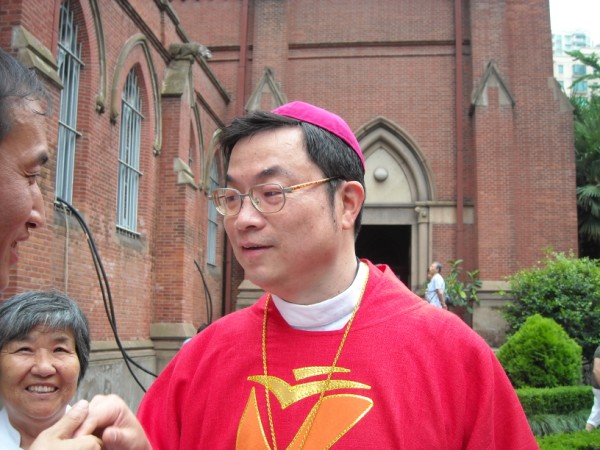
And recently, just almost two years ago, the then newly appointed Auxiliary Bishop of Shanghai, Bishop Thaddeus Ma Daqin bravely and courageously announced his resignation from the CPCA, the official ‘church’ of China at his own episcopal ordination, which was done with the blessing of the Holy See and the Pope. This resignation triggered a massive response from the government which resulted in his incarceration for the past two years, and he had greatly suffered for this. His episcopal motto is clear and indeed clearly highlighted his wish for the unity of the Church in China with the Universal Church, free from any external intervention. His motto is “Ut Sint Unum ad Maiorem Dei Gloriam” or “That they may be One, for the greater glory of God.”

The Church in China still grows, and more and more people hunger for the truth that Christ can offer them. There are many opportunities at evangelisation, and many brave and courageous ministers of the Lord’s Gospel went forth even against the challenges that await them. The recent attacks by the government on the Christian faith, as shown by the demolition of a church building in Wenzhou show how much the authoritarian government fears the power and influence that the Church and the faith may have in bringing about their downfall. The downfall of Communism and the authoritarian governments in Eastern Europe must still be fresh in the minds of the autocrats in Beijing, and they fear their own demise if they allow the faith to grow unchecked.

There is still great hope in the Church in China, and there is genuine faith in the people, who desire to be reunited completely with their brethren in faith, all of us, in the Universal Church, and be freed from any form of pressure or external domination, which are unjust and uncalled for. But they need our prayers, our support and our encouragement.

a2b631b0

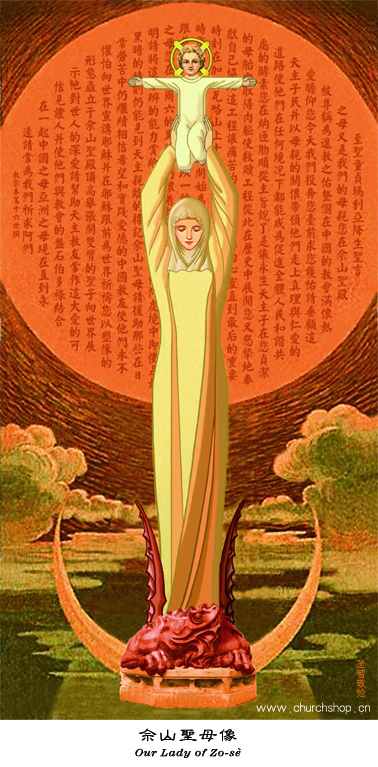
Let us ask for the intercession of the Blessed Mother of our Lord, Mary, the Help of Christians, who in the above picture is depicted as our Lady of Zose or Sheshan, from a famous pilgrimage site in Sheshan near Shanghai. Let us ask for her intercession for the Church in China and for the faithful there, our brethren in faith. Just as once the Lord had done His great works through Pope St. John Paul II, another great saint, to cast down the tyranny of atheism and unbelief in the states of Eastern Europe and Russia, may our Lady of Sheshan also intercede for the sake of our brethren in faith in China, a great nation and a great civilisation and yet is filled with worldly hatred of the devil who hates the Church and all its faithful.

We also pray that there will be a new spirit of dialogue and renewal, and that those entrusted with power at the top of the Chinese government hierarchy will finally realise the futility and the inhumane nature of their attempts to control the Church and the faithful. We hope that there will be an amicable and peaceful solution, that the Church in China may be completely reunited once again with the Universal Church, free from all the current issues and dilemmas, and free from any political arguments and intrusions by any external forces.

May the Lord be with His people always, protect them, bless them, and guide them to the light of Christ. May He give them rest and grace, after all the difficulties and challenges that they have faced, in the courageous and zealous defense of their faith in Him. Amen.

Sunday, 26 January 2014 : 3rd Sunday of Ordinary Time (Psalm)

Liturgical Colour : Green

Psalm 26 : 1, 4, 13-14

The Lord is my Light and my Salvation – whom shall I fear? The Lord is the rampart of my life; I will not be afraid.

One thing I ask of the Lord, one thing I seek – that I may dwell in His house all the days of my life, to gaze at His jewel and to visit His sanctuary.

I hope, I am sure, that I will see the goodness of the Lord in the land of the living. Trust in the Lord, be strong and courageous. Yes, put your hope in the Lord!

Thursday, 26 December 2013 : Feast of St. Stephen, Protomartyr (Scripture Reflections)

Liturgical Colour : Red

Brothers and sisters in Christ, today we celebrate the feast day of the first martyr of the faith, that is St. Stephen, known also as the Protomartyr or simply the first martyr in Greek. We celebrate today the memory of this great and zealous defender of the faith, the very first one to gave up his life for the sake of Jesus the Lord.

Many of you may ask, why do we suddenly and so quickly jump from the joyous celebrations of Christmas into the sombre celebration of one’s death, a martyr of the faith no less? That is because St. Stephen died not for nothing, but because he gave up his life as an example to the faithful, that we should never ever leave behind or abandon the true joy of Christmas in Jesus.

St. Stephen met his death because he rebuked harshly the Pharisees and the chief priests who were judging him, because of their lack of faith in Jesus, and because of their compliance in killing the very One sent by God to deliver everyone from sin and death, themselves included. He met his death because he spoke the truth, about the Lord who came to save His people in Jesus, the joy and glory we celebrate on Christmas day.

Therefore it is no less fitting that we celebrate in honour of this saint who had courageously defended the Christ who was reviled, rejected, and cast out by His own beloved people. He did not fear man but God alone. And he truly followed the way of the Lord, imitating even Jesus in death. Remember that Jesus forgave His executioners and those who condemned Him, asking the Father not to punish them for what they had done? What St. Stephen had done was essentially the same thing.

We rejoice in the Lord at Christmas, and we celebrate with great joy and festivities, but have we put Christ at the centre of our joy and our celebrations? Or have we forgotten entirely about Him in our festivities? We cannot be Christians if we do not put Christ at the centre of our lives, just as we cannot have Christmas if we do not put Christ at the heart of what we are celebrating.

To be Christian is to follow what St. Stephen had done, maybe not into martyrdom as what had happened to him, but in terms of zealous and unchanging faith, even in the midst of persecution and societal pressure for us to do otherwise. It is sad to see how many of the faithful have changed their views of the faith, and even the faith that they have itself, to accommodate to the currently popular ways of the world.

Many of them did these because they fear persecution, opposition, ridicule, and many other similar reasons. Many did them because of the pressure to conform to the societal ‘norms’, especially the socially acceptable ones. Many did so because they do not want to look weird or unacceptable to their peers and friends. And some did so because they craved power and popularity, which they could not have gained if they keep faithfully the faith in the Lord in its completeness.

And Christmas too have often become none other than just another party time or shopping and holiday season. Christmas had become so commercialised and infused with the greed and the values of the world that we have often forgotten about Christ. Between Christmas and how we live our lives according to our faith, both are no different, assailed at all sides by the forces of the evil one seeking our destruction.

That is why, brothers and sisters in Christ, it is important that in this Christmas season that we look at, and emulate the examples that St. Stephen had presented to us, and what he had shown to his opponents in that judging session. St. Stephen proudly and without fear, proclaimed his faith in God aloud, without compromise and without seeking for acceptance at the price of his faith.

St. Stephen served God’s people as one of the first seven deacons, and even though his service might have been very short indeed, but his holiness and exemplary actions show that, being a Christian, and in the celebration of Christmas, firstly Christ must always be at the centre of everything, be it our lives, how we live our daily lives, in our words and actions, and in everything. We cannot be half-hearted Christians, who believed in only what we like to believe in, or what is often called to be “market” or “cafetaria” Christians.

Therefore, brothers and sisters in Christ, as we continue our celebration of Christmas, and as we rejoice in the great saint, Stephen the martyr, let us always remember to devote ourselves wholly and without distractions to the Lord, keeping the faith we have for Him devoutly, without compromising anything for the sake of the world. Both St. Stephen and Jesus Himself did not compromise anything, for the sake of what they are called to do in this world. For St. Stephen, it is for the glory of God, and for Jesus, it is for the salvation of all.

May St. Stephen pray for us, that the Lord will send His help to us, to strengthen our faith, and to be ready to stand up for our faith in the same way as St. Stephen had done, fearing not the powers of this world and proclaim our faith in its entirety. May we all have a blessed time this Christmas season and may God be with us all always. Amen.

Saturday, 7 December 2013 : 1st Week of Advent, Memorial of St. Ambrose, Bishop and Doctor of the Church (Scripture Reflections)

Liturgical Colour : Purple/Violet or White (Bishops)

Brothers and sisters in Christ, today we celebrate mission and the fruits of the mission that Jesus Himself, our Lord, has commissioned the disciples to do. The Lord sent out His call to repentance and salvation to all the nations, and through His disciples, in the missions He gave them, He offered all peoples, literally all mankind, the opportunity to be saved and to be made whole again, through Christ.

He made salvation readily available to all the nations, and through His disciples as His mouthpiece and as His representatives in the world, He spread the seeds of faith, hope, and love in this world. And those seeds that they spread in this world grow tall and strong, despite oppositions and persecutions that faced the Lord and His followers. These seeds would either grow or wither, depending on how each individuals respond to the Lord and His actions.

Some of us readily responds to the seeds God has planted in us, and yet there are others who ignored these gifts or even outrightly rejected them. That is why, these seeds of faith, hope, and love, cannot be left alone to fend for its own. Most likely in that case, the seeds will not grow, or will grow and then wither. That is because we need to make sure that we are healthy in spirit if we are to receive the grace from the Lord.

We need guidance, and we need helpers. That is why Jesus commissioned His disciples, to go ahead of Him, proclaiming His coming and His teachings to the people. Firstly only to the people of Israel, which many of them listened to those words and teachings of Jesus, but they did not truly believe in Him. They abandoned Him when He was betrayed and put to death by the Jewish authorities.

Then, He sent the disciples to all the nations after His death and resurrection, and as a parting statement and mission before He ascended into heaven, He sent forth the disciples to proclaim the Good News to all nations, bringing the words about salvation to all the furthest ends of the earth. And this they did, faithfully, persevering through oppositions, oppressions, and rejections, until they met martyrdom at the end, as part of their mission.

The disciples appointed many successors, who were to continue the good works they had begun, continuing to spread the seeds of faith, hope, and love throughout the world. The world was a great, fertile ground, where those seeds may grow, grow aplenty and strong. But at the same time, great challenges also awaited in the midst of all the goodness and all the opportunities.

Firstly, as Jesus mentioned, that the harvest is plentiful but the labourers are few. These labourers are literally those who had given themselves in the service of the Lord, in spreading His Good News, following in the footsteps of the Apostles. They are today represented by our priests, bishops, our Pope and the Cardinals, all the religious priests and brothers, all missionaries, nuns, sisters, and all who devoted themselves to a life of dedication to God. Each of them devoted themselves as labourers and servants of the Lord in different ways and yet they laboured for the same purpose, that is to make disciples of all the nations as Jesus had commissioned His Apostles.

In the past, we have plenty of priests and many aspirants to the priesthood and religious life. Many people lined up to join the Seminary or religious life, in total and complete devotion to the Lord. Seminaries were full, and churches were full. Priests were in abundance, in great numbers, and even though demands of them continued to increase over time, there was no concern of shortage as we have now.

Today, our world is increasingly becoming more and more hostile to the faith, to the development of our faith, and to the dedicated life in God, in general. The temptations and challenges of this world has become greater, greater, and ever greater. The world offered increasingly more and more tempting options that lured people away from a life of devotion in God. After all, being someone who is affluent in the world offers much greater opportunities and easier life as compared to those who dedicated themselves as the labourers of the Lord, as the servants of the Good News, the missionaries, priests, and so on and so forth.

The call of the Lord for more people to come and serve Him and help Him in bringing the people of God together towards Him, as harvesters seeking the harvest awaiting harvest, increasingly becoming more and more subdued behind the screen of noise of the world. Life as a servant of God becomes more and more of a challenge, as in every corner, the servants of the Lord face numerous obstacles, be it opposition, rejection, temptation, or lack of inner self-discipline and self-control.

And then, in the end, we ourselves have often are to blame ourselves too, whenever we fail to do our part to help, or we may even hinder the process of salvation. That is because, the Lord also calls upon all of us to also play a part in the mission He had commissioned the Apostles for, that is to continue proclaiming the word of God in all the nations. We like to remain idle, and do not profess the Lord in our actions and words. Indeed, we often show things contrary to the teachings of the Lord in our behaviour, that in fact keep people away from truly believing in God.

After all, how can they believe if they see that we ourselves do not believe and do not put complete and pure faith in what we believe in? And today, we celebrate the feast of a great saint, one who did not make compromises about the faith, and one who truly act what he preached, and as a result, gained bountiful harvests for the Lord through the salvation of many souls of the people of God.

Today is the feast of St. Ambrose, the well-known Bishop of Milan in the fourth century after the birth of Christ. St. Ambrose was well-known for his piety, his devotion to the Lord, his exemplary faith, and his unyielding and unbending faith, and his fearlessness to stand up against even the authorities especially when they had subverted and corrupted the faith to suit their own purposes, as I will explain soon.

St. Ambrose lived at a time of turbulence, when the Roman Empire is gradually heading to its ultimate demise, especially in the west, where St. Ambrose had his bishopric, that is the Diocese of Milan, the most important diocese besides Rome in the West, and which is still one of the most important see in the world today. St. Ambrose was an exemplary leader and shepherd of God’s people that few people could hope to equal.

St. Ambrose began his life as a layperson, who was appointed as governor of the region where Milan was in, and he was very well-liked by the people, due to his piety, his character, and the devotion that he had showed the people entrusted under his rule. This made him the clear favourite when the election of the Bishop of Milan took place, and St. Ambrose, while still a layperson, was literally called in to serve the people of God as their shepherd, their bishop.

St. Ambrose did a very good job, and as immediately as he began his tenure as the Bishop of Milan, he set out to root out heresies there, particularly the aberrant teachings of Arianism, which doubted the divinity of Christ. St. Ambrose went on hard on the heresy, persuading and pleading many of those who had left their faith in God, so that they may return to the Lord in the true and pure faith, untainted by heretical teachings such as Arianism.

Not only that, St. Ambrose himself also censured the Empress, because she herself believed in the heretical teachings of Arianism, and tried to destroy the presence of the true faith in Milan and in the Empire, and bend them to conform to the will of the Empress, following her heretical thoughts. St. Ambrose openly condemned the Empress without fear, knowing that heresy has no place in the hearts of the faithful.

St. Ambrose eventually won the day, and the true faith prevailed. And on another occasion, with the another Emperor, Theodosius I, St. Ambrose in fact censured the Emperor himself, by denying him from receiving communion, because he had razed and destroyed the lives of innocent peoples, when they rebelled against him asking for help and assistance. Instead, they were brutally assaulted and executed.

St. Ambrose did not fear at all even to censure the most powerful man on earth, and he stood his ground until the Emperor eventually came to him in sackcloth and in the spirit of repentance, asking the Lord for forgiveness for the sins he had committed in God’s eyes. The Emperor had to publicly acknowledge his sins in public and wore sackcloth and mourning clothes until he had shown his public act of repentance, only after which he was received back into the Church by St. Ambrose. It can be seen here, how exemplary St. Ambrose was, in daring to stand up to authorities in order to defend our faith.

So, after we heard the case of St. Ambrose of Milan and that of his persistence and zeal which made the faith in God truly concrete and real, through the zeal he had in His ministry, he was truly a very good and inspiring servant of God. But is this limited only to the holy men and women? No! All of us in fact also have a role to play. We are the agents of the Lord just as much as the disciples were.

We may not have to go to the extent of what St. Ambrose had done, and it may indeed be difficult to replicate what he had done. What we can do is indeed, starting from simple things, such as through our own deeds. If our faith in God is truly genuine, as that of St. Ambrose’s, and if our hearts are touched by the love that God has given us, I assure you that, we will bring rich harvests to the Lord, and the Lord will reward us with kindness and justice.

Therefore, brothers and sisters in Christ, today, as we reflect on the life of St. Ambrose of Milan, and coupled with what was said in the Holy Scriptures today, let us resolve to seek to advance the cause for evangelisation, and for the conversion of many nations to the Lord. We should also resolve take part in the process, and not just standing in the sidelines, watching and doing nothing.

Remember, brothers and sisters in Christ, idleness does not reward us with anything. If anything at all, we will be scrutinised for our failure to act according to what the Lord had instructed us to do, through His disciples. Follow in the footsteps of the Apostles, and in the footsteps of St. Ambrose. We may not be able to do much, but it is the intention which counts. We ought to take part and support evangelisation where possible, and as much as within our capabilities.

Be brave, be courageous, and be fearless as St. Ambrose was! Do not worry for the Lord is with us, behind us, supporting us, in all the things that we do in His Name. May God bless us all, and bring more and more souls towards salvation. Amen.

Friday, 6 December 2013 : 1st Week of Advent, Memorial of St. Nicholas, Bishop (Psalm)

Liturgical Colour : Purple/Violet or White (Bishops)

Psalm 26 : 1, 4, 13-14

The Lord is my light and my salvation – whom shall I fear? The Lord is the rampart of my life; I will not be afraid.

One thing I ask of the Lord, one thing I seek – that I may dwell in His house all the days of my life, to gaze at His jewel and to visit His sanctuary.

I hope, I am sure, that I will see the goodness of the Lord in the land of the living. Trust in the Lord, be strong and courageous. Yes, put your hope in the Lord!

Thursday, 7 November 2013 : 31st Week of Ordinary Time (Psalm)

Liturgical Colour : Green

Psalm 26 : 1, 4, 13-14

The Lord is my light and my salvation – whom shall I fear? The Lord is the rampart of my life; I will not be afraid.

One thing I ask of the Lord, one thing I seek – that I may dwell in His house all the days of my life, to gaze at His jewel and to visit His sanctuary.

I hope, I am sure, that I will see the goodness of the Lord in the land of the living. Trust in the Lord, be strong and courageous. Yes, put your hope in the Lord!

Thursday, 26 September 2013 : 25th Week of Ordinary Time, Memorial of Saints Cosmas and Damian, Martyrs (Scripture Reflections)

Liturgical Colour : Green or Red

Dear brothers and sisters in Christ, today we heard the story on Jesus, and on who Jesus truly is. Yes, Christ is the Son of God, God incarnate into man, the Word of God made flesh, but what is the significance to us? What is the significance of the coming and the revelation of this Man, who made even Herod tremble, hearing about His Name and His deeds?

That is because, dear brethren, Christ is the bringer of new hope, the new hope in God, in the same way as how we heard in the first reading today, on the prophet Haggai admonishing the people of Israel for not taking their part in the rebuilding of the House of God in Jerusalem. Through Christ, the House of God long forgotten and which laid in ruins, was rebuilt, in all its new splendour and glory.

That new House of God is us, brothers and sisters in Christ, that is the Body of Christ, that is the One, Holy, Catholic, and Apostolic Church. Through Christ, we had been brought together into one, as one people, and towards God. The old, ruined house had been rebuilt, and a new hope arose for all mankind and for all creation marred by sin.

The first physical House of God, that is the First Temple of Jerusalem, the Temple King Solomon had built, was truly magnificent and mighty, and yet, it faltered and was destroyed, when Jerusalem and Israel were both given over to their enemies, to the Babylonians who enslaved them for years. The Temple, as the symbol of the unity of the people of God was destroyed and the people of God was scattered, because they themselves had rejected the Lord and His love.

The prophet Haggai criticised the people and rebuked them, because they seemed to become lax in their faith, in how they showed no concern and general ignorance on the need to rebuild the House of God in the midst of His people. All these while they themselves lived well and had had a good life. They lived according to the world and gave in to the temptations of the world. Sin still held mastery over them, and enslaved they were to it.

The Lord sent His own Son, Jesus the Christ as the One who would reestablish that Temple, and not just any Temple like that of Solomon, but an eternal Temple, the renewed House of God, of all the people of God, reunited once again as one people, united by Christ the Lord, through His sacrifice on Calvary. That Temple is the new Temple, also known as the Temple of the Holy Spirit, that are our physical bodies, all of us who had accepted Christ and He dwells in us.

Just as the Temple of Jerusalem housed the Lord residing among the people in the Holy of Holies, we too house the Lord within each one of us. That is why we have to keep ourselves pure and holy, and therefore worthy of His presence within us. Not only pure and clean in physical terms, but even more importantly, the purity of our soul, our spiritual being, from any kind of sins or fornication.

Today, we celebrate the feast of two saints, St. Cosmas and Damian, who are well-known martyrs of the Church, and they were martyred for their faith at the last great persecution against the faithful ones of God, during the late Roman Empire. St. Cosmas and Damian were twin brothers who were doctors and faithful servants of the Lord living in the late third century after the birth of Christ.

St. Cosmas and Damian worked hard for the good of the people of God and even performed miracles on the sick, bringing them back to good health, even in impossible cases. Yet, the Roman Emperor at the time, Diocletian, was staunchly against the faithful of the Lord, and ordered a vicious persecution on them, killing and capturing many, torturing them to abandon the faith in God.

St. Cosmas and Damian were also among those who were imprisoned for their faith, and despite attempts, persuasion, and even torture to make them recant their faith went nowhere, and they stayed ever faithful and did not budge even in the face of suffering and death. They were crucified, shot with arrows, and finally beheaded. They spilled their blood defending their faith, keeping their purity, the purity of their souls from the taints of sin.

Therefore, brothers and sisters, following the example of Saints Cosmas and Damian, let us also strive to strengthen ourselves, our faith in God, and our love, that we will be ever holy and worthy for our God, that we, as the Temples of the Lord, where He resides, will be found worthy and that God will reside in us, and we in Him, that we will be welcomed into His kingdom on the last day.

Pray for us, St. Cosmas and Damian, that we will be always inspired by your examples and strive to keep our faith strong and alive in Christ. May God bless us all. Amen.

Sunday, 25 August 2013 : 21st Sunday of Ordinary Time, Lay Apostolate Sunday (Second Reading)

Liturgical Colour : Green

Hebrews 12 : 5-7, 11-13

Do not forget the comforting words that Wisdom addresses to you as children : ‘My son, pay attention when the Lord corrects you and do not be discouraged when He punishes you. For the Lord corrects those He loves and chastises everyone He accepts as a son.’

What you endure is in order to correct you. God treats you like sons and what son is not corrected by his father? All correction is painful at the moment, rather than pleasant; later it brings the fruit of peace, that is, holiness to those who have been trained by it.

Lift up, then, your drooping hands, and strengthen your trembling knees; make level the ways for your feet, so that the lame may not be disabled, but healed.