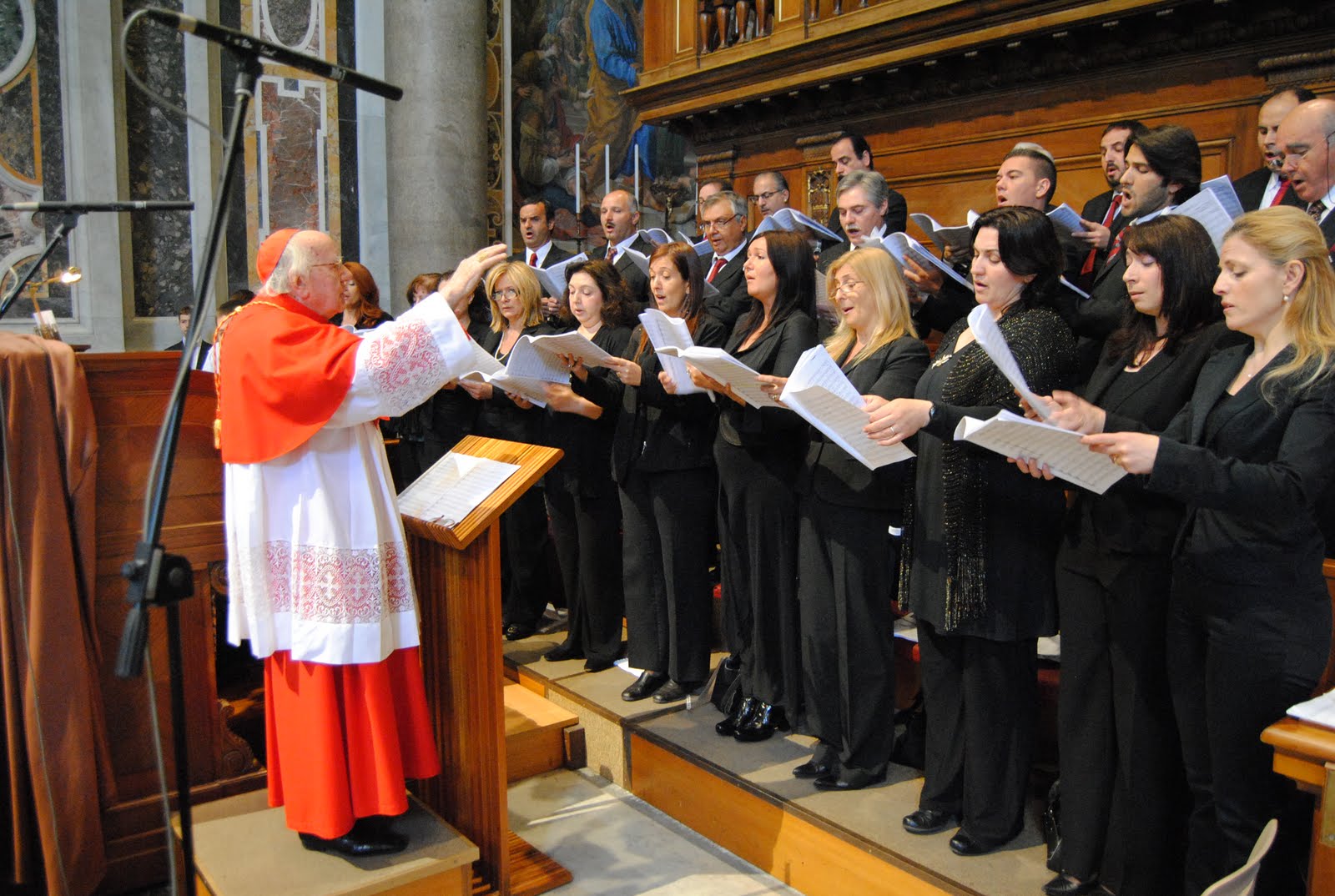
Monday, 18 November 2013 : 33rd Week of Ordinary Time, Memorial of the Dedication of the Basilica of St. Peter and the Basilica of St. Paul Outside the Walls (Scripture Reflections)

Liturgical Colour : Green or White (Dedication of Basilica)

Dear brothers and sisters in Christ, we listen today to the beginnings of a great tragedy, where the people of Israel, was subjected to the attempts of acculturation and Hellenisation, which happened during the years after Alexander the Great conquered much of the known world. They suffered persecution and ridicule, subjected into attempts to corrupt them from the one and true faith in God.

In the second reading, the same happened, with St. Paul being led into custody of the Romans, brought to Rome, the capital of the Roman Empire, to be judged by the Emperor for his supposed crimes. St. Paul was charged by his Jewish opponents, who resisted his attempts to bring the Good News to them. Rather than being killed at Jerusalem, St. Paul chose to appeal to the Emperor, and in doing so, as we listened, he gained a chance to evangelise yet one last time, at the city of Rome, where the centre of our Church now lies.

Today we listened to the tale of both St. Paul and St. Peter, the earlier as mentioned, and the latter, as we listened to the story of Jesus performing the miracle of walking on the water in the middle of the storm. St. Peter took the scene, as he tried to walk on the water and as he doubted, he almost sank into the water. Jesus rescued him and chided him about his lack of faith in Him. So we heard today about both St. Paul and St. Peter, who at the end of their lives, went to Rome to be martyred there.

Yes, in that old and venerable city, the Eternal City, as many would call it. It is where the two greatest saints and pillars of the Church were welcomed into the hands of the Lord through holy martyrdom. Today we mark the commemoration of the dedication of two great basilicas, namely the Papal Basilica of St. Peter, where most of the Pope’s celebrations take place, and the Papal Basilica of St. Paul, also known as St. Paul Outside the Walls, because it was located outside the walls of the ancient city of Rome. It was also where St. Paul stayed during his two year stay in Rome, prior to his martyrdom by the Emperor Nero.

These two saints were exemplary in their actions, just as what some brave people of Israel, God’s first chosen people had done at the time of persecution under the Greek king Antiochus Epiphanes. They stood up bravely and courageously for their faith without being corrupted or tempted by the offers of worldly pleasures and temporary glories offered to them, if they just would betray the Lord and their faith.

Yet these people were also pretty much ordinary people like ourselves, and they too were much like us sinful and weak, as St. Peter himself had shown in that storm in the lake, where his lack of faith to God made him almost sink as he walked on the water towards Jesus. St. Paul was once a great enemy of the faith, and he hounded many hundreds if not thousands of the early believers of the Lord, sending them to their deaths. We too lacked the faith at times, brothers and sisters, and doubt is always in our mind.

And yet, through Christ and His love, they have been transformed into powerful tools of His presence and love. God made them to be the bearers of the Good News and they went on faithfully with their missions to the end. And through their hard and dedicated works, many people were saved. Their works of salvation continues even today, through their successors, our bishops and their priests, and primarily, the Bishop of Rome, our Pope, now Pope Francis, the leader of the entire Universal Church.

It is often that times are truly hard for our Church, especially in the recent times. The ways of the world are increasingly becoming more and more antithesis to what our Church stands up for, that is our faith in God, true and just. The corruptions of this world threaten to sink many people in the storm of this turbulent world. Remember what had happened to St. Peter in that stormy night.

The Lord picked him up by the hand and strengthened his faith. Indeed, St. Peter was to abandon his faith yet another time, when he denied knowing the Lord, not just once, but three times in total! He did so, because his faith in God is wavering, having seen Jesus, the one hope that he and the other apostles had had, captured, tortured, and mocked like a lowly criminal. He abandoned the Lord for the security of the world.

St. Paul too was a leading Jew, who was a Pharisee and very strict in his observation of the Law, and was particularly hostile to the followers of Jesus in the early days of the Church. He hunted them without mercy, and caused the death of many people of the Lord. He took part in the stoning and murder is St. Stephen, the first martyr, and was a great scourge to the faithful.

Then what differentiates them from the people of Israel, who abandoned their faith in God, for the sake of their own security and to secure the favour of the king? And how was St. Peter even different from Judas Iscariot, the traitor? Did they both not betray the Lord? One through direct betrayal and the other by abandoning Him at the time of His greatest sorrow?

That is because, St. Peter professed his true and undying faith in the Lord, and he repented from his past mistakes. Everyone makes mistakes, as is common to us because of our humanity, for we are predisposed to sin ever since we were exposed to it. What is important is that, we learn from those mistakes, face them with courage and faith, and repent, that is change our ways, to conform again to that of God! That was what St. Peter, as well as St. Paul had done.

Judas Iscariot felt the guilt after he had betrayed the Lord, but instead of learning from his mistakes, and accepting the chance of repentance the Lord gave him, he chose the quick way out, that is suicide. He did not repent, and therefore was counted among the lost ones. He also stole the money of the Lord and His disciples and was unrepentant about it, even to the end.

St. Peter professed his love and dedication to the Lord, and he showed it with true sincerity, knowing fully the guilt and the faults he had done, and yet, he still professed that love he has for God, and the Lord gave him, the stewardship over this world, over all of the faithful ones in God, as His Vicar on earth. St. Paul too met a life-changing experience, after the Lord appeared to him on the road to Damascus. He received the empowerment of the Holy Spirit, and the truth about all things were revealed to him in its entirety.

Ever since, both Apostles, as well as the other apostles and disciples of Christ, tirelessly laboured for the sake of God and His kingdom, without end going from one end of the earth to the other, as witnesses to God and His saving power. They laboured hard and the fruits grew aplenty, as the faith spread among many, converting many to the cause of Christ. And despite the storm that threatened to engulf all the faithful, they stabilised the ship, and made it last to the present day.

St. Peter was crucified upside down in Rome, at the site now where the Basilica of St. Peter now stood. He chose to do so because he found himself unworthy to be crucified in the same way the Lord had done. St. Paul too was beheaded in Rome, after the burning of Rome was blamed by the reigning Emperor, Nero, on the followers of Christ. See the dedication, faith, and love that these two saints have for our Lord!

Today, therefore, as we commemorate the two great Basilicas dedicated in their honour, that of St. Peter, the Vicar of Christ, and St. Paul, the Apostle to the Gentiles, let us take this opportunity to reflect, on whether we have taken the same choice or whether we will be ready to commit ourselves to the same choice that both saints had chosen. Remember that saints too were called from sinners. We can opt to choose the easy way, that is what Judas and the people of Israel had done, or take the difficult and challenge-ridden path that the Apostles had once taken, all the way to the end, where the glory of heaven awaits them.

May our Lord Jesus, who helped St. Peter out of the water in his doubt, also help us to overcome our doubts and empower us with love, hope, and faith, that we will be able to make a commitment towards reaching out to the Lord, choosing the right path in the end. May He continue to love us and watch over us. Amen.
Tuesday, 12 November 2013 : 32nd Week of Ordinary Time, Memorial of St. Josaphat, Bishop and Martyr (Scripture Reflections)

Liturgical Colour : White

Dear brothers and sisters in Christ, we are all servants of the Lord Most High, our God. We are the ones subservient to that great Lord the Creator of all of us, and all the universe. Yet, at the same time, He calls us sons and daughters, and brothers and sisters, as the ones whom He loved so dearly, that He gave us Himself through Jesus His Son, so that we can be saved, and be lifted up from our fate that is death, into a new life with Him, eternal in heaven.

For we were created by the Lord not to suffer nor to experience death and eternal suffering that is our fate. This is in fact because of the fall of our ancestors, who disobeyed God, that we too are made susceptible to the power of death. They obeyed their own desires and wishes instead of the will of God, and fell they did, succumbing to the allures and lies of the evil one, Satan the deceiver.

Satan was once Lucifer, the greatest and the mightiest one among all the angels of God. Beautiful and radiant, he was the most brilliant of all creations, and yet, he sowed evil in his hearts. He became proud and arrogant of his own beauty, might, and power. In the perfection and beauty he had been created, he craved greater power, that is to set his place above that of God Himself. Thus he rebelled against heaven and against God, and was felled and thrown down away from the glories he had once commanded.

Satan was certainly displeased at this, and therefore he seduced our ancestors, leading them away from God with false and empty promises of greatness, that they were cast out of heaven and the eternal glory set out for us. That is how we deserve death and destruction, because we have been tainted by sin and by rebelliousness. But God did not let us to just perish and be destroyed, because in  Jesus, He gave us a new hope.

Mankind cried out aloud to the Lord for the sufferings and injustice they had suffered, for we all, and our ancestors all had suffered greatly under the yoke of evil, that is sin. For sin, even though outwardly often look good and enticing, but in reality, it distorts us and bring pain to us, that is the pain and suffering of severance from the love of God and from God’s grace.

For although the Lord loves us and cares for us very much, but He is at the same time also a just and a righteous God, who cannot stand the presence of sin and disobedience against Him and His laws. Those who had committed sin, had rebelled and been disobedient against Him. And the punishment for such disobedience and rebelliousness is none other than death. And death that leads to hell, that is the total separation from God.

It is for this fate that we cry out to God, for mercy and for forgiveness, that we do not have to suffer this grievous fate. And out of His love, God sent us Jesus, to be our Redeemer, to make righteous again the whole assembly of the people of God, that everyone may not suffer death and eternal suffering, but be raised in glory with Christ, to reclaim the glories in life that we had lost in our rebelliousness.

Today, brethren, we celebrate the feast of St. Josaphat, also known as St. Josaphat Kuntsevych, a monk and later a great bishop of the Eastern Catholics. St. Josaphat lived a few hundred years ago, in what is now northern part of Ukraine. He lived at a time of great upheavals of the faith, which cost the faithful dearly and brought about many bitter emotions and feelings even to now, the present day.

Ever since the Universal Church’s unity was undermined by the series of heresies and breakups, there rose splinter groups claiming to hold the true faith in God. Many of these divisions eventually disappeared and the unity of the Universal Church was restored. But when the Eastern churches broke away from Rome over political and other petty issues over a thousand years ago, a great wound was created in the universal Church.

This is the reality of what faced St. Josaphat Kuntsevych, who grew up in an area of clashing ideologies. In the area where he lived, the population  was divided between the believers of the true Apostolic faith, and those who follow the churches that broke away from the Apostolic authority of the Church. St. Josaphat, upon his ministry and later on as a bishop of the Eastern Catholic community, had hard work laid out in front of him.

The people had mixed opinions about the faith in the Church, as they were in a way forced to comply with the decision of the state. Many of them belong to the Eastern Orthodox churches that broke away from the Universal Church over petty political and personal squabbles. The Union of Brest declared the reunion of all Christians in the Polish-Lithuanian Commonwealth into the Universal Church of God. Thus the task of St. Josaphat was made very difficult, with the people even openly rebelling against the religious authorities.

St. Josaphat persevered through all of those tribulations and faithfully served the people entrusted to him, even though they were openly against him and his obedience to the Apostolic See, to the Church of God, one and true. He served faithfully and dutifully even unto his death at the hands of the people of whom he was the shepherd. St. Josaphat was murdered by an angry mob just outside of a church and his body was thrown into the river.

In sweet and holy martyrdom therefore, St. Josaphat was welcomed into the glory of heaven. Following the footsteps of Jesus who died for His people, St. Josaphat too chose to die to himself and bring glory to God, that salvation may draw closer to His people. We too can do the same. Let us all draw closer to the Lord our Master and the source of our salvation. May He forgive us from our sins and welcome us back into His loving embrace. God bless us all. Amen.

Passing of Cardinal Domenico Bartolucci of Italy, at the age of 96

Bartolucci

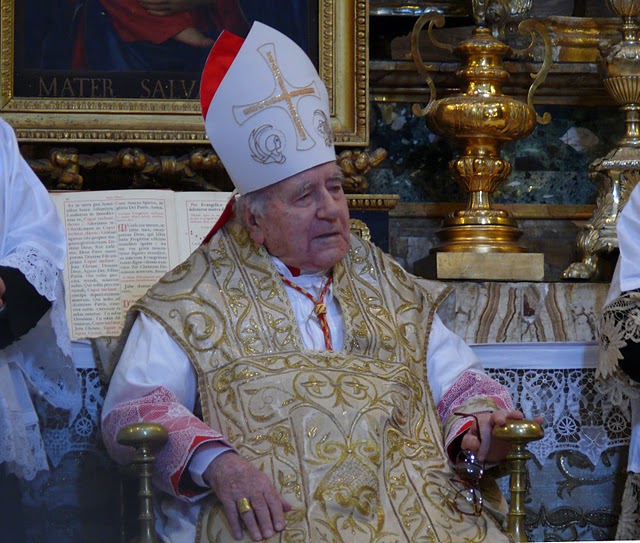
Cardinal Domenico Bartolucci, Cardinal Deacon of SS. Nomi di Gesu e Maria in Via Lata has passed away on Monday, 11 November 2013 at the age of 96. He was the Director of the Sistine Chapel Choir (1956-1997), better known as his title of the Director Master of the Pontifical Musical Chorus of the Sistine Chapel.

http://www.gcatholic.org/hierarchy/data/cardB16-3.htm#45954

Jan2011Nov2010BartolucciReuters

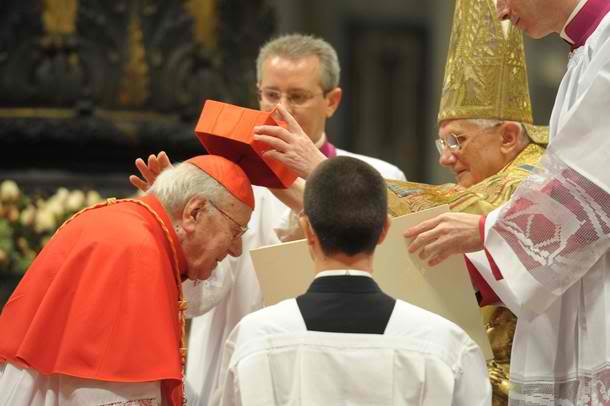
Cardinal Bartolucci was created Cardinal in 2010 by Pope Benedict XVI in his third Cardinal creation consistory and he was a longtime Director of the Sistine Chapel choir, a great conductor and composer of sacred and liturgical music, for over 41 years from 1956 to 1997. Cardinal Bartolucci retired in 1997, but even then, he still conducted his beloved choir and created more beautiful music for worship after he retired. He was honoured by Pope Benedict XVI for his longtime service to the Church by the bestowal of the red hat of a Cardinal in 2010, when he was 93.

brandmuller xvi

We pray for Cardinal Bartolucci, that he will rest in peace, and God will reward him for all his hard and great work as the long time servant of God through music as the conductor, director, and composer of the Papal liturgical music and sacred music through the Sistine Chapel choir  and his numerous other contributions to the Universal Church and for the Lord’s sake. May the Lord welcome him into His embrace in heaven and give him eternal rest and happiness that he deserved.

With the passing of Cardinal Bartolucci, the College of Cardinals now stands at 200 members, with 109 Cardinal-electors and 91 Cardinal non-electors.

There are now 11 Cardinal-elector vacancies in the College of Cardinals, 12 vacant Cardinal Titles (for Cardinal Priests) and 9 vacant Cardinal Deaconries (for Cardinal Deacons)

Thursday, 7 November 2013 : 31st Week of Ordinary Time (First Reading)

Liturgical Colour : Green

Romans 14 : 7-12

In fact, none of us lives for himself, nor dies for himself. If we live, we live for the Lord, and if we die, we die for the Lord. Either in life or in death, we belong to the Lord; It was for this purpose that Christ both died and come to life again to be Lord both of the living and of the dead.

Then you, why do you criticise your brother or sister? And you, why do you despise them? For we will all appear at the tribunal of God. It is written : ‘I swear by Myself – word of the Lord – every knee will bend before Me, and every tongue shall give glory to God.’ So each one of us will account for himself before God.

Saturday, 2 November 2013 : Solemnity of All Souls (Scripture Reflections)

Liturgical Colour : Violet or Black

Brothers and sisters in Christ, after we celebrated the feast of all saints yesterday, today we also remember all of our faithful departed, the souls of the dead, those who departed before us, some of which are known to us, as our own relatives, brothers and sisters in Christ. They have departed from us, but certainly they are not forgotten, as they remain with us, united in God.

Just like all saints, those who had departed this world are also our intercessors. They pray for us who are still in this world, this sinful world, immersed in our sinfulness. At the same time we also pray for them, that the Lord will welcome them into the kingdom of God, opening the gates of heaven for them, forgiving their sins, and purifying them that they will be able to join the company of saints and angels.

The Lord had given all of us and the souls departed a new and great hope, that they may receive salvation in Him, and be freed from the bondage of sin and evil. Previously, mankind had no hope for salvation, as the gates of heaven was closed shut tight before them, as the consequence and punishment for their rebellion and sinfulness.

It is through Jesus then, that we are made righteous again. It is because Christ took unto Himself all of our sins and defects, suffering for all the consequences of our sins in place of us, and die a humiliating death, all that so we can have a new hope in Him, the hope of a life eternal in glory with God in the afterlife. Through His resurrection, we then too share the hope of the same resurrection, that we will be brought body and soul, purified and made worthy by the sacrifice of Christ on the cross.

But this salvation is only offered to all those who receive and accept Christ as their Lord, their God, and their Saviour. In accepting the Lord Jesus as their Saviour and Lord, they receive the fullness of the salvation promised to all of us. But those who rejected Him and spurned His love will have no part in the glory promised to them. Instead, they shall perish and suffer everlasting death in the eternal darkness of hell.

If we are saved, then why do we need to pray for our departed ones, the souls of the dead? That is because, we believe that, in our faith, as a central dogma, is the presence of the purgatory, as a temporary place where souls transit on their way towards heaven. These souls have been found worthy by the Lord, worthy of heaven and therefore, they did not deserve hell and the devil’s fate for their destination. Yet, for them, they still have venial and small sins that prevented them from truly being with the Lord. This is why we have the souls in purgatory.

In purgatory, the souls are being purified of their sins, through suffering that they are not yet able to be with God. Nevertheless, this is unlike hell, which is a state of total and complete separation from God, in which there is no hope, an eternal suffering without end. In the purgatory are good souls who deserve to be with God, but they need to be rid of these little imperfections first before they can enter heaven. God is so great and perfect, and so perfectly good that no evil can hope to stand in His presence and survive. That is why, we have souls in purgatory.

Through our prayers, we help the souls departed in purgatory, that the Lord will pardon them completely, and allow them to be completely reunited with His love. Our prayers do help, brothers and sisters, if we are sincere. These souls, suffering the temporal separation from God, also pray for us, that we can grow more faithful and evade damnation, together with the saints, who intercede for us daily and at all times without cease.

Therefore, brothers and sisters, today, as we pray for the souls departed and the souls in purgatory, let us also take some time to reflect on our own actions, that we may seek to rectify any errors and unworthiness that we still maintain before the Lord, which distanced us from the embrace and love of God. Let us from now on, seek to be righteous and to be worthy, loving God’s children and He who is our Father Himself, with all of our hearts, our minds, and our souls. Amen.

Saturday, 2 November 2013 : Solemnity of All Souls (Gospel Reading)

Liturgical Colour : Violet or Black

John 6 : 37-40

Yet all those whom the Father gives Me will come to Me, and whoever comes to Me, I shall not turn away. For I have come from heaven, not to do My own will, but the will of the One who sent Me.

And the will of Him who sent Me is that I lose nothing of what He has given Me, but instead that I raise it up on the last day. This is the will of the Father, that whoever sees the Son and believes in Him shall live eternal life; and I will raise Him up on the last day.

Saturday, 2 November 2013 : Solemnity of All Souls (Second Reading)

Liturgical Colour : Violet or Black

Romans 5 : 5-11

And hope does not disappoint us because the Holy Spirit has been given to us, pouring into our hearts the love of God. Consider, moreover, the time that Christ died for us : when we were still helpless and unable to do anything. Few would accept to die for an upright person; although, for a very good person, perhaps someone would dare to die.

But see how God manifested His love for us : while we were still sinners, Christ died for us and we have become just through His Blood. With much more reason now He will save us from any condemnation.


Once enemies, we have been reconciled with God through the death of His Son; with much more reason now we may be saved through His life. Not only that; we even boast in God because of Christ Jesus, our Lord, through whom we have been reconciled.

Alternative Reading

Romans 6 : 3-9

Do you not know that in baptism which unites us to Christ we are all baptised and plunged into His death? By this baptism in His death, we were buried with Christ and, as Christ was raised from among the dead by the Glory of the Father, so we begin walking in a new life. If we have been joined to Him by dying a death like His so we shall be by a resurrection like His.

We know that our old self was crucified with Christ, so as to destroy what of us was sin, so that we may no longer serve sin – if we are dead, we are no longer in debt to sin. But if we have died with Christ, we believe we will also live with Him. We know that Christ, once risen from the dead, will not die again and death has no more dominion over Him.

Saturday, 2 November 2013 : Solemnity of All Souls (Psalm)

Liturgical Colour : Violet or Black

Psalm 22 : 1-3a, 3b-4, 5, 6

The Lord is my shepherd, I shall not want. He makes me lie down in green pastures. He leads me beside the still waters, He restores my soul.

He guides me through the right paths for His Name’s sake. Although i walk through the valley of the shadow of death, I fear no evil, for You are beside me : Your rod and Your staff comfort me.

You spread a table before me in the presence of my foes. You anoint my head with oil; my cup is overflowing.

Goodness and kindness will follow me all the days of my life, I shall dwell in the house of the Lord as long as I live.

Friday, 25 October 2013 : 29th Week of Ordinary Time (First Reading)

Liturgical Colour : Green

Romans 7 : 18-25a

I know that what is right does not abide in me, I mean, in my flesh. I can want to do what is right, but I am unable to do it. In fact I do not do the good I want, but the evil I hate. Therefore, if I do what I do not want to do, I am not the one striving towards evil, but Sin which is in me.

I discover, then, this reality : though I wish to do what is right, the evil within me asserts itself first. My inmost self agrees and rejoices with the law of God, but I notice in my body another law challenging the law of the Spirit, and delivering me as a slave to the law of sin written in my members.

Alas, for me! Who will free me from this being which is only death? Let us give thanks to God through Jesus Christ, our Lord!

Monday, 7 October 2013 : 27th Week of Ordinary Time, Memorial of Our Lady of the Rosary (Scripture Reflections)

Liturgical Colour : White

Dear brothers and sisters in Christ, today we celebrate an important Marian feast, a day dedicated to the Mother of God, Mary, the lady and our mother. Today, in particular, we celebrate an aspect of her that we often find to be ubiquitous in our faith and devotions, that is the holy rosary, the linked beads in chain, that we use to guide us in our prayer.

What is the rosary and what is its significance in our faith, and how does it affect us in our journey of faith in this world and beyond? The rosary is a weapon, a spiritual weapon in a spiritual warfare between the forces of evil led by the devil, against us, the children of the light, the beloved ones of God. This devotion was introduced by Mary herself, when she appeared to St. Dominic, who was then the first to recommend the devotion of the rosary to the people of God.

We often take the rosary for granted, and instead of taking the devotion seriously, we said the prayers without meaning and said the words faster than even the bullet trains! That is exactly what happened if we do not truly understand the usefulness and the purpose of the holy rosary, which is a potent weapon, a spiritual weapon, in the spiritual warfare constantly fought between us and the devil and his servants.

Then how did this feast of our Lady of the Rosary come about? This feast originated in the late sixteenth century, after the great victory of the forces of the faithful, fighting against the forces of the devil, represented by the Muslim forces of the expansionist Ottoman Turk Empire. This battle is the Battle of Lepanto, which happened on this date, today, in the year 1571.

This great victory marked a great turning point in the history of Christendom, where the faithful are no longer on the defensive, after the enemy was dealt a massive defeat by the power of God. Pope St. Pius V, the Pope at the time, decided to commemorate the great victory by dedicating it to the intercession of the Blessed Virgin Mary, that the victory over the enemy was made possible.

In the same way therefore, today, through the rosary as our weapon, the spiritual weapon, we would like to celebrate our victory and triumph against the evil one and his forces of darkness, as we, the children of the light, had triumphed against the darkness, much like the victorious Christian vanguards at the Battle of Lepanto more than four centuries ago.

Nevertheless, brethren, even though we have been victorious, as through Mary and her Son Jesus, whose sacrifice on the cross dealt the evil one a complete and thorough defeat, but the devil still has plenty of tools under his sleeves. He continues to marshall his forces of darkness to harass us, especially those who are most vulnerable, those whose faith are wavering and weakened.

The devotion to Mary, the mother of Jesus our Lord and God, through the holy rosary is a potent tool to prevent this from happening, that is to prevent our brethren to fall into the temptation of Satan and his angels, the fallen ones. The rosary, as I mentioned, is a powerful weapon in this constant spiritual warfare raging daily around us, where angels and devils fight for the sake of our soul, for its salvation or damnation.

Through meaningful and devoted praying of the holy rosary, we invoke the protection of the angels sent by Jesus our Lord, through the intercession of His blessed mother Mary, hearing the prayer we have made through the rosary in complete devotion and love. The Lord will certainly not abandon us to the forces of the enemy. He will smite them and cast them away from us, His beloved children.

Therefore, brothers and sisters in Christ, the rosary, in which we pray the prayers dedicated to the Lord and His mother Mary, emulate the Marian virtues of obedience and love, which we ought to follow and emulate ourselves. Through her obedience and love, we have Jesus who came into this world, and we have a hope, hope of salvation and eternal life in Him.

This rosary is our spiritual weapon and also our spiritual defender, a breastplate of faith and devotion, protecting us from the threats of the evil one and his forces. Let us therefore, spread the habit of praying the rosary meaningfully and devoutly, to all around us, especially to those among us whose faith is wavering. May the Lord continue to watch over us, and may His blessed mother Mary continue to intercede for us, for our salvation, as we continue to offer her and her Son, our love and devotion through the rose of the holy rosary. Amen.