Friday, 19 July 2013 : 15th Week of Ordinary Time (Gospel Reading)

Matthew 12 : 1-8

It happened that Jesus walked through the wheat fields on a Sabbath. His disciples were hungry, and began to pick some heads of wheat and crush them to eat the grain. When the Pharisees noticed this, they said to Jesus, “Look at Your disciples! They are doing what is prohibited on the Sabbath!”

Jesus answered, “Have you not read what David did, when he and his men were hungry? He went into the house of God, and they ate the bread offered to God, though neither he nor his men had the right to eat it, but only the priests. And have you not read in the Law, that on the Sabbath the priests in the Temple break the Sabbath rest, yet they are not guilty?”

“I tell you, there is greater than the Temple here. If you really knew the meaning of the words : ‘It is mercy I want, not sacrifice,’ you would not have condemned the innocent. Besides, the Son of Man is Lord of the Sabbath.”

Tuesday, 16 July 2013 : 15th Week of Ordinary Time, Memorial of Our Lady of Mount Carmel (Scripture Reflection)

Brothers and sisters in Christ! Indeed, we are all brethren, brothers and sisters to one another, because all of us share the same Jesus, our Lord and Saviour, who is our Brother. He did not leave mankind behind when we sinned against Him and rebelled against His love and His will. Instead, as the reading pointed out today, He came to dwell among us, and be with us, that we become His brethren, and will have part in Him and His salvation.

The Lord dwells within us, because we are the Temple of the Holy Spirit, which must be kept holy at all times, and free from the filth of sin and evil. To do so, we must reflect Christ in all the things that we do, in all the words that we say, and in all the works of our hands. And to reflect Christ simply means to love, loving God with all our hearts and our entire being, and also to love our neighbours, our brethren as much as we love ourselves.

If we do all these, in the complete awareness of what we are doing, which glorify Christ more and more, we will be brought closer and ever be with God. He will accept us as His own, as His brethren, and He will protect us from the harm caused by the evil one. To us, He had shown compassion and love, just as the love shown by shepherd to his sheep. If we are lost, like the lost sheep, He will do all the things He can, in order to bring us back to Him again.

But we must also remain obedient to Christ, as even if we are already saved, we can be lost once again, if we do not remain faithful to our calling in life, that is to be with Christ and to love Him with all our strength. Especially, in our world today, it is easy for one to fall away from grace, because of the increasing materialism in this world, the temptations of pleasure and false happiness that this world provide to many people, that they began to turn away from the teachings of Christ.

Doing the will of God is what God truly desires from us all, and in following Christ and His teachings, we are doing the will of God, that is love, for one another, and for God Himself. If we show love in our actions, we are doing God’s will and therefore will always remain in God’s grace, and we will be save from damnation of death and hell that awaits those who disobeyed the Lord and continued their lives in sin.

Today, we are celebrating the feast of Our Lady of Mount Carmel, an important feast day for the Carmelites, a well-known religious order, which began at Mount Carmel itself, which is located in Israel today, the same location where the prophet Elijah contested against the four hundred and fifty priests of Baal, the pagan god, in front of the people of Israel, on who is the true God of Israel.

Our Lady, the Blessed Virgin Mary, appeared to St. Simon Stock, who was the founder of the Carmelite Order, and gave him what is well-known today as the brown scapular, closely associated with this feast of Our Lady of Mount Carmel. The Carmelites themselves placed the Blessed Virgin Mary as the perfect role model for all faithful to follow, in their faith to the Lord, in following the example of Mary herself, in her dedication to her Son, Jesus Christ our Lord, from His birth, to His suffering on the way to Calvary and death on the cross.

So devoted is our Lady to her Son, our Lord Jesus, that she followed Him all the way through His suffering for our sake, to the cross, and stood by below Him, accompanying Him through the time of His greatest ordeal. Though sword pierced her heart, for seeing the cruel death of her Son, she persevered and our Lord gave her to His disciple, John, and gave him to His mother too.

Therefore, in the same way, our Blessed Virgin Mary had been given to us by the Lord Himself, and we had also been given to the care of our Lady, whom we celebrate today as the Lady of Mount Carmel, to be our mother and helper. Why helper? Because our Lady is the greatest of the saints, through her own position being the mother of God, but even more importantly because of her purity and dedication to the Lord and all God’s children.

Today we follow the example of the Carmelites, to give our love and dedication to the Lord, through His mother, our Blessed Virgin Mary. Because, just as the Carmelites stress in their formations and principles, there is no better way to the Lord other than through Mary, His mother. Mary is our greatest intercessor before the Lord for His mercy and help, because, just as at the wedding at Cana, Jesus did listen to His mother, when she pleaded with Him to help the wedding brides despite Him telling her explicitly that the time has not yet come for Him to reveal His power.

That is why we dedicate ourselves in prayer through the Blessed Virgin Mary, who became a guide in our journey towards the Lord. She helps us through her prayer, and because she is closest among the saints in heaven to the Lord, our prayers will be heard, through the intercession of the Blessed Virgin, Our Lady of Mount Carmel.

That is why it is good for us to follow the example of the Carmelites and indeed, of our Lady herself, in their dedication to Jesus our Lord, on the love they have to our Lord and Saviour. Jesus did not mean any disrespect when He seemingly rebuked His own family when they were waiting for Him as told in the Gospel today. Indeed, Jesus actually affirmed the honoured position His mother had, because Jesus told the people that whoever does the will of God and do things for the sake of the Lord, they are His brethren, His family. Who else is more faithful and more obedient to the will of God other than Mary, our Lord’s own mother? The Virgin who readily accepted her role in the salvation of all mankind by accepting the Lord’s will for her, to be the vessel that brought the Saviour into this world.

Surely, today we must rejoice, that we have our Lady of Mount Carmel, the Blessed Virgin Mary, to intercede for our sake before her Son, our Lord and God. Through her we can be closer to Christ, and through her prayers for our sake, all of us who are sinners have greater hope of salvation, because Christ Himself will surely be moved by the petitions and pleas of His own mother, who cares for us just like her own children. Remember, when Christ gave His mother to John to be cared for, He also gave her to us, that we become her own, and receive the love and care that she had once shown Jesus.

May our Lady of Mount Carmel, our Blessed Virgin Mary, the mother of our Lord Jesus Christ, pray for us and protect us from the harm of evil that is in our world, and through her, may we be able to get closer and reach higher to Christ, her Son, that in the future, we will be able to praise Him together with her, and all the saints and holy people of God in heaven. Amen.

Monday, 15 July 2013 : 15th Week of Ordinary Time, Memorial of St. Bonaventure, Bishop and Doctor of the Church (Gospel Reading)

Matthew 10 : 34 – Matthew 11 : 1

Do not think that I have come to establish peace on earth. I have not come to bring peace, but a sword. For I have come to set a man against his father, and a daughter against her mother, a daughter-in-law against her mother-in-law. Each one will have as enemies those of one’s own family.

Whoever loves father or mother more than Me is not worthy of Me. And whoever loves son or daughter more than Me is not worthy of Me. And whoever does not take up his cross and come after Me is not worthy of Me. Whoever finds his life will lose it; but whoever loses his life for My sake will find it.

Whoever welcomes you welcomes Me, and whoever welcomes Me welcomes Him who sent Me. The one who welcomes a prophet as a prophet will receive the reward of a prophet; the one who welcomes a just man, because he is a just man, will receive the reward of a just man. And if anyone gives even a cup of cold water to one of these little ones, because he is My disciple, I assure you, he will not go unrewarded.

When Jesus had finished giving His twelve disciples these instructions, He went on from there to teach and to proclaim His message in their towns.

Dedication of the State of the Vatican City to St. Joseph and St. Michael the Archangel

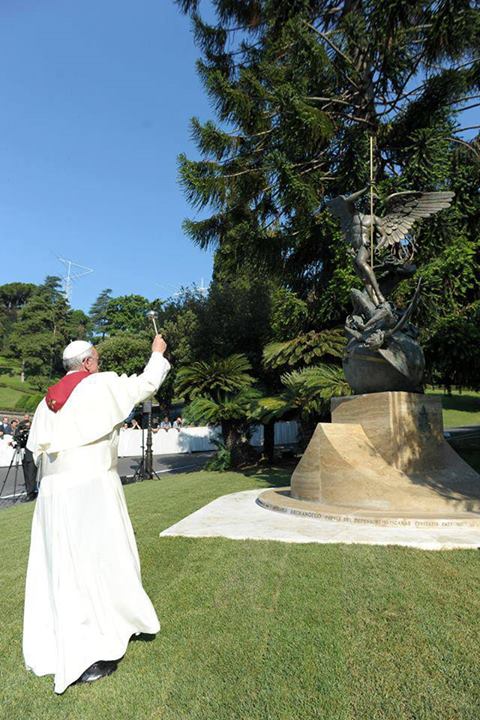
As all of you have heard, the Vatican City state had been dedicated by Pope Francis to both St. Joseph, the spouse of the Blessed Virgin Mary and the foster-father of Jesus Christ our Lord; as well as St. Michael the Archangel, the leader of all of heaven’s angelic forces, the mighty champion of our Lord, and the terror of demons.

Image

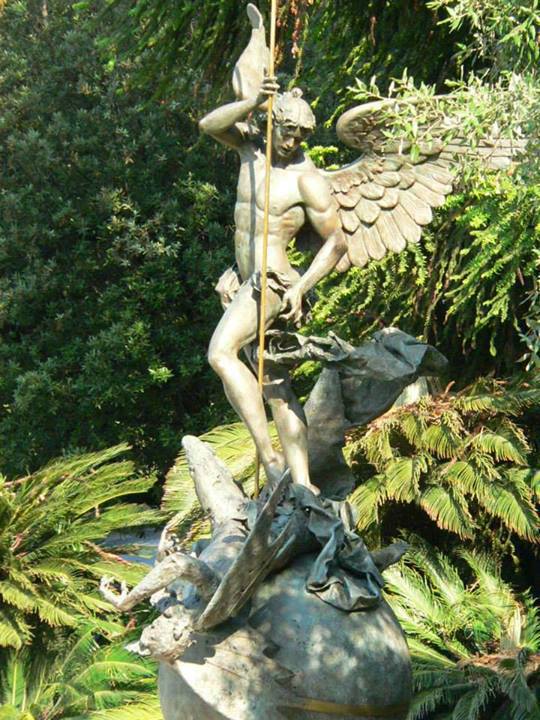
The above statue is a statue of St. Michael the Archangel subduing Satan, the evil one. The statue was unveiled and blessed by Pope Francis in a ceremony at the Vatican Gardens where the statue is located.

Image

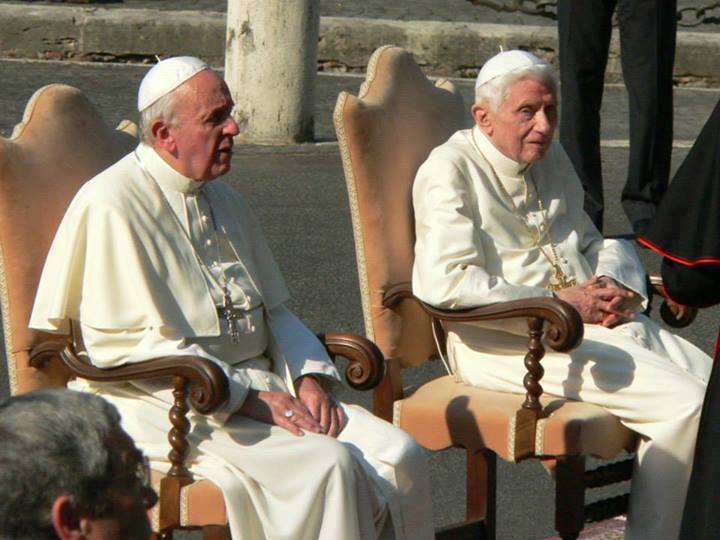
The ceremony was attended by both Pope Francis and his predecessor as the Vicar of Christ, Pope Emeritus Benedict XVI.

Image

Let us pray for both our Pope and our Pope Emeritus, that God will continue to guide them in leading the Church, in the spirit of prayer. St. Joseph and St. MIchael the Archangel, pray for us! Pray for the Church of our Lord Jesus Christ, and protect our leader, the Successor of Peter, whose residence now entrusted to both of you for protection.

God bless the One, Holy, Catholic, and Apostolic Church!

Tuesday, 2 July 2013 : 13th Week of Ordinary Time (Scripture Reflection)

Brothers and sisters in Christ, today we are called to put our complete trust in Christ our Lord, for in Him lies all the authority over all the universe, and not even the wind, the seas, and the storm can overcome Him. Indeed, not even death could overcome Him! The evil one tried to derail the plan of salvation by inciting the people and the priests to condemn Him to death, death on the cross. A sign of humiliation, yes, but that sign of humiliation was changed to a sign of victory and glory, the triumphant Christ winning over all evil, once and for all.

The scene in the Gospel reading today inspires the logo that we have for our celebration of the Year of the Faith, in which is depicted a ship sailing in the rough seas and waves, and a triumphant cross stands on that ship. In today’s Gospel reading, Jesus calmed the storm and the sea after He rebuked them with His authority. He has the power and authority over all things, without exceptions, and He also rebuked His disciples for their fear. In their fear, they distrusted the power and authority of the Lord, and that was where fear originated and entered into their hearts.

Our Church today is like that ship, floating and sailing in the midst of a sea full of storms and thunder, a sea full of dangerous hazards and oppositions, just as our Church faced plethora of problems and issues that continue to assault it unabated, especially in the past few years. Had the Church not had Christ, it would have collapsed long ago, and therefore brought about damnation for many, a damnation in hell.

Christ, who rebuked the wind and the sea is that central figure on the ship of faith, is that Christ had become a steadfast and strong anchor, which kept the boat from capsizing in the midst of that turbulant seas. If we keep our faith in Him strong, He will then also help to keep us under His protection, that we, as a Church and an individual child of God, will not fall into damnation.

Remain faithful, brothers and sisters in Christ, and pray for one another, help one another, that all of us, who belongs to the Lord, but somehow were brought apart by the currents of the world, that all of us will survive the temptations of the world and evil, who always tries to separate us from our Lord. Temptations are everywhere, and in this increasingly affluent world, it is getting more and more difficult to resist these temptations, temptations of pleasure, temptations of wealth, and many others.

That was one of the things that made Lot’s wife to disobey the commands of the angel of the Lord to not look back at the cities of Sodom and Gomorrah as they escaped the catastrophe towards the city of Zoar, towards safety. That was because Lot’s wife was likely not able to come to terms with having to leave all the pleasures of life and wealth that she and her family had to left behind in their hurried escape from Sodom.

She disobeyed the commands of the Lord through the angel, and received her just reward, that is punishment, to become a pillar of salt. It is not that God is harsh or anything of the sort, but He is just to everyone, that to those who obey His laws and those who practised His teachings on love through Jesus, He will give their due rewards, and to those who had not obeyed His laws and openly disregarded His will, they will certainly receive their due rewards as well, that is condemnation.

Therefore, brothers and sisters in Christ, we have a simple choice between two, the devil and world pleasures, which corrupt our hearts and minds, and cloud our perceptions and judgments, making our faith in God to tremble and weaken, or to choose a more difficult path, that is the path of the Lord, to choose God, who is our anchor and our strength, and who has authority over all things in the universe.

Salvation or damnation, it is indeed entirely our choice. Do we want the ship, that is our Church, and indeed that is our being, to be stable, with the Lord as the anchor and guide, or do we want the ship to be unstable and sinking, if we do not put our trust in God? Let us use this excellent opportunity in the Year of the Faith to renew our commitment to our God, and to renew our faith in Him, and show Him the extent of our love and dedication for Him. May God bless us all and strengthen our faith day by day, that we do not fall into sin anymore. Amen.

Sunday, 30 June 2013 : 13th Sunday of Ordinary Time (Scripture Reflection)

Dear brothers and sisters in Christ, today in the reading, particularly the First reading from the First Book of Kings, we listened to the calling of those who had been chosen by our Lord and God. Those whom he had been chosen like Elisha were called, and were given specific trust on certain ministries that they have been entrusted with. Elisha was called from the fields and his oxen by Elijah, to be his successor, and continued the works of the prophet in the lands of the Kingdom of Israel.

We too have our calling, our vocations in life, and what they are depends on what the Lord has in plan for all of us. There are those among us called to be ministers of the Lord, in the same way as Elisha the prophet had once been called. Those of us who are called then, if we accept the calling, become priests, religious, deacons, and all the others who dedicate themselves fully to serve the Lord and minister to His people, while spreading the Good News of the Gospel.

One may think that Christ may sound very rough and impolite when He said that the dead should bury the dead, and one may also think that Christ is being rude when someone asked to first say goodbye to his family before following Him and was rebuked with the words that if someone turn back from their chosen or appointed duty, that person is not fit for the kingdom of God. However, there is in fact great truth inside what Christ had told us today as we heard in our Gospel reading today.

Indeed, in order to serve the Lord, and in order to minister to His people, we must not be half-hearted in our efforts and our work, and we must put all our hearts, all our minds, and all our beings into the works, and focus all of our attention on Christ. There must not be space for doubt or indecision in our hearts, or we risk evil to enter our hearts and corrupt our purpose, which may turn the very noble act of our ministry into something corrupted and hideous.

Well, one may say that this is just a one-time farewell, or a one-time thing, but we must not underestimate the power of evil, as little as that is compared to the power of the Lord, and the power of the world’s temptations and allures. Many had fallen into those temptations and could not keep up their commitment to the service to the Lord and His people, and ended up becoming a contempt to the faithful and a disgrace to the Lord and to the faith.

For we humans are weak, and we are naturally predisposed to temptations and human desires, desire for wealth, and desire for pleasure. If we do not have a hundred percent attention on the Lord, and if we do not put all our hearts and beings into the task ahead of us, not just for the case of the service to the Lord and God’s ministers, but indeed for any other occupations and careers, we must be entirely focused on what we are doing, or we risk mistakes and other flaws that may undermine our own credibility and trustworthiness.

Worse still for the servants of the Lord, because we are directly accountable to God for our actions, our words, and our deeds. When one especially has been called and had chosen to accept the calling and become one of the servants of the Lord, one must not be distracted by worldly concerns and desires. Not even one peek! Since even one peek would tend to corrupt our hearts and twist the true purpose of our ministry, even with just one attempt.

We often think that, ‘It’s only once, it won’t hurt, will not try it again anyway afterwards’, but there is no guarantee that after the first one we will definitely not do it a second time, a third time, or even become an addict. And for priests, religious, and servants of God, a very strict code of conduct must indeed be in place, for they have been marked and appointed as shepherds of God’s people, and shepherds cannot lead their flock unless they themselves have been proper in their conduct and behaviour.

The sheep follow the shepherd, and therefore, if the shepherd does something wrong, the sheep of the flock are bound to follow the actions of the shepherd. We who are called and chosen have to remember that we are responsible for God’s people and to the Lord Himself, in that we must make sure that we do not make any of God’s children, to fall into sin because of us. Remember that Christ greatly chastised those people who did so, “Better for those who let these little ones to fall into sin, to go into hell and be tortured there for eternity’. He condemned those who had misused their authority and abused people’s trust and God’s trust in them.

Therefore, my brothers and sisters in Christ, let us today pray for those called and chosen, for those priests, bishops, our Pope, and those in the religious orders, that they will remain faithful and steadfast in their faith and in their calling, that they will faithfully discharge the duties that the Lord had entrusted them, and lead the flock God had entrusted them with dignity, love, compassion, and determination.

Let us also pray for those who are aspiring to join the service of the Lord, and those who had been called, but had not made their decisions in their lives. Let us pray, that indeed, in the face of so many worldly temptations and allures, they can remain faithful to their faith and their calling. Let us pray that the parents of those who are called will not be stubborn and reject God’s call for the sake of their own selfish desire for their children. This is one of the main reason why so many did not end up follow their calling, because their parents and their families did not support God’s work by their rejection!

For parents, let’s be open-minded, and be open to the fact that one of your sons and daughters may be called by God to be His servants to serve His people, all of us, and instead of disgust and opposition, take that as a great opportunity and an honourable occasion. Not everyone is called, and not everyone is worthy, and as the parents of those who had been called, all of us should be proud of them instead, and support them to make a wise and carefully thought decision.

May the Lord therefore grant all of us strength and determination to persevere in our missions in life, to be a loving child of God, to be a loving brethren to our brothers and sisters in need, and to listen to God’s will. May the Lord be with all those whom He had chosen from among us, that the Holy Spirit will continue to guide them and strengthen their faith, resolve, and dedication to their respective ministries. God bless us all. Amen.

Monday, 24 June 2013 : Solemnity of the Nativity of St. John the Baptist (Scripture Reflection)

Dear brothers and sisters in Christ, our God loves us, and He loves all of us so much that He is willing to save all of us from the damnation of hell. He sent us His only Son, Jesus Christ, to be our Saviour, the One who redeemed us from the sins of our forefathers, from their rebellion against the love of God. Through Him we are saved, if we accept Him as our Lord, and His free offer of salvation to all of us.

To prepare for the Messiah, the Lord sent His messenger, in the person of John the Baptist, the precursor and the preparer of the way for Christ. His dedication to the mission for which he had been chosen for, and his tireless work had indeed straightened the way for Christ and paved the way for salvation.

Today we celebrate the feast of this great messenger of God and saint, John the Baptist, whose baptisms called the people back towards the Lord through repentance. Repentance allowed the people to set their hearts and minds right, so that they would be in the correct state of heart and mind to be receptive of the Lord and His message that is brought by none other than Christ, His Son and our Saviour.

St. John the Baptist had dedicated his whole life to the Lord, as someone set aside for the works of God, through whose hands God had worked His wonders to the people of Israel, the last of the prophets before the coming of the Messiah, who would eventually liberate God’s people from the tyranny of evil, sin, and therefore death.

God is faithful, and He remembered His covenant that He made with Abraham years ago, with the promise He had made that the descendants of Abraham, all of us, will be fruitful, and will be blessed. Even when the descendants of Abraham, as shown through Israel did not stay faithful entirely to the Lord, but fell into rebellion, in the similar way as their forefathers, God did not give up on us, just as He did not give up on mankind after the disobedience of Adam and Eve, our first ancestors.

We are all precious to God, so precious that despite the covenant broken by our rebellion and our stubbornness against God’s love and compassion, He was willing to forge a new covenant with all of us, and this covenant will never be broken, because this covenant is not made just by God’s words alone, but sealed with none other than the Most Precious Blood of the Lamb of God, the Son of God, Jesus Christ, who shed His blood from up there on the cross, flowing from His holy wounds, pierced by our sins and our rebellion.

St. John the Baptist had a great part to play in this plan of salvation, not only as the one who helped to bring God’s mission to perfection, and helped to convert many to the cause of the Lord through repentance, but also through his direct role in the initiation of Jesus’ ministry on this world. Through his baptism of Christ on the Jordan, he initiated Christ on His ministry, which began after that baptism, when the Lord proclaimed to the world, that Jesus is indeed His Son, and that His favour is on Him.

His humility that he showed when he declared the identity of Christ to his own disciples, so that He would increase while John himself would decrease in importance is an example for all of us, that whenever we do things, let us remember that we should do it for the greater glory of God, and not to our own personal human glory, and seek the praise of the Lord, and not the praise of man.

We can follow the many examples of Saint John the Baptist, my dear brothers and sisters, that we should emulate him in our lives. To love and serve the Lord with all our hearts, with all our minds, and with all our being, that we truly become the children of God, and people beloved by the Lord our God. May the Lord guide us at all times in our lives, that we will not be led astray in our path towards Him. God bless us all. Amen.

Saturday, 22 June 2013 : 11th Week of Ordinary Time, Memorials of St. Paulinus of Nola, Bishop, Saints John Fisher, Bishop and Thomas More, Martyrs (Scripture Reflection)

Dear brothers and sisters in Christ, today we heard the words of the Gospel, in which we are told not to worry about our needs and our desires in this world. Christ had taught His disciples that the Lord takes care of the needs of His people, and He will protect those whom He considers as His own. Therefore, as long as we belong to Christ, to the Lord, we will be safe and we will always be provided, with all the things that we need.

Worry is a natural part of a human being, and worry cannot be separated from our own selves, from our own insecurities and our own natural predisposition to the desire for things, material or otherwise, in order to secure our own survival. Such is also the law of nature according to those who study it, that we are always concerned with our own survival, and therefore would do all that we can in our own power, in order to maintain our survival.

That is why we grow increasingly concerned with our own human needs, of food, of material goods, and even of relationships and love. We worry about things that may happen to us in the future, especially if those things may affect us in a negative manner. Fuelled by these insecurities, we end up becoming selfish and overprotective of ourselves and those precious to us, that end up in numerous causes for sorrow and anguish.

Many problems of this world can be traced to our own worries, our own insecurities. The reason that many nations maintain powerful armies and forces is because they are always ever insecure about their own future, with often endless probabilities and possible scenarios of ‘enemy’ attacks on them, so that they, in their insecurity, end up building that tool of destruction, in order to protect themselves, but inadvertently, when the violence does come, that tool is often used to cause great destruction and mayhem in our world.

One of the most important reasons why countries become embroiled in long-drawn conflicts is because of conflict over resources and material wealth of the earth, with well-known examples of crude oil, gas, and other precious metals, which become a source of contention between states, and led to the build-up of enmity and mutual hostility between nations.

That was why Christ told us that we should not worry, and indeed that we should put a complete trust in God, for God who loves and cares for us will take care of us and provide us all that we need. Let us take note that it is very often that what we want is not what we truly need. Many items that we want are merely the product of our own desires and greed, driven by this world, which had brought upon us countless lucrative deals that entice us to want to have more and more of such goods.

Commercialism and materialism are rampant in our world today, brothers and sisters in Christ. One can just imagine its extent from the insatiable human desire for things that bring wealth and prestige to their owners. Our media is filled with advertisements and channels that promote decadent lifestyles. A lifestyle of great excesses and waste. A lifestyle that is apathetic to the needs of others, and a lifestyle that is often lived in ignorance of the reality of life in this world.

Today we commemorate the feast day of St. Paulinus of Nola, a bishop who lived in the later years of the Roman Empire, and also the feast day of St. John Fisher, a bishop in the late Renaissance England, in the times of the English Reformation, and his fellow saint, with whom he was also martyred, St. Thomas More, who is also known as the patron saint of lawyers.

St. Paulinus of Nola was a bishop who renounced his privileged early life as an influential senator of the Roman Empire, and chose to follow the ways of the ascetics, to give himself fully to the Lord, and eventually became a priest and bishop of Nola. He was also a well-known writer and poet, with many of his writings influencing later people and saints of the Church.

The example of St. Paulinus of Nola, who disavowed wealth and did not pursue human glory and possessions. He looked for what is more valuable to him, and indeed should be truly valuable to all of us, that is the Lord Himself, our real and true treasure. He did not find it shameful to abandon all the worldly pursuit of wealth, and all the fame and affluence he had while he was an influential senator of Rome.

It does not mean that all of us should then become monks though, and follow ascetic lifestyle. But certainly the examplary life of St. Paulinus of Nola, whose writings inspired many in the faith, and whose pursuit of the true richness in Christ, can become a powerful driving engine behind our own personal journey in the faith. And equally, just as St. Paulinus of Nola had shown all of us, the examples of Saints John Fisher and Thomas More too, cannot be ignored.

Saints John Fisher and Thomas More lived in a difficult time, a difficult and troubled time to be a follower of the Lord, and to be the faithful ones in the Church of God. For they lived at the time when the English Reformation begun, under the persona of King Henry VIII, whose greatest sin was to break away from the Apostolic authority of Rome just because he did not get his second marriage approved, in his crazed and ultimately fruitless pursuit for an heir, a son to inherit the throne of England.

St. John Fisher was the bishop of Rochester, and a closer advisor to the king, while St. Thomas More was a laity, the powerful chancellor for the king of England. When the king began his upstart new ‘church’, naturally, he wanted all of his subjects to follow him into his rebellion against the authority of the Church, especially those nearest to him in confidence and power.

Those who followed the king into his disobedience and rebellion gained prestige with the king and much material wealth and affluence, which was also the reason why many followed the king into his disobedience against Rome. Yet, St. Thomas More, and also St. John Fisher, despite the offers made by the king, particularly St. Thomas More’s lucrative chancellorship, they remained steadfast to their faith in the Lord, and remained firmly within the Church, against all attempts and temptations for them to leave the Church of God.

In refusing the order of the king, they faced suffering, persecution, prison, and eventually death in martyrdom, in their defense of the faith. They remained faithful and true to the Lord to the end, and they received their eternal reward and glory in heaven, having shedding their blood for the sake of their faith.

The lesson to be learnt here is of course not that we must shed our blood and our life like what the two martyrs of the faith had done, but just like St. Paulinus of Nola, we must value our faith and the Lord our God as the much more valuable and priceless treasure, the true treasure of our life, over any kind of worldly and material wealth, that is offered by our world, and especially in our present day world, becoming ever more tempting in their approach to all of us.

Do not give up our faith in God and our righteousness for moments of pleasure and false happiness, through the means of material goods of this world. Not that we cannot enjoy what this world can offer and neither should we restrain from gaining any material possession or money, but all of these must be done in moderation, so that it would not end up in these shutting out the Lord from our hearts, because remember that the Lord Himself said that wherever the treasure is, the our hearts lie.

Therefore, my dear brothers and sisters in Christ, let us today renew our commitment to strengthen our faith in the Lord, that we will ever keep Him in our hearts, that He will know that we belong to Him, and will reward us greatly when He comes again as our King. God bless us all. Amen.

Wednesday, 12 June 2013 : 10th Week of Ordinary Time (Scripture Reflection)

Dear brothers and sisters in Christ, Christ is our Lord and Messiah. His coming was told in the numerous prophecies by the prophets as written throughout the Old Testament of the Scripture. His coming was indeed not to destroy the Law as written in the Scripture, and not to abolish the teachings of the prophets and the Law and commandments that God has given to Moses, but to fulfill and complete all the prophecies made about Him.

In the first reading today, we also heard about how the ‘text’ of the Law brings death, while the Spirit brings life, and it also seemingly criticise those who minister to the Law. In this we can clearly see, that in his letter to the faithful in Corinth, he was referring to the chief priests and the Pharisees, whom Christ repeatedly called hypocrites, and whom repeatedly had caused troubles during the Lord’s earthly ministry.

Therefore, brothers and sisters, today we are called to live out the Law of God, the Law which God had given to Moses, and then perfected and completely fulfilled by Christ, His Son, that we do not become slaves to the Law, but become alive due to that Law, which is, according to Christ, is all about love, for God Himself is love.

The chief priests and the Pharisees had grown so accustomed and so attached to the Law, that they had entirely forgotten the Spirit of the Law, that is love, and they had entirely misunderstood the meaning of the Law, and its purpose, becoming instead mindless slaves to their own human traditions, which their ancestors established in rituals and traditions to worship the Lord, but over time, becoming corrupted with worldly desires and impurities.

Rituals and observations of the Law had become empty, and prayers had become stale, and lacking the freshness of the Spirit of the Lord. That was what Christ had criticised, when the Pharisees went praying in the public places, showcasing their piety for all to see. That they love human glory instead of seeking heavenly glory of God and praising God, and instead of using the Law as it is intended, they had abused it to their own purposes.

That is why Christ came into our world, not just to be our Saviour, but also to perfect the Law of God, and to explain them clearly to the people of God, that they would no longer misinterpret the Law and therefore sin in the eyes of the Lord. He revealed to those whom He had chosen and those who were willing to listen to His word.

The same too, brothers and sisters in Christ, applies to our Church today. We have our own Law in the Church, that is the Canon Law, to regulate matters pertaining to the Church and the faithful in God, and also the liturgical laws to regulate the way we worship the Law with its rituals and observations, much like that observed by the priests of Israel of old, and during Jesus’ time.

We have to obey these laws and norms, my brothers and sisters in Christ, particularly regarding the Mass and the liturgy, because in the Mass we worship the Lord Himself, and we have to do it worthily. Sadly, there are many today who simply do not care about the liturgy and the proper worship of the Mass as written in the Law of the Church, as are evident in the numerous liturgical abuses in the Masses all around the world.

What is important is, not that we should not obey these laws, nor should we disregard them, but to understand them, by proper preparation and explanations, just as Christ Himself once had done regarding the Laws of Moses, which were given by God. A proper understanding of our Church laws and the liturgical norms in the Mass is a must, brothers and sisters, for improper understanding will certainly lead us astray from God.

But on the other hand, neither should we be so fixated on the rules and the Law that we end up doing everything just for the sake of obeying the Law. Then in that case we are no better than the Pharisees and the chief priest of Jesus’ time. We should not follow the rules simply for the sake of obeying the rules and looking good in the eyes of others.

A simple example would indeed be, the obligation for all of us to attend the Sunday Mass. While it may seem to be trivial, but how many of us actually come to the Mass because we want to come to the Mass and worship the Lord, as all of us should be? I am certain that many of us came to the Mass because we feel that it is an obligation to do so, and being good Catholics, we ‘obeyed’. But, this is not good, because if we do it this way, our heart will not be fully in the Mass, not fully attuned to the worship of the Lord, because our mind and our heart are elsewhere, in our businesses, our other occupations, and not focused towards the Lord.

No, when we come for the Mass, my brothers and sisters in Christ, let us make sure that we truly come to be with God, to love our God, and to praise Him and give thanks to Him for all the good graces and blessings that He had given us. Seek to understand more about our faith and about the Mass from those who have the knowledge and are qualified to teach about the faith to others. Remember, obey the Law because we love the Law and understand it, not just for the sake of obedience, or worse, as a symbol of self-gratification and self-glorification. Amen.

Friday, 7 June 2013 : Solemnity of the Most Sacred Heart of Jesus (Gospel Reading)

Luke 15 : 3-7

Jesus told the Pharisees and the scribes this parable : “Who among you, having a hundred sheep and losing one of them, will not leave the ninety-nine in the wilderness, and seek the lost one till he finds it? And finding it, will he not joyfully carry it home on his shoulders?”

“Then he will call his friends and neighbours together, and say, ‘Celebrate with me, for I have found my lost sheep!'”

I tell you, in the same way, there will be more rejoicing in heaven over one repentant sinner, than over ninety-nine decent people, who do not need to repent.