
The final document of the 2014 Extraordinary Synod on the Family, which took place between 5-19 October 2014, has finally been released in English. The text of the document ‘Relatio Synodi’ can be found below, courtesy of the Holy See bollettino.
Please do continue to pray for the Synod fathers, that they will uphold the true and orthodox teachings of the Faith as they continue to discuss next year in the upcoming 2015 Extraordinary Synod on the Family. May God and His Holy Spirit be with them!
Source : http://press.vatican.va/content/salastampa/en/bollettino/pubblico/2014/10/18/0770/03044.html
TABLE OF CONTENTS
Introduction
Part I
Listening: The Context and the Challenges of the Family
The Socio-Cultural Context
The Importance of Affectivity in Life
Pastoral Challenges
Part II
Looking at Christ: The Gospel of the Family
Looking at Jesus and Divine Pedagogy in the History of Salvation
The Family in the God’s Salvific Plan
The Family in the Church’s Documents
Indissolubility of Matrimony and the Joy of Sharing Life Together
The Truth and Beauty of the Family and Mercy Towards Broken and Fragile Families
Part III
Facing the Situation: Pastoral Perspectives
Proclaiming the Gospel of the Family Today in Various Contexts
Guiding Engaged Couples in Their Preparation for Marriage
Accompanying Married Couples in the Initial Years of Marriage
Pastoral Care for Couples Civilly Married or Living Together
Caring for Broken Families (Separated, Divorced and Not Remarried,
Divorced and Remarried, Single-Parent Families)
Pastoral Attention towards Persons with Homosexual Tendencies
The Transmission of Life and the Challenges of the Declining Birthrate
Upbringing and the Role of the Family in Evangelization
Conclusion
* * *
Introduction
1. The Synod of Bishops, gathered around the Holy Father, turned its thoughts to all the families of the world, each with its joys, difficulties and hopes. In a special way, the Assembly felt a duty to give thanks to the Lord for the generosity and faithfulness of so many Christian families in responding to their vocation and mission, which they fulfill with joy and faith, even when living as a family requires facing obstacles, misunderstandings and suffering. The entire Church and this Synod express to these families our appreciation, gratitude and encouragement. During the prayer vigil held in St Peter’s Square on 4 October 2014 in preparation for the Synod on the family, Pope Francis evoked, in a simple yet concrete way, the centrality [of the experience] of the family in everyone’s lives: “Evening falls on our assembly. It is the hour at which one willingly returns home to meet at the same table, in the depth of affection, of the good that has been done and received, of the encounters which warm the heart and make it grow, good wine which hastens the unending feast in the days of man. It is also the weightiest hour for one who finds himself face to face with his own loneliness, in the bitter twilight of shattered dreams and broken plans; how many people trudge through the day in the blind alley of resignation, of abandonment, even resentment: in how many homes the wine of joy has been less plentiful, and therefore, also the zest — the very wisdom — for life […]. Let us make our prayer heard for one another this evening, a prayer for all.”
2. Within the family are joys and trials, deep love and relationships which, at times, can be wounded. The family is truly the “school of humanity” (Gaudium et Spes, 52), which is much needed today. Despite the many signs of crisis in the family institution in various areas of the “global village”, the desire to marry and form a family remains vibrant, especially among young people, and serves as the basis of the Church’s need to proclaim untiringly and with profound conviction the “Gospel of the Family”, entrusted to her together with the revelation of God’s love in Jesus Christ and ceaselessly taught by the Fathers, the masters of spirituality and the Church’s Magisterium. The family is uniquely important to the Church and in these times, when all believers are invited to think of others rather than themselves, the family needs to be rediscovered as the essential agent in the work of evangelization.
3. At the Extraordinary General Assembly of October, 2014, the Bishop of Rome called upon the Synod of Bishops to reflect upon the critical and invaluable reality of the family, a reflection which will then be pursued in greater depth at its Ordinary General Assembly scheduled to take place in October, 2015, as well as during the full year between the two synodal events. “The convenire in unum around the Bishop of Rome is already an event of grace, in which episcopal collegiality is made manifest in a path of spiritual and pastoral discernment.” These were the words used by Pope Francis in describing the synodal experience and indicating the task at hand: to read both the signs of God and human history, in a twofold yet unique faithfulness which this reading involves.
4. With these words in mind, we have gathered together the results of our reflections and our discussions in the following three parts: listening, looking at the situation of the family today in all its complexities, both lights and shadows; looking, our gaze is fixed on Christ to re-evaluate, with renewed freshness and enthusiasm, what revelation, transmitted in the Church’s faith, tells us about the beauty and dignity of the family; and facing the situation, with an eye on the Lord Jesus, to discern how the Church and society can renew their commitment to the family.
PART I
Listening: the context and challenges of the family
The Socio-Cultural Context
5. Faithful to Christ’s teaching, we look to the reality of the family today in all its complexity, with both its lights and shadows. We turn our thoughts to parents, grandparents, brothers and sisters, close and distant relatives and the bonds between two families forged by marriage. Anthropological and cultural changes in our times influence all aspects of life and require an analytic and diversified approach. The positive aspects are first to be highlighted, namely, a greater freedom of expression and a better recognition of the rights of women and children, at least in some parts of the world. On the other hand, equal consideration needs to be given to the growing danger represented by a troubling individualism which deforms family bonds and ends up considering each component of the family as an isolated unit, leading, in some cases, to the idea that a person is formed according to one’s own desires, which are considered absolute. Added to this is the crisis of faith, witnessed among a great many Catholics, which oftentimes underlies the crisis in marriage and the family.
6. One of the poorest aspects of contemporary culture is loneliness, arising from the absence of God in a person’s life and the fragility of relationships. There is also a general feeling of powerlessness in the face of socio-cultural realities which oftentimes end in crushing families. Such is the case in increasing instances of poverty and unemployment in the workplace, which at times is a real nightmare or in overwhelming financial difficulties, which discourage the young from marrying. Families often feel abandoned by the disinterest and lack of attention by institutions. The negative impact on the organization of society is clear, as seen in the demographic crisis, in the difficulty of raising children, in a hesitancy to welcome new life and in considering the presence of older persons as a burden. All these can affect a person’s emotional balance, which can sometimes lead to violence. The State has the responsibility to pass laws and create work to ensure the future of young people and help them realize their plan of forming a family.
7. Some cultural and religious contexts pose particular challenges. In some places, polygamy is still being practiced and in places with long traditions, the custom of “marriage in stages”. In other places, “arranged marriages” is an enduring practice. In countries where Catholicism is the minority, many mixed and interreligious marriages take place, all with their inherent difficulties in terms of jurisprudence, Baptism, the upbringing of children and the mutual respect for each other’s religious freedom, not to mention the danger of relativism or indifference. At the same time, such marriages can exhibit great potential in favouring the spirit of ecumenism and interreligious dialogue in a harmonious living of diverse religions in the same place. Even outside Western societies, many places are witnessing an overall increase in the practice of cohabitation before marriage or simply cohabitating with no intention of a legally binding relationship.
8. Many children are born outside marriage, in great numbers in some countries, many of whom subsequently grow up with just one of their parents or in a blended or reconstituted family. Divorces are increasing, many times taking place solely because of economic reasons. Oftentimes, children are a source of contention between parents and become the real victims of family break-ups. Fathers who are often absent from their families, not simply for economic reasons, need to assume more clearly their responsibility for children and the family. The dignity of women still needs to be defended and promoted. In fact, in many places today, simply being a woman is a source of discrimination and the gift of motherhood is often penalized, rather than esteemed. Not to be overlooked is the increasing violence against women, where they become victims, unfortunately, often within families and as a result of the serious and widespread practice genital mutilation in some cultures. The sexual exploitation of children is still another scandalous and perverse reality in present-day society. Societies characterized by violence due to war, terrorism or the presence of organized crime are witnessing the deterioration of the family, above all in big cities, where, in their peripheral areas, the so-called phenomenon of “street-children” is on the rise. Furthermore, migration is another sign of the times to be faced and understood in terms of its onerous consequences to family life.
The Importance of Affectivity in Life
9. Faced with the afore-mentioned social situation, people in many parts of the world are feeling a great need to take care of themselves, to know themselves better, to live in greater harmony with their feelings and sentiments and to seek to live their affectivity in the best manner possible. These proper aspirations can lead to a desire to put greater effort into building relationships of self-giving and creative reciprocity, which are empowering and supportive like those within a family. In this case, however, individualism and living only for one’s self is a real danger. The challenge for the Church is to assist couples in the maturation and development of their affectivity through fostering dialogue, virtue and trust in the merciful love of God. The full commitment required in marriage can be a strong antidote to the temptation of a selfish individualism.
10. Cultural tendencies in today’s world seem to set no limits on a person’s affectivity in which every aspect needs to be explored, even those which are highly complex. Indeed, nowadays a person’s affectivity is very fragile; a narcissistic, unstable or changeable affectivity does not always allow a person to grow to maturity. Particularly worrisome is the spread of pornography and the commercialization of the body, fostered also by a misuse of the internet and reprehensible situations where people are forced into prostitution. In this context, couples are often uncertain, hesitant and struggling to find ways to grow. Many tend to remain in the early stages of their affective and sexual life. A crisis in a couple’s relationship destabilizes the family and may lead, through separation and divorce, to serious consequences for adults, children and society as a whole, weakening its individual and social bonds. The decline in population, due to a mentality against having children and promoted by the world politics of reproductive health, creates not only a situation in which the relationship between generations is no longer ensured but also the danger that, over time, this decline will lead to economic impoverishment and a loss of hope in the future.
Pastoral Challenges
11. In this regard, the Church is conscious of the need to offer a particularly meaningful word of hope, which must be done based on the conviction that the human person comes from God, and that, consequently, any reconsideration of the great question on the meaning of human existence can be responsive to humanity’s most profound expectations. The great values of marriage and the Christian family correspond to the search that characterizes human existence, even in these times of individualism and hedonism. People need to be accepted in the concrete circumstances of life. We need to know how to support them in their searching and to encourage them in their hunger for God and their wish to feel fully part of the Church, also including those who have experienced failure or find themselves in a variety of situations. The Christian message always contains in itself the reality and the dynamic of mercy and truth which meet in Christ.
PART II
Looking at Christ: the Gospel of the Family
Looking at Jesus and the Divine Pedagogy in the History of Salvation
12. In order to “walk among contemporary challenges, the decisive condition is to maintain a fixed gaze on Jesus Christ, to pause in contemplation and in adoration of his Face. … Indeed, every time we return to the source of the Christian experience, new paths and undreamed of possibilities open up” (Pope Francis, Discourse, 4 October 2014). Jesus looked upon the women and the men he met with love and tenderness, accompanying their steps with patience and mercy, in proclaiming the demands of the Kingdom of God.
13. Since the order of creation is determined by its orientation towards Christ, a distinction needs to be made without separating the various levels through which God communicates to humanity the grace of the covenant. By reason of the divine pedagogy, according to which the order of creation develops through successive stages to the moment of redemption, we need to understand the newness of the Sacrament of Marriage in continuity with natural marriage in its origin, that is, the manner of God’s saving action in both creation and the Christian life. In creation, because all things were made through Christ and for him (cf. Col 1:16), Christians “gladly and reverently lay bare the seeds of the Word which lie hidden among their fellows; they ought to follow attentively the profound changes which are taking place among peoples” (Ad Gentes, 11). In the Christian life, the reception of Baptism brings the believer into the Church through the domestic church, namely, the family; thus beginning “a dynamic process [which] develops, one which advances gradually with the progressive integration of the gifts of God” (Familiaris Consortio, 9), in an ongoing conversion to a love which saves us from sin and gives us fullness of life.
14. Jesus himself, referring to the original plan of the human couple, reaffirms the indissoluble union between a man and a woman and says to the Pharisees that “for your hardness of heart Moses allowed you to divorce your wives, but from the beginning it was not so”(Mt 19: 8). The indissolubility of marriage (“what therefore God has joined together, let no man put asunder” Mt 19:6), is not to be understood as a “yoke” imposed on persons but as a “gift” to a husband and wife united in marriage. In this way, Jesus shows how God’s humbling act of coming to earth might always accompany the human journey and might heal and transform a hardened heart with his grace, orientating it towards its benefit, by way of the cross. The Gospels make clear that Jesus’ example is paradigmatic for the Church. In fact, Jesus was born in a family; he began to work his signs at the wedding of Cana; and announced the meaning of marriage as the fullness of revelation which restores the original divine plan (Mt 19:3). At the same time, however, he put what he taught into practice and manifested the true meaning of mercy, clearly illustrated in his meeting with the Samaritan woman (Jn 4:1-30) and with the adulteress (Jn 8:1-11). By looking at the sinner with love, Jesus leads the person to repentance and conversion (“Go and sin no more”), which is the basis for forgiveness.
The Family in God’s Salvific Plan
15. The words of eternal life, which Jesus gave to his disciples, included the teaching on marriage and the family. Jesus’ teaching allows us to distinguish three basic stages in God’s plan for marriage and the family. In the beginning, there is the original family, when God the Creator instituted the first marriage between Adam and Eve as the solid foundation of the family. God not only created human beings male and female (Gen 1:27), but he also blessed them so they might be fruitful and multiply (Gen 1:28). For this reason, “a man leaves his father and his mother and cleaves to his wife and the two become one flesh” (Gen 2:24). This union was corrupted by sin and became the historical form of marriage among the People of God, for which Moses granted the possibility of issuing a bill of divorce (cf. Dt 24: 1ff.). This was the principal practice in the time of Jesus. With Christ’s coming and his reconciling a fallen world through his redemption, the period begun by Moses ended.
16. Jesus, who reconciled all things in himself, restored marriage and the family to their original form (Mk 10:1-12). Marriage and the family have been redeemed by Christ (Eph 5:21-32), restored in the image of the Holy Trinity, the mystery from which every true love flows. The spousal covenant, originating in creation and revealed in the history of salvation, receives its full meaning in Christ and his Church. Through his Church, Christ bestows on marriage and the family the grace necessary to witness to the love of God and to live the life of communion. The Gospel of the Family spans the history of the world from the creation of man in the image and likeness of God (cf. Gn 1: 26-27) until it reaches, at the end of time, its fulfilment in the mystery of the Christ’s Covenant with the wedding of Lamb (cf. Rev 19: 9) (cf. John Paul II, Catechesis on Human Love).
The Family in the Church’s Documents
17. “Throughout the centuries, the Church has maintained her constant teaching on marriage and family. One of the highest expressions of this teaching was proposed by the Second Vatican Council, in the Pastoral Constitution Gaudium et Spes, which devotes an entire chapter to promoting the dignity of marriage and the family (cf. Gaudium et Spes, 47-52). This document defined marriage as a community of life and love (cf. Gaudium et Spes, 48), placing love at the center of the family and manifesting, at the same time, the truth of this love in counter distinction to the various forms of reductionism present in contemporary culture. The ‘true love between husband and wife’ (Gaudium et Spes, 49) implies a mutual gift of self and includes and integrates the sexual and affective aspects, according to the divine plan (cf. Gaudium et Spes, 48-49). Furthermore, Gaudium et Spes, 48 emphasizes the grounding of the spouses in Christ. Christ the Lord ‘comes into the lives of married Christians through the Sacrament of Matrimony,’ and remains with them. In the Incarnation, he assumes human love, purifies it and brings it to fulfillment. Through his Spirit, he enables the bride and groom to live their love and makes that love permeate every part of their lives of faith, hope and charity. In this way, the bride and groom are, so to speak, consecrated and, through his grace, they build up the Body of Christ and are a domestic church (cf. Lumen Gentium, 11), so that the Church, in order fully to understand her mystery, looks to the Christian family, which manifests her in a real way” (Instrumentum Laboris, 4).
18. “In the wake of Vatican II, the papal Magisterium has further refined the doctrine on marriage and the family. In a special way, Blessed Pope Paul VI, in his Encyclical Humanae Vitae, displayed the intimate bond between conjugal love and the generation of life. Pope St. John Paul II devoted special attention to the family in his catechesis on human love, his Letter to Families(Gratissimam Sane) and, especially, his Apostolic Exhortation Familiaris Consortio. In these documents, the Pope called the family the ‘way of the Church,’ gave an overview on the vocation of man and woman to love and proposed the basic guidelines for the pastoral care of the family and the presence of the family in society. In specifically treating ‘conjugal love’ (cf. Familiaris Consortio, 13), he described how the spouses, through their mutual love, receive the gift of the Spirit of Christ and live their call to holiness” (Instrumentum Laboris, 5)
19. “Pope Benedict XVI, in his Encyclical Deus Caritas Est, again took up the topic of the truth of the love between man and woman, which is fully understood only in light of the love of Christ Crucified (cf. Deus Caritas Est, 2). The Pope emphasized that ‘marriage based on an exclusive and definitive love becomes the icon of the relationship between God and his people and vice versa. God’s way of loving becomes the measure of human love’ (Deus Caritas Est, 11). Moreover, in his Encyclical Caritas in Veritate, he emphasizes the importance of love as the principle of life in society (cf. Caritas in Veritate, 44), the place where a person learns to experience the common good” (Instrumentum Laboris, 6).
20. “Pope Francis, in his Encyclical Lumen Fidei, treating the connection between the family and faith, writes: ‘Encountering Christ, letting themselves (young people) be caught up in and guided by his love, enlarges the horizons of existence, gives it a firm hope which will not disappoint. Faith is no refuge for the fainthearted, but something which enhances our lives. It makes us aware of a magnificent calling, the vocation of love. It assures us that this love is trustworthy and worth embracing, for it is based on God’s faithfulness which is stronger than our every weakness’ (Lumen Fidei, 53)” (Instrumentum Laboris, 7).
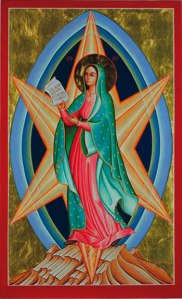
The Indissolubility of Marriage and the Joy of Sharing Life Together
21. Mutual self-giving in the Sacrament of Marriage is grounded in the grace of Baptism, which establishes in all its recipients a foundational covenant with Christ in the Church. In accepting each other and with Christ’s grace, the engaged couple promises a total self-giving, faithfulness and openness to new life. The married couple recognizes these elements as constitutive in marriage, gifts offered to them by God, which they take seriously in their mutual commitment, in God’s name and in the presence of the Church. Faith facilitates the possibility of assuming the benefits of marriage as commitments which are sustainable through the help of the grace of the Sacrament. God consecrates the love of husband and wife and confirms the indissoluble character of their love, offering them assistance to live their faithfulness, mutual complementarity and openness to new life. Therefore, the Church looks to married couples as the heart of the entire family, which, in turn, looks to Jesus.
22. From the same perspective, in keeping with the teaching of the Apostle who said that the whole of creation was planned in Christ and for him (cf. Col 1:16), the Second Vatican Council wished to express appreciation for natural marriage and the valid elements present in other religions (cf. Nostra Aetate, 2) and cultures, despite their limitations and shortcomings (cf. Redemptoris Missio, 55). The presence of the seeds of the Word in these cultures (cf. Ad Gentes, 11) could even be applied, in some ways, to marriage and the family in so many societies and non-Christian peoples. Valid elements, therefore, exist in some forms outside of Christian marriage — based on a stable and true relationship of a man and a woman — which, in any case, might be oriented towards Christian marriage. With an eye to the popular wisdom of different peoples and cultures, the Church also recognizes this type of family as the basic, necessary and fruitful unit for humanity’s life together.
The Truth and Beauty of the Family and Mercy Towards Broken and Fragile Families
23. With inner joy and deep comfort, the Church looks to families who remain faithful to the teachings of the Gospel, encouraging them and thanking them for the testimony they offer. In fact, they witness, in a credible way, to the beauty of an indissoluble marriage, while always remaining faithful to each other. Within the family, “which could be called a domestic church” (Lumen Gentium, 11), a person begins a Church experience of communion among persons, which reflects, through grace, the Mystery of the Holy Trinity. “In a family, a person learns endurance, the joy of work, fraternal love, and generosity in forgiving others — repeatedly at times — and above all divine worship in prayer and the offering of one’s life” (Catechism of the Catholic Church, 1657). The Holy Family of Nazareth is a wondrous model in whose school we “understand why we have to maintain spiritual discipline, if we wish to follow the teachings of the Gospel and become Christ’s disciples” (Blessed Pope Paul VI, Address at Nazareth, 5 January 1964). The Gospel of the Family also nourishes the seeds which are still waiting to grow; and serves as the basis for caring for those trees which might have withered and need treatment.
24. The Church, a sure teacher and caring mother, recognizes that the only marriage bond for those who are baptized is sacramental and any breach of it is against the will of God. At the same time, the Church is conscious of the weakness of many of her children who are struggling in their journey of faith. “Consequently, without detracting from the evangelical ideal, they need to accompany with mercy and patience the eventual stages of personal growth as these progressively occur. […] A small step in the midst of great human limitations can be more pleasing to God than a life which outwardly appears in order and passes the day without confronting great difficulties. Everyone needs to be touched by the comfort and attraction of God’s saving love, which is mysteriously at work in each person, above and beyond their faults and failings”(Gaudium Evangelii, 44).
25. In considering a pastoral approach towards people who have contracted a civil marriage, who are divorced and remarried or simply living together, the Church has the responsibility of helping them understand the divine pedagogy of grace in their lives and offering them assistance so they can reach the fullness of the God’s plan for them. Looking to Christ, whose light illumines every person (cf. Jn 1: 9; Gaudium et Spes, 22), the Church turns with love to those who participate in her life in an incomplete manner, recognizing that the grace of God works also in their lives by giving them the courage to do good, to care for one another in love and to be of service to the community in which they live and work.
26. The Church looks with concern at the distrust of many young people in relation to a commitment in marriage and suffers at the haste with which many of the faithful decide to put an end to the obligation they assumed and to take on another. These lay people, who are members of the Church, need pastoral attention which is merciful and encouraging, so they might adequately determine their situation. Young people, who are baptized, should be encouraged to understand that the Sacrament of Marriage can enrich their prospects of love and they can be sustained by the grace of Christ in the Sacrament and by the possibility of participating fully in the life of the Church.
27. In this regard, a new aspect of family ministry is requiring attention today — the reality of civil marriages between a man and woman, traditional marriages and, taking into consideration the differences involved, even cohabitation. When a union reaches a particular stability, legally recognized, characterized by deep affection and responsibility for children and showing an ability to overcome trials, these unions can offer occasions for guidance with an eye towards the eventual celebration of the Sacrament of Marriage. Oftentimes, a couple lives together without the possibility of a future marriage and without any intention of a legally binding relationship.
28. .In accordance with Christ’s mercy, the Church must accompany with attention and care the weakest of her children, who show signs of a wounded and lost love, by restoring in them hope and confidence, like the beacon of a lighthouse in a port or a torch carried among the people to enlighten those who have lost their way or who are in the midst of a storm. Conscious that the most merciful thing is to tell the truth in love, we go beyond compassion. Merciful love, as it attracts and unites, transforms and elevates. It is an invitation to conversion. We understand the Lord’s attitude in the same way; he does not condemn the adulterous woman, but asks her to sin no more (Jn 8: 1-11).
Part III
Facing the Situation: Pastoral Perspectives
Proclaiming the Gospel of the Family Today in Various Contexts
29. Discussion at the synod has allowed for agreement on some of the more urgent pastoral needs to be addressed in the particular Churches, in communion cum Petro et sub Petro. Proclaiming the Gospel of the Family is urgently needed in the work of evangelization. The Church has to carry this out with the tenderness of a mother and the clarity of a teacher (cf. Eph 4: 15), in faithfulness to the mercy displayed in Christ’s kenosis. Truth became flesh in human weakness, not to condemn it but to save it (cf.Gn 3: 16, 17).
30. Evangelizing is the shared responsibility of all God’s people, each according to one’s ministry and charism. Without the joyous testimony of married people and families, proclamation, even if done in its proper way, risks being misunderstood or lost in a flurry of words which is characteristic of society today (cf. Novo Millennio Ineunte, 50). On various occasions, the synod fathers emphasized that Catholic families, by reason of the grace of the Sacrament of Marriage, are called upon to be the active agents in every pastoral activity on behalf of the family.
31. The primacy of grace needs to be highlighted and, consequently, the possibilities which the Spirit provides in the Sacrament. It is a question of allowing people to experience that the Gospel of the Family is a joy which “fills hearts and lives”, because in Christ we are “set free from sin, sorrow, inner emptiness, and loneliness” (Evangelii Gaudium, 1). Bearing in mind the Parable of the Sower (cf. Mt 13; 3), our task is to cooperate in the sowing; the rest is God’s work; nor must we forget that, in preaching about the family, the Church is a sign of contradiction.
32. Consequently, this work calls for missionary conversion by everyone in the Church, that is, not stopping at proclaiming a message which is perceived to be merely theoretical, with no connection to people’s real problems. We must continually bear in mind that the crisis of faith has led to a crisis in marriage and the family and, consequently, the transmission of faith itself from parents to children has often been interrupted. If we confront the situation with a strong faith, the imposition of certain cultural perspectives which weaken the family is of no importance.
33. Conversion also needs to be seen in the language we use, so that it might prove to be effectively meaningful. Proclamation needs to create an experience where the Gospel of the Family responds to the deepest expectations of a person: a response to each’s dignity and complete fulfillment in reciprocity, communion and fruitfulness. This does not consist in merely presenting a set of rules but in espousing values, which respond to the needs of those who find themselves today, even in the most secularized of countries.
34. The Word of God is the source of life and spirituality for the family. All pastoral work on behalf of the family must allow people to be interiorly fashioned and formed as members of the domestic church through the Church’s prayerful reading of Sacred Scripture. The Word of God is not only good news in a person’s private life, but also a criterion of judgment and a light in discerning the various challenges which married couples and families encounter.
35. At the same time, many synod fathers insisted on a more positive approach to the richness of various religious experiences, without overlooking the inherent difficulties. In these different religious realities and in the great cultural diversity which characterizes countries, the positive possibilities should be appreciated first and then on this basis evaluate their limitations and deficiencies.
36. Christian marriage is a vocation which is undertaken with due preparation in a journey of faith with a proper process of discernment and is not to be considered only a cultural tradition or social or legal requirement. Therefore, formation is needed to accompany the person and couple in such a way that the real-life experience of the entire ecclesial community can be added to the teaching of the contents of the faith.
37. The synod fathers repeatedly called for a thorough renewal of the Church’s pastoral practice in light of the Gospel of the Family and replacing its current emphasis on individuals. For this reason, the synod fathers repeatedly insisted on renewal in the training of priests and other pastoral workers with a greater involvement of families.
38. They equally highlighted the fact that evangelization needs to clearly denounce cultural, social, political and economic factors, such as the excessive importance given to market logic which prevents authentic family life and leads to discrimination, poverty, exclusion, and violence. Consequently, dialogue and cooperation need to be developed with the social entities and encouragement given to Christian lay people who are involved in the cultural and socio-political fields.
Guiding Engaged Couples in Their Preparation for Marriage
39. The complex social reality and the changes affecting the family today require a greater effort on the part of the whole Christian community in preparing those who are about to be married. The importance of the virtues needs to be included, among these chastity which is invaluable in the genuine growth of love between persons. In this regard, the synod fathers jointly insisted on the need to involve more extensively the entire community by favouring the witness of families themselves and including preparation for marriage in the course of Christian Initiation as well as emphasizing the connection between marriage and the other sacraments. Likewise, they felt that specific programmes were needed in preparing couples for marriage, programmes which create a true experience of participation in ecclesial life and thoroughly treat the various aspects of family life.
Accompanying the Married Couple in the Initial Years of Marriage
40. The initial years of marriage are a vital and sensitive period during which couples become more aware of the challenges and meaning of married life. Consequently, pastoral accompaniment needs to go beyond the actual celebration of the Sacrament (Familiaris Consortio, Part III). In this regard, experienced couples are of great importance in any pastoral activity. The parish is the ideal place for these experienced couples to be of service to younger couples. Married couples need encouragement in a basic openness to the great gift of children. The importance of a family spirituality and prayer needs emphasis so couples might be encouraged to meet regularly to promote growth in their spiritual life and solidarity in the concrete demands of life. Meaningful liturgies, devotional practices and the Eucharist celebrated for entire families were mentioned as vital factors in fostering evangelization through the family.
Pastoral Care for Couples Civilly Married or Living Together
41. While continuing to proclaim and foster Christian marriage, the Synod also encourages pastoral discernment of the situations of a great many who no longer live this reality. Entering into pastoral dialogue with these persons is needed to distinguish elements in their lives which can lead to a greater openness to the Gospel of Marriage in its fullness. Pastors ought to identify elements which can foster evangelization and human and spiritual growth. A new element in today’s pastoral activity is a sensitivity to the positive aspects of civilly celebrated marriages and, with obvious differences, cohabitation. While clearly presenting the Christian message, the Church also needs to indicate the constructive elements in these situations which do not yet or no longer correspond to it.
42. The synod fathers also noted in many countries an “an increasing number of people live together ad experimentum, in unions which have not been religiously or civilly recognized” (Instrumentum Laboris, 81). In some countries, this occurs especially in traditional marriages which are arranged between families and often celebrated in different stages. Other countries are witnessing a continual increase in the number of those who, after having lived together for a long period, request the celebration of marriage in Church. Simply to live together is often a choice based on a general attitude opposed to anything institutional or definitive; it can also be done while awaiting more security in life (a steady job and income). Finally, in some countries de facto marriages are very numerous, not because of a rejection of Christian values concerning the family and matrimony but primarily because celebrating a marriage is too expensive. As a result, material poverty leads people into de facto unions.
43. All these situations require a constructive response, seeking to transform them into opportunities which can lead to an actual marriage and a family in conformity with the Gospel. These couples need to be provided for and guided patiently and discreetly. With this in mind, the witness of authentic Christian families is particularly appealing and important as agents in the evangelization of the family.
Caring for Broken families (Persons who are Separated, Divorced, Divorced and Remarried and Single-Parent Families)
44. Married couples with problems in their relationship should be able to count on the assistance and guidance of the Church. The pastoral work of charity and mercy seeks to help persons recover and restore relationships. Experience shows that with proper assistance and acts of reconciliation, though grace, a great percentage of troubled marriages find a solution in a satisfying manner. To know how to forgive and to feel forgiven is a basic experience in family life. Forgiveness between husband and wife permits a couple to experience a never-ending love which does not pass away (cf. 1 Cor 13:8). At times, this is difficult, but those who have received God’s forgiveness are given the strength to offer a genuine forgiveness which regenerates persons.
45. The necessity for courageous pastoral choices was particularly evident at the Synod. Strongly reconfirming their faithfulness to the Gospel of the Family and acknowledging that separation and divorce are always wounds which causes deep suffering to the married couple and to their children, the synod fathers felt the urgent need to embark on a new pastoral course based on the present reality of weaknesses within the family, knowing oftentimes that couples are more “enduring” situations of suffering than freely choosing them. These situations vary because of personal, cultural and socio-economic factors. Therefore, solutions need to be considered in a variety of ways, as suggested by Pope St. John Paul II (cf. Familiaris Consortio, 84).
46. All families should, above all, be treated with respect and love and accompanied on their journey as Christ accompanied the disciples on the road to Emmaus. In a particular way, the words of Pope Francis apply in these situations: “The Church will have to initiate everyone – priests, religious and laity – into this ‘art of accompaniment’, which teaches us to remove our sandals before the sacred ground of the other (cf. Ex 3: 5). The pace of this accompaniment must be steady and reassuring, reflecting a closeness and compassion which, at the same time, heals, liberates and encourages growth in the Christian life” (Evangelii Gaudium, 169).
47. A special discernment is indispensable for pastorally guiding persons who are separated, divorced or abandoned. Respect needs to be primarily given to the suffering of those who have unjustly endured separation, divorce or abandonment, or those who have been subjected to the maltreatment of a husband or a wife, which interrupts their life together. To forgive such an injustice is not easy, but grace makes this journey possible. Pastoral activity, then, needs to be geared towards reconciliation or mediation of differences, which might even take place in specialized “listening centres” established in dioceses. At the same time, the synod fathers emphasized the necessity of addressing, in a faithful and constructive fashion, the consequences of separation or divorce on children, in every case the innocent victims of the situation. Children must not become an “object” of contention. Instead, every suitable means ought to be sought to ensure that they can overcome the trauma of a family break-up and grow as serenely as possible. In each case, the Church is always to point out the injustice which very often is associated with divorce. Special attention is to be given in the guidance of single-parent families. Women in this situation ought to receive special assistance so they can bear the responsibility of providing a home and raising their children.
48. A great number of synod fathers emphasized the need to make the procedure in cases of nullity more accessible and less time-consuming. They proposed, among others, the dispensation of the requirement of second instance for confirming sentences; the possibility of establishing an administrative means under the jurisdiction of the diocesan bishop; and a simple process to be used in cases where nullity is clearly evident. Some synod fathers, however, were opposed to this proposal, because they felt that it would not guarantee a reliable judgment. In all these cases, the synod fathers emphasized the primary character of ascertaining the truth about the validity of the marriage bond. Among other proposals, the role which faith plays in persons who marry could possibly be examined in ascertaining the validity of the Sacrament of Marriage, all the while maintaining that the marriage of two baptized Christians is always a sacrament.
49. In streamlining the procedure of marriage cases, many synod fathers requested the preparation of a sufficient number of persons — clerics and lay people — entirely dedicated to this work, which will require the increased responsibility of the diocesan bishop, who could designate in his diocese specially trained counselors who would be able to offer free advice to the concerned parties on the validity of their marriage. This work could be done in an office or by qualified persons (cf. Dignitas Connubii, art. 113, 1).
50. Divorced people who have not remarried, who oftentimes bear witness to their promise of faithfulness in marriage, ought to be encouraged to find in the Eucharist the nourishment they need to sustain them in their present state of life. The local community and pastors ought to accompany these people with solicitude, particularly when children are involved or when in serious financial difficulty.
51. Likewise, those who are divorced and remarried require careful discernment and an accompaniment of great respect. Language or behavior which might make them feel an object of discrimination should be avoided, all the while encouraging them to participate in the life of the community. The Christian community’s care of such persons is not to be considered a weakening of its faith and testimony to the indissolubility of marriage, but, precisely in this way, the community is seen to express its charity.
52. The synod father also considered the possibility of giving the divorced and remarried access to the Sacraments of Penance and the Eucharist. Some synod fathers insisted on maintaining the present regulations, because of the constitutive relationship between participation in the Eucharist and communion with the Church as well as the teaching on the indissoluble character of marriage. Others expressed a more individualized approach, permitting access in certain situations and with certain well-defined conditions, primarily in irreversible situations and those involving moral obligations towards children who would have to endure unjust suffering. Access to the sacraments might take place if preceded by a penitential practice, determined by the diocesan bishop. The subject needs to be thoroughly examined, bearing in mind the distinction between an objective sinful situation and extenuating circumstances, given that “imputability and responsibility for an action can be diminished or even nullified by ignorance, inadvertence, duress, fear, habit, inordinate attachments, and other psychological or social factors” (Catechism of the Catholic Church, 1735).
53. Some synod fathers maintained that divorced and remarried persons or those living together can have fruitful recourse to a spiritual communion. Others raised the question as to why, then, they cannot have access “sacramentally”. As a result, the synod fathers requested that further theological study in the matter might point out the specifics of the two forms and their association with the theology of marriage.
54. The problems relative to mixed marriages were frequently raised in the interventions of the synod fathers. The differences in the matrimonial regulations of the Orthodox Churches creates serious problems in some cases, which require due consideration in the work of ecumenism. Analogously, the contribution of the dialogue with other religions would be important for interreligious marriages.
Pastoral Attention towards Persons with Homosexual Tendencies
55. Some families have members who have a homosexual tendency. In this regard, the synod fathers asked themselves what pastoral attention might be appropriate for them in accordance with the Church’s teaching: “There are absolutely no grounds for considering homosexual unions to be in any way similar or even remotely analogous to God’s plan for marriage and family.”Nevertheless, men and women with a homosexual tendency ought to be received with respect and sensitivity. “Every sign of unjust discrimination in their regard should be avoided” )Congregation for the Doctrine of the Faith, Considerations Regarding Proposals to Give Legal Recognition to Unions Between Homosexual Persons, 4(.
56. Exerting pressure in this regard on the Pastors of the Church is totally unacceptable: this is equally so for international organizations who link their financial assistance to poorer countries with the introduction of laws which establish “marriage” between persons of the same sex.
The Transmission of Life and the Challenges of a Declining Birthrate
57. Today, the diffusion of a mentality which reduces the generation of human life to accommodate an individual’s or couple’s plans is easily observable. Sometimes, economic factors are burdensome, contributing to a sharp drop in the birthrate which weakens the social fabric, thus compromising relations between generations and rendering a future outlook uncertain. Openness to life is an intrinsic requirement of married love. In this regard, the Church supports families who accept, raise and affectionately embrace children with various disabilities.
58. Pastoral work in this area needs to start with listening to people and acknowledging the beauty and truth of an unconditional openness to life, which is needed, if human life is to be lived fully. This serves as the basis for an appropriate teaching regarding the natural methods for responsible procreation, which allow a couple to live, in a harmonious and conscious manner, the loving communication between husband and wife in all its aspects, along with their responsibility at procreating life. In this regard, we should return to the message of the Encyclical Humanae Vitae of Blessed Pope Paul VI, which highlights the need to respect the dignity of the person in morally assessing methods in regulating births. The adoption of children, orphans and the abandoned and accepting them as one’s own is a specific form of the family apostolate (cf. Apostolicam Actuositatem, III, 11), and oftentimes called for and encouraged by the Magisterium (cf. Familiaris Consortio, III, II; Evangelium Vitae, IV, 93). The choice of adoption or foster parenting expresses a particular fruitfulness of married life, not simply in the case of sterility. Such a choice is a powerful sign of family love, an occasion to witness to one’s faith and to restore the dignity of a son or daughter to a person who has been deprived of this dignity.
59. Affectivity needs assistance, also in marriage, as a path to maturity in the ever-deepening acceptance of the other and an ever-fuller gift of self. This necessitates offering programmes of formation which nourish married life and the importance of the laity providing an accompaniment, which consists in a life of witness. Undoubtedly, the example of a faithful and deep love is of great assistance; a love shown in tenderness and respect; a love which is capable of growing over time; and a love which, in the very act of opening itself to the generation of life, creates a transcendent mystical experience.
Upbringing and the Role of the Family in Evangelization
60. One of the fundamental challenges facing families today is undoubtedly that of raising children, made all the more difficult and complex by today’s cultural reality and the great influence of the media. Consideration, then, needs to be given to the needs and expectations of families, who are able to bear witness, in their daily lives, to the family as a place of growth in the concrete and essential transmission of the virtues which give form to our existence. Parents, then, are able freely to choose the type of education for their children, according to their convictions.
61. In this regard, the Church can assume a valuable role in supporting families, starting with Christian Initiation, by being welcoming communities. More than ever, these communities today are to offer support to parents, in complex situations and everyday life, in their work of raising their children, accompanying children, adolescents and young people in their development through personalized pastoral programmes, capable of introducing them to the full meaning of life and encouraging them in their choices and responsibilities, lived in the light of the Gospel. Mary, in her tenderness, mercy and maternal sensitivity can nourish the hunger of humanity and life itself. Therefore, families and the Christian people should seek her intercession. Pastoral work and Marian devotion are an appropriate starting point for proclaiming the Gospel of the Family.
Conclusion
62. These proposed reflections, the fruit of the synodal work which took place in great freedom and with a spirit of reciprocal listening, are intended to raise questions and indicate points of view which will later be developed and clarified through reflection in the local Churches in the intervening year leading to the XIV Ordinary General Assembly of the Synod of Bishops, scheduled for October, 2015, to treat The Vocation and Mission of the Family in the Church and in the Contemporary World. These are not decisions taken nor are they easy subjects. Nevertheless, in the collegial journey of the bishops and with the involvement of all God’s people, the Holy Spirit will guide us in finding the road to truth and mercy for all. This has been the wish of Pope Francis from the beginning of our work, when he invited us to be courageous in faith and to humbly and honestly embrace the truth in charity.
[03044-02.01] [Original text: Italian]
Votazioni dei singoli numeri della “Relatio Synodi”
Totale dei presenti: 183
(Non sono indicate le astensioni.)
| placet | non placet | |
| 1. | 175 | 1 |
| 2. | 179 | 0 |
| 3. | 178 | 1 |
| 4. | 180 | 2 |
| 5. | 177 | 3 |
| 6. | 175 | 5 |
| 7. | 170 | 9 |
| 8. | 179 | 1 |
| 9. | 171 | 8 |
| 10. | 174 | 8 |
| 11. | 173 | 6 |
| 12. | 176 | 3 |
| 13. | 174 | 7 |
| 14. | 164 | 18 |
| 15. | 167 | 13 |
| 16. | 171 | 8 |
| 17. | 174 | 6 |
| 18. | 175 | 5 |
| 19. | 176 | 5 |
| 20. | 178 | 3 |
| 21. | 181 | 1 |
| 22. | 160 | 22 |
| 23. | 169 | 10 |
| 24. | 170 | 11 |
| 25. | 140 | 39 |
| 26. | 166 | 14 |
| 27. | 147 | 34 |
| 28. | 152 | 27 |
| 29. | 176 | 7 |
| 30. | 178 | 2 |
| 31. | 175 | 4 |
| 32. | 176 | 5 |
| 33. | 175 | 7 |
| 34. | 180 | 1 |
| 35. | 164 | 17 |
| 36. | 177 | 1 |
| 37. | 175 | 2 |
| 38. | 178 | 1 |
| 39. | 176 | 4 |
| 40. | 179 | 1 |
| 41. | 125 | 54 |
| 42. | 143 | 37 |
| 43. | 162 | 14 |
| 44. | 171 | 7 |
| 45. | 165 | 15 |
| 46. | 171 | 8 |
| 47. | 164 | 12 |
| 48. | 143 | 35 |
| 49. | 154 | 23 |
| 50. | 169 | 8 |
| 51. | 155 | 19 |
| 52. | 104 | 74 |
| 53. | 112 | 64 |
| 54. | 145 | 29 |
| 55. | 118 | 62 |
| 56. | 159 | 21 |
| 57. | 169 | 5 |
| 58. | 167 | 9 |
| 59. | 172 | 5 |
| 60. | 174 | 4 |
| 61. | 178 | 1 |
| 62. | 169 | 8 |
[03047-01.01]
[B0770-XX.01]
 petercanisiusmichaeldavidkang