Tuesday, 10 September 2013 : 23rd Week of Ordinary Time (First Reading)

Liturgical Colour : Green

Colossians 2 : 6-15

If you have accepted Christ Jesus as Lord, let Him be your doctrine. Be rooted and built up in Him; let faith be your principle, as you were taught, and your thanksgiving overflowing. See that no one deceives you with philosophy or any hollow discourse; these are merely human doctrines not inspired by Christ but by the wisdom of this world. For in Him dwells the fullness of God in bodily form. He is the head of all cosmic power and authority, and in Him you have everything.

In Christ Jesus you were given a circumcision but not by human hands, which removed completely from you the carnal body : I refer to baptism. On receiving it you were buried with Christ; and you also rose with Him for having believed in the power of God who raised Him from the dead.

You were dead. You were in sin and uncircumcised at the same time. But God gave you life with Christ. He forgave all our sins. He cancelled the record of our debts, those regulations which accused us. He did away with all that and nailed it to the cross. Victorious through the cross, He stripped the rulers and authorities of their power, humbled them before the eyes of the whole world and dragged them behind Him as prisoners.

Monday, 9 September 2013 : 23rd Week of Ordinary Time, Memorial of St. Peter Claver, Priest (Scripture Reflection)

Liturgical Colour : Green or White

Dear brothers and sisters in Christ, indeed, as we heard today, God has His plans for all of us. And that plan is none other than in Jesus Christ, the Saviour of the world. He had prepared that plan for salvation long beforehand, ever since the time of creation, ever since the fall of our forefathers into sin.

God did not abandon us to our fate that is to die because of our wrongdoings, our betrayal against His love, but He wants us to live, an eternal life with Him in heaven. That was why He had given us His love throughout time, sending prophets and messengers one after another, in order to bring mankind back to the Lord their God and Father who loves them.

God’s prophets and messengers existed throughout time, especially ones we know in Israel, the people first chosen by the Lord to be His people. He sent these prophets and messengers to Israel and put in them the understanding and knowledge on His plan for salvation of mankind. The prophets proclaimed the message of the Lord, but many kept their hearts shut tight against the Lord, spurning His eternal love.

But God is not someone who easily gives up. Yes, He did punish those who had wronged and disobeyed His commandments, like what He did to the people of Israel in the desert, where they wandered for forty years to atone for their sins and rebelliousness, but He ultimately did all that, because He loved all of them so greatly, that it truly had caused Him pain to watch them going astray from His ways.

He had given His laws and commandments to His people, through Moses His servant and through the prophets. He gave them all these so that they will stay true to His ways and do not fall back into their past, sinful ways. These laws are to be their guide in their lives, and yet, over time, they had taken it for granted and misused them for their own purposes. They become enslaved to the Law and had forgotten what the true intention and meaning of the Law was.

That is why, He chose to send the deliverer, in Jesus, the long awaited Messiah , the Christ. In Him, the Lord finally revealed the true intent and the plan that He had crafted for our salvation. Through Christ He had revealed the nature of His Law, including that of the Sabbath. The Sabbath was made as a special day to honour the Lord, to love God, and not as a punishment for certain.

The Pharisees failed to see that, having had a set mind in their own version of the Law, and always set themselves in the path of Christ, always trying in futility to find fault with Him, particularly on the matter of the observance of the Sabbath Law. Instead of learning the true meaning of the Law, that is love, the love God has for all of us, they withdrew themselves into their sinfulness. This was what Christ had condemned them all for.

Today, we celebrate the feast of St. Peter Claver. He was a great priest and missionary, as a Spanish Jesuit who lived during the height of the Spanish American Empire in what is now known as Latin or South America. He lived at a time of conquest, when many native people of Spanish America were made into slaves of the Spanish conquerors.

St. Peter Claver worked hard as a missionary, and dedicated himself to his work, especially to the slaves, the enslaved natives of his mission work area. He denounced the slavery of fellow mankind, in an era when these slaves and the native people of the Americas in general were considered as less than human beings and were being traded as if they were animals.

He worked so hard that he kind of ‘enslaved himself to his work and ministry, but in this manner, his ‘enslavement’ is a good one. Unlike the Pharisees who enslaved themselves and the people they led on human laws, earning the condemnation of Christ, St. Peter Claver enslaved himself to the cause of love, the care of the least among all, the slaves and the lowest in the society.

Indeed, Christ Himself had done the same for all of us, for the sake of God’s children. He made Himself a slave for us, tortured and suffering, and died the humiliating death of a slave and a criminal on the cross, so that we may live and not die, so that we may not be slave again to sin, but to be free and not just any freedom, but eternal freedom from death and sin.

May the Lord who loves us so much that He is willing to die a slave’s death that we can be free from our enslavement to sin, together with St. Peter Claver and his love for the least among mankind and slaves, empower us, to dare to make a difference in our world today, and to be able to give our love and our entire being to them, in the way similar to what Christ and St. Peter Claver had done, that no one will remain unloved, and no one will remain a slave. Amen.

Saturday, 7 September 2013 : 22nd Week of Ordinary Time (First Reading)

Liturgical Colour : Green or White

Colossians 1 : 21-23

You yourselves were once estranged and opposed to God because of your evil deeds, but now God has reconciled you in the human body of His Son through His death, so that you may be without fault, holy and blameless before Him.

Only stand firm, upon the foundation of your faith, and be steadfast in hope. Keep in mind the Gospel you have heard, which has been preached to every creature under heaven, and of which, I, Paul, became a minister.

Wednesday, 4 September 2013 : 22nd Week of Ordinary Time (Scripture Reflection)

Liturgical Colour : Green

Dear brothers and sisters in Christ, we continue today reading about the Lord’s ministry in this world, in His healing of the sick and those possessed by evil spirits, through which He showed His might and mercy, and in healing us He revealed to us the great true depth of His divine love, and the nature of His love. He cared for us so deeply that He even was willing to descend unto us, to be one of us, and to walk among us that we may have a new hope.

He was sent into this world on an important mission, that is to bring the Good News of the Lord to many, that they would be aware of the imminence of the coming of the kingdom of God, and that the Lord Himself had come to bring forth and herald the coming of the kingdom. He came to fulfill the prophecies and predictions of the prophets, regarding the coming Saviour, the Messiah who would come and save all, in the same way that Moses had come to liberate the people of Israel from their bondage in Egypt.

He brought forth into this world, a new and complete understanding as well as explanations on the Law of God, that is love. He showed that love is all God wanted from us mankind, the love we have for Him and for one another. He did not just preach that brothers and sisters and then did nothing. On the other hand, Jesus the Lord Himself took concrete actions in order to show His love, the love He had shown throughout His ministry on this world.

The healing of the sick and the healing of those possessed by demons were just some of the examples of the great divine love that our Lord had for us all. He showed mercy to those who clearly showed their faith in Him, to those who placed their hope in Him. He brought healing and new life to those who had asked Him for His mercy. And ultimately, He did no greater act of love, than His own death on the cross, the death that brought about new life for all the faithful ones in Him.

The Risen Christ, Lord of all, God who laid down His life for His people that we may all live and not die, is at the centre of our faith, brothers and sisters, as our faith is truly about rejoicing and praising the Lord our God, the Lord our Saviour and Redeemer. This is the Gospel that St. Paul and the other Apostles had worked hard, and even putting their lives in a line, to bring to the peoples who never saw or knew Christ.

It is easy for the people of Israel to believe in Jesus, because He did wonders, healing and miracles, casting out demons among many other things He had done, but does this really constitute strong faith? Well, sometimes yes, but more often than not, no. Remember that despite them praising and glorifying Christ for the miracles He had done, they were also the ones who called for His death when they were agitated by the Pharisees and the chief priests.

Therefore they in fact did not truly have faith or love for God in Jesus. What they truly had was in fact awe and the sense of surprise, and fascination on the miracles, the healing powers of Jesus. What they truly loved is the miracles and all the wonders He had performed. Yet they did not truly have God in their hearts.

That is why, today, brothers and sisters in Christ, we who are in this world of ours today, are happy, and truly are blessed. Why so? That is because we who have not seen the Lord and all of His wonders and miracles, kept our faith and love for Him, and we have kept our dedication to Him, despite having not seen all the great works He had once done to Israel, the healing of the sick and the casting out of demons.

But we must not stay idle, brothers and sisters, for we have indeed a lot of work to do, a lot of tasks that we must accomplish, as in our world today, the faith in God had been diminishing, because people once again clamour for things that they can see and they can feel tangibly, which apparently the Lord does not ‘offer’ them. That is why the reason, brothers and sisters in Christ, that many chose science as an ‘alternative’ to God. This really should not be the case!

Yet, the presence of God can be made truly manifest and real, through us, brothers and sisters in Christ, through our actions and deeds based in the love of God, that God who is love will truly manifest through our loving actions, through our loving deeds, and that is our task in this world, brothers and sisters. Let us make the Lord visible to others, to everyone who seeks Him, through us, through our own actions, that many will turn back towards the Lord their God and therefore receive salvation in Christ.

May the Lord our God who showed us love, and who cast demons from the possessed, and brought healing to the sick also empower us, to be able to love with all sincerity of our hearts, to be able to commit to His cause, and to be able to show His presence in this world through ourselves, to our brethren who have yet to believe in the Lord and God. May the Lord guide us and bless us through life. Amen.

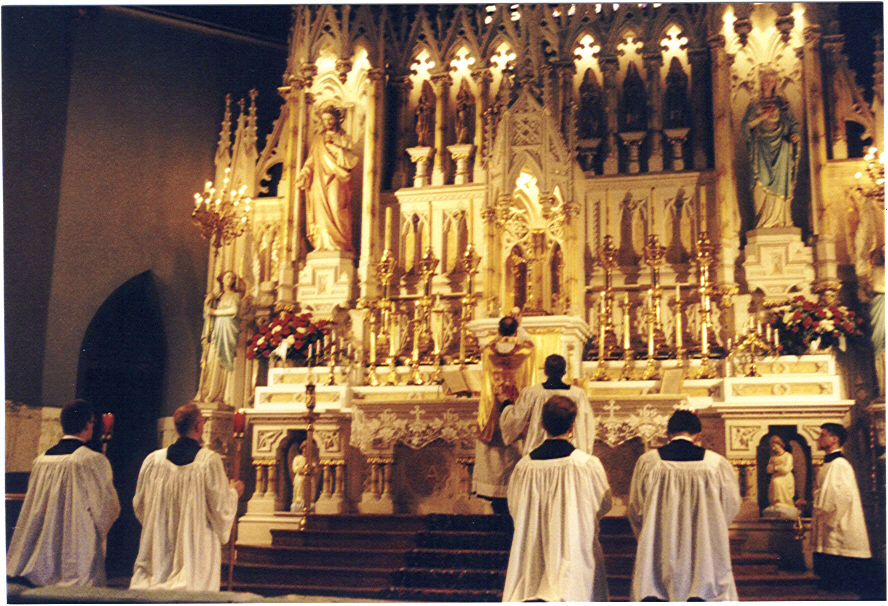
The need to return to ‘Ad Orientem’ celebration

00056_15042010

Let us return to the ad orientem celebration! That is facing the Lord TOGETHER with the people, instead of facing the people (ad populum).

The Mass is not a political gathering or a party where everyone faces each other and look at each other. The Mass is about the Holy Sacrifice of Jesus Christ, and we ALL ought to look at Him crucified. Therefore, everyone, including the priest, MUST face the Lord, and ad orientem is the best way.

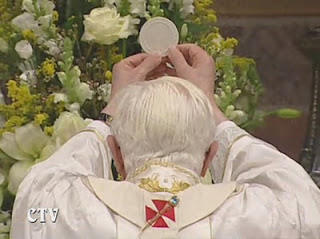
Elevation

The focus of the Mass is the Lord, not the priest as a person. The priest is Alter Christus, Christ personified in the priest, and when he lifts up that bread turned into the Most Precious Body, It is like Christ lifted up high between the heaven and the earth, offering Himself as a sacrificial victim, to absolve and save all the world from death and sin. When the priest lifts up that chalice with wine, transformed into the Most Precious Blood, it is the Blood of Christ, Jesus Christ Himself we are looking at, His Blood pouring down the cross to us, to wash us from our iniquities and our sins, making our garments white again in the Blood of the Lamb.

Monstrance Baroque

And even the ones who crucified Him, looked at Him “And they shall look at the One whom they pierced”. It is therefore imperative, that we keep our focus at the Lord, as One people, One Church, during and throughout the Mass. The focus is not in the dances and the upbeat songs now often used to arouse people’s attention and interest in the Mass, and neither is the focus on the priest dancing, singing, or the people’s performances, but the focus is Christ.

When the priest faces the people, this fact is quickly and easily lost in both the people, AND the priest. Eye contact is very important in relationships, and eye contact between the priest and the people while can be beneficial (during the homily) it can easily distract our attention from the Lord in the Eucharist, very easily.

In this way too, we take the best from both of the two Form of the Latin Rite we have in the Church, that is the Extraordinary Form (Tridentine) and the Ordinary Form (Novus Ordo), and end the numerous liturgical abuses that had arisen ever since ad populum celebration became commonplace, and many did them inappropriately and without due honour to our Lord Jesus Christ.

papal ad orientem 2010 4

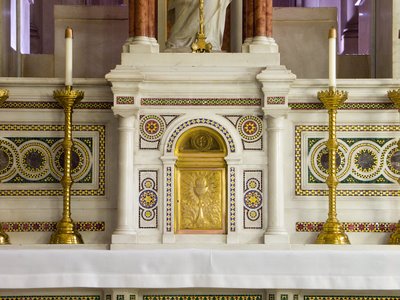
And lastly, it is time to return the Tabernacle with the Most Holy Eucharist back to its place of primary honour behind the Altar, that is where all the people and the priests focus at during the Mass, and not relegated somewhere at the side or a less-than-honorary place in the church building. There can be another Tabernacle for use especially during the Transfer of the Eucharist on Holy Thursday, but the Tabernacle itself should and indeed, must be restored to its position of honour at the Altar!

Cathedral Basilica of Saint Louis, in Saint Louis, Missouri - All Saints Chapel - tabernacle

Ad orientem celebration helps this, as the priest no longer need to show his back all the time to the Lord throughout the Mass if ad populum celebration is done.

Wednesday, 28 August 2013 : 21st Week of Ordinary Time, Memorial of St. Augustine, Bishop and Doctor of the Church (First Reading)

Liturgical Colour : White

1 Thessalonians 2 : 9-13

Remember our labour and toll; when we preached the Gospel, we worked day and night so as not to be a burden to you. You are witnesses with God that we were holy, just, and blameless toward all of you who now believe. We warned each of you as a father warns his children; we encouraged you and urged you to adopt a way of life worthy of God who calls you to share His own glory and kingdom.

This is why we never cease giving thanks to God for, on receiving our message, you accepted it, not as human teaching, but as the word of God. That is what it really is, and as such it is at work in you who believe.

Saturday, 24 August 2013 : 20th Week of Ordinary Time, Feast of St. Bartholomew, Apostle (Scripture Reflection)

Liturgical Colour : Red

Dear brothers and sisters in Christ, today we celebrate the great feast day of one of the Twelve Apostles, namely St. Bartholomew, also known as Nathaniel or Nathanael. He was a righteous and upright man called by the Lord to be one of His disciples, and therefore made him His apostle. The Lord did call His disciples from various backgrounds, including even tax collectors and murderers, as well as the righteous ones. All of them called from their former lives, abandoning them to follow the Lord their God in Christ.

Each of the Apostles were called to be the followers of Christ, to help Him in His mission in this world, and ultimately, to continue the works He had done, after He ascended in glory to heaven. They were entrusted with the care of the faithful, as shepherds of the sheep of the Lord, that is all of us, to be the guiding beacons along our long and arduous path towards salvation in God. From them came many generations of shepherds of the people of God, including that of our priests and bishops today, who are their successors, the successor of the Apostles of Christ.

St. Bartholomew travelled wide after the events depicted in the New Testament, as one of the Apostles of Christ, spreading the Good News of salvation to many around the world, and according to records, St. Bartholomew had visited and evangelised in Ethiopia, Armenia, India, and some other places throughout his ministry, converting many to the cause of God, bringing God’s salvation to many those who had not yet heard about Christ or saw His marvellous works.

He converted many to the Lord and brought many into the Church. However, in the same way with all the other Apostles and disciples of Christ, St. Bartholomew met much opposition, persecution, and oppression just as he was accepted by some in the societies that he had visited. Nevertheless, he continued to labour for the sake of the Lord in distant, foreign lands, until he eventually met the end of his life in martyrdom, apparently in Armenia, by being flayed alive and crucified upside down, much like St. Peter in Rome.

Despite his death, and the death of the other Apostles of Christ, in the hands of their enemies and executioners, in the hands of the enemies of God and the godless ones, they had brought forth a growth and flowering of the faithful in the Church, such that the saying is really true that ‘the blood of martyrs is the seed of Christians’. Their devotion, dedication, and martyrdom had inspired many to remain true to their faith and to remain faithful to their God, and many followed the Apostles like St. Bartholomew, into martyrdom themselves.

St. Bartholomew and the other Apostles of Christ, St. Peter, St. John the Evangelist and others, were not superhuman, brothers and sisters in Christ. They were same like us, mere man, with all their weaknesses, but also with their respective qualities and strengths. They experienced human emotions as we too experience our human emotions. They experienced doubt and fear when they followed Jesus, and especially when Jesus was captured, tried, and executed. They were scattered like sheep without a shepherd, and yet, when Christ came back in great triumph against evil and sin, He gathered them back upon Himself and sent them the Spirit as the Helper.

They were empowered with God’s love through that Spirit of love, and they were emboldened to take up the cause of the Lord and went forth courageously to spread the Gospels to all men. The Apostles went through hardships and suffering for the sake of God and also for the sake of His people, in the Church of God, and they faced death bravely when they were martyred for their faith and unshakeable devotion to the Lord. They shed their blood, and as I had mentioned, these formed the foundations of the Church of God, along with many other martyrs, that even though they are persecuted against, they remain vibrant and growing in both number and in their faith.

In the first reading, we see the Holy City of Jerusalem descending from heaven, to meet her Bride, that is the Lamb of God. That Holy City was great and precious, the heavenly Jerusalem, pure and clear like crystal. The City has twelve gates and twelve foundation stones, representing the twelve tribes of Israel. Those foundation stones also in fact represent the twelve apostles, brothers and sisters! Just as Christ Himself had said that the Apostles will sit on twelve thrones and judge the people of God. They are akin to the guardians of those gates, barring the entry into the city to anyone found not worthy.

That Holy City of God in fact represent both the presence of God, that all of us aspire to enter, and also the Church of God, built upon the support, the foundation stone of the Apostles. Their faith and dedication had been the strong foundation that held up the Church of God, and ensured its continuity throughout time, despite all the opposition, persecution, and evils it had faced all these while. That includes St. Bartholomew who gave up his life and laboured hard for the sake of the Lord.

Therefore, brothers and sisters in Christ, let us today, as we recall the labours and the righteousness of St. Bartholomew the Apostle, resolve to follow his life examples, and resolve to devote ourselves more to the laws and commandments of our God that is love, by loving one another, giving our love especially to those who have little or none of it, and to love God with all our might. Pray for us St. Bartholomew, the Apostle of Christ and defender of the faith. Amen.

Friday, 23 August 2013 : 20th Week of Ordinary Time, Memorial of St. Rose of Lima, Virgin (Scripture Reflection)

Liturgical Colour : Green or White

Dear brothers and sisters in Christ, today we listen to the very heart of our faith as how it was explained by Jesus Himself. The Law and commandments of the Lord, the entirety of the divine laws itself had been summed up as love. Yes, love for both God and for our fellow men. All the laws and the rules God had given to His people through Moses and the prophets, are really about showing our love to both He who created us and our fellow brethren, the same children of God.

The entirety of the laws and regulations God had given His people was indeed to guide them that they know what to do in their lives, and will not fall easily into the traps of Satan. Indeed, ever since mankind rebelled against God during the days of Adam and Eve, our ancestors, mankind had ever been under the thrall of the evil one. God who liberated His people from the tyranny of the Pharaohs and the Egyptians therefore also want to free His people from the true slavemasters, that is Satan.

However, liberating His people would not have been easy, as we have been corrupted by sin, and evil had darkened our hearts. We have therefore been rendered unworthy of our Lord and Creator, who is good and perfect. We had shunned the love of God for the temptations of Satan. That was evident even after God had shown His power and brought His people out of the land of Egypt into the Promised Land He promised them and eventually gave them.

Those laws are meant to remind and keep the people in the ways of the Lord, that they will truly grow to be worthy of God, and be worthy of being God’s children and chosen ones. Sadly, by the time of Jesus, the laws had been taken out of its original purpose and context, ending up in the law being observed for the sake of being observed, that is the Law had become an obligation rather than something that truly lives in the hearts of mankind.

The Law of God had instead become a set of rituals that people followed, but the Lord is not in their hearts, because what they are observing is the law of men instead of the law of love, the true Law. That was what Jesus was trying to rectify by teaching the truth about God and His Law. He showed us that the Law is actually not about following rituals or a set of rules, and if we disobey them, we will be punished. The Law was truly God’s love for us, showing all of us, how to love Him and become His loving children.

Jesus reminded His disciples, the people of God, and ultimately all of us today, that the Law must truly live within each one of our hearts. Yes, the Law of love, our love for God, and our love for our fellow men, for everyone without exception. That was the main points that Jesus wanted to stress to each one of us, to keep God’s commandments, not just within us, but also in our actions, our words, and our deeds.

Today, we celebrate the feast of St. Rose of Lima, also known as St. Rosa of Lima. She is the very first saint from the Americas, the New World. St. Rose of Lima was born in Lima, Peru, in the then Spanish America. She was truly a devout and dedicated servant of God, who was greatly inspired by her faith to do more in the service of God and her fellow brethren. She vowed to remain pure and holy all her life, by pledging a virgin life before God, and despite her parents’ objection, she continued to do her best to pursue her passion in life, that is God.

She prayed fervently and worked with love, sharing her love with everyone she met and everyone she worked with. St. Rose also even wore a silver crown with thorns to remind her of the suffering of Christ wearing the crown of thorns during His Passion, that she would be ever mindful of the suffering and love Christ had shown to her and all of us in order to save us. In St. Rose of Lima, we can indeed see the extent of the love and dedication she had for God and also for her fellow men. This is what the Lord wants from us, and this is the only way that we cam truly follow God’s commandments, not by obeying rules or observing rituals, but by loving one another and loving God, just as St. Rose of Lima had shown us through her own life examples.

We have to devote ourselves to the Lord unconditionally as St. Rose had done, and as Ruth, the holy woman and ancestor of David had done, as we read in the First Reading today. We have to truly give ourselves fully to God, the gift of our hearts, our soul, and all of our beings, that we truly reflect God in all the things that we do, that we truly obey His will and His commandments, and therefore, be made worthy of Him once again, and deserve the eternal reward of life and glory in heaven, which Christ had prepared for us. May the Lord bless us, and through the example and intercession of St. Rose of Lima, may we all be inspired to love God better, serve God better, and commit ourselves more to Him, and do the same to our fellow brothers and sisters. Amen.

Wednesday, 21 August 2013 : 20th Week of Ordinary Time, Memorial of St. Pius X, Pope (Scripture Reflection)

Liturgical Colour : White

Dear brothers and sisters in Christ, today, we listen to the fairness of our God, the upright nature of His words, and the love He showed upon all of us through His constant help throughout time. He showed His love and mercy upon us, and He is just to all of His children. We who have been marred by sin and evil, and the ones who should have been cast with the devil into the eternal fire of hell, had been brought from the domain of death, back into the land of the living, just as the owner of the vineyard had brought those who are unemployed on the streets to work on his field.

Indeed, He has brought us from our oppressors, that is the devil and his angels, at a great price, a price that He paid with nothing other than His own Most Precious Blood, that redeemed all of us, from the price of sin that had been placed on us ever since we first sinned against God and disobeyed against His will and His commandments. He paid for all of us with that Most Precious Body and Blood of His, that we will not die, but live eternal with Him, He who loves us and He who wants to forgive us from our sins and impurities.

He had called us all from the darkness to come into the light, to come for the salvation that He had prepared for us. He made a promise, a covenant with all of us, that we will be rewarded with life eternal in Him, as we enter into our new life in Him, just as the labourers were taken out of their joblessness and life in the streets, into the new life in the service of the Lord in His field, His vineyard. Each of us, brothers and sisters, given a new chance of life, that we may truly receive a reward of eternity at the end of our labours and journey in this world.

Yes, and just like what we heard in the First Reading today, we are like the trees that goes around seeking a tree to be king over all of us, to be that source of leadership and guidance in our respective lives, to be the light guiding us through the darkness of this world. And indeed, while all the regal and great trees, well beloved and renowned, like the fig tree and the vine, did not want to abandon all that they have for the trees’ sake, Jesus is indeed like the bramble vine, who would want to lower Himself to be our king.

Why so? It is because becoming our king is not an easy thing for Jesus, as His ministry in this world would have shown. Many people opposed Him, and many paid a deaf ear to His messages and His teachings, and many openly defied Him and questioned Him, not least of all the leaders of the people, the chief priests and the Pharisees. He stripped everything off Himself to be our King, the king of slaves and the king of the oppressed and the abandoned ones.

That such that even He went through so much, as our leader and our King, and our Master, being crowned with the painful crown of thorns, to indeed signify that He is our king, and not just like any earthly kings, but a true king, one with His people always forefront in His heart and in all His concerns. He loves us, brothers and sisters, and His love for all of us, without exception, is so much that He was willing to endure all our sufferings and supposed punishments, and drink the cup of suffering that had been prepared for Him.

He did not shirk from the huge and burdensome task that awaited Him, and instead He went on, being led like a lamb brought to its slaughterhouse, and although He is innocent, He wanted to endure all those that were intended for all of us. For what, brothers and sisters in Christ? None other than the salvation and the rescue of our souls from the eternal damnation in hell! None other than the eternal separation that we would have to endure for all times, for all eternity, away from our Lord and God who loves us so much.

Yes, Jesus our Lord and God wants us to be with Him, instead of being in the fires and suffering of hell. He cares for us, He showered us with His love and mercy, especially through no other act greater than the surrendering of His own life, as the perfect and unblemished sacrifice for our sins, in His death on the cross. That was why He gave us the one and only means to salvation, that is none other than His own flesh and blood, which He gave to all of us and offered to all of us, at the Last Supper He had with His disciples.

That was exactly what Pope St. Pius X, the great early twentieth century Pope whose feast we are celebrating today, championed, on the emphasis on the Most Holy Body and Blood of Christ, the Most Holy Eucharist through which He had given us the means to salvation. Pope St. Pius X was born Giuseppe Melchiorre Sarto, and he became a priest in his home diocese of mantua, eventually rising up the ranks to be bishop, and then the Cardinal Patriarch of Venice. He was elected as Pope Pius X, the 257th Pope and the 256th successor of St. Peter in 1903.

Pope St. Pius X was truly a great and holy Pope determined to reform the Holy Church and all its practices to better reflect its task as the bearer and medium of God’s salvation to all of us, the member of that One Body of Christ in the Church. Most important of all, He reformed the rules of the Holy Communion, such that then even small children would be able to receive the Most Precious Body and Blood of Christ our Lord. Previously, only full fledged adults were able to receive Holy Communion, but with the reform spearheaded by Pope St. Pius X, those children were opened the way of salvation through the receiving of the Holy Eucharist.

To Pope St. Pius X, there is no better path and way to salvation, and there is no better gate to salvation than that of the Most Precious Body and Blood offered to us, from the Last Supper, down to us through the Holy Mass that we celebrate regularly. In them, we find the fullness and completeness of the Lord’s promise and dedication to us, in suffering the blows meant for us, that we will not die but live a life eternal in the bliss of heaven. For his hard work for the sake of the Lord, through the promotion of the early reception of the Eucharist, and also the regular reception of the Holy Eucharist, he was known as the Pope of the Eucharist.

Pope St. Pius X also reformed much aspect of the Church, ensuring that the Church can reflect better the ways through which it can persevere in the ever-changing and increasingly hostile world, to spread the words of the Lord’s Gospel to all mankind. He reformed the Church music by greatly promoting and reviving the usage of the Gregorian Chant, which beauty for the worship of the Lord, we can still enjoy today. He truly had dedicated his life and work for the sake of God, His Church, and His people, and he is indeed an example that all of us should try to emulate in our own lives.

Therefore, brothers and sisters in Christ, reminding ourselves most importantly of the love and attention God had for us, and the blessings He had given us, through His Son, Jesus, who had shed His own flesh and blood, and His life for us, let us resolve to love Him more and more, let us revere Him in the Most Holy Eucharist by attending the Mass regularly and reverently, and accepting Him into ourselves as we eat His Body and His Blood in the Holy Communion. Pray for us, Pope St. Pius X, that we will grow to love the Lord ever more in the Most Holy Eucharist. May the Lord in the Eucharist remain with us and bless us always. Amen.

Sunday, 11 August 2013 : 19th Sunday of Ordinary Time (Second Reading)

Liturgical Colour : Green

Hebrews 11 : 1-2, 8-19

Faith is the assurance of what we hope for, being certain of what we cannot see. Because of their faith our ancestors were approved.

It was by faith that Abraham, called by God, set out for a country that would be given to him as an inheritance; for he parted without knowing where he was going. By faith he lived as a stranger in that promised land. There he lived in tents, as did Isaac and Jacob, beneficiaries of the same promise. Indeed, he looked forward to that city of solid foundation of which God is the architect and builder.

By faith Sarah herself received power to become a mother, in spite of her advanced age; since she believed that he who had made the promise would be faithful. Therefore, from an almost impotent man were born descendants as numerous as the stars of heavens, as many as the grains of sand on the seashore.

Death found all these people strong in their faith. They had not received what was promised, but they had looked ahead and had rejoiced in it from afar, saying that they were foreigners and travellers on earth. Those who speak in this way prove that they are looking for their own country. For if they had longed for the land they had left, it would have been easy for them to return, but no, they aspired to a better city, that is, a supernatural one; so God, who prepared the city for them is not ashamed of being called their God.

By faith Abraham went to offer Isaac when God tested him. And so he who had received the promise of God offered his only son although God had told him : Isaac’s descendants will bear your name. Abraham reasoned that God is capable even of raising the dead, and he received back his son, which has a figurative meaning.


Alternative reading (Shorter version)


Hebrews 11 : 1-2, 8-12

Faith is the assurance of what we hope for, being certain of what we cannot see. Because of their faith our ancestors were approved.

It was by faith that Abraham, called by God, set out for a country that would be given to him as an inheritance; for he parted without knowing where he was going. By faith he lived as a stranger in that promised land. There he lived in tents, as did Isaac and Jacob, beneficiaries of the same promise. Indeed, he looked forward to that city of solid foundation of which God is the architect and builder.

By faith Sarah herself received power to become a mother, in spite of her advanced age; since she believed that he who had made the promise would be faithful. Therefore, from an almost impotent man were born descendants as numerous as the stars of heavens, as many as the grains of sand on the seashore.