
Wednesday, 14 August 2013 : 19th Week of Ordinary Time, Memorial of St. Maximilian Kolbe, Priest and Martyr (Scripture Reflection)

Liturgical Colour : Red

Dear brothers and sisters in Christ, today we listened to the word of God in the readings, in which we are told first of the greatness of God and His kindness and love for His people, in giving to His people, the full promise of His covenant by bringing them into the land promised onto them for possession, just as God had once promised Abraham, their forefather.

Today, we also listened to the end of Moses the great prophet and leader of God’s people, who acted as the conduit of God’s amazing power and brought Israel out of Egypt, through the miracles the Lord performed through Moses and his brother, Aaron. Moses was appointed to be tool through which God exercised His saving power on His beloved people. But Moses too had his flaws, and he disobeyed God in Massah and Meribah, when the people tested the Lord and complained against Him and Moses, His servant.

Through that disobedience, Moses was not allowed to enter the Holy Land, that Promised Land of Canaan, but he was indeed allowed to take a look of the land the people of Israel was about to enter, before the Lord took him into heaven into His presence at the end of his earthly life. Moses, as all men had, met the end of his life that is death. But as Christ had proven, that death is not the end, nor does it have any power over us, because, He had overcome death, and brought new life to all mankind, that is eternal life with God in heaven for those who remain faithful in God.

Although Moses had indeed gone, and no one was ever like him in this world, save for Christ, our Lord who had incarnated Himself as one of us, but there were many prophets that God had sent to His people to guide them from generations to generations. And then, our Lord Himself had commissioned His apostles, the disciples whom He had chosen, to be the new messengers and bearers of the will of God in this world. Yes, they were to be the leaders of the people of God, the shepherds of God’s beloved sheep, in the One, Holy, Catholic, and Apostolic Church He Himself had established and entrusted to the Apostles through Peter.

From the apostles, the authority of leadership of God’s people, as the divine shepherds, came down to bishops and priests throughout the generations, and eventually to our bishops and priests today, who minister to us and lead us in our path towards God, as our leader and guide. They are our role models and to be like Moses of old, when he led the people of Israel from the land of Egypt, to the Promised Land of Canaan.

And like Moses, our priests and bishops too have to deal with all kinds of problems, with our complaints and rejections of the Lord, that they really have much things to deal with in their hands. Yes, brothers and sisters in Christ, their job is not easy, and they always need our constant prayers and assistance. And one of the task that priests need to do is to bring peace and love between one another, just as we listened in the Gospel Reading today, of the need to reconcile between ourselves, between brethren and children of the same God.

Today, we mark the feast of one of those excellent priests of the Lord, the leader of God’s people, the true shepherd, the good shepherd of God’s flock. Yes, that is Saint Maximilian Kolbe, the well-known saint of the Holocaust of Nazi Germany during the World War II era. St. Maximilian Kolbe was a Polish Franciscan friar, who in his great zeal in the service of the Lord, and after witnessing the erosion of the faith in many, established the Militia Immaculata or the Army of Mary, a group intended to foster the love and devotion to the Lord through His mother Mary, and through the work, many people rejoined the Church and had their faith strengthened.

St. Maximilian Kolbe did much good works and service during his life and as a priest of the Lord. He truly became like Moses was for the people of Israel. He ministered to the people of God and through the Militia Immaculata, spread catechism and teachings of the Church to many people, bringing them closer towards the Lord and salvation, by means of printed media and publications such as newspapers and magazines. St. Maximilian Kolbe also went to Japan and established at Nagasaki in particular a base of operations, from where the good works of St. Maximilian Kolbe and his fellow workers spread to the people still in darkness.

St. Maximilian Kolbe protected many thousands of people including the Jews, when Nazi Germany invaded Poland at the beginning of World War II. He protected them from the cruelty of the Nazi holocaust policy, but in the end he himself was captured and imprisoned by the Germans. He was incarcerated in prison with many other people, suffering under very harsh treatment and hard labour in the Nazi concentration camp. Yet, he did not give in to despair, but he in fact encouraged his fellow inmates, singing hymns and saying the Mass for them.

St. Maximilian Kolbe was not obliged to do so, but he did so because of the faith and dedication he had for the Lord and for the people of God. He truly lived his faith and made it a concrete and living faith. One day, the Germans wanted to punish a few people in the prison, because it was found that someone had managed to escape the prison, and therefore these people had to suffer in the escaped prisoner’s place. One Polish military officer who was imprisoned was chosen to be among the ones to suffer death. His pleas for mercy because he had a wife and children brought the attention of St. Maximilian Kolbe, who offered himself in exchange for the man, that is to die in his place instead.

The example of St. Maximilian Kolbe is truly praiseworthy, brothers and sisters in Christ, because through his death, much had been achieved. Yes, his death was not a waste, but it has brought much fruits, that is the fruit of love, the fruit of one’s selfless act of sacrifice, for the love of his fellow men. St. Maximilian Kolbe exemplified the very words of Christ, on who is a true and good shepherd, that is someone who love fully those who had been entrusted to him, his friends and loved ones, and one who even would die for the sake of his friends. That was what St. Maximilian Kolbe had done with his sacrifice for the poor soldier and indeed, our Lord Jesus Christ Himself had done for all of us out of His love.

Yes, brothers and sisters in Christ, we all ought to emulate the example of St. Maximilian Kolbe in our own lives, in our giving of ourselves to our brethren in need. We can do it in a variety of ways, but basically we have to be ready to give our all for our brethren’s sake. As importantly as this, let us support our priests and those who have been appointed as shepherds over us, that they will remain faithful to the mission they have been appointed to, and faithful to the people and the flock they have been entrusted with, just as St. Maximilian Kolbe and many other great saints and martyrs had done.

May the Lord bless us, our priests, and our Church, and may through the intercession of St. Maximilian Kolbe and all the saints, more souls will find their way to heaven, and may in this world that we live in today, justice and peace can be held up ever better, and may the innocent and the weak ones be protected from harm, injustice, and evil. God bless us all. Amen.
My Prayer Intention for Thursday, 1 August 2013

1. For nations and people around the world. May the Lord inculcate in His beloved people, the spirit of obedience and support, that the people will love and support those who had been entrusted with power and authority in their respective societies, that the leaders may effectively exercise their power and authority for the good sake of the Lord’s people, and may the people of God become more committed to serving their society, to the least, the abandoned, and unloved of their neighbours.

2. For the leaders of the nations and the people. May the Lord inflames in them the fire of love for the people they have been entrusted with, like a shepherd loving his own sheep and flock. May He empower them to take an extra mile in their service and their work, as well as a strong commitment to sincerity and honesty in their work, that they will not resort to underhanded measures for their own sake. Instead, may they be more committed to serving the people God had entrusted them with.

3. For all of us. May we grow to understand God’s love for us, and His love for everyone, without exception, that we will not inculcate any feelings of hatred, jealousy, or the similar vices in our hearts. Instead, may they be more dedicated to the plight of their unloved, their forsaken, and their poor brothers and sisters, who are without food, without love, and without care. Let us not be selfish individuals but be individuals for others.

May the Lord receive these prayers we offer Him in humility, in our sinfulness. May His angels bring these sweet incense to His presence in heaven. God bless us all. Amen.

Wednesday, 24 July 2013 : 16th Week of Ordinary Time, Memorial of St. Charbel Makhluf, Priest (First Reading)

Exodus 16 : 1-5, 9-15

The Israelites left Elim and the entire community reached the desert of Sin, between Elim and Sinai, on the fifteenth day of the second month after leaving Egypt. In the desert the whole community of Israel grumbled against Moses and Aaron and said to them, “If only we had died by the hand of YHVH in Egypt when we sat down to caldrons of meat and ate all the bread we wanted, whereas you have brought us to this desert to let the whole assembly die of starvation!”

YHVH then said to Moses, “Now I am going to rain down bread from heaven for you. Each day the people are to gather what is needed for that day. In this way I will test them to see if they will follow My teaching or not. On the sixth day when they prepare when they have brought in, they will find that there is twice as much as they gather each day.”

Then Moses directed Aaron to say to the whole community of Israel, “Draw near to YHVH for He has heard your complaints.” It happened that as Aaron was speaking to the full assembly of Israel, they turned towards the desert and saw the Glory of YHVH in the midst of the cloud.

Then YHVH spoke to Moses, “I have heard the complaints of Israel. Speak to them and say : ‘Between the two evenings you will eat meat, and in the morning you will have bread to your heart’s content; then you shall know that I am YHVH, your God!”

In the evening quails came up and covered the camp. And in the morning, dew had fallen around the camp. When the dew lifted , there was on the surface of the desert a thin crust like hoarfrost. The people of Israel upon seeing it said to one another, “What is it?” for they did not know what it was. Moses told them, “It is the bread that YHVH has given you to eat.”

Thursday, 18 July 2013 : 15th Week of Ordinary Time (Scripture Reflection)

Brothers and sisters in Christ, come to Christ our Lord whose yoke is light, and come to the Lord who had liberated us from the yoke of sin and death. He has liberated all of us from our fate that is death through His own death on the cross, and His resurrection give us all new hope of life, in the eternal bliss of heaven.

Yes, following the Lord has its own crosses, that is difficulties, because this world that is filled with evil will certainly oppose us with all of its might, that they will try to destroy us just as they had tried to destroy our Lord Jesus Christ by condemning Him to death, the humiliating death on the cross. Yet, Christ had triumphed, and not even death could hold Him captive, but He gloriously turned hell upside down, releasing the souls of the faithful from the slavery in hell and death.

For Christ is like the new Moses, whom the Lord had sent to liberate all the people, all mankind, all of creation, instead of just the people of Israel. If Moses was sent to liberate the people of Israel from slavery in Egypt under the Pharaohs, Christ was sent to liberate everyone, without exception from our slavery under sin, with Satan as the jailer.

Following Christ will be difficult, and there will be lots of oppositions from those in the world, particularly from the allies of evil. But this is nothing if compared to the suffering and difficulties that we will face for eternity, if we do not follow Christ and choose to follow the devil instead. That is also to represent how light is the yoke of Christ, compared to the yoke of the devil, because while the yoke of Christ leads eventually to eternal happiness, and only a temporary suffering, the yoke of the devil leads to never-ending eternal death and suffering, from the complete separation of man from God.

But yet, many people seem to prefer the heavier yoke of the devil than the lighter yoke of Christ, why? That is because the yoke of the devil looks more attractive in our hearts. It looks better and also feels better than the yoke of Christ. The yoke of the devil looks sweeter, better, and more promising, and the devil had also sweetened it further with all the pleasures and offerings this world can give, whereas in the yoke of Christ, we can only see suffering, although it is a suffering accompanied by the love of God.

That was why the same had happened to the people of Israel, when they followed Moses through the desert towards the Promised Land. They rebelled and rebelled constantly against the leadership of Moses and against God Himself. They saw the desert as the sure place of death, while their life in Egypt, under slavery, they deemed to be better than the nomadic life in the desert. Yes, even in slavery! They were glad to remain in slavery rather than be free, so that they could enjoy their ‘good’ life in Egypt.

That good life in Egypt, my brothers and sisters, is truly equivalent to our current life in the state of sin. Because sinning is actually enjoyable, and the devil put no stops to ensure that we remain in our state of sin and indifference towards the merciful God. We constantly rebel against the will of God and the teachings of His prophets and apostles, as we have always done, just like the people of Israel themselves had done in the desert. They complained of their temporary suffering, as we does now, but they failed to realise that true happiness lies at the end of that suffering. Remember, the yoke of Christ is light, and it leads to salvation, while the yoke of the devil leads only to death and eternal suffering.

Therefore, brothers and sisters in Christ, do we resolve now to take up our crosses while following He who was crucified? That is to take up the Cross of Christ? Or do we slacken and let the devil has the better of us and lead us to eternal damnation? If we are to follow Christ, as He Himself had said, we must be ready to take up our crosses and suffer the rejection by evil and the world. But that is nothing, compared to if we are rejected by our Lord Himself, in which, then, there will be no hope left.

Let us resolve to follow the Lord and be ready to face all the consequences of following Him, facing it with faith, courage, and devotion, without ever going out of our way or being led astray. May the Lord who is merciful look kindly upon us, and help us during this journey of the faith, and guiding us through the persecutions and sufferings that will be inflicted upon us.

May the Lord bless us all and protect us, so that all of us will persevere, and fall not into eternal damnation in hell, but achieve eternal life in bliss in heaven, with our Lord who loves us. Amen.

(Holy Thursday) Thursday, 28 March 2013 : Mass of the Lord’s Supper – Cena Domini, Holy Week (Scripture Reflection)

Jesus showed us that to be a leader, one must be ready to be a servant. For a leader is not appointed for the sake of the leader, but rather for the sake of the people over whom the leader is appointed for. Therefore, Christ too, who is the Lord and Master of all things, are also in service to all those things He is Master of, that is all the mankind and all those children of God to whom He come.

No better form of service that our Lord had rendered to all the people, other than the gift of Himself, the Lamb of God, as the lamb of sacrifice in the manner of the lambs of the Passover, since that first Passover in Egypt, when the Lord told Moses to celebrate the Passover to mark the salvation of the people of Israel from the slavery of Egypt.

In Christ, there is a new salvation indeed, not just salvation from physical bonds, but indeed, the most important of all, the breaking of the bonds that had bound us since the time of our forefathers, from the time of Adam and Eve, the first mankind, when they rebelled against the Lord under Satan’s instigation and sinned. Thereafter, sin enslaved mankind, and made them do plenty of immoral things and things evil in the sight of God.

Yet Christ, the Son of God, who came into this world, out of the perfect love that God has for all of us, became the new Adam, who renewed mankind’s bonds with the Lord, by acting as the one and only bridge through which mankind, banished since the time of Adam onto the wild earth, to return back to God who loves them like a father loves his children. Christ broke the bonds of sin, and released mankind from slavery of sin, that is the spiritual slavery of the soul, much worse than any physical slavery.

For as long as we are enslaved by sin and the evil one, we have no hope of life in God, and we are doomed to death eternal with Satan and his fallen angels, to suffer the separation from the love of God for eternity. Christ ensured that this does not happen to us, as long as we are also welcoming of Christ’s love and redemption, that He offered freely to all mankind.

Christ poured out His Blood and His Body for all to eat and drink, through the bread and wine transformed into His Divine Presence in the Eucharist. Just like the unblemished lamb, whose flesh was eaten by the people of Israel, and whose blood marked the doorposts as a sign of salvation to God, that whoever marked by that blood, belongs to Him and deserves no death.

Therefore, similarly, Christ marked us through His Blood, and through His flesh, His Body. For no lamb is greater and more perfect than the Lamb of God Himself, and no blood or sacrifices are ever more worthy of redeeming one’s sins than that of the Blood of the Lamb itself. He gave Himself that we all may have hope of life, in Him! Such is the sacrifice and the service that He, who is Lord and Master, had rendered to all His people whom He loves.

Just like Christ who washes the feet of His disciples, He washes them clean from impurities, therefore the Blood of Christ too washes our sins away. Remember that in the Book of Revelations, John saw the large multitude of saints and martyrs who had washed their robes white in the Blood of the Lamb, that they be made holy and pure through their willingness to die for the sake of their Lord, and in defense of their faith.

Therefore, just like the martyrs and the saints, we too should wash ourselves clean through the Blood of the Lamb, which He freely gave to us. We are already cleaned externally as long as we bathe and ensure that all hygienic steps are taken, but what is much more difficult to clean is that of our interior, our heart, our mind, and our soul.

This is why we should bring the Lord into us, and we can do that by receiving worthily the Precious Body and/or Blood of our Lord. Just as the Church teaches us that either the Body or the Blood is already complete in itself, so it does not mean that if we only receive the Body then we receive the incomplete Lord.

No! This is not the case, and the most important things is to keep sacred the Temple of the Lord that is our being, our body, and our soul, that we make ourselves to be a worthy vessel, a worthy Temple, and a worthy Tabernacle in which our Lord resides. He who resides within us, through the Holy Spirit, and through his cleansing Blood, will purify us from our sins, if we are truly repentant and wish to be rid of such impurities.

Therefore, brothers and sisters in Christ, in the commemoration of this year’s Maundy or Holy Thursday, let us renew our commitment to the Lord, in order to receive Him into ourselves, and to partake in His Body and Blood, and welcome Him in our hearts, and humbly accepts His cleansing of our being and our soul, just as how He washed the feet of His disciples.

Let us all strive to be more faithful and be more loving, just as Christ had loved us to the point of death. May He shine over us and bless us with His grace, that we may have a great time in our celebration of the Easter Triduum, and will truly become the children of God, who values service to others, and to embody service in our leadership if we are chosen as leaders, and also to show God’s love through our actions, daily and even to the smallest of things that we do, that we show love in them. Amen.

Sunday, 24 March 2013 : Palm Sunday of the Passion of the Lord, Holy Week (Scripture Reflection)

Christ, Jesus Christ, the Son of God, whom we know as our Saviour, through His death on the cross at Calvary, had His story of the Passion He went through for our sake told today, beginning from the triumphal entry into Jerusalem, and ending with the great Resurrection on Easter Sunday. It all began in what today’s commemoration called as the Palm Sunday, the beginning of the Holy Week, in which in this holiest of all weeks in history, the story of salvation of all mankind was unfold. It marked the culmination of Jesus’ mission on this world to save it and bring it back into unity with God the Father, who loves all.

Palm Sunday marked how Christ came into Jerusalem, welcomed as a ‘king’ and glorified with the palms and hymns, and all the people glorifying God and mentioned His descent from David, as a sign of His mission to make God’s promise fulfilled to David, that is to establish David’s throne forever through Him, and to mark the return of the true King to the people of Israel. He is indeed a king of glory who will lead His beloved people to glory and victory once again, and this victory is none other than that of the ultimate triumph over evil, Satan, and all his evil plots that had plagued all mankind since he brought Adam and Eve, our forefathers to evil and rebellion against God.

Yes, Christ had entered Jerusalem in order to bring about that triumph, that victory against Satan who had enchained mankind to slavery under sin since the beginning of creation. He came as the one to liberate mankind, as their king to lead them out of the darkness of evil. Yes, Christ is a king, king of all kings indeed. For in Him lies all authority and all power that is there on earth and in heaven. But yet, our Lord remains humble, a servant leader. For even He entered Jerusalem not on a mighty warhorse or elephants as kings and rulers of the earth would do or had done before, but on a humble donkey, widely considered as a dumb and weak animal.

Yes, and as Christ had mentioned in the Last Supper He had with His disciples, the greatest among all, the leader should be the servant of all, and show the leadership, not via strong arms, wealth, or power, but through example through service. That a leader truly is a leader only if he serves as an example of his leadership, for a leader is not made a leader to glorify that leader, but most importantly that he will do good for the sake of others, especially those upon whom he had been appointed as a leader for.

And remember, Jesus Christ Himself had said that His kingdom is not of this world, but is a kingdom of love and truth, and not of power, strength, and glory. For Christ had come into this world, to be that servant leader, that as its leader, being God, who created it and all mankind and creations on earth, He had come to show example through His teachings and His actions, and also showed example to other leaders on how they should be responsible on their duties entrusted to them, as well as showing them how to lead as He had done.

He came to Jerusalem to face His death, as we all know, that He was to die on that week, which we commemorate every year on Good Friday. From that jubilation and glorification that we see and commemorate today of His entry, within a short time, all that turned to lamentation, and worse, condemnation, when they shouted “Crucify Him!” at Christ when He was being condemned to death before Pilate. He shows that power and glory indeed are just temporary, and indeed things may just change as quickly as it would, as it was with Christ, who was hailed as King and then condemned to die like a criminal within the same week.

Jesus wanted to enter Jerusalem because He must do so in order to accomplish the mission that had been given to Him by the Father, and also because He is of the Father, He also loves us that He wants to save us, despite all the difficulties and the sufferings that He had to go through. Being human as Jesus is, He Himself too feel the suffering that all of us suffer from, and even He asked God the Father, to let that cup of suffering that He had to drink to pass from Him. Such is the extent of suffering that He had to suffer from that even Jesus, who is fully human and fully divine, was also pushed to the point of wavering in the face of such unprecedented and unimaginable weight that He had to bear.

Indeed, inside that cup of suffering, is all our sins, our faults, and our rebellions against God. That is all the weight of sin that Christ had to bear through His suffering until His death, in order to purchase us from Satan, our jailor, our slaver. He redeemed us from our slavery to sin by His own being, His own Precious Body and Precious Blood, which He freely gave to all of us, that we may have eternal life in Him.

It is up to us entirely whether to follow Christ, in taking up our crosses as Christ had asked of us and His disciples, and therefore in doing so, sharing in the cross of Christ and therefore in His glory upon His resurrection, or we can be like His accusers and like those who shouted for His death, or by continuing to live in our state of sin, and therefore adding more and more to that cup which Christ had to bear, and also therefore took part passively in scourging Christ and creating His wounds.

Therefore, brothers and sisters in Christ, as we begin this Holy Week and all the celebrations and Masses that we are going to have, let us keep our focus on Christ, on Christ crucified on the cross, for through that cross all of us were saved from sin and eternal damnation, and also on Christ Resurrected, which on Easter Vigil and Easter Sunday, and indeed through the entire Easter season we are going to celebrate. That despite the death of Jesus on the Cross, all is not lost, since on the third day, He was risen to life again, and was resurrected in glory, to show the final victory of God and light over Satan and his agents of darkness.

Holy Week is not just like any other week, but it is indeed a very important week, and should be the most important week in our calendar year, when there are so many events surrounding the salvation of the world are being commemorated. We should do our best and our utmost in order to make this Holy Week a truly holy and blessed week. Let us reflect on the suffering, death, and resurrection of our Lord Jesus Christ as we begin this Holy Week, with today, reflecting over the entry of Jesus in Jerusalem, how Jesus, the king of all kings, and Son of God the Most High, entered Jerusalem, His Holy City on a donkey, a lowly animal, and readily welcoming the death that would take Him that same week in Jerusalem.

May God Almighty bless all of us and make this Holy Week a truly holy and blessed week for all of us. Happy Holy Week! Amen.

Ring of the Fisherman for Pope Francis, 266th Pope, Successor of St. Peter the Apostle, leader of the Universal Church

Image

Another image from Rome Reports

6719_10151417713052928_1657486910_n

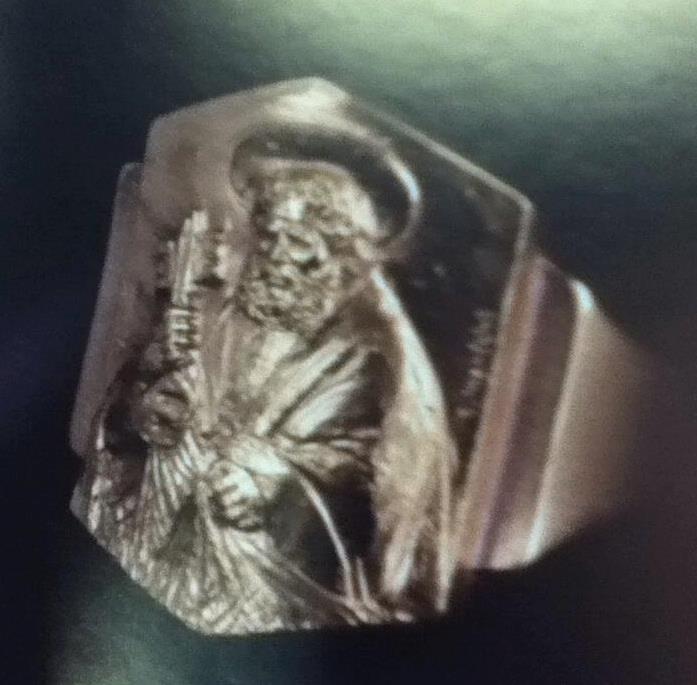
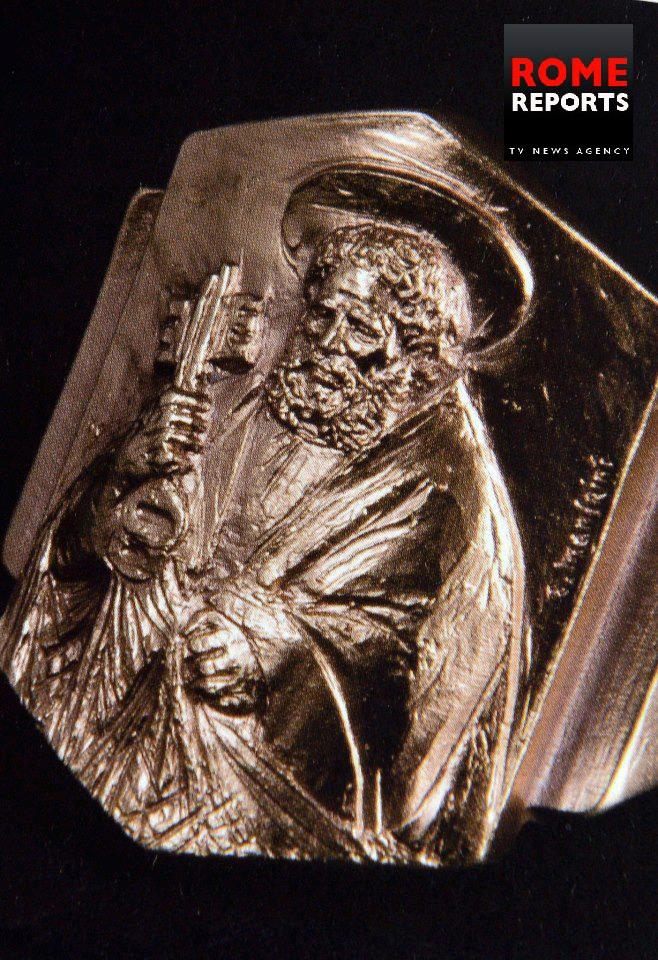
Pope Francis’ Ring of the Fisherman, which is one of the symbol of the authority as the Pope, as both a bishop (episcopal ring) and the Successor of St. Peter the Apostle, leader of the entire Universal Church. It will be given to Pope Francis at the celebration of the Papal Inauguration Mass, on the Feast of St. Joseph, Tuesday, 19 March 2013, together with another symbol, that is the pallium.

The ring’s image closely follow that of Pope Benedict XVI’s Ring of the Fisherman, with slight difference in the shape of the ring, and the ring being made of gold-plated silver instead of gold. Depicted on the ring is the image of St. Peter holding onto the keys of the kingdom of heaven, and fishing, as he was a fisherman, but called by God to be a ‘fisher of man’.

Sunday, 10 March 2013 : 4th Sunday of Lent, Laetare Sunday, 2nd Scrutiny for Baptism (Scripture Reflection)

Forgiveness. Something that is easy to be said, but difficult to be done. Something that we want to do, but hard to do, because either we lack love in our hearts, or have the hatred and darkness in our hearts that block us and prevent us from carrying out acts of forgiveness and mercy.

Today, our Lord Jesus Christ showed us the virtues of forgiveness and mercy, just as what God the Father had done for us, through the parable of the prodigal son. It shows the extent of God’s boundless and infinite love for us, who are sinners, but yet He is willing to take all of us as His children. After all, are we not His most beloved of all creation? The very beings created in His image? Though indeed, we were marred by our rebellion, beginning from the rebellion of our foreparents Adam and Eve, who fell into Satan’s temptation.

But God again shows that no sinner is beyond His mercy and salvation. That is why, out of His great love for all of us, the only One worthy to redeem us, His Son, Jesus Christ, was given to us as a ‘Sacrificial Offering’, the perfect offering that redeemed us every single cents of our debts, that is our sins and faults.

We who had been saved by Christ through His Sacrifice, and through our baptism, either when we were infants or when we were already adults, when God took us to be His sons and daughters, are like the elder son of the father in the parable, who had already had a share in the wealth and all the properties of the father, who is God represented. We should not act like the Pharisees, who thought themselves of worthy, and that others who had ‘erred’ in their eyes, they labeled as sinners and unworthy to share their salvation and faith.

For the Pharisees in the blind man case, represented exactly the sentiments of the elder son, where pride, arrogance, and power trumped over humility, love, and compassion. Just like the elder sons of Jesse, whom the Lord asked the prophet Samuel to visit to appoint the new king of Israel, they had been rejected although they were strong, powerful, and has that aura of command, being the elder and thus more mature sons according to the society’s norms.

No, the Lord seeks not these kind of strength, pride, and power, for these things often corrupted men and deviates their heart from their true love for God, and instead to love mankind, the world, and all the temptations of power and glory that Satan offered through the world. God desires indeed the qualities found in David, whom he chose as the new king of Israel to replace the disobedient Saul.

For David is humble and loving, and he truly loved the Lord with all his heart and after his anointing, he set out to do good throughout all his life, for God’s sake. And except for the sin he committed in murdering the husband of his future wife (he is still like us after all, a sinner), he was committed to a life of dedicated love to God, and to all his fellow men, whom he ruled justly.

It is through humility and love that we can learn the true nature of God, that is love, mercy, and compassion. For if we let ourselves be blinded by our pride, jealousy, our hatred, and all things of evil and sin, we blind ourselves, not only from the truth in our fellow men, but also blind ourselves from God. This is exactly what happened to the Pharisees and the people gathered, who condemned the blind man, cured by Jesus, failing to see God’s work in Jesus, and failing to listen to the testimony of the blind man, which is truth.

For they are too embroiled in their own self-vanity, pride, and preservation, and jealousy against all who intruded into their sphere of control and power (who was indeed Jesus), that they rejected God directly, out of these sheer darkness in their hearts. For them, these had closed their hearts from God’s love, but still, God gave His life to save all, including them, and He forgave them in the end at Calvary. This is how great the love that God has shown us, that He gave Himself for us.

Therefore, brothers and sisters in Christ, let us strive that we will not be like the ungrateful and arrogant elder son, who think highly of himself and failing to see God’s love in all, and for all, even for the greatest sinners, represented by the younger son. Because he has been always with the Father as we are with the Father through Christ and through our baptism, but we have to reach out and help out those who are still struggling, and those who had lost their way to God.

Help one another, strengthen one another in faith, and bring the Good News to others who had yet to receive it. Let us, brothers and sisters in Christ, as One community, One Church in Christ, do our best to show God’s mercy, forgiveness, and love, through our charity and our actions, which will make God’s love manifest in this world. That more can be saved, through our action, not out of jealousy, not out of pride, but out of love, and humility, and let us rejoice together when anyone returns or comes to the Lord, acknowledging Him as their Saviour.

May God bless us all, and bless those who had rejected Him, those who had hated Him, and those who had closed their hearts to His love. Amen.