Tuesday, 18 November 2014 : 33rd Week of Ordinary Time, Memorial of the Dedication of the Basilica of St. Peter and the Basilica of St. Paul Outside the Walls (Psalm)

Liturgical Colour : Green or White (Dedication of the Basilicas)

Psalm 14 : 2-3ab, 3cd-4ab, 5

Those who walk blamelessly and do what is right, who speak truth from their heart and control their words.

Who do no harm to their neighbours and cast no discredit on their companions, who look down on evildoers but highly esteem God’s servants.

Who do not lend money at interest and refuse a bribe against the innocent. Do this, and you will soon be shaken.


Alternative reading (Mass for the Dedication of the Basilicas)

Psalm 97 : 1, 2-3ab, 3c-4, 5-6

Sing to the Lord a new song, for He has done wonders; His right hand, His holy arm, has won victory for Him.

The Lord has shown His salvation, revealing His justice to the nations. He has not forgotten His love nor His faithfulness to Israel.

The farthest ends of the earth all have seen God’s saving power. All you lands, make a joyful noise to the Lord, break into song and sing praise.

With melody of the lyre and with music of the harp. With trumpet blast and sound of the horn, rejoice before the King, the Lord!


Homily and Reflection :

https://petercanisiusmichaeldavidkang.com/2014/11/17/tuesday-18-november-2014-33rd-week-of-ordinary-time-memorial-of-the-dedication-of-the-basilica-of-st-peter-and-the-basilica-of-st-paul-outside-the-walls-homily-and-scripture-reflections/

Tuesday, 18 November 2014 : 33rd Week of Ordinary Time, Memorial of the Dedication of the Basilica of St. Peter and the Basilica of St. Paul Outside the Walls (First Reading)

Liturgical Colour : Green or White (Dedication of the Basilicas)

Revelations 3 : 1-6, 14-22

Write this to the angel of the Church in Sardis, “Thus says He who holds the seven spirits of God and the seven stars : I know your worth, you think you live but you are dead. Wake up and strengthen that which is not already dead. For I have found your works to be imperfect in the sight of My God.”

“Remember what you were taught; keep it and change your ways. If you do not repent I will come upon you like a thief at an hour you least expect. Yet, there are some left in Sardis who have not soiled their robes; these will come with Me, dressed in white, since they deserve it.”

“The victor will be dressed in white and I will never erase his name from the book of life; instead, I will acknowledge it before My Father and His Angels. Let anyone who has ears listen to what the Spirit says to the Churches.”

Write this to the angel of the Church in Laodicea, “Thus says the Amen, the faithful and true witness, the beginning of God’s creation : I know your works, you are neither cold nor hot. Would that you were cold or hot! You are lukewarm, neither hot nor cold so I will spit you out of My mouth.”

“You think you are rich and have piled up so much that you need nothing, but you do not realise that you are wretched and to be pitied, poor, blind and naked. I advise you to buy from Me gold that has been tested by fire, so that you may be rich, and white clothes to wear so that your nakedness may not shame you, and ointment for your eyes that you may see.”

“I reprimand and correct all those I love. Be earnest and change your ways. Look, I stand at the door and knock. If you hear My call and open the door, I will come in to you and have supper with you, and you with Me. I will let the victor sit with Me on My throne just as I was victorious and took My place with My Father on His throne.”

“Let anyone who has ears listen to what the Spirit says to the Churches.”


Alternative reading (Mass for the Dedication of the Basilicas)

Acts 28 : 11-16, 30-31

After three months, we boarded a ship that had spent the winter at the island. It belonged to an Alexandrian company and carried the figurehead of Castor and Pollux as insignia.

We sailed for Syracuse, staying there for three days and, after circling the coast, we arrived at Rhegium. On the following day, a south wind began to blow, and at the end of two days we arrived at Puteoli, where we found some of our brothers who invited us to stay with them for a week. And that was how we came to Rome.

There the brothers and sisters had been informed of our arrival and came out to meet us as far as the Appian Forum and the Three Taverns. When Paul saw them, he gave thanks to God and took courage. Upon our arrival in Rome, the captain turned the prisoners over to the military governor but permitted Paul to lodge in a private house with the soldier who guarded him.

Paul stayed for two whole years in a house he himself rented, where he received without any hindrance all those who came to see him. He proclaimed the kingdom of God and taught the truth about Jesus Christ, the Lord, quite openly and without any hindrance.


Homily and Reflection :

https://petercanisiusmichaeldavidkang.com/2014/11/17/tuesday-18-november-2014-33rd-week-of-ordinary-time-memorial-of-the-dedication-of-the-basilica-of-st-peter-and-the-basilica-of-st-paul-outside-the-walls-homily-and-scripture-reflections/

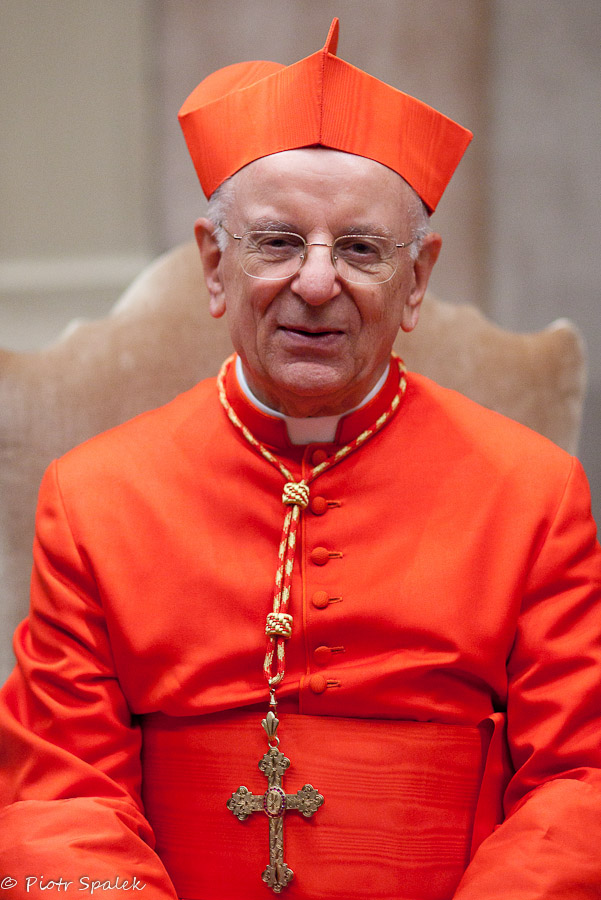
Cardinal Francesco Monterisi (Italy), Cardinal-Archpriest Emeritus of Papal Basilica of St.Paul Outside-the-Walls turned 80, ceases to be a Cardinal-elector

On Wednesday, 28 May 2014, Cardinal Francesco Monterisi, Cardinal Deacon of S. Paolo alla Regola, Cardinal-Archpriest Emeritus of Papal Basilica of St.Paul Outside-the-Walls (Italy), turned 80, and therefore, according to the rules written in the Apostolic Constitution Universi Dominici Gregis, he lost his right to vote in any future conclave.

_MG_4038

Cardinal Francesco Monterisi was made Cardinal-Deacon of S. Paolo alla Regola by Pope Benedict XVI in the 2010 Consistory of Cardinals on 20 November 2010, the third Consistory of his pontificate. Cardinal Monterisi was made a Cardinal in honour of his position as the Archpriest of one of the four Papal Major Basilica, that is the Papal Basilica of St. Paul Outside-the-Walls, which he held since 2009 to 2012 until his retirement from active Church service.

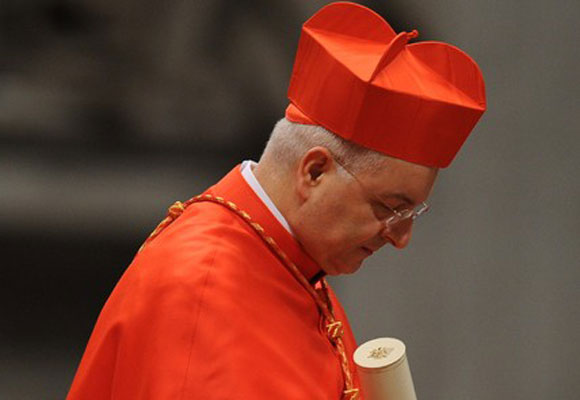
Raymond Leo Burke

http://www.gcatholic.org/hierarchy/data/cardB16-3.htm#675%5B/embed%5D

May God bless His Eminence Cardinal Monterisi with a blessed old age and health. May he remain strong in the faith and hopefully can perhaps still continue to work great graces and good works of love and peace even after he has been retired to the people as the helper of the Vicar of Christ our Pope, as he continues to minister to the people of God.

Francesco_Monterisi1

The College of Cardinals now stands at 215 members in total, with 118 Cardinal-electors and 97 Cardinal non-electors. There are now a vacancy of 2 Cardinal-elector as compared to the maximum number of electors allowed in the Conclave of 120.

Next Cardinal-elector to age out (80) will be Cardinal Claudio Hummes, the Metropolitan Archbishop Emeritus of Sao Paulo (Brazil), on 8 August 2014.

Monday, 18 November 2013 : 33rd Week of Ordinary Time, Memorial of the Dedication of the Basilica of St. Peter and the Basilica of St. Paul Outside the Walls (Scripture Reflections)

Liturgical Colour : Green or White (Dedication of Basilica)

Dear brothers and sisters in Christ, we listen today to the beginnings of a great tragedy, where the people of Israel, was subjected to the attempts of acculturation and Hellenisation, which happened during the years after Alexander the Great conquered much of the known world. They suffered persecution and ridicule, subjected into attempts to corrupt them from the one and true faith in God.

In the second reading, the same happened, with St. Paul being led into custody of the Romans, brought to Rome, the capital of the Roman Empire, to be judged by the Emperor for his supposed crimes. St. Paul was charged by his Jewish opponents, who resisted his attempts to bring the Good News to them. Rather than being killed at Jerusalem, St. Paul chose to appeal to the Emperor, and in doing so, as we listened, he gained a chance to evangelise yet one last time, at the city of Rome, where the centre of our Church now lies.

Today we listened to the tale of both St. Paul and St. Peter, the earlier as mentioned, and the latter, as we listened to the story of Jesus performing the miracle of walking on the water in the middle of the storm. St. Peter took the scene, as he tried to walk on the water and as he doubted, he almost sank into the water. Jesus rescued him and chided him about his lack of faith in Him. So we heard today about both St. Paul and St. Peter, who at the end of their lives, went to Rome to be martyred there.

Yes, in that old and venerable city, the Eternal City, as many would call it. It is where the two greatest saints and pillars of the Church were welcomed into the hands of the Lord through holy martyrdom. Today we mark the commemoration of the dedication of two great basilicas, namely the Papal Basilica of St. Peter, where most of the Pope’s celebrations take place, and the Papal Basilica of St. Paul, also known as St. Paul Outside the Walls, because it was located outside the walls of the ancient city of Rome. It was also where St. Paul stayed during his two year stay in Rome, prior to his martyrdom by the Emperor Nero.

These two saints were exemplary in their actions, just as what some brave people of Israel, God’s first chosen people had done at the time of persecution under the Greek king Antiochus Epiphanes. They stood up bravely and courageously for their faith without being corrupted or tempted by the offers of worldly pleasures and temporary glories offered to them, if they just would betray the Lord and their faith.

Yet these people were also pretty much ordinary people like ourselves, and they too were much like us sinful and weak, as St. Peter himself had shown in that storm in the lake, where his lack of faith to God made him almost sink as he walked on the water towards Jesus. St. Paul was once a great enemy of the faith, and he hounded many hundreds if not thousands of the early believers of the Lord, sending them to their deaths. We too lacked the faith at times, brothers and sisters, and doubt is always in our mind.

And yet, through Christ and His love, they have been transformed into powerful tools of His presence and love. God made them to be the bearers of the Good News and they went on faithfully with their missions to the end. And through their hard and dedicated works, many people were saved. Their works of salvation continues even today, through their successors, our bishops and their priests, and primarily, the Bishop of Rome, our Pope, now Pope Francis, the leader of the entire Universal Church.

It is often that times are truly hard for our Church, especially in the recent times. The ways of the world are increasingly becoming more and more antithesis to what our Church stands up for, that is our faith in God, true and just. The corruptions of this world threaten to sink many people in the storm of this turbulent world. Remember what had happened to St. Peter in that stormy night.

The Lord picked him up by the hand and strengthened his faith. Indeed, St. Peter was to abandon his faith yet another time, when he denied knowing the Lord, not just once, but three times in total! He did so, because his faith in God is wavering, having seen Jesus, the one hope that he and the other apostles had had, captured, tortured, and mocked like a lowly criminal. He abandoned the Lord for the security of the world.

St. Paul too was a leading Jew, who was a Pharisee and very strict in his observation of the Law, and was particularly hostile to the followers of Jesus in the early days of the Church. He hunted them without mercy, and caused the death of many people of the Lord. He took part in the stoning and murder is St. Stephen, the first martyr, and was a great scourge to the faithful.

Then what differentiates them from the people of Israel, who abandoned their faith in God, for the sake of their own security and to secure the favour of the king? And how was St. Peter even different from Judas Iscariot, the traitor? Did they both not betray the Lord? One through direct betrayal and the other by abandoning Him at the time of His greatest sorrow?

That is because, St. Peter professed his true and undying faith in the Lord, and he repented from his past mistakes. Everyone makes mistakes, as is common to us because of our humanity, for we are predisposed to sin ever since we were exposed to it. What is important is that, we learn from those mistakes, face them with courage and faith, and repent, that is change our ways, to conform again to that of God! That was what St. Peter, as well as St. Paul had done.

Judas Iscariot felt the guilt after he had betrayed the Lord, but instead of learning from his mistakes, and accepting the chance of repentance the Lord gave him, he chose the quick way out, that is suicide. He did not repent, and therefore was counted among the lost ones. He also stole the money of the Lord and His disciples and was unrepentant about it, even to the end.

St. Peter professed his love and dedication to the Lord, and he showed it with true sincerity, knowing fully the guilt and the faults he had done, and yet, he still professed that love he has for God, and the Lord gave him, the stewardship over this world, over all of the faithful ones in God, as His Vicar on earth. St. Paul too met a life-changing experience, after the Lord appeared to him on the road to Damascus. He received the empowerment of the Holy Spirit, and the truth about all things were revealed to him in its entirety.

Ever since, both Apostles, as well as the other apostles and disciples of Christ, tirelessly laboured for the sake of God and His kingdom, without end going from one end of the earth to the other, as witnesses to God and His saving power. They laboured hard and the fruits grew aplenty, as the faith spread among many, converting many to the cause of Christ. And despite the storm that threatened to engulf all the faithful, they stabilised the ship, and made it last to the present day.

St. Peter was crucified upside down in Rome, at the site now where the Basilica of St. Peter now stood. He chose to do so because he found himself unworthy to be crucified in the same way the Lord had done. St. Paul too was beheaded in Rome, after the burning of Rome was blamed by the reigning Emperor, Nero, on the followers of Christ. See the dedication, faith, and love that these two saints have for our Lord!

Today, therefore, as we commemorate the two great Basilicas dedicated in their honour, that of St. Peter, the Vicar of Christ, and St. Paul, the Apostle to the Gentiles, let us take this opportunity to reflect, on whether we have taken the same choice or whether we will be ready to commit ourselves to the same choice that both saints had chosen. Remember that saints too were called from sinners. We can opt to choose the easy way, that is what Judas and the people of Israel had done, or take the difficult and challenge-ridden path that the Apostles had once taken, all the way to the end, where the glory of heaven awaits them.

May our Lord Jesus, who helped St. Peter out of the water in his doubt, also help us to overcome our doubts and empower us with love, hope, and faith, that we will be able to make a commitment towards reaching out to the Lord, choosing the right path in the end. May He continue to love us and watch over us. Amen.

Monday, 18 November 2013 : 33rd Week of Ordinary Time, Memorial of the Dedication of the Basilica of St. Peter and the Basilica of St. Paul Outside the Walls (Gospel Reading)

Liturgical Colour : Green or White (Dedication of Basilica)

Luke 18 : 35-43

When Jesus drew near to Jericho, a blind man was sitting by the road, begging. As he heard the crowd passing by, he inquired what was happening, and they told him that Jesus of Nazareth was going by.

Then he cried out, “Jesus, Son of David, have mercy on me!” The people in front of him scolded him. “Be quiet!” they said, but he cried out all the more, “Jesus, Son of David, have mercy on me!”

Jesus stopped, and ordered the blind man to be brought to Him; and when he came near, Jesus asked him, “What do you want Me to do for you?” And the man said, “Lord, that I may see!”

Jesus said, “Receive your sight, your faith has saved you.” At once the blind man was able to see, and he followed Jesus, giving praise to God. And all the people who were there also praised God.

Alternate Reading (Mass for Dedication of the Basilicas)


Matthew 14 : 22-33

Immediately Jesus obliged His disciples to get into the boat and go ahead of Him to the other side, while He sent the crowd away. And having sent the people away, He went up the mountain by Himself to pray. At nightfall, He was there alone.

Meanwhile, the boat was very far from land, dangerously rocked by the waves, for the wind was against it. At daybreak, Jesus came to them walking on the sea. When they saw Him walking on the sea, they were terrified, thinking that It was a ghost. And they cried out in fear.

But at once Jesus said to them, “Courage! Do not be afraid. It is Me!”

Peter answered, “Lord, if it is You, command me to come to You walking on the water.” Jesus said to him, “Come!” And Peter got out of the boat, and walked on the water to go to Jesus. But seeing the strong wind, he was afraid and begtan to sink; and he cried out, “Lord, save me!”

Jesus immediately stretched out His hand and took hold of him, saying, “Man of little faith, why did you doubt?”

As they got into the boat, the wind dropped. Then those in the boat bowed down before Jesus, saying, “Truly, You are the Son of God!”

Monday, 18 November 2013 : 33rd Week of Ordinary Time, Memorial of the Dedication of the Basilica of St. Peter and the Basilica of St. Paul Outside the Walls (Psalm)

Liturgical Colour : Green or White (Dedication of Basilica)

Psalm 118 : 53, 61, 134, 150, 155, 158

I feel indignant at the wicked who have forsaken Your law.

The wicked have me trapped in their snares, but I have not forgotten Your laws.

Rescue me from human oppression, and help me keep Your precepts.

My persecutors close in with evil intent; they are far from Your Law.

Salvation is far from the wicked, for they do not seek Your statutes.

I look upon the faithless with loathing, because they do not obey Your ruling.

Alternate Reading (Mass for Dedication of the Basilicas)


Psalm 97 : 1, 2-3ab, 3c-4, 5-6

Sing to the Lord a new song, for He has done wonders; His right hand, His holy arm, has won victory for Him.

The Lord has shown His salvation, revealing His justice to the nations. He has not forgotten His love nor His faithfulness to Israel.

The farthest ends of the earth all have seen God’s saving power. All you lands, make a joyful noise to the Lord, break into song and sing praise.

With melody of the lyre and with music of the harp. With trumpet blast and sound of the horn, rejoice before the King, the Lord!

Monday, 18 November 2013 : 33rd Week of Ordinary Time, Memorial of the Dedication of the Basilica of St. Peter and the Basilica of St. Paul Outside the Walls (First Reading)

Liturgical Colour : Green or White (Dedication of Basilica)

1 Maccabees 1 : 10-15, 41-43, 54-57, 62-64

From the kings who followed Alexander (the Great), from their descendants there came a godless offshoot, Antiochus Epiphanes, son of King Antiochus, who had been held as hostage in Rome. He became king in the one hundred and thirty-seventh year of the Greek era (175 B.C.).

It was then that some rebels emerged from Israel, who succeeded in winning over many people. They said, “Let us renew contact with the peoples around us for we had endured many misfortunes since we separated from them.”

This proposal was well-received and some eagerly went to the king. The king authorised them to adopt the customs of the pagan nations. With his permission, they built a gymnasium in Jerusalem in the pagan style. And as they wanted to be like the pagans in everything, they made artificial foreskins for themselves and abandoned the Holy Covenant, sinning as they pleased.

Antiochus issued a decree to his whole kingdom. All the peoples of his empire had to renounce their particular customs and become one people. All the pagan nations obeyed and respected the king’s decree, and even in Israel many accepted the imposed cult. They offered sacrifices to idols and no longer respected the Sabbath.

On the fifteenth day of the month of Chislev, in the year one hundred and forty-five, Antiochus erected the “abominable idol of the invaders” on the altar of the Temple. Pagan altars were built throughout the whole land of Judea; incense was offered at the doors of their houses and in the squares. There wicked men tore up the books of the Law they found and burned them. They killed anyone they caught in possession of the book of the Covenant and who fulfilled the precepts of the Law, as the royal decree had ordered.

But in spite of all this, many Israelites still remained firm and determined not to eat unclean food. They preferred to die rather than to make themselves unclean with those foods prohibited by the Law, that violated the Holy Covenant. And Israel suffered a very great trial.

Alternate Reading (Mass for Dedication of the Basilicas)


Acts 28 : 11-16, 30-31

After three months, we boarded a ship that had spent the winter at the island. It belonged to an Alexandrian company and carried the figurehead of Castor and Pollux as insignia. We sailed for Syracuse, staying there for three days and, after circling the coast, we arrived at Rhegium.

On the following day, a south wind began to blow, and at the end of two days we arrived at Puteoli, where we found some of our brothers who invited us to stay with them for a week. And that was how we came to Rome.

There the brothers and sisters had been informed of our arrival and came out to meet us as far as the Appian Forum and the Three Taverns. When Paul saw them, he gave thanks to God and took courage.

Upon our arrival in Rome, the captain turned the prisoners over to the military governor, but permitted Paul to lodge in a private house with the soldier who guarded him.

Paul stayed for two whole years in a house he himself rented, where he received without any hindrance all those who came to see him. He proclaimed the kingdom of God and taught the truth about Jesus Christ, the Lord, quite openly and without any hindrance.

Saturday, 9 November 2013 : Feast of the Dedication of the Lateran Basilica (Scripture Reflections)

Liturgical Colour : White

Today, all of us in the Holy Mother Church, that is all the people of God in communion with each other, and therefore united as one Church of God, celebrate the feast of the dedication of the Basilica of St. John Lateran, or the Cathedral of the Diocese of Rome, the place where the very Vicar of Christ, the Pope, has his seat of authority. It is the mother church of all Christendom, the primary church of the entire Universal Church.

We celebrate today the dedication of that Basilica, the great place of worship of our God, which had stood since the day when the faith in God finally triumphed over all its oppressors, under the rule of the first Christian Emperor Constantine. This Basilica was once an Imperial palace complex for the Roman Emperors in Rome, and it was donated to the Church by the Emperor Constantine, over seventeen centuries ago, with massive state funding to help establish proper places of worship.

The Bishop of Rome, that is the successor of St. Peter as the Vicar of Christ on earth, the leader of the entire Universal Church, received that generous donation from the pious Emperor, and he made what will become the Basilica of St. John Lateran, as the Cathedral and seat of the Pope, the centre and heart of the Universal Church. That Basilica is dedicated to St. John the Evangelist and to the Lord Saviour of all mankind. Truly a place of marvel, fitting to be the heart of all Christendom. Today we celebrate the dedication of that wonder of God.

Dear brothers and sisters in Christ, today’s readings have been designed to fit with the occasion, and therefore, they deal with the matter of the holy Temple of God. In the first reading, we are told of the heavenly Temple, the Temple of God in the glory of heaven, out of which gushes forth living water that satisfies and saves. It is the life-giving water that came from the Lord Himself

But the Temple of God is not just a physical temple or the heavenly temple. It is also in fact, all of us the faithful ones of God. For, ever since we were baptised and sealed in the Holy Name of the Most Holy Trinity of Father, Son, and Holy Spirit, God has dwelled within us, through the Holy Spirit that comes and dwells within all of us, who had been marked as the children of God.

That is why, all of us, our hearts and bodies are the Temple of God and the Temple of the Holy Spirit. Hence, it is why the Lord continues to encourage us to do good deeds and avoid things evil and unworthy of God, basically things that can corrupt the holiness of our Temples, that is our hearts and bodies. We must always be vigilant, as we cannot be complacent or evil may corrupt the Temple that is our body and heart.

Just as we keep the Temple of God, that is our churches, cathedrals, and also the Basilica of St. John Lateran, which dedication we remember today, holy and good at all times, then we too must and should keep the Temple that is our hearts and bodies pure at all times. If we wreath ourselves in love, in God’s love, then we can readily maintain the purity of our Temples.

Our mouth is the gate to this Temple, and our hands, limbs and others are the courtyard. If we are to ensure the purity of the Temple of God in us, we have to make sure that these places are clean as well. We cannot let the devil and his agents to corrupt these that the Temple that is our body, heart and soul be corrupted with sin.

That is why, brothers and sisters in Christ, we have to watch our words, our deeds and actions, that we do not end up committing sin through them. That we will not make dirty and unworthy the Temple, where the Lord resides in us. Jesus was right to be angry, when He saw the House of God, that is the Temple of Jerusalem, made into a house of sin, by the corrupt practices of the merchants and sellers of the animal sacrifices and money changers, all of whom cheated their customers all those who came to genuinely worship the Lord.

The Lord’s wrath is great against all those people, and He will not let them go so easily. The Lord will show them His justice. Therefore, we too, brethren, should strive to always be upright in our dealings, in our words and actions. How to do so? By having a strong and healthy spiritual life and having closer and intimate relationship with the Lord our God!

We have to pray, pray faithfully, pray with zeal, and pray with true devotion and dedication to God, whenever we pray. Through prayer, the Lord will grant us His love and blessing, opening the floodgates of His blessing upon us. We will be strong, and purified by the waters that flow from the Temple of God in heaven, the life-giving water, and the water that purifies. That water is also Jesus, the One who had given up His life for us, that from Him, and to all who believes in Him, a new life may be given to them, a life eternal in God.

Hence, as we rejoice today in the dedication of this great Basilica of St. John Lateran, the centre and heart of Christendom, let us also take the time to reflect and make the effort to keep clean and pure, the Temple of God, the Temple of the Holy Spirit, that is our hearts and our bodies, that we can always worship the Lord worthily and with the fullness of God’s blessings. God bless us all. Amen.

Saturday, 9 November 2013 : Feast of the Dedication of the Lateran Basilica (Gospel Reading)

Liturgical Colour : White

John 2 : 13-22

As the Passover of the Jews was at hand, Jesus went up to Jerusalem. In the Temple court He found merchants selling oxen, sheep, and doves, and money-changers seated at their tables. Making a whip of cords, He drove them all out of the Temple court, together with the oxen and sheep.

He knocked over the tables of the money-changers, scattering the coins, and ordered the people selling doves, “Take all this away, and stop turning My Father’s house into a marketplace!”

His disciples recalled the words of Scripture : “Zeal for Your House devours me like fire.”

The Jews then questioned Jesus, “Where are the miraculous signs which give you the right to do this?” And Jesus said, “Destroy this temple and in three days I will raise it up.”

The Jews then replied, “The building of this temple has already taken forty-six years, and will You raise it up in three days?” Actually Jesus was referring to the Temple of His Body. Only when He had risen from the dead did His disciples remember these words; then they believed both the Scripture and the words Jesus had spoken.

Saturday, 9 November 2013 : Feast of the Dedication of the Lateran Basilica (Second Reading)

Liturgical Colour : White

1 Corinthians 3 : 9b-11, 16-17

You are God’s field and building. I, as a good architect, according to the capacity given to me, I laid the foundation, and another is to build upon it. Each one must be careful how to build upon it. No one can lay a foundation other than the one which is already laid, which is Jesus Christ.

Do you not know that you are God’s temple, and that God’s Spirit abides within you? If anyone destroys the temple of God, God will destroy him. God’s temple is holy, and you are this temple.