Wednesday, 18 December 2013 : 3rd Week of Advent (Psalm)

Liturgical Colour : Purple/Violet

Psalm 71 : 2, 12-13, 18-19

May He rule Your people justly and defend the rights of the lowly.

He delivers the needy who call on Him, the afflicted with no one to help them. His mercy is upon the weak and the poor, He saves the life of the poor.

Praised be the Lord, God of Israel, who alone works so marvelously. Praised be His glorious Name forever; may the whole earth be filled with His glory! Amen. Amen.

Wednesday, 20 November 2013 : 33rd Week of Ordinary Time (Gospel Reading)

Liturgical Colour : Green

Luke 19 : 11-28

Jesus was now near Jerusalem, and the people with Him thought that God’s reign was about to appear. So as they were listening to Him, Jesus went on to tell them a parable. He said, “A man of noble birth went to a distant country to assume regal authority, after which he planned to return home. Before he left, he summoned ten of his servants and gave them ten pounds of silver.”

“He said, ‘Put this money to work until I get back.’ But his compatriots, who disliked him, sent a delegation after him with this message, ‘We do not want this man to be our king.’ He returned, however, appointed as king. At once he sent for the servants, to whom he had given the money, to find out what profit each had made.”

“The first came in, and reported, ‘Sir, your pound of silver has earned ten more pounds of silver.'”

“The master replied, ‘Well done, my good servant! Since you have proven yourself faithful in a small matter, I can trust you to take charge of ten cities.'”

“The second reported, ‘Sir, your pound of silver earned five more pounds of silver.’ The master replied, ‘And you, take charge of five cities!'”

“The third came in, and said, ‘Sir, here is your money, which I hid for safekeeping. I was afraid of you, for you are an exacting person : you take up what you did not lay down, and you reap what you did not sow,'”

“The master replied, ‘You worthless servant, I will judge you by your own words! So you knew I was an exacting person, taking up what I did not lay down, and reaping what I did not sow? Why, then, did you not put my money on loan, so that, when I got back, I could have collected it with interest?'”

“Then the master said to those standing by, ‘Take from him that pound, and give it to the one with ten pounds.’ But they objected, ‘Sir, he already has ten pounds!'”

“The master replied, ‘I tell you, everyone who has will be given more; but from those who have nothing, even what they have will be taken away. As for my enemies who did not want me to be their king, bring them in, and execute them right here in front me!'”

So Jesus spoke, and then He passed on ahead of them, on His way to Jerusalem.

Thursday, 15 August 2013 : Solemnity of the Assumption of the Blessed Virgin Mary (Second Reading)

Liturgical Colour : White

1 Corinthians 15 : 20-26

But no, Christ has been raised from the dead and He comes before all those who have fallen asleep. A human being brought death; a human being also brings resurrection of the dead. For as in Adam all die, so in Christ all will be made alive. However, each one in his own time : first Christ, then Christ’s people, when He comes.

Then the end will come, when Christ delivers the kingdom to God the Father, after having destroyed every rule, authority, and power. For He must reign and put all enemies under His feet. The last enemy to be destroyed will be death.

Saturday, 3 August 2013 : 17th Week of Ordinary Time (Psalm)

Psalm 66 : 2-3, 5, 7-8

May God be gracious and bless us; may He let His face shine upon us, that Your way be known on earth and Your salvation among the nations.

May the countries be glad and sing for joy, for You rule the peoples with justice and guide the nations of the world.

The land has given its harvest; God, our God, has blessed us. May God bless us and be revered, to the very ends of the earth.

Monday, 15 July 2013 : 15th Week of Ordinary Time, Memorial of St. Bonaventure, Bishop and Doctor of the Church (Scripture Reflection)

Dear brothers and sisters in Christ, today we reflect on the readings, which began from the opening of the Book of Exodus from the Old Testament, which told us the story of the people of Israel, the descendants of Abraham, Isaac, and Jacob, the chosen people, in Egypt, during their time of stay there. The people of Israel had been blessed by the Lord and grew exponentially in wealth and in their number, such that the Egyptians truly might have feared that the Israelites might overwhelm them in their own country.

Thus began the persecution of Israel, led by the Pharaoh, king and ruler of Egypt, who felt the threat created by the people of Israel in his lands. He oppressed them and tried to bring them under control, and therefore begun the slavery of Israel, the years of suffering in Egypt, when the people of Israel laboured under the yoke of the Pharaohs and many died. Yet, the Lord remained with His people, and He continued to bless them, and thence, they multiplied still even more.

But the Lord did not leave His people to suffer, because He cared for them and wished for their safety, and that was why He sent them a liberator, through Moses, the son of Israel lifted from the water of the River Nile by the daughter of the then reigning Pharaoh. Through Moses, the prayers of Israel were heard, and the Lord brought His people out of Egypt on eagle’s wings, with the ten plagues He sent to Egypt to punish them for mistreating the people of Israel and keeping them enslaved in suffering.

The Lord saved Israel from the slavery in Egypt, and He brought them through the Red Sea to the land of flowing milk and honey, the Promised Land of Canaan. The Lord God brought the people through the desert to Canaan, so that they can enjoy the promise that the Lord had made to Abraham, their forefather, that they, as his descendants, will enjoy the fruits of God’s blessings which had been given to Abraham and his descendants for eternity.

But the journey was not easy, and was full of trial and suffering, just as the people of Israel had endured suffering during their time in Egypt. That is because to become the disciples of the Lord is not easy, and is not straightforward. Much sacrifices had to be made, and indeed, as Christ had told His disciples, we have to take up our crosses and follow Him, otherwise we would not be worthy of Him.

That is because there is much evil in the world, ever since the beginning of time, when the evil one came and corrupted mankind and creation, with the evils that did not belong to God. Terrible things such as hatred, jealousy, greed, lust, and many other evils that had marred the perfection of God’s creations and all of His works.

But Christ would not let us suffer alone in this darkness, and that was why He came, to be the Light that rescues all from the grip of darkness. Instead, He bear all our sufferings, caused by our disobedience, so that He would blamed instead of us, punched and received blows instead of us, and died instead of us, a death on the cross.

The cross was, at the time of Jesus, the Romans’ favourite way to deal with criminals, particularly those seen as great threat to the Romans and to the society itself. Death of the cross for Jesus was to be a sure condemnation of His memory and a completely humiliating death for the so called ‘Messiah’, according to the chief priests.

Yet, the Lord prevailed, through His death, and then, most importantly, His Resurrection, the first to be Risen from the dead by His own power. The Risen Lord turned the humiliating cross, a symbol of shame, into a glorious sign of victory and triumph. The cross reminds us always that we have been victorious against the devil, and have also been triumphant in the struggle against sin and evil, because through that cross on Calvary, we had been made whole once again, and be made worthy in the presence of God.

That is why, brothers and sisters in Christ, we must be proud to show that we are the people who belongs to God, a people of the Lord, marked by none other than by the sign of the victorious cross. Through even simple gestures like making the sign of the cross before meals would signify our pride and faith in the triumphant cross, the Lord who had brought us up from the mire of sin, and like the Israelites of old, brought with the power of God’s hands out of Egypt, thus we have been brought out of our slavery of sin, into a new, free life in Christ.

Do not be afraid to show that we are Christians, and we also should not attempt to hide it whenever we make the sign of the cross, before meals, before prayers, and in many other occasions. Behold the symbol of our salvation, our pride and faith in God, the cross, to remember our Lord who had died for us, endured suffering that should have befallen us, just so that all of us may live, and not just a life that is temporary, but eternal life in heaven.

Today we also commemorate the memorial of St. Bonaventure, who was a religious and a well-known theologian, preacher, and scholar who lived in the early part of the last millenium, living just after the time of St. Francis of Assisi. He and his works advanced the theology and teachings of the Franciscans, which he was a member of, and his great contribution made the Pope elevated him to the Cardinalate.

St. Bonaventure in his hard works, ensured that the Franciscans would be known for its depth in understanding God’s teachings and also excellent oratory skills. He had laboured hard for Christ and God’s people, and He upheld the cross that was his, and he did not shirk from the duty to carry that cross. Instead he embraced it, and carried his cross alongside Christ.

Therefore, brothers and sisters in Christ, inspired by the zeal and devotion of St. Bonaventure and other great saints, holy men and women of God, let us renew our commitment and faith to the Lord, the One who saved us from certain death, death that awaits us sinners and evildoers, but which had been voided by the power of Christ, through the outpouring of His Blood on the cross.

Let us bear our own crosses, and help one another to bear one another’s cross, and walk our way through the path to salvation, to Christ. It will not be an easy journey, as often there will be temptations and oppositions, especially by the world, but if we remain strong, and carry our crosses faithfully, we will reach the end, and we will reach Christ, our Lord who loves us. It is up to us, brothers and sisters in Christ, whether we end up in hell or in heaven. Let us be proactive in living out our faith, that our faith will not die, but blossom with love.

God bless us all, and let us ask St. Bonaventure for his intercession for us sinners. Pray for us St. Bonaventure. Amen.

Friday, 5 July 2013 : 13th Week of Ordinary Time, Memorial of St. Anthony Zaccaria, Priest (Scripture Reflection)

Brothers and sisters in Christ, today we reflect on the calling of Matthew, who was a tax collector, and according to the Pharisees, a sinner. He was called from his custom-house and followed Christ, eventually to become one of the Twelve Apostles and one of the Four Evangelists, who wrote the Gospel of Matthew, which passage we are reading today.

Why did the Pharisees consider the tax collectors as sinners? We should understand the history and condition of the region at the time, of the region called Palestine today, and Judea at that time. At the time of Jesus, Judea was still a semi-independent kingdom, led by a king, Herod Antipas at that time, the son of Herod the Great, who tried to kill Jesus as a baby. But despite the semblance of independence generated by the presence of a ‘king of the Jews’ in Herod, the Romans, which had become an Empire by that time, had the overall command and control as the master of the people of Judea.

The Romans established an efficient taxation system throughout their Empire, and that made up the main source of their annual income, and Judea is no exception to the rule. The people of Judea, including the Jews, had to pay their taxes to the Roman authorities, and this was greatly despised by the Jews, particularly the Pharisees and the teachers of the Law. Not just because it showed a subordination to the greater Roman authority, but it seemed that it also contradicted the fact that one should obey and give honour to the Lord alone.

The Roman coins used in the tax payment itself could be considered blasphemous by the Jews at the time, because every single coins were engraved with the facial image of the Emperor, and therefore could be considered as tantamount to idolatry, worship of the Emperor, as what was indeed happening in Rome at that time, as Emperors increasingly became more autocratic, they also attributed more divinity towards themselves, and would in time be established as the cult of the Emperors, where the Roman Emperors were worshipped as divine, living in the flesh.

All these sparked the notion that paying taxes to the Romans was a detestable idea at best, and the people did not like it for certain, for other than the religious reasons, taxes also burdened them financially, and that was why, out of all people, the tax collectors were always considered to be at the bottom of the society and were considered, particularly by the ‘pious’ Pharisees, to be morally corrupt and unworthy as well as incapable of redemption.

The tax collectors were treated and condemned as sinners, even though they might actually be good people. Remember that tax collectors often had no choice to be one, because they themselves had to earn a living, and it was indeed not an easy job to be done, as I had mentioned, being tax collectors meant that one had to endure the hatred and displeasure of the general population, the priesthood, and many other people, and endure the label of evil placed unfairly onto them.

The Jewish people themselves were very nationalistic in nature, and were very proud of their descent from Abraham, their forefather both in blood and faith. They kept mostly to themselves and married one another, in order to prevent themselves from being tainted by the pagans around them. This had happened since the time of Abraham himself, as you would have noted in our first reading today, who asked Eliezer his servant to find a wife for his son, Isaac, from among his own people, his own family, and not among the women of Canaan.

This had further made the contempt given to the tax collectors and other Roman collaborators even greater. They were barely tolerated in the society, cursed and rejected by many. They may be able to survive financially, but in terms of their lives, it was truly miserable. This was the condition that formed the backdrop of the situation as it was when Jesus called Matthew to be His disciple, and when He ate with him and his fellow tax-collectors in his house with the Pharisees.

Jesus then highlighted His mission in this world to His disciples, the Pharisees, and the tax collectors, that is to heal the world and those afflicted in this world, those who are condemned to damnation in hell, those who are suffering, those who are immersed deeply in the darkness of sin. That is because these are the ones who really need help and assistance in order to ensure that they will not fall into hell. God loves all, everyone, especially the greatest of sinners, who are in greatest need for God’s mercy and love.

That is because those of us who had been saved, and had been following the commandments of the Lord will remain safe, as long as we keep the Lord’s commandments and stay in His grace. As long as we remain faithful to the Lord, no harm can come our way. That is why it is those who are ‘sick’ from sin and evil would need much more assistance and help than we do. But we should not let Christ do that alone, but we ourselves, as the children of God, can also play our part in ensuring the salvation of all, especially those whose sins are the greatest.

The Pharisees themselves, who considered themselves most pious and blessed of all the children of God because of their strict adherence to the Law of Moses, were in fact in great need of salvation themselves. They had indeed observed ‘sacrifices’ so much that they had forgotten ‘mercy’, and forgotten love. God desires not sacrifices from man, but their love, both towards Him and towards His other children, our brothers and sisters.

The Pharisees did not love and do the true will of God, and instead became too focused on their own strict laws made by men, and even condemned those so-called sinners such as prostitutes and tax collectors as morally bankrupt and evil, while in fact, it is they themselves who were deep in the darkness, and worse still, blind to their own inadequacies and iniquities.

Today, brothers and sisters, we also commemorate the feast day of St. Anthony Zaccaria, a priest who lived in the late Renaissance era Italy. He was a priest who placed a great emphasis on the love of God and the teachings of the Church as espoused by St. Paul and the Apostles. He put the emphasis on acts of love and mercy, in addition to devotions and prayers, that made the faithful become even more devout and strong in their faith.

St. Anthony Zaccaria showed to the people of his time that to love God, is to both worship Him in prayer and supplication, in the offering of the ‘sacrifice’ of our hearts, the true sacrifice that our Lord wants from us, and also to make our love evident through our own deeds and actions, so that the love that is in us will not be an empty love, but a vibrant love in both word and action.

Therefore, following the zeal and example of St. Anthony Zaccaria, let us be loving person, loving children of God our Father, who is Love. May all of us truly show our love for Him through our complete dedication to Him, and also our loving service to our neighbours, particularly those in greatest need of help.

May the Lord be with us and remain with us, blessing us with His love and mercy at all times. St. Anthony Zaccaria, pray for us. Amen.

Thursday, 9 May 2013 : Solemnity of the Ascension of the Lord (Psalm)

Psalm 46 : 2-3, 6-7, 8-9

Clap your hands, all you peoples; acclaim God with shouts of joy. For the Lord, the Most High, is to be feared; He is a great king all over the earth.

God ascends amid joyful shouts, the Lord amid trumpet blasts. Sing praises to God, sing praises! Sing praises to our King, sing praises!

God is king of all the earth; sing to Him a hymn of praise. For God now rules over the nations, God reigns from His holy throne.

Friday, 26 April 2013 : 4th Week of Easter (Psalm)

Psalm 2 : 6-7, 8-9, 10-11

“Behold the King I have installed, in Zion, upon My holy hill!” I will proclaim the decree of the Lord. He said to Me : “You are My Son. This day I have begotten You.”

Ask of Me and I will give You, the nations for Your inheritance, the ends of the earth for Your possession. You shall rule them with iron sceptre and shatter them as a potter’s vase.

Now therefore, learn wisdom, o Kings; be warned, o rulers of the earth. Serve the Lord with fear and fall at His feet; lest He be angry and you perish when His anger suddenly flares. Blessed are all  who take refuge in Him!

Wednesday, 17 April 2013 : 3rd Week of Easter (Psalm)

Psalm 65 : 1-3a, 4-5, 6-7a

Shout with joy to God, all you on earth; sing to the glory of His Name; proclaim His glorious praise. Say to God, “How great are Your deeds!”

All the earth bows down to You, making music in praise of You, singing in honour of Your Name. Come and see God’s wonders, His deeds awesome for humans.

He has turned the sea into dry land, and the river was crossed on foot. Let us, therefore, rejoice in Him. He rules by His might forever.

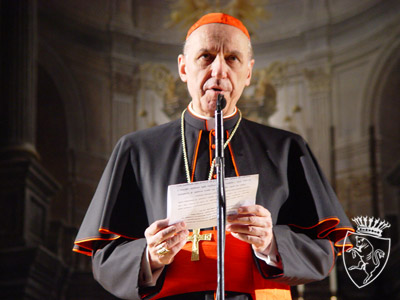
College of Cardinals : Cardinal Severino Poletto turns 80, ceases to be a Cardinal-elector

http://www.gcatholic.org/hierarchy/data/cardJP2-8.htm#125

Image

Cardinal Severino Poletto, Metropolitan Archbishop Emeritus of Torino in Italy, and Cardinal Priest of S. Giuseppe in Via Trionfale, who was elevated to the cardinalate on 21 February 2001 by Blessed Pope John Paul II, turns 80 today, Monday, 18 March 2013.

As such, Cardinal Poletto ceases to be a Cardinal-elector as of today, and lost in voting rights in any future Conclave, according to the Apostolic Constitution Universi Dominici Gregis.

The College of Cardinals now stands at 206 members, out of which there are 114 Cardinal-electors (minus one due to Cardinal Poletto) and 92 Cardinal non-electors.