Saturday, 24 February 2018 : 1st Week of Lent (Gospel Reading)

Liturgical Colour : Purple/Violet

Matthew 5 : 43-48

At that time, Jesus said to His disciples and to the people, “You have heard that it was said : Love your neighbour and do not do good to your enemy. But this I tell you : love your enemies, and pray for those who persecute you, so that you may be children of your Father in Heaven. For He makes His sun rise on both the wicked and the good, and He gives rain to both the just and the unjust.”

“If you love those who love you, what is special about that? Do not even tax collectors do as much? And if you are friendly only to your friends, what is so exceptional about that? Do not even the pagans do as much? As for you, be righteous and perfect in the way your heavenly Father is righteous and perfect.”

Saturday, 24 February 2018 : 1st Week of Lent (Psalm)

Liturgical Colour : Purple/Violet

Psalm 118 : 1-2, 4-5, 7-8

Blessed are they whose ways are upright, who follow the Law of the Lord. Blessed are they who treasure His word and seek Him with all their heart.

You have laid down precepts to be obeyed. O, that my ways were steadfast in observing Your statutes!

I will praise You with an upright spirit when I learn Your just precepts by heart. I mean to observe Your commandments. O, never abandon me.

Saturday, 24 February 2018 : 1st Week of Lent (First Reading)

Liturgical Colour : Purple/Violet

Deuteronomy 26 : 16-19

On this day, YHVH, your God, commands you to fulfil these norms and these commandments. Obey them now and put them into practice with all your heart and with all your soul.

Today YHVH has declared to you that He will be your God, and so you shall follow His ways, observing His norms, His commandments and His laws, and listening to His voice. Today YHVH has declared that you will be His very own people even as He had promised you, and you must obey all His commandments.

He, for His part, will give you honour, renown and glory, and set you high above all the nations He has made, and you will become a nation consecrated to YHVH, your God, as He has declared.

Friday, 23 February 2018 : 1st Week of Lent, Memorial of St. Polycarp, Bishop and Martyr (Homily and Scripture Reflections)

Liturgical Colour : Purple/Violet

Dear brothers and sisters in Christ, on this day from the book of the prophet Ezekiel we heard about the salvation of God’s people and how it all depends not on how a person’s current standing or status, but on what the person has done and committed in life. The prophet Ezekiel made it clear through the example of a holy and devout man who sinned, and by whose sins the man would be judged and condemned, as well as sinners who would be redeemed if they would turn away from their sins.

This is related to what we heard in the Gospel passage, regarding the Lord’s teaching to the people about being faithful to God in the right way. The Lord mentioned how the people must be faithful more than how the Pharisees and the teachers of the Law had been faithful in their ways or else they would not be able to enter into the kingdom of God.

In order to appreciate and understand the fullness of the meaning of these Scripture passages, we have to understand the context in which the Lord made such a comment about the two groups of people He mentioned. Otherwise we may end up failing to understand just how important they are to our own salvation and life.

The Pharisees were influential group of people who were highly educated by the standard of the time, as were the teachers of the Law, where the Pharisees were a political grouping of those who favour strict interpretation and enforcement of the laws of Moses among the people. Meanwhile the teachers of the Law taught those laws among the people and interpreted them in accordance to their beliefs.

These two groups of people were often considered pious and authoritative in terms of religion. And they basked in the praise and adulation they received from the people, even expecting them to follow what they were doing. But many of the Pharisees and the teachers of the Law did not observe the Law for the right reasons. They did them to garner support and praise, and to advance their prestige and status rather than any genuine faith in God.

That was why the Lord often rebuked them for their hypocrisy in faith, saying to the people one thing and yet doing it in an entirely different manner and for different purpose. They expect the people to obey their strict interpretation of the laws of Moses, and yet, they did not perform their observances for the right reasons as mentioned. Is this what we have also done with our own lives? Remember what the prophet Ezekiel said, that even those who were considered pious will be judged should they fall into sin, exactly what the Pharisees and the teachers of the Law had done.

Brothers and sisters in Christ, on this day all of us are called to be true disciples of the Lord, following and obeying what the Lord had taught us to do. We should not become like the Pharisees and the teachers of the Law who did not follow the laws and commandments for the right reasons. When we follow the laws and the teachings of the Church, we must first and foremost do them with God first and foremost in our hearts and minds.

Otherwise, it is easy for us to fall into the same trap that the Pharisees and the teachers of the Law had fallen into. God calls everyone to be faithful to Him, in their hearts, minds and whole beings. What He told the prophet Ezekiel is a reminder for us that no one is beyond God’s love, mercy and forgiveness. Even sinners, as all of us are, will be made and considered righteous for whatever good deeds we do in our lives, done with the right purpose and intention, that is with the intention of the greater glory of God.

Let us all follow the examples of St. Polycarp, holy bishop and martyr of the Faith. He was a bishop of the early Church, who led the faithful and God’s flock in the region of Smyrna in Asia Minor. He was a faithful successor of the Apostles, who converted many to the faith by his teachings and exemplary faith. He helped the spiritual growth of many people, and was martyred in his old age after many years of service, having refused to offer incense to the Roman Emperor who was then worshipped like a god.

Brothers and sisters in Christ, all of us are called to do what the faithful St. Polycarp and our holy predecessors, the saints and martyrs had done. We have to dedicate ourselves wholeheartedly to the Lord, without being distracted by our worldly concerns and desires. We must learn to let go of our pride, our human desires and greed, and learn to put God first and ourselves second. Otherwise, we will end up like those who put their own interests ahead of God’s interests, and thus likely to fall into sin.

Let us all renew our faith, that we may live ever more faithfully day after day, in accordance with the way that the Lord has shown us, following in the footsteps of the saints, particularly remembering the memory of the good and faithful St. Polycarp the bishop and martyr. May the Lord strengthen our faith, and give us the courage to live our lives ever more in accordance with His will. May God bless us all, now and always. Amen.

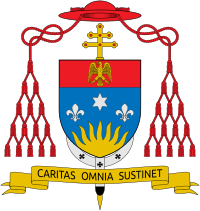
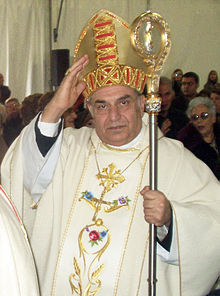
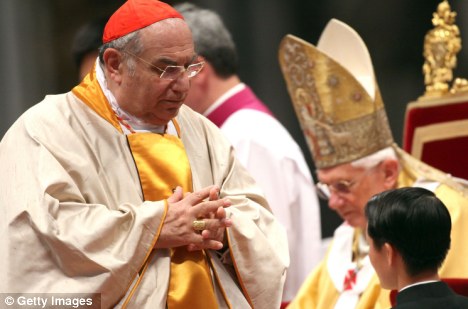
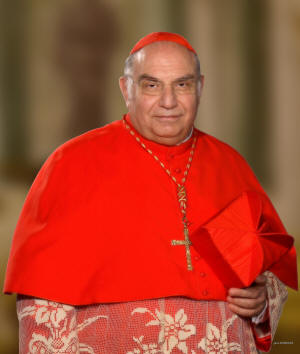
(College of Cardinals Update) Cardinal Paolo Romeo (Italy), Metropolitan Archbishop Emeritus of Palermo turned 80 and becomes ineligible to participate in a future Papal Conclave

Cardinal Paolo Romeo, Cardinal Priest of Santa Maria Odigitria dei Siciliani, Metropolitan Archbishop Emeritus of Palermo has turned 80 on Tuesday, 20 February 2018. Therefore, in accordance to the Apostolic Constitution Universi Dominici Gregis, he can no longer vote in a future Papal Conclave.

Cardinal Paolo Romeo has served the Church for many years in the diplomatic service, as the Apostolic Nuncio to Haiti from 1983 to 1990, and then as Apostolic Nuncio to Colombia (199o to 1999), Canada (1999 to 2001) and Italy and San Marino (2001 to 2006).

Cardinal Paolo Romeo was appointed as the Metropolitan Archbishop of Palermo (Italy), a position he held from 2006 to 2015. He was made a Prince of the Church, as the Cardinal Priest of Santa Maria Odigitria dei Siciliani at the Consistory of 20 November 2010 by Pope Benedict XVI, the Vicar of Christ.

We pray for Cardinal Paolo Romeo, that even in his retirement years, he may continue to inspire the faithful and the Church, and keep strongly the teachings of the Church. May he have a good health and be blessed all the days of his life. Ad multos annos!

Currently, there are 118 Cardinal-electors in the College of Cardinals, which means that there are 2 vacancies for Cardinal-electors available at the moment. The next Cardinal to age out will be Cardinal Francesco Coccopalmerio, President of Pontifical Council for Legislative Texts (Italy) on 6 March 2018.

Friday, 23 February 2018 : 1st Week of Lent, Memorial of St. Polycarp, Bishop and Martyr (Gospel Reading)

Liturgical Colour : Purple/Violet

Matthew 5 : 20-26

At that time, Jesus said to His disciples, “I tell you then, if you are not righteous in a much broader way than the teachers of the Law and the Pharisees, you cannot enter the kingdom of heaven. You have heard that it was said to our people in the past : Do not commit murder; anyone who does kill will have to face trial. But now I tell you : whoever gets angry with a brother or sister will have to face trial.”

“Whoever insults a brother or sister deserves to be brought before the council. Whoever calls a brother or a sister, ‘Fool!’ deserves to be thrown into the fire of hell. So, if you are about to offer your gift at the altar, and you remember that your brother has something against you, leave your gift there in front of the altar, go at once and make peace with him, and then come back and offer your gift to God.”

“Do not forget this : be reconciled with your opponent quickly when you are together on the way to court. Otherwise he will turn you over to the judge, who will hand you over to the police, who will put you in jail. There you will stay, until you have paid the last penny.”

Friday, 23 February 2018 : 1st Week of Lent, Memorial of St. Polycarp, Bishop and Martyr (Psalm)

Liturgical Colour : Purple/Violet

Psalm 129 : 1-2, 3-4, 5-7a, 7bc-8

Out of the depths I cry to You, o Lord, o Lord, hear my voice! Let Your ears pay attention to the voice of my supplication.

If You should mark our evil, o Lord, who could stand? But with You is forgiveness.

For that You are revered. I waited for the Lord, my soul waits, and I put my hope in His word. My soul expects the Lord more than watchmen the dawn.

O Israel, hope in the Lord, for with Him is unfailing love and with Him full deliverance. He will deliver Israel from all its sins.

Friday, 23 February 2018 : 1st Week of Lent, Memorial of St. Polycarp, Bishop and Martyr (First Reading)

Liturgical Colour : Purple/Violet

Ezekiel 18 : 21-28

If the sinner turns from his sin, observes My decrees and practices what is right and just, he will live, he will not die. None of the sins he committed will be charged against him, he will live as a consequence of his righteous deeds. Do I want the death of the sinner? – word of YHVH. Do I not rather want him to turn from his ways and live?

But if the righteous man turns away from what is good and commits sins as the wicked do, will he live? His righteous deeds will no longer be credited to him, but he will die because of his infidelity and his sins. But you say : YHVH’s way is not just! Why, Israel! Is My position wrong? Is it not rather that yours is wrong?”

“If the righteous man dies after turning from his righteous deeds and sinning, he dies because of his sins. And if the wicked man does what is good and right, after turning from the sins he committed, he will save his life. He will live and not die, because he has opened his eyes and turned from the sins he had committed.”

Thursday, 22 February 2018 : Feast of the Chair of St. Peter, the Apostle (Homily and Scripture Reflections)

Liturgical Colour : White

Dear brothers and sisters in Christ, on this day we commemorate together the Feast of the Chair of St. Peter the Apostle, one of the celebrations commemorating the leader of Christ’s Apostles and His vicar on earth, besides that of the Solemnity of St. Peter and St. Paul in the month of June. On this day, we are focusing on the Chair or indeed, better known as the Cathedra of St. Peter, the first Bishop of Rome and Pope.

Some of us might be wondering, why is it that we celebrate the feast of a chair, even if it is the Chair of St. Peter himself as the Vicar of Christ. That is because we must understand the importance of chair in the historical context of the Church. A chair is historically related as the symbol of power and authority, much as thrones are for kings and rulers. When a king or ruler is enthroned, he or she symbolically receives the power and authority to reign over his or her kingdom.

Similarly therefore, the chair for the bishops of the Church symbolises their authority, the authority to teach the Gospels and the truth of God to the people, as well as their administrative and spiritual authority over the flock and the people entrusted under his care. And throughout the dioceses in the world, there is a particular chair in each of the dioceses, in a particular church, named the cathedra as mentioned, as the seat of the bishop’s authority, and the churches with the cathedra are called cathedrals.

There is in fact an actual physical cathedra belonging to St. Peter in the Vatican, at St. Peter’s Basilica, where the chair that is supposed to be St. Peter’s actual chair of teaching is placed in the most prominent place above the high altar on the eastern end of the Basilica, underneath the famous and magnificent dove imagery representing the Holy Spirit. This signifies the authority of the Pope as the successors of St. Peter as the Bishop of Rome and as leader of the entire universal Church, under the guidance of the Holy Spirit.

Brothers and sisters in Christ, nonetheless, the celebration today is much more than just the celebration of a physical and actual chair possessed by St. Peter at the Basilica of St. Peter in Vatican. In fact, this celebration is more about the authority which the Lord Himself has delegated to His vicar, St. Peter as well as to his successors as Bishop of Rome and Pope, in leading all the faithful people of God, His flock and faithful ones.

But if we imagine that St. Peter is someone who was amazing and great, glorious and mighty, then we ought to remember that he was once a mere poor fisherman trying out his best to make a living by fishing in the lake of Gennesaret or Galilee. It was as a poor, illiterate fisherman that the Lord Jesus encountered him and his brother, St. Andrew the Apostle. And many other Apostles and disciples of the Lord also came from humble and unremarkable origins.

Yet, the Lord chose them and called them to follow Him, and for some among them, He entrusted them to become the most important among all of His disciples as the Apostles because they had qualities in them which the Lord discovered, and which He deemed to be worthy. It was not us who make ourselves worthy, but God who makes those whom He called to be worthy.

And the tasks He entrusted to the Apostles were not easy ones, as challenges and difficulties were abound. They had to face persecutions and oppressions from various sources, from those who were against the Church, the teachings of the Lord and against whatever good works that they had done among the people. They had to endure prison, arrests and torture, sufferings and rejections from time to time.

St. Peter himself had to endure the same difficulties, as he travelled from place to place establishing the foundations of the Church in those places. When he was in Rome, Christians there were persecuted heavily at the reign of the Emperor Nero, and together with St. Paul, St. Peter himself was martyred during the reign of that Emperor. He suffered with his flock and remained true to his calling as a shepherd of the Lord.

He remained committed to the end, and humbly even requesting the Romans who were about to crucify him to put him on the cross upside down, as he felt it was not right for him to be crucified and died in the same manner and way as his Lord and Master. Through all of these examples, St. Peter had shown us how he is truly a devout and hardworking servant of God, who places his responsibility to the Lord above everything else.

Brothers and sisters in Christ, let us all remember all the things that the Apostles had done, especially St. Peter in all the works he had done. Through him, the Lord had established His Church in this world, built upon the strong foundation of faith which he had, and upon the faith and commitment of the Apostles. But their hard works were not yet complete, and there are still many things that we can do in this world, fulfilling the vocation to which we have been called to.

Each and every one of us as Christians ought to follow the examples of our holy predecessors. And as we are all part of the one Church of God, which is the same Church that He established upon the foundation of His Apostles, especially St. Peter the Apostle, let us all do our respective parts, in order to work together as one Church, under the authority of the successors of the Apostles, the bishops, who themselves are united to the successor of St. Peter, our Pope, the leader of the Universal Church.

May the Lord be with us all, and may He bless the Church He has built, so that we may always stay together and remain strong in our faith and in our dedication to serve the Lord, and preach more and more of the Good News to the people who have not yet heard of it. Let us all deepen our faith and commit ourselves more wholeheartedly to fulfil the mission which the Lord had entrusted to His Church. May the Lord bless us always, now and forevermore. Amen.

Thursday, 22 February 2018 : Feast of the Chair of St. Peter, the Apostle (Gospel Reading)

Liturgical Colour : White

Matthew 16 : 13-19

At that time, Jesus came to Caesarea Philippi. He asked His disciples, “Who do people say the Son of Man is?” They said, “For some of them You are John the Baptist, for others Elijah, or Jeremiah, or one of the prophets.”

Jesus asked them, “But you, who do you say I am?” Peter answered, “You are the Messiah, the Son of the living God.” Jesus replied, “It is well for you, Simon Bar-Jona, for it is not flesh or blood that has revealed this to you, but My Father in heaven.”

“And now I say to you : You are Peter, and on this rock I will build My Church; and never will the powers of death overcome it. I will give you the keys of the kingdom of heaven : whatever you bind on earth shall be bound in heaven, and whatever you unbind on earth shall be unbound in heaven.”