Tuesday, 26 November 2013 : 34th Week of Ordinary Time (Scripture Reflection)

Liturgical Colour : Green

Dear brothers and sisters in Christ, as we approach the end of our liturgical year cycle, we listen to a lot of readings regarding the forecast for the future. In the first reading, we heard the prophecy in the book of the prophet Daniel, when the Lord revealed His plan for mankind, to the king of Babylon, Nebuchadnezzar in a dream. This dream was also told to Daniel, who gave all who heard these words of revelation, in the court of the Babylonian king, showing to them the signs of the things to come, which many of them yet refused to believe.

The kingdom of God, that is the eternal and glorious kingdom that will last forever, is coming, and Jesus Himself has foretold it to the people as we heard in the Gospel reading today. And it is important that we take heed of what has been revealed to us in truth. Let us not be ignorant as the Babylonians and the people of Israel at the time of Jesus, who listened but did not believe.

First, it was revealed to us, that the coming of the kingdom is imminent. Indeed, in the timing of God, the kingdom of God may come anytime soon. And we have entirely no idea when this will happen. Only God Himself knows when He will come again, that is at the end of time, to bring all those faithful to Him, into the eternal glories prepared for them. If we are not prepared for the coming of God’s kingdom, when it truly comes, we will have no share in it.

Then, linked to the first one, it was revealed to us too, that there will be false prophets and false messiah, proclaiming that the kingdom has come, and that they are the Christ, the One who is to come. It is indeed hard to discern which one is truth and which one is lies, and many seeds of lies have been planted by the evil one, in order to deceive us from the reality and the truth.

Yes, especially in the recent years, there had been people exclaiming that the kingdom of God has come or will come through them, if the people would follow them and obey their teaching, which are not the teachings of the Lord. They brought about portents of doom and destruction, and foretold of doom to come, which in the end did not come true. Worse still, some of them established cults, and managed to convince people to commit mass suicides, as some of them had reached worldwide fame in the 1990s.

This is our weakness, brothers and sisters. Not because we are not faithful or anything, but most importantly because we are too concerned about ourselves, our well-being, and being too self-centred, that we tend to forget what is more important in our lives, and what we are called to do in this life. We worry so much about the future and about what will happen, because we simply cannot tear ourselves, even for a moment, away from our concerns and possessions in this world.

Too often a times that we are fixated at the ties that keep us connected to this world. Well, it is not that it is wrong to do so, but we have often fixed our eyes too much towards the world, that we end up forgetting everything else. And Jesus said things in the Gospel today, precisely so that we will not repeat this same mistakes, again and again.

He reminded us on the greatness of love that the Lord has for us, and the promise He had granted us through none other than Jesus Himself, who came to fulfill God’s great plan for salvation. We also should not be deceived by the lies of the devil, and then became overly worried for ourselves. Worry not, brothers and sisters! That is why we are reminded of the love God has for us. The Lord will take care of us, and give us all that we need. Note, what we need, and not what we want.

We often want things that we do not need, and this results in hunger, great hunger not easily satiable. And it is often that the more we want, the even more we grow to want in time. This created that irresistible tie with the world, which caused us to worry so much in the first place. But what does worry bring us? It brings us nothing! That is because worry paralyzes us, and make us idle, doing nothing, even if these things that we ought to do will have saved us instead.

Brothers and sisters in Christ, today, let us renew our resolve and our dedication to the Lord in our faith, that we will put in Him all our trust and love, without seeking alternatives or easy way outs. Do not trust in false prophets or false prophecies, and instead put our trust completely in God. The Lord did tell us that calamities and suffering would happen before His coming, but they do not determine the time of His coming.

Hence, let us put aside our fear, our worries, and our uncertainties, and open ourselves to the love and care that God pours out for us. May the Lord who cares for us, and loves us unto giving Himself to us, continue to watch over us, guide us, and provide for us, as we walk this path, and may that when He comes again, we will be found worthy, having fulfilled His will and commandments, obeying the instructions that Jesus had given us. May the Lord bless us all. Amen.

Friday, 15 November 2013 : 32nd Week of Ordinary Time, Memorial of St. Albert the Great, Bishop and Doctor of the Church (Gospel Reading)

Liturgical Colour : Green or White (Bishops)

Luke 17 : 26-37

As it was in the days of Noah, so will it be on the day the Son of Man comes. In those days people ate and drank and got married; but on the day Noah entered the Ark, the flood came and destroyed them all.

So it was in the days of Lot : people ate and drank, and bought and sold, and planted and built; but on the day Lot left Sodom, God made fire and sulfur rain down from heaven, which destroyed them all. So will it be on the day the Son of Man is revealed.

On that day, if you are on the rooftop, do not go down into the house to get your belongings; and if you happen to be in the fields, do not turn back. Remember Lot’s wife! Whoever tries to save his life will lose himself, but whoever gives his life will be born again.

I tell you, though two men are sharing the same bed, it might happen that one will be taken, and the other left; though two women are grinding corn together, one might be taken and the other left.

Then they asked Jesus, “Where will this take place, Lord?” And He answered, “Where the body is, there too will the vultures gather.”

Friday, 13 September 2013 : 23rd Week of Ordinary Time, Memorial of St. John Chrysostom, Bishop and Doctor of the Church (Scripture Reflection)

Liturgical Colour : White

Brothers and sisters in Christ, today Christ continued to remind us of the great need to remain humble and loving in our lives, avoiding all sorts of vices, and do only what is in line with the will of God. He cares for us very much, and wants us to be righteous and worthy of Him. He protects and provides for all of us, in the same way that a father cares for his children, and way more than that.

He gave second chances to those who repent, to those who realised the depth of their sins and iniquities as He had done with St. Paul, once the great enemy of the faithful and the Church, and the great persecutor of saints and martyrs, turned into the great champion and defender of the faith, the great missionary of the Lord. Therefore, sinners are great in the eyes of the Lord, because the Lord loves them and cares for them, and wants them to return to Him.

Even saints and holy men and women of God now in heaven were once sinners, great or small. What matters is that they had learnt to manage their human weaknesses and tendency for sin, and overcome the sins they had done, with the help of God and one another, with the love they have in their hearts, and with the faith that they have.

We must therefore not be quick to condemn others or judge on others, especially on their faults or shortcomings, as we have to remember that none of us are perfect or completely filled with good things. All of us have weakness one way or another. We are imperfect, ever since sin has entered mankind’s heart. Yet, some of us would not realise of our own faults, thinking highly of ourselves and our own achievements, and look down on others whom we perceive to be inferior to us.

That was what the Pharisees did, as well as the chief priests and the teachers of the Law did, looking down on others because they thought highly of themselves. They prayed in loud voice and wonderful gestures, and followed the rules of the Law strictly, observing everything to the most minute details, and yet, behind all that, lay a huge problem, a huge fault with them. They have not the Lord in their heart, not even deep within their hearts.

They condemned others and sought faults in others, while they themselves were even more faulty in themselves. That was exactly what Christ condemned them for, their failure to do what the Lord truly asked of them, and even worse that as the leaders of the people, they misled the people and brought them to ruin instead of salvation.

Today, we celebrate the feast of St. John Chrysostom, one of the original four great Doctors of the Church, as one of the most brilliant minds of the Church, the leader of the faithful in Constantinople, St. John Chrysostom was truly an upright man, who lived piously and with deep faith in the Lord their God. He preached often of the need to live in charity and love, that is to show love to one another, especially the ones in need, and he truly practice what he preached.

St. John Chrysostom did not have it easy, as he did face many oppositions, especially from those who followed the heretical teachings, like Arianism, Monophysitism, Nestorianism, and many others. He faced them with firm faith and dedication to God. He was fully aware of his own sins and weaknesses, and therefore he wanted to bring souls to salvation in God, showing his care as a fellow sinner who had been called to guide his lost brethren to the Father in heaven.

St. John Chrysostom did not even shy away or fear of rebuking the Roman Emperor, Arcadius at the time, for the improper behaviour of his wife, the Empress Eudoxia, who resented St. John Chrysostom so much that he was banished from Constantinople and from his post. Immediately God set out to punish those who had conspired against the servant of God, and the Roman capital faced terrible catastrophe. Not even the imperial family was spared, with the Empress dying from childbirth and the Emperor himself a few years later.

Dear brothers and sisters in Christ, we should try to emulate St. John Chrysostom in his actions, in his life, and in his examples, that we should really look into ourselves first before we judge others, and reflect on our lives whether our words and actions had reflected God’s love in them. If we had not done so, then truly now is a good time to do so, while we still have the opportunity in this life. Let us have no fear and keep a steadfast faith like that of St. John Chrysostom, whom in his righteousness rebuked even an emperor and empress who went astray from the Lord.

Let us be always faithful to God, be loving both to Him and our brethren, and finally let us strive to give more of ourselves for the sake of others, the last, the lost, and the lonely, as St. John Chrysostom had done. Pray for us St. John Chrysostom! May God bless us always. Amen.

Wednesday, 31 July 2013 : 17th Week of Ordinary Time, Memorial of St. Ignatius Loyola, Priest (Scripture Reflection)

Brothers and sisters in Christ, today, Christ reminded us in the readings, how precious is the Lord to us, how wonderful is His kingdom, that is for us to inherit as eternal reward, if we remain faithful to Him who always loves us. The Kingdom of God is truly a precious and priceless gift to all, that everyone should indeed focus their attention on, as in the allusion made by Christ, that the kingdom of God is likened to a precious and top-quality pearl, so much so that one should sell all they have, just that they can own that wonderful and beautiful pearl.

So beautiful and perfect is the entire glory of God, that as stated in the first reading today, when Moses talked to the Lord face-to-face in the fullness of His glory and majesty, he would be bathed in His perfect and wonderful light, such that his face became the countenance of the Lord Himself, brilliant and radiant like the sun. Such was the glory of God reflected on the face of Moses, that he was compelled to hide his face by the means of the veil, so great is such glory that no one but Moses was allowed to see.

Our Lord Jesus Christ too was glorified on the mountaintop when He was transfigured from His human persona, and revealed the fullness of His glory and majesty. He revealed Himself to Peter, James, and John who were present at His Transfiguration. In that event too, we saw the same thing that had happened to Moses, in how Jesus Himself was transfigured into a figure of perfection and brilliance, except that the light itself came from Christ Himself, not because it was a reflection of God’s glory and majesty as in the case of Moses.

Why is this very important, brothers and sisters in Christ, that we listened to the word of God on how Moses faced God face-to-face? And why I mentioned Christ and His Transfiguration? That is because, brothers and sisters in Christ, we have been made in the image of God, that is our very face and countenance is a reflection of the very image of our God, the Creator Himself. We have the face of the Lord, but yet, we are not perfect as the Lord is perfect.

We were once perfect, in the early days of creation, when Adam and Eve still walked the Gardens of Eden, when they were still pure and without blame. After they had followed the devil instead of the Lord, they had lost sight of the treasure that the Lord would have given them for eternity. Mankind would have had no need to suffer, the suffering that is because of our sin and our rebellion against the Lord. Yet, we are the most beloved ones of the Lord, created in His own image, and He loved us still even after we had been corrupted by the sins our fathers had committed. That was why He sent Jesus Christ to the world, that man may be reunited once again with Him.

In our world, the devil has many tools to steer us away from the true path towards the Lord. There are many things that he can use, in order to continue his subversion of mankind, just as what he had once done to Eve and to Adam. He offered Eve the knowledge of things good and evil, and the tempting suggestion that eating the fruit of the forbidden tree would make her God’s equal. These are the same things he can utilise in our world today, to make us falter in our journey of faith.

We must set our focus right, on the true treasure that is the Lord and His love, and not be distracted by the false and temporary treasures of the world, such as wealth, properties, pleasure, and many other thing this world offers us, and our world offers us as things that we should all pursue. It is not that it is wrong to have money, wealth, and pleasure, because it is perfectly fine for us to have these, if these would help us to live in our increasingly challenging world. We do need money and worldly goods to be able to live on and survive.

What is important is that we do not become distracted by them, that we lost track of our real treasure, that is God. So precious is this wealth to us that we all should be motivated to seek it, and the wealth and treasures we have in this world should be directed to help us to obtain the real treasure. We do not have to go to the extent of selling everything in order to get that true treasure, but certainly, we need to put in effort in order to gain our true treasure and reward in God.

Today, we celebrate the feast of St. Ignatius Loyola, the priest and founder of the Jesuit order, the largest religious order and movement in our Church today, of which our current Pope, Pope Francis, is a member of. St. Ignatius Loyola was born in Spain to a family of noble, who inherited much wealth and affluence in the society. St. Ignatius Loyola was destined to be a great knight and noble, and participated in much activities that the nobles used to do at that time.

St. Ignatius Loyola was born to a life of privilege, to a life of wealth and sufficiency, with all the things that all of us surely would have craved for. He was brought up to be a knight, seeking valour and fame through all his activities, seeking ever greater fame as he grew up, participating frequently in battles and duels in order to gain more fame and power. Yet, as he progressed on through life, he grew unsatisfied by these ‘treasures’ that he had.

St. Ignatius Loyola eventually left all that he had and abandoned the inheritance, the fame, and the glory he had once had, and instead, became the knight of Christ. Therefore, he no longer served himself, his own ego, his own pride and glory, but instead he gave it all to serve the Lord our God. Christendom then was in great turmoil, with people leaving the Church to the Reformation heresy every day. More and more left the Church tempted by the devil and his tools in this world, those who rebelled against the Lord and His Church.

That marked the beginning of the Jesuit order, which was first established by St. Ignatius Loyola and several of his companions. The Jesuit order rapidly grew and spread throughout Europe and Christendom at the time, combatting heresies and evils of the world, converting many back to the true faith, and stemmed the tide of destruction caused by the Reformation. The Reformation itself might have had good intentions, but in its implementation, it was a disaster for the faith, for God’s people, for the Church of God.

That was what the Jesuits, under the leadership of St. Ignatius Loyola was trying to combat and fight, in the Name of the Lord, which was the reason behind their name, that is the Society of Jesus. They, who had found the true treasure in God, and truly treasure this treasure, the priceless treasure, sought to ensure that others too can find their true treasure that is the Lord our God, and not to be misled by the devil into the chasm of damnation in hell, because of their heresy and transgressions against the true faith, as was rampant during the time of St. Ignatius Loyola.

The Jesuits are still active today, and together with many other religious orders, they work to continue the good works started by St. Ignatius Loyola and many other saints, so that more and more souls may be saved and prevented from falling into the traps of Satan. The hard work by St. Ignatius Loyola and his successors ensured that many are saved and received their true treasure in God, their eternal reward of everlasting life in the bliss of heaven.

We too, brothers and sisters in Christ, can do our part to bring more souls and indeed, ourselves to the Lord and His salvation, by ensuring that we keep our focus right, that is to focus ourselves on the real treasure that is the Lord our God, and do not become distracted by the world and all its temptations. Instead, let us use whatever graces and blessings that had been given to us, in wealth and other things, that we may use them as best as possible, to help us to achieve the real treasure of our lives. May St. Ignatius Loyola intercede for us that the Lord will always keep us strong in our struggle against evil and keep us in His embrace and favour, always, forever and ever. Amen.

Saturday, 27 July 2013 : 16th Week of Ordinary Time (Psalm)

Psalm 49 : 1-2, 5-6, 14-15

The God of gods, the Lord has spoken, He summons the earth from the rising of the sun to its setting. God has shone from Zion, perfect in beauty.

“Gather before Me My faithful ones, who made a covenant with Me by sacrifice.” The heavens will proclaim His sentence, for God Himself is the judge.

“Yet offer to God a sacrifice of thanks, and fulfill your vows to the Most High. Call on Me in time of calamity; I will deliver you, and you will glorify Me.”

On the Future Canonisation of Blessed Pope John XXIII and Blessed Pope John Paul II

Image

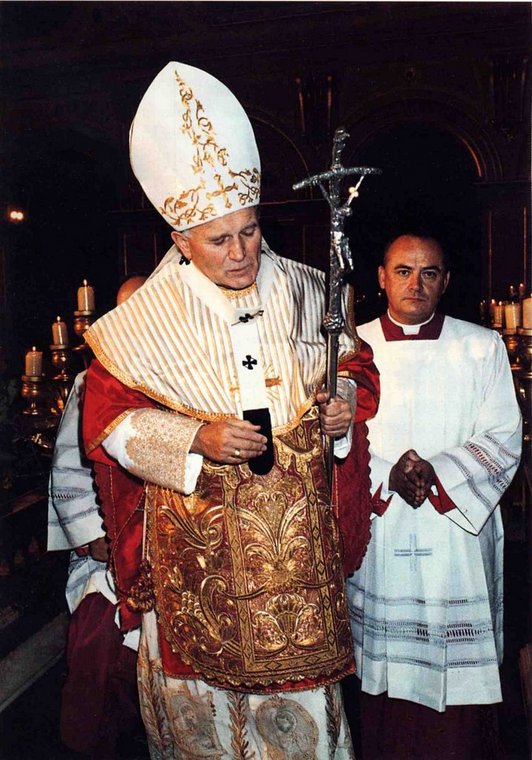
The two great Popes of the last century, both of whom had been recognised as Blessed, through the virtues of their life and miracles attributed to them, will be declared Saints, in a ceremony likely to be scheduled at the end of this year (2013).

Both Blessed Pope John XXIII and Blessed Pope John Paul II, who was made a Blessed just two years ago on 1 May 2011, had each left their incredible and remarkable footprint in the path of history, both in the history of the Church, and in the history of the world and mankind.

Image

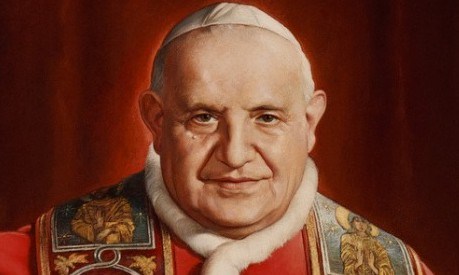
Blessed Pope John XXIII was known to be a great man of peace, and above all things seek to embrace peace and cooperation, between mankind, and also begun the process of Ecumenism in order to reunite the divided fragments of God’s Church back into the One, Holy, Catholic, and Apostolic Church that is our Church.

He was also known for his Encyclical Pacem in Terris (Peace on earth), which was released just months after the world was almost engulfed in an all-out nuclear war between the two superpowers, the United States of America (USA) and the Soviet Union (USSR) during the height of the Cold War in the Cuban Missile Crisis. Blessed Pope John XXIII worked hard ceaselessly to promote peace between the parties in conflict, for the good of all mankind, all of whom are the children of the same one God.

Blessed Pope John XXIII also convoked the Second Vatican Council, which brought the Church in line with the developments in the world, and also to make the Church more relevant in the increasingly rapid new developments in our world, and the rise of apathy towards religion in general. He would pass away before the Council was completed, but his legacy continued on until today.

Image

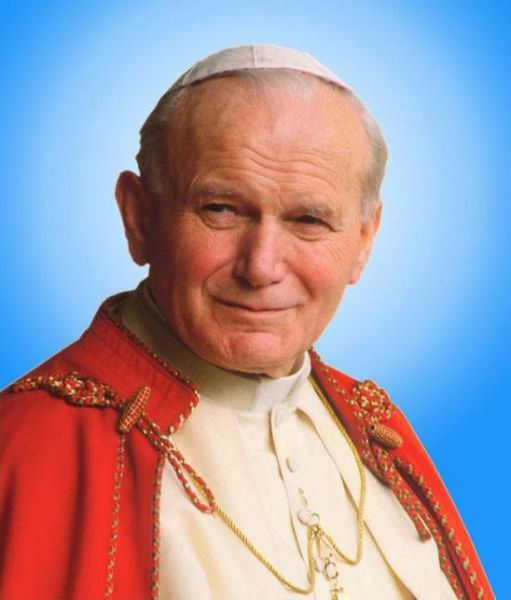
Blessed Pope John Paul II ‘the Great’ was a well-known Pope, a Pope of youths, and a hardworking Pope, who travelled around the world to visit all the flocks of the Lord that had been entrusted to him as the Successor of St. Peter the Apostle, as the Vicar of Christ. He was instrumental in the end of Communism in Eastern Europe, ending persecutions against the people of the faith, and also open boundaries and barriers that had been long in place since the beginning of the Cold War.

Blessed Pope John Paul II has also renewed the zeal for the faith amongst many around the world, and especially in youths, to whom he dedicated a special event, the World Youth Day, in order to commemorate the faith, particularly amongst the youths of the faith, around the globe. He inspired many through his works, his Encyclicals, and especially his perseverance despite being troubled with a worsening Parkinson’s disease condition, that made him to labour until his passing on 2 April 2005.

Both Popes had been very influential, hardworking, and very holy leaders of the One Church of the Lord Jesus Christ, and they had done much to strengthen the faith and the Church, and bring God closer to many, bringing them closer to salvation.

I hope to soon be able to ask for the intercessions of Pope St. John XXIII and Pope St. John Paul II the Great, and I pray that they will intercede for us sinners around the world, and pray for us, till we are greeted by them at the doors of heaven when it is time for us to be with the Lord again. Now we wait for the official announcement on the date of the Canonisation.

Image

Blessed Pope John XXIII, pray for us!

Image

Blessed Pope John Paul II, pray for us!

Tuesday, 2 July 2013 : 13th Week of Ordinary Time (Scripture Reflection)

Brothers and sisters in Christ, today we are called to put our complete trust in Christ our Lord, for in Him lies all the authority over all the universe, and not even the wind, the seas, and the storm can overcome Him. Indeed, not even death could overcome Him! The evil one tried to derail the plan of salvation by inciting the people and the priests to condemn Him to death, death on the cross. A sign of humiliation, yes, but that sign of humiliation was changed to a sign of victory and glory, the triumphant Christ winning over all evil, once and for all.

The scene in the Gospel reading today inspires the logo that we have for our celebration of the Year of the Faith, in which is depicted a ship sailing in the rough seas and waves, and a triumphant cross stands on that ship. In today’s Gospel reading, Jesus calmed the storm and the sea after He rebuked them with His authority. He has the power and authority over all things, without exceptions, and He also rebuked His disciples for their fear. In their fear, they distrusted the power and authority of the Lord, and that was where fear originated and entered into their hearts.

Our Church today is like that ship, floating and sailing in the midst of a sea full of storms and thunder, a sea full of dangerous hazards and oppositions, just as our Church faced plethora of problems and issues that continue to assault it unabated, especially in the past few years. Had the Church not had Christ, it would have collapsed long ago, and therefore brought about damnation for many, a damnation in hell.

Christ, who rebuked the wind and the sea is that central figure on the ship of faith, is that Christ had become a steadfast and strong anchor, which kept the boat from capsizing in the midst of that turbulant seas. If we keep our faith in Him strong, He will then also help to keep us under His protection, that we, as a Church and an individual child of God, will not fall into damnation.

Remain faithful, brothers and sisters in Christ, and pray for one another, help one another, that all of us, who belongs to the Lord, but somehow were brought apart by the currents of the world, that all of us will survive the temptations of the world and evil, who always tries to separate us from our Lord. Temptations are everywhere, and in this increasingly affluent world, it is getting more and more difficult to resist these temptations, temptations of pleasure, temptations of wealth, and many others.

That was one of the things that made Lot’s wife to disobey the commands of the angel of the Lord to not look back at the cities of Sodom and Gomorrah as they escaped the catastrophe towards the city of Zoar, towards safety. That was because Lot’s wife was likely not able to come to terms with having to leave all the pleasures of life and wealth that she and her family had to left behind in their hurried escape from Sodom.

She disobeyed the commands of the Lord through the angel, and received her just reward, that is punishment, to become a pillar of salt. It is not that God is harsh or anything of the sort, but He is just to everyone, that to those who obey His laws and those who practised His teachings on love through Jesus, He will give their due rewards, and to those who had not obeyed His laws and openly disregarded His will, they will certainly receive their due rewards as well, that is condemnation.

Therefore, brothers and sisters in Christ, we have a simple choice between two, the devil and world pleasures, which corrupt our hearts and minds, and cloud our perceptions and judgments, making our faith in God to tremble and weaken, or to choose a more difficult path, that is the path of the Lord, to choose God, who is our anchor and our strength, and who has authority over all things in the universe.

Salvation or damnation, it is indeed entirely our choice. Do we want the ship, that is our Church, and indeed that is our being, to be stable, with the Lord as the anchor and guide, or do we want the ship to be unstable and sinking, if we do not put our trust in God? Let us use this excellent opportunity in the Year of the Faith to renew our commitment to our God, and to renew our faith in Him, and show Him the extent of our love and dedication for Him. May God bless us all and strengthen our faith day by day, that we do not fall into sin anymore. Amen.

Tuesday, 2 July 2013 : 13th Week of Ordinary Time (First Reading)

Genesis 19 : 15-29

At daybreak the Angels urged Lot, saying, “Hurry! Take your wife and two daughters who are here, lest they perish because of the sin of the town.” As he hesitated, the men took him by the hand and his wife, and two daughters with him, because YHVH had mercy on him. And they led him outside the town.

When they were outside, the men said to him, “Flee for your life and do not look back and do not stop anywhere in the plain. Flee to the mountain lest you perish.” But Lot replied, “My lords, your servant has found favour with you, and you have shown me great kindness in saving my life. But I cannot flee to the mountains for fear the disaster will overtake me and I die.”

“See, there is a town near enough for me to flee to and it is a small one. Let me flee there : it is very small, that is why the town is called Zoar. So I will be safe.” And the angel answered, “I grant you this favour as well by not destroying the town you speak of. But flee fast for I can do nothing until you arrive there.”

The sun had risen on the earth when Lot reached Zoar. Then YHVH rained on Sodom and Gomorrah burning sulphur out of the heavens from YHVH, and He completely destroyed those towns and all the valley and all the inhabitants of the towns and everything that grew there.

Lot’s wife looked back and she became a pillar of salt. Early next morning Abraham returned to the place where he had stood before YHVH. He looked towards Sodom and Gomorrah and towards all the land of the valley and he saw smoke rising from the earth like the smoke from a furnace.

So when God destroyed the towns of the plain He remembered Abraham and made Lot escape from the catastrophe while He destroyed the cities where Lot had lived.

Monday, 1 July 2013 : 13th Week of Ordinary Time (First Reading)

Genesis 18 : 16-33

The men went away and turned towards Sodom. Abraham walked with them to set them on their way. And YHVH said, “Can I conceal from Abraham what I am about to do? Abraham, in fact, is going to become a great and powerful nation and through him all the nations of the earth will be blessed, for I have chosen him to command his sons and his household after him to keep the way of the Lord by doing what is right and just, so that YHVH may bring about for Abraham what He has promised him.”

Then YHVH said, “How great is the cry for justice against Sodom and Gomorrah! And how grievous is their sin! I am going down to see if they have done all that they are charged with in the outcry that has reached Me. If it is not so, I will know.”

The men with Him turned away and went towards Sodom, but YHVH remained standing before Abraham. Abraham went forward and said, “Will You really let the just perish with the wicked? Perhaps there are fifty good people in the town. Are You really going to let them perish? Would You not spare the place for the sake of these fifty righteous people? It would not be at all like You to do such a thing and You cannot let the good perish with the wicked, nor treat the good and the wicked alike. Far be it from You! Will not the Judge of all the earth be just?”

YHVH said, “If I find fifty good people in Sodom, I will spare the whole place for their sake.”

Abraham spoke up again, “I know that I am very bold to speak like this to my Lord, I who am only dust and ashes! But perhaps the number of the good is five less than fifty. Will You destroy the town because of five?”

YHVH replied, “I will not destroy the town if I find forty-five good people there.”

Again Abraham said to Him, “Perhaps there will be only forty.” He answered, “For the sake of forty I will not do it.”

Abraham went on, saying, “May my Lord not be angry, but let me speak. Maybe only thirty good people will be found in the town.” YHVH answered, “I will not destroy it if I find thirty there.”

Abraham said, “Now that I have been so bold as to speak to my Lord, what if only twenty can be found?” He said, “For the sake of twenty I will not destroy the place.”

But Abraham insisted, “May my Lord not be angry, but let me speak just once more. What if only ten can be found?” And YHVH answered, “For the sake of ten good people, I will not destroy Sodom.”

When YHVH had finished speaking with Abraham, He left and Abraham went home.

Friday, 21 June 2013 : 11th Week of Ordinary Time, Memorial of St. Aloysius Gonzaga, Religious (First Reading)

2 Corinthians 11 : 18, 21b-30

As some people boast of human advantages, I will do the same. But if others are so bold, I shall also dare, although I may speak like a fool. Are they Hebrews? So am I. Are they Israelites? So am I. Are they descendants of  Abraham? So am I. Are they ministers of Christ? I begin to talk like a madman. I am better than day.

Better than they with my numerous labours. Better than they with the time spent in prison. The beatings I received are beyond comparison. How many times have I found myself in danger of death! Five times the Jews sentenced me to thirty-nine lashes.

Three times I was beaten with a rod, once I was stoned. Three times I was beaten with a rod, once I was stoned. Three times I was shipwrecked, and once I spent a night and a day adrift on the high seas. I have been continually in hazards of travelling because of rivers, because of bandits, because of my fellow Jews, or because of the pagans; in danger in the city, in the open country, at sea; in danger from false brothers.

I have worked and often laboured without sleep. I have been hungry and thirsty and starving, cold and without shelter. Besides these and other things, there was my daily concern for all the churches. Who is weak that I do not feel weak as well? Whoever stumbles, am I not on hot bricks?

If it is necessary to boast, let me proclaim the occasions in which I was found weak.