Saturday, 5 October 2013 : 26th Week of Ordinary Time (Scripture Reflections)

Liturgical Colour : Green or White

Dear brothers and sisters in Christ, today we are again reminded of the great love that God has for all of us, the most beloved of His creations, as beloved children of God. We have disobeyed against Him and thus committed great sin before His eyes, and yet He continues to love us without end, and He even unconditionally gave Himself for us, His life and all, through the sacrifice of Jesus on the cross.

Through Jesus, mankind had been given a new hope, and a new light in Christ Himself, and they had been revealed a glimpse of heaven through Jesus, who showed them the path of salvation and new life, eternal life in God. He revealed the Lord’s long planned plan of salvation to His beloved people, to those who possessed the humility of heart to listen to the word of salvation, that is the Good News of Jesus.

To those who had listened to the Lord, and obeyed His commands, leading an upright and just life in this world, to those who had not gone astray in their path, the Lord had exalted them in glory, the glory of His majesty, and they become His beloved children, safe from the power of the devil, the great enemy and the deceiver of all.

The evil one was thrown down from heaven, where he was once the greatest angel of creation, and because of his pride, arrogance, and vanity, he was thrown down. He boasted that he would rise above the throne of God and rule over creation and yet he was made into nothing. He was struck, and not only once, but twice, by the power of God.

For Satan continued his rebellion, by ensuring that it is not just him and some of his fellow angels that fall into the sin of rebellion, but also mankind through the temptation of Eve by Satan-in-disguise, the deceitful snake. This made mankind to also fall into sin, and was cast out of heaven, of the beautiful garden of Eden God had prepared for them, His beloved.

It is in Christ and His coming into this world, that Satan was struck again, and this time for eternity, for all time. He was defeated with such finality, that he will not rise again, and his fate was sealed. For in Christ lies the fulfillment of God’s desire for mankind to be saved from the fate that awaits them that is death. In Christ is the final nail to the coffin of the devil, the final destruction of his rebellion, that mankind, whom Satan caused to fall into sin, now through Christ has the hope of redemption.

The anger of God was indeed aimed at us, but as much as He is angry with us, He remains loving and forgiving, and the fullness of His wrath is truly aimed at the deceiver himself, the devil, Satan, the old snake. It is His wish that all of us be freed from our bondage to that rebellious angel, one who thought that he is the greatest of all. We have been bonded to him ever since our forefathers chose to obey him instead of their true Master, the Lord our God.

That is why, brothers and sisters in Christ, we must not fear the anger of the Lord our God. Rather, let us use that knowledge of His anger as a warning and a reminder to all of us, how much the Lord loves us and cares for us, that He is angered by our trespasses and our indignant rebellion against His love. Yet, He is always merciful and His heart is always open and available to all of us, especially those of us who repent from our sinful ways and return back to He who loves us with all our sincerity and love.

Therefore, brothers and sisters in Christ, we should not fear the Lord anymore, and neither should we fear the devil, that great enemy of all. The former, is because He truly loves all of us, and punishes us or be angry with us, because He cares for us and our salvation, that we will not fall into eternal damnation, away from His love, out of which, there can be no escape. And the latter, because, through Jesus, the Lord had broken the chains that had enslaved us to the power of Satan. He had broken the chains of death through His own death on the cross. Christ had been triumphant, and He crushed the devil under His feet in glory.

Let us therefore, first, seek the Lord’s merciful love and forgiveness, baring all of ourselves and our hearts before Him, opening the deepest depths of our heart to Him. Let us then, allow His love to flow into us, and through us, that we be made into conduits of His love, through our words, deeds, and actions. We have to become the children of the light, and the children of love, that is God, and there is nothing better than our dedication to Him through our loving actions and words. May we continue to spread the love of God to all mankind. God bless us all. Amen.
Monday, 30 September 2013 : 26th Week of Ordinary Time, Memorial of St. Jerome, Priest and Doctor of the Church (Scripture Reflections)

Liturgical Colour : White

Dear brothers and sisters in Christ, today we listened to a lesson on humility, and its importance, when we become the disciples of Christ, not to boast of our own glory, but rather boast of the glory of God, made evident in Jesus the Christ. That is because it is indeed the Lord who is worthy of all praise and glory, for His might, and even more importantly for the extent of the love that He had shown us through Christ.

The Lord wanted to teach His disciples, and through them, all of us, on the value and importance on humility and being humble, as the way to be a good and upright person, a good child of God. And Christ did not just preach and do nothing about what He taught, because in fact He truly practiced what He had preached.

How so? Jesus is truly humble and unassuming, although He is truly great, as the King of all kings. He is divine and omnipotent, and all creation is under His power and authority, as the Lord of all the universe, and yet, for our sake and our salvation from death, He is willing to make Himself small and insignificant, as small and unworthy as we are, to be man like one of us, although without sin.

In His humility too, He was born in a small stable, rejected by others, from inns and houses, that He had to be born among the animals and shepherds. He lived as a carpenter’s son and was ridiculed by His own people, the people of Nazareth, when He revealed the truth about Himself to them. He was humble in all of His ways and loving in all of His actions.

There is nothing that exemplifies His humility better than that of His ultimate sacrifice on the cross. That He lowered Himself to die a death of a slave, the death on the cross, condemned to death despite His innocence, for the sake of all of us. But that is also where the Lord’s words came true even more. That is because the symbol of the cross was transformed forever, from the symbol of shame to be a symbol of hope and victory.

Christ rose up from the dead in glory on the third day after His death, and He took His rightful place as the Lord of all things, having saved mankind through His death, that they will not die but live. On the other hand, the prideful and arrogant Satan was cast down in great shame, and forever he is condemned to the punishment prepared for him, for his prideful rebellion against the Lord.

With humility, we will go a long way, because with humility in our heart, we will be more ready to open it to the love of God, to the wisdom of God, and to His saving power. We will be more ready to listen to Him and take in all the teachings that He had told us, the commandments that He had given us to follow, that we become truly faithful and obedient to He who created us.

Humility allows one to understand one’s faults and weaknesses more readily, and also the understanding, that one’s sins had prevented one from reaching the Lord and eternal joy in heaven. That this will likely make one to atone for one’s own sins and do things that help to overcome those sins as well as doing good for others. That is how important humility truly is.

Without humility, we tend to be prone to fall into our own pride, and end up shutting the Lord and even our other beloved ones from our heart. We will tend to build up our ego, to the point that we think only about ourselves, and not for others, at all. We tend to do things for our own glory, and praising ourselves for our own greatness, without realising that, without God we are really nothing.

Today, brethren, we celebrate the feast of St. Jerome, a great writer of the early Church, and one of the greatest Doctors of the Church, as one of the original Four, together with St. Augustine, St. Gregory Nazianzen and St. as strong pillars of the Church. St. Jerome lived at a time when the faith has begun to take hold over the entire Roman Empire after it was no longer persecuted.

St. Jerome’s contribution to the Church is truly great, especially to the Church in the western parts of the Empire. The Roman Empire was a vast Empire spanning from Britain and the Atlantic Ocean all the way to the Middle East and Egypt, encompassing the entire Mediterranean Sea basin. The western part of that Empire spoke primarily Latin and its dialectic derivatives, the official language of the Empire.

The eastern part however, spoke primarily Greek and a variety of other ancient languages, and because the faith came and arose from that region, much of the Scripture that we know today was written in Greek or in the other eastern languages. It is St. Jerome who opened the doorway to the Scripture in the west, and therefore to us, by being the first to translate the Septuagint, that is the Greek Scripture, into the Vulgate, the Latin Scripture, written by St. Jerome himself.

St. Jerome also courageously defended the true and orthodox faith, defending it against every kind of aberrations and heresies that threatened to split the Church apart at that time. Through his writings and other works, St. Jerome kept the Apostolic faith alive and strong even in difficult times.

Therefore, brothers and sisters in Christ, today, as we celebrate the feast of this great saint, St. Jerome, let us also strive to be more like him. St. Jerome is an ascetic, one who withdrew from the pleasures of the world and reject worldly glories, putting the Lord above everything else. He is also humble, and he did his work with great humility, and yet he bore much fruits.

That is why, brethren, we too should emulate him, in doing good works in our own ways, even in small little ways. Because even in little things, good can eventually come in abundance. In humility too, we can become great, not in the way that the world sees it, but instead in the eyes of the Lord. Humility bears love, and that love will bear much good. Even in his ‘humble’ work as a writer, St. Jerome’s good works still affect us even until this day. All the Bibles that we read today eventually had their roots from the works of St. Jerome.

May St. Jerome intercede for us and pray always for us sinners, that we can remain in the grace of God, and receive His heavenly blessings. May God be with us and remain with us always. Amen.

Friday, 27 September 2013 : 25th Week of Ordinary Time, Memorial of St. Vincent de Paul, Priest (Scripture Reflections)

Liturgical Colour : White

Dear brothers and sisters in Christ, today Christ revealed His identity to His disciples, after asking them whether they know who He truly was. And the prophet Haggai in the first reading, comforted the people of God who laid in ruins after they returned to the land the Lord had given them after a long exile in Babylon.

In Christ, the Son of God, the world has been given the salvation that God had promised for them. In Christ, who is not mere man but a divine made man, the world achieve a fullness of glory in the Lord, the perfection that has been taken from us when we became lost after our rebellion at the beginning of Creation.

Christ is the fulfillment of God’s promise to mankind over time which He renewed through the prophets, and finally perfected in Jesus. God resolved to rebuild the destroyed mankind that they once again become His beloved ones, freed from sins and slavery to the worldly pleasures and sins.

Yet, although He is a conquering King who comes to destroy death and sin, and be triumphant over all evils, but He came as a humble King, One who is destined to suffer and die. Yes, death for our sake, that through the death, we may not die but live eternal with Him. He is the Lamb of God, the One to be slaughtered and whose Blood is to be shed, for the sake of all of us, for our salvation.

Although He is great and mighty, He faced suffering, persecution, and death, that He took in into Himself all the sins and sufferings of mankind, that we do not have to suffer them for eternity, and instead enjoy life everlasting in happiness with God. This is the renewal the Lord promised to the returned exiles of Israel through the prophet Haggai and the other leaders of the people. The renewal God had sent through His own Son, Jesus Christ.

The Lord loves us so much, that He was not willing to see us to suffer with the devil in eternal fire, to suffer for the consequences of our sins and faults. That was why He sent us Jesus, to be our Help, our Hope, and our Way, to return to Him, to reclaim the true joy, happiness, and the inheritance that we had forsaken when we disobeyed Him in the garden of Eden.

All that, and He was ready to endure lashes, torture, nails, and the cross itself.  The Lord Jesus walked that arduous path towards Calvary, enduring the weight of that cross, bleeding from His wounds, to die a criminal’s death on the cross, in Calvary, for our sake. Imagine the combined weight of the world’s sins, that is the sins of all mankind. That was the weight of the burden which caused Christ much pain and suffering, and He endured it.

At the same time, through that sacrifice of Himself, God had made His love for His people evident, by the giving of Himself for out sake. He gave us all new hope and light in life. Remember, before the glorious cross, the cross of Christ resurrected from the dead, there is always the cross of suffering, that is the cross taken up by the Christ suffering for our sins.

We cannot abandon the Christ, both in His glory and in His time of greatest humiliation on the cross, the humiliation that he turned into glory. That is why, brethren, we have a mission that has been given to all of us and that is to proclaim the crucified Christ to all people, to all the nations, especially to those who have yet to hear about the wondrous Christ and His works of salvation.

Today, we commemorate the feast of St. Vincent de Paul, one of the great saints in the Church, who was well known for his commitment to the Lord, especially to the weak, the poor, and the unloved. St. Vincent de Paul was born in France and was educated to be a faithful and good follower of Christ, when he was captured among many by the Algerian pirates running rampant in the region during his time, and was made into a slave.

St. Vincent de Paul was enslaved and sold to a renegade Catholic owner, until he managed to convince him to return to the faith, who then helped to get St. Vincent to be released from his slavery. He then committed the rest of his life as a worker of the Lord, caring for the last, the lost, and the least in the society, emphasizing on the need to give love to these people, and not abandon them to the darkness.

St. Vincent de Paul was particularly caring about those who were enslaved, being once a slave himself, and showed them the true nature of Christian love, that is dedication and the giving of oneself for the sake of others in need. He was truly the embodiment of who we all Christians ought to become, to be people for others, to be faithful disciples of the Lord who is Love.

Therefore, brothers and sisters in Christ, let us follow the examples of St. Vincent de Paul, making real our faith in this world, through our dedication and service to our brethren in need. We do not have to do big things, but what we can do is, to do even simple things to those around us, to those whom we meet along the way, giving them simple acts of love.

Even these small acts are significant, brethren, and we must not discount them for bigger and more ambitious acts of charity, as it is in these small acts that we can do daily that truly make the difference, and truly bring out the love that we have in us, and sharing it with one another. St. Vincent de Paul, pray for us always, that in all the things we do, we may be more inspired to be charitable and loving. God bless us all, always. Amen.

Friday, 27 September 2013 : 25th Week of Ordinary Time, Memorial of St. Vincent de Paul, Priest (Gospel Reading)

Liturgical Colour : White

Luke 9 : 18-22

One day, when Jesus was praying alone, not far from His disciples, He asked them, “What do people say about Me?” And they answered, “Some say that You are John the Baptist; others say that You are Elijah, and still others that You are one of the prophets of old, risen from the dead.”

Again Jesus asked them, “But who do you say that I am?” Peter answered, “The Messiah of God.” Then Jesus spoke to them, giving them strict orders not to tell this to anyone.

And He added, “The Son of Man must suffer many things. He will be rejected by the elders and chief priests and teachers of the Law, and be put to death. Then after three days, He will be raised to life.”

Monday, 2 September 2013 : 22nd Week of Ordinary Time (First Reading)

Liturgical Colour : Green

1 Thessalonians 4 : 13-18

Brothers and sisters, we want you not to be mistaken about those who are already asleep, lest you grieve as do those who have no hope. We believe that Jesus died and rose; it will be the same for those who have died in Jesus. God will bring them together with Jesus and for His sake.

By the same word of the Lord we assert this : those of us who are to be alive at the Lord’s coming will not go ahead of those who are already asleep. When the command by the archangel’s voice is given, the Lord Himself will come down from heaven, while the divine trumpet call is sounding.

Then those who have died in the Lord will rise first; as for us who are still alive, we will be brought along with them in the clouds to meet the Lord in the celestial world. And we will be with the Lord forever.

So, then comfort one another with these words.

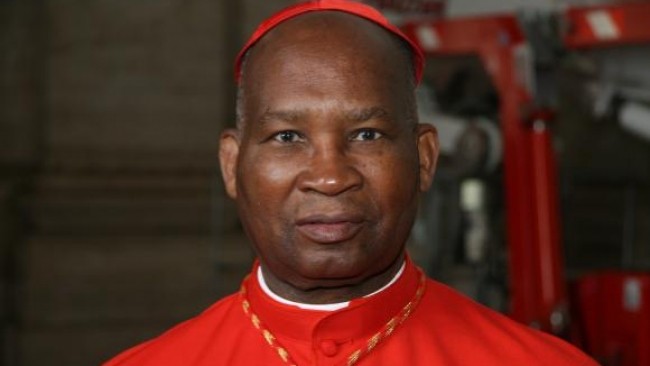
Passing of Cardinal Medardo Joseph Mazombwe of Zambia, at the age of 81

169-medardo-joseph-mazombwe-archeveque-emerite-lusaka-en-zambie

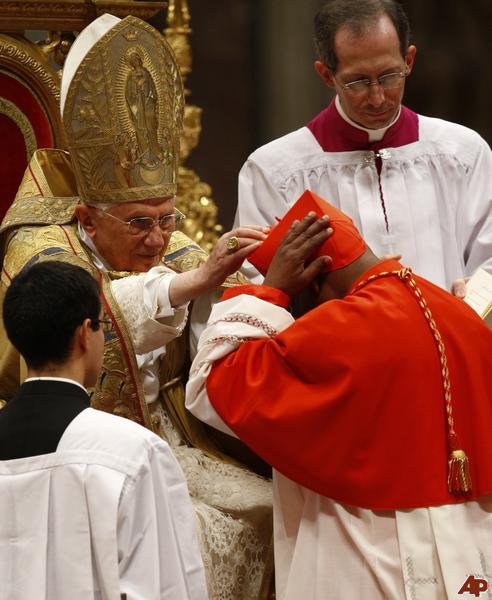
Cardinal Medardo Joseph Mazombwe, Cardinal Priest of S. Emerenziana a Tor Fiorenze has passed away on Thursday, 29 August 2013 at the age of 81. He was the Metropolitan Archbishop Emeritus of Lusaka in Zambia.

http://www.gcatholic.org/hierarchy/data/cardB16-3.htm#6723

medardo-joseph-mazombwe-2010-11-20-8-10-45

Cardinal Mazombwe was created Cardinal in 2010 by Pope Benedict XVI and he was a longtime bishop of Chipata since 1970 until he was made the Metropolitan Archbishop of Lusaka, Zambia in 1996. Cardinal Mazombwe retired in 2006, and was also for a few years the President of the Zambia Episcopal Conference.

We pray for Cardinal Mazombwe, that he will rest in peace, and God will reward him for all his hard work as the shepherd of the people of God in Lusaka and in Zambia as a whole and his numerous other contributions to the Universal Church and for the Lord’s sake. May the Lord welcome him into His embrace in heaven and give him eternal rest and happiness that he deserved.

With the passing of Cardinal Mazombwe, the College of Cardinals now stands at 201 members, with 112 Cardinal-electors and 89 Cardinal non-electors.

There are now 8 Cardinal-elector vacancies in the College of Cardinals, 12 vacant Cardinal Titles (for Cardinal Priests) and 8 vacant Cardinal Deaconries (for Cardinal Deacons)

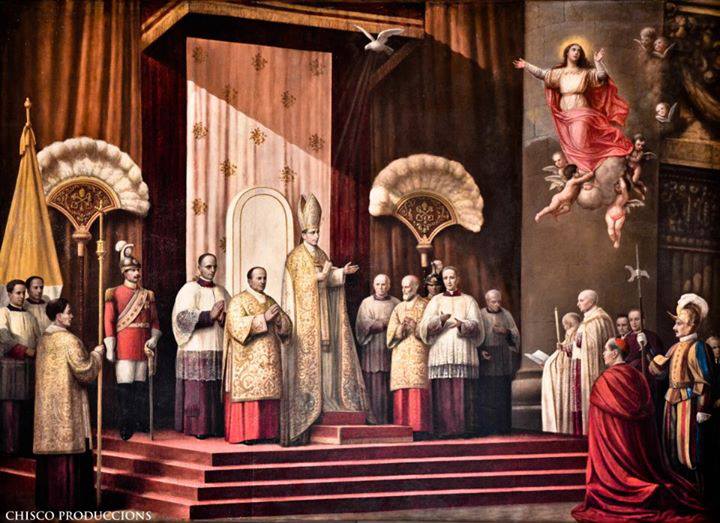
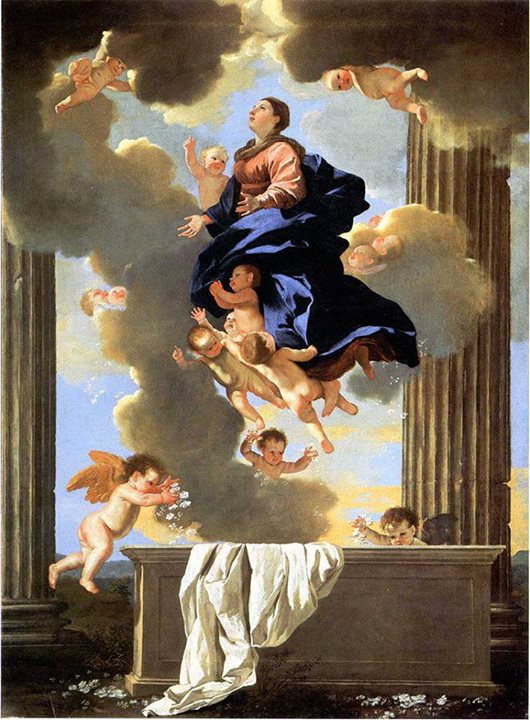
The Promulgation of the Dogma of the Assumption of the Blessed Virgin Mary into heaven in 1950 by Pope Pius XII

Image

The image of the scene when Pope Pius XII proclaimed the Dogma of the Assumption of the Blessed Virgin Mary into heaven in 1950, through his Apostolic Constitution ‘Munificentissimus Deus’ released on 1 November 1950.

This proclamation is made ‘ex cathedra’ or from the authority of the Seat of St. Peter as the Vicar of Christ, as a binding Church teaching, in conjunction with the tradition of the faith, of both the West and East, that the Blessed Virgin Mary, being the mother of our Lord and Saviour, Jesus Christ, who conquered death through His resurrection, did not die but was brought bodily into heaven.

563342_346600692139400_676496786_n

(Vigil) Wednesday, 14 August 2013 : Vigil Mass of the Solemnity of the Assumption of the Blessed Virgin Mary (Second Reading)

Liturgical Colour : White

1 Corinthians 15 : 54b-57

When our mortal being puts on immortality, the word of Scripture will be fulfilled : Death has been swallowed up by victory. Death, where is your victory? Death, where is your sting? Sin is the sting of death to kill, and the Law is what gives force to sin. But give thanks to God who gives us the victory through Christ Jesus, our Lord.

Wednesday, 14 August 2013 : 19th Week of Ordinary Time, Memorial of St. Maximilian Kolbe, Priest and Martyr (Scripture Reflection)

Liturgical Colour : Red

Dear brothers and sisters in Christ, today we listened to the word of God in the readings, in which we are told first of the greatness of God and His kindness and love for His people, in giving to His people, the full promise of His covenant by bringing them into the land promised onto them for possession, just as God had once promised Abraham, their forefather.

Today, we also listened to the end of Moses the great prophet and leader of God’s people, who acted as the conduit of God’s amazing power and brought Israel out of Egypt, through the miracles the Lord performed through Moses and his brother, Aaron. Moses was appointed to be tool through which God exercised His saving power on His beloved people. But Moses too had his flaws, and he disobeyed God in Massah and Meribah, when the people tested the Lord and complained against Him and Moses, His servant.

Through that disobedience, Moses was not allowed to enter the Holy Land, that Promised Land of Canaan, but he was indeed allowed to take a look of the land the people of Israel was about to enter, before the Lord took him into heaven into His presence at the end of his earthly life. Moses, as all men had, met the end of his life that is death. But as Christ had proven, that death is not the end, nor does it have any power over us, because, He had overcome death, and brought new life to all mankind, that is eternal life with God in heaven for those who remain faithful in God.

Although Moses had indeed gone, and no one was ever like him in this world, save for Christ, our Lord who had incarnated Himself as one of us, but there were many prophets that God had sent to His people to guide them from generations to generations. And then, our Lord Himself had commissioned His apostles, the disciples whom He had chosen, to be the new messengers and bearers of the will of God in this world. Yes, they were to be the leaders of the people of God, the shepherds of God’s beloved sheep, in the One, Holy, Catholic, and Apostolic Church He Himself had established and entrusted to the Apostles through Peter.

From the apostles, the authority of leadership of God’s people, as the divine shepherds, came down to bishops and priests throughout the generations, and eventually to our bishops and priests today, who minister to us and lead us in our path towards God, as our leader and guide. They are our role models and to be like Moses of old, when he led the people of Israel from the land of Egypt, to the Promised Land of Canaan.

And like Moses, our priests and bishops too have to deal with all kinds of problems, with our complaints and rejections of the Lord, that they really have much things to deal with in their hands. Yes, brothers and sisters in Christ, their job is not easy, and they always need our constant prayers and assistance. And one of the task that priests need to do is to bring peace and love between one another, just as we listened in the Gospel Reading today, of the need to reconcile between ourselves, between brethren and children of the same God.

Today, we mark the feast of one of those excellent priests of the Lord, the leader of God’s people, the true shepherd, the good shepherd of God’s flock. Yes, that is Saint Maximilian Kolbe, the well-known saint of the Holocaust of Nazi Germany during the World War II era. St. Maximilian Kolbe was a Polish Franciscan friar, who in his great zeal in the service of the Lord, and after witnessing the erosion of the faith in many, established the Militia Immaculata or the Army of Mary, a group intended to foster the love and devotion to the Lord through His mother Mary, and through the work, many people rejoined the Church and had their faith strengthened.

St. Maximilian Kolbe did much good works and service during his life and as a priest of the Lord. He truly became like Moses was for the people of Israel. He ministered to the people of God and through the Militia Immaculata, spread catechism and teachings of the Church to many people, bringing them closer towards the Lord and salvation, by means of printed media and publications such as newspapers and magazines. St. Maximilian Kolbe also went to Japan and established at Nagasaki in particular a base of operations, from where the good works of St. Maximilian Kolbe and his fellow workers spread to the people still in darkness.

St. Maximilian Kolbe protected many thousands of people including the Jews, when Nazi Germany invaded Poland at the beginning of World War II. He protected them from the cruelty of the Nazi holocaust policy, but in the end he himself was captured and imprisoned by the Germans. He was incarcerated in prison with many other people, suffering under very harsh treatment and hard labour in the Nazi concentration camp. Yet, he did not give in to despair, but he in fact encouraged his fellow inmates, singing hymns and saying the Mass for them.

St. Maximilian Kolbe was not obliged to do so, but he did so because of the faith and dedication he had for the Lord and for the people of God. He truly lived his faith and made it a concrete and living faith. One day, the Germans wanted to punish a few people in the prison, because it was found that someone had managed to escape the prison, and therefore these people had to suffer in the escaped prisoner’s place. One Polish military officer who was imprisoned was chosen to be among the ones to suffer death. His pleas for mercy because he had a wife and children brought the attention of St. Maximilian Kolbe, who offered himself in exchange for the man, that is to die in his place instead.

The example of St. Maximilian Kolbe is truly praiseworthy, brothers and sisters in Christ, because through his death, much had been achieved. Yes, his death was not a waste, but it has brought much fruits, that is the fruit of love, the fruit of one’s selfless act of sacrifice, for the love of his fellow men. St. Maximilian Kolbe exemplified the very words of Christ, on who is a true and good shepherd, that is someone who love fully those who had been entrusted to him, his friends and loved ones, and one who even would die for the sake of his friends. That was what St. Maximilian Kolbe had done with his sacrifice for the poor soldier and indeed, our Lord Jesus Christ Himself had done for all of us out of His love.

Yes, brothers and sisters in Christ, we all ought to emulate the example of St. Maximilian Kolbe in our own lives, in our giving of ourselves to our brethren in need. We can do it in a variety of ways, but basically we have to be ready to give our all for our brethren’s sake. As importantly as this, let us support our priests and those who have been appointed as shepherds over us, that they will remain faithful to the mission they have been appointed to, and faithful to the people and the flock they have been entrusted with, just as St. Maximilian Kolbe and many other great saints and martyrs had done.

May the Lord bless us, our priests, and our Church, and may through the intercession of St. Maximilian Kolbe and all the saints, more souls will find their way to heaven, and may in this world that we live in today, justice and peace can be held up ever better, and may the innocent and the weak ones be protected from harm, injustice, and evil. God bless us all. Amen.

Sunday, 11 August 2013 : 19th Sunday of Ordinary Time (Second Reading)

Liturgical Colour : Green

Hebrews 11 : 1-2, 8-19

Faith is the assurance of what we hope for, being certain of what we cannot see. Because of their faith our ancestors were approved.

It was by faith that Abraham, called by God, set out for a country that would be given to him as an inheritance; for he parted without knowing where he was going. By faith he lived as a stranger in that promised land. There he lived in tents, as did Isaac and Jacob, beneficiaries of the same promise. Indeed, he looked forward to that city of solid foundation of which God is the architect and builder.

By faith Sarah herself received power to become a mother, in spite of her advanced age; since she believed that he who had made the promise would be faithful. Therefore, from an almost impotent man were born descendants as numerous as the stars of heavens, as many as the grains of sand on the seashore.

Death found all these people strong in their faith. They had not received what was promised, but they had looked ahead and had rejoiced in it from afar, saying that they were foreigners and travellers on earth. Those who speak in this way prove that they are looking for their own country. For if they had longed for the land they had left, it would have been easy for them to return, but no, they aspired to a better city, that is, a supernatural one; so God, who prepared the city for them is not ashamed of being called their God.

By faith Abraham went to offer Isaac when God tested him. And so he who had received the promise of God offered his only son although God had told him : Isaac’s descendants will bear your name. Abraham reasoned that God is capable even of raising the dead, and he received back his son, which has a figurative meaning.


Alternative reading (Shorter version)


Hebrews 11 : 1-2, 8-12

Faith is the assurance of what we hope for, being certain of what we cannot see. Because of their faith our ancestors were approved.

It was by faith that Abraham, called by God, set out for a country that would be given to him as an inheritance; for he parted without knowing where he was going. By faith he lived as a stranger in that promised land. There he lived in tents, as did Isaac and Jacob, beneficiaries of the same promise. Indeed, he looked forward to that city of solid foundation of which God is the architect and builder.

By faith Sarah herself received power to become a mother, in spite of her advanced age; since she believed that he who had made the promise would be faithful. Therefore, from an almost impotent man were born descendants as numerous as the stars of heavens, as many as the grains of sand on the seashore.