
(Usus Antiquior) Feast of Dedication of St. Michael the Archangel (I Classis) – Monday, 29 September 2014 : Homily and Scripture Reflections

Dear brothers and sisters in Christ, today we celebrate the great feast of a great protector, our great defense against the assaults of the evil one, Satan, the prince and progenitor of all evils. We celebrate today the feast of the chief of all the angelic hosts of heaven, that is St. Michael the Archangel, prince of all the angels, and chief of the seven Archangels who served before the throne of God.

The angels were created by the Lord to be His servants, that is to be the ones who carry out His will throughout the world, to be His messengers and the bearers of His good works, to exercise His power throughout the universe He had created. He created angels of many forms and kinds, and they have various tasks and functions, depending on how they were created.

Just like men, when we were first created, the angels were initially pure and blameless, free from what is now called as sin, the impurities and imperfections that blemished the purity of creation, through disobedience against the will of God. The angels too, were granted free will just like us, so that, just as we are able to choose our path and destination in life, then they too were able to choose.

But everything was good and perfect, just as our ancestors once lived in perfect peace and harmony in the gardens of Eden, the angels were all pure and immaculate, free from all evil and taints of sin, that is until the corruption and fall of Lucifer, the greatest, brightest and the mightiest of all the angels, and unfortunately, his pride too was the greatest of all the angels, his vanity and sense of superiority over others, which proved to be his greatest undoing.

While now we speak of St. Michael the Archangel as the chief of all the heavenly hosts, he was not made such because of his greatness and his power or might, neither it was because he was the most beautiful or splendid among the angels of God. It was rather because of St. Michael’s great obedience and faith in the Lord, which made him to be the greatest defender of the Lord and His beloved people against the forces of evil.

For as mentioned, that Lucifer was once the greatest and the mightiest among the angels, but this made him proud beyond any pride, and he began to plot his rise among the angels, and eventually even boasted that he would make his throne rise above the stars of God, namely the angels, to be the ruler of them, and displacing God as the ruler over all creations.

Lucifer was proud and haughty, and he was brought down, because he was thinking too highly of himself, aspiring to be the ruler of all surpassing the Creator, while he is merely a creation, albeit a glorious and great one at that. On the contrary, St. Michael was known for his great faith and piety, and the complete trust he has for the Lord. And in addition to this, he was also told to be trembling at always before the presence of God.

This does not mean that St. Michael was fearful or weak, but rather, in doing so, he actually by himself acknowledging the superiority of God, and how great God is as compared to himself. It is his humility, courage and piety which made the Lord to choose him and honour him to be the great commander of His heavenly forces. And he courageously led the forces of the faithful against the deceiver and the evil one, the fallen Lucifer, who was struck down and cast out of heaven, to suffer for eternity the fate prepared for him.

The examples of St. Michael’s faith, piety, dedication and courage therefore should become guiding lights for us to follow, that in our actions and deeds, we may model them after what St. Michael had once done, and what he is doing now, that is leading the hosts of the Lord in a constant and regular battle for the salvation of our souls, against Satan, the fallen Lucifer, and his allies, those angels who were also ensnared in his pride and vanity, and ended up rebelling against God.

We mankind are special indeed, for we are the greatest of God’s creations, including even the angels, and we are the most beloved ones of all the things which God had created. As such, while the angels who rebelled were given no second chance to turn back to the Lord, and receive forgiveness, we mankind alone had been given this gift of forgiveness, that as long as we repent our sins and rebelliousness, and if we are willing to follow the way of the Lord, we will be saved.

That is why, even though our ancestors had disobeyed the Lord, through the instigation of the snake, the form assumed by the fallen Lucifer, who wanted mankind to also follow into his rebellion, God gave us a second chance, and by no other means than to send His very own Son, part of Himself, Jesus Christ our Lord, to assume our own form, and through what He had done, He gave up His life and through His sacrifice, gained for us a new hope and a new justification in Himself.

And we also have to note that the Lord is thoroughly concerned with us, brothers and sisters in Christ. He is truly concerned about our fate, and whether we will share the fate of the devil, that is to suffer in the hell fire, or to be reunited with Himself in perfect love and harmony, just as what He intended for us at the very beginning when He first created us.

That is why, He sent us Jesus His Son, so that through what He taught His disciples, and from them passed down to us, we may all know what we need to do in order to avoid the dark fate which awaits us if we remain in our life of sin. But we need to be aware that, what Jesus said today in the Gospels, we should not interpret or take it literally, which means that if a part of our body made us to sin, then we should not chop it off just like that.

There is indeed wisdom and thought put into that kind of decision, to cut off the part that corrupts the entire body and soul, but that also means that we can no longer do good with the same part of the body, which God had given us. This is where we need to truly understand, that what the Lord means is that, we have to really do our best to excise from ourselves any actions or parts which have been great hindrances to our salvation, beginning from within ourselves.

Sin corrupts everything it touches, my dear brothers and sisters in Christ, and it is caused by the accumulation of the negativity in our hearts, of which things such as pride, jealousy, hatred, greed and many others consist of. And it was this same thing that had corrupted even the greatest and the brightest of the angels into rebellion against God and therefore sinned against Him.

Brothers and sisters in Christ, therefore let us renew our faith in the Lord, not by just mere empty words and promises, but also through real action and devotions, that is by following the examples of St. Michael the Archangel. Let us excise from our hearts, all evils and darkness, that we may truly become pure and worthy of the Lord once again. We can do this by sincere love and devotion to the Lord, and by listening to what He had said to us through Jesus.

Therefore, brothers and sisters in Christ, let us all sharpen the edges of our humility and obedience to God, that we may always listen to Him and follow Him, obeying Him in His will for us rather than to listen to our own desires and pride, as Lucifer had done. Let us all not be enslaved by our emotions and pride, that we may truly rebuke Satan and let him to suffer alone the fate which he had earned for himself. Do not let him to drag us into hellfire, brethren!

Let us pray and ask for the help and intercession of St. Michael the Archangel and the holy angels, so that they may help us and protect us from all the harm which the evil one and his allies, the fallen angels had intended for us. St. Michael the Archangel, defend us in battle, so that by the power of God, you who are the prince and leader of all the heavenly hosts, may smite down Satan and all his lies, and all those who are working their evils in our world, seeking after the ruination of all the souls of the faithful. Amen.
(Usus Antiquior) Feast of Dedication of St. Michael the Archangel (I Classis) – Monday, 29 September 2014 : Holy Gospel

Sequentia Sancti Evangelii secundum Matthaeum – Continuation of the Holy Gospel according to St. Matthew

Matthew 18 : 1-10

In illo tempore : Accesserunt discipuli ad Jesum, dicentes : Quis, putas, major est in regno caelorum? Et advocans Jesus parvulum, statuit eum in medio eorum et dixit : Amen, dico vobis, nisi conversi fueritis et efficiamini sicut parvuli, non intrabitis in regnum caelorum.

Quicumque ergo humiliaverit se sicut parvulus iste, hic est major in regno caelorum. Et qui susceperit unum parvulum talem in nomine meo, me suscipit. Qui autem scandalizaverit unum de pusillis istis, qui in me credunt, expedit ei, ut suspendatur mola asinaria in collo ejus, et demergatur in profundum maris.

Vae mundo a scandalis! Necesse est enim, ut veniant scandala : verumtamen vae homini illi, per quem scandalum venit! Si autem manus tua vel pes tuus scandalizat te, abscide eum et projice abs te : bonum tibi est ad vitam ingredi debilem vel claudum, quam duas manus vel duos pedes habentem mitti in ignem aeternum.

Et si oculus tuus scandalizat te, erue eum et projice abs te : bonum tibi est cum uno oculo in vitam intrare, quam duos oculos habentem mitti in gehennam ignis. Videte, ne contemnatis unum ex his pusillis : dico enim vobis, quia Angeli eorum in caelis semper vident faciem Patris mei, qui in caelis est.

English translation

At that time the disciples came to Jesus, saying, “Who do You think, is the greater in the Kingdom of Heaven?” And Jesus calling unto Him a little child, set him in the midst of them, and said, “Amen, I say to you, unless you be converted, and become as little children, you shall not enter into the Kingdom of Heaven.”

“Whosoever therefore shall humble himself as this little child, he is greater in the Kingdom of Heaven, and he who shall receive one such little child in My Name, receive Me also. But he who shall scandalise one of these little ones who believe in Me, it is better for him that a millstone should be hanged about his neck, and that he should be drowned in the depth of the sea.”

“Woe to the world because of scandals, for it needs be that scandals come, but nevertheless to the man by whom the scandal came. And if your hand, or your foot, cause scandal to you, cut it off, and cast it from you. It is better for you to go into life maimed or lame, than having two hands or two feet, and cast into everlasting fire.”

“And if your eyes scandalise you, pluck it out, and cast it from you. It is better for you to have one eye to enter into life, than to have two eyes and be cast into hell fire. See that you do not despise one of these little ones, for I say to you, that their angels in Heaven always see the face of My Father who is in Heaven.”

Tuesday, 23 September 2014 : 25th Week of Ordinary Time, Memorial of St. Pius of Pietrelcina (Padre Pio) (Psalm)

Liturgical Colour : White

Psalm 118 : 1, 27, 30, 34, 35, 44

Blessed are they whose ways are upright, who follow the law of the Lord.

Explain to me all Your ordinances, and I will meditate on Your wondrous deeds.

I have chosen the way of truth; I have set my heart upon Your laws.

Give me understanding, that I may observe Your law with all my heart.

Guide me in obeying Your instructions, for my pleasure lies in them.

May I always keep Your word forever and ever.

Tenth Anniversary of Holy Sacrament of Baptism : My Profession of Faith

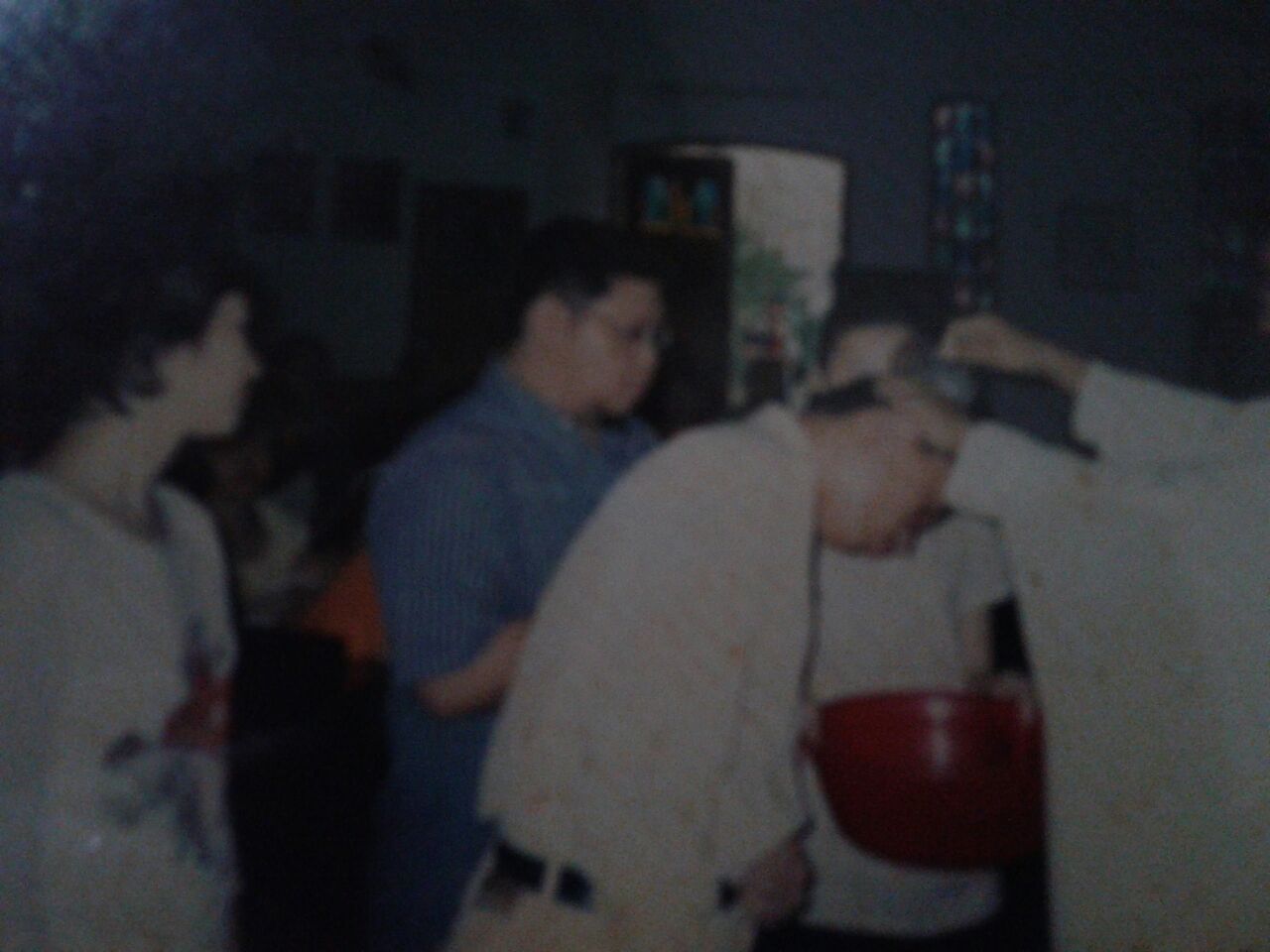
Friday, 19 September 2014 marked the exact ten years since I received the Holy Sacrament of Baptism on Sunday, 19 September 2004.

With this, I renewed my profession of faith before the Holy Gospels, and I ask that all of you will pray for me, that I will continue to grow stronger and deeper in faith, in hope and in love.

IMG-20140919-WA004

‘I baptise you in the Name of the Father, the Son and the Holy Spirit’


IMG-20140919-WA000

‘The almighty God, Father of our Lord Jesus Christ, has caused you to be born over again of water and the Holy Spirit and pardoned you all your sins. May He now anoint you with the chrism that sanctifies in Christ Jesus our Lord, and bring you to everlasting life.’


IMG-20140919-WA001

‘Take this burning candle as a reminder to keep your baptismal innocence. Obey God’s commandments, so that when our Lord comes for the joyous wedding feast you may go forth to meet Him with all the saints in the halls of heaven, and be happy with Him forevermore.’

Wednesday, 17 September 2014 : 24th Week of Ordinary Time, Memorial of St. Robert Bellarmine, Bishop and Doctor of the Church (Homily and Scripture Reflections)

Liturgical Colour : Green or White (Bishops)

Brothers and sisters in Christ, today we heard how the world ridiculed and doubted Christ, our Lord and Saviour, having their own set of prejudices and judgments that they applied to the actions of Jesus Christ and His disciples, as we obviously can see throughout the Gospels, where the world, represented by the Pharisees and the elders of Israel, who were always opposed to the actions of our Lord.

And in the first reading today, in the letter written by St. Paul to the faithful and the Church in Corinth, St. Paul reminded the people of the three greatest virtues and fruits of the Holy Spirit, that is faith, hope and love, and that the people of God should uphold all these values in their lives and stick closely to the precepts of the Lord, abandoning all pretexts of falsehoods and evil in their hearts.

We often lack sight of what is truly important in our lives. We are often distracted by many things in our lives, to the point that we end up focusing on the things that are less important and in fact which may disrupt and distract our attention from the true treasures of our lives. These treasures are indeed faith, hope and love as mentioned, which are the greatest gifts from God to mankind.

It was mentioned by St. Paul that acts without love, faith without love, acts without faith and hope are meaningless, as shown through the example of even the possessions of the gifts and talents of the Holy Spirit are meaningless without love, and without the other virtues mentioned. This means, whatever other talents and abilities we have, if we do not use them in tandem with the virtues we ought to have, then our actions do not bring justification and benefit for ourselves.

Compare this to the popular practice in many ‘evangelical’ and ‘charismatic’ movements and ‘churches’ around the world, of which not few are in fact within our own Church, that is the practice of speaking in tongues, as if the whole congregation is suddenly filled with the Holy Spirit as per the day of the Pentecost, when the Holy Spirit descended upon the Apostles.

The conduct of such activity is meaningless, although many in the world today are in awe of such an occurrence. I would say that, when they do such actions, what is first in their mind is not God or His praise, but rather themselves, as they glorified themselves by doing so, and they revel in the satisfaction of such action. But without faith and love, those actions and others are truly empty and nothing before God.

And also for the heretics who believed and indeed still believe today, that salvation can be achieved through faith alone, and that the faith constitutes what had been written in the Bible and the Scriptures alone are wrong. They failed to realise that first, faith alone is insufficient to attain salvation for our souls. Faith is nothing without hope and without love, and so neither is hope anything without faith and love, and lastly, love without hope and faith is also meaningless.

We ought to have all these three virtues working together in tandem within us, that our actions may be truly blessed and be gracious, and we ourselves justified in the eyes of the Lord. We cannot separate the three virtues of faith, hope and love without making each of them meaningless and useless, and in fact may even bring harm to ourselves and others around us.

Why is this so, brothers and sisters in Christ? Why mankind even have so much trouble so that St. Paul had to remind even the faithful through his letter? That is because, mankind are bound and prone to their own self-glorification and self-praise, and this is also the reason for the various doubts that the people of God, and the various standards they employed against the prophets and the Lord Himself as we heard in the Gospel today.

Mankind are very difficult to please and satisfy, and even after their needs and wants have been satisfied, it is very common for us to demand even more and want even more. That is why, as Jesus mentioned, that mankind are never satisfied and they will always complained against whatever is around them, just as they had complained against Jesus our Lord Himself.

Thus, all of us should and indeed must anchor ourselves on the three great virtues of the Lord, that is faith, hope and love, which seeds have been placed in our hearts and our souls. But as mentioned, that these are just seeds. If we do nothing to cultivate the faith, hope and love in us, then we are nothing more than just an empty shell, even with all of our talents and virtues.

Why faith? That is because faith is what anchored us in the Lord, in His laws and precepts. We have faith because we believe in the Lord, and we adhere closely to Him and His ways, so that we can live according to His will, and from there gain righteousness and justification. But faith without hope and without love is meaningless, as it means a selfish faith, that is nonsense. Our faith must be complemented by care for our brethren, both through our genuine concern and love for them, practicing what we have been taught by the Lord, and also through our efforts at evangelisation to them.

And why hope? That is because hope is what keeps us going even amidst despair and darkness. And hope itself is intertwined with faith, as faith without hope is also nonsense. We believe in our Lord Jesus Christ, who has died for us on the cross and who has risen from the dead in glory, and through that resurrection, He brought us new hope in Himself, that is a hope of liberation from sin and the promise of eternal life. This is an integral part of our faith, and it cannot be said that we have faith if we do not believe in this hope.

And lastly, why love? That is because love is the most important of all these virtues, and ultimately is the one that makes all things good and possible. Love allows us to care for one another, and also for us to seek our God who had first shown us the example of what love truly is. Love helps us to have that focus and application for the faith and hope within us. We believe in the Lord, who is love Himself, and through whose love He had brought us to Himself. And then through hope, we have hope in Christ and His love, that He is willing to save us from death and grant us a new, eternal life.

Today, we also celebrate the feast of St. Robert Bellarmine, whose life and works clearly indicated the adherence to this teaching of Christ, in having his life and works founded on strong foundation of faith, of hope and of love. St. Robert Bellarmine was a Cardinal of the Holy Roman Church and one of the pillars of the defense of the Church through his active role and participation in the application of the decrees of the Ecumenical Council of Trent, in what is known as the Counter-Reformation, in the efforts against the Protestant heresy.

St. Robert Bellarmine was an intelligent and devout follower and servant of Christ, who dedicated his life in a faithful and loving service of our Lord Jesus Christ. St. Robert Bellarmine wrote numerous writings and other works on the matter of the faith, and he was renowned for his great works in the defense of the true faith, condemning falsehoods and heresies and reestablished many aspects of the faith in the Church through his various works.

He rose quickly through the Church hierarchy, and eventually was made a Cardinal of the Holy Roman Church. Nevertheless, he remained humble and devoted to his works, if not even more devoted and zealous in delivering the salvation of God to countless souls. Through his dedication, works and even through the power of his mind and pen, he had brought many of the faithful to be reawakened to the true faith in them, one that is not tainted by human pride and emotions as that of the heretics, and one that is lived out well through loving acts and filled with hope in the Lord.

Therefore, brothers and sisters in Christ, following the examples of St. Robert Bellarmine and many other holy saints, today let us all reflect on these words of the Scriptures and the Holy Gospels, that we may grow stronger in our faith, grow deeper in our hope, and grow more gentle and dedicated in our love. Let us all dedicate ourselves more to the works of charity in our world and society. That we may indeed live out our faith, that our faith will not be just merely imaginary and a formality, but a real and living faith for the benefit of ourselves and all those around us. God bless us all. Amen.

Wednesday, 17 September 2014 : 24th Week of Ordinary Time, Memorial of St. Robert Bellarmine, Bishop and Doctor of the Church (First Reading)

Liturgical Colour : Green or White (Bishops)

1 Corinthians 12 : 31 – 1 Corinthians 13 : 13

Be that it may, set your hearts on the most precious gifts, and I will show you a much better way.

If I could speak all the human and angelic tongues, but had no love, I would only be sounding brass or a clanging cymbal. If I had the gift of prophecy, knowing secret things with all kinds of knowledge, and had faith great enough to remove mountains, but had no love, I would be nothing.

If I gave everything I had to the poor, and even give up my body to be burnt, if I am without love, it would be of no value to me. Love is patient, kind, without envy. It is not boastful or arrogant. It is not ill-mannered nor does it seek its own interest. Love overcomes anger and forgets offenses.

It does not take delight in wrong, but rejoices in truth. Love excuses everything, believes all things, hopes all things, endures all things. Love will never end. Prophecies may cease, tongues be silent and knowledge disappear. For knowledge grasps something of the truth and prophecy as well.

And when what is perfect comes, everything imperfect will pass away. When I was a child I thought and reasoned like a child, but when I grew up, I gave up childish ways. Likewise, at present we see dimly as in a mirror, but then it shall be face to face. Now we know in part, but then I will know as I am known.

Now we have faith, hope and love, these three, but the greatest of these is love.

Sunday, 7 September 2014 : 23rd Sunday of Ordinary Time (Homily and Scripture Reflections)

Liturgical Colour : Green

Dear brothers and sisters in Christ, as we come together to be with the Lord on this holy day of His, we are called together as the members of the Church of God to be responsible, loving and caring for one another, so that each one of us may help one another in our effort to seek our Lord and God, and so that all of us may be saved and be freed from the tyranny of sin.

Brothers and sisters in Christ, the Scripture readings of this day called us to ponder and reflect on the attitude we adopt in this life, and in how we live our faith in this life. Mankind are by nature a social creature, and we often need others around us as we live and as we face the daily challenges and opportunities presented before us, and how we behave would certainly be greatly affected by who we interacted with and what we did together with others around us.

That is why today in the readings, the main theme that we heard is in fact on the nature of the Church, and on how the Church should work together to ensure the salvation of all of its members, that means all of us gathered here this day, and also many others who have fallen along the way. The Church here does not refer to just the buildings and the institution of the Church as we know it. The Church of God as a whole, is the assembly and the gathering of all the faithful ones in Christ, united to His Body, as a member of the same Body by which we are made one, and made righteous in the Blood of the Lamb of God.

That is why in the Church, the whole Church refers to the entire body of the faithful, all over the world, from the greatest to the least, from the Pope to the common layman, from the ordained ministers and the religious brothers and sisters to all common faithful ones like us, and from the youngest ones to the oldest, and both the newly baptised and those who had been long counted among the faithful.

Following the tradition and teachings established by Jesus as we read in the Gospel today, the Church indeed rightly should be concerned on the fate of the faithful and the salvation of their souls. Why is this so? This is because mankind are by nature disobedient, restless and easily manipulated, and we are also easily tempted by our own personal ego, pride and other emotions, which in many cases likely resulted in us drifting away further and further from God and into damnation.

That was why over the course of the past two millenia, since the establishment of the Church and the faith, countless peoples have tried to subvert the faith and to corrupt it to suit their own purposes. And worse still, they did so not just for themselves, but they also spread their false ideas and teachings to many others around them and thus condemning and risking not just themselves, but also many others who are around them and even those entrusted to their care.

Among these could be counted the ranks of princes, kings, lords, even priests, bishops and the top hierarchy of the Church at times, and also among the laity, the educated, the rich and the poor. What they have thought about, spoke about and taught about were incompatible to the faith and what Jesus had taught to His disciples. In time, the Church came up with varieties of words to describe their actions, that is anathema, heresy and many others.

Those who studied the history of the Church and the faith must have been surprised by the staggering number of times the punishment and measure known best as excommunication, had been used. And in fact, excommunication remains to be used this day to correct the behaviour and awaken the spirit of repentance of those whose ideas and teachings are in direct or indirect contradiction to the faith and to the teachings of the Church.

Many detractors of this measure had argued and even became violently opposed to the actions of the Church both in the past and in the present, so that they criticised the use of excommunications as a tool to remove opposition to the Church and to gain more influence for itself. And some even alleged that the Church used them to silence the voice of those who wanted for reform or change in the Church.

Yes, it is true indeed that sometimes, excommunication had been used inappropriately, but in most cases, they have been intended not to punish, but to awaken the spirit of repentance and genuine desire to seek forgiveness from the Lord, which is that desire to admit their errors and return to the full embrace of the loving God through His Church.

We have to first understand the history of how excommunication come about, using what we know from the Scriptures and from what we heard today in the readings, especially from what Jesus mentioned in the Gospel today. In the past, during the time of the people of Israel, after the Exodus, God gave them His laws, commandments and precepts through Moses.

In that Law, some dealt with how certain people should be treated. Those who were found to have the disease of leprosy were obliged to leave their houses and the community of the faithful, and they have to wander outside the community, in the barrens and the desert until they are healed or cured. And when this was so, they had to show themselves to the priests who would certify them to return once more to the society.

Indeed, it was inevitable that those who contracted leprosy at that time to be ostracised and intimidated against by the rest of the society. They were considered to be uncleaned and as leprosy can spread from one person to another, this helped the exclusion and the bad treatment of the leprosy patients, even after they had been cured from their afflictions. But God did not intend for this to happen.

And in a similar spirit, the Lord Jesus told us through His disciples precisely how to deal with those among us in the Church who had contracted the same ‘leprosy’. This leprosy no longer refers to the physical disease that affects the body, but in fact refers to the leprosy of the soul, that is the degeneration of the state of our faith and soul to the point that we become defiant and unwilling to listen and to obey the teachings of the Church and the fundamentals of our faith.

We have many peoples such as these, and what I am going to mention to you are not the only ones there are out there. The Gnostics of the second century after the birth of Christ mixed the teachings of the faith with the contemporary pagan religions, idols and philosophical pursuits that ended up as a syncretic movement and faith totally incompatible with our true faith.

Then came the Arians, the Donatists, the Monophysites and others who taught doctrines incompatible against the faith, and who tried to subvert the faithful to their cause, telling them lies and inaccurate statements about the faith, on the nature of Jesus our Lord Himself, so that the people who were confused were easy to lure into their corrupting hold. As such, many were led away from salvation in God and into damnation, despite the best efforts by those in the Church to resist and fight back against their corrupting influences.

Then we have many others like the the Albigensians or the Cathars, the Hussians, the Bogomils, Paulicians, Iconoclasts who taught numerous lies and confused theology to the faithful, ending up in corrupting the people in the same way, pulling them away from salvation in the Church into damnation and eternal suffering in hellfire. Those people were misguided by many who thought that their human wisdom were better than the teachings of the Lord preserved in the traditions of the Church and the faith.

Then lastly came the great heresy of the Protestant ‘reformation’, where many of the faithful came to take it on themselves to rebel against the authority of the Church and by willingly splitting themselves from the Church, a rebellion which continues even to this day. Yes, we have so many Protestant denominations, to the point that it may not be wrong to say that there are as many denominations, or splinter groups as there are heads.

People like King Henry VIII, Martin Luther, John Calvin, Zwingli and many other prominent persona of the Protestant ‘reformations’ like many others before them, Arian, Jan Hus, and others were truly the one mentioned by Jesus as the brethren who refused to listen to reason and chose to break away from the Church. They walked their own path, in open rebellion against God and the Church, leading and guiding many people into their rebellion and thus condemned countless souls to damnation.

The effects of their actions can still be felt today. Many remained separate from the Church and thus from the grace of God, and the lies perpetuated by those leaders mentioned earlier and their successors continued to poison their thoughts and that is why many remained with great contempt to the Church and all it represented.

The Church excommunicated them as well as many of the earlier members of the Church, who even included high ranking nobles and clergymen, and even kings, as they have erred in their path. However, as I have mentioned earlier, the purpose of this move was not to punish those afflicted, but rather to make them realise of the gravity of their errors, so that they may come to understand how their actions had caused grief wounds on the fabric of the Church and the faithful.

And thus, many of those who had been excommunicated had returned to the Church in penitence and seeking God’s forgiveness. A famous example would be that of the excommunication of Emperor Theodosius I of the Roman Empire, who was cut off from the communion of the Church by the famous St. Ambrose, the Bishop of Milan, for the Emperor’s implicit and direct role in a massacre of the city of Thessalonica, where thousands of the faithful were ruthlessly murdered and the city ransacked.

The meaning of excommunication itself was to exclude the person afflicted from the Communion of the Church, and if this word sounds familiar, that is indeed what we receive in the Holy Communion, which is none other than the Most Precious Body and Blood of our Lord Jesus Christ, in the Real Presence of the Most Holy Eucharist. All of us in the Church belongs to the Church, that is the Body of Christ precisely because all of us received the same Eucharist and thus are united to each other through our unity with the Lord.

And when a person is excommunicated, like that of the Emperor Theodosius and many others, they were severed from this unity and communion, and thus they were not able to receive the Eucharist, as they were also in a state of sin, and they were not able to exercise anything pertinent to the faith. Thus, that was why Jesus mentioned that those ought to be treated like a pagan or a publican, that means outside the Church, just like the lepers of old.

However, once again, the focus here is on mercy, and on the desire to see these people attaining forgiveness and justification, becoming once again a member of the Church and thus capable of attaining salvation once again. And to wrap up the story on the Emperor Theodosius, the Emperor went on to make a public display of humility and penance, wearing sackcloth to the Church and was once again welcomed into the Church by Bishop St. Ambrose.

That is, brothers and sisters in Christ, the purpose and intention of excommunication. Not as a punishment, but as a means through which the wayward ones and the staunchly rebellious among us may find our way back to God through the Church, through sincere repentance and penitence. Sadly, of course, many of those names and groups mentioned earlier never repented their sins and continued in their rebellions, some of which continued even today.

Therefore, brothers and sisters in Christ, as we reflect on these readings of today, let us recall the words of God to the prophet Ezekiel, how the faithful are tasked with the guardianship of the faith of one another, which means that we should be ready to intervene whenever we see around us there are those who begin to veer away from the path of the Lord.

It is only then if the person persisted in their rebelliousness, then we should refer it to the Church as a whole, and if he or she continued to persist to disobey the Lord, only then they should be cast out of the assembly of the faithful, in what we know as the excommunication, hoping that the person may in that time that remains for him or her, found his or her way back to the Lord and repent.

Brothers and sisters in Christ, let us all therefore work together to maintain the unity and the faith in the Church. May Almighty God guide us in our endeavours and help us to keep this faith alive and well. Let us all renew our commitment to the Lord and awaken in one another the love we truly should have for God, casting away all impurities and unworthiness. Let us all not reject and condemn those who have sinned and erred, and those who had been excommunicated, for indeed, many saints too were once sinners and excommunicants, who returned to the Lord and be reconciled with the Church. May God bless us all. Amen.

Thursday, 4 September 2014 : 22nd Week of Ordinary Time (Gospel Reading)

Liturgical Colour : Green

Luke 5 : 1-11

One day, as Jesus stood by the Lake of Gennesaret, with a crowd gathered around Him listening to the word of God, He caught sight of two boats, left at the water’s edge by fishermen, now washing their nets. He got into one of the boats, the one belonging to Simon, and asked him to pull out a little from the shore. There He sat and continued to teach the crowd.

When He had finished speaking, He said to Simon, “Put out into deep water and lower your nets for a catch.” Simon replied, “Master, we worked hard all night and caught nothing. But if You say so, I will lower the nets.”

This they did, and caught such a large number of fish that their nets began to break. They signalled their partners in the other boat to come and help them. They came, and they filled both boats almost to the point of sinking.

Upon seeing this, Simon Peter fell at Jesus’ knees, saying, “Leave me, Lord, for I am a sinful man!” For he and his companions were amazed at the catch they had made, and so were Simon’s partners, James and John, Zebedee’s sons.

Jesus said to Simon, “Do not be afraid. You will catch people from now on.” So they brought their boats to land and followed Him, leaving everything.

Thursday, 4 September 2014 : 22nd Week of Ordinary Time (Psalm)

Liturgical Colour : Green

Psalm 23 : 1-2, 3-4ab, 5-6

The earth and its fullness belong to the Lord, the world and all that dwell in it. He has founded it upon the ocean and set it firmly upon the waters.

Who will ascend the mountain of the Lord? Who will stand in His holy place? Those with clean hands and pure heart, who desire not what is vain.

They will receive blessings from the Lord, a reward from God, their Saviour. Such are the people who seek Him, who seek the face of Jacob’s God.

Thursday, 4 September 2014 : 22nd Week of Ordinary Time (First Reading)

Liturgical Colour : Green

1 Corinthians 3 : 18-23

Do not deceive yourselves. If anyone of you considers himself wise in the ways of the world, let him become a fool, so that he may become wise. For the wisdom of this world is foolishness in God’s eyes. To this, Scripture says : “God catches the wise in their own wisdom.” It also says : “The Lord knows the reasoning of the wise, that it is useless.”

Because of this, let no one boast about human beings, for everything belongs to you, Paul, Apollos, Cephas – life, death, the present and the future. Everything is yours, and you, you belong to Christ, and Christ is of God.