New Cardinals and their assigned Churches in Rome, Consistory of 22 February 2014

On the Feast of the Chair of St. Peter, on Saturday, 22 February 2014, the Vicar of Christ and Bishop of Rome, Leader of the Universal Church, Pope Francis elevates 19 new Cardinals to the Cardinalate by the bestowal of the red biretta, 15 of which are of the order of priests (Cardinal Priests) and 4 of which are of the order of deacons (Cardinal Deacons).

3 of the new Cardinals are non-electors, being above the age of 80, appointed purely as honorary Cardinals for their service to the Church, and the other 16 Cardinals are voting-age Cardinals (below 80), and will be eligible to vote for the next Pope in the next Conclave until they reach the age of 80.

The College of Cardinals now stands at 218 members, with 122 Cardinal-electors and 96 Cardinal non-electors as of 22 February 2014.

In total, 2 new Cardinal churches in Rome are created, 1 for Cardinal Titular church and 1 for Cardinal deaconry.There are as of now, 0 vacant Cardinal Title, and 6 vacant Cardinal Deaconries.


Cardinal Deaconries :

1. Pietro Cardinal Parolin, Cardinal Secretary of State

Cardinal Deaconry of Ss. Simone e Giuda Taddeo e Torre Angela (New Deaconry)


2. Lorenzo Cardinal Baldisseri, Secretary of the Synod of Bishops and College of Cardinals

Cardinal Deaconry of S. Anselmo all’Aventino


3. Gerhard Ludwig Cardinal Muller, Prefect of the Congregation for the Doctrine of the Faith

Cardinal Deaconry of S. Agnese in Agone


4. Beniamino Cardinal Stella, Prefect of the Congregation for Clergy

Cardinal Deaconry of Ss. Cosma e Damiano


Cardinal Titles :

1. Vincent Gerard Cardinal Nichols, Metropolitan Archbishop of Westminster (UK)

Cardinal Title of Ss. Redentore e S. Alfonso in Via Merulana


2. Leopoldo Jose Cardinal Brenes Solorzano, Metropolitan Archbishop of Managua (Nicaragua)

Cardinal Title of S. Gioacchino ai Prati di Castello


3. Gerald Cyprien Cardinal Lacroix, Metropolitan Archbishop of Quebec (Canada)

Cardinal Title of Giuseppe all’Aurelio


4. Jean-Pierre Cardinal Kutwa, Metropolitan Archbishop of Abidjan (Ivory Coast/Cote d’Ivoire)

Cardinal Title of S. Emerenziana a Tor Fiorenza


5. Orani Joao Cardinal Tempesta, Metropolitan Archbishop of Sao Sebastiao do Rio de Janeiro (Brazil)

Cardinal Title of S. Maria Madre della Provvidenza e Monte Verde


6. Gualtiero Cardinal Bassetti, Metropolitan Archbishop of Perugia-Citta della Pieve (Italy)

Cardinal Title of S. Cecilia


7. Mario Aurelio Cardinal Poli, Metropolitan Archbishop of Buenos Aires (Argentina)

Cardinal Title of S. Roberto Bellarmino


8. Andrew Cardinal Yeom Soo-jung, Metropolitan Archbishop of Seoul (South Korea)

Cardinal Title of S. Crisogono


9. Ricardo Cardinal Ezzati Andrello, Metropolitan Archbishop of Santiago (Chile)

Cardinal Title of Ss. Redentore a Valmelaina


10. Philippe Nakellentuba Cardinal Ouedraogo, Metropolitan Archbishop of Ouagadougou (Burkina Faso)

Cardinal Title of S. Marie Consolatrice al Tiburtino


11. Orlando Beltran Cardinal Quevedo, Metropolitan Archbishop of Cotabato (Philippines)

Cardinal Title of S. Maria ‘Regina Mundi’ a Torre Spaccata


12. Chibly Cardinal Langlois, Bishop of Les Cayes (Haiti)

Cardinal Title of S. Giacomo in Augusta (New Title)


13. Loris Francesco Cardinal Capovilla, Titular Archbishop of Mesembria, Personal Secretary to Blessed Pope John XXIII

Cardinal Title of S. Maria in Trastevere


14. Fernando Cardinal Sebastian Aguilar,  Metropolitan Archbishop Emeritus of Pamplona y Tudela (Spain)

Cardinal Title of S. Angela Merici


15. Kelvin Cardinal Edward Felix,  Metropolitan Archbishop Emeritus of Castries (Saint Lucia)

Cardinal Title of S. Maria della Salute a Primavalle

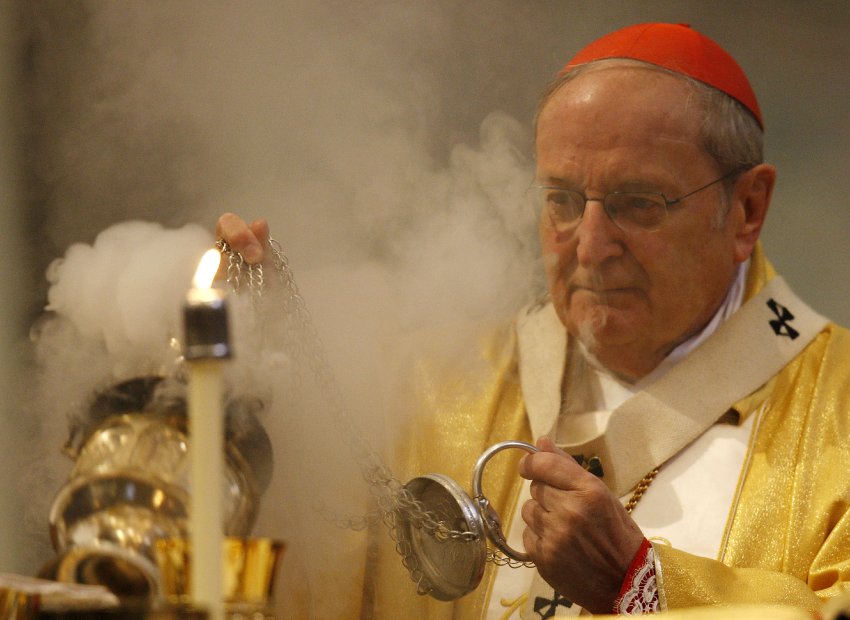
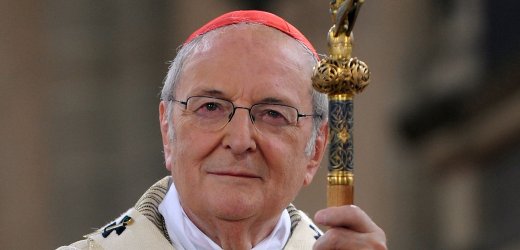
Cardinal Joachim Meisner, Metropolitan Archbishop of Koln (Germany) turns 80, ceases to be a Cardinal-elector

Kardinal Meisner feiert 75. Geburtstag

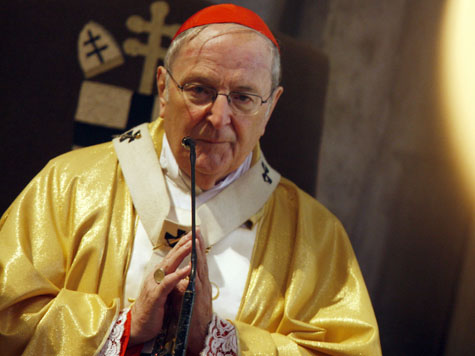
Today, Wednesday, 25 December 2013, on Christmas Day, Cardinal Joachim Meisner, Cardinal-Priest of S. Pudenziana, the current Metropolitan Archbishop of Koln, of Germany, turns 80, and therefore, according to the rules written in the Apostolic Constitution Universi Dominici Gregis, he loses his right to vote in any future conclave.

Cardinal Joachim Meisner was made Cardinal-Priest of S. Pudenziana by Blessed Pope John Paul II in the 1983 Consistory of Cardinals on 2 February 1983, the Solemnity of the Presentation of the Lord, the second Consistory of his pontificate. Cardinal Meisner was made a Cardinal in his position as the Bishop of Berlin since 1980, and in 1988 until now, he is the Metropolitan Archbishop of the Metropolitan Archdiocese of Koln.

Kardinal Meisner feiert 75. Geburtstag

http://www.gcatholic.org/hierarchy/data/cardJP2-2.htm#102

May God bless His Eminence Cardinal Meisner, with a blessed old age and health. May he remain strong in the faith and hopefully can perhaps still continue carry out the mission God had given him in the Metropolitan Archdiocese of Koln, where he continues to be the shepherd of the people of God.

Kardinal Joachim Meisner

The College of Cardinals now stands at 199 members in total, with 108 Cardinal-electors and 91 Cardinal non-electors. There are now vacancy of 12 Cardinal-electors as compared to the maximum number of electors allowed in the Conclave of 120, although Popes John Paul II and Benedict XVI had sometimes surpassed this limit.

Next Cardinal-elector to age out (80) will be Cardinal Raul Eduardo Vela Chiriboga, the Metropolitan Archbishop Emeritus of Quito (Ecuador),  on New Year’s Day, 1 January 2014.

Saturday, 21 December 2013 : 3rd Week of Advent, Memorial of St. Peter Canisius, Priest and Doctor of the Church (Scripture Reflections)

Liturgical Colour : Purple/Violet or White (Priests)

Brothers and sisters in Christ, today we celebrate the feast day of one of the great saints of the past centuries, that is of St. Peter Canisius, also known as Peter Canis or Petrus Canisius. He was a German who joined the then growing and newly established Society of Jesus, founded by St. Ignatius of Loyola. St. Peter Canisius also happen to be the saint whose name, together with that of St. Peter the Apostle, I adopted as my own name at baptism, because both of them are truly inspiring role models to me.

St. Peter Canisius lived during a time of great difficulty for the Church, because at that time, numerous people were swayed under the heresy of Protestantism, which spread like wildfire, based on ignorant and fallacious teachings and ideas of men. These ideas were manipulated by some to gain followers and broke apart the unity of the Church. This was particularly bad in Germany, where numerous occurrences of the mentioned heresies happened.

Yet St. Peter Canisius was not to be daunted by challenges, and he put his full trust in the Lord and spearheaded the efforts countering the damaging effects of the Protestant heresy. He and several other leaders such as St. Ignatius of Loyola were crucial in the process of Counter-Reformation, where these courageous leaders fought to stem the tide of corruption on the faithful and return them to the one true faith in God.

The problem was that we have grown lax in our faith, and we no longer stay truly faithful to the Lord. And neither did we put our trust in the Lord, trusting rather more the forces of this world, and our own feeble abilities and desires. Faith is weakened when we no longer put ourselves completely in God’s hands, and evil may enter our hearts. The same, then, happened as it had, during the heresy, which sadly continues all the way until even today.

At that time, indeed, the Church had grown powerful, and it had gained many worldly properties and accumulated much influence and wealth. That was when human desires and the corrupting power of Satan entered into the Church. The Church became a nest of impurities, debauchery, and sinfulness, far from being the holy congregation of the Lord’s faithful ones. Popes, cardinals, bishops and priests were influenced by the forces of the world and quite a few of them were corrupted.

Indeed, many of those who had submitted themselves to Protestant heresies, would argue that the very reason why they broke away from the one and only Church of God was because of its impurities, such that as if the Church no longer had any legitimacy or spiritual authority over the faithful. They elected their own leaders and established their own so-called ‘churches’ in the delusion of righteousness that they experienced.

Yes, that delusion in fact served the purposes of the devil. Some of the proponents and leaders of the heresies had truly noble intents in their actions, but many if not all were eventually succumbed to the designs of the evil one. Instead of helping to reform the Church and purge the impurities out of the holy Church, they succumbed to their own human vanity, pride, and stubbornness, and broke apart the unity of the One Body of Christ, that is the Church.

Remember what the Lord had said, that He is the vine and we are the branches. In the unity of the One, Holy, Catholic, and Apostolic Church, the one and only Church, that is our Church, we live in grace and love because of the love and life-giving strength that God bestowed upon us through that unity. Broken and torn apart from that unity, those splinters withered and died, just as history itself had proven to us.

“There were as many churches as there were heads.” Such was the sayings that time, when numerous churches were founded and established, and each with their own ideas and own way of interpreting the messages of the Lord, and therefore, confirming further the devil’s hold on many souls and on the hearts of mankind. Many of these ‘heads’ could not agree upon each other on what they were to believe in God and about God.

They quarrelled, fought, debated, and wasted much energy doing nothing but attacking each other and badmouthing each other, blaspheming that in doing so, they obeyed and followed God’s will. The devil sowed the seeds of distrust, division, and strife among the people of God. Instead of the intended good, only evil and division came out of the events.

That was what St. Peter Canisius was so eager to combat, the divisions within the Church and among the faithful ones. He championed both the reform within the Church as well as the deliverance of those who had lapsed and went outside of the saving grace of Christ in the Church. He led the Jesuit order to restore the faith in his native Germany. And he made great successes there, converting many thousands upon thousands back to the true faith.

St. Peter Canisius stemmed the tide of heresy, from what is an unstoppable wave into a controllable tide. He championed reaching out to those who had fallen away from the faith and explaining to them in great clarity and truth, the truth about the One and True faith, our Catholic faith. That was why St. Peter Canisius was also well known for his contribution to Catholic education. He educated the faithful of the future, as well as future zealous and dedicated teachers of the faith who would bring back the faithful back into the Church.

The Catechisms written by St. Peter Canisius helped many to return to their true faith in God, explaining the faith in clear terms to the people. His Mariology and devotion to the Blessed Virgin Mary was also exemplary, and in fact laid the foundations of much of the devotion to the Blessed Mother of God as we know today. It was he who included the phrase, ‘Holy Mary, Mother of God, pray for us sinners” to the Hail Mary prayer.

Indeed, seeing the examples of the life of this saint, St. Peter Canisius, we see how much we need to come closer to God, and dedicate ourselves even more intimately to Him. We cannot separate ourselves from the Lord, or we risk the corruption of evil, through the ways of this world. To keep ourselves close to the Lord, with the help of His Blessed mother, is to keep our faith pure and acceptable to the Lord.

Therefore, brothers and sisters in Christ, as we come even closer to the celebration of Christmas, and as we rejoice in this feast day commemorating the great Doctor of the Church and the Defender of the Faith, St. Peter Canisius, let us heed the lesson on the importance of our faith, and how important it is to make sure that we adhere to the teachings and to the will of God, putting aside our human ego, our human weaknesses, and all the temptations of the world.

Instead, let us open ourselves fully and completely to the Lord, and the Lord who loves us completely and dedicatedly will grant us His endless blessings and graces. Let us also follow in the footsteps of St. Peter Canisius, preaching the truth about the Lord, especially to our separated brethren. Proclaim the truth to them and reveal to them the fullness of the Lord’s saving power, and what is true faith in the Lord, that is in the teachings of the One, Holy, Catholic, and Apostolic Church, the one and only Church of God.

St. Peter Canisius, pray for us, and help us that we may be strong in our faith and remain vigilant against the powers and temptations of the evil one. May the Lord too watch over us, and love us dearly and tenderly as He had always done. May the prayer of our Lord Jesus Christ, Ut Omnes Unum Sint, that they all may be one, come true, that all the faithful ones in God can be reunited once again, purging themselves of all the errors of human judgments, emotions, and thinkings. Amen.

Saturday, 21 December 2013 : 3rd Week of Advent, Memorial of St. Peter Canisius, Priest and Doctor of the Church (Gospel Reading)

Liturgical Colour : Purple/Violet or White (Priests)

Luke 1 : 39-45

Mary then set out for a town in the hill country of Judah. She entered the house of Zechariah and greeted Elizabeth. When Elizabeth heard Mary’s greeting, the baby leapt in her womb. Elizabeth was filled with Holy Spirit, and giving a loud cry, said, “You are most blessed among women, and blessed is the Fruit of your womb! How is it that the mother of my Lord comes to me?”

“The moment your greeting sounded in my ears, the baby within me suddenly leapt for joy. Blessed are you who believed that the Lord’s word would come true!”

Saturday, 21 December 2013 : 3rd Week of Advent, Memorial of St. Peter Canisius, Priest and Doctor of the Church (Psalm)

Liturgical Colour : Purple/Violet or White (Priests)

Psalm 32 : 2-3, 11-12, 20-21

Give thanks to Him on the harp and lyre, making melody and chanting praises. Amid loud shouts of joy, sing to Him a new song and play the ten-stringed harp.

But His plan stands forever, and His heart’s design through all generations. Blessed is the nation whose God is the Lord – the people He has chosen for His inheritance.

In hope we wait for the Lord, for He is our help and our shield. Our hearts rejoice in Him, for we trust in His Holy Name.

Saturday, 21 December 2013 : 3rd Week of Advent, Memorial of St. Peter Canisius, Priest and Doctor of the Church (First Reading)

Liturgical Colour : Purple/Violet or White (Priests)

Song of Songs 2 : 8-14

The voice of my lover! Behold He comes, springing across the mountains, jumping over the hills, like a gazelle or a young stag. Now He stands behind our wall, looking through the windows, peering through the lattice.

My lover speaks to me, “Arise, my love, my beautiful one! Come, the winter is gone, the rains are over. Flowers have appeared on earth; the season of singing has come; the cooing of doves is heard.”

“The fig tree forms its early fruit, the vines in blossom are fragrant. Arise, my beautiful one, come with me, my love, come. O my dove in the rocky cleft, in the secret places of the cliff, let Me see your face, let Me hear your voice. Your face – how lovely! Your voice – how sweet!”

Alternative Reading

Zephaniah 3 : 14-18a

Cry out with joy, o daughter of Zion; rejoice, o people of Israel! Sing joyfully with all your heart, daughter of Jerusalem! YHVH has lifted your sentence and has driven your enemies away. YHVH, the King of Israel is with you; do not fear any misfortune.

On that day they will say to Jerusalem : Do not be afraid nor let your hands tremble, for YHVH your God is within you, YHVH, saving Warrior. He will jump for joy on seeing you, for He has revived His love. For you He will cry out with joy, as you do in the days of the Feast.

I will drive away the evil I warned you about.

Cardinal Geraldo Majella Agnelo, Metropolitan Archbishop Emeritus of Sao Salvador da Bahia (Brazil) turns 80, ceases to be a Cardinal-elector

y3323912291618536_1

Today, Saturday, 19 October 2013, Cardinal Geraldo Majella Agnelo, Cardinal-Priest of S. Gregorio Magno alla Magliana Nuova, the Metropolitan Archbishop Emeritus of Sao Salvador da Bahia, of Brazil, turns 80, and therefore, according to the rules written in the Apostolic Constitution Universi Dominici Gregis, he loses his right to vote in any future conclave.

Cardinal Geraldo Majella Agnelo was made Cardinal-Priest of S. Gregorio Magno alla Magliana Nuova by Pope John Paul II in the 2001 Consistory of Cardinals on 21 February 2001, the eighth of his pontificate. He was also the once the Secretary of Congregation for Divine Worship and the Discipline of the Sacraments from 1991, prior to his appointment as Metropolitan Archbishop of Sao Salvador da Bahia in 1999. He retired in 2011.

dom-geraldo-maljella

http://www.gcatholic.org/hierarchy/data/cardJP2-8.htm#1

May God bless His Eminence Cardinal Agnelo, with a blessed old age and health. May he remain strong in the faith and hopefully can perhaps still carry out the mission God had given him in an active retirement and old age.

The College of Cardinals now stands at 201 members in total, with 109 Cardinal-electors and 92 Cardinal non-electors. There are now vacancy of 11 Cardinal-electors as compared to the maximum number of electors allowed in the Conclave of 120, although Popes John Paul II and Benedict XVI had sometimes surpassed this limit.

Next Cardinal-elector to age out (80) will be Cardinal Joachim Meisner, the current Metropolitan Archbishop of Koln (Germany),  on 25 December 2013.

Saturday, 28 September 2013 : 25th Week of Ordinary Time, Memorial of St. Wenceslaus, Martyr, and Saints Lawrence Ruiz and Companions, Martyrs (Scripture Reflections)

Liturgical Colour : Green or Red (Martyrs) or White (Mass of our Lady)

Beloved brother and sisters in Christ, today we continue to listen to the reality of the Lord’s mission in this world, that is to be betrayed by His beloved, to be forsaken, rejected, and finally to suffer death although He is innocent, that through His death, all may gain eternal life in Him.

The Lord had come to be the Saviour of all, the One who bring forth the light of God into the darkened world, and into the darkened hearts of men. Through His coming and saving works, He had brought the hopelessness of mankind in the face of death and sin, into a new dawn of hope, the hope in He who died for all that they may live.

Dear brethren, as the Lord Himself had said, He came into the world to ransom His people, to deliver them from the fate they were to suffer for eternity, all for following the devil and listening to his lies instead of the truths of God. He ransomed all of us, from the hands of the devil, our slavemaster, not through gold, silver, or any form of material possessions and money, but through His own Most Precious Blood, the Blood of the Lamb.

That Blood is blood that saves and purifies, and which washes us clean from the filth of our sins and faults, making us perfect again in the eyes of God. That once we who were unworthy of God and His kingdom, now be made worthy and ready to be accepted again. The Blood shed from the innocent and purest lamb of all, the Lamb of God, Jesus Christ.

He did not resist at all when the chief priests and the Pharisees captured Him and tortured Him. He was indeed like a lamb being led to the slaughter, never complaining and in complete obedience to the will of God, the Father of all. Jesus is our Paschal Lamb, the One who offered Himself as the perfect and acceptable sacrifice to the throne of God.

That He was willing to suffer in place of us for the punishments intended to us, to bear that cross for our sake, and to bear all the humiliations imaginable, just that we may have hope and be saved, should have awakened us from our slumber, from our ignorance, yes, ignorance from the love of God most kind and forgiving,

Without Him, there can be no hope, and without His suffering, all of us will suffer, suffer from the consequences of our sins and of our wayward ways, away from the Lord our God. It is in the suffering of Christ that He shared our sufferings and bore it upon Himself, that we are freed from the weight of that yoke, the yoke of sin. And in His glorious resurrection, He lifted us all up from our old ways, from our old slavery to death, into a new life that He guaranteed through His own resurrection, as One who had conquered death.

Today, we celebrate the feast of several saints, first of which is St. Wenceslas or Wenceslaus, one of the first kings of Bohemia in the early Medieval era Germany, one of the first converts to the faith in that nation, which just a generation before was the nation of pagans and barbarians who ransacked many of Christendom’s countries. Even at the time of St. Wenceslaus, there were still strong pagan elements in the country, opposed to him and his rule as a Christian ruler.

Nevertheless, St. Wenceslaus remained faithful and committed to the cause of the Lord, and was known to be a good and caring ruler, who cared especially for the poor and the oppressed among his people, and worked hard to help spread the faith in the country where he ruled. This of course resulted in opposition to build up from the pagan elements in the society and among the nobles.

St. Wenceslaus was martyred for the faith, when he was murdered on his way to the church by his brother and his noble supporters. While his brother was a Christian himself, but many of the nobles who supported him were not, and they resented St. Wenceslaus’ attempts to bring the faith to them. Therefore, in the defense of his faith, St. Wenceslaus had given his life, and his blood, for the sake of the Lord, for the spreading of the Gospel and the salvation of his people.

St. Lawrence Ruiz or Lorenzo Ruiz and his companions are the other saints whom we commemorate on this day, also as martyrs of the faith, shedding their blood for the sake of the Lord. St. Lawrence Ruiz is the first saint of the Philippines, who was martyred with several others in Japan. He was born in the Philippines during the early seventeenth century, when Spain owned the Philippines. He lived a relatively normal life until he was falsely accused of a crime, which prompted him to hide in exile, which happened to be in a ship bound for Japan.

St. Lawrence Ruiz arrived in Japan at a time of very great difficulty for any of the faithful of the Lord. Although just decades before Japan was truly a ripe ground for evangelisation, which saw hundreds of thousands converted into the faith, during the time of St. Lawrence Ruiz in Japan, the new Tokugawa shogunate government had changed their policy against Christians from tolerance and warmth into an open and vicious persecution.

Christians everywhere in Japan were threatened to abandon their faith or lose their lives through harsh torture and pain. Many recanted their faith following these threats, but equally many persevered in their faith and ended up being martyred, through various methods like crucifixion, beheading, and burning, many of them cruel and painful in nature.

St. Lawrence Ruiz and his companions were also captured and subjected to these torturous methods, and were asked to abandon their faith in God. They resisted and remained staunch in their undying faith to God. They forsake their earthly life in order to obtain the life in heaven, which is eternal, from the Lord.

Therefore, brothers and sisters in Christ, after listening to the life stories of these courageous and faithful martyrs of the Lord, who did not shy from even risking their lives for the true faith, and recalling the very sacrifice Jesus had endured on the cross for our salvation, let us then, brethren, be proactive in our faith, no longer sitting down and let what God has given us go to waste, and instead, let us bravely take up our crosses, as the martyrs and saints had done, and go to proclaim to the whole world, the salvation of our Lord, offered to all those who believe in Him.

May the Lord continue to empower and strengthen us, in our mind, body, and speech, that we will be able to be strong and courageous bearers of His holy Gospels, the bearer of the Good News of salvation, inspired by the examples of the holy saints and martyrs, St. Wenceslaus, St. Lawrence Ruiz and his companions. God bless us all. Amen.

Saturday, 28 September 2013 : 25th Week of Ordinary Time, Memorial of St. Wenceslaus, Martyr, and Saints Lawrence Ruiz and Companions, Martyrs (Gospel Reading)

Liturgical Colour : Green or Red (Martyrs) or White (Mass of our Lady)

Luke 9 : 43b-45

But while all were amazed at everything Jesus did, He said to His disciples, “Listen, and remember what I tell you now : The Son of Man will be betrayed into the hands of the men.”

But the disciples did not understand this saying; something prevented them from grasping what He meant, and they were afraid to ask Him about it.

Saturday, 28 September 2013 : 25th Week of Ordinary Time, Memorial of St. Wenceslaus, Martyr, and Saints Lawrence Ruiz and Companions, Martyrs (Psalm)

Liturgical Colour : Green or Red (Martyrs) or White (Mass of our Lady)

Jeremiah 31 : 10, 11-12ab, 13

Hear the word of YHVH, o nations, proclaim it on distant coastlands : He who scattered Israel will gather them and guard them as a shepherd guard His flock.

For YHVH has ransomed Jacob, and redeemed him from the hand of his conqueror. They shall come shouting for joy, while ascending Zion.

Maidens will make merry and dance, young men and old as well. I will turn their mourning into gladness, I will give them comfort and joy for sorrow.