Monday, 20 October 2014 : 29th Week of Ordinary Time (Psalm)

Liturgical Colour : Green

Psalm 99 : 2, 3, 4, 5

Serve the Lord with gladness; come before Him with joyful songs.

Know that the Lord is God; He created us and we are His people, the sheep of His fold.

Enter His gates with thanksgiving, His courts with praise. Give thanks to Him and bless His Name.

For the Lord is good; His love lasts forever and His faithfulness through all generations.

Monday, 20 October 2014 : 29th Week of Ordinary Time (First Reading)

Liturgical Colour : Green

Ephesians 2 : 1-10

You were dead through the faults and sins. Once you lived through them according to this world and followed the Sovereign Ruler who reigns between heaven and earth and who goes on working in those who resist the faith.

All of us belonged to them at one time and we followed human greed; we obeyed the urges of our human nature and consented to its desires. By ourselves, we went straight to the judgment like the rest of humankind.

But God, who is rich in mercy, revealed His immense love. As we were dead through our sins, He gave us life with Christ. By grace you have been saved! And He raised us to life with Christ, giving us a place with Him in heaven.

In showing us such kindness in Christ Jesus, God willed to reveal and unfold in the coming ages the extraordinary riches of His grace. By the grace of God you have been saved through faith. This has not come from you : it is God’s gift. This was not the result of your works, so you are not to feel proud.

What we are is God’s work. He has created us in Christ Jesus for the good works He has prepared that we should devote ourselves to them.

Sunday, 19 October 2014 : 29th Sunday of Ordinary Time, Mission Sunday and Memorial of St. John de Brebeuf and St. Isaac Jogues, Priests and Martyrs; and St. Paul of the Cross, Priest (Homily and Scripture Reflections)

Liturgical Colour : Green

Brothers and sisters in Christ, today we celebrate together the love of God for us in the Eucharist through which He gave us all His own Body and Blood, so that we who share in them, we may receive salvation in our God, and be freed from the bondage of sin and death. And we are reminded of this fact in the readings from the Holy Scriptures which we read today.

In the first reading, taken from the Book of the prophet Isaiah, the Lord revealed to Isaiah His servant, of the coming of salvation for the people of Israel, in the person of Cyrus, the King and Emperor of the Persian Empire, who would deliver the people of God the salvation which they would come to await for. For a background understanding, I will share with you the significance of this passage from the Book of Isaiah by telling you the historical background behind it.

At the time the revelation was made to the prophet Isaiah, it was at the time just as the northern kingdom of Israel fell to the conquering power of the Assyrian Empire. The people of the northern kingdom was unfaithful and were engrossed in wickedness and in the worship of the pagan gods. As such, they were handed over to the hands of their enemies and brought away as slaves and exiles from the lands promised and given to their ancestors.

Meanwhile, in the kingdom of Judah, the southern kingdom, the people of God there were also not always faithful. They also from time to time rebelled against the will of God, preferring to follow their own ways and disobeyed the Lord’s instructions. At the time of the prophet Isaiah, during the reign of King Hezekiah of Judea, the consequences for these were not so apparent yet, but then soon they too would suffer the same fate as their northern brethren, the kingdom of Israel.

They too would be defeated, conquered and exiled, as well as into slavery by the rising power of the Neo-Babylonian Empire, under the famous king Nebuchadnezzar, who brought siege to Jerusalem, the Holy City of God, and brought it to ruin. The Temple of Solomon was destroyed and the Ark of the Covenant was lost in the chaos. This represented the end of the southern kingdom of Judah and the rule of the kings as a whole, and also marked the beginning of what would be called the Babylonian exile.

During this period of exile, the people of Judah were also uprooted and cast away from the land promised and given to their ancestors, and brought in chains to the foreign lands. There they suffered indignation and much humiliation, and they were made to work hard and experienced the bitter pills of difficulties of the world for a period of time, when, according to the word of God through the prophets, that they were humbled among the nations.

Yet, God did not leave them alone with that fate for long. He promised them deliverance, precisely through the prophet Isaiah, that the King of Persia, Cyrus the Great, who conquered many kingdoms in the known world at that time, would conquer Babylon and then liberated all the people of God from their bondage and slavery, allowing them to return home to their ancestral lands of Israel, freed at last from their bonds and exile.

God called Cyrus from among the nations, and gave him His blessings and grace, even though he did not know Him. Such was the Lord’s will and plan, and how He put all of His desires and will into effect. He never retracted His promises, nor is He ever being unfaithful. He fulfilled His promises through Cyrus, who just like Moses, brought the people of God out of suffering, bondage and slavery into freedom and God’s renewed promise and covenant.

But at the time of Jesus, the nation of the Jews have endured many cycles of persecutions, oppressions and enslavement by other, more powerful nations, and the latest to be added to the list at the time was the Roman Empire, which ruled over most of the known world, and was known for the first regular and organised ruling imperium in the world, with a meticulous system of taxation, both to maintain control and to obtain revenue for the Roman state.

However, the imposition of taxes also represented the symbol of Roman dominance and mastery over the world, and over the peoples of the Mediterranean at the time, including the Jews, who lived in the Roman province of Judea, which constituted roughly the old Promised Land which they had been given, together with the provinces of Galilee and Decapolis.

The imposition of the taxes were hated and disliked by the people, who viewed them as first the symbol of their submission to the Romans and their Emperor, the Caesar in Rome, as well as the symbol of their renewed enslavement and the end of their freedom which they had often fought hard for and gained for. It also burdened them economically, and thus they were resented by the people as a whole. This was also why the tax collectors were so hated by the people, and they were considered outcasts and traitors, as they were seen as serving the hated Romans in imposing their hated taxes.

The Roman taxes were paid with the Roman currency, that is the Roman coins, most commonly the silver variant, the denarius. On the denarius, just as all the other Roman coins, the face portrait of the Emperor were printed, such that to the extent of the Romans and the peoples of the Empire recognised their Emperor by the coins they released.

This represented a problem, and a rather serious one, in the view of the Jews, as the Roman Emperors at the time, beginning with the Emperor Augustus, and even his pre-Imperial predecessor, Julius Caesar, were deified and worshipped in the Empire as gods or descendants of the gods. Thus, for the Jews, particularly to the Pharisees, the act of paying the taxes with the Roman coins represent a potentially dangerous and serious sin.

Yes, that is the offering to the idols, as equated by the ‘offering’ of the Roman coins with the Emperor’s portrait to the Empire, and thus to the Emperor himself, the deified entity, the pagan god patron of the Empire. Thus, the Pharisees and the elders of Israel wanted to trap Jesus with the question, and had He answered that they should pay the taxes, then they could whip up the masses’ opinion against Jesus and accuse Him of collaboration with the Romans, essentially a traitor to the nation.

On the other hand, if He had answered that they should not pay the taxes, then the Pharisees and the elders, with their links to the Roman establishment could claim that Jesus wanted to lead the people in rebellion against the Roman rule, by refusing to pay the taxes due for them. But Jesus knew all that they had plotted against Him with, and He gave them the answer which none of them had predicted.

Give to God what belongs to God, and give to the Caesar, the Emperor of Rome, what belongs to him, namely the coins and the wealth of the world. Jesus wanted to remind us, just as He wanted to rebuke His opponents, that the wealth and the materials of this world belong to the world and ought to be returned back to them. Thus, money and possessions that we have and gained in this life, is no more than the means for us to live a good and sufficient life, enough for us to sustain ourselves, but they should not be the focus of our life.

Yes, for God is the Creator of all of us, the most beloved ones of all His creations. We were made by God with love, given life by His Spirit and intended for greatness and goodness, and despite our waywardness and disobedience, in the end, we still belong to God, and nothing and noone can deny this very fact. Hence, whatever we are and whoever we are, we ought to give it to the Lord, as we truly belong to God and not to this world.

And hence, we should avoid all the evils of this world and keep ourselves pure, and the Lord had already warned against these sinful ways, namely the sins of the Pharisees, who preached what they believed in, but they did not practice what they had preached. That is why they were called hypocrites, and rightly so, for their faith in the Lord was superficial, and all that they cared about was their own vanity and pride.

Brothers and sisters in Christ, what God wants from us is our love, that is what we ought to give to Him, after He Himself had loved us all first. We should also keep ourselves away from the vices and evils of the Pharisees. Think not about bringing harm and plotting against others, but think rather of love, and how we can better love one another, as well as forgiving those who had sinned against us, as Jesus Himself had taught us.

And today in our world, as it had been in the past, there are still many people who live in the darkness of the world, following the ways of the Pharisees and have yet to see the love of the Lord and have yet to understand His ways. And thus, today, in which we also celebrate the occasion of the Mission Sunday, we have to remind ourselves of the responsibilities and the obligations which we have been given by the Lord when we became the member of His Church.

God desires not the destruction of mankind, just as He did not desire the condemnation of His people, Israel. This was why He sent them deliverers, beginning from Moses and then Cyrus, and finally Jesus Himself, His own Son, the One who would deliver not just the Jews but all mankind from the greatest of their bondage and slavery.

Yes, all of us who have sinned and under the whim of sin are enslaved and bonded to sin. And the chains of sin that bind us will eventually and inevitably lead to death, the punishment and ultimate consequence for sin. And not just any death, but eternal death, which will separate us from the love of God, the suffering of hell for eternity, where we are completely and entirely devoid of that love which God lavishes on us.

We can just begin to imagine the kind of suffering when we lack and are denied the wonderful love which God has for us. The pain and suffering far dwarfs the kind of physical and mental suffering which the people in exile and slavery had suffered. And this is exactly what God does not want to happen to us, and thus He also sent His people more deliverers, and who are they? They are none other than each one of us, who have been received into His Church, and have been endowed with the faith.

Let me share with you the inspiring lives of the saints who we also commemorate today, that is St. Jacques Chastan and St. Isaac Jogues, as well as St. Paul of the Cross. For the case of St. Jacques Chastan and St. Isaac Jogues, they were French martyrs, who were part of the French missionaries, the Mission Estrangeres de Paris, the M.E.P. priests who were specialised in the missions to the far ends of the world, spreading the word of God to those who have yet to hear the Good News of the Lord.

St. Jacques Chastan was sent to the missions in Asia, to Thailand, then called Siam, and to Macao, and finally to Korea, where he met his death with faith, in a holy martyrdom. Through his works there and with the collaboration of many other missionaries, many souls were called to the Lord, and heeding the call of conversion, they gave themselves to be baptised and to be part of the Church of God.

The Korean authorities were strongly opposed to the efforts of the missionaries, and they did everything they could to prevent the spread of the faith. Many people, including St. Jacques Chastan were martyred in the defense of their true faith, refusing to renounce the faith and salvation which they had received. After all, when one had been liberated and delivered from slavery, who would want to be enslaved again? To do so would condemn oneself to an eternity of suffering.

Meanwhile, St. Isaac Jogues was a French missionary who was sent to the wild and undiscovered regions of North America, then known as the New World. He worked for the Lord among the many tribes of the North American indigenous populations. Life was indeed difficult for him, and the wars and conflicts between the tribes made it even more difficult. Nevertheless, St. Isaac Jogues persevered and continued to minister to them, spreading the Good News and converting many of them, urging them to abandon their old ways and learn the ways of the Lord.

St. Isaac Jogues was also martyred for his faith, while he was on his mission. He never gave up until the end, and as a result, together with him, many people who were enslaved by sin and darkness, were made free and gain salvation together in God. Such was the role model which actions we can and that we indeed should follow in life.

Lastly, St. Paul of the Cross, the Italian priest of the early modern era who was particularly devoted to the memory of the Holy Passion of our Lord Jesus Christ, in the remembrance of that singular act of ultimate love of God, through which mankind were delivered from the chains and the tyranny of sin into true freedom. Through his works and devotion to the Holy Passion of our Lord, St. Paul of the Cross bring many of the faithful into greater and deeper understanding of their faith, and how all of us too have our own roles to play in helping one another to reach out to God’s salvation.

Therefore, brothers and sisters in Christ, heeding the call of the Lord which He had made through the Scriptures and the Gospels which we had heard today, let us all be renewed in our faith and zeal for the Lord. Let us all realise the great love which God has for all of us, that He does not want to see us remain chained to sin and darkness, and for that He had sent us Jesus, to be the One true Saviour of all, in the mould of Moses and Cyrus, but He did even greater things than these two had done.

Why so, brethren? That is because sin is a greater slavery than anything else that may affect our body. Sin enslaves both our body and soul, our heart and mind, and all that comprise us. And thus, through Christ, by believing in Him and in His love, and in His death on the cross, through which He showed us the act of ultimate love, offering Himself in exchange for us as a ransom for death, the consequence of our sins, we have been made free.

Hence, on this occasion of Mission Sunday, inspired by the examples of the saints whom we remember today, let us all also imitate the love which Christ had shown us, and let us imitate this love and show the same love in our own actions and deeds in life, that we may come to realise the great potential within us, and also in the many others who still live in darkness and sin.

May Almighty God bless us and our efforts, the missionary works which we ought to take on, in order to spread the Word of God and the Good News of the Gospels to all the nations, especially those still under the thrall of sin, so that we may truly be what Jesus had asked of us, to give to the Lord what belongs to Him, that is all of us, our hearts and our minds, our entire being. May God bring more and more souls to Him and rescue them, and free them from the shackles of sin and into the everlasting life in true joy which He had promised us all. God be with us, forever and ever. Amen.

Gospel : https://petercanisiusmichaeldavidkang.com/2014/10/17/sunday-19-october-2014-29th-sunday-of-ordinary-time-mission-sunday-and-memorial-of-st-john-de-brebeuf-and-st-isaac-jogues-priests-and-martyrs-and-st-paul-of-the-cross-priest-gospel-reading/

Second Reading : https://petercanisiusmichaeldavidkang.com/2014/10/17/sunday-19-october-2014-29th-sunday-of-ordinary-time-mission-sunday-and-memorial-of-st-john-de-brebeuf-and-st-isaac-jogues-priests-and-martyrs-and-st-paul-of-the-cross-priest-second-reading/

First Reading : https://petercanisiusmichaeldavidkang.com/2014/10/17/sunday-19-october-2014-29th-sunday-of-ordinary-time-mission-sunday-and-memorial-of-st-john-de-brebeuf-and-st-isaac-jogues-priests-and-martyrs-and-st-paul-of-the-cross-priest-first-reading/

Sunday, 19 October 2014 : 29th Sunday of Ordinary Time, Mission Sunday and Memorial of St. John de Brebeuf and St. Isaac Jogues, Priests and Martyrs; and St. Paul of the Cross, Priest (Gospel Reading)

Liturgical Colour : Green

Matthew 22 : 15-21

At that time, the Pharisees went out and considered how they could trap Jesus by His own words. They then sent out their disciples, with members of Herod’s party, for this purpose.

They said to Jesus, “Master, we know that You are an honest Man and truly teach God’s way. You are not influenced by others nor are You afraid of anyone. So tell us what You think : is it against the Law to pay taxes to Caesar or not?”

But Jesus understood their bad intentions, and said to them, “Hypocrites, why are you testing Me? Show Me the coin with which you pay the taxes.” They showed Him a silver coin, and Jesus said to them, “Whose head is this, and whose name?”

They answered, “Caesar’s.” Then Jesus replied, “So give to Caesar what is Caesar’s, and give to God what is God’s.”

Sunday, 19 October 2014 : 29th Sunday of Ordinary Time, Mission Sunday and Memorial of St. John de Brebeuf and St. Isaac Jogues, Priests and Martyrs; and St. Paul of the Cross, Priest (Second Reading)

Liturgical Colour : Green

1 Thessalonians 1 : 1-5b

From Paul, Sylvanus and Timothy to the church of Thessalonica which is in God the Father and in Christ Jesus, the Lord. May the peace and grace of God be with you.

We give thanks to God at all times for you and remember you in our prayers. We constantly recall before God our Father the work of your faith, the labours of your love and your endurance in waiting for Christ Jesus our Lord.

We remember, brothers and sisters, the circumstances of your being called. The Gospel we brought you was such not only in words. Miracles, Holy Spirit and plenty of everything were given to you.

Sunday, 19 October 2014 : 29th Sunday of Ordinary Time, Mission Sunday and Memorial of St. John de Brebeuf and St. Isaac Jogues, Priests and Martyrs; and St. Paul of the Cross, Priest (Psalm)

Liturgical Colour : Green

Psalm 95 : 1 and 3, 4-5, 7-8, 9-10a, 10c

Sing to the Lord a new song, sing to the Lord, all the earth! Recall His glory among the nations, tell all the peoples His wonderful deeds.

How great is the Lord and worthy of praise! Above all gods He is to be feared. For all other gods are worthless idols, but YHVH is the One who made the heavens.

Give to the Lord, you families of nations, give to the Lord glory and strength. Give to the Lord the glory due His Name; bring gifts and enter His courts.

Worship the Lord with holy celebrations; stand in awe of Him, all the earth. Say among the nations, “The Lord reigns!”

He will judge the peoples with justice.

Sunday, 19 October 2014 : 29th Sunday of Ordinary Time, Mission Sunday and Memorial of St. John de Brebeuf and St. Isaac Jogues, Priests and Martyrs; and St. Paul of the Cross, Priest (First Reading)

Liturgical Colour : Green

Isaiah 45 : 1, 4-6

Thus says YHVH to His anointed, to Cyrus : “I have taken you by the right hand to subdue nations before you and strip kings of their armour, to open the gateways before you so that they will be closed no more.”

“For the sake of Jacob My servant, of Israel My chosen one, I have called you by your name and given you your mission although you do not know Me. I am YHVH, and there is no other; there is no God besides Me. I armed you when you did not know Me, so that, from the rising to the setting of the sun, all may know that there is no one besides Me; I am YHVH, and there is no other.”

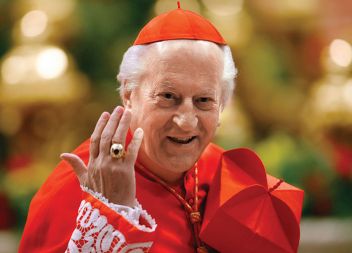
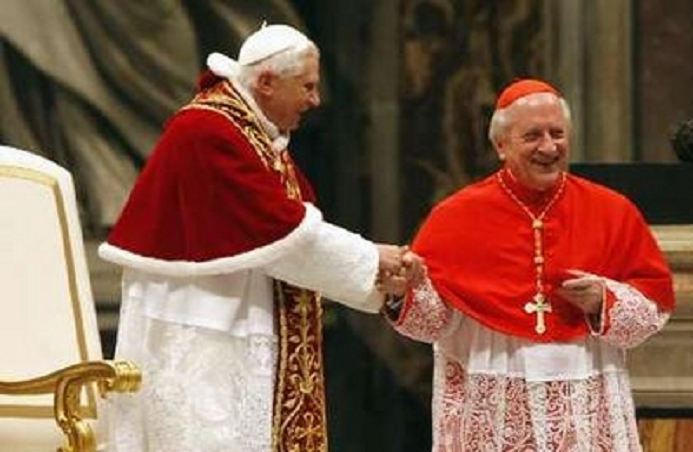
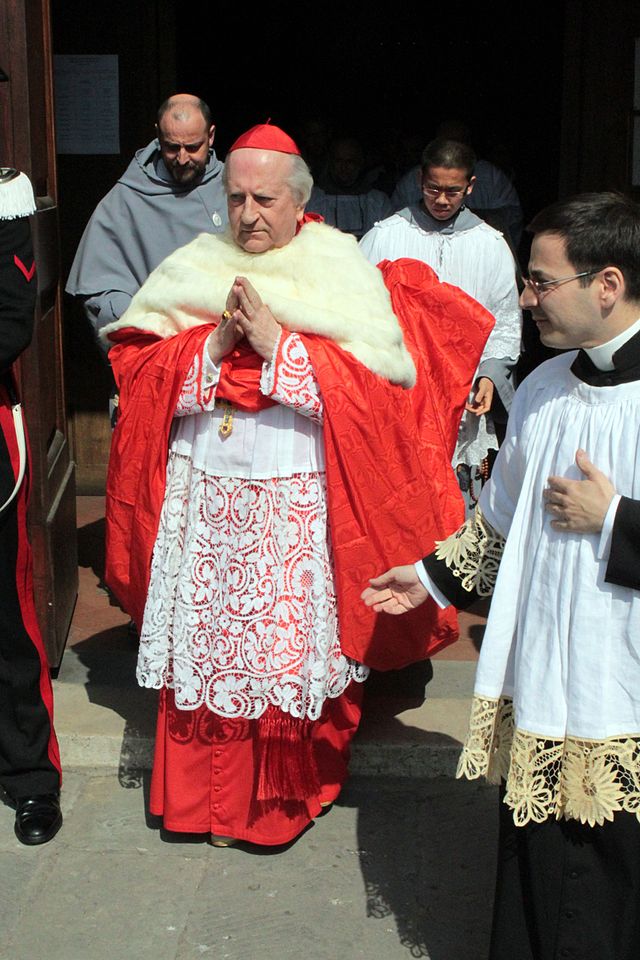
Cardinals Update : Cardinal Franc Rode, C.M., Prefect Emeritus of the Congregation for Institutes of Consecrated Life and for Societies of Apostolic Life (Slovenia), turned 80, ceases to be a Cardinal-elector

640px-Cardeal_franc_rodé

On Tuesday, 23 September 2014, Cardinal Franc Rode, C.M., Cardinal-Deacon of S. Francesco Saverio alla Garbatella, Prefect Emeritus of the Congregation for Institutes of Consecrated Life and for Societies of Apostolic Life (Slovenia), turned 80, and therefore, according to the rules written in the Apostolic Constitution Universi Dominici Gregis, he lost his right to vote in any future conclave. Cardinal Franc Rode was born in Ljubljana, Slovenia on 5 September 1934.

rode_franc_ap

Cardinal Rode was made Cardinal-Deacon of S. Francesco Saverio alla Garbatella by Pope Benedict XVI in the 2006 Consistory of Cardinals on 24 March 2006, the first Consistory of his pontificate. Cardinal Rode was made a Cardinal in honour of his position as the Prefect Emeritus of the Congregation for Institutes of Consecrated Life and for Societies of Apostolic Life, the branch of the Roman Curia in charge of all religious orders and all matters pertaining to religious life and profession, a position he held from 2004 to 2011. Before that, Cardinal Rode was the Metropolitan Archbishop of Ljubljana (Slovenia), the greatest and largest see in the country of Slovenia, from 1997 to 2004.

0202relig1pi7

http://www.gcatholic.org/hierarchy/data/cardB16-1.htm#695

May God bless His Eminence Cardinal Rode with a blessed old age and health. May he remain strong in the faith and hopefully can perhaps still continue to work great graces and good works of love and peace just as he had once done in his long service to the Church, particularly his contributions as a member of the Roman Curia in helping the actions of the Holy See and the Pope.

images

The College of Cardinals now stands at 210 members in total, with 113 Cardinal-electors and 97 Cardinal non-electors. There are now a vacancy of 7 Cardinal-elector as compared to the maximum number of electors allowed in the Conclave of 120.

Next Cardinal-elector to age out (80) will be Cardinal Tarcisio Bertone, S.D.B. (Italy), the Cardinal Secretary of State Emeritus of the Secretariat of State and the current Chamberlain of the Holy Roman Church of the Apostolic Camera on 2 December 2014.

Monday, 18 November 2013 : 33rd Week of Ordinary Time, Memorial of the Dedication of the Basilica of St. Peter and the Basilica of St. Paul Outside the Walls (Scripture Reflections)

Liturgical Colour : Green or White (Dedication of Basilica)

Dear brothers and sisters in Christ, we listen today to the beginnings of a great tragedy, where the people of Israel, was subjected to the attempts of acculturation and Hellenisation, which happened during the years after Alexander the Great conquered much of the known world. They suffered persecution and ridicule, subjected into attempts to corrupt them from the one and true faith in God.

In the second reading, the same happened, with St. Paul being led into custody of the Romans, brought to Rome, the capital of the Roman Empire, to be judged by the Emperor for his supposed crimes. St. Paul was charged by his Jewish opponents, who resisted his attempts to bring the Good News to them. Rather than being killed at Jerusalem, St. Paul chose to appeal to the Emperor, and in doing so, as we listened, he gained a chance to evangelise yet one last time, at the city of Rome, where the centre of our Church now lies.

Today we listened to the tale of both St. Paul and St. Peter, the earlier as mentioned, and the latter, as we listened to the story of Jesus performing the miracle of walking on the water in the middle of the storm. St. Peter took the scene, as he tried to walk on the water and as he doubted, he almost sank into the water. Jesus rescued him and chided him about his lack of faith in Him. So we heard today about both St. Paul and St. Peter, who at the end of their lives, went to Rome to be martyred there.

Yes, in that old and venerable city, the Eternal City, as many would call it. It is where the two greatest saints and pillars of the Church were welcomed into the hands of the Lord through holy martyrdom. Today we mark the commemoration of the dedication of two great basilicas, namely the Papal Basilica of St. Peter, where most of the Pope’s celebrations take place, and the Papal Basilica of St. Paul, also known as St. Paul Outside the Walls, because it was located outside the walls of the ancient city of Rome. It was also where St. Paul stayed during his two year stay in Rome, prior to his martyrdom by the Emperor Nero.

These two saints were exemplary in their actions, just as what some brave people of Israel, God’s first chosen people had done at the time of persecution under the Greek king Antiochus Epiphanes. They stood up bravely and courageously for their faith without being corrupted or tempted by the offers of worldly pleasures and temporary glories offered to them, if they just would betray the Lord and their faith.

Yet these people were also pretty much ordinary people like ourselves, and they too were much like us sinful and weak, as St. Peter himself had shown in that storm in the lake, where his lack of faith to God made him almost sink as he walked on the water towards Jesus. St. Paul was once a great enemy of the faith, and he hounded many hundreds if not thousands of the early believers of the Lord, sending them to their deaths. We too lacked the faith at times, brothers and sisters, and doubt is always in our mind.

And yet, through Christ and His love, they have been transformed into powerful tools of His presence and love. God made them to be the bearers of the Good News and they went on faithfully with their missions to the end. And through their hard and dedicated works, many people were saved. Their works of salvation continues even today, through their successors, our bishops and their priests, and primarily, the Bishop of Rome, our Pope, now Pope Francis, the leader of the entire Universal Church.

It is often that times are truly hard for our Church, especially in the recent times. The ways of the world are increasingly becoming more and more antithesis to what our Church stands up for, that is our faith in God, true and just. The corruptions of this world threaten to sink many people in the storm of this turbulent world. Remember what had happened to St. Peter in that stormy night.

The Lord picked him up by the hand and strengthened his faith. Indeed, St. Peter was to abandon his faith yet another time, when he denied knowing the Lord, not just once, but three times in total! He did so, because his faith in God is wavering, having seen Jesus, the one hope that he and the other apostles had had, captured, tortured, and mocked like a lowly criminal. He abandoned the Lord for the security of the world.

St. Paul too was a leading Jew, who was a Pharisee and very strict in his observation of the Law, and was particularly hostile to the followers of Jesus in the early days of the Church. He hunted them without mercy, and caused the death of many people of the Lord. He took part in the stoning and murder is St. Stephen, the first martyr, and was a great scourge to the faithful.

Then what differentiates them from the people of Israel, who abandoned their faith in God, for the sake of their own security and to secure the favour of the king? And how was St. Peter even different from Judas Iscariot, the traitor? Did they both not betray the Lord? One through direct betrayal and the other by abandoning Him at the time of His greatest sorrow?

That is because, St. Peter professed his true and undying faith in the Lord, and he repented from his past mistakes. Everyone makes mistakes, as is common to us because of our humanity, for we are predisposed to sin ever since we were exposed to it. What is important is that, we learn from those mistakes, face them with courage and faith, and repent, that is change our ways, to conform again to that of God! That was what St. Peter, as well as St. Paul had done.

Judas Iscariot felt the guilt after he had betrayed the Lord, but instead of learning from his mistakes, and accepting the chance of repentance the Lord gave him, he chose the quick way out, that is suicide. He did not repent, and therefore was counted among the lost ones. He also stole the money of the Lord and His disciples and was unrepentant about it, even to the end.

St. Peter professed his love and dedication to the Lord, and he showed it with true sincerity, knowing fully the guilt and the faults he had done, and yet, he still professed that love he has for God, and the Lord gave him, the stewardship over this world, over all of the faithful ones in God, as His Vicar on earth. St. Paul too met a life-changing experience, after the Lord appeared to him on the road to Damascus. He received the empowerment of the Holy Spirit, and the truth about all things were revealed to him in its entirety.

Ever since, both Apostles, as well as the other apostles and disciples of Christ, tirelessly laboured for the sake of God and His kingdom, without end going from one end of the earth to the other, as witnesses to God and His saving power. They laboured hard and the fruits grew aplenty, as the faith spread among many, converting many to the cause of Christ. And despite the storm that threatened to engulf all the faithful, they stabilised the ship, and made it last to the present day.

St. Peter was crucified upside down in Rome, at the site now where the Basilica of St. Peter now stood. He chose to do so because he found himself unworthy to be crucified in the same way the Lord had done. St. Paul too was beheaded in Rome, after the burning of Rome was blamed by the reigning Emperor, Nero, on the followers of Christ. See the dedication, faith, and love that these two saints have for our Lord!

Today, therefore, as we commemorate the two great Basilicas dedicated in their honour, that of St. Peter, the Vicar of Christ, and St. Paul, the Apostle to the Gentiles, let us take this opportunity to reflect, on whether we have taken the same choice or whether we will be ready to commit ourselves to the same choice that both saints had chosen. Remember that saints too were called from sinners. We can opt to choose the easy way, that is what Judas and the people of Israel had done, or take the difficult and challenge-ridden path that the Apostles had once taken, all the way to the end, where the glory of heaven awaits them.

May our Lord Jesus, who helped St. Peter out of the water in his doubt, also help us to overcome our doubts and empower us with love, hope, and faith, that we will be able to make a commitment towards reaching out to the Lord, choosing the right path in the end. May He continue to love us and watch over us. Amen.

Monday, 18 November 2013 : 33rd Week of Ordinary Time, Memorial of the Dedication of the Basilica of St. Peter and the Basilica of St. Paul Outside the Walls (Gospel Reading)

Liturgical Colour : Green or White (Dedication of Basilica)

Luke 18 : 35-43

When Jesus drew near to Jericho, a blind man was sitting by the road, begging. As he heard the crowd passing by, he inquired what was happening, and they told him that Jesus of Nazareth was going by.

Then he cried out, “Jesus, Son of David, have mercy on me!” The people in front of him scolded him. “Be quiet!” they said, but he cried out all the more, “Jesus, Son of David, have mercy on me!”

Jesus stopped, and ordered the blind man to be brought to Him; and when he came near, Jesus asked him, “What do you want Me to do for you?” And the man said, “Lord, that I may see!”

Jesus said, “Receive your sight, your faith has saved you.” At once the blind man was able to see, and he followed Jesus, giving praise to God. And all the people who were there also praised God.

Alternate Reading (Mass for Dedication of the Basilicas)


Matthew 14 : 22-33

Immediately Jesus obliged His disciples to get into the boat and go ahead of Him to the other side, while He sent the crowd away. And having sent the people away, He went up the mountain by Himself to pray. At nightfall, He was there alone.

Meanwhile, the boat was very far from land, dangerously rocked by the waves, for the wind was against it. At daybreak, Jesus came to them walking on the sea. When they saw Him walking on the sea, they were terrified, thinking that It was a ghost. And they cried out in fear.

But at once Jesus said to them, “Courage! Do not be afraid. It is Me!”

Peter answered, “Lord, if it is You, command me to come to You walking on the water.” Jesus said to him, “Come!” And Peter got out of the boat, and walked on the water to go to Jesus. But seeing the strong wind, he was afraid and begtan to sink; and he cried out, “Lord, save me!”

Jesus immediately stretched out His hand and took hold of him, saying, “Man of little faith, why did you doubt?”

As they got into the boat, the wind dropped. Then those in the boat bowed down before Jesus, saying, “Truly, You are the Son of God!”