Friday, 14 June 2013 : 10th Week of Ordinary Time (Gospel Reading)

Matthew 5 : 27-32

You have heard that it was said : ‘Do not commit adultery’. But I tell you this : anyone who looks at a woman too lustfully has in fact already committed adultery with her in his heart.

So, if your right eye causes you to sin, pull it out and throw it away! It is much better for you to lose a part of your body than to have your whole body thrown into hell. If your right hand causes you to sin, cut it off and throw it away! It is better for you to lose a part of your body than to have your whole body thrown into hell.

It was also said : ‘Anyone who divorces his wife, must give her a written notice of divorce.’ But what I tell you is this : If a man divorces his wife, except in the case of unlawful union, he causes her to commit adultery. And the man who marries a divorced woman commits adultery.

Thursday, 6 June 2013 : 9th Week of Ordinary Time, Memorial of St. Norbert, Bishop (First Reading)

Tobit 6 : 10-11 and Tobit 7 : 1, 9-17 and Tobit 8 : 4-9a

When they had entered Media and were already approaching Ecbatana, Raphael said to Tobias, “Friend, we shall spend the night at the house of Ragouel. He is a relative of yours. He has no son, just an only daughter called Sara.”

When they arrived in Ecbatana, Tobias said to Raphael, “Friend Azarias, take me straightaway to our friend Ragouel.” So Raphael led Tobias to Ragouel’s house and they found Ragouel sitting by the door of the courtyard. Ragouel and his wife killed a sheep and served them numerous dishes.

After they had bathed and washed, as they were relaxing before the meal, Tobias said to Raphael, “Friend Azarias, tell Ragouel to give me Sara my kinswoman. Talk about what you were saying during our journey, that the matter may come about and be accomplished.”

Ragouel overheard the conversation and he said to Tobias, “Eat, drink, and be merry tonight. You are the man who has most right to take Sara my daughter because you are my kinsman. Indeed it is impossible for me to give her to any other man but you, because you are my closest relative. But, my son, I must tell you the whole story.”

“I gave her to seven husbands from among our kinsmen. They each died on the wedding night. But, for the moment, my son, eat and drink, and the Lord will arrange things for you.”

Tobias said, “I shall eat nothing if you do not stop now and bring this matter to a conclusion.” Ragouel said to Tobias, “Take her from now on; I give her to you according to the Law of Moses and you have to understand that God Himself gives her to you. Receive your kinswoman, from now on you are her brother and she is your sister. She is yours from today and forever. Now God will bless you this night and may He give you both His mercy and peace.”

He called his daughter Sara and taking her by the hand, he gave her to Tobias as his wife. He said, “According to Moses’ Law, take her now and bring her to your father’s house.” And he blessed them. Ragouel then called Edna his wife; taking a sheet of parchment, he wrote down a matrimonial contract and they both affixed their seals. Then they all began to eat.

Ragouel called his wife and said to her, “My sister, prepare the other room and take Sara there.”Edna did as Ragouel told her and she took Sara to this room and Sara began to cry. Edna dried her daughter’s tears and said, “Have courage, my child, the God of heaven and earth will change your sorrow into joy. Have confidence, my daughter!”

When Sara’s parents had left the room and closed the door, Tobias got up from the bed and said to Sara, “Get up, my sister, and let us ask the Lord to have mercy on us and save us.” She got up and they began to pray, asking that they be given life.

Tobias began like this, “May You be blessed, o Lord God of our fathers, and may Your holy and glorious Name be blessed forever. May the heavens and all creatures bless You. You created Adam and You gave him Eve, his wife, as a helper and companion, so that from these two the human race might be born.”

“You said : ‘It is not good that man should be alone, let us give him a companion who is like himself.’ Now, Lord, I take my sister to myself in sincerity and love, not merely seeking pleasure. Have mercy on us and grant us a long life together.” Together they said, “Amen,” and returned to bed for the night.

Friday, 24 May 2013 : 7th Week of Ordinary Time, World Day of Prayer for the Church in China (Scripture Reflection)

Brothers, and sisters in Christ! Today, I announce to you a great news of great joy, especially for the Church in Singapore. For as of 18 May 2013, the Coadjutor Archbishop of Singapore had succeeded as the new Archbishop of Singapore, Archbishop William Goh Seng Chye. He was installed today at the cathedra of the Cathedral of the Good Shepherd, the mother church of Singapore, and today also marked his inauguration as the ordinary of the Archdiocese, beginning the full extent of his ministry as bishop to the flock entrusted to him by the Lord in Singapore.

How is this then relevant to what we heard in the readings today, brothers and sisters in Christ? In fact, today’s readings are perfect for the occasion, because, today’s reading, in the Gospel in particular, deal with the intimacy of relationships between peoples. In the first reading, we heard about friendship and the type of friends we have and we can encounter in our daily lives.

In the Gospel then, we heard about another type of relationship, one that is even closer than friendship, that is marriage, which is a union between two persons, male and female, as ordained by God, that men should leave their parents and join with women, that they become one body, and from this union, spring forth new life, through procreation and birth of new children.

But there is yet still another, even more noble kind of relationship, one that is not explicitly mentioned in the Gospel today, but in fact has very large degree of similarity to it. That is the relationship that those in the Holy Orders with both God and with the Church which they serve, and which they lead. Those in the Holy Orders include all those who had been ordained by the authority passed down through the Apostles from Christ Himself, from our pope, to our bishops, and to our priests and deacons.

All are relationships that are sanctified by God, particularly in the case of marriage and the Holy Orders, in which we should always remember the words of Christ that, whatever God has made into one, no man and no angel should separate. No one may undo the union that God has sanctified and sealed, in the holy sacrament of matrimony and priesthood.

First then, let us begin with friendship. We may not have a sacrament of friendship, unlike marriage and priesthood, but true friendship itself is also holy, because true friendship must be based on love and purity of hearts and intention between the friends. Today’s first reading explained to us the different kinds of friends, because friends may indeed look superficially from outside like a good friend to us, but in fact, this ‘friend’ of ours is only using us up, either because we have material wealth or something that keeps this friend to remain at our side.

As long as we have this something, money, possession, or some other thing, this ‘friend’ will remain, but once we run out of this something, they will leave us, and sometimes do not be surprised that the ‘friend’ may even become an enemy. This is one of the thing warned by the first reading we heard today. We have to also take note of the parable of the prodigal son, where when the son has all the properties that he inherited from his father, he made many friends in the foreign land, and lived a happy but wasteful life. But those friends are not his true friends, because once his money dries up, they leave him and do not lift even their fingers to help him, until he has to work as a pig handler and even be tempted to eat the pig’s food due to his hunger. He has no friend!

What is true friendship then? True friends are friends who stand by us in times of joy, but even more importantly, they also stand by our side at our times of greatest sorrow. Not many people indeed will become our true friends, but once we have true friends in our life, true friendship, as long as we have love in ourselves, will last forever. Because true friendship is based not on material goods and possessions, or even human greed, but it is based on love, care, and compassion.

Thus, value the friendships we have and look beyond the veil of possessions and greed, in order to find out who are our true friends in life. True friends are not always those who join us in fun and happy things, in parties and celebrations, but are those who also care for us and protect us in our time of troubles and whenever we are downtrodden. All being said, we ourselves then too should strive to become true friends to those around us, particularly to those whom we love, and of course to our God.

Yes, Christ, our Lord and Saviour is also our friend, and He is friend to all mankind, to all the children of God, for remember that He Himself had said to His disciples that there is no greater love than that of a friend who gives up his life for the sake of his friend. And Jesus, our Saviour did just exactly that, because He died for all of us, giving up His life, and even though He was blameless and pure, He accepted damnation to death that through His death, we may gain a new life in Him, through His glorious resurrection.

Maintain this friendship and relationship that we have with Christ, with God, dear brothers and sisters in Christ. And how do we do that? Exactly by ensuring that we remained in God’s love and that ourselves and our hearts are always filled with God’s love, and in our actions, we always reflect Christ, our Lord, and become witnesses to His death and resurrection. And we also can help those among us who are least, weakest, ostracised, and abandoned, and in doing so, we are the friends of Jesus, and He is dear to us, just as we are dear to Him.

Then, after we have talked about friendship, let us continue on with a greater degree of relationship, that is marriage, which must be sealed in the sanctity of the sacrament of marriage. Marriage is only once in life and is eternal, between a man and a woman, as God ordained since the beginning of time, when He created Adam and Eve, the progenitor of all mankind.

Marriage is not merely physical relationship between two persons, that is filled with lust and desire. This kind of union is not marriage, but merely the fulfillment of human desires that may be corrupted by the evil one for his own purposes, and result in what we have seen in our world today, in the form of deviant form of ‘marriages’ that so many people champion, without realising that marriage is not something they should trifle with.

This is because marriage is ultimately about love, and again the love that I refer to over here, does not mean physical lust and sexual relationship between two persons, as these may form some part of marriage, but without true love, instead of a holy union of marriage, what we have is a perversion and sin before the eyes of God, essentially fornication and defilement of our own bodies, the Temple of the Holy Spirit.

Marriage is about love, that is the spiritual relationship, both between the two persons, male and female, united in love, caring for one another, committed in times of joy and sorrow, united in body and spirit, sealed by God Himself. And marriage is also about the spiritual relationship between the couple with God, because with God as their anchor, love will always remain within the sacred marriage union of the married couple.

Marriage itself must also breath out love, and produce love. Because the fruit of marriage is in fact children, and children are the fruits of love between the man and woman united by God in the sacred and inviolable union. Children receive love from both of their respective parents, which then ultimately have its source in God. That is the key to having a functioning and loving family, that this love that is within the couple is shared and poured to others, particularly in the child, whom the couple have responsibility for, and as the fruit of their marriage.

Therefore, marriage must never be manipulated and falsified by modern innovations and inventions, which bar the ultimate purpose of marriage, that is to produce the fruits of love, that is the children, just as the Lord commands mankind, to be fruitful and multiply, and to be Lord over all the earth. Men and women He created them for this purpose, that they multiply and prosper, sharing love with one another.

Sadly, too many modern innovations, especially through scientific discoveries, had made marriage no longer life-producing, and instead, even cause death in certain cases. The use of contraceptives and birth-control mechanisms had transformed marriage such that marriage is no longer solely based on love, and on producing the fruits of love, but has moved it such that mankind now focus on the more immediate and worldly aspect of marriage, submitting themselves to their desire and lust, and seeking pleasure instead of love in marriage.

Abortion and other life-destroying actions, continue to destroy both the sanctity of marriage, and the sanctity of life, for in abortion, we destroy the very life and fruit of love which is the fruit of marriage. Many abortions also resulted from extramarital affairs and relations, which signify the importance of marriage as the necessary step in the union between man and woman, for anything that is conceived outside of marriage, is not sealed by God, and therefore, becoming much more prone to human weakness and evil, which leads to irresponsible acts such as abortion.

Divorce is yet another great evil, that destroys both marriage, and the family which are split and destroyed by this other, irresponsible act. Marriage should be based on love, and the children, the fruits of marriage and love, must get love from their parents. Divorce, which destroys this union between the husband and the wife, ruins not just the two persons involved, but also the children, who suffer even more from the separation between their parents. This is also in direct violation against what God has revealed through Christ, His Son, that whatever God had joined into one, through the sacred sacrament of matrimony, should never be divided by men.

Therefore, brothers and sisters in Christ, those among us who are couples in holy marriage, strive to empower your married life, that the Lord remains in it, and love remains the heart of your marriage, that the marriage will not become empty, and end in painful and sinful divorce, or extramarital affairs. Rather, as a family, all of you must be functional and do your part as members of the family, to love one another and love the Lord your God, that He will give you guidance through your married life.

Pray together often, and have your meals together often too. Bring your children together with you, and raise him or her together, as husband and wife, sharing with them the love that is between both of you, the love that originates from God Himself, that they too will have love within themselves. Prayer especially is important, because prayer will strengthen your faith, and it can strengthen the anchor of love you have in God, and in one another.

Time maybe scarce, brothers and sisters, in our busy modern world, with all its noises, and with all the careers and works we have taken upon ourselves. But, brethren, try your best to spend your time together as a family, especially with the children, so that your marriage will remain loving and happy, and will last for eternity.

Then, finally, let us go into the most special relationship that those in the Holy Orders have, particularly the bishop, and today, especially as those in Singapore commemorate the inauguration of the ministry of the new Archbishop, Archbishop William Goh, it is most appropriate to look into the intimate nature of the relationship that the bishop has, both with God, and with the Church.

Those in the Holy Orders, and those committing themselves to pious, religious life, do not marry, not because they disobey the Lord, but because they commit themselves to God and His people so much that, they are in fact married to God and His Church. They had become the bride of the Church upon their entry into the Holy Orders.

Does this relationship then bring about love and life? just as marriage does? Yes! definitely! For a priest, a bishop, and any ordained ministers, and those who commit themselves to God, share fully in the love of God, and through their ministry, they share this love with all the faithful in the Church, to whom they made themselves as conduits of God’s love, and also of God’s life.

They bring life through their ministry, through their words and actions, because they bring healing to those who are sick, maybe not physically, but most importantly spiritually. Many of us have become dead spiritually, because our hearts are empty. The priests recharge our dead spiritual selves and allow us to be alive again, through the life that God has granted us. Through evangelisation too, priests bring life, to those who listen to the Word of God and believe, that they receive new life through the waters of baptism.

For them, the Lord and the Church are their sole care, the people of God. They choose not for themselves any particular partner, so that they can make themselves available, to share the love of God, to all mankind, rather than to be limited in the family. But this does not mean that the family cannot share its love with others, only that those in the family will certainly need to put the priority of love, first and foremost, to the fruits of their marriage, that is their children, and the love they have for one another as husband and wife.

A bishop is even more intimately in a loving relationship with God and with His Church, because a bishop is like a chief shepherd, who loves all the sheep entrusted to him by the Chief of all shepherd, that is God. He must love the priests that have been placed under his care, just as he needs to love the people, the laity that had been entrusted to him. They are married to him, just as he too is married to the Lord, to be his most humble and dedicated servant, in the evangelisation of the Good News to all.

Therefore, brothers and sisters in Christ, let us inspire one another, and build good relationships among ourselves. Forgo our hatred and fear, and allow love and joy of companionship build up in all our hearts. Build healthy and strong relationships, be it friendship, or higher degree ones such as marriage or Holy Orders for those who chose either, and anchor them in love, and our faith in God. God will then surely bless all of us, with everlasting love and abundant blessings.

Finally, today, we also mark the World Day of Prayer for the Church in China, which falls annually on 24 May. We show our care for the oppressed and persecuted faithful in China, by building concrete bridges of love, to reach out to them, and care for them, and pray for them especially, that they may be strong, to resist the temptations of the world, and that those who suffer will receive their due reward for their unfailing faith.

We are one Church, one Body in Christ, my brothers and sisters in Christ, from all over the world we had come, and into one we have become, that is one in the Church of God, the Universal Church He established on Peter, His apostle. No human power, no government, no form of oppression or persecution, will be able to separate what God has made into one, not even in the case of China. Therefore, pray hard, brothers and sisters in Christ, that liberation will soon come, not only for those oppressed in China for their faith, but also in North Korea, and other places, where injustice, and prejudices against the faith in God is still rampant, even till today.

Our Lady of Sheshan, protector of the faithful ones in China, pray for them, and pray for all of us. God be with us all, through joy and sorrow, and through this darkened world, and may He bring us into the light of salvation. Amen.

Friday, 24 May 2013 : 7th Week of Ordinary Time, World Day of Prayer for the Church in China (Gospel Reading)

Mark 10 : 1-12

Jesus then left that place and went to the province of Judea, beyond the Jordan River. Once more crowds gathered around Him and once more He taught them, as He always did. Some Pharisees came and put Him to the test with this question, “Is it right for a husband to divorce his wife?”

He replied, “What law did Moses give you?” They answered, “Moses allowed us to write a certificate of dismissal in order to divorce.”

Then Jesus said to them, “Moses wrote this law for you, because you are stubborn. But in the beginning of creation God made them male and female, and because of this, man has to leave father and mother and be joined to his wife, and the two shall become one body. So they are no longer two but one body. Therefore let no one separate what God has joined.”

When they were indoors at home, the disciples again asked Him about this, and He told them, “Whoever divorces his wife and marries another commits adultery against his wife, and the woman who divorces her husband and marries another also commits adultery.”

Sunday, 5 May 2013 : 6th Sunday of Easter (First Reading)

Acts 15 : 1-2, 22-29

Some persons who had come from Judea to Antioch were teaching the brothers in this way, “Unless you are circumcised according to the law of Moses, you cannot be saved.” Because of this there was trouble, and Paul and Barnabas had fierce arguments with them. For Paul told the people to remain as they were when they became believers.

Finally those who had come from Jerusalem suggested that Paul and Barnabas and some others go up to Jerusalem to discuss the matter with the apostles and elders. Then the apostles and elders, together with the whole Church decided to choose representatives from among them to send to Antioch with Paul and Barnabas.

These were Judas, known as Barsabbas, and Silas, both leading men among the brothers. They took with them the following letter : ‘Greetings from the apostles and elders, your brothers, to the believers of non-Jewish birth in Antioch, Syria, and Cilicia. We have heard that some persons from among us have worried you with their discussions and troubled your peace of mind. They were not appointed by us.”

“But now, it has seemed right to us in an assembly, to choose representatives and to send them to you, along with our beloved Barnabas and Paul, who have dedicated their lives to the service of our Lord Jesus Christ. We send you then Judas and Silas who themselves will give you these instructions by word of mouth.”

“We, with the Holy Spirit, have decided not to put any other burden on you except what is necessary : You are to abstain from blood, from the meat of strangled animals, and from prohibited marriages. If you keep yourselves from these, you will do well. Farewell.”

Thursday, 2 May 2013 : 5th Week of Easter, Memorial of St. Athanasius, Bishop and Doctor (First Reading)

Acts 15 : 7-21

As the discussions became heated, Peter stood up and said to them, “Brothers, you know that from the beginning God chose me among you so that non-Jews could hear the Good News from me and believe. God, who can read hearts, put Himself on their side by giving the Holy Spirit to them just as He did to us. He made no distinction between us and them and cleansed their hearts through faith.”

“So why do you want to put God to the test? Why do you lay on the disciples a burden that neither our ancestors nor we ourselves were able to carry? We believe, indeed, that we are saved through the grace of the Lord Jesus, just as they are.”

The whole assembly kept silent as they listened to Paul and Barnabas tell of all the miraculous signs and wonders that God had done through them among the non-Jews. After they had listened, James spoke up, “Listen to me, brothers. Symeon has just explained how God first showed His care by taking a people for Himself from non-Jewish nations.”

“And the words of the prophets agree with this, for Scripture says, ‘After this I will return and rebuild the booth of David which has fallen; I will rebuild its ruins and set it up again. Then the rest of humanity will look for the Lord, and all the nations will be consecrated to My Name. So says the Lord, who does today what He decided from the beginning.'”

“Because of this, I think that we should not make difficulties for those non-Jews who are turning to God. Let us just tell them not to eat food that is unclean from having been offered to idols; to keep themselves from prohibited marriages; and not to eat the flesh of animals that have been strangled, or any blood. For from the earliest of times Moses has been taught in every place, and every Sabbath his laws are recalled.”

Details on the Papal Inauguration Mass and ceremony of Pope Francis, 266th Pope and Bishop of Rome

Mass appeal: some details of tomorrow’s papal inauguration—UPDATED

Today, Tuesday, 19 March 2013, our new Pope will be solemnly inaugurated to begin his Pontificate. He is already our Pope, ever since he accepted the rightful election in the Conclave, but the Inauguration ceremony affirms and completes that process, with the imposition of the symbols of the authority of the Pope, as the leader of the entire Universal Church.

There will be some changes to the liturgy this year, as the imposition of the Pallium and the Ring of the Fisherman will take place just before the Mass starts, instead of being within the Mass itself, as the impositions are seen as more of an extra-liturgical event.

The Pope will pray with the leaders of the Eastern Catholic Churches, the Patriarchs and Major Archbishops at the Tomb of St. Peter underneath the main altar of St. Peter’s Basilica, where the pallium and the ring had been placed since the night before.

The Pope will then proceed with all the other concelebrating Cardinals and prelates outside to the Altar at St. Peter’s Square, which in the meanwhile the Laudes Regia hymn or ‘Laud to the King (Christ)’, that is a glorious rendition of the Litany of the Saints, with the new innovation of the inclusion of part asking the past Popes who had been canonised as saints for the new Pope, their successor, beginning from Pope St. Linus to Pope St. Pius X.

Following after this is the imposition of the papal pallium, which is different from the pallium worn by the Metropolitan Archbishops. Pope Francis’ pallium will be the same in appearance with that of Pope Benedict XVI’s pallium, with red crosses instead of black ones, representing the wounds of Christ, with three gold pins on three of the crosses, representing the nails that bound both hands and the legs of Christ onto the cross. The pallium symbolises the authority the Pope has over the entire Universal Church. The pallium will be imposed by the senior Cardinal of the order of Priest in the Cardinal-electorate, Cardinal Godfried Danneels.

The Ring of the Fisherman will be given after this, which signifies the bond between the Pope and God’s Church, and as the image on the ring depicts, that of St. Peter holding the keys on a boat, while fishing, as a fisher of man, it symbolises the Pope’s role as the successor of St. Peter the Apostle, and also as the current holders of the keys of the kingdom of Heaven, entrusted by Christ to Peter. The ring will be presented to the Pope by the senior Cardinal Deacon, Cardinal Jean-Louis Tauran.

Six Cardinals representing the rest of the Cardinals will pay homage to the Pope, and will give their obedience to him, following the imposition of the pallium and the Ring of the Fisherman.

The Mass follows as usual, and the readings will be done in different languages, English, Spanish, and most notably the Gospel in Greek, to highlight the universal nature of the Church, encasing both the Western and Eastern tradition of Christendom. The whole liturgy of the Mass itself will be conducted in solemn Latin and beautiful Gregorian chants.

The booklet for the Mass is available at the link below, in English, Italian, and Latin :

Click to access 20130319_inizio-ministero-petrino.pdf

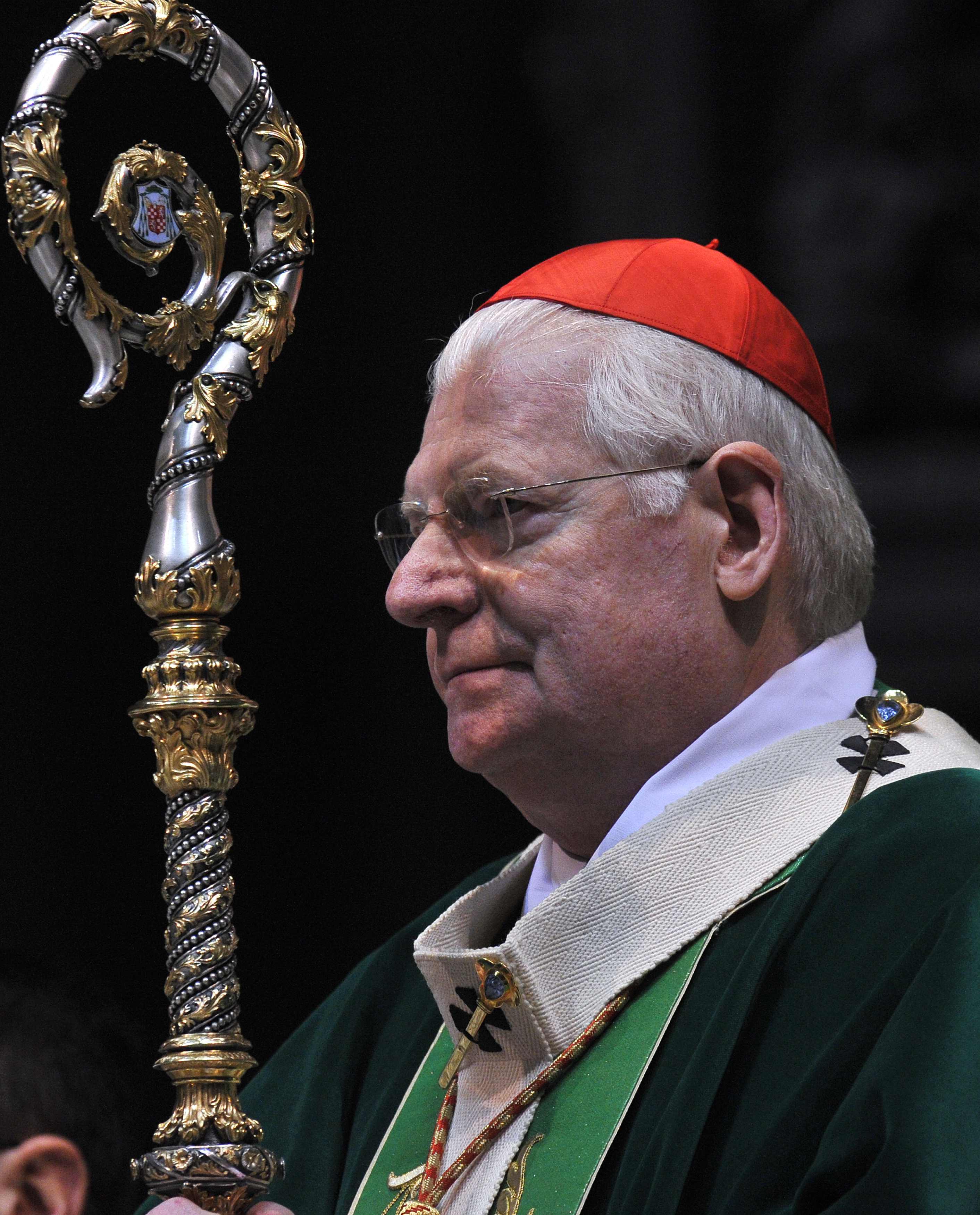
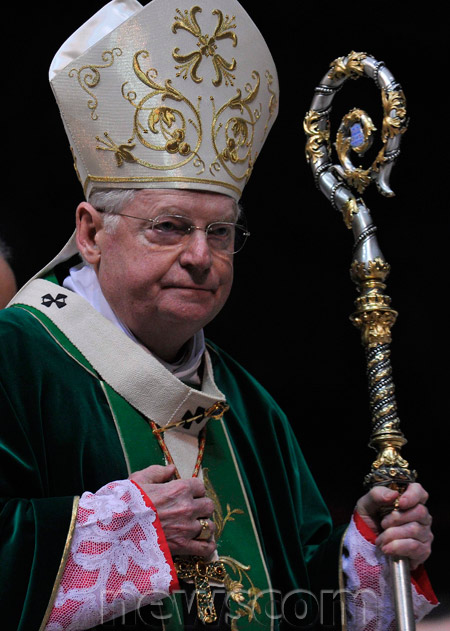
Cardinal Angelo Scola, Archbishop of Milan, the Papabile

http://www.eitb.com/en/news/world/detail/1282802/candidates-new-pope–profile-cardinal-angelo-scola/

From the article (My commentary at the end) :


Election of new pope

Profile of Cardinal Angelo Scola, Archbishop of Milan

APTN

03/11/2013

A conservative, and theologically close to both Pope Benedict and his predecessor John Paul II, Cardinal Scola is regarded as one of the leading European candidates to become Pope.

Cardinal Angelo Scola, the archbishop of Milan.

Cardinal Angelo Scola, the archbishop of Milan, shot to the top of a list of possible successors to Pope Benedict XVI almost immediately the resignation was announced.

A conservative, and theologically close to both Pope Benedict and his predecessor John Paul II, Cardinal Scola is regarded as one of the leading European candidates to become Pope.

Some observers tipped him to succeed after the death of John Paul II in 2005, but the conclave instead chose Cardinal Joseph Ratzinger who became Benedict XVI, the 265th pope.

But if there was rivalry between the candidates in 2005, it had little effect on their close relationship, and Scola remained a favourite of Pope Benedict’s, who appointed the Cardinal archbishop of the Milan Diocese in June 2011.

In the small town of Malgrate on Lake Como in northern Italy, many of the 5,000 residents are backing their hometown boy to become Pope. Scola was born in Malgrate on 7 November 1941 to a truck driver and a homemaker.

He entered the priesthood in 1970, became a Cardinal in 2003, serving first as Patriarch of Milan until he was elevated to his current post of archbishop.

Scola’s cousin, Angelo Colombo, remembers that during World War II he would spend time at his cousin’s home because Scola’s father was a truck driver and could get access to flour and bread.

Colombo said he would go to Scola’s family home, and his aunt and the future Cardinal would always share their food. When he asked if he thought his cousin would make a good Pope, Colombo laughed and responded: “he was a tough boy”.

Scola spent the early years of his life in a small home on Malgrate’s Salita Sant’Antonio. Alfredo Cagliandi was a classmate of Cardinal Scola and lived in the apartment below him.

“We would invite Angelo to come and play and he would repeatedly respond ‘I am sorry, but I don’t have time.’  He was too busy because was already involved in something religious,” said Cagliandi, who still lives in Malgrate.

Scola spent the first two decades after his 1970 ordination in the lecture halls and libraries of renowned Catholic universities and theological training grounds, notably in Fribourg, Switzerland, and the Lateran Pontifical University in Rome.

While pursuing theological studies, Scola was involved in Communion and Liberation, a conservative Italian Catholic group which blends political activism with faith-based fervour as it seeks to make its weight felt in the country’s decision-making.

Back in Scola’s home town, the local priest Father Andrea Lotterio proudly showed off the baptismal font where he says the town’s babies are still baptised today, noting that Scola was baptised there in 1941.

Father Lotterio said Scola has pleased the residents of Malgrate by never losing his strong ties to his hometown. “He has maintained his relationships with many local citizens, with his friends, with his relatives,” Lotterio said. “So much so that in this town he is called Don Angelo, instead of Cardinal or Patriarch of Venice.”

Pope Benedict resigned as leader of the Catholic Church on Thursday, becoming the first pope in 600 years to resign. For the time being, the governance of the Catholic Church shifts to Cardinal Tarcisio Bertone, the camerlengo, or chamberlain. Bertone, along with the College of Cardinals will guide the church and make plans for the conclave to elect the 266th leader within the next few weeks.


Commentary and additions:

Indeed, Cardinal Angelo Scola has many strengths and characteristics that we need as the new Pope to lead the Roman Catholic Church, the one and Universal Church. He does have his weaknesses, but his strengths more than made up for him. After all, it is human to have weaknesses and to make mistakes.

Cardinal Scola is media-savvy, able to reach out into the hearts of many, including youths and those in the world, who are longing for the Lord to come to them. Being media-savvy, and also internet-savvy, Cardinal Scola is not shy of using modern media tools, such as the internet, twitter, YouTube, his own site, and many other means to evangelise to the world, and to reach out, especially to youths.

Cardinal Scola also has a positive outlook and optimism in the Church, and indeed, instead of being pessimistic on the Church, and instead of looking at a Church in trouble, he dismissed all this, and all the lies that the media had brought about the Church, that the Church instead of being in chaos and trouble, is in fact growing, and filled with vibrant and strong faith and love in God, and Cardinal Scola has the capacity to tap into all these energies.

Cardinal Scola also came from a poorer family background, and he understood the plight of the poor and the less fortunate. His hometown people has often remembered him as someone who not only did not forget about where he came from, and where he was born, but also someone who constantly gives them his care and his love, in imitation of Christ and His care for the poor.

Cardinal Scola speaks Italian, English, French, and Spanish, and although his English is not that good, but he has quite a strong command of these languages, which are essential in the Pope’s ministry as the leader of the Universal Church.

Cardinal Scola’s initiatives to reach out to the Christians in the Holy Land and in other areas where Christians are minorities, and his involvement in interreligious dialogue and cooperation, and even with atheists, had been fruitful and crucial in strengthening Christians in the areas where they had been persecuted, and where persecutions are ongoing.

His experience in the Archdiocese of Milan, Patriarchate of Venice, and Diocese of Grosseto clearly showed that he is a pastoral leader with a humble and yet intellectual mind, that matches that of our beloved Pope Emeritus Benedict XVI. Yet, his experiences in the Roman Curia too were many, with works as leader of Pontifical Institute of Marriage and the Family, which he also took a strong stand with the Church in the sanctity of both marriage and the family.

His intellect, knowledge, and publications especially in topics like bioethics, in the midst of the attacks against Church’s stand on bioethics, cloning, and contraceptions will be essential for the future leader of the Church, and his ability to connect and reach out to people, more than Pope Emeritus Benedict XVI, will be valuable asset to have in the new Pope.

Nevertheless, now that the Conclave will begin soon, we continue to pray that God will pour His Holy Spirit on all the Cardinal-electors, that they can make a wise and inspired decision, to elect someone whom the Lord has chosen, as the best possible person to succeed His Apostle, Peter, and lead the whole Universal Church, that God Himself built in this world, to be the manifestation of His love, justice, and presence.

Friday, 8 March 2013 : 3rd Week of Lent, Memorial of St. John of God, Religious (Scripture Reflection)

Today we hear again about love, and about compassion, these two most wonderful things in the world that came to us from God Himself. For God is love, and God is compassion. He loves all things, and especially all mankind, the last and greatest of all of His creations. Of course God hates all forms of evil and sin, but even greater is His love is for us sinners, if only that we too show Him our sincere and pure love for Him.

That is why the greatest commandments of all is to love, and even the base and heart of all the ten commandments in the Ten Commandments given to Moses, in all the prohibitions and the wordings are basically about love, and the commands given by God not to spurn the love between God and man, and the love between mankind themselves, who are fellow brothers and sisters in God. That is why love is very important, especially in our world today, when love is increasingly marginalised and misinterpreted.

For love is not just a commercial kind of love, and love is not desire and lust. Contrary to what popular perception is, love is not just limited to the love between a love-struck male and a love-struck female. That is just one form of love, and there are many kinds of love, and true love is definitely much more difficult than just to say “I love you” or giving presents and expensive gifts to show our ‘love’.

For to love means to have the profound and concrete change in our heart, and our being, and in some cases even to give ourselves in its entirety, to the other person, especially in the case of our love to God, to love Him with all our hearts, our minds, and our souls, and of course love between man and woman who have been made one by God, and no man should divide and separate such a divine union.

The reason why the institution of love, marriage, and the family had been under attack and had been subjected to much destruction in recent years is because of the growing absence of love in our world today, either between spouses, within the family itself, between the parents and the children, and between man and God, and between man and their fellow neighbours. Many of our world’s troubles today are because of the lack of this love, that man began to turn their back against God, abandoning Him for other pursuits, either for material goods or for the fame among men.

Violence in our world today has also arisen because of this growing lack of love, where brothers and sisters would not hesitate to attack one another physically or verbally, totally disregarding the commandments that God had given us, that is to love one another as we love ourselves. In too many cases today, we love ourselves too much, and we think too highly of ourselves. We are increasingly becoming less communal and more individualistic, and began to isolate ourselves from others, either in our busy career, in our busy commitments, or in our material properties and wealth, and at the same time also isolating ourselves from God and His love.

That is exactly the kind of love that St. John of God, whose feast we celebrate today, want to get away from. For St. John of God was a holy and pious man of God, and often strived for his personal piety and salvation through prayers and faith in God. However, one day, a great enlightenment came for St. John of God, through another saint, St. John of Avila, who advised him to put his personal piety and salvation behind an even more important matter, that is love for others, and service for the poor, the needy, and the less fortunate.

Since then, the light of love within St. John of God, which was previously confined within him, was released and he did plenty of good works for the sake of the poor, the abandoned, and the weak in the society of his time. This is the kind of love that God wants us to have, to care for our brethren, our fellow mankind without any hesitation, qualms, or ulterior motives, and to die first in ourselves, that we can be born anew as caring persons that place the well-being of others before our own.

It is not easy to cast away our selfishness and our strong love for ourselves, but brothers and sisters, if we help one another, and keep a strong prayer life, God will show us how to love others. It is not enough just to love God or to love ourselves alone, but to love others unconditionally is the final piece in the puzzle, that allow us to become truly beings of love that God desires, for when we love others in this way, and give ourselves to them, our own love for God will only become more perfect and more profound.

Let us pray brothers and sisters in Christ, that our life will be filled more fully with love, and that our actions too will be based on love and compassion. That we can do more things as God wanted us to do, to help one another, especially those least among us. Forgive one another’s sins and faults too. For if we do not forgive, we can never fully love one another, with the grudge and faults being in the way for that perfection of love. Let us imitate St. John of God, and also experience his moment of epiphany, when he understood that love can be more perfect, and faith can be more perfect, when it is shared and used for the good of others around us, rather than just kept within ourselves.

St. John of God, pray for us sinners, that we may follow your footsteps and grow in love for one another, and love for God our Father. Amen.

12 reasons why Cardinal Angelo Scola may be the next Pope : My chosen Papabile

Cardinal Angelo Scola attends a mass in Duomo Cathedral in Milan

Cardinal Angelo Scola (12 reasons why I think he is the best of all the other Candidates, a frontrunner, and should be elected Pope) :

1. Strong in faith and theology : Yes, an intellectual disciple of Pope Benedict XVI, and is as strong as our Pope Emeritus on theology and his deep knowledge of the faith and the Church

2. Close and capable to work with youths : Yes, will be Pope for the youths indeed, and have been working closely with youths in many occasions, especially in his pastoral ministry in Venice and now Milan.

3. Twitter : Already had, and had actively tweeted in the past! Will be no problem to continue to @Pontifex!

4. Italian and other languages : Yes, and Bishop of Rome definitely must speak fluent Italian! Also fluent in several other languages, including English.

5. Interreligious dialogue : Yes, and knowledgeable about Islam in particular, and have been active in reaching out to Christian minorities in the Middle East and the Muslim world.

6. Tradition : Strong in liturgy and tradition, a tradition-based Pope just like Pope Benedict XVI, we need a strong anchor of faith! A close and personal understanding of the liturgy through its beauty can only serve to strengthen the faith of the faithful and the Church.

angelo-scola
7. Charisma : Yes, strong charisma and outreach, and also has a global persona and able to connect with youths and other sections of the society.

8. Poverty and charity of the Church : Being born into low-middle income family, made him to have a close connection and personal connection to the poor and the less fortunate in the Church and the world.

9. Age : At 71, is at the prime age for Pope. Not too old (Pope Benedict XVI was elected at 78 and yet managed to lead an almost 8 year Pontificate), and therefore he will be expected to lead for 15-20 years, and relatively healthy, which is what the Cardinals seek. Not too young, and very experienced.

10. Experience (Curia) : Significant term as the Rector Magnificus of Pontifical University, and then as the President of the Pontifical Institute of John Paul II for Studies of Marriage and Family.

11. Experience (Pastoral) : Experience as Bishop of Grosetto, and long experience as the Patriarch of Venice, and also a great job as the Archbishop of Milan. Hence, being accorded the extremely rare honour of having headed to of Italy’s and the world’s most influential dioceses.

12. Bioethics and Family : Knowledgeable and had published books in bioethics (and also many other topics, totalling more than 120 volumes in total), and very supportive of marriage and family, and definitely strong in the matter, being the former President in the Pontifical Institute on the Family (see number 10). It is necessary to have a strong leader in the issue at the time when the institution of marriage and the family is under constant and increasingly serious attacks.