
Monday, 30 November 2015 : Feast of St. Andrew, Apostle, Feast Day of the Church of Constantinople (Homily and Scripture Reflections)

Liturgical Colour : Red

Dear brothers and sisters in Christ, on this day, we celebrate the feast of the Holy Apostle Andrew, St. Andrew the First-Called, known as such because he was among the first of the Apostles to be called by the Lord, as we heard the story in the Gospel passage of today, where Jesus called him and his brother Peter from their job as fishermen on the shores of the Lake of Galilee.

St. Andrew was the brother of St. Peter, who would later be the one to establish many churches and structure of the Universal Church in many places, and in the end became the first Bishop of Rome, and also as the first Pope as he was given the authority by the Lord to be the chief shepherd and the leader of all His faithful ones. St. Andrew himself went on to establish his own dioceses and churches, and the most famous and lasting one is the Church of the city of Constantinople, then known as Byzantium.

St. Andrew would become the patron of that city and as its first bishop, and as that city grew in importance, and especially after the Roman Emperor Constantine, the very first Christian Emperor and the one to rescind the persecution against the faithful, conquered the whole Empire and chose the site if Byzantium to be his new capital city, the city he named after himself as Constantinople, to be the site of New and Second Rome.

And thus from then on, the episcopal see of St. Andrew, the See of Constantinople rose in prominence and importance until it became second in importance only after the See of Rome. And the Patriarchate that grew from Constantinople, patronised by St. Andrew, would become eventually a great Church that helped to spread the Faith to many peoples in what is now Eastern Europe, and as the centre of the Eastern half of Christianity.

It is therefore with a sense of great regret that we now exist as a divided and shattered Church, where the Universal authority of St. Peter of Rome was not recognised and acknowledged by the successors of St. Andrew, his brother, as since about a thousand years ago, due to the worldly ambitions of the then Patriarch of Constantinople, the See of Constantinople tore itself apart from the Universal Church, a division that we now seek to heal and restore.

Therefore, today, on the feast of the faithful and devoted St. Andrew, brother of the first Vicar of Christ, who shared with him the blood of martyrdom and in the defense of his Faith in God, having both been tortured, incarcerated and crucified as the chief disciples and Apostles of our Lord, we pray that firstly the Church established by St. Andrew will be reunited to the whole Universal Church under the primacy, supremacy and leadership authority of the Pope, whose authority extends over the entire Church and over all the faithful without exception, as the Vicar of our Lord Himself.

And then, let us also pray for ourselves, as the examples of the Holy Apostles and disciples of Christ should have made us to realise that there are still so many of the works which they have initiated that are still left undone and incomplete. And if we look carefully and listen to what St. Paul had exhorted the faithful in Rome in our first reading taken from his Epistle to the Romans, then we should know what is to be expected from us.

Yes, St. Paul reminded that salvation cannot come to the people of God unless they believe in the Lord God Who saved them from sin and death, but they cannot believe before someone bring to them the truth and the wholeness of the Good News, and while the Good News is already there, but without someone to convey the message and the truth, no one would know and thus no one will be saved.

This is the fact that all of us should understand and know, and we have to realise that God has not just called the Apostles to be His bearers of the Good News of His salvation, but in fact, He has called even all of us, all of us here living in this world today, many years after the time of the Apostles, to continue their good works and missions, following in their footsteps and in the examples of their successors.

Let us all therefore on this day, ask for the intercession of the Holy Apostles, particularly that of St. Andrew, that through us and through our works, we may bring light into the world, and also unite all the faithful ones of the Lord, especially those who have separated themselves from the unity of the Church under His Vicar. Let us all pray for the unity of all Christians and for the conversion of the whole world. Amen.
Monday, 30 November 2015 : Feast of St. Andrew, Apostle, Feast Day of the Church of Constantinople (Gospel Reading)

Liturgical Colour : Red

Matthew 4 : 18-22

At that time, as Jesus walked by the lake of Galilee, He saw two brothers, Simon called Peter, and Andrew his brother, casting a net into the lake, for they were fishermen. He said to them, “Come, follow Me, and I will make you fish for people.”

At once they left their nets and followed Him. He went on from there and saw two other brothers, James, the son of Zebedee, and his brother John in a boat with their father Zebedee, mending their nets. Jesus called them. At once they left the boat and their father and followed Him.

Monday, 30 November 2015 : Feast of St. Andrew, Apostle, Feast Day of the Church of Constantinople (Psalm)

Liturgical Colour : Red

Psalm 18 : 2-3, 4-5

The heavens declare the glory of God; the firmament proclaims the work of His hands. Day talks it over with day; night hands on the knowledge to night.

No speech, no words, no voice is heard – but the call goes on throughout the universe, the message is felt to the ends of the earth.

Monday, 30 November 2015 : Feast of St. Andrew, Apostle, Feast Day of the Church of Constantinople (First Reading)

Liturgical Colour : Red

Romans 10 : 9-18

You are saved if you confess with your lips that Jesus is Lord and in your heart you believe that God raised Him from the dead. By believing from the heart, you obtain true righteousness; by confessing the faith with your lips you are saved.

For Scripture says : ‘No one who believes in Him will be ashamed.’ Here there is no distinction between Jew and Greek; all have the same Lord, Who is very generous with whoever calls on Him. Truly, all who call upon the Name of the Lord will be saved.

But how can they call upon the Name of the Lord without having believed in Him? And how can they believe in Him without having first heard about Him? And how will they hear about Him if no one preaches about Him? And how will they preach about Him if no one sends them?

As Scripture says : ‘How beautiful are the feet of the messenger of Good News.’ Although not everyone obeyed the Good News, as Isaiah said : ‘Lord, who has believed in our preaching?’ So, faith comes from preaching, and preaching is rooted in the word of Christ.

I ask : Have the Jews not heard? But of course they have. Because the voice of those preaching resounded all over the earth and their voice was heard to the ends of the world.

Text of the Joint Declaration of the Vicar of Christ and Supreme Pontiff, Pope Francis and Ecumenical Patriarch Bartholomew I of Constantinople

http://www.zenit.org/en/articles/text-of-joint-declaration-signed-by-pope-and-ecumenical-patriarch

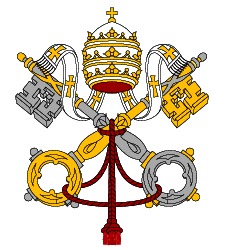
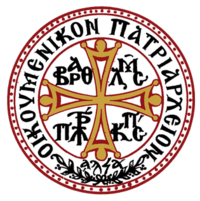
Vatican-coa200px-Constantinople_coat_of_arms

We, Pope Francis and Ecumenical Patriarch Bartholomew I, express our profound gratitude to God for the gift of this new encounter enabling us, in the presence of the members of the Holy Synod, the clergy and the faithful of the Ecumenical Patriarchate, to celebrate together the feast of Saint Andrew, the first–called and brother of the Apostle Peter. Our remembrance of the Apostles, who proclaimed the good news of the Gospel to the world through their preaching and their witness of martyrdom, strengthens in us the aspiration to continue to walk together in order to overcome, in love and in truth, the obstacles that divide us.

On the occasion of our meeting in Jerusalem last May, in which we remembered the historical embrace of our venerable predecessors Pope Paul VI and the Ecumenical Patriarch Athenagoras, we signed a joint declaration. Today on the happy occasion of this further fraternal encounter, we wish to re–affirm together our shared intentions and concerns.

We express our sincere and firm resolution, in obedience to the will of our Lord Jesus Christ, to intensify our efforts to promote the full unity of all Christians, and above all between Catholics and Orthodox. As well, we intend to support the theological dialogue promoted by the Joint International Commission, instituted exactly thirty–five years ago by the Ecumenical Patriarch Dimitrios and Pope John Paul II here at the Phanar, and which is currently dealing with the most difficult questions that have marked the history of our division and that require careful and detailed study. To this end, we offer the assurance of our fervent prayer as Pastors of the Church, asking our faithful to join us in praying “that all may be one, that the world may believe” (Jn17:21).

We express our common concern for the current situation in Iraq, Syria and the whole Middle East. We are united in the desire for peace and stability and in the will to promote the resolution of conflicts through dialogue and reconciliation. While recognizing the efforts already being made to offer assistance to the region, at the same time, we call on all those who bear responsibility for the destiny of peoples to deepen their commitment to suffering communities, and to enable them, including the Christian ones, to remain in their native land. We cannot resign ourselves to a Middle East without Christians, who have professed the name of Jesus there for two thousand years. Many of our brothers and sisters are being persecuted and have been forced violently from their homes.It even seems that the value of human life has been lost, that the human person no longer matters and may be sacrificed to other interests. And, tragically, all this is met by the indifference of many. As Saint Paul reminds us, “If one member suffers, all suffer together; if one member is honoured, all rejoice together” (1 Cor 12:26). This is the law of the Christian life, and in this sense we can say that there is also an ecumenism of suffering. Just as the blood of the martyrs was a seed of strength and fertility for the Church, so too the sharing of daily sufferings can become an effective instrument of unity. The terrible situation of Christians and all those who are suffering in the Middle East calls not only for our constant prayer, but also for an appropriate response on the part of the international community.

The grave challenges facing the world in the present situation require the solidarity of all people of good will, and so we also recognize the importance of promoting a constructive dialogue with Islam based on mutual respect and friendship. Inspired by common values and strengthened by genuine fraternal sentiments, Muslims and Christians are called to work together for the sake of justice, peace and respect for the dignity and rights of every person, especially in those regions where they once lived for centuries in peaceful coexistence and now tragically suffer together the horrors of war. Moreover, as Christian leaders, we call on all religious leaders to pursue and to strengthen interreligious dialogue and to make every effort to build a culture of peace and solidarity between persons and between peoples. We also remember all the people who experience the sufferings of war. In particular, we pray for peace in Ukraine, a country of ancient Christian tradition, while we call upon all parties involved to pursue the path of dialogue and of respect for international law in order to bring an end to the conflict and allow all Ukrainians to live in harmony.

Our thoughts turn to all the faithful of our Churches throughout the world, whom we greet, entrusting them to Christ our Saviour, that they may be untiring witnesses to the love of God. We raise our fervent prayer that the Lord may grant the gift of peace in love and unity to the entire human family.

“May the Lord of peace himself give you peace at all times and in every way. The Lord be with all of you” (2 Thess 3:16).

From the Phanar, 30 November 2014

Saturday, 30 November 2013 : Feast of St. Andrew, Apostle (Scripture Reflections)

Liturgical Colour : Red

Brothers and sisters in Christ! Today we celebrate the great feast of one of the Apostles, that is St. Andrew, the brother of St. Peter, the leader of the Apostles and Vicar of Christ. St. Andrew is also known as St. Andrew the first-called, because he was known to be the first Apostle to be called out of the Twelve Jesus had chosen. It was St. Andrew who brought his brother Simon, who is St. Peter, to the Lord and introduced the Lord to him.

St. Andrew is the patron saint of the city and Archdiocese of Constantinople, or New Rome. It is known as such because the Emperor Constantine, who ended the persecution of Christians in the Roman Empire, established a new capital in the eastern part of the Empire, in the city he built and named after his own name, which is today known as Istanbul, after its fall to the evil and pagan forces of the Muslim Ottoman Empire.

Not much is known of the actions of St. Andrew in the New Testament, but the Church tradition showed that he established many Christian communities in today’s Greece, particularly in the area now known as Thrace, especially the Christian community of Byzantium, later known as Constantinople when the Emperor established his new city and capital there.

St. Andrew laboured hard for the sake of the Gospel and preached to the unbelievers in the area, earning many converts for the sake of the Lord. Despite difficulties and oppositions and rejections, he continued his ministry with faith, and the faithful communities under his care flourished. And as many of the other Apostles and disciples of the Lord, he followed the Lord into death.

St. Andrew was crucified on an X-shaped cross, which from then on became known as the St. Andrew’s cross. His dedication and faith to the Lord did not make him hesitate to sacrifice even his own life for the sake of the Lord, shedding his blood and giving up his own life for the growth and spread of the Gospel, and for the salvation of more souls to God.

Today we rejoice with our brethren of the Eastern Orthodox Church, headed by the venerable Ecumenical Patriarch of Constantinople, the successor of St. Andrew the Apostle, who had first founded the see of that city. That is why today, we celebrate this great feast of St. Andrew, the patron of the see of our brethren in Constantinople, our brethren in faith, and One as the One, Holy, Catholic, and Apostolic Church.

It is lamentable and sad indeed, that due to petty political and personal ambitions of the corrupt Patriarch of Constantinople at that time, Michael Cerularius, that this very sad and preventable tragic division of the faithful had to occur, in what is known as the Great Schism of 1054, almost a thousand years ago. It is in the best interest of all the faithful that we all put aside our differences and throw far away the lies, rumours, prejudices, and misconceptions which keeps up the enmity and divisions in our One, Holy, Catholic, and Apostolic Church.

We are called today, as St. Paul has shown in the first reading, that we ought to preach the Good News to many people of many nations, and we have to reach out to them, and show them the love of God so that they will be converted to the cause of the Lord, just as St. Andrew himself had done. But we certainly cannot do this, if we ourselves are divided against ourselves.

Yes, first we must show our unity, the unity of the Church as one, the One and only Church of God, which Christ had established Himself on Peter, His Apostle, whom the Lord Jesus had appointed as the first Vicar of His will on this world. Sadly, many people, driven by ambition and human greed would like to see and keep the Church divided as it is, not for the glory of God, but for their own glory, for their own ego.

Following the footsteps of St. Andrew and the other Apostles, that of St. Peter, his brother, let us today, as we celebrate the feast of this great saint, as one Church, remember the mission that the Lord has given to us through His disciples, that we have to go out, and proclaim the words of the Lord, the Good News of Salvation, the salvation in Jesus Christ. And that before all these can be completely done, we must resolve to seek unity among ourselves, to avoid divisions and infighting among ourselves.

We are called to become the fishers of men, as we will catch mankind by thousands, tens of thousands, millions and more, bringing them closer to the Lord. That is why the Lord said to His disciples that they will become fishers of men. We too therefore have been called to be the same as they were, to be the witnesses of the Lord in this world. But fishermen cannot catch the fish if they first fight among themselves, instead of catching the fish and waste much energy, effort, and time in the process, and many fish will be lost.

Therefore, brothers and sisters in Christ, today on the feast of St. Andrew, we rejoice and celebrate together with our brethren in the Church of Constantinople, that is the Eastern Orthodox Christians. We resolve that we will aim and seek for unity between us, that we will be able to soon once again be perfectly reunited in One, Holy, Catholic, and Apostolic Church, the one and only Church that our Lord had built in this world, which He entrusted to Peter and his successors to lead and to be His Vicar in this world.

May the Lord continue to bless us and our loving Church, and bring it closer ever to unity, and with the help of the intercession of St. Andrew, may we be one again, as our Lord is One. Amen.

Saturday, 30 November 2013 : Feast of St. Andrew, Apostle (Gospel Reading)

Liturgical Colour : Red

Matthew 4 : 18-22

As Jesus walked by the lake of Galilee, He saw two brothers, Simon called Peter, and Andrew his brother, casting a net into the lake, for they were fishermen. He said to them, “Come, follow Me, and I will make you fish for people.”

At once they left their nets and followed Him. He went on from there and saw two other brothers, James, the son of Zebedee, and his brother John in a boat with their father Zebedee, mending their nets. Jesus called them.

At once they left the boat and their father and followed Him.

Saturday, 30 November 2013 : Feast of St. Andrew, Apostle (Psalm)

Liturgical Colour : Red

Psalm 18 : 2-3, 4-5

The heavens declare the glory of God; the firmament proclaims the work of His hands. Day talks it over with day; night hands on the knowledge to night.

No speech, no words, no voice is heard – but the call goes on throughout the universe, the message is felt to the ends of the earth.

Saturday, 30 November 2013 : Feast of St. Andrew, Apostle (First Reading)

Liturgical Colour : Red

Romans 10 : 9-18

You are saved if you confess with your lips that Jesus is Lord and in your heart you believe that God raised Him from the dead. By believing from the heart, you obtain true righteousness; by confessing the faith with your lips you are saved.

For Scripture says : ‘No one who believes in Him will be ashamed.’ Here there is no distinction between Jew and Greek; all have the same Lord, who is very generous with whoever calls on Him. Truly, all who call upon the Name of the Lord will be saved.

But how can they call upon the Name of the Lord without having believed in Him?  And how can they believe in Him without having first heard about Him? And how will they hear about Him if no one preaches about Him? And how will they preach about Him if no one sends them?

As Scripture says : ‘How beautiful are the feet of the messengers of Good News.’ Although not everyone obeyed the Good News, as Isaiah said : ‘Lord, who has believed in our preaching?’

So, faith comes from preaching, and preaching is rooted in the word of Christ. I ask : Have the Jews not heard? But of course they have. Because the voice of those preaching resounded all over the earth and their voice was heard to the ends of the world.