Sunday, 18 January 2015 : Second Sunday of Ordinary Time, World Day of Migrants and Refugees and Week of Prayer for Christian Unity (Homily and Scripture Reflections)

Liturgical Colour : Green

Dear brothers and sisters in Christ, today we heard about the calling of Samuel, who had been called by God in his youth, when he was still under the tutelage of Eli, the judge over Israel. He was called to be the servant of God, and to be the one who would lead the people of Israel back to the Lord, as the messenger of His will and desire for His people.

And in the Gospel we heard about the parallel story of how the Apostles, that is the chief disciples of the Lord, were called. They were called from their respective lives to be the bearers of the Good News of the Lord. And therefore, just like Samuel, they brought much goodness to the people of God. They were after all called to be the bearers of God’s great Light to a people who lived in a great darkness, to dispel that darkness and bring them all back to the true Light.

Why was Samuel called by the Lord? And why was the Apostles and the disciples of Christ called by Jesus to follow Him and to do His will? That is because there is indeed much wickedness in this world, so much so that it disgusts our Lord to see such great darkness and wickedness existing among us His people. Thus, He called His servants and all those whom He had chosen to be the bearers of His will to His people, to call them to repentance.

The people at the time of Samuel was led by the judges whom God had appointed over His people. But they were only faithful as long as the judges were alive. As soon as they passed away, they returned to their old way of sin and wickedness, following the customs and practices of their Canaanite neighbours. Therefore, God was angry with them and they suffered greatly at the hands of their persecutors.

Similarly, the people at the time of Jesus lived at a time when they were adrift among the false practices of the people around them. Just a century or so before the birth of Christ, if we read the Book of the Maccabees, then we should know how many of the people of God readily submitted to the pagan ways and rejected the way of the Lord, and they sinned greatly before God.

Nevertheless, it does not mean that God did not love His people. It is neither that He desired their destruction and annihilation. In fact, God loves all of them, and He desires only for their salvation. And that is why, He called Samuel to bring His warnings and His truth to the people, that they might repent and follow Him again. And in the same way, He called His Apostles through whom He made clear His truth and teachings, and from them, the same truth is passed down to all of us.

In the second reading, St. Paul in his letter to the Church in Corinth reminded the faithful that they must avoid all forms of sins and fornications, of the flesh and of the spirit. He reminded the people that they are the Temple of the Holy Spirit, that is the very Temple and House of God where God Himself resides. If they committed sin and fornications, then they would have defiled the very House and Presence of God Himself, and they committed grave sin that threatened condemnation on them.

Therefore it will be the same for all of us if we choose to live wickedly and be filled with sin. All of us who have believed in Christ and accept Him into ourselves through the Most Holy Eucharist have been made into the dwelling and the house where God Himself resides. Thus, we are all the Temples of the Lord’s Holy Presence and we have to maintain the purity and sanctity of this Temple, that is our body, our mind, our heart and our spirit, so that no taint of sin or wickedness may come and harm our purity.

How is the reading today relevant to us, brothers and sisters in Christ? It is because all of us have been called to be the disciples and followers of Christ, and we all have been baptised in His Name, and receiving the gift of the Holy Spirit, we have been granted such great grace to have the Lord Himself dwelling in us. Thus first, we have to maintain ourselves in a state of purity and avoiding the taints of sin as best as we can.

But we cannot just stop there, brethren, as the gifts and graces which we have received are the same gifts which God had given to Samuel, and also the same gifts as He had granted the Apostles and disciples in the ages past. Therefore, we too have the same obligation and duty as that which had been given to the prophets and the Apostles, that is to bring the revelations of God’s truth to mankind and to call mankind back to the Lord, abandoning their sins and embracing fully the way of the Lord.

Are we able to be like Samuel and say courageously to the Lord, “Lord, speak, for Your servant is listening!”? It is very difficult for many if not most of us to listen and to allow God to speak in us, within our heart. He speaks to us in a subtle way, and if we allow ourselves to be distracted by the many things in the world, the many pleasures and evils in it, then I would say that, we would be deaf to the Lord calling for us, to repent and to follow Him with all of our heart. Let us change our ways therefore, that we may truly be faithful and active disciples of our Lord.

And again therefore, it is related once again to how we live our lives. No one will believe in what we preach should we not live according to what our faith tells us. No one will follow us if we do not do as what we have preached to them. Thus, our faith in God must be truly a living faith, and in living our faith, we too can preserve the sanctity of our Temple, the Temple of God that is our body, our mind, our heart, and our soul.

Today we mark the World Day of Prayer for Migrants and Refugees. We ought to pray for all those who have been displaced by various causes, either by war, injustice, oppression or any other reasons, which cause them difficulties and sufferings. If we are truly the Temples of God, the dwelling place of our Lord, then by nature all of us should act according to what our Lord would have done, that is to love those who are least, weakest, the ostracised and the rejected ones in our society. Migrants and refugees are often among these, and if we do not love them, then who will?

Let us share some of our love and our joy, our blessing and our grace with them, the migrants, those who have travelled far from their homeland, as well as refugees who have been displaced from their lands. After all, was not Abraham a migrant too? He travelled far following the will of God, and he obediently followed His commandments, and his descendants Israel also have to move from place to place, suffering difficulties along the way. Thus, let us all share a thought for this, and give them the best we can do. Do not shun them, or ostracise them or reject them, but let us welcome them all with love.

Today we also mark the beginning of the Week of Prayer for Christian Unity, where we pray for the eventual reunion of all the faithful and all those who profess faith in Christ, under the orthodox and true teachings of the Faith, according to the One, Holy, Catholic and Apostolic Church under the sovereignty and leadership of the one and only Vicar of Christ, the Pope of Rome, whom God had appointed to be His sole representative on this world.

Thus as we begin this solemn week of prayer, let us all commit ourselves to keep ourselves pure and righteous, following the Law of God and be obedient to His teachings, so that all others who see us, will believe and repent from their sins. Let us pray sincerely for the conversion of heretics and schismatics who have separated themselves from the true faith in particular, that they may have their eyes opened and their senses awakened, so they may know what the true Faith is like and abandon all forms of lies and falsehoods which Satan had planted in them to divide the Church of God.

Brothers and sisters in Christ, let us all be true to our mission in life, that is to keep ourselves faithful and at the same time, bring our brethren who are still in darkness and all those who have gone wayward, to return them to the path towards the Lord. Hence, now we pray, we act and we do things that will show the faith we have in our Lord, our loving God, and He who sees it all and knows it all, will reward us richly forevermore. God bless us all. Amen.


First Reading :

https://petercanisiusmichaeldavidkang.com/2015/01/17/sunday-18-january-2015-second-sunday-of-ordinary-time-world-day-of-migrants-and-refugees-and-week-of-prayer-for-christian-unity-first-reading/


Psalm :

https://petercanisiusmichaeldavidkang.com/2015/01/17/sunday-18-january-2015-second-sunday-of-ordinary-time-world-day-of-migrants-and-refugees-and-week-of-prayer-for-christian-unity-psalm/


Second  Reading :

https://petercanisiusmichaeldavidkang.com/2015/01/17/sunday-18-january-2015-second-sunday-of-ordinary-time-world-day-of-migrants-and-refugees-and-week-of-prayer-for-christian-unity-second-reading/


Gospel Reading :

https://petercanisiusmichaeldavidkang.com/2015/01/17/sunday-18-january-2015-second-sunday-of-ordinary-time-world-day-of-migrants-and-refugees-and-week-of-prayer-for-christian-unity-gospel-reading/

Sunday, 18 January 2015 : Second Sunday of Ordinary Time, World Day of Migrants and Refugees and Week of Prayer for Christian Unity (Gospel Reading)

Liturgical Colour : Green

John 1 : 35-42

At that time, on the following day John was standing there again with two of his disciples. As Jesus walked by, John looked at Him and said, “There is the Lamb of God.” On hearing this, the two disciples followed Jesus. He turned and saw them following, and He said to them, “What are you looking for?”

They answered, “Rabbi (which means Master), where are You staying?” Jesus said, “Come and see.” So they went and saw where He stayed, and spent the rest of that day with Him. It was about four o’clock in the afternoon.

Andrew, the brother of Simon Peter, was one of the two who heard what John had said, and followed Jesus. Early the next morning he found his brother Simon and said to him, “We have found the Messiah (which means the Christ),” and he brought Simon to Jesus.

Jesus looked at him and said, “You are Simon, son of John, but you shall be called Cephas (which means Rock).”


Homily and Reflection :

https://petercanisiusmichaeldavidkang.com/2015/01/18/sunday-18-january-2015-second-sunday-of-ordinary-time-world-day-of-migrants-and-refugees-and-week-of-prayer-for-christian-unity-homily-and-scripture-reflections/

Sunday, 18 January 2015 : Second Sunday of Ordinary Time, World Day of Migrants and Refugees and Week of Prayer for Christian Unity (Second Reading)

Liturgical Colour : Green

1 Corinthians 6 : 13c-15a, 17-20

Yet the body is not for fornication, but for the Lord; and the Lord is for the body. And God who raised the Lord, will also raise us with His power. Do you not know that your bodies are members of Christ?

On the contrary, anyone united to the Lord becomes one Spirit in Him. Avoid unlawful sex entirely. Any other sin a person commits is outside the body but those who commit sexual immorality sin against their own body.

Do you not know that your body is a Temple of the Holy Spirit within you, given by God? You belong no longer to yourselves. Remember at what price you have been bought and make your body serve the glory of God.


Homily and Reflection :

https://petercanisiusmichaeldavidkang.com/2015/01/18/sunday-18-january-2015-second-sunday-of-ordinary-time-world-day-of-migrants-and-refugees-and-week-of-prayer-for-christian-unity-homily-and-scripture-reflections/

Sunday, 18 January 2015 : Second Sunday of Ordinary Time, World Day of Migrants and Refugees and Week of Prayer for Christian Unity (Psalm)

Liturgical Colour : Green

Psalm 39 : 2 and 4ab, 7-8a, 8b-9, 10

With resolve I waited for the Lord; He listened and heard me beg. He put a new song in my mouth, a song of praise to our God.

Sacrifice and oblation You did not desire; this You had me understand. Burnt offering and sin offering You do not require. Then I said, “Here I come!”

As the scroll says of me, to do Your will is my delight, o God, for Your Law is within my heart.

In the great assembly I have proclaimed Your saving help. My lips, o Lord, I did not seal – You know that very well.


Homily and Reflection :

https://petercanisiusmichaeldavidkang.com/2015/01/18/sunday-18-january-2015-second-sunday-of-ordinary-time-world-day-of-migrants-and-refugees-and-week-of-prayer-for-christian-unity-homily-and-scripture-reflections/

Sunday, 18 January 2015 : Second Sunday of Ordinary Time, World Day of Migrants and Refugees and Week of Prayer for Christian Unity (First Reading)

Liturgical Colour : Green

1 Samuel 3 : 3b-10, 19

And Samuel also lay in the house of YHVH near the Ark of God. Then YHVH called, “Samuel! Samuel!” Samuel answered, “I am here!” and ran to Eli saying, “I am here, did you not call me?” But Eli said, “I did not call, go back to sleep.” So he went and lay down.

Then YHVH called again, “Samuel!” and Samuel stood up and went to Eli saying, “You called me; I am here.” But Eli answered, “I did not call you, my son. Go back to sleep.”

Samuel did not yet know YHVH and the word of YHVH had not yet been revealed to him. But YHVH called Samuel for the third time and, as he went again to Eli saying, “I am here for you have called me,” Eli realised that it was YHVH calling the boy.

So he said to Samuel, “Go, lie down, and if He calls you again, answer : ‘Speak, YHVH, Your servant listens.'” Then YHVH came and stood there calling as He did before, “Samuel! Samuel!” And Samuel answered, “Speak, for Your servant listens.”

Samuel grew; YHVH was with him and made all his words become true.


Homily and Reflection :

https://petercanisiusmichaeldavidkang.com/2015/01/18/sunday-18-january-2015-second-sunday-of-ordinary-time-world-day-of-migrants-and-refugees-and-week-of-prayer-for-christian-unity-homily-and-scripture-reflections/

Text of the Joint Declaration of the Vicar of Christ and Supreme Pontiff, Pope Francis and Ecumenical Patriarch Bartholomew I of Constantinople

http://www.zenit.org/en/articles/text-of-joint-declaration-signed-by-pope-and-ecumenical-patriarch

Vatican-coa200px-Constantinople_coat_of_arms

We, Pope Francis and Ecumenical Patriarch Bartholomew I, express our profound gratitude to God for the gift of this new encounter enabling us, in the presence of the members of the Holy Synod, the clergy and the faithful of the Ecumenical Patriarchate, to celebrate together the feast of Saint Andrew, the first–called and brother of the Apostle Peter. Our remembrance of the Apostles, who proclaimed the good news of the Gospel to the world through their preaching and their witness of martyrdom, strengthens in us the aspiration to continue to walk together in order to overcome, in love and in truth, the obstacles that divide us.

On the occasion of our meeting in Jerusalem last May, in which we remembered the historical embrace of our venerable predecessors Pope Paul VI and the Ecumenical Patriarch Athenagoras, we signed a joint declaration. Today on the happy occasion of this further fraternal encounter, we wish to re–affirm together our shared intentions and concerns.

We express our sincere and firm resolution, in obedience to the will of our Lord Jesus Christ, to intensify our efforts to promote the full unity of all Christians, and above all between Catholics and Orthodox. As well, we intend to support the theological dialogue promoted by the Joint International Commission, instituted exactly thirty–five years ago by the Ecumenical Patriarch Dimitrios and Pope John Paul II here at the Phanar, and which is currently dealing with the most difficult questions that have marked the history of our division and that require careful and detailed study. To this end, we offer the assurance of our fervent prayer as Pastors of the Church, asking our faithful to join us in praying “that all may be one, that the world may believe” (Jn17:21).

We express our common concern for the current situation in Iraq, Syria and the whole Middle East. We are united in the desire for peace and stability and in the will to promote the resolution of conflicts through dialogue and reconciliation. While recognizing the efforts already being made to offer assistance to the region, at the same time, we call on all those who bear responsibility for the destiny of peoples to deepen their commitment to suffering communities, and to enable them, including the Christian ones, to remain in their native land. We cannot resign ourselves to a Middle East without Christians, who have professed the name of Jesus there for two thousand years. Many of our brothers and sisters are being persecuted and have been forced violently from their homes.It even seems that the value of human life has been lost, that the human person no longer matters and may be sacrificed to other interests. And, tragically, all this is met by the indifference of many. As Saint Paul reminds us, “If one member suffers, all suffer together; if one member is honoured, all rejoice together” (1 Cor 12:26). This is the law of the Christian life, and in this sense we can say that there is also an ecumenism of suffering. Just as the blood of the martyrs was a seed of strength and fertility for the Church, so too the sharing of daily sufferings can become an effective instrument of unity. The terrible situation of Christians and all those who are suffering in the Middle East calls not only for our constant prayer, but also for an appropriate response on the part of the international community.

The grave challenges facing the world in the present situation require the solidarity of all people of good will, and so we also recognize the importance of promoting a constructive dialogue with Islam based on mutual respect and friendship. Inspired by common values and strengthened by genuine fraternal sentiments, Muslims and Christians are called to work together for the sake of justice, peace and respect for the dignity and rights of every person, especially in those regions where they once lived for centuries in peaceful coexistence and now tragically suffer together the horrors of war. Moreover, as Christian leaders, we call on all religious leaders to pursue and to strengthen interreligious dialogue and to make every effort to build a culture of peace and solidarity between persons and between peoples. We also remember all the people who experience the sufferings of war. In particular, we pray for peace in Ukraine, a country of ancient Christian tradition, while we call upon all parties involved to pursue the path of dialogue and of respect for international law in order to bring an end to the conflict and allow all Ukrainians to live in harmony.

Our thoughts turn to all the faithful of our Churches throughout the world, whom we greet, entrusting them to Christ our Saviour, that they may be untiring witnesses to the love of God. We raise our fervent prayer that the Lord may grant the gift of peace in love and unity to the entire human family.

“May the Lord of peace himself give you peace at all times and in every way. The Lord be with all of you” (2 Thess 3:16).

From the Phanar, 30 November 2014

Saturday, 30 November 2013 : Feast of St. Andrew, Apostle (Scripture Reflections)

Liturgical Colour : Red

Brothers and sisters in Christ! Today we celebrate the great feast of one of the Apostles, that is St. Andrew, the brother of St. Peter, the leader of the Apostles and Vicar of Christ. St. Andrew is also known as St. Andrew the first-called, because he was known to be the first Apostle to be called out of the Twelve Jesus had chosen. It was St. Andrew who brought his brother Simon, who is St. Peter, to the Lord and introduced the Lord to him.

St. Andrew is the patron saint of the city and Archdiocese of Constantinople, or New Rome. It is known as such because the Emperor Constantine, who ended the persecution of Christians in the Roman Empire, established a new capital in the eastern part of the Empire, in the city he built and named after his own name, which is today known as Istanbul, after its fall to the evil and pagan forces of the Muslim Ottoman Empire.

Not much is known of the actions of St. Andrew in the New Testament, but the Church tradition showed that he established many Christian communities in today’s Greece, particularly in the area now known as Thrace, especially the Christian community of Byzantium, later known as Constantinople when the Emperor established his new city and capital there.

St. Andrew laboured hard for the sake of the Gospel and preached to the unbelievers in the area, earning many converts for the sake of the Lord. Despite difficulties and oppositions and rejections, he continued his ministry with faith, and the faithful communities under his care flourished. And as many of the other Apostles and disciples of the Lord, he followed the Lord into death.

St. Andrew was crucified on an X-shaped cross, which from then on became known as the St. Andrew’s cross. His dedication and faith to the Lord did not make him hesitate to sacrifice even his own life for the sake of the Lord, shedding his blood and giving up his own life for the growth and spread of the Gospel, and for the salvation of more souls to God.

Today we rejoice with our brethren of the Eastern Orthodox Church, headed by the venerable Ecumenical Patriarch of Constantinople, the successor of St. Andrew the Apostle, who had first founded the see of that city. That is why today, we celebrate this great feast of St. Andrew, the patron of the see of our brethren in Constantinople, our brethren in faith, and One as the One, Holy, Catholic, and Apostolic Church.

It is lamentable and sad indeed, that due to petty political and personal ambitions of the corrupt Patriarch of Constantinople at that time, Michael Cerularius, that this very sad and preventable tragic division of the faithful had to occur, in what is known as the Great Schism of 1054, almost a thousand years ago. It is in the best interest of all the faithful that we all put aside our differences and throw far away the lies, rumours, prejudices, and misconceptions which keeps up the enmity and divisions in our One, Holy, Catholic, and Apostolic Church.

We are called today, as St. Paul has shown in the first reading, that we ought to preach the Good News to many people of many nations, and we have to reach out to them, and show them the love of God so that they will be converted to the cause of the Lord, just as St. Andrew himself had done. But we certainly cannot do this, if we ourselves are divided against ourselves.

Yes, first we must show our unity, the unity of the Church as one, the One and only Church of God, which Christ had established Himself on Peter, His Apostle, whom the Lord Jesus had appointed as the first Vicar of His will on this world. Sadly, many people, driven by ambition and human greed would like to see and keep the Church divided as it is, not for the glory of God, but for their own glory, for their own ego.

Following the footsteps of St. Andrew and the other Apostles, that of St. Peter, his brother, let us today, as we celebrate the feast of this great saint, as one Church, remember the mission that the Lord has given to us through His disciples, that we have to go out, and proclaim the words of the Lord, the Good News of Salvation, the salvation in Jesus Christ. And that before all these can be completely done, we must resolve to seek unity among ourselves, to avoid divisions and infighting among ourselves.

We are called to become the fishers of men, as we will catch mankind by thousands, tens of thousands, millions and more, bringing them closer to the Lord. That is why the Lord said to His disciples that they will become fishers of men. We too therefore have been called to be the same as they were, to be the witnesses of the Lord in this world. But fishermen cannot catch the fish if they first fight among themselves, instead of catching the fish and waste much energy, effort, and time in the process, and many fish will be lost.

Therefore, brothers and sisters in Christ, today on the feast of St. Andrew, we rejoice and celebrate together with our brethren in the Church of Constantinople, that is the Eastern Orthodox Christians. We resolve that we will aim and seek for unity between us, that we will be able to soon once again be perfectly reunited in One, Holy, Catholic, and Apostolic Church, the one and only Church that our Lord had built in this world, which He entrusted to Peter and his successors to lead and to be His Vicar in this world.

May the Lord continue to bless us and our loving Church, and bring it closer ever to unity, and with the help of the intercession of St. Andrew, may we be one again, as our Lord is One. Amen.

Thursday, 11 July 2013 : 14th Week of Ordinary Time, Memorial of St. Benedict, Abbot (Scripture Reflection)

Dear brothers and sisters in Christ, today we heard from the readings about the mission that Christ had entrusted all of us with. The mission that He had given to the apostles before He left this world, that is to spread the Good News of salvation to all mankind, and to all the world. Each and every Christians baptised in the Name of the Most Holy Trinity of Father, Son, and the Holy Spirit must uphold this mission and pledge ourselves to its cause, that is the cause of the Lord.

Christ had called all of us to be His disciples, to bring all the people of God back to His loving embrace, to open their eyes and their hearts to God’s divine and everlasting love. The Lord offers His love and His peace freely to all, without exception, even sinners, and especially sinners, because the Lord did come especially for the sake of sinners, those lost sheep lost in the darkness of evil and sin.

Christ gave up His life in sacrifice, as a worthy offering in atonement for all our sins, all of us, without any exceptions. He died for all mankind, past, present, and future so that all may live, and in this new life, be granted eternal life in glory with Him for eternity, as long as we keep to the covenant that He had made with us, a new covenant sealed by His Blood pouring down from the cross.

Our Lord Jesus loves us, brethren, so much that He is willing to suffer all the blows, lashes, and curses, the pain of the nails that pierced his hands and feet, so that all of us do not have to suffer death eternal in hell. For our sins and iniquities the Lamb of God had been slaughtered and sacrificed, innocent and pure as He is, He was made to bear all the sins of the world.

Sadly, as many as those who would accept His call and His words, and followed Him into a new life of purity and holiness, there are even many more who would prefer to remain in their state of sin and darkened life, and preferred the pleasures of the world and Satan to the Lord who loves them. Many would reject Him and reject His messengers and disciples, including all of us who had been called by the Lord to be His apostles in this modern era.

So if Christ is rejected by many, then we will be rejected too, but this does not mean that we should slacken or abandon the mission that has been given to us. Indeed, there are still those who would accept Christ and His Good News, and even among those who have rejected Him and rejected us, there is always still hope, that they will change and receive the Lord. We must remain strong and courageous, and embrace our mission with zeal, devotion, and most importantly, love.

Today, we celebrate the memorial of St. Benedict the abbot, also known widely as St. Benedict of Nursia, the founder of the religious order of St. Benedict, or the Benedictines. He was also an inspiration for our great Pope Emeritus, the beloved Pope Emeritus Benedict XVI, in choosing his regnal name as Pope, together with Pope Benedict XV, his predecessor and the Pope of peace.

St. Benedict of Nursia lived in the first millenium in the late Roman Empire, and he was the founder of a great religious order, the Benedictines, who imposed on them what is well-known as the Rule of St. Benedict. The rule placed a great emphasis on the balance between piety and religiosity and the need for service and good works, which the Benedictines practiced through their charitable acts and service, and a pious and holy lifestyle, dedicated to the Lord in humility and obedience. And important to the Benedictines are also the concept of peace, the need to seek peace in this world, and to be peaceful in one’s own acts.

St. Benedict strengthened the Christian monasticism that was growing up at his era, and he laid much foundations for the future missionary works of the Church and religious orders that helped to preserve the Traditions of the Faith through the tumultous era of the ending of the Roman Empire and the advent of the Dark Ages. Through St. Benedict, the monastic communities had been strengthened, and therefore, the Church itself had been strengthened.

Inspired by the example of St. Benedict of Nursia and other great missionary saints of the monastic orders, we embark on this new journey of the faith in this modern era of secularism and consumerism, where God increasingly take a lesser importance in people’s minds and lives. It is our duty then, to continue the work of faith, to bring the Lord closer to many people around the world who have yet to receive the Good News of the Lord, or even those who had rejected the message of salvation outright.

There will be rejection for sure, for the world will reject us just as it had once rejected Christ Himself. But we must never give up and we must be courageous, to defend our faith, to defend the Lord, and to bring salvation to many who still live in the darkness of evil and sin. May St. Benedict of Nursia intercede for us, and pray for our sake, that God will send His helpers to aid us in our mission in this world. May St. Benedict also intercede for the sake of our beloved Pope Emeritus Benedict XVI, who is fighting for the Church in prayer and solitude. God bless us all, and God bless His Holy Church! Amen.

On the Future Canonisation of Blessed Pope John XXIII and Blessed Pope John Paul II

Image

The two great Popes of the last century, both of whom had been recognised as Blessed, through the virtues of their life and miracles attributed to them, will be declared Saints, in a ceremony likely to be scheduled at the end of this year (2013).

Both Blessed Pope John XXIII and Blessed Pope John Paul II, who was made a Blessed just two years ago on 1 May 2011, had each left their incredible and remarkable footprint in the path of history, both in the history of the Church, and in the history of the world and mankind.

Image

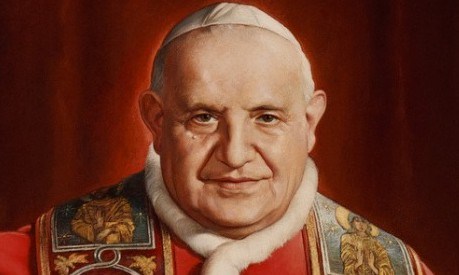
Blessed Pope John XXIII was known to be a great man of peace, and above all things seek to embrace peace and cooperation, between mankind, and also begun the process of Ecumenism in order to reunite the divided fragments of God’s Church back into the One, Holy, Catholic, and Apostolic Church that is our Church.

He was also known for his Encyclical Pacem in Terris (Peace on earth), which was released just months after the world was almost engulfed in an all-out nuclear war between the two superpowers, the United States of America (USA) and the Soviet Union (USSR) during the height of the Cold War in the Cuban Missile Crisis. Blessed Pope John XXIII worked hard ceaselessly to promote peace between the parties in conflict, for the good of all mankind, all of whom are the children of the same one God.

Blessed Pope John XXIII also convoked the Second Vatican Council, which brought the Church in line with the developments in the world, and also to make the Church more relevant in the increasingly rapid new developments in our world, and the rise of apathy towards religion in general. He would pass away before the Council was completed, but his legacy continued on until today.

Image

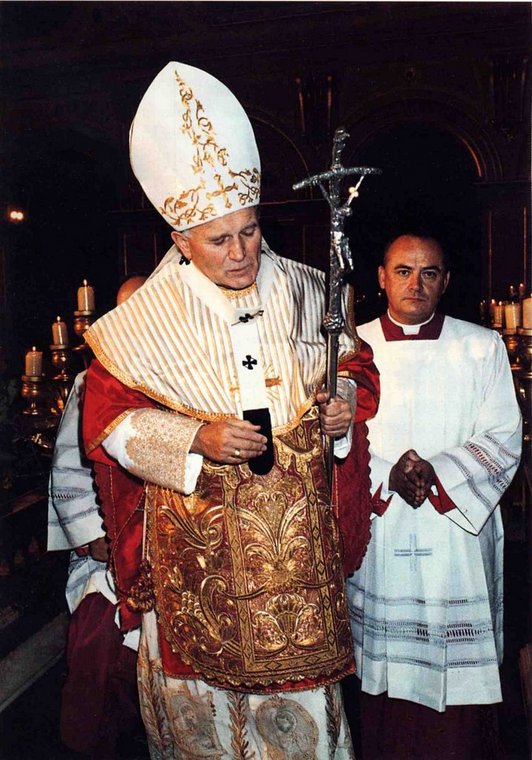
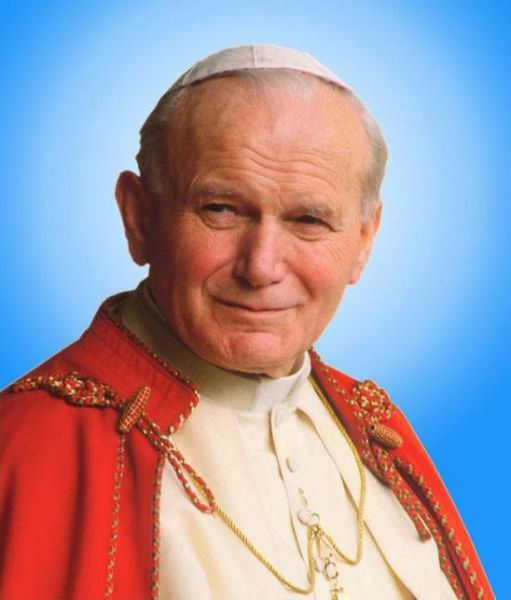
Blessed Pope John Paul II ‘the Great’ was a well-known Pope, a Pope of youths, and a hardworking Pope, who travelled around the world to visit all the flocks of the Lord that had been entrusted to him as the Successor of St. Peter the Apostle, as the Vicar of Christ. He was instrumental in the end of Communism in Eastern Europe, ending persecutions against the people of the faith, and also open boundaries and barriers that had been long in place since the beginning of the Cold War.

Blessed Pope John Paul II has also renewed the zeal for the faith amongst many around the world, and especially in youths, to whom he dedicated a special event, the World Youth Day, in order to commemorate the faith, particularly amongst the youths of the faith, around the globe. He inspired many through his works, his Encyclicals, and especially his perseverance despite being troubled with a worsening Parkinson’s disease condition, that made him to labour until his passing on 2 April 2005.

Both Popes had been very influential, hardworking, and very holy leaders of the One Church of the Lord Jesus Christ, and they had done much to strengthen the faith and the Church, and bring God closer to many, bringing them closer to salvation.

I hope to soon be able to ask for the intercessions of Pope St. John XXIII and Pope St. John Paul II the Great, and I pray that they will intercede for us sinners around the world, and pray for us, till we are greeted by them at the doors of heaven when it is time for us to be with the Lord again. Now we wait for the official announcement on the date of the Canonisation.

Image

Blessed Pope John XXIII, pray for us!

Image

Blessed Pope John Paul II, pray for us!