Liturgical Colour : Purple or Violet
Dear brothers and sisters in Christ, today we mark the beginning of the season of Advent, the special season in our liturgical year, which we also begin anew today, that marks the season of preparation before the great feast and solemnity of Christmas, which will occur in about four weeks from now. The celebration of Christmas is about the birth of our Lord Jesus Christ, commemorating the occasion when He first came into our world, He who is Divine and yet willing to assume the appearance and substance of a humble Man, in order to bring salvation to all of us.
We have two great celebrations in our liturgical year, namely the solemnities of Christmas and Easter, both of which commemorate the most important events in the life of our Lord Jesus Christ on earth. The former celebrates His birth and entry into the world as mentioned, and the latter celebrates the even greater event of His suffering, Passion and way to the cross, death and ultimately His resurrection from the dead. These are the two great celebrations of our Faith, and we put special importance to them.
And that is why for both occasions, we have two special seasons to prepare for them, as a season of penitence and self-introspection, a time for reflection and for us to look deeply into our lives. For our Lord is coming to us, just as He had come before, and like someone who is inviting guests to a party, would it not be fitting for the host to be prepared beforehand?
Thus why those seasons I have mentioned are very important? That is because these two seasons, Advent and Lent are the time for us to be prepared to celebrate with all of our heart, the joy and the truth of our Lord’s life events, in the Christmas and Easter celebrations. If we do not prepare ourselves fully beforehand, then the meaning of the celebrations may be lessened, as what many of us often encountered in our own lives.
The celebrations and festivals which grew around both events, Christmas and Easter had become increasingly more and more distant from their original meaning and purpose, and in this world, which values money and possessions above everything else, the true meaning of the celebration, in particular of Christmas had been lost, in the midst of commercialisation, branding and attempts to sell Christmas for money and profit.
How many of us grow to see Christmas only in terms of the parties and celebrations it brings with it? And how many of us associate it with shopping and gifts? Presents, new clothes and new things for our homes? How many of us associate Christmas with Santa Claus, the Christmas tree, the gift boxes and the various other so-called Christmas apparels and decorations? If we have done so frequently, then do not be afraid brethren, for many of us certainly have done so too.
It is the way of the world, and by extension, the works of Satan, in order to divert us from the true focus of Christmas. It is certainly not wrong for us to celebrate Christmas and be happy with all the celebrations. But are we really celebrating for the right purpose and with the right attitude? This is a question which all of us must ask ourselves, and for us all to be aware of.
Christmas is truly about Christ, the birthday Boy, the One whose birth we are celebrating, and nothing more important than this. We can celebrate and be happy about all the feasts and celebrations, but we must have Christ in our celebrations, and in our hearts we have to understand the significance of His birth and coming into the world. Otherwise, our Christmas celebrations will be empty, meaningless and directionless.
You may be wondering why I am talking so much about Christmas, and even Easter and all the festive and celebration seasons of the Church, even though Christmas itself is still about a month away, and we are just barely beginning the season of Advent. That is because the season of Advent is intimately and very closely related to Christmas itself, and our four weeks of Advent will be meaningless if we do not understand the true meaning of Christmas. It is just necessary that we start this Advent season right.
And in the same way, Christmas and all of its celebrations will be meaningless as I have mentioned, if we have not amply and sufficiently prepared ourselves, and that is why we have this season of Advent to serve as an opportunity and guide for us, to sit back and move away for a while from the busy schedules and activities we have in our lives, and take the opportunity to reflect, and to also confess our sins that as we enter later into the season of Christmas, our hearts, minds, body and souls will be ready for the Lord.
That is also the essence of the Scripture Readings which we heard today, from the first reading, to the second reading and the Gospel itself. The Lord Jesus who has come once before, will come again one day to judge all the living and the dead, and this is what we believe. And it is necessary that we begin the preparations for what is to come. For Advent itself means to prepare and to welcome in expectation for, from the Latin, ‘Adventus’ which literally means ‘coming’, the coming of our Lord Jesus Christ.
The first reading from the Book of the prophet Isaiah focuses on the nature of our Lord as our Redeemer, who will wash away our sins and iniquities, providing that we want to change our ways and repent all of our sinfulness. Isaiah the prophet had indeed acknowledged our sinfulness, and how wicked we have been, but he also showed that while our Lord is angry with our sins and attitudes in life, but He also opens the way for our salvation and repentance.
The psalm spoke of our Lord as our Shepherd, and this relates to how Isaiah the prophet said that the Lord is like our Potter, who shaped us all like a potter shaped the clay jugs and items. He guides us and leads us like a shepherd guiding his sheep from places to places. But it is also easy for the clay to lose its structure and shape, and for the sheep to be lost to the shepherd, if the condition of the clay is not satisfactory, or if the sheep is misled and misguided by other things other than the shepherd.
Thus, as I have elaborated earlier on, it is easy for us to lose our path in life, and to lose focus in our faith, that we forget the true meaning of our faith, of all the celebrations we have and why we even call ourselves a Christian and come to celebrate the Holy Mass together as the Church. We have to therefore be vigilant and strong, and seek help from whatever source available, to strengthen our faith and be ready, for when the Lord comes again.
The second reading from the letter of St. Paul to the Corinthians and the Gospel from the Gospel according to St. Mark truly spoke of one thing, that our Lord is coming again, and the time of His coming will not be known to us. But we have no need to fear if we put our trust and faith in Jesus completely, for He will guide us and show us the way. Thus, it is of great importance for us, to use this perfect opportunity of the Advent season now, to prepare thoroughly, for the eventual and inevitable coming of our Lord and Saviour.
On this day, we also celebrate the feast of one of the great holy Apostles, the feast of St. Andrew, the brother of St. Peter, the chief of all the Apostles and Vicar of Christ. St. Andrew was the first to be called among all the Apostles, at the shore of the lake of Galilee by Jesus, who then called his brother Simon, then to be named Peter by the Lord. As he was the first to be called among the Apostles, and also the first to believe in the Lord Jesus as the Messiah who came into the world, he is also known widely as St. Andrew the First-Called.
And it happens also that as the brother of St. Peter, he was also the founder of the brother of the premier see and diocese in Christendom. He was the founder of the See and Diocese of Constantinople, then known as Byzantium, a quiet city at the edge of Europe at the boundary between Europe and Asia, which is at the site now known as the city of Istanbul. However, it is truly still known by its true name, Constantinople or New Rome or Second Rome.
The city of Constantinople was founded by the Roman Emperor Constantine the Great who was the first Christian Emperor and who ended the great persecutions of the faithful and convoked the first Ecumenical Council in Nicaea in the year 325. The city of Constantinople therefore became a second capital of the Roman Empire, and as such, in the next few decades, the See founded by St. Andrew would grow to a great importance, as the second most important in Christendom after Rome, the See of St. Peter, the Vicar of Christ.
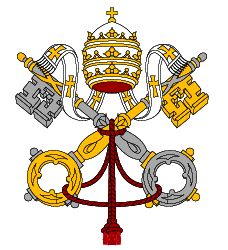
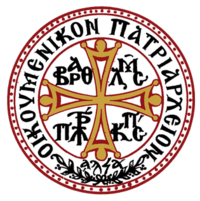
Thus, today we see that among our separated brethren in the Eastern Orthodox Communion, the Archbishop of Constantinople is the most important among all the bishops, and styled himself the Ecumenical Patriarch of Constantinople. Our Holy Father and Vicar of Christ, Pope Francis is visiting Constantinople today to celebrate this occasion of the feast of St. Andrew, and to foster unity between the Church established by the Apostles, and rediscover the close bond and brotherhood between the Apostles St. Peter and St. Andrew.
But what is truly the significance of this feast of St. Andrew for us? And how is it relevant to our celebration of the First Sunday of Advent? Truly, we have to know first what St. Andrew had done for the Lord and for the faithful. St. Andrew was one of the Twelve Apostles, and although details about him other than his calling by Jesus were scant in the Gospels and also in the rest of the New Testament, it was known by Tradition that he also did what the other Apostles did, in spreading the Good News to many lands and helped to establish many dioceses and structures of the Church.
St. Andrew worked hard and zealously to bring the Good News of the Lord to the people who have yet to hear of it, and he and his fellow servants of God faced difficulties and challenges, until eventually, he was martyred in what is now Greece, as he went about spreading the Gospel. He was crucified like that of his brother, St. Peter in Rome. While St. Peter chose to be crucified upside-down, St. Andrew was crucified on an X-shaped cross, which we are now familiar with as the cross of St. Andrew.
The lesson from the life of St. Andrew, how he was called and how he carried on his faith is very relevant to us, on this very occasion of the very first day of this season of Advent. The Lord Jesus is coming soon, and when He comes again, in sudden and unannounced arrival, He will proceed to measure the worth of us all, in whether we have been faithful and devoted to Him. He Himself had told His disciples and all of us many times of what will happen.
The signs are clear, brethren, and the evidence is clear. If we have faith in God, then why hesitate anymore? We have to use whatever opportunity we have now, and this Advent is a perfect reminder to all of us, that we have to prepare ourselves for the coming of the Lord. This Advent is more than just a preparation for Christmas and Christmas is more than just festivities and celebrations. They are all part of our larger preparation in expectation of the coming again of our Lord and Saviour Jesus Christ into this world as King, and this time to bring us all into the eternal glory and happiness He had promised all of us.
Therefore, brothers and sisters in Christ, let us use this opportunity to the maximum, and let us be proactive in our faith. Just as St. Andrew believed in John the Baptist when he said about the Christ, ‘there is the Lamb of God who takes away the sins of the world’ and immediately set about following Him as the first-called among many, we too should follow his example and set about following the Lord now.
Do not wait until the last minute, lest we may be like the foolish and unwise women who were not prepared with oil in their lamps as told in the parable of the five wise women and the five unwise women. When the Lord comes again suddenly, they will be caught unprepared and no goodness will come to them. Instead, be ready and be vigilant, be prepared with all things, that is our heart, mind, body and soul, that we are ever ready to welcome the Lord our God in His glory.
May Almighty God bless us all and guide us all in this season of Advent, that all of us may come to greater realisation of the need to prepare for the coming of Christ, and therefore to prepare ourselves thoroughly and fully, that when He comes again in glory, reminiscing His first coming at Christmas, we may be found ready and worthy, as like St. Andrew, be made worthy of the kingdom of God. God bless us all. Amen.
First Reading :
https://petercanisiusmichaeldavidkang.com/2014/11/28/sunday-30-november-2014-first-sunday-of-advent-feast-of-st-andrew-apostle-first-reading/
Psalm :
https://petercanisiusmichaeldavidkang.com/2014/11/28/sunday-30-november-2014-first-sunday-of-advent-feast-of-st-andrew-apostle-psalm/
Second Reading :
https://petercanisiusmichaeldavidkang.com/2014/11/28/sunday-30-november-2014-first-sunday-of-advent-feast-of-st-andrew-apostle-second-reading/
Gospel Reading :
https://petercanisiusmichaeldavidkang.com/2014/11/28/sunday-30-november-2014-first-sunday-of-advent-feast-of-st-andrew-apostle-gospel-reading/
Epistle (Usus Antiquior) :
https://petercanisiusmichaeldavidkang.com/2014/11/28/usus-antiquior-first-sunday-of-advent-i-classis-sunday-30-november-2014-epistle/
Gospel (Usus Antiquior) :
https://petercanisiusmichaeldavidkang.com/2014/11/28/usus-antiquior-first-sunday-of-advent-i-classis-sunday-30-november-2014-holy-gospel/

 petercanisiusmichaeldavidkang