Monday, 14 October 2013 : 28th Week of Ordinary Time, Memorial of Pope St. Callistus I, Pope and Martyr (Gospel Reading)

Liturgical Colour : Green or Red (Martyr)

Luke 11 : 29-32

As the crowd increased, Jesus began to speak in this way, “People of the present time are troubled people. They ask for a sign, but no sign will be given to them except the sign of Jonah. As Jonah became a sign for the people of Nineveh, so will the Son of Man be a sign for this generation.”

“The Queen of the South will rise up on Judgment Day with the people of these times and accuse them, for she came from the ends of the earth to hear the wisdom of Solomon; and here there is greater than Solomon.”

“The people of Nineveh will rise up on Judgment Day with the people of these times and accuse them, for Jonah’s preaching made them turn from their sins, and here there is greater than Jonah.”

Monday, 14 October 2013 : 28th Week of Ordinary Time, Memorial of Pope St. Callistus I, Pope and Martyr (Psalm)

Liturgical Colour : Green or Red (Martyr)

Psalm 97 : 1, 2-3ab, 3cd-4

Sing to the Lord a new song, for He has done wonders; His right hand, His holy arm, has won victory for Him.

The Lord has shown His salvation, revealing His justice to the nations. He has not forgotten His love nor His faithfulness to Israel.

The farthest ends of the earth all have seen God’s saving power. All you lands, make a joyful noise to the Lord, break into song and sing praise.

Monday, 14 October 2013 : 28th Week of Ordinary Time, Memorial of Pope St. Callistus I, Pope and Martyr (First Reading)

Liturgical Colour : Green or Red (Martyr)

Romans 1 : 1-7

From Paul, a servant of Jesus Christ, an apostle called and set apart for God’s Good News, the very promises He foretold through His prophets in the Sacred Scriptures, regarding His Son, who was born in the flesh a descendant of David, and has been recognised as the Son of God endowed with Power, upon rising from the dead through the Holy Spirit.

Through Him, Jesus Christ, our Lord, and for the sake of His Name, we received grace and mission in all the nations, for them to accept the faith. All of you, the elected of Christ, are part of them, you, the beloved of God in Rome, called to be holy : May God our Father,  and the Lord Jesus Christ, give you grace and peace.

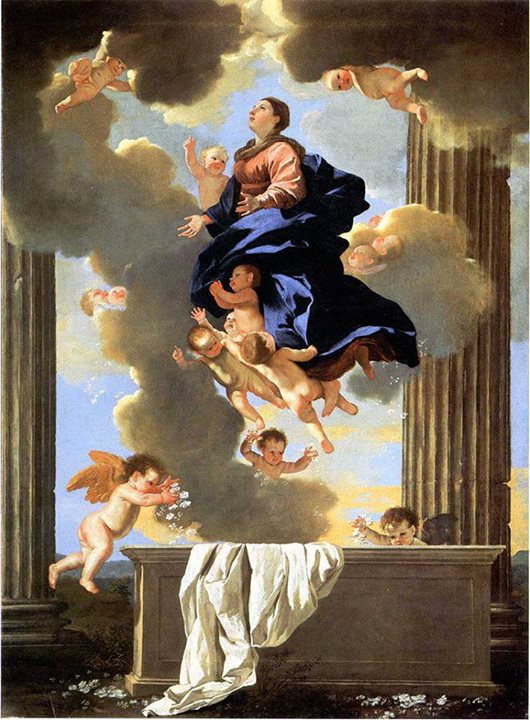
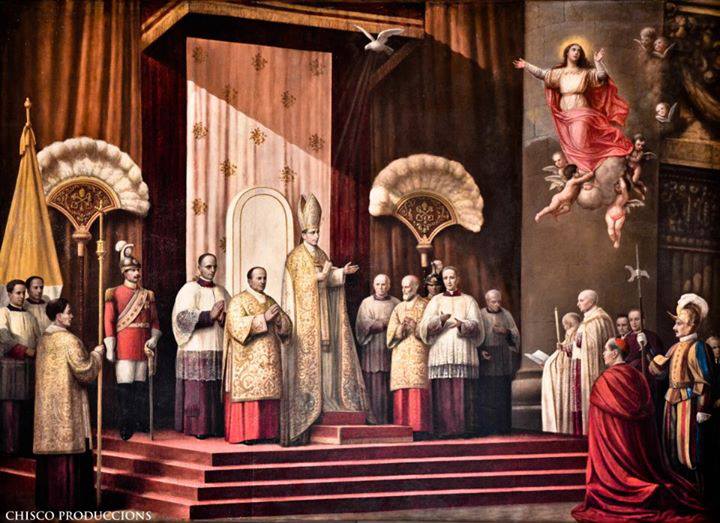
The Promulgation of the Dogma of the Assumption of the Blessed Virgin Mary into heaven in 1950 by Pope Pius XII

Image

The image of the scene when Pope Pius XII proclaimed the Dogma of the Assumption of the Blessed Virgin Mary into heaven in 1950, through his Apostolic Constitution ‘Munificentissimus Deus’ released on 1 November 1950.

This proclamation is made ‘ex cathedra’ or from the authority of the Seat of St. Peter as the Vicar of Christ, as a binding Church teaching, in conjunction with the tradition of the faith, of both the West and East, that the Blessed Virgin Mary, being the mother of our Lord and Saviour, Jesus Christ, who conquered death through His resurrection, did not die but was brought bodily into heaven.

563342_346600692139400_676496786_n

Saturday, 10 August 2013 : 18th Week of Ordinary Time, Feast of St. Lawrence, Deacon and Martyr (Scripture Reflection)

Liturgical Colour : Red

Brothers and sisters in Christ, today, we are urged by none other than our Lord, that we should invest and go to work, in order to make use the gifts that God had given us through the Holy Spirit that He had planted in each one of us the faithful ones in God. He had given us much gifts, abilities, and power, through the Spirit, which if we utilise them, we will truly be able to make a great difference in ourselves, in our neighbours, our fellow men, and in our society, through those gifts given to us.

Yes, brothers and sisters, within us all is the Spirit that God had given us when we were baptised, and when we were confirmed in our faith, given with the Holy Spirit that strengthens and nurtures. We have been given with the seeds of faith, hope, and love, as well as compassion, kindness, care, patience, and devotion, that all of us ought to utilise and nurture in our hearts, as well as in our own communities, that they will not remain just a seed, but will germinate and grow to become healthy and fruitful.

The love that is in us will never grow if we just keep it within ourselves, and the other gifts of the Spirit will also just languish in us and be wasted, if we keep them unused and sealed within our hearts. In order to let them grow and prosper, effort is required, and not just any effort, but strong, dedicated and purposeful effort, with strong contribution from our side, and a significant investment of our attention and our sweat. We do not gain anything from slacking up or resting.

Just like farmers, brothers and sisters, the farmers who worked hard day and night, ploughing the land, planting the seeds, and putting manure or fertilisers on the land, that the seeds will be provided with enough nutrients and therefore can grow to healthy and strong plants, that will in the future bear much fruits. The farmers cared for their plants with love, and give them their full attention, that they grow big and laden with much flowers and therefore, much fruits.

The fruits that are juicy and sweet cannot be born, if the plants are not taken care of carefully and with great dedication, and neither can they be produced, if the farmers have slackened off in their works, and let the plants to their own in growing up. They carefully removed the weeds and the pests, preventing them from eating up the fruits and threatening the health and survival of the plants. In the end, they reaped much fruits, an abundant and bountiful harvest, the sweet products of harvest, which bring them happiness and joy.

That is how, brothers and sisters in Christ, we should also do for the seeds of faith, love, and hope planted by the Lord, the Sower, in each of us, within our hearts. These seeds need our attention, our dedication, and our great effort, in order to grow, bloom, and prosper. As I have mentioned, the seeds need good soil and manure or fertiliser, to ensure that they have the right nutrients and sufficient ones in order to grow properly into healthy and vibrant plants. So, how do we then ensure this to what the Spirit had planted in us? That is faith, hope, and love?

It is by our actions, our deeds, and our words, that we contribute to the growth of the gifts of the Lord within us. How we act and what we say, the words that we utter, determine the growth, the health, and the survival of the ‘plants’ in us, that is what God had given all of us, the gifts, the talents, and skills we have been endowed with in our lives. Each of us do have our own unique skills and talents, but none of these will be useful nor beneficial if we do not practice them and use them.

We give the nutrients and fertilisers to these gifts, by our actions and our words that reflect the goodness that is the Lord, or in short, by following the Lord and His laws, all of His commandments, just as Christ had told His disciples in the Gospel reading today. We have to made evident the commandments of the Lord in our own lives, through our acts of love, words that promote love, and our loving embrace for one another, for our brothers and sisters especially those who are rejected and without love.

It will not be easy, and our path will be littered with dangers and threats, but our God will walk with us through all these obstacles, and if we remain strong in our faith and in our bond and dedication to Him, we will make it through, and at the end, lies the reward, the eternal reward of everlasting life in the glory of heaven, which God had reserved for His holy saints, the people who had persevered through fire and through the test of life, and had been found worthy of God’s Kingdom.

Today, brethren, we celebrate the feast of a great saint, that is St. Lawrence, a deacon of the early Church and a martyr of the faith. He was also known as St. Lawrence of Rome because he was one of the seven deacons serving the Diocese of Rome under the other great saint Pope St. Xystus II (Sixtus II) whose feast day we had just celebrated a few days ago. He met his martyrdom almost at the same time with the saintly Pope during the height of the persecution of Christians under Emperor Valerian in the mid-third century after the birth of Christ.

St. Lawrence was the disciple of Pope St. Xystus II and helped him in the governance of the Church in the times of difficulty, with extreme persecution and hunts against the Christians by the pagan Roman Emperor and the entire Roman military at the time. He helped to manage the Church and the Diocese of Rome in the midst of that difficult times, and he bravely defended the faith and the Church after the death of its leader the Pope in martyrdom, by standing up to the Roman authorities and proclaiming the sanctity of the Church and the greatness of God.

St. Lawrence was asked by the prefects of Rome after the martyrdom of Pope St. Xystus II to gather the wealth of the church, because of a law that required all Christians and others to surrender their wealth to the church if convicted of any act of treason to the state, which was exactly the situation given to St. Lawrence, in that he was to gather the riches of the Church to be confiscated by the state. He gathered the poor people of God, and bravely proclaimed to the prefects, that those are the wealth of the Church, its true wealth, and in all its glory, the Church is even richer than the Emperor himself.

In such courage of defending his faith, his Church, and his God, St. Lawrence brought upon him the wrath of the Emperor and he was martyred. But as we all know, brothers and sisters in Christ, to all of us who believe in Christ and become a part of the Church, accepting our Lord and God and our Saviour, death has no power over us, and indeed, St. Lawrence was raised in glory to the heavenly kingdom of our God, as one of the holy men and women who along with the angels praise the Lord and intercede for our sake on earth.

Therefore, brothers and sisters in Christ, let us follow in the footsteps of St. Lawrence, the great deacon and martyr, and in all the holy saints and martyrs of the Lord, that we will make use of the gifts and talents God had given to all of us, that we will nurture it through love and love in our actions and our words, that the love in us will grow and grow to encompass everyone, every one of God’s children, our brothers and sisters. In doing that, we follow Christ, His laws and commandments, and at the end of time, He will raise us up, and be given our reward of eternal life with Him in heaven. May God bless us always and remain us at all times. Amen.

Thursday, 8 August 2013 : 18th Week of Ordinary Time, Memorial of St. Dominic, Priest (Scripture Reflection)

Liturgical Colour : White

Dear brothers and sisters in Christ, we are reminded today, of our own weaknesses, of our own vulnerabilities, and the need for all of us to follow the will of our God, and follow the thinking of our God, trusting in Him fully with all our hearts, our minds, and all our beings, instead of trusting our own instincts and human emotions.

Today we celebrate the feast of St. Dominic, also known as St. Dominic de Guzman, a well known preacher who lived in the high Middle Ages Europe in the twelfth and thirteenth century Europe. He was the founder of the Dominican religious order, also known as the Order of Preacher. St. Dominic was well known for his strong devotion in the Lord, and his unshaken faith, in which he emphasized on the importance of having a strong and vibrant faith in God, as our armour, and put our trust in the Lord, instead of trusting in the power of men.

St. Dominic worked hard to spread the words of the Gospel, preaching to many people of God who had gone astray from the faith, and those in whom the flames of faith had died down. He had made much impact in strengthening the faith and zeal among the faithful at a time when heresies were commonplace in the Medieval Europe, particularly the Albigensian heresy or the Catharian heresy widespread in the Christendom at the time. Not only that, St. Dominic de Guzman was also well-known for being the one who propagated the devotion to the mother of our Lord, the Blessed Virgin Mary, through the Rosary.

St. Dominic and his successors in the Dominican religious order continued the spreading of the holy Rosary, as a potent tool and weapon which we can use, in our fight and constant struggle against the devil, as something that can help us anchor our faith firmly in the Lord, through the inspiration of the faith that His Blessed Mother has, that is the faith of Mary. The Dominican friars, monks, and priests continued until today the works and passions of St. Dominic, bringing more and more lost souls back to the embrace of the Lord who loves them.

Yes, brothers and sisters in Christ, it is important for all of us to continue to have faith in our Lord and in His saving power. Not just any faith, but a strong and immovable faith like that of a rock, faith that will never be shaken by any power of the devil or the temptations of this world. If our faith in the Lord is not strong, the devil can easily sow the seeds of rebellion and distrust in our hearts, and that will make our faith even weaker and less anchored.

That was what happened to the people of Israel during their journey in the desert, when the Lord led them through Moses to walk through the desert of Sinai from Egypt towards the Promised Land of Canaan. Even though the Lord had shown them His power and might through the miracles He had shown them via Moses and Aaron, by the Ten Plagues He had sent to punish their former Egyptian slavemasters, and despite His opening of the Red Sea for them to cross, and finally, even giving them manna, the bread of heaven to eat, and sweet water to drink from rocks, they still rebelled against Him and constantly complained against Him throughout the journey.

They abandoned the Lord immediately after He made them walk through the Red Sea, when Moses went up the Mountain of God and did not come down for forty days, when they decided to take the matter on their own hands, and made a new ‘god’ of gold shaped into a calf, abandoning the Lord their God who had shown them their might, for the pagan idol of gold and the world. They did not have true faith in their heart, nor true love for God, but they merely have amazement, wonder, and even fear for the Lord, for all the things He had done for them, but that is not love or faith.

We must be strong and have our faith firmly rooted in the Lord, that we will not be tempted nor give in to our human weaknesses and vulnerabilities. Ever since our ancestors ate from the tree of knowledge of good and evil, we have been exposed to such weaknesses, negative things such as lust, greed, wrath, anger, pride, and many others. These can derail us from the path towards salvation, that is the path for us to return to our Lord.

What happened to Moses and Peter in the first and the Gospel readings respectively are also examples of what can happen, even to those whose faith are firm and strong in the first place, if we do not keep our faith strong at all times and let it to waver or allow evil to dwell within us and plant his seeds of evil within us. Moses as the leader of the people of Israel and Peter as the leader of all the Apostles, the one to whom God entrusted all His people on earth to.

As the leader of the people, Moses certainly had a great responsibility, and his role as the one who speaks directly to the Lord God made his works even more demanding on him. When the people constantly complained and rebelled against his leadership and the Lord Himself, the strain went too much for him and indeed, at Massah and Meribah, as we heard from the reading today, Moses snapped. In his anger and wrath, he disobeyed the Lord in order to chastise the people. Yes, the Lord in His love still allowed the water to flow through the rocks for His people to drink, but Moses’ disobedience is something that he should not have done. As a result, he was not to enter the Promised Land together with the rebellious people, who had been punished for their lack of faith in the Lord.

Peter, the leader of the disciples of Jesus in his fear that the Lord would suffer and die under the Jewish authorities, rebuked Jesus in that he said that Jesus should not face His death and therefore complete what He was born into this world for. Peter gave in to his fear and uncertainty, and his faith was shaken. But the Lord rebuked Satan who was inside him, and rebuked the one who sowed the seeds of uncertainty in the heart of Peter, and reminded Peter as well, that one ought to put their full trust and attention to the Lord their God and not in the wisdom and power of men.

Yet, despite the apparent weakness of faith of Peter, and his later abandonment of the Lord in his three times denial that he knew Christ, Peter, who was Simon son of John has great faith in his heart, that the Lord who sees all knew about the true faith in Peter. That was why, He named Simon as Peter, which means ‘Rock’ or Cephas in the approximate Aramaic language used by the people of Jesus’ time.

That is because Peter truly is faithful to the Lord, and he truly loved Him, and he showed that in the end by giving up his own life for the sake of the Lord, as the martyr of the faith. He led the people of God in the Church faithfully and dutifully, ensuring that a stable foundation of God’s Church was built, and behold! The Church of God that He established on Peter as foundation remains today as our Church, with our current Pope Francis, as the successor of Peter as the head of the Universal Church.

We too, brothers and sisters in Christ, ought to strengthen our faith and our love for the Lord our God. There are many ways to do this, that our faith will blossom and grow together with our love, both for God and for our fellow men. Pray often, speak to the Lord our God through prayer, that we constantly remain in connection to His will and His words, that we do not easily fall astray of the true path to God.

And following the push by the Dominicans and their founder, St. Dominic, let us pray the rosary often with meaning and devotion, and not just merely chanting the prayers, but that we really mean the prayers in the rosary that we offer to the Blessed Virgin Mary, that she will then deliver our prayers to the throne of her Son, our Lord Jesus Christ, God and King of all the Universe, who will hear us, and succour us at all times.

May the Lord who is faithful and loving be with us always and give us His love and kindness, strengthening us whenever we are weak, and planting the seeds of faith in us, anchoring it on solid rock foundation, that we will withstand whatever assault Satan tries to make, and whatever temptations this world attempt on us, to lead us astray from salvation into damnation. Let us, inspired by the example of St. Dominic, reach out to one another and help one another in our devotion to the Lord, that all of us will be saved together. Amen.

My Prayer Intentions for Monday, 29 July 2013

Today I would like to offer my prayer intentions for :

1. To the victims of the terrible coach accident in Italy. May the Lord welcome those whom He had called back into His presence in heaven, and may He grant them eternal rest in peace and happiness. May He also be with those who had been left behind, and those who received injuries, that the Lord will be with them until they fully recover from their physical and mental sufferings. May the Lord who comforts the sorrowful and sinners be with them.

2. To the Holy Father, our Pope Francis, the successor of St. Peter, Your Vicar in this world. May the Lord be with him at all times, and protect him, and grant him new strength and rest after the tiring but wonderful experience at the World Youth Day in Rio de Janeiro, Brazil. May He always bless our Pope with abundant blessings!

3. To the youths who had participated in the World Youth Day 2013 in Rio de Janeiro. May the Lord continue to inflame their hearts with the fire of the Holy Spirit, with the fire of faith, hope, and love. That the Spirit of the World Youth Day and the renewal of the faith does not just stop at there, but continue to lead them as they all grow and journey through life, becoming inspiration for the future generations.

4. To the youths and all who had not been able to attend the World Youth Day 2013 in Rio de Janeiro. May the Lord continue to strengthen their faith, their hope, and their love, that they will continue to serve the Lord faithfully as they had done all these while. May the Lord be with them and give them chance to participate in the next World Youth Day in Krakow in 2016.

5. To all teachers around the world, including me, the Lord’s humble servant and all priests. May the Lord continue to inspire in us, the love for every children of God, particularly the young ones, in whom the Lord had planted His love and faith. May we through our actions, our words, and our deeds, both inside and outside the classroom, both inside and outside the church, continue to inspire others to follow our footsteps, to be good men and women, as people of love, and as people for others.

May the angels of God bring these prayers to His Altar in heaven, and may our prayers together smell sweet like incense of our offering, as we pour out our heart to Him, and as we listen to Him in our prayer. God be with us all, forever and ever. Amen.

On the Future Canonisation of Blessed Pope John XXIII and Blessed Pope John Paul II

Image

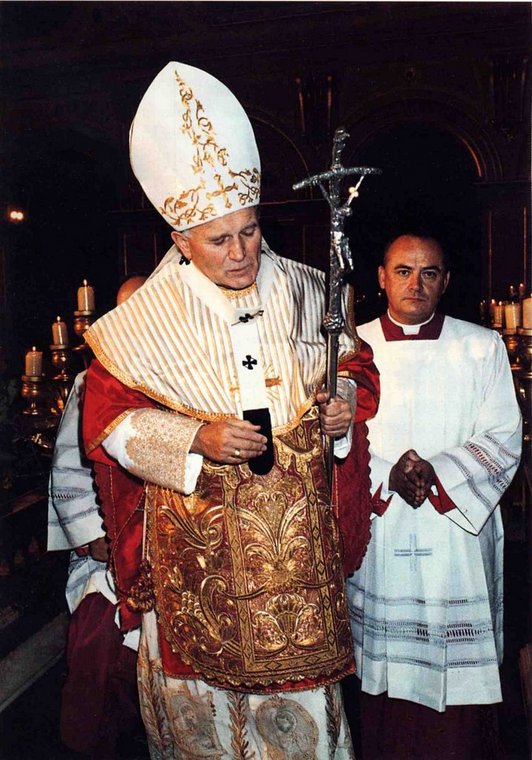
The two great Popes of the last century, both of whom had been recognised as Blessed, through the virtues of their life and miracles attributed to them, will be declared Saints, in a ceremony likely to be scheduled at the end of this year (2013).

Both Blessed Pope John XXIII and Blessed Pope John Paul II, who was made a Blessed just two years ago on 1 May 2011, had each left their incredible and remarkable footprint in the path of history, both in the history of the Church, and in the history of the world and mankind.

Image

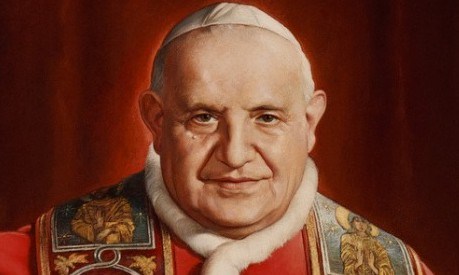
Blessed Pope John XXIII was known to be a great man of peace, and above all things seek to embrace peace and cooperation, between mankind, and also begun the process of Ecumenism in order to reunite the divided fragments of God’s Church back into the One, Holy, Catholic, and Apostolic Church that is our Church.

He was also known for his Encyclical Pacem in Terris (Peace on earth), which was released just months after the world was almost engulfed in an all-out nuclear war between the two superpowers, the United States of America (USA) and the Soviet Union (USSR) during the height of the Cold War in the Cuban Missile Crisis. Blessed Pope John XXIII worked hard ceaselessly to promote peace between the parties in conflict, for the good of all mankind, all of whom are the children of the same one God.

Blessed Pope John XXIII also convoked the Second Vatican Council, which brought the Church in line with the developments in the world, and also to make the Church more relevant in the increasingly rapid new developments in our world, and the rise of apathy towards religion in general. He would pass away before the Council was completed, but his legacy continued on until today.

Image

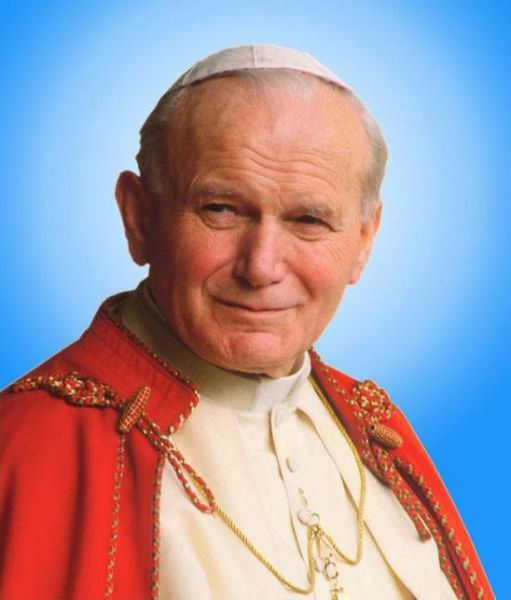
Blessed Pope John Paul II ‘the Great’ was a well-known Pope, a Pope of youths, and a hardworking Pope, who travelled around the world to visit all the flocks of the Lord that had been entrusted to him as the Successor of St. Peter the Apostle, as the Vicar of Christ. He was instrumental in the end of Communism in Eastern Europe, ending persecutions against the people of the faith, and also open boundaries and barriers that had been long in place since the beginning of the Cold War.

Blessed Pope John Paul II has also renewed the zeal for the faith amongst many around the world, and especially in youths, to whom he dedicated a special event, the World Youth Day, in order to commemorate the faith, particularly amongst the youths of the faith, around the globe. He inspired many through his works, his Encyclicals, and especially his perseverance despite being troubled with a worsening Parkinson’s disease condition, that made him to labour until his passing on 2 April 2005.

Both Popes had been very influential, hardworking, and very holy leaders of the One Church of the Lord Jesus Christ, and they had done much to strengthen the faith and the Church, and bring God closer to many, bringing them closer to salvation.

I hope to soon be able to ask for the intercessions of Pope St. John XXIII and Pope St. John Paul II the Great, and I pray that they will intercede for us sinners around the world, and pray for us, till we are greeted by them at the doors of heaven when it is time for us to be with the Lord again. Now we wait for the official announcement on the date of the Canonisation.

Image

Blessed Pope John XXIII, pray for us!

Image

Blessed Pope John Paul II, pray for us!

Peter’s Pence Collection, Solemnity of Saints Peter and Paul, Apostles

Peters Pence

In case any of you are wondering what is Peter’s Pence, which is collected every Sunday nearest to the Solemnity of Saints Peter and Paul, Apostles, which falls on 29 June every year (Therefore this year Peter’s Pence is collected on Sunday, 30 June 2013, 13th Sunday of Ordinary Time), Peter’s Pence is a special collection in which the collection will not go into the local church or parish fund, but gathered from all over the world and sent to Rome, to the Holy See. Thus, the collection made during the offertory this Sunday will go directly to Rome.

What is the purpose of the Peter’s Pence collection? Exactly to support the numerous charitable activities and organisations managed by the Holy See, by our Church, all over the world. There are thousands, tens of thousands of charity under the supervision of the Church, and to be able to continue with the action, funds are definitely necessary to provide a solid backing. That is why, Peter’s Pence is done once every year, on the Sunday nearest to the Solemnity of Saints Peter and Paul.

1045213_354782624625355_1349576998_n

Why Solemnity of Saints Peter and Paul? That is because on that day lie the great celebration of the two great saints and apostles that defined our Church, because they met their martyrdom in Rome. St. Peter, the Prince and leader of all the Apostles, whom the Pope is the successor of today, met his martyrdom in what is now Vatican City, through crucifixion, and St. Paul, the Apostle to the Gentiles, and author of the Epistles in the New Testament, met his martyrdom in Rome, through beheading.

Peter’s Pence itself had its origins in the late dark ages and early medieval period, particularly from England, where it got the name Peter’s ‘Pence’. Pence is the unit of money still in use until today in the United Kingdom and the related monetary units. ‘Peter’ simply point to the fact that the collection or ‘pence’ is intended to be sent to Rome, to the Pope, in order to support various Church activities.

Sunday, 14 April 2013 : 3rd Sunday of Easter (Gospel Reading)

John 21 : 1-19

After this, Jesus revealed Himself to the disciples by the Lake of Tiberias. He appeared to them in this way. Simon Peter, Thomas who was called the Twin, Nathanael of Cana in Galilee, the sons of Zebedee, and two other disciples were together; and Simon Peter said to them, “I’m going fishing.” They replied, “We will come with you.” And they went out and got into the boat, but they caught nothing that night.

When day had already broken, Jesus was standing on the shore, but the disciples did not know it was Jesus. Jesus called them, “Friends, have you anything to eat?” They answered, “Nothing.” Then He said to them, “Throw the net on the right side of the boat and you will find something.” When they had lowered the net, they were not able to pull it in because of the great number of fish.

Then the disciple Jesus loved said to Peter, “It is the Lord!” Simon Peter put on his clothes, for he was stripped for work, and jumped into the water. The other disciples came in the boat, dragging the net full of fish; they were not far from land, about a hundred metres.

When they landed, they saw a charcoal fire with fish on it, and some bread. Jesus said to them, “Bring some of the fish you have just caught.” So Simon Peter climbed into the boat and pulled the net to shore. It was full of big fish – one hundred and fifty-three – but, in spite of this, the net was not torn.

Jesus said to them, “Come and have breakfast.” And not one of the disciples dared to ask Him, “Who are You?” for they knew it was the Lord. Jesus then came and took the bread and gave it to them, and He did the same with the fish.

This was the third time that Jesus revealed Himself to His disciples after rising from the dead.

After they had finished breakfast, Jesus said to Simon Peter, “Simon, son of John, do you love Me more than these?” He answered, “Yes, Lord, You know that I love You.” And Jesus said, “Feed My lambs.”

A second time Jesus said to him, “Simon, son of John, do you love Me?” And Peter answered, “Yes, Lord, You know that I love You.” Jesus said to Him, “Look after My sheep.” And a third time He said to him, “Simon, son of John, do you love Me?”

Peter was saddened because Jesus asked him a third time, “Do you love Me?” and he said, “Lord, You know everything; You know that I love You.” Jesus then said, “Feed My sheep! Truly, I say to you, when you were young, you put on your belt and walked where you liked. But when you grow old, you will stretch out your hands, and another will put a belt around you, and lead you where you do not wish to go.”

Jesus said this to make known the kind of death by which Peter was to glorify God. And He added, “Follow Me.”


Alternative Reading (Shorter version)

John 21 : 1-14

After this, Jesus revealed Himself to the disciples by the Lake of Tiberias. He appeared to them in this way. Simon Peter, Thomas who was called the Twin, Nathanael of Cana in Galilee, the sons of Zebedee, and two other disciples were together; and Simon Peter said to them, “I’m going fishing.” They replied, “We will come with you.” And they went out and got into the boat, but they caught nothing that night.

When day had already broken, Jesus was standing on the shore, but the disciples did not know it was Jesus. Jesus called them, “Friends, have you anything to eat?” They answered, “Nothing.” Then He said to them, “Throw the net on the right side of the boat and you will find something.” When they had lowered the net, they were not able to pull it in because of the great number of fish.

Then the disciple Jesus loved said to Peter, “It is the Lord!” Simon Peter put on his clothes, for he was stripped for work, and jumped into the water. The other disciples came in the boat, dragging the net full of fish; they were not far from land, about a hundred metres.

When they landed, they saw a charcoal fire with fish on it, and some bread. Jesus said to them, “Bring some of the fish you have just caught.” So Simon Peter climbed into the boat and pulled the net to shore. It was full of big fish – one hundred and fifty-three – but, in spite of this, the net was not torn.

Jesus said to them, “Come and have breakfast.” And not one of the disciples dared to ask Him, “Who are You?” for they knew it was the Lord. Jesus then came and took the bread and gave it to them, and He did the same with the fish.

This was the third time that Jesus revealed Himself to His disciples after rising from the dead.