Sunday, 21 December 2014 : Fourth Sunday of Advent, Memorial of St. Peter Canisius, Priest and Doctor of the Church (Homily and Scripture Reflections)

Liturgical Colour : Purple or Violet

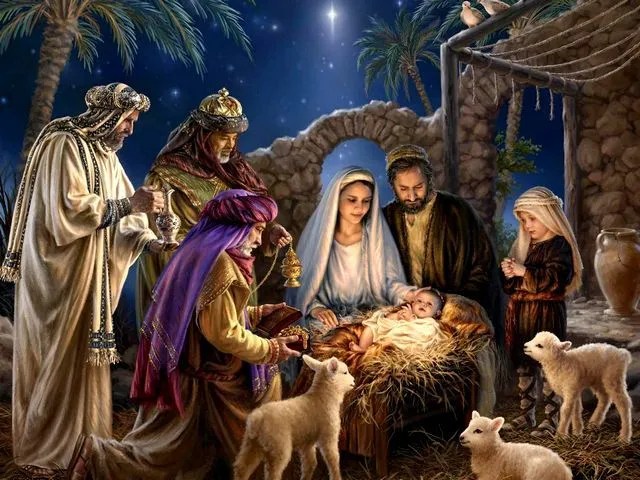
Dear brothers and sisters in Christ, today we celebrate the fourth and therefore the last Sunday of Advent in our liturgical year. Christmas is coming soon and this week is the time traditionally prescribed by the Church as the time for the final preparation for Christmas. This Sunday we continue to observe and reflect on the major aspects of Christmas, that is Love. We have previously reflected on Hope, on Peace, and finally on Joy at the Gaudete Sunday last week.

Love is the central nature of Christmas and all that we celebrate. Indeed, love is the centre of everything, of why we still live and breathe comfortably now in this world. God loves us all, for we were created special, with the very image of our God imprinted on us, and we have been given the greatest gift of all. And what is this gift? It is the Gift of all gifts, surpassing all other gifts, that is Christ our Lord Himself, the Gift of God to all mankind.

As we have often talked about and discussed throughout this Advent season, this season is a time for ardent prayer and genuine preparation, a time for us to prepare for the ‘Adventus’ or the coming of the Lord. And after going through four Sundays in which we discern the true meaning of Christmas, we should all be ready and prepared to celebrate this Christmas meaningfully.

Otherwise, if we fail to understand the true meaning of Christmas, then we will not benefit from the richness of God’s grace which He had given to us, which will benefit us most if we can appreciate what Christmas truly is. Christmas is not just about the glorious and bountiful food, not just about the festivities and the parties, and not just about the decorations and shopping that we often do to prepare for Christmas.

Christmas is truly about love, the love of God for mankind. Surely we know that the Gospel has clearly spoken about God who loves us all so much, that He gave us His only Son, so that all those who believe in Him, the Son, will not perish but gain eternal life (John 3:16). This is the essence of Christmas, the coming of the Son into the world, so that a new Hope arises for the nations and for all the peoples.

So the aspect of love that we reflect on this Sunday, reflects this Love that God had shown us, the true meaning of Christmas that I have often emphasized. Without the love of God, there can be no Christmas, and there can be no hope for us. There can no true peace in us, if we do not embrace the peace brought to us by God’s Love in Christ. There can also be no joy in us that lasts, if we do not share in the joy of God’s Love.

What is love, brothers and sisters in Christ? Is love shown by expensive gifts or romantic activities, and all the things taught and shown to us by the world? Is it like what are being advertised to us in many things, about love? No, it is not that kind of love, for that kind of love is often selfish, love that is bound to possessions and material goods, love that is conditional and once spent, then no love is left. Sadly, this is also the reason why there are so much sorrow in the world, of broken families, of abuses in the family, of infighting and jealousy, and many others.

Love, and indeed real love, is not about all these, but is the kind of love which Love Himself, Christ, had shown us. For God is Love, and He had shown us what love really is. His love is true love, genuine and pure, unconditional and gentle. His love does not have any prerequisite, nor does He demand us to give Him something for the love He had shown us. Indeed, He loved us even when we are still sinners, and even laid down His life for us.

St. Paul mentioned in his letter to the Romans, that someone may want to give their life for the just and righteous ones, but very unlikely to do so, for those who are wicked and evil. But Jesus suffered for us, bearing all of our sins, and died for us, laying down His life, even when we are still sinners and wicked (Romans 5:8). And as Jesus had said that the greatest kind of love is for someone to lay down his life for a friend (John 15:13), then we can see indeed how much greater the love God had for us when He chose to lay down His life for us, sinners and evildoers.

God does detest our sins greatly. Sin has no place in His presence, as sin is a taint and corruption, and for He who is perfectly good and pure, sin is completely disgusting. And yet, His love is even greater than His hatred for our sins. He loves us so much that He was willing to endure all those sufferings in order to rescue us from our predicament of sin.

This is the kind of love we should really have with us, and the love we should cherish. For it is through the love of God that we can enjoy a new hope, true peace and real joy which the world and others cannot provide. His love for us is unconditional, and by His coming into the world, that we celebrate in Christmas, He offered Himself, His love and mercy for all of us, so that we may be saved.

But at the same time, we have to be vigilant and be careful, for this world certainly has done much to prevent the love of God from reaching us, as Satan is the Lord of this world, and he has all in his possessions and within his means to tempt us and lead us away from the salvation and love which God freely offers us all. And today, we celebrate the feast of a great and faithful servant of God, who is a devout and courageous defender of the Faith in God.

St. Peter Canisius was a Dutch Jesuit, who lived during the time of the Protestant ‘reformation’, when many of the faithful and the members of the Church were misguided and misled by those who have been corrupted by the lies and the confusion of the evil one. They left the Church and the teachings of our Lord Jesus Christ as faithfully kept by the Church and chose to follow their own human desires, greed, selfishness, and other evils in them.

St. Peter Canisius joined the Society of Jesus, also known as the Jesuit order, which is the spearhead of the Church’s effort at Counter-Reformation, which main goal is to counter the heresy of Protestantism and bring as many souls as possible back to salvation that exists only in the Church of God. He led the effort of Counter-Reformation in what is now Germany, where the effects of the Protestant heresy is at its worst. He preached the true faith, and it was told that his preaching was so effective that hundreds and more returned to the true Faith.

He preached and taught in many places, and he persuaded many to return to the Faith not by coercion or force, but by clear reason and clear understanding of the Faith, and through that clarity in the teaching of the Faith, his words of truth, the truth of God rang deep into the depths of the hearts of many, who were convinced to abandon their heresy and return to the Holy Mother Church.

St. Peter Canisius was very particular in the matter of the education of the Faith to the people, and his most well-known legacy is the three books of Catechism he had written, which are the clear source of the teachings of the Faith, used in many generations and saved countless souls from sins and heresies. That is why his name today is also identical with Catholic education and several Jesuit education institutes adopted his name after he was made saint of the Holy Church.

He was also credited for his great devotion to Mary, and he taught that the best way to the Lord is through His mother Mary, and he was the one who added the response in the Ave Maria or Hail Mary prayer, “Holy Mary Mother of God, pray for us sinners.” This clearly showed the importance of Mary in the lives of the faithful, for through her intercessions and prayers for us, God our Lord His Son, is most likely to hear our pleas and petitions, and mercy shall be shown us.

Why did St. Peter Canisius do all of these, brothers and sisters in Christ? Why did he go forth and preach to the heretics and those who have been lost to the darkness of the world? That is because of none other than God’s love for us, and His desire that we be found and be gathered again, that we will be lost sheep no more but belonging once more to the one flock of Christ, that is the Church.

The love of God is such, that He, although despising our sins and repelled by our wickedness, endure all of them, and even endure all forms of humiliation and rejection, none less by His own people, the ones whom He was sent to save! And yet, He persevered, out of that eternal and infinite love which He has in Him, for He is Love, and just as He wanted to share that love with us when He created us, thus, He wanted us to be loved by Him even when we have fallen into sin.

Therefore, brothers and sisters in Christ, even as we prepare for the Christmas celebrations which will be here in less than a week’s time, and even as we prepare to rejoice together with the whole world and the whole Universal Church at the celebration of the Birth of our Lord Jesus, let us never forget that this event is there in the first place, because of God and His Love for us, that is made real and concrete through His Son Jesus, who performed the act of ultimate love for us, to die for us for our sins on the cross at Calvary.

This Christmas, shall we then ponder at the love God has for us, that He was willing to enter into our world, and indeed into our lives and dwell within us? Let us never forget that Christ is at the heart of Christmas, and at the very heart of that celebration and joy is the Love of God, the eternal and undying love Christ had shown us through the cross, the very purpose of His coming into this world, and thus to liberate us from the chains of sin.

Sin no more, repent, change our ways and be wholeheartedly devoted to God from now on, that this Christmas and the next ones will be decidedly different from the past ones, that this time, we truly understand and fully embrace the love of Christ, the true meaning of Christmas. God bless us all and may St. Peter Canisius intercede for us always with the Blessed Mother of our Lord, Mary our mother. Amen.


First Reading :

https://petercanisiusmichaeldavidkang.com/2014/12/19/sunday-21-december-2014-fourth-sunday-of-advent-memorial-of-st-peter-canisius-priest-and-doctor-of-the-church-first-reading/


Psalm :

https://petercanisiusmichaeldavidkang.com/2014/12/19/sunday-21-december-2014-fourth-sunday-of-advent-memorial-of-st-peter-canisius-priest-and-doctor-of-the-church-psalm/


Second Reading :

https://petercanisiusmichaeldavidkang.com/2014/12/19/sunday-21-december-2014-fourth-sunday-of-advent-memorial-of-st-peter-canisius-priest-and-doctor-of-the-church-second-reading/


Gospel Reading :

https://petercanisiusmichaeldavidkang.com/2014/12/19/sunday-21-december-2014-fourth-sunday-of-advent-memorial-of-st-peter-canisius-priest-and-doctor-of-the-church-gospel-reading/


Epistle (Usus Antiquior) :

https://petercanisiusmichaeldavidkang.com/2014/12/19/usus-antiquior-fourth-sunday-of-advent-i-classis-sunday-21-december-2014-epistle/


Gospel (Usus Antiquior) :

https://petercanisiusmichaeldavidkang.com/2014/12/19/usus-antiquior-fourth-sunday-of-advent-i-classis-sunday-21-december-2014-holy-gospel/

Sunday, 21 December 2014 : Fourth Sunday of Advent, Memorial of St. Peter Canisius, Priest and Doctor of the Church (Gospel Reading)

Liturgical Colour : Purple or Violet

Luke 1 : 26-38

In the sixth month, the angel Gabriel was sent from God to a town of Galilee called Nazareth. He was sent to a young virgin, who was betrothed to a man named Joseph, of the family of David; and the virgin’s name was Mary.

The angel came to her and said, “Rejoice, full of grace, the Lord is with you.” Mary was troubled at these words, wondering what this greeting could mean. But the angel said, “Do not fear, Mary, for God has looked kindly on you. You shall conceive and bear a Son, and you shall call Him Jesus.”

“He will be great, and shall rightly be called Son of the Most High. The Lord God will give Him the kingdom of David, His ancestor; He will rule over the people of Jacob forever, and His reign shall have no end.”

Then Mary said to the angel, “How can this be, since I am a virgin?” And the angel said to her, “The Holy Spirit will come upon you and the power of the Most High will overshadow you; therefore, the Holy Child to be born of you shall be called Son of God. Even your relative Elizabeth is expecting a son in her old age, although she was unable to have a child; and she is now in her sixth month. With God nothing is impossible.”

Then Mary said, “I am the handmaid of the Lord, let it be done to me as you have said.” And the angel left her.


Homily and Reflection :

https://petercanisiusmichaeldavidkang.com/2014/12/19/sunday-21-december-2014-fourth-sunday-of-advent-memorial-of-st-peter-canisius-priest-and-doctor-of-the-church-homily-and-scripture-reflections/

Sunday, 21 December 2014 : Fourth Sunday of Advent, Memorial of St. Peter Canisius, Priest and Doctor of the Church (Second Reading)

Liturgical Colour : Purple or Violet

Romans 16 : 25-27

Glory be to God! He is able to give you strength, according to the Good News I proclaim, announcing Christ Jesus. Now is revealed the mysterious plan kept hidden for long ages in the past.

By the will of the eternal God it is brought to light, through the prophetic books, and all nations shall believe the faith proclaimed to them. Glory to God, who alone is wise, through Christ Jesus, forever! Amen.


Homily and Reflection :

https://petercanisiusmichaeldavidkang.com/2014/12/19/sunday-21-december-2014-fourth-sunday-of-advent-memorial-of-st-peter-canisius-priest-and-doctor-of-the-church-homily-and-scripture-reflections/

Sunday, 21 December 2014 : Fourth Sunday of Advent, Memorial of St. Peter Canisius, Priest and Doctor of the Church (Psalm)

Liturgical Colour : Purple or Violet

Psalm 88 : 2-3, 4-5, 27 and 29

I will sing forever, o Lord, of Your love and proclaim Your faithfulness from age to age. I will declare how steadfast is Your love, how firm Your faithfulness.

You said, “I have made a covenant with David, My chosen one; I have made a pledge to My servant. I establish His descendants forever; I build His throne for all generations.”

He will call on me, ‘You are my Father, my God, my Rock, my Saviour.’ I will keep My covenant firm forever, and My love for him will endure.


Homily and Reflection :

https://petercanisiusmichaeldavidkang.com/2014/12/19/sunday-21-december-2014-fourth-sunday-of-advent-memorial-of-st-peter-canisius-priest-and-doctor-of-the-church-homily-and-scripture-reflections/

Sunday, 21 December 2014 : Fourth Sunday of Advent, Memorial of St. Peter Canisius, Priest and Doctor of the Church (First Reading)

Liturgical Colour : Purple or Violet

2 Samuel 7 : 1-5, 8b-12, 14a, 16

When the king had settled in his palace and YHVH had rid him of all his surrounding enemies, he said to Nathan the prophet, “Look, I live in a house of cedar but the Ark of God is housed in a tent.” Nathan replied, “Do as it seems fit to you for YHVH is with you.”

But that very night, YHVH’s word came to Nathan, “Go and tell My servant David, this is what YHVH says : Are you able to build a house for Me to live in? I took you from the pasture, from tending the sheep, to make you commander of My people Israel. I have been with you wherever you went, cutting down all your enemies before you.”

“Now I will make your name great as the name of the great ones on earth. I will provide a place for My people Israel and plant them that they may live there in peace. They shall no longer be harassed, nor shall wicked men oppress them as before. From the time when I appointed judges over My people Israel it is only to you that I have given rest from all your enemies. YHVH also tells you that He will build you a house.”

“When the time comes for you to rest with your ancestors, I will raise up your son after you, the one born of you and I will make his reign secure. I will be a Father to him and he shall be My son. Your house and your reign shall last forever before Me, and your throne shall be forever firm.”


Homily and Reflection :

https://petercanisiusmichaeldavidkang.com/2014/12/19/sunday-21-december-2014-fourth-sunday-of-advent-memorial-of-st-peter-canisius-priest-and-doctor-of-the-church-homily-and-scripture-reflections/

Saturday, 20 December 2014 : Third Week of Advent (Homily and Scripture Reflections)

Liturgical Colour : Purple or Violet

Dear brothers and sisters in Christ, today we heard about the conception and birth of our Lord Jesus Christ, the Saviour of the world, Son of God incarnate into the flesh of Man. If yesterday we listened to the messenger of God, John the Baptist, who would prepare the way for Christ and His coming, then fittingly today we heard about the coming of Christ Himself.

In the first reading we heard about king Ahaz of Judea who refused to ask for a sign from God, when he was asked to do so by the prophet Isaiah. Why did God show His displeasure as He said through Isaiah? That is because it was hypocrisy and unfaithfulness at best on the side of Ahaz. He and many of his ancestors have not been faithful to the Lord, worshipping the pagan idols, committing wickedness after wickedness, and abandoning the Lord their God who had blessed them so much.

In refusing to ask for a sign from God, Ahaz was a hypocrite, since he pretended humility and meekness, that as if he lowered himself before God, but in fact he was not genuine in that gesture. The Sign which God has intended to give to His people is a Sign of His Love and a Sign of His mercy and forgiveness, and Ahaz refused it in his hypocritical attitude.

And that sign, is the Virgin who would bear a Child, and the Child would be named Emmanuel, which means literally, ‘God is with us’ and this is significant. Some of us may ask, how come then the Royal Baby born of Mary was not then named as Emmanuel? Why was He named as Jesus? Jesus is the Name of our Lord, the Name above every other names, the terror at the hearts of all demons, but He also has many other titles and names.

In the same book of the prophet Isaiah, we know that the Child to be born of the Virgin is to be known as the Prince of Peace, Wonderful Counsellor, Almighty God, and so on, and then, we also know that elsewhere in the Scriptures, the Child is also known as the Shoot of Jesse or the Shoot of David, the Son of David, Son of God and Son of Man. Emmanuel is one of His many titles, and its meaning underlines the very core of why we celebrate Christmas, that is God who dwells among us, His people.

Our Lord who is God has no need to be concerned about us. After all, He is God who is Almighty and sufficient in all things, and in love, He is perfectly united in love, the Three Aspects and Godhead, the Father, Son and Holy Spirit united in perfect love and harmony. Yet, He created us all out of His love, and He loved us all very much. To the point that even after we had sinned and deserved punishment and destruction, He was willing to forgive us and plan for our salvation.

And this salvation He had indeed given us through His own Son, part of His perfect Trinity, the Word, whom He sent into the world, so that from that moment on, God would truly dwell among His people, sharing their nature, inhabiting the flesh of Man, as the Son of Man, fully Man but also fully Divine at the same time. That is the wonder and mystery of Christmas, and one that we ought to celebrate with full and genuine understanding.

Brothers and sisters in Christ, God was willing to assume our lowly form, so that as a Human Being, He might suffer as we have suffered, and even more than that, so that He might bear the entirety of our sins and our iniquities. That even though He is innocent and pure, but He was punished for our sins, and by His wounds and His death on the cross, we are healed.

This Christmas, shall we reflect on these that we had just discussed? Our Christmas celebration is meaningless without Christ and without clear understanding of its true and real purpose. This is because if we do not understand, then our Christmas will be merely a loud fanfare without purpose and without reason, and it will be empty. Instead, we should place our focus on the true meaning of Christmas, that is our Lord, Emmanuel, God who is willing to dwell among His people out of His love for us.

In the remaining few days, let us prepare ourselves further, by discovering more and more about the love of God, which He made perfectly manifest through our Lord Jesus Christ, born in this Christmas Day. Let us follow Him and devote ourselves entirely to Him. Remember that He had loved us first, and we ought to also love Him back with all of our heart. God bless us all. Amen.


First Reading :

https://petercanisiusmichaeldavidkang.com/2014/12/18/saturday-20-december-2014-third-week-of-advent-first-reading/


Psalm :

https://petercanisiusmichaeldavidkang.com/2014/12/18/saturday-20-december-2014-third-week-of-advent-psalm/


Gospel Reading :

https://petercanisiusmichaeldavidkang.com/2014/12/18/saturday-20-december-2014-third-week-of-advent-gospel-reading/

Saturday, 20 December 2014 : Third Week of Advent (Gospel Reading)

Liturgical Colour : Purple or Violet

Luke 1 : 26-38

In the sixth month, the angel Gabriel was sent from God to a town of Galilee called Nazareth. He was sent to a young virgin, who was betrothed to a man named Joseph, of the family of David; and the virgin’s name was Mary.

The angel came to her and said, “Rejoice, full of grace, the Lord is with you.” Mary was troubled at these words, wondering what this greeting could mean. But the angel said, “Do not fear, Mary, for God has looked kindly on you. You shall conceive and bear a Son, and you shall call Him Jesus.”

“He will be great, and shall rightly be called Son of the Most High. The Lord God will give Him the kingdom of David, His ancestor; He will rule over the people of Jacob forever, and His reign shall have no end.”

Then Mary said to the angel, “How can this be, since I am a virgin?” And the angel said to her, “The Holy Spirit will come upon you and the power of the Most High will overshadow you; therefore, the Holy Child to be born of you shall be called Son of God. Even your relative Elizabeth is expecting a son in her old age, although she was unable to have a child; and she is now in her sixth month. With God nothing is impossible.”

Then Mary said, “I am the handmaid of the Lord, let it be done to me as you have said.” And the angel left her.


Homily and Reflection :

https://petercanisiusmichaeldavidkang.com/2014/12/18/saturday-20-december-2014-third-week-of-advent-homily-and-scripture-reflections/

Saturday, 20 December 2014 : Third Week of Advent (Psalm)

Liturgical Colour : Purple or Violet

Psalm 23 : 1-2, 3-4ab, 5-6

The earth and its fullness belong to the Lord, the world and all that dwell in it. He has founded it upon the ocean and set it firmly upon the waters.

Who will ascend the mountain of the Lord? Who will stand in His holy place? Those with clean hands and pure heart, who desire not what is vain.

They will receive blessings from the Lord, a reward from God, their Saviour. Such are the people who seek Him, who seek the face of Jacob’s God.


Homily and Reflection :

https://petercanisiusmichaeldavidkang.com/2014/12/18/saturday-20-december-2014-third-week-of-advent-homily-and-scripture-reflections/

Saturday, 20 December 2014 : Third Week of Advent (First Reading)

Liturgical Colour : Purple or Violet

Isaiah 7 : 10-14

Once again YHVH addressed Ahaz, “Ask for a sign from YHVH your God, let it come either from the deepest depths or from the heights of heaven.”

But Ahaz answered, “I will not ask, I will not put YHVH to the test.” Then Isaiah said, “Now listen, descendants of David. Have you not been satisfied trying the patience of people, that you also try the patience of my God?”

“Therefore the Lord Himself will give you a sign : The Virgin is with Child and bears a Son and calls His Name Immanuel.”


Homily and Reflection :

https://petercanisiusmichaeldavidkang.com/2014/12/18/saturday-20-december-2014-third-week-of-advent-homily-and-scripture-reflections/

Friday, 19 December 2014 : Third Week of Advent (Homily and Scripture Reflections)

Liturgical Colour : Purple or Violet

Dear brothers and sisters in Christ, as we draw ever closer to Christmas, the Church and our Faith are preparing us all for the great celebration of the commemoration of the birth of our Lord and Saviour Jesus Christ, and for this purpose today we are focusing on the two servants of God, Samson and St. John the Baptist, both of whom had been born into the world as a sign for many, a sign of God’s love for them.

The readings today focused on the similarities between the two great servants of God, whom one is a Judge of Israel, the leader God had appointed and chosen from among the people to protect them, to deliver them from their enemies, and to keep them in line with the teachings of God and stay faithful to Him amidst the temptations of the world. The other is the messenger of God, born with the spirit and power of Elijah, whom many believed, even as the second coming of the prophet Elijah into the world, and to be the one who would straighten the path for the Lord, for he came just before the Lord Himself was to come.

Samson and John the Baptist were both born of parents who had for long been unable to conceive a child on their own. Their prayers were answered by the Lord, and even more so, their children were both chosen to have the special roles in God’s plan of saving His people from the darkness of the world. Samson was born to deliver the Israelites from the hands of the Philistines, the people who caused them great suffering and enslaved them, because they were not faithful to the commandments of God and instead worshipped pagan idols.

Meanwhile, John the Baptist was born to prepare the way for the Messiah in an age and time where although outwardly the people and their elders showed faith and piety to the Lord, but they were not sincere in this, and they even failed to understand the true meaning of their faith, giving in into their own vanity and self-praise, and lacking the understanding of the faith, their rituals and customs are empty and meaningless, and they paid only lip service to God.

These were the societies to whom they were sent to, and they had to encounter many difficulties in doing so, in bringing the people of God back to the love and grace of God. Both of them were consecrated to God from even before their birth, set aside for the service of God, called the Nazirites. Samson was a Nazirite, that means, he should not drink wine or alcoholic drinks throughout his life, nor should his hair be cut at all. This means to live according to what God had appointed him to do, shunning all the beautiful things and the temptations of the world.

But what we need to understand is, what is exactly their mission in this world? Why did God set them apart from the many others in such a manner? Their mission is to prepare for the coming of the Lord’s salvation and power to His people, and in that, they encountered the challenges and persevered through them, calling for people to change their ways by their own example, and follow God.

Samson came at the time when the Israelites after they had settled in the Promised Land constantly came under attack from their neighbours, who persecuted them, raided them and enslaved them. The judges were sent by God to liberate them and lead them back to the path of righteousness. But no sooner than each judges passed, then they returned to their ways of sin. Samson was the among the last mentioned judges, before the time of the prophet Samuel, which then would lead on to the era of king David, the era of prosperity, the time when peace and prosperity reigns in the land of Israel.

Therefore, in a sense, there is a parallel between Samson and John the Baptist, in that while Samson heralded the coming of the era of peace and greatness under King David of Israel, then St. John the Baptist heralded the coming of an even greater era, the time of the coming of the King of kings, the Divine Messiah, our Lord Jesus Christ, the One whom we are celebrating this Christmas.

God had sent His faithful servants in order to prepare for the coming of His glory and love, and in the coming of Jesus His Son into the world, He had sent John to prepare the way for Him. Why is this so, brothers and sisters in Christ? That is because this world is filled with sin and darkness, and with all of these distractions and corruptions, we would not be able to listen to the teachings of Christ and we would not be able to recognise Him.

That is why Advent is here, as a time for us to prepare, and indeed prepare thoroughly, for the coming of Christ, not just for this Christmas celebration, but also for His eventual return into the world, to claim all of His faithful ones and to judge all the living and the dead. If God had done such an ample and thorough preparation for His own coming, then we too should do our part to prepare ourselves for Christmas. This is to shun sin and reject all the temptations of evil, seeking from now on, only the truth in the Light of Christ.

Otherwise, it would be very easy for us to lose our focus in our celebrations, and it may likely end up that we celebrate Christmas for its fun, for its feasting and partying, but not for Christ, who we should place at the centre of our celebrations. May Almighty God help us all to prepare ourselves in this Advent season to welcome His Son, that when He comes again, He will find us ready and alert. May He help us all to change our ways and shun forever the sinful ways of our past. God bless us all. Amen.


First Reading :

https://petercanisiusmichaeldavidkang.com/2014/12/18/friday-19-december-2014-third-week-of-advent-first-reading/


Psalm :

https://petercanisiusmichaeldavidkang.com/2014/12/18/friday-19-december-2014-third-week-of-advent-psalm/


Gospel Reading :

https://petercanisiusmichaeldavidkang.com/2014/12/18/friday-19-december-2014-third-week-of-advent-gospel-reading/