Cardinal deaths update: Passing of Cardinal Francesco Marchisano (Italy) and Cardinal Edward Bede Clancy (Australia)

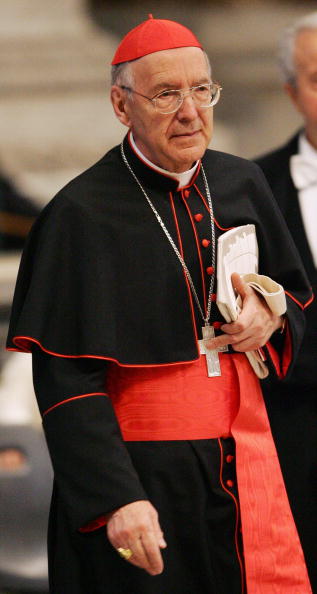
Cardinal Francesco Marchisano, Cardinal-Priest of S. Lucia del Gonfalone pro hac vice Title passed away on Monday, 27 July 2014 at the age of 85. He was the President Emeritus of the Labour Office of the Apostolic See and the Permanent Commission for the Protection of Historical and Artistic Monuments of the Holy See. He was also the Vicar General Emeritus of the Diocese of Rome, a position which he occupied during the years 2002 to 2005.

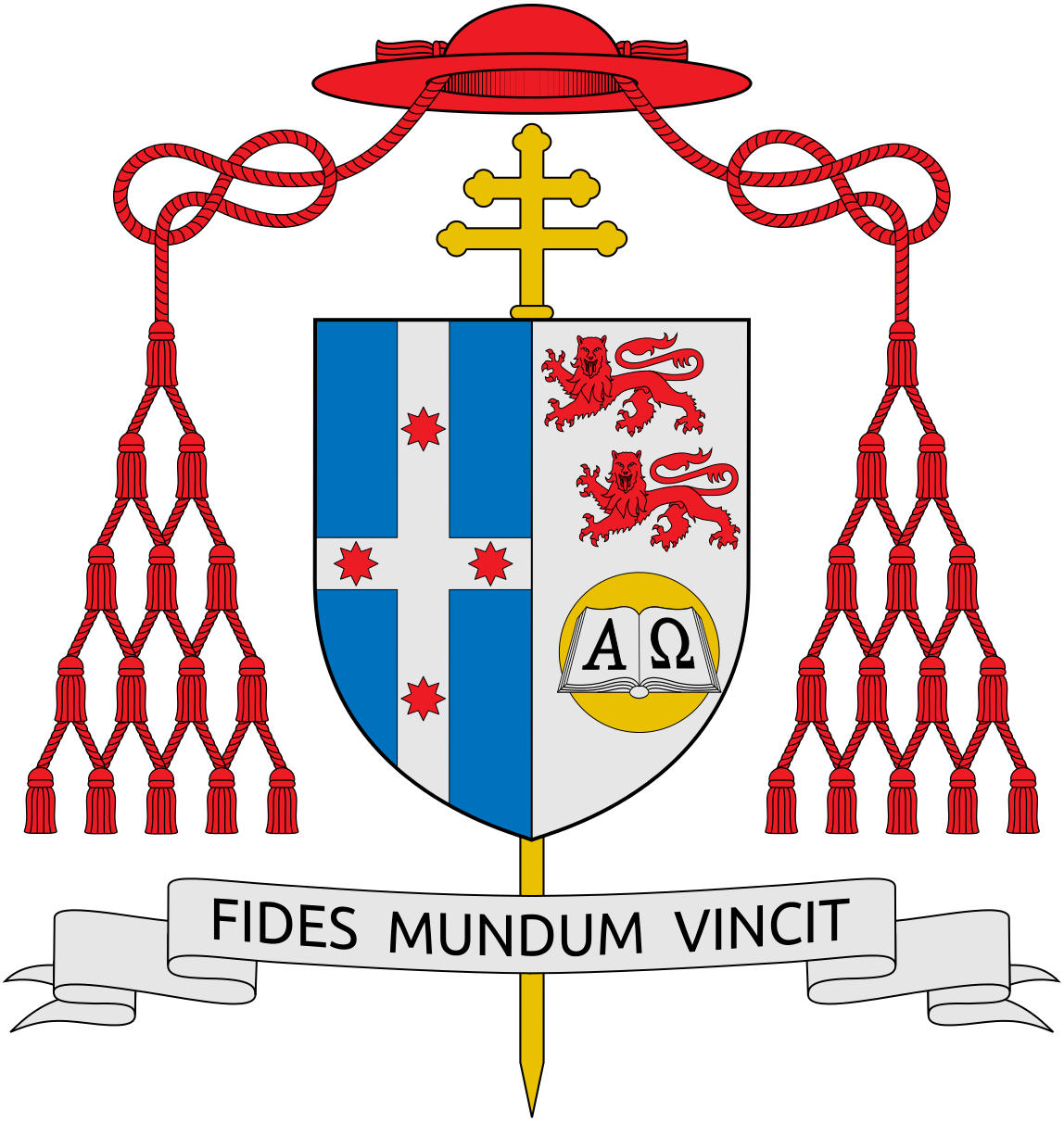
Meanwhile, Cardinal Edward Bede Clancy, Cardinal-Priest of S. Maria in Vallicella passed away on Sunday, 3 August 2014 at the age of 90. He was the Metropolitan Archbishop Emeritus of Sydney, and therefore the Primate Emeritus of Australia. He faithfully led the faithful in Sydney from 1983 to 2001.

cardinal_marchisano

Cardinal Francesco Marchisano

Italian Cardinal Francesco Marchisano at

http://www.gcatholic.org/hierarchy/data/cardJP2-9.htm#94

Cardinal Marchisano was created Cardinal in 2003 by Pope St. John Paul II in his ninth and last Cardinal creation consistory on 21 October 2003. His motto was In Caritate Radicati et Fundati, which means rooted and grounded in love, that is the emphasis placed on love, which is the essential and the greatest fruit of the Holy Spirit, and the fact that without love, we cannot truly have faith in the Lord.


wpd2816a17_05

Cardinal Edward Bede Clancy

Coat_of_arms_of_Edward_Bede_Clancy.svg

http://www.gcatholic.org/hierarchy/data/cardJP2-4.htm#34

Cardinal Marchisano was created Cardinal in 1988 by Pope St. John Paul II in his fourth Cardinal creation consistory on 28 June 1988, on the eve of the Solemnity of St. Peter and St. Paul. His motto was Fides Mundum Vincit, which means faith conquers the world, the fact that is truly about how if we have faith, no matter what the world throws at us, we will prevail, just as the Lord will eventually prevail against the world and the forces of Satan.

We pray for the soul of these two great Princes of the Church and the servants of God’s people. May their hard work and commitments to the Church and God’s people bring them justification and eternal rest in God’s presence in heaven. We pray also for those whom they had left behind, that their legacies and hard work will continue to bear fruit in those whom they had touched in life.

With the passing of Cardinal Agre, the College of Cardinals now stands at 211 members, with 117 Cardinal-electors (one reduced due to Cardinal Claudio Hummes having exceeded the electorate age of 80) and 94 Cardinal non-electors. The number of Cardinal-electors now is 3 below the specified maximum limit of 120.

There are now 3 Cardinal-elector vacancy in the College of Cardinals, 0 vacant Cardinal Suburbicarian Sees (for Cardinal Bishops), 4 vacant Cardinal Title (for Cardinal Priests) and 8 vacant Cardinal Deaconries (for Cardinal Deacons).

(Usus Antiquior) Seventh Sunday after Pentecost (II Classis) – Sunday, 27 July 2014 : Offertory Prayer, Secret Prayer of the Priest, Communion and Postcommunion Prayers

Offertory Prayer

Sicut in holocaustis arietum et taurorum, et sicut in milibus agnorum pinguium : sic fiat sacrificium nostrum in conspectu Tuo hodie, ut placeat Tibi : quia non est confusio confidentibus in Te, Domine.

English translation

As in holocausts of rams and bullocks, and as in thousands of fat lambs, so let our sacrifice be made in Your sight this day, that it may please You. For there is no confusion to them that trust in You, o Lord.

Secret Prayer of the Priest

Deus, qui legalium differentiam hostiarum unius sacrificii perfectione sanxisti : accipe sacrificium a devotis Tibi famulis, et pari benedictione, sicut munera Abel, sanctifica; ut, quod singuli obtulerunt ad majestatis Tuae honorem, cunctis proficiat ad salutem. Per Dominum…

English translation

O God, who has sanctioned the diversity of offerings by the perfection of one sacrifice, receive the sacrifice offered to You by Your devoted servants, and sanctify it as You had sanctified the gifts of Abel, that what each one had offered to the glory of Your majesty may profit for the salvation of all. Through our Lord…

Communion

Inclina aurem Tuam, accelera, ut eripias me.

English translation

Bow down Your ear, make haste to deliver me.

Postcommunion Prayer

Tua nos, Domine, medicinalis operatio, et a nostris perversitatibus clementer expediat, et ad ea, quae sunt recta, perducat. Per Dominum…

English translation

May Your health-giving operation, o Lord, mercifully rid us of our evil inclinations and unto rightful ways strongly lead us. Through our Lord…

(Usus Antiquior) Seventh Sunday after Pentecost (II Classis) – Sunday, 27 July 2014 : Holy Gospel

Sequentia Sancti Evangelii secundum Matthaeum – Continuation of the Holy Gospel according to St. Matthew

Matthew 7 : 15-21

In illo tempore : Dixit Jesus discipulis Suis : Attendite a falsis prophetis, qui veniunt ad vos in vestimentis ovium, intrinsecus autem sunt lupi rapaces : a fructibus eorum cognoscetis eos.

Numquid colligunt de spinis uvas, aut de tribulis ficus? Sic omnis arbor bona fructus bonos facit : mala autem arbor malos fructus facit. Non potest arbor bona malos fructus facere : neque arbor mala bonos fructus facere.

Omnis arbor, quae non facit fructum bonum, excidetur et in ignem mittetur. Igitur ex fructibus eorum cognoscetis eos. Non omnis, qui dicit Mihi, Domine, Domine, intrabit in regnum caelorum : sed qui facit voluntatem Patris Mei, qui in caelis est, ipse intrabit in regnum caelorum.

English translation

At that time, Jesus said to His disciples, “Beware of false prophets, who come to you in the clothing of sheep, but inwardly they are ravening wolves. By their fruits you shall know them.”

“Do men gather grapes of thorns, or figs of thistles? Even so, every good tree brings forth good fruit, and the evil tree brings forth evil fruit. A good tree cannot bring forth evil fruit, neither can an evil tree bring forth good fruit.”

“Every tree that does not bring forth good fruit shall be cut down, and shall be cast into the fire. Wherefore by their fruits you shall know them. Not everyone that says to Me, ‘Lord, Lord’ shall enter into the kingdom of heaven, but he who does the will of My Father who is in heaven, he shall enter into the kingdom of heaven.”

(Usus Antiquior) Seventh Sunday after Pentecost (II Classis) – Sunday, 27 July 2014 : Gradual and Alleluia

Psalm 33 : 12, 6 and Psalm 46 : 2

Venite, filli, audite me : timorem Domini docebo vos.

Response : Accedite ad eum, et illuminamini : et facies vestrae non confundentur.

Alleluja, alleluja.

Response : Omnes gentes, plaudite manibus : jubilate Deo in voce exsultationis. Alleluja.

English translation

Come, children, harken to me. I will teach you the fear of the Lord.

Response : Come all of you to Him and be enlightened, and your faces shall not be confounded.

Alleluia, alleluia.

Response : O clap your hands, all you nations, shout unto God with the voice of joy. Alleluia.

(Usus Antiquior) Seventh Sunday after Pentecost (II Classis) – Sunday, 27 July 2014 : Epistle

Lectio Epistolae beati Pauli Apostoli ad Romanos – Lesson from the Epistle of Blessed Paul the Apostle to the Romans.

Romans 6 : 19-23

Fratres : Humanum dico, propter infirmitatem carnis vestrae : sicut enim exhibuistis membra vestra servire immunditiae et iniquitati ad iniquitatem, ita nunc exhibete membra vestra servire justitiae in sanctificationem. Cum enim servi essetis peccati, liberi fuistis justitiae.

Quem ergo fructum habuistis tunc in illis, in quibus nunc erubescitis? Nam finis illorum mors est. Nunc vero liberati a peccato, servi autem facti Deo, habetis fructum vestrum in sanctificationem, finem vero vitam aeternam.

Stipendia enim peccati mors. Gratia autem Dei vita aeterna, in Christo Jesu, Domino nostro.

English translation

Brethren, I speak a human thing, because of the infirmity of your flesh; for as you have yielded your members to serve uncleanness and iniquity unto iniquity, so now yield your members to serve justice, unto sanctification. For when you were the servants of sin, you were free from justice.

What fruit therefore had you then in those things, of which you are now ashamed? For the end of them is death. But now being made free from sin, and become servants to God, you have your fruit unto sanctification, and the end life everlasting.

For the wages of sin is death. But the grace of God, life everlasting, in Christ Jesus our Lord.

(Usus Antiquior) Seventh Sunday after Pentecost (II Classis) – Sunday, 27 July 2014 : Introit and Collect

Introit

Psalm 46 : 2, 3

Omnes gentes, plaudite manibus : jubilate Del in voce exsultationis.

Quoniam Dominus excelsus, terribilis : Rex magnus super omnem terram.

Response : Gloria Patri et Filio et Spiritui Sancto, sicut erat in principio, et nunc, et semper : et in saecula saeculorum. Amen.

English translation

O clap your hands, all you nations, shout unto God with the voice of joy.

For the Lord is Most High. He is terrible, He is a great King over all the earth.

Response : Glory be to the Father and to the Son and to the Holy Spirit, as it was in the beginning, is now, and ever shall be, world without end. Amen.

Collect

Deus, cujus providentia in sui dispositione non fallitur : Te supplices exoramus; ut noxia cuncta submoveas, et omnia nobis profutura concedas. Per Dominum…

English translation

O God, You whose providence failed not in setting things in order, we, You suppliants, beseech You, that You would remove from us all things harmful and grant us all that makes for our welfare. Through our Lord…

Sunday, 27 July 2014 : 17th Sunday of Ordinary Time (Scripture Reflections)

Liturgical Colour : Green

Dear brothers and sisters in Christ, today we are fielded with a good question, one that asks us and looks deep into the depths of our souls, hearts and minds. It is this question, ‘What is truly precious to us in our life?’ And this asks us exactly what we consider as something precious and to be guarded well in our lives.

There are many things that mankind find precious in life. Yes, some of the examples are wealth, possessions, family, loved ones, and many other things. To different people, these may command different level of preciousness. Yet, it is quire common for many of us to treasure wealth, possession, fame and standing in the society as things truly precious to us. This is especially more so in our world today, which is filled with greed and evil.

In the first reading today, we heard about the story of young King Solomon of Israel, just after he had succeeded to the throne from King David his father. This is a story how King Solomon prayed for wisdom before the Lord when the Lord offered to him all the things that he desired to have. King Solomon is renowned for his incomparable wisdom, in the story how he settled the issue of two mothers who are claiming to be the mother of the same baby.

God did not just give great wisdom, intellect and understanding to King Solomon, but as He Himself mentioned to the king, He granted him more than just what he had asked for, just because in his humility and meekness, he asked not for the wealth or power of the world, but for wisdom and understanding of things good and evil. God saw this and granted him what he had asked for, and in addition to that, all the others that he had not asked for.

But the example of Solomon is an example of how mankind can be corrupted by our desire and our greed. Our pride and desire will come in the way of righteousness, and prevent us from thinking and feeling rationally. Solomon grew wise and great, but he also gained much power and wealth during his long reign as king of Israel. If we read the first part of the Second Book of Kings, it would be clear how much wealth and greatness and fame that King Solomon had attained in his reign.

King Solomon was great, and his reign, together with that of King David his father was seen by all the people as the golden age of Israel, when the people of God were in the peak of their glory and power. However, with great power comes great responsibility, as well as great temptation and corruption. We know the phrase, that power corrupts, great power corrupts greatly, and absolute power corrupts absolutely. This is what exactly happened to Solomon, as well as many of the kings who followed after him in both Israel and Judah.

When mankind began to gain power and goodness such as wealth and possession, they can be tempted to get more and more, often by means that are wicked and unjust in nature. This is how Solomon also fell into sin and failed to live up to the expectations and failed to follow God in the same way as his father, king David had done.

But this does not mean that this is limited to the case of king Solomon or anyone who is powerful and rich. All of us are prone to this same fault. Mankind are all naturally predisposed to greed and desire, and this is something we really need to put in our greatest effort to escape from. If we are able to resist that wicked desire for more wealth, possession, affluence, fame and many other things that corrupt our hearts, then we can draw closer to God, and avoid those obstacles which Satan had placed on our way.

Brothers and sisters in Christ, it is important that we all realise how blessed we are in God. The Lord Jesus had taught us all that the kingdom of heaven is at the end of our path in life, if we remain faithful and devoted to God, without falling inti temptation of this world as King Solomon had done. King Solomon was faithful to God, but over time, his attachments to the worldly goods, and the attachments he had to his numerous wives and concubines, designed to grant him greater power and prestige, had dulled his mind and heart. Great wisdom is of no use if your heart and mind are dulled and confounded by the evils of this world.

It is ultimately not that we should shun all forms of contact with the world or anything of the sort. They are themselves neutral and none are inherently evil in purpose. Money and possessions are in particular capable of both good and bad actions and uses. It is when mankind use them and get hold of them, that they have the choice of either using them for good or bad, more often for bad than good in many cases.

Let us all ponder on all these, and think, on what do we consider or what we can consider as true and genuine treasure in our lives. Is it that all we can get as treasure is only in this world, in all the things we can see, touch, hear and enjoy? If we think that this is so, then we are in the danger of falling into the same pitfall into which Solomon and so many other men had fallen into. Even king David himself fell into this when he was tempted by Bathsheba, and plotted to kill her husband so that she might belong to him, and so committed a sin before God.

Our true treasure is in heaven, the prize which God Himself had prepared for us. Jesus Himself had told His disciples, that He went ahead of them to prepare for them the place which He had made ready and reserved for them in the kingdom of the everlasting life, that is the life to come, in heaven. That is also, brothers and sisters, what is to be our reward. This is the treasure that we have to seek, and not what is in the world.

Seek not the treasures that can rot or be destroyed. Neither seek the treasures that we cannot bring with us into the life that is to come. Our material wealth and goods, and all else do not matter and do not affect what we will be like in the world of the afterlife, when we are either reunited once again with God in eternal happiness or whether we will be cast away forever from His presence and suffer forever in hellfire with Satan and his fellow fallen angels.

God is our true treasure, and the One who we should aspire to gain, that means to be closer to Him and to make Him our own, just as He had resolved to forgive us our sins and trespasses and make us His own. We should do what Jesus told us in His parable of the one who seek a precious pearl, or a precious treasure, and selling all that they have in order to gain the treasure.

Be warned that we should not interpret this literally and sell everything we have. Rather, what it means is that, we should not spare any thought or have any doubt about seeking the Lord and finding our way towards Him. We must put in a lot of effort to do this, as well as to counter any opposition that we will encounter on our way. We must put in our effort, which is through none other by understanding the Lord’s will and teachings, and putting them into concrete practice in our own lives.

May Almighty God guide us on our journey, and strengthen our faith, so that we may continue to persevere, despite all the difficulties and challenges, that we can eventually at the end of the day, receive our well-earned reward, the treasure of all treasures, that is for us to see and be one with God, our Lord and Father once again. Amen.

Sunday, 27 July 2014 : 17th Sunday of Ordinary Time (Gospel Reading)

Liturgical Colour : Green

Matthew 13 : 44-52

The kingdom of heaven is like a treasure hidden in a field. The one who finds it buries it again; and so happy is he, that he goes and sells everything he has, in order to buy that field.

Again, the kingdom of heaven is like a trader who is looking for fine pearls. Once he has found a pearl of exceptional quality, he goes away, sells everything he has and buys it.

Again, the kingdom of heaven is like a big fishing net let down into the sea, in which every kind of fish has been caught. When the net is full, it is dragged ashore. Then they sit down and gather the good fish in buckets, but throw the worthless ones away. That is how it will be at the end of time; the angels will go out to separate the wicked from the just, and to throw the wicked into the blazing furnace, where they will weep and gnash their teeth.

Jesus asked, “Have you understood all these things?” “Yes,” they answered. So He said to them, “You will see that every teacher of the Law, who becomes a disciple of the kingdom of heaven is like a householder, who can produce from his store things both new and old.”

Alternative reading (shorter version)

Matthew 13 : 44-46

The kingdom of heaven is like a treasure hidden in a field. The one who finds it buries it again; and so happy is he, that he goes and sells everything he has, in order to buy that field.

Again, the kingdom of heaven is like a trader who is looking for fine pearls. Once he has found a pearl of exceptional quality, he goes away, sells everything he has and buys it.

Sunday, 27 July 2014 : 17th Sunday of Ordinary Time (Second Reading)

Liturgical Colour : Green

Romans 8 : 28-30

We know that in everything God works for the good of those who love Him, whom He has called according to His plan. Those whom He knew beforehand, He has also predestined to be like His Son, similar to Him, so that He may be the Firstborn among many brothers and sisters.

And so, those whom God predestined He called, and those whom He called He makes righteous, and to those whom He makes righteous He will give His Glory.

Sunday, 27 July 2014 : 17th Sunday of Ordinary Time (Psalm)

Liturgical Colour : Green

Psalm 118 : 57 and 72, 76-77, 127-128, 129-130

You are my portion, o Lord; I have promised to obey Your word. Your law is more precious to me than heaps of silver and gold.

Comfort me then with Your unfailing love, as You promised Your servant. Let Your mercy come to give me life, for Your law is my delight.

I love Your commandments more than gold – the finest gold. Because my steps are guided by Your precepts, I hate all false ways.

Wonderful are Your decrees; my soul cannot but keep them. As Your words unfold, light is shed, and the simple-hearted understand.