Wednesday, 3 December 2014 : Feast of St. Francis Xavier, Priest and Patron of Missions (Homily and Scripture Reflections)

Liturgical Colour : White

Dear brothers and sisters in Christ, today we celebrate the feast of a truly great and renowned saint, of whom many of our brethren around the world, particularly in Asia and in the Pacific region owed their faith to in the beginning, when the Church and the Faith first reached those regions of the world and was able to anchor themselves until today as flourishing communities of the faithful as we witness today.

Today we celebrate the feast of St. Francis Xavier, or Franciscus Xaverius, a Spanish Jesuit priest and great missionary, whose missionary works caused a great flowering of the cause of the Faith in the East Indies, in countries now encompassing India, Malaysia, Singapore, Indonesia, Macau, Hong Kong, China, and also Japan. It is also likely that his works had also had even wider contributions to the whole Universal Church both in the mission areas and at home, in the heart of Christendom.

For St. Francis Xavier lived during a very difficult time for the Faith and the Church of God. This is because at that time, the very heart of Christendom were besieged both inside and outside by its enemies, both heretics, heathens, pagans and other enemies of God and His Church alike. The Islamic Ottoman Turks were on the rise and they had conquered many nations, and after vanquishing and subjugating Christian nations one after another, it seemed that they were poised to strike at the remaining nations faithful to the Lord.

Meanwhile, the so-called false Protestant ‘reformation’ was on the rage in most of Europe at the time, with many people, rulers and even clergy alike were swayed by the lies of the devil and by the greed of men, in following their own hearts’ desire and following false doctrines, forsaking the truth and the wholeness of the teachings of Christ as espoused and kept by the Church of God. Princes and peoples alike rebelled and broke free from the Church of God, destroying the unity of the Church.

Wars were fought in many places for the sake of the souls of the faithful. Many were lost to the Lord, but many also were called back to the Faith and repented their sins and rebellions. But at a time when external threats to the Faith were mounting as mentioned earlier, the Church and the faithful were not in good position to deal with all of them at once.

This is not to mention that within the Church itself there were many corruption and wickedness, with simony and even sexual impropriety all over the places. Buying of positions and honours were abound, nepotism and collusion were commonplace. And these further caused troubles to the already beleaguered Faith, Church and the faithful of God. This was why, there were a new movement then within the Church aiming for a great reform and purification of the Faith, which led to the great Council of Trent and Counter-Reformation, to reclaim the souls of many from heresy.

The Society of Jesus founded by St. Ignatius of Loyola, together with many others of his comrades, St. Peter Canisius and including St. Francis Xavier, the Patron Saint of Missions whose feast we are celebrating today, they were pivotal in the efforts of Counter-Reformation, to reclaim for the Lord His people who have been lost to the darkness of the world and all those who had been lost to heresy of men.

Many of these brave missionaries and servants of God preached throughout Christendom calling them to repent from their sins and return to the Faith in the Holy Mother Church. While many resisted and persecuted the missionaries, there were also many who were moved by the preachings and they returned to the one and true Faith. But at the same time, there were challenges and opportunities beyond what had been mentioned here.

For at that time, advances in technology allowed the people of God for the very first time, to explore the entirety of the world. New worlds and places were discovered and this represented a great opportunity for the evangelisation of the Faith as it could not have been done before. St. Francis Xavier was sent as part of the evangelisation effort, to spearhead the Faith’s effort to bring the Good News to many of those who have yet to hear it before, bringing the Light to a people still living in darkness.

All these are linked to the readings of this day we heard from the Holy Scriptures, all of which talked about one thing, that is evangelisation and the spreading of the Good News to all of the world. That was the last and ongoing mission given by the Lord Jesus to all of His Apostles and disciples after His resurrection and just before He ascended to heaven, as we heard in the Gospel today.

Jesus told His disciples to bring forth the Good News and preach it to the entire world, to the whole mankind, so that all peoples may hear and witness the truth of God’s love and salvation, and thus be stirred from their slumber, to be awakened to walk and seek the Lord’s saving grace. This is a mission which He charged the Church with, and thus the mission which the Lord entrusted to all of us His faithful ones.

And the actions of the Jesuits in the traditional home of Christendom in Europe, wrecked by the Protestant ‘reformation’ and heresy, represented also a kind of evangelisation and spreading the Good News. They worked hard to dispel the lies of the devil and the falsehoods spread by the wicked agents of the evil one, and instead preaching and teaching the truth of Christ which the Church had kept faithfully since the very beginning.

What St. Francis Xavier and his fellow missionaries had done, then also expand the works of evangelisation even further, carrying out the mission of our Lord Jesus as He had entrusted to His disciples. Yes, which is to spread the Good News to all the nations and to baptise many nations and peoples in the Name of the Father, Son and the Holy Spirit, which was exactly what St. Francis Xavier had laboured hard for.

St. Francis Xavier travelled from countries to countries and from places to places, spreading the Faith wherever he went. He baptised many of the local communities and populace whom he encountered along his missionary journeys, and gained for the Lord many more souls he had helped brought to salvation. He preached the Lord’s Good News wherever he went, and he also helped to build up the Church in various places in Asia, at Goa in India, Malacca in the Malay Archipelago, Macau in China, and Nagasaki in Japan.

He faced and encountered many difficulties and challenges along the way, and yet he persevered. He performed many miracles and wonders throughout his missionary journeys, and he also even calmed a terrible storm which threatened to sink his boat while he was sailing to a place he was to preach the Good News at. He healed many of the sick and cast out demons.

Yes, brethren, was this not what our Lord Jesus had told His disciples too in the Gospel today? Those whom He had sent to preach His Good News and those who had devoted themselves and their lives in the service of God and His Gospel, He will not leave alone, but He will grant them His blessings and power to carry out their mission successfully.

Therefore, brothers and sisters in Christ, on this holy occasion of the feast of St. Francis Xavier, the Patron Saint of Missions, let us all learn from what I have shared with you, of the courage of the missionaries and the servants of God in preaching the Good News of the Gospel to the nations, not only to those who had erred in their ways and walked away from the truth, but also to those who have not yet heard a single word of the Good News of Christ.

But it does not mean that their works ended just there, brothers and sisters in Christ. The mission which Jesus entrusted His disciples continues even today, and we are all, brothers and sisters in Christ, all the faithful ones of God are also tasked and entrusted with the same mission, to preach and spread the Good News of God’s salvation to all the nations and to all the peoples.

Therefore, let us all pray to the Lord, that in our hearts, the courage and desire we should have to preach His words and truth may be awakened and strengthened in us, so that we may also live faithfully and truly live out our faith with real action and real devotion, by loving one another as our Lord had loved us, and show love to all those around us who need them. Let us all follow and walk in the footsteps of St. Francis Xavier, the Patron Saint of missions! God bless us all. Amen.


First Reading :

https://petercanisiusmichaeldavidkang.com/2014/12/02/wednesday-3-december-2014-feast-of-st-francis-xavier-priest-and-patron-of-missions-first-reading/


Psalm :

https://petercanisiusmichaeldavidkang.com/2014/12/02/wednesday-3-december-2014-feast-of-st-francis-xavier-priest-and-patron-of-missions-psalm/


Gospel Reading :

https://petercanisiusmichaeldavidkang.com/2014/12/02/wednesday-3-december-2014-feast-of-st-francis-xavier-priest-and-patron-of-missions-gospel-reading/

Tuesday, 25 November 2014 : 34th Week of Ordinary Time, Memorial of St. Catherine of Alexandria, Virgin and Martyr (Homily and Scripture Reflections)

Liturgical Colour : Green or Red (Martyrs)

Dear brothers and sisters in Christ, today we heard the words of the Holy Scriptures, which told us about when Jesus foretold the great destruction that was about to befall the city of Jerusalem and the Temple of God there, because of the wickedness of the people who lived there. Then in the psalm we heard of the songs of joy and exultation which came from all of creation to praise the Lord who is to come to save His people.

And in the first reading we heard about the warning and prophecy of what is about to come in the future, at the end of times, when the Lord deems it is time for the ending of the world as we knew it. When everything is at hand, what had been said in the Scriptures, will be completely fulfilled. There are two meanings of the reaping of the earth in the first reading today from the Book of the revelations of St. John.

The first one is related to the parable of the fig tree where the Lord rebuked the fig tree for having bore no fruit, and it withered, and also to the parable of the sower, where the seeds sown in a rich and fertile soil grew to such an extent that they bore a thirtyfold, or a sixtyfold, or a hundredfold return in bountiful fruits and products. Therefore, this means that at the time, when the Lord’s chosen ones had been completed in their fullness, and in the fullness of their faith, He will come again.

The time is not known to us, and only He who knows it all, has control over it. We who have been chosen and we who chose to put our faith in Him has therefore one task for ourselves, that is to live faithfully and genuinely in our love for Him, so that through our actions, we may be filled with such goodness and grace, so that we bear the fruits of love, that is the fruits of the Holy Spirit.

We are the grapes of the Lord, sown with love by our Lord Himself, the vineyard owner. The angels are His servants, who will go forth into the world to reap whatever can be reaped on the day of the harvest. If we do not bear fruit within us, then when the time of reckoning, that is the harvest time, comes, then the angels will find no fruit in us, and we will end up as useless plants.

What is our fate then if that is the case? Our fate will therefore be to share the fate of Satan and his angels, who had been the first ones to disobey the Lord and His will, bearing themselves no good fruit in them. And the same goes if the fruits we produce are rotten or no good at all in quality. No vineyard owner would like to have bad or rotten grapes as his harvest produce, and these will be thrown into the fire to be destroyed, lest they contaminate the good grapes. Hence, the same will happen to us, at the Last Judgment.

The second meaning of the reaping of the earth in the first reading today, is that the grapes when they are pressed, they produce rich liquid that if we look at the most commonly used grapes at the time, the red variant, produce a deep red grape juice, which if we look at it, does look like blood. And this is another meaning of the reaping of the earth at the end of time.

If we read in another part of the Book of the Revelation of St. John, we will see a passage on the Mother Harlot, the great Babylon, seated on the beast, which represent the evil forces and all the wickedness of this world and whoever it is that do not have faith in the Lord. The harlot was drunk with the blood of martyrs, and the anger of God was very great against the world because of that.

That means, when the wickedness of the world was such, and the persecution of the holy martyrs was such that their blood cries out to the Lord for justice, then the Lord will heed their call, and at His appointed time, come to judge and destroy all the wickedness in this world. This is therefore related to the first interpretation of the meaning of the reaping of the world by the angel. In what way is this so?

It means that, just as Jesus warned of a great tribulation would soon befall Jerusalem, its destruction and the mayhem it would cause, that would only be a precursor and a brief insight into what will happen when the Lord is about to come again, just as St. John has seen them all in his revelation. Nations will fight against nations, and many will be misled by the forces of evil, seeking to turn us away from the way of the Lord and to worship and serve the devil instead.

In this therefore, the temptation will be great for us to turn from being a good and faithful vine, producing good and sweet grapes, into one corrupted and sickened by diseases, namely the disease of sin, which cause us to produce bad and rotten fruits instead. And the persecution of those who believe in the Lord will be growing more and more, greater and greater, and at times, even our lives and our blood will be at stake.

It is therefore a reminder for us, that first, we have to be thoroughly and completely faithful to the Lord, without doubts or second thoughts. We cannot serve both the Lord and the devil, and if we are to serve the Lord, we have to take our clear stand with Him, regardless of what the world may do to us for doing so. Do not fear the world, for it can only harm our body temporarily, but they cannot touch even a single bit of our soul, which is eternal.

Then, it is also a reminder that if we follow the Lord and remain faithful to Him, everything will not be easy or happy all the time. Difficulties and challenges will surely come our way, but if we are resolute and dedicated in our faith, then be assured, brothers and sisters, that we will be well taken care of by the Lord, and our reward is very great in heaven.

Today, we remember the memory and celebrate the feast of a great martyr and saint, whose example may help us to strengthen our own faith and effort to defend it, in the face of the difficulties and challenges presented by this world. The saint of today is St. Catherine of Alexandria, a holy virgin and martyr of the faith, who died heroically defending her faith and the Lord, as well as her purity, from the corruptions of sin and the world during the last of the great persecutions of the Faith by the Roman Empire.

St. Catherine of Alexandria was born a noble lady, the daughter of the rulers or governors of Egypt, a wealthy and influential province of the Roman Empire. Her beauty, wisdom and skills were such that, many people were her suitors. However, St. Catherine, who was a convert to the faith in her youth, was to dedicate herself and her love only to One, and that One is the Lord.

St. Catherine devoted herself to perpetual and perfect virginity, maintaining her purity, by offering herself totally and completely to the Lord, as a spiritual bride of the Lord, rejecting all the offers of all those who pursued her, even though she was showered with gifts of wealth, riches, power, influence, fame and many others. Eventually, even the Emperor himself, Maxentius, who would later perish against the first Christian Emperor, Constantine the Great, was also taken in by her beauty, but he failed to persuade her as well.

It was told that St. Catherine tried to persuade Emperor Maxentius to stop the persecution of Christians and to make him to see the errors of his ways of idol worship and to embrace the true Faith. The Emperor was not persuaded and he tried to employ several pagan philosophers to debate with her, and instead, those philosophers were persuaded and some joined the Faith.

Eventually St. Catherine of Alexandria was martyred, suffering terribly for defending her Faith and the truth, but in doing so, she had stood up for her faith, and brought witness and testimony to the truth, that inspired even others and brought others to salvation. She is our role model, brothers and sisters, as her actions in life is the example of what we should do in this life, to gain righteousness in God’s sight.

Therefore, with the intercession of St. Catherine of Alexandria, let us all renew our commitment to the Faith, strengthening our resolve to love and serve the Lord in all things, so that we may be true disciples of the Lord, rejecting all the falsehoods of Satan and his allies. Their lies and temptations are plentiful, cunning and wicked.

Remember what our Lord said in the Gospel today, that there will be lots of false prophets and false leads, and if we are not careful, we may fall into the traps of the devil. Let us therefore be courageous to live fully in the Lord, and at the same time, be vigilant and careful in all the things we do, so as to avoid committing sin and falling into damnation. God bless us all. Amen.


First Reading :

https://petercanisiusmichaeldavidkang.com/2014/11/24/tuesday-25-november-2014-34th-week-of-ordinary-time-memorial-of-st-catherine-of-alexandria-virgin-and-martyr-first-reading/


Psalm :

https://petercanisiusmichaeldavidkang.com/2014/11/24/tuesday-25-november-2014-34th-week-of-ordinary-time-memorial-of-st-catherine-of-alexandria-virgin-and-martyr-psalm/


Gospel Reading :

https://petercanisiusmichaeldavidkang.com/2014/11/24/tuesday-25-november-2014-34th-week-of-ordinary-time-memorial-of-st-catherine-of-alexandria-virgin-and-martyr-gospel-reading/

Tuesday, 18 November 2014 : 33rd Week of Ordinary Time, Memorial of the Dedication of the Basilica of St. Peter and the Basilica of St. Paul Outside the Walls (Homily and Scripture Reflections)

Liturgical Colour : Green or White (Dedication of the Basilicas)

Dear brothers and sisters in Christ, today we celebrate together with the whole universal Church, the feast of the dedication of two of the four greatest churches in the whole world. These four churches are the primary church buildings of the entire Christendom, and they are the Papal Basilicas, each of which was dedicated to important patron saints of the Church.

The first, head and mother of all the churches of Rome and the whole world is dedicated to our Lord Himself, the Most Holy Saviour of all, and also to St. John the Baptist and St. John the Evangelist, the Lateran Archbasilica, which feast we had just celebrated a few days ago. It is the Cathedral of the Pope, and the centre and heart of the whole Christendom.

And then after that, in importance and primacy, we have the greatest church in Christendom, the Papal Basilica of St. Peter, which is probably the most well known church in the whole world, as not only that it is the most elaborate but also because the Pope celebrates the majority of his celebrations in that great basilica. St. Peter himself was martyred at the site of the great basilica, the former Vatican hills, and his bones can be found there in its necropolis.

And then we also have the Basilica of Santa Maria Maggiore, or also known as the Papal Basilica of St. Mary Major, dedicated to the Mother of our Lord and the Protector of the city and people of Rome. And lastly, we have the Papal Basilica of St. Paul Outside the Walls, or San Paulo fuori le mura, named as such because it was located outside the historical walls of the city of Rome, dedicated to St. Paul the Apostle, who was beheaded in Rome in holy martyrdom.

Today we celebrate the day of the consecration and dedication of two of these four great basilicas, dedicated to none other than St. Peter the Apostle, the Prince of the Apostles, Vicar of Christ and the leader of the Universal Church, and St. Paul the Apostle, the Apostle to the Gentiles and the writer of the many holy Epistles. Both of these greatest two pillars of the Church died in martyrdom in the Holy city of Rome, made holy because of their blood shed in that city, and the two basilicas were built over their respective tombs.

Most importantly, on this day, by looking at the life and examples set by these two saints, St. Peter and St. Paul, all of us are also called to share in their experiences and to emulate them in their actions. They too were once sinners and weak human beings, but through the Lord and their own faith, they changed themselves to be truly faithful and devoted servants of God.

God did not call the perfect and those who are already awesomely good in life to be His disciples, as they are likely to be already saved and secure in their lives in the world to come. Instead, He empowers those who are weak and fragile, and also calls those who are sinners and unworthy, who by His grace and power, are transformed to be holy tools and servants of His will.

Indeed, is it not better that those who were sinners and unworthy, by the works and graces of God be made to be worthy and just? And that was exactly God had done, wit two of His principal Apostles, the two greatest pillars of the Faith and the Church. St. Peter was a simple, poor fisherman, whose faith was often weak and he often trembled in doubt, while St. Paul was an overzealous and extreme Pharisee, who was hell bent on destroying the Church and the faithful.

St. Peter was called by Jesus from the shores of the lake of Galilee, together with his brother, St. Andrew, who was the first to be called among the Twelve Apostles. St. Peter was a humble and simple fisherman who made his living by catching fishes from the lake. Jesus called him to be a fisher of men instead, and he left behind his net and boat, and followed Him.

Yet during his period of service to God, St. Peter often encountered many difficult moments. Today we heard in the Gospel, of the moment when he and the other Apostles were in the middle of the lake going through a great storm, and the Lord came to them walking on the water. St. Peter was the one who offered to test the Lord to find out if it was truly Him on the water, and when the Lord asked him to come towards Him, he went forth.

But for his lack of a solid faith without doubt, seeing the power of the storm and the waves, he began to falter and sink. Thus, the Lord rebuked him for his doubts after He helped him. And we know of how Peter denied Jesus three times during His Passion. It was also because of the same doubt and uncertainty, which led to fear of the retribution of the world and its powers, which led to Peter to do such things.

But the quality of Peter comes in that, he was courageous and brave, ready to take the initiative, as we know that out of all the Apostles, he was the only one in the boat to seek to walk towards the Lord, even proposing that if He is indeed the Lore, he, Peter would be able to walk on the water. Such an act, does require an incredible amount of courage and faith. Indeed, that faith was to be shaken, but it was there indeed.

And Peter eventually made the thrice profession of faith, after Jesus had risen from the dead, and when He asked him, whether he loved Him more than anyone else. In that profession of faith and love, Peter knew that he was forgiven for his denial of Jesus, and in that also, we can see the kind of faith and love which he had for the Lord, and that was why, he was made to be the Vicar of Christ on earth, and the leader of the entire Universal Church.

Meanwhile, St. Paul was once known as Saul, as a great enemy of the Church and the faithful, as some sort of an executioner, who belonged to the caste of the Pharisees, young and overly zealous, that he was blinded by his rage and youthful pursuits, seeking to destroy the Church and kill as many believers as possible. Thus, he brought the Church and the Lord much sorrow and sadness.

Yet, he was transformed from such a sinner and great enemy, into the greatest champion of the Faith, and into a figure so important and crucial to the growth of the Church and the spreading of the Good News in the early years of the Church. St. Paul as Saul encountered the Lord speaking directly to him and rebuking him for his actions on the way to Damascus, and ever since then, he repented and was converted to the Faith.

St. Paul thereafter became a great evangeliser, who went on many journeys to different cities and places to spread the Good News, and for his works and efforts to spread the Faith to the Gentiles, he was then appropriately titled as the Apostle to the Gentiles. And together with St. Peter, they went on to Rome, the capital city of the Empire, and there they were martyred for their faith. The locations where they were martyred and buried then became the two great Basilicas we know today.

Therefore, brothers and sisters in Christ, today’s celebration of the dedication of the Basilicas of St. Peter and St. Paul is a reminder to all of us, that God seeks our salvation, and He calls us all to return to Him, all of us sinners that we may be, like St. Peter and St. Paul before us, turn from our sinfulness and path of darkness, into the light and become holy servants following the examples of the two great saints whose memory we remember today.

May Almighty God therefore, with the intercession of St. Peter and St. Paul, be hearkened to strengthen our zeal and faith, so that we may become ever faithful and loving in our lives, that eventually, at the end of the days, when He comes again, He may congratulate us for our dedication and welcome us into His eternal kingdom. God bless us all. Amen.


First Reading :

https://petercanisiusmichaeldavidkang.com/2014/11/16/tuesday-18-november-2014-33rd-week-of-ordinary-time-memorial-of-the-dedication-of-the-basilica-of-st-peter-and-the-basilica-of-st-paul-outside-the-walls-first-reading/


Psalm :

https://petercanisiusmichaeldavidkang.com/2014/11/16/tuesday-18-november-2014-33rd-week-of-ordinary-time-memorial-of-the-dedication-of-the-basilica-of-st-peter-and-the-basilica-of-st-paul-outside-the-walls-psalm/


Gospel Reading :

https://petercanisiusmichaeldavidkang.com/2014/11/16/tuesday-18-november-2014-33rd-week-of-ordinary-time-memorial-of-the-dedication-of-the-basilica-of-st-peter-and-the-basilica-of-st-paul-outside-the-walls-gospel-reading/

Tuesday, 18 November 2014 : 33rd Week of Ordinary Time, Memorial of the Dedication of the Basilica of St. Peter and the Basilica of St. Paul Outside the Walls (First Reading)

Liturgical Colour : Green or White (Dedication of the Basilicas)

Revelations 3 : 1-6, 14-22

Write this to the angel of the Church in Sardis, “Thus says He who holds the seven spirits of God and the seven stars : I know your worth, you think you live but you are dead. Wake up and strengthen that which is not already dead. For I have found your works to be imperfect in the sight of My God.”

“Remember what you were taught; keep it and change your ways. If you do not repent I will come upon you like a thief at an hour you least expect. Yet, there are some left in Sardis who have not soiled their robes; these will come with Me, dressed in white, since they deserve it.”

“The victor will be dressed in white and I will never erase his name from the book of life; instead, I will acknowledge it before My Father and His Angels. Let anyone who has ears listen to what the Spirit says to the Churches.”

Write this to the angel of the Church in Laodicea, “Thus says the Amen, the faithful and true witness, the beginning of God’s creation : I know your works, you are neither cold nor hot. Would that you were cold or hot! You are lukewarm, neither hot nor cold so I will spit you out of My mouth.”

“You think you are rich and have piled up so much that you need nothing, but you do not realise that you are wretched and to be pitied, poor, blind and naked. I advise you to buy from Me gold that has been tested by fire, so that you may be rich, and white clothes to wear so that your nakedness may not shame you, and ointment for your eyes that you may see.”

“I reprimand and correct all those I love. Be earnest and change your ways. Look, I stand at the door and knock. If you hear My call and open the door, I will come in to you and have supper with you, and you with Me. I will let the victor sit with Me on My throne just as I was victorious and took My place with My Father on His throne.”

“Let anyone who has ears listen to what the Spirit says to the Churches.”


Alternative reading (Mass for the Dedication of the Basilicas)

Acts 28 : 11-16, 30-31

After three months, we boarded a ship that had spent the winter at the island. It belonged to an Alexandrian company and carried the figurehead of Castor and Pollux as insignia.

We sailed for Syracuse, staying there for three days and, after circling the coast, we arrived at Rhegium. On the following day, a south wind began to blow, and at the end of two days we arrived at Puteoli, where we found some of our brothers who invited us to stay with them for a week. And that was how we came to Rome.

There the brothers and sisters had been informed of our arrival and came out to meet us as far as the Appian Forum and the Three Taverns. When Paul saw them, he gave thanks to God and took courage. Upon our arrival in Rome, the captain turned the prisoners over to the military governor but permitted Paul to lodge in a private house with the soldier who guarded him.

Paul stayed for two whole years in a house he himself rented, where he received without any hindrance all those who came to see him. He proclaimed the kingdom of God and taught the truth about Jesus Christ, the Lord, quite openly and without any hindrance.


Homily and Reflection :

https://petercanisiusmichaeldavidkang.com/2014/11/17/tuesday-18-november-2014-33rd-week-of-ordinary-time-memorial-of-the-dedication-of-the-basilica-of-st-peter-and-the-basilica-of-st-paul-outside-the-walls-homily-and-scripture-reflections/

Saturday, 1 November 2014 : Solemnity of All Saints (Homily and Scripture Reflections)

Liturgical Colour : White

Dear brothers and sisters in Christ, today is a great feast day of the entire Universal Church, and not just of the Church which is in this world, but also together with the entire Church of the heavenly realm, as we celebrate today the feast and solemnity of All Saints, rejoicing with all creation, for the gift of the saints, who were once of mankind, but have been raised to the glory of the Altar and had been deemed by the Church as worthy of heaven by the virtue of their life and works.

This day marks the very important concept in our Faith, that is of the belief in saints and also to that extent, the blesseds or the Beati, who were also deemed worthy of praise and veneration, due to their actions in life, and in how they have faithfully lived their life in accordance with the ways and teachings of our Lord Jesus Christ, and in how they have dedicated their lives in service both to God and to their fellow men.

Then, in order to start, we have to understand who are saints in the first place and why they were so special, and how they can inspire us all in our own lives and drive towards salvation in God. Saints were also once living and walking in this world just like us, and they were also once sinners like us. Some saints were even once great sinners, who committed even abominable acts in the sight of God, when they were still alive.

Some saints were once murderers, and some were heretics and rebels against the orthodox teachings of the faith, and yet some were also fornicators and those who gave in to the pleasures of the flesh and the temptations of the world. St. Augustine of Hippo, the renowned Doctor of the Church and great saint is a traditional example of this, as well as St. Paul the Apostle, the great Apostle to the Gentiles and the one who wrote the many letters that today form the majority of our New Testament in the Scripture.

St. Augustine of Hippo was the son of another well-known saint, St. Monica, who was a devout Christian and had hoped that her son would be one too. She brought him up in the Faith with zeal and love, only to be greatly disappointed when he grew up to be a fornicator and a heretic, following the heresy of Manichaeanism, and indulging in various pleasures of the flesh and the world with his friends and companies.

Meanwhile, we know that St. Paul the Apostle was once Saul, the great scourge and enemy of the Church and the faithful, who hunted down many of the faithful, persecuted many of the saints and martyrs of the early Church, destroyed many of the communities of the faithful, and were once a bitter and zealous enemy of Christ. He went to Damascus with the evil intent of bringing the faithful who lived and hid there to the justice of the Pharisees and the chief priests.

And yet, what differentiated them from those who sin and was lost to us into eternal damnation? It is because they did not remain forever in their sins and in their sinful state, and instead, they sought complete change and turnaround in their own lives. They abandoned what were wicked and evil in their lives, casting out wickedness from their actions and deeds, and they embraced the mercy and love of God, taking up instead the armour of God, that is faith, hope, love and justice.

St. Augustine of Hippo was converted to the truth through both the endless intercession and prayer by his mother, St. Monica, who ceaselessly prayed for him and his soul, and he changed his ways, finding eventually the Lord his God, abandoning all of his past wickedness and since then, walked faithfully in the Lord, becoming among the greatest of the saints of Christendom, through his acts and works.

Saul as we know, was changed since he encountered our Lord Jesus personally, on that fateful day, on the way to the city of Damascus. He was blinded and was helpless, but the Lord through Ananias, His servant, he was healed and made wholesome once again. He was baptised and regained his old strength, but instead of resuming his old ways of hunting and persecuting the faithful, he made a turnaround and indeed, he from then on preached the Good News of God.

Thus, as we can see from their examples, saints does not have to be perfect people. Indeed, they were just as imperfect as we are, and they were sinners as we are. What matters is however that, they did not remain in their sinfulness and neither did they remain steadfast in their rebellion against the will of God. They changed their ways and had a turnaround in their lives, and therefore, they are converted to the cause of the Lord, and through their new lives, they gained justification in their faith and actions.

Some saints and blesseds were indeed already holy for most of their lives, and they were exemplary throughout the life they led, and in all of their actions. Some of these saints even died young, at a teenage or young adult age. This is in fact God’s way to preserve their saintliness and holiness, and to prevent them from falling into sin as they progressed further in life.

St. John Bosco or John de Bosco, St. Stanislaus Kostka, St. Bernadette Soubirous and many other saints who died young, because of sickness and other reasons, showed great holiness and piety since youth, and because of that, as the Lord Himself had said through His prophets and messengers, that He would rather that they be brought to His presence early and in their youth, rather than to allow the corruptions of the world and the temptations of Satan to get into them.

And closer to our era, we also know of the deeds of Blessed Mother Teresa of Calcutta, the simple Albanian woman who dedicated herself to the service of the Lord and of her fellow men, by becoming, in her own words, as the ‘pencil in the hand of God’, and she became a beacon of faith and hope in many of those who suffered at the hands of the world, the dejected, the ostracised, the poorest and the weakest in the society.

We also know of St. Maximilian Kolbe, the saint of the Holocaust, who gave up his own life in exchange for another prisoner, who was condemned to death while trying to escape from the persecution of NAZI Germany. And we know of several Popes who are also saints, namely, Pope St. Pius X, the holy and devout Pope of the Eucharist, who reformed the faith and allowed more people to come closer to the Lord in the Eucharist.

And just recently this year we have two new Popes who were declared saints by Pope Francis, our current Pope. They are Pope St. John XXIII, the Pope of the Second Vatican Council, the Pope of peace and the one who worked hard to bring about peace between nations in the height of superpower conflict, and also to usher unity among the quarrelling bodies of the faithful in God. Pope St. John Paul II is the one whom we are often know a lot about, as the Pope who helped to bring down the tyranny of Communism, and who helped the Church to stand up strongly against the evils of this world.

Now one may ask yet again, who are the saints? And how do they play a part in helping us to achieve our salvation in God? And no doubt there are those who misunderstood and having been led by the lies of the devil, thinking that we in the Church of God pray to the saints and worship them as if they are gods. These are among the many things we surely will encounter in our lives, the common opinion of the world around us, the lies of Satan!

So, it is important that we are thoroughly capable of understanding the role that the holy saints play in our faith life, and as I have mentioned the various examples of saints, their actions and their justifications in faith, we can already see that these saints were once also men like us, walking down the same paths we take in this world, but they all share one thing in common, that they truly love the Lord their God, as well as their fellow men, and allow their faith to grow and flourish through their actions which bring grace not just to themselves but also to all those they have interacted with.

Sainthood is a state of someone who had been found worthy by the Church, after a process of formal scrutiny, or through widespread public testimony, that the aforementioned is indeed worthy of heaven, by the virtue of his or her actions, and by the piety of his or her faith, living and substantiated by the actions, which made the person as someone who is assured of heaven at the moment of death.

Is there a precedent for this? Yes, there is, exactly, and none other than, as done by our Lord Jesus Christ Himself, when He was on the cross at Golgotha. If now the Pope, as the supreme leader and the Vicar of Christ invested with authority, proclaimed that a person is worthy of sainthood, then the first ever saint, was the humble sinner, the criminal who was on the right side of Jesus, who was crucified together with Him.

There were two criminals who were crucified together with Jesus, and the one on the left of Him cursed Jesus and mocked Him, even daring to ask Him to bring Himself down from the cross, so that he too could escape from the suffering and the death that was to come. And what did he get in the end? Nothing, and he went straight into hell, for his pride, arrogance, lack of faith and most importantly, for his lack of repentance.

Both of them were sinners, but what differentiated the criminal on the left, who was condemned, and the one on the right, who was made just and righteous? It was because the criminal on the right fully acknowledged his sins and misconducts in life, humbly seeking the forgiveness of God, and declaring his faith and love in Jesus, knowing that He who is the Master of all, has the power to save all, providing that he was willing to accept the salvation. And indeed, he accepted it, and Jesus praised his faith and humility, and his genuine repentance, saying to him, that he would be with Him that very day in paradise.

Thus, that criminal too, was made a saint, St. Dismas according to tradition, as he was assured of his place in heaven. And thus, following in the same manner, as a tradition, the Church also declares worthy individuals as saints, and many of these were once sinners, who changed their ways and embraced the love and faith in God. And now that they are assured of their places in heaven, and being in heaven, they lie close to the throne of our Lord.

Therefore, now we come to the matter whether we worship the saints as if they are gods. No, and this is absolutely not true, the lies of Satan, the prince of evil, which he spread to misguide many from the truth and bring many away from salvation in the Church. We do not worship the saints, but we ask them for their prayers and intercession instead, asking them sincerely for their support for us, as they are close to the throne of God, and hopefully, through their prayers, the Lord will be moved to have mercy on us.

But this eventually does not mean that we should be idle, and pretending to think that the saints can help us in everything, while we sit back and relax, enjoying ourselves in this world. The saints implore for us and pray for us, but if we ourselves are not proactive in our faith, and if we ourselves embrace wickedness and darkness in this life, then we have no hope for salvation ourselves. Indeed, unless if we follow in the path of the saints, those who have turned away from the darkness into the light and follow their examples.

What does this mean, brothers and sisters in Christ? That means, even today, as we celebrate together the great feast of all the holy saints of God, we too should realise that in each and every one of us lie the potential to become saints and holy before God, just as the saints who have gone before us had done. What matters is whether we make that potential a reality, by following the examples of the saints, embracing the goodness of God and rejecting all the falsehood, the lies and the temptations of the devil.

Therefore, brothers and sisters in Christ, today let us ask the multitudes of the saints, the people who have been righteous and worthy in life, and were chosen and marked as belonging to God, for them to pray for us sinners who still live and roam in this world. Let us ask them for their intercession before the throne of our Lord’s mercy, so that God may be moved in His love, to help us to overcome our own sinfulness and vulnerabilities to sin, that we too may become worthy as His saints had been.

May Almighty God be with us always, and may the glory and joy of His saints remind us always of the everlasting promise of happiness and goodness which He gave all those who keep their faith in Him, and who lived according to what He had wanted us to live, so that we too may one day be found worthy of the glorious sainthood, and be holy people, one people united in our praise to God, forever and ever more. Amen.


First Reading :
https://petercanisiusmichaeldavidkang.com/2014/10/30/saturday-1-november-2014-solemnity-of-all-saints-first-reading/

Psalm :
https://petercanisiusmichaeldavidkang.com/2014/10/30/saturday-1-november-2014-solemnity-of-all-saints-psalm/

Second Reading :
https://petercanisiusmichaeldavidkang.com/2014/10/30/saturday-1-november-2014-solemnity-of-all-saints-second-reading/

Gospel Reading :
https://petercanisiusmichaeldavidkang.com/2014/10/30/saturday-1-november-2014-solemnity-of-all-saints-gospel-reading/

Prayer of Consecration to the Blessed Virgin Mary, Star of the New Evangelisation

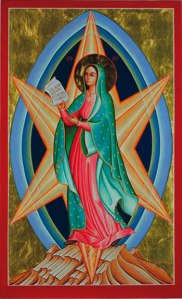
marystarofevanglisationicon

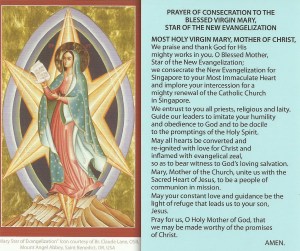
On 7 October 2014, on the Feast of our Lady of the Rosary, His Excellency Archbishop William Goh Seng Chye, the Archbishop of Singapore dedicated and consecrated the Archdiocese of Singapore and all the efforts of the New Evangelisation in Singapore to the Blessed Virgin Mary, Star of the New Evangelisation.

Although this refers to the Archdiocese of Singapore, I believe that everyone else in the world, within the Church of God may also pray the same prayer for the sake of evangelisation of the Good News everywhere in this world.


Here is the text of the prayer, to be prayed daily from 7 October 2014 to 7 October 2015, the Feast of our Lady of the Rosary.


10669256_842249659148292_6829732685043142899_o

Most Holy Virgin Mary, Mother of Christ.

We praise and thank God for His mighty works in you. O Blessed Mother, Star of the New Evangelisation; we consecrate the New Evangelisation for Singapore to your Most Immaculate Heart and implore your intercession for a mighty renewal of the Catholic Church in Singapore. We entrust to you all priests, Religious and laity. Guide our leaders to imitate your humility and obedience to God and to be docile to the promptings of the Holy Spirit.

May all hearts be converted and re-ignited with love for Christ and inflamed with evangelical zeal, so as to bear witness to God’s loving salvation. Mary, Mother of the Church, unite us with the Sacred Heart of Jesus, to be a people of communion in mission.

May your constant love and guidance be the light of refuge that leads us to your son, Jesus. Pray for us, O Holy Mother of God, that we may be made worthy of the promises of Christ. Amen.

Saturday, 18 October 2014 : 28th Week of Ordinary Time, Feast of St. Luke the Evangelist (Homily and Scripture Reflections)

Liturgical Colour : Red

Brothers and sisters in Christ, today we celebrate with the entire Universal Church, the feast of one of the four great Evangelists, that is the four writers of the Holy Gospels. Today is thus the feast of St. Luke the Evangelist, who wrote the Gospel accorded with his name, the Gospel of St. Luke. As a background, St. Luke was once a renowned physician, who became one of the faithful and followed St. Paul in some of his journeys, including what St. Paul wrote in the letter he wrote to Timothy, another faithful disciple of the Lord.

As we can see from what St. Paul shared with Timothy, St. Luke remained faithful and devoted to the tasks entrusted to him. Yes, this is true even though his fellow journeymen had left to pursue their own interests or for various other reasons. They encountered difficulties along the way, and not all the people they were sent to welcomed them. There were indeed instances when they were welcomed and accepted gladly, but more often than not, they literally had the doors slammed on their faces.

This is exactly what Jesus mentioned as He sent His group of seventy-two disciples, who were meant to help both Jesus Himself and His Apostles in the ministries and works they were doing. Jesus mentioned how they would be sent like lambs among wolves. They would not encounter easy works and acceptance easily, but will be constantly subjected to difficulties and suffering. The lambs rightly represent the disciples and the Apostles, while the wolves represent the various people of God, from which a great majority refused to listen to the Word of God.

Remember that in the other occasion in the Gospels, Jesus also mentioned how that as He who is the Lord and Master of all would suffer rejection and suffering at the hands of mankind, the very people of God to whom He had been sent, then His disciples and Apostles, as well as all those who follow Him and walk in His path will also suffer the same fate. Thus, it explained the fate which St. Paul and St. Luke the Evangelist met during their journeys.

But did they stop on their path? No! That is what made them different from those others who gave up along the way, who could not endure the difficulties and challenges and preferred the comfort of their old lives, settling for the less worthy. What can indeed be more worthy than the Lord and to live to proclaim the Lord’s words to the nations? And St. Luke, together with the other saints continued courageously to defend their faith and to continue the hard works for which they are admired and adored now.

Remember what the Lord had said in the Gospel today, in the Gospel written by St. Luke himself, so that we may know it and hear it as if it was spoken directly by the Lord Jesus Himself to us? Yes, that the harvest is plentiful but the labourers and workers are few. So what did Jesus then tell His disciples? Exactly, that they should ask the Lord of the harvest to send more labourers and workers to tend to the harvest. This truly makes sense, as more labourers will help the Lord of the harvest to bring in even more harvest and bring about more bountiful returns.

But what does this mean, brothers and sisters in Christ? This means exactly that the harvest is truly plentiful in our world, and the harvest refers to the people of God, who are ripe for picking and salvation in God, are awaiting for the labourers and workers who serve the Lord, to pick mankind for the Lord of the harvest, that is the Lord our God.

The field itself refers to this world. This world is filled with much difficulties and uncertainties, but it also offers much opportunities and chances for the crops grown in the field of this world. The pests and the weeds that threaten the crops refer to the forces of darkness that is led by Satan, the father of lies and evil, who always try their best to seduce mankind and make them to follow him instead of the Lord.

The rich harvest is a very tempting thing to the pests and weeds, who will definitely try to snatch and destroy the good harvest from the hands of those who collect these rich harvests to the Lord of the harvest. Thus, the same applies to us, as Satan and his fellow fallen angels is out there trying to turn us mankind, by appealing to our human desires and weaknesses, so that we may fall along our path towards the Lord, and then into damnation with them.

The labourers and the workers of the harvest refer to the servants of God, the disciples of Christ and the Apostles, who like St. Luke the Evangelist and many other saints, worked hard and courageously, like lambs among wolves, to ensure that the harvest of the Lord is collected amidst all the pests and the weeds, that is amidst the challenges and difficulties. Their successors, our priests and bishops, and all who devoted themselves to the service of God, continued their hard works even until this very day.

But this does not mean that the works of the Lord are limited to them only. In fact, brothers and sisters in Christ, we too are the workers and servants of the Lord. How is this so? That is because all of us who believe in the Lord and had received the revelation of truth through the Holy Scriptures and the Church, and have been baptised and accepted into the Church of God have the responsibility to spread the Good News of the Lord.

If St. Luke the Evangelist wrote one of the four Holy Gospels and through it countless souls had been saved, then we too can do it in our own way, by showing the faith through our own actions, that show our sincere and genuine faith, which is not in mere words but also through real actions, so that all those who see us, may know that we belong to the Lord, and therefore hopefully they too will seek salvation in God.

Therefore, brothers and sisters in Christ, inspired by the examples of St. Luke the Evangelist and other holy saints of God, and remembering always the words of the Lord, how the harvest is plentiful but the labourers are few, let us all pray sincerely and fervently, so that we may truly know and understand what we can do in order to help the works of God in the salvation of mankind.

May Almighty God bless us all and strengthen us, that we may courageously take up the cross and bear the mission entrusted to us, so that we may help the works of God, saving many others who await God’s salvation and who still live in the darkness of the world, and so that those of us who are called, we may embrace our calling and devote our lives in the full and complete service of the Lord. God bless us all. Amen.

Thursday, 16 October 2014 : 28th Week of Ordinary Time, Memorial of St. Hedwig, Religious and St. Margaret Mary Alacoque, Virgin (Homily and Scripture Reflections)

Liturgical Colour : Green or White (Religious and Virgins)

Brothers and sisters in Christ, today heard about the salvation which God had brought upon mankind through the means of Christ our Lord, who is His own Son and also the Messiah, our Saviour. And how Jesus had secured this for all of us, through His obedient act on the cross, that is to suffer for our sins and so that we may be free from the consequences of our sins, that is death.

By the shedding and outpouring of His Blood, He who is the Lamb of God, completely perfect and unblemished, not just by appearance but also by the complete purity and perfection of His heart, without any traces of sin, obtained for us the grace of redemption from sins, which God had also granted to all those who offered sin and burnt offerings of animals, sheep, goats and doves.

However, the loving sacrifice of our Lord Jesus Christ was different, because through that singular act of ultimate love, and by the offering of the perfect sacrifice, the only One worthy of all of our sins at once, He obtained for us all, salvation for all those who believe in Him and those who indeed willingly take part in His salvation, namely those who with faith and love for Him, accept and receive His Body and Blood into themselves, which He freely shed and offered for our salvation.

And this was in essence what God had in mind for all of His beloved people, when He sent them His messengers, that is the prophets and servants during the time of the old covenant of God, and to the Apostles, who were also His messengers and bearers of the truth of God at the time of the new covenant of God. Through them God wanted to reveal to mankind the fullness of His mercy and love, which He conveyed through Jesus and His works in this world.

And yet, the hearts of mankind were too heavily saddled and corrupted with the burdens of sin. And this burden of sin prevented them from understanding and realising the love of God, which He had for them. Instead, they embraced those sins and succumbed to their own temptations, the temptations of their flesh, so that they turned a deaf ear to the words and callings of the prophets and the Apostles of God, and they became proud and haughty, torturing and persecuting those messengers of God’s Good News because they considered them a nuisance to their way of life.

Brothers and sisters in Christ, can we tell indeed how many times had the people of God disobeyed Him throughout time? In the Bible we witnessed yet again and again of this disobedience, beginning from the disobedience of our ancestors, who listened to Satan rather than to the words of the divine Wisdom of God, and then with the countless generations of mankind who continued to live in debauchery and sin, disregarding His laws and precepts.

And we knew of how the people of Israel did not have their full heart’s attention to the Lord. They complained against Moses and always made demands after demands to the Lord, even after He had done so much for them, so much that everyone who saw them would have proclaimed how fortunate and blessed they were, having been given the grace of God.

The disobedience of the people of God, who preferred to languish in sin and under the chains of slavery of the aforementioned sin, therefore became the greatest obstacle for mankind to reach out back to the Lord, their God and loving Father. But all this changed when the Lord exercised His might and power, and through a single stroke, changed everything through Christ, giving new hope to mankind and liberating them from the slavery of sin.

Thus, brothers and sisters in Christ, today we are reminded of the need for us all to constantly shun sin and impurities before the Lord, and we need to be always vigilant in all things, and be aware how the evil one may try to turn us away from the Lord. His attacks are always relentless and unforgiving, but we have no need to fear him, as long as we stay steadfastly faithful to His Son, our Lord and Saviour Jesus Christ.

Today we also celebrate the feast day of two great and faithful saints, whose life I am certain will be a great example to all of us, and what I am going to share with all of you about them will certainly benefit our faith, and our salvation in God. They are St. Hedwig of Silesia, the once Duchess of Poland turned into a holy religious devoted to God, and St. Margaret Mary Alacoque, a holy virgin devoted to God who began the popular devotion to the Sacred Heart of Jesus.

St. Hedwig of Silesia was married off to a Polish duke at a very young age, and in age of warfare at the time, time was chaotic and destructive. And she lost her husband after she had born him many children. After the death of her husband, she moved to a monastery established by her daughter, Gertrude, and she devoted her life to God fully from then on. St. Hedwig and her husband were both renowned for their very pious lifestyle and very great devotion to helping the poor.

They devoted themselves to give their love and service to the poor, and amidst difficulties, they never gave up but continued with their works with great passion. St. Hedwig donated all of her riches and fortune after her widowhood and as she enters the Church as a religious. She was renowned for her great piety and humility as well, often walking barefoot even in snow.

Meanwhile, St. Margaret Mary Alacoque was a young woman who devoted herself since early in her life to the Lord, to live a completely devoted life to the Lord. She lived frugally and with full faith in God. St. Margaret Mary Alacoque experienced many visions of the Lord and His mother Mary during her life, and in those visions, she experienced in particular the love emanating from the Most Sacred Heart of Jesus.

Thus from her began the promotion of the now popular devotion to the Sacred Heart of Jesus, which reminds us of the love of God which He showed us all through His Son, Jesus our Lord, whose loving sacrifice on the cross purchased for us the freedom from all of our sins and iniquities, and opened for us the path towards His love and His salvation, the offer of eternal life which He freely gives to all those who believe in Him.

Therefore, brothers and sisters in Christ, inspired by the examples of these two saints, let us all be on our way to seek the Lord and to be faithful to Him in all of our actions. Let us all shun all forms of sins and fornications, holding tightly and strongly to the centre tenets of our faith. May Almighty God grant us the gift of faith, empower us and help us on our way to reach Him. God bless us all. Amen.

Sunday, 28 September 2014 : 26th Sunday of Ordinary Time, Memorial of St. Wenceslaus, Martyr, and St. Lawrence Ruiz and Companions, Martyrs (Psalm)

Liturgical Colour : Green

Psalm 24 : 4bc-5, 6-7, 8-9

O Lord, make known to me Your paths. Guide me in Your truth and instruct me, for You are my God, my Saviour; I hope in You all day long.

Remember Your compassion, o Lord, Your unfailing love from of old. Remember not the sins of my youth, but in Your love remember me.

Good and upright, the Lord teaches sinners His way. He teaches the humble of heart and guides them in what is right.

Monday, 22 September 2014 : 25th Week of Ordinary Time (Homily and Scripture Reflections)

Liturgical Colour : Green

Dear brothers and sisters in Christ, the lesson for us today from the Holy Scriptures we have heard is exceedingly clear, that we have to do something and take action, if we are able to do that something, for the benefit of those who are around us, and not just for our own benefits. We cannot be idle or ignorant especially if we have the power to make a difference. We certainly have this power, as God had granted it to us. If we are idle, then the Lord who knows it all, will not be pleased at our actions, or lack of actions.

We cannot have a faith that is stagnant and consists of mere word of mouth and lip-service. And we cannot have that kind of faith in which we are merely concerned about our own salvation. This kind of selfishness and this kind of faith will not be acceptable to the Lord. He had clearly indicated to us the kind of faith and love that we need to have, which is to love one another as we have loved ourselves, and to also love God in the same way, with all of our strengths and our dedications.

Our faith must therefore be based on this love, which we ought to have for God and for our fellow men. If not, then our faith is no different from being dead. It is precisely as what Jesus had said to His disciples, that this kind of faith is like those who has lighted a lamp but hide it under the bed or cover it with a bowl, in which the light of the lamp becomes useless and meaningless.

Those who committed evil and bad things in the sight of God, and also those who fail to do things which we ought to do, in our ignorance and laziness, as according to the words of the Book of Proverbs, will receive the wrath and displeasure of the Lord, as these have not done what He had asked us to do, and in our failure, we may have led many people who should have been saved, into darkness and condemnation together with us.

But God did promise also, that those who do His will faithfully and committed themselves to His cause will receive rich rewards and bountiful blessings for their work and dedication. God will not abandon those who had been faithful to Him, and who had undertaken the endeavours to bring more and more to the embrace of God and out of condemnation and the path to hell.

God knows everything, whatever we do, and whatever we have done in our lives, and whatever we have failed to do. We cannot hide anything from God who is omniscient and omnipresent, and who knows all things even in the depths of our hearts. Every moment we fail to do something for the benefit of our brethren, or instead if we bring them into sin, then it is a missed opportunity for us to do as what God had told us to do, and therefore is a missed opportunity for us to add another security to our salvation.

Therefore, brothers and sisters in Christ, what we are expected today from now on, is so that all of us can be heralds of the Lord’s Good News, spreading the truth and the teachings of our Lord Jesus Christ, which we had ourselves received, to the world and to the people, especially those who are still lost from the Lord, so that through our deeds and actions, we may be justified in our faith and therefore gain salvation promised to us by the Lord our God.

And at the same time, we may also help one another in our effort to seek the Lord and to attain salvation, such that in the end, we hope that no one shall be lost to the darkness and to evil. Indeed, the reality is that there are those who have been lost and there are also those who will be lost, because they continue to rebel against the Lord and refuse to listen to the words and to obey the works of the saints regardless of what had been done to them.

Let us all therefore work together as one people, one family in the Lord, helping one another, especially those who are in great need for the saving grace of our good works, that in the end, as many souls as possible can be saved and gain justification together with us. No one should be lost to the darkness, and more importantly, if we are capable of doing something to prevent the loss of these good souls, and we do nothing, then we are indeed responsible for their downfall and damnation.

May Almighty God be with us all, and may He give us strength and courage to do something for the sake and benefit of our brethren in need, that whenever it is within our power to do so, we should never be idle, but take a conscious action for their sake. God bless us all. Amen.